-
-
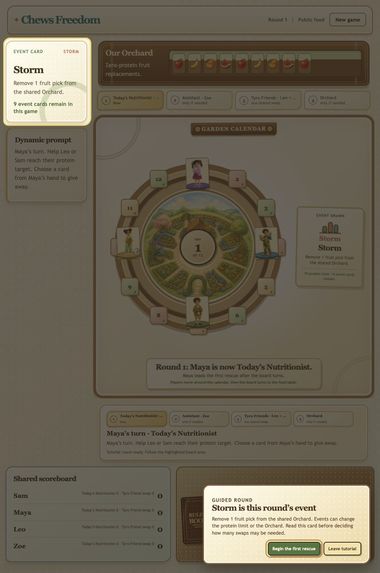
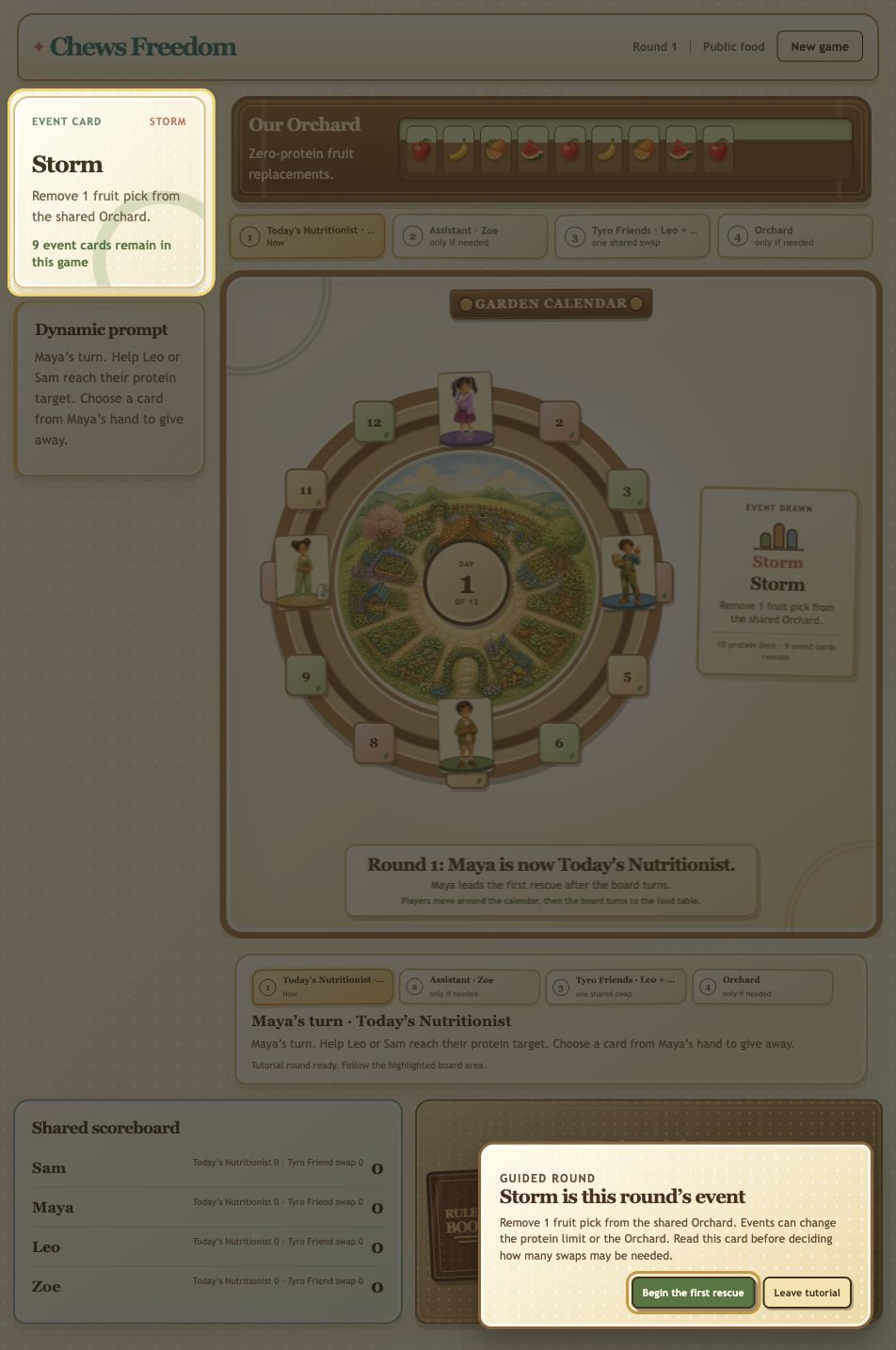
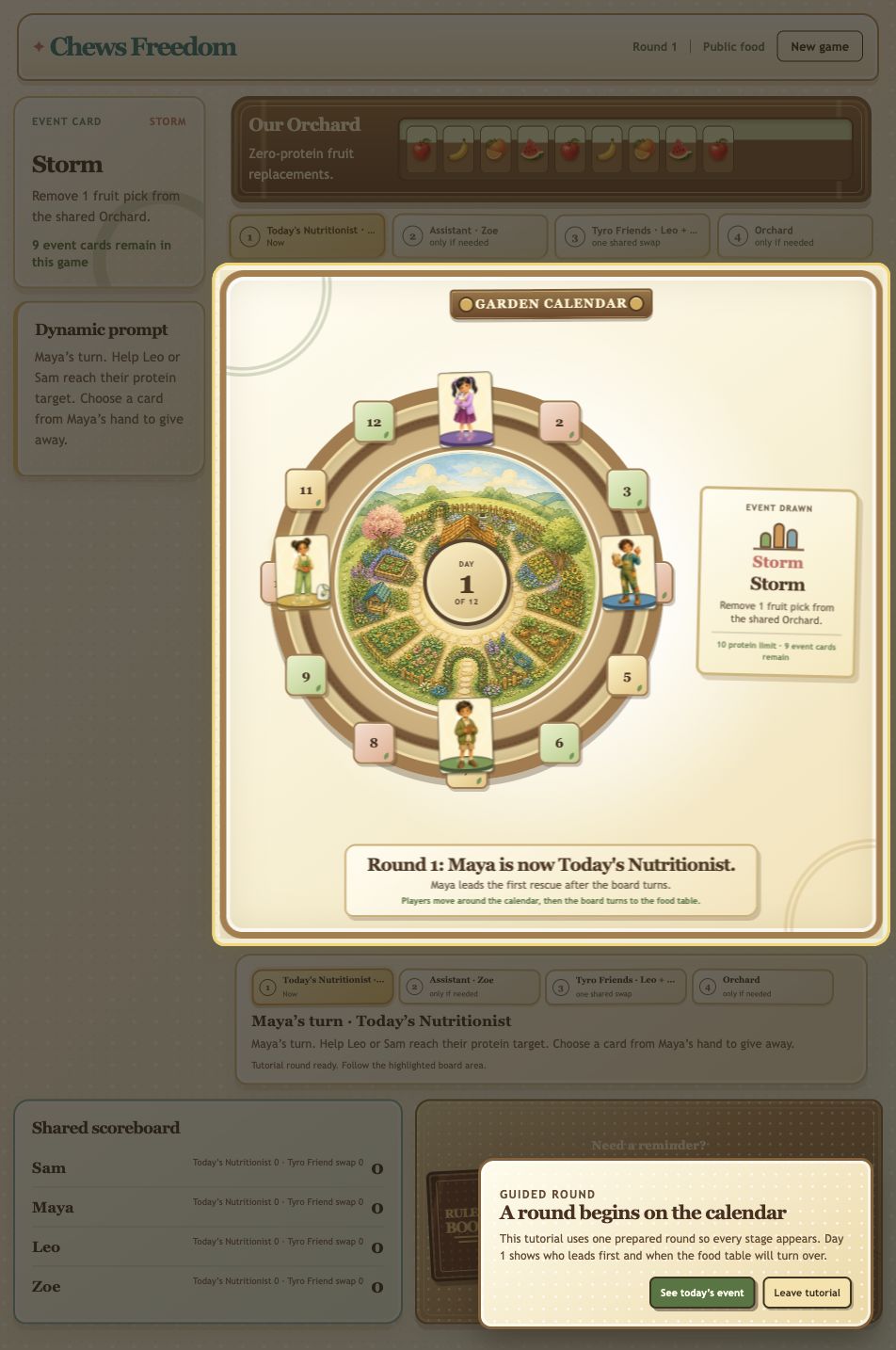
Event card
-
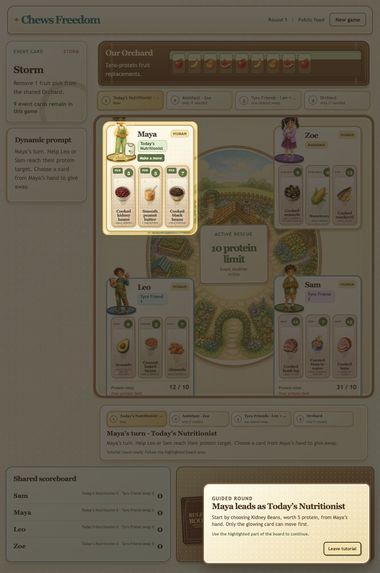
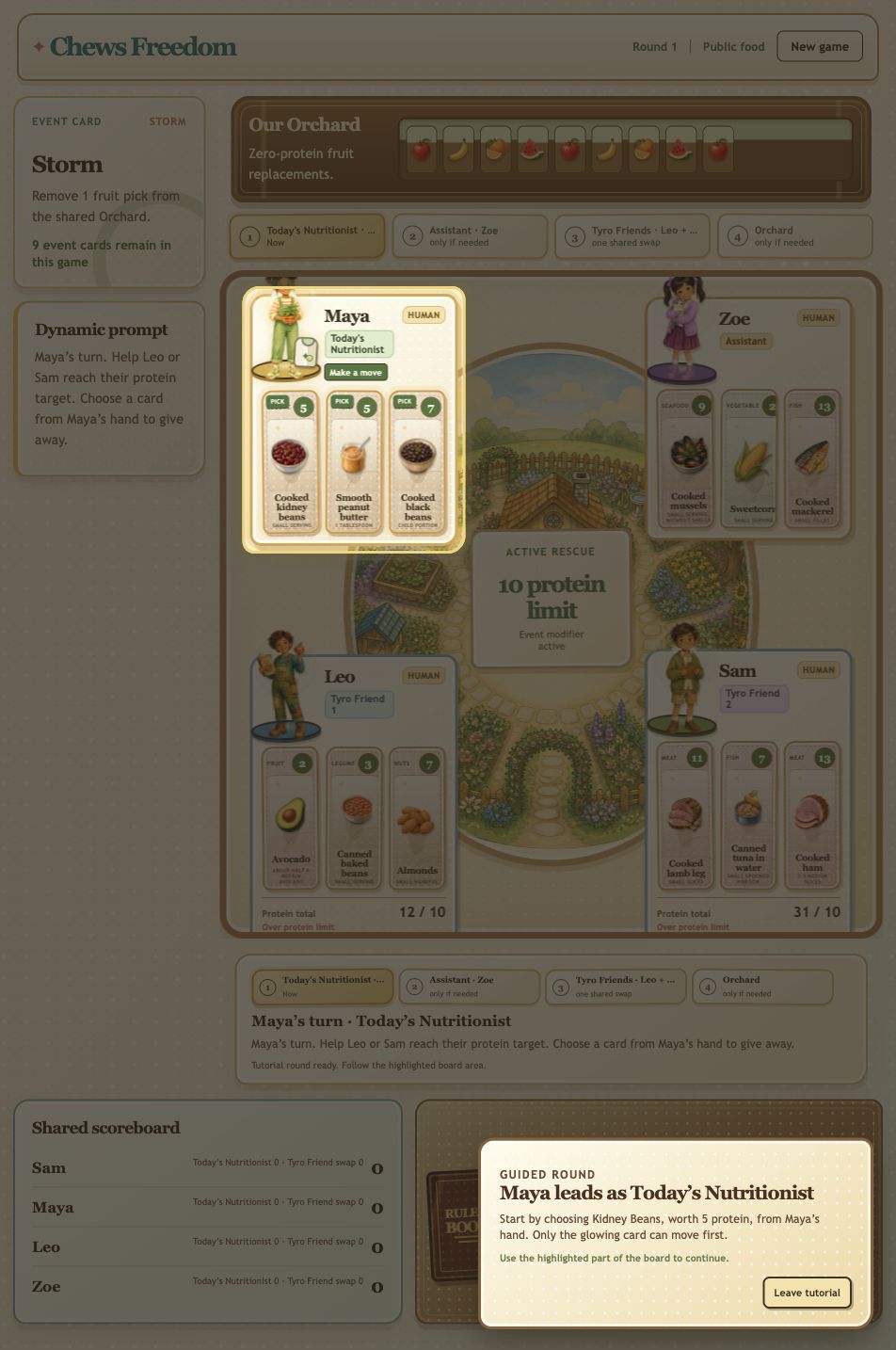
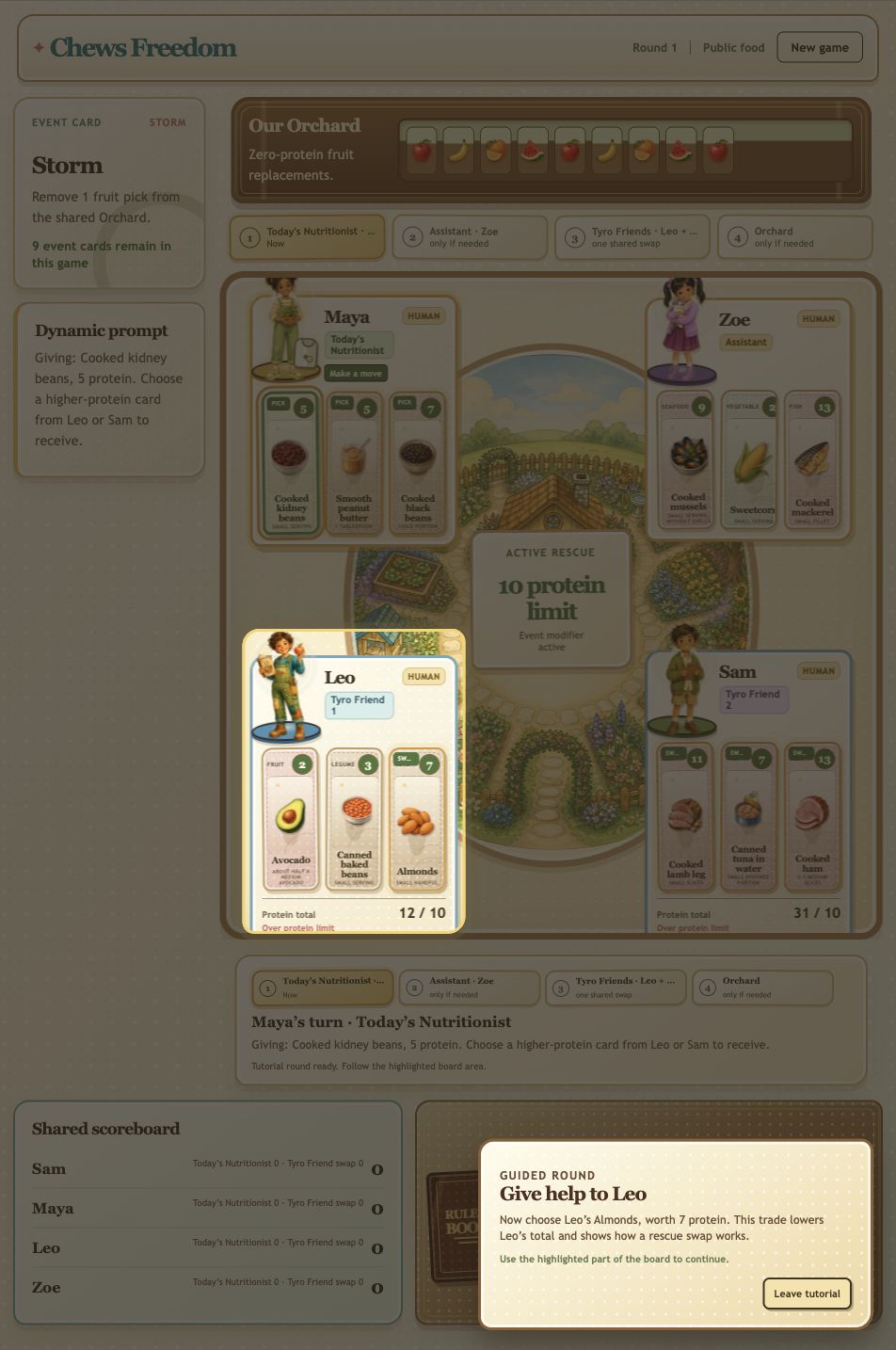
Move of the nutritionist
-
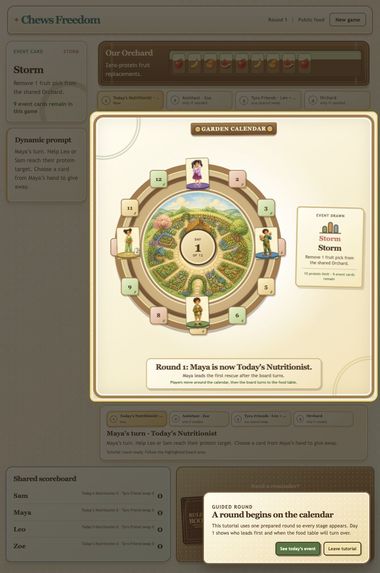
Daily counting clock
-
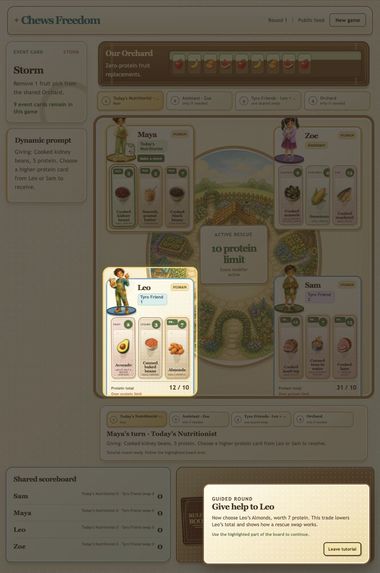
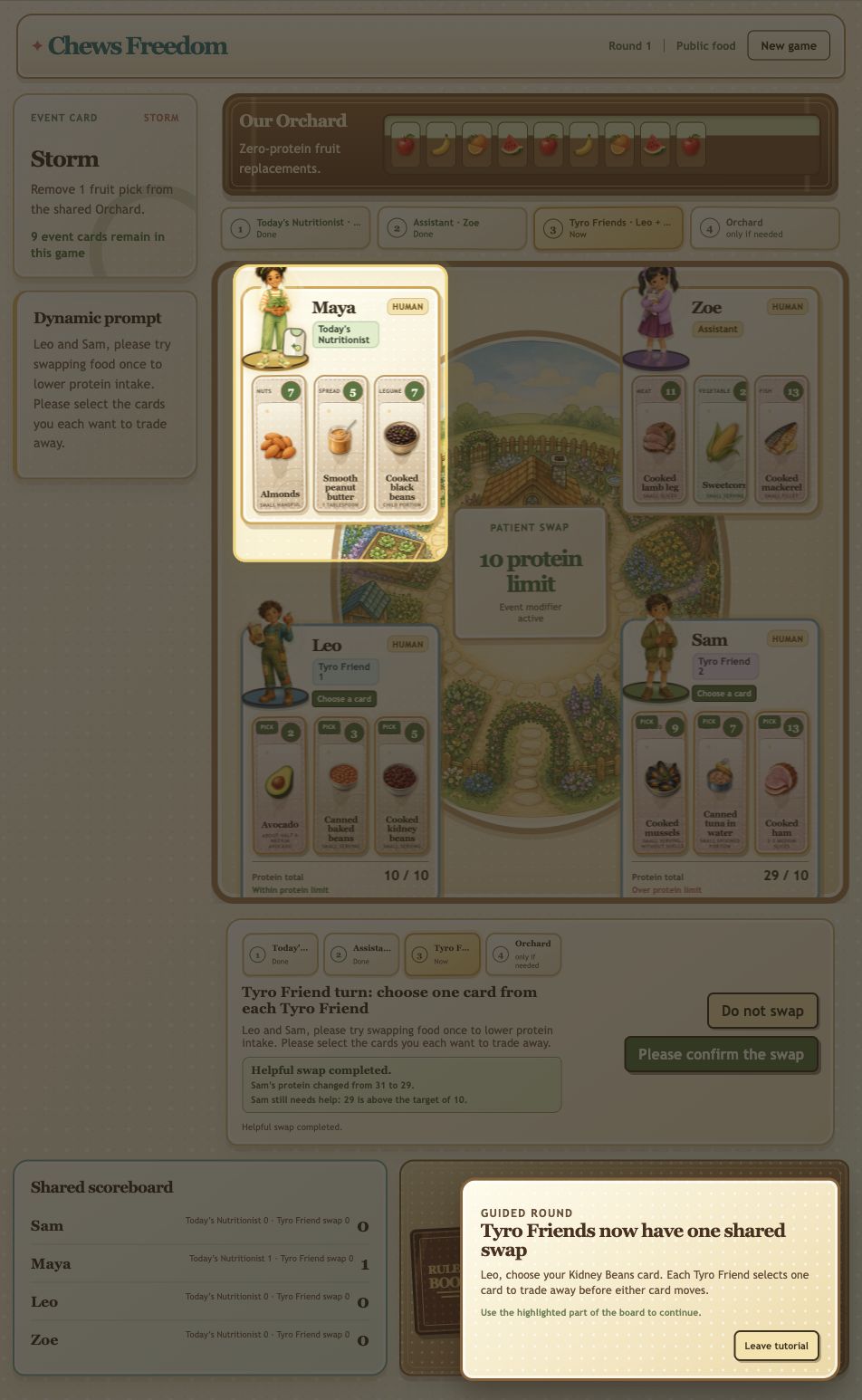
Move of the card swap
-
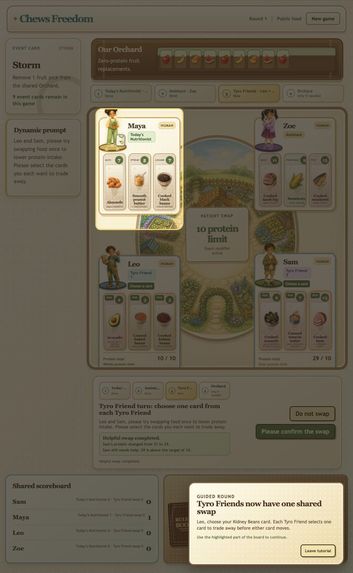
Tyro friend mutual aid
-
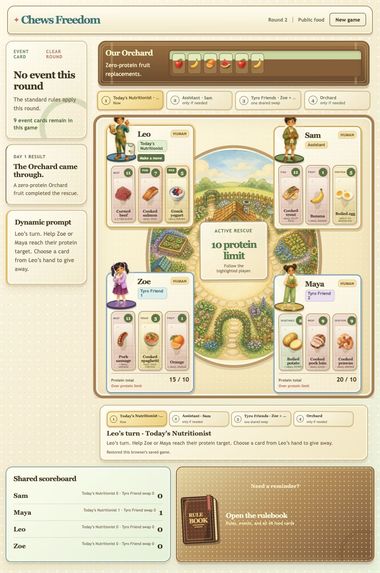
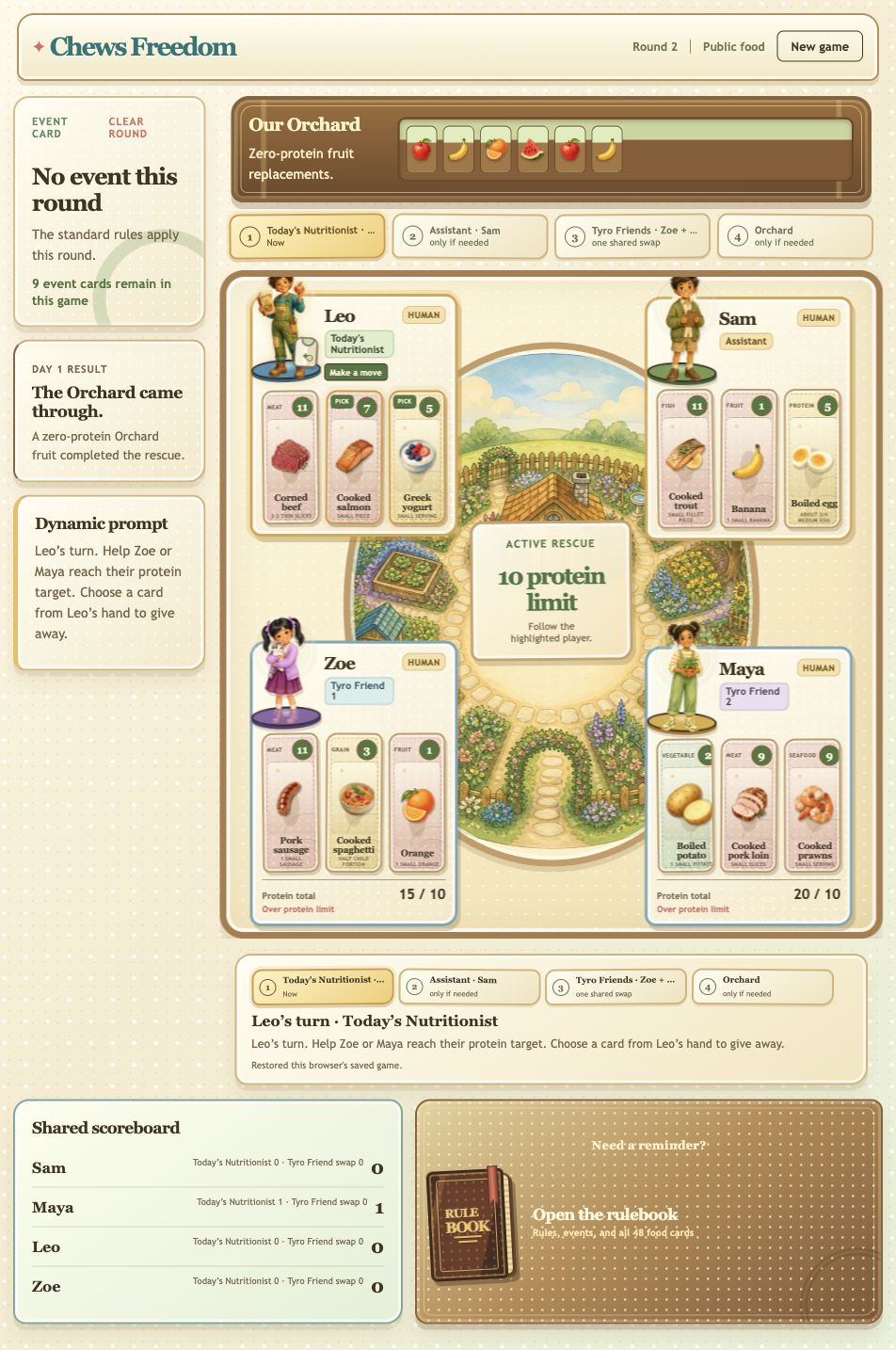
game interface
Inspiration
I am a genetic engineer, but Chews Freedom began with a deeply personal experience rather than a laboratory experiment.
When my son was eight months old, he was diagnosed with tyrosinemia, a rare inherited metabolic disorder that has no cure. The diagnosis changed every part of our family life. Over the following years, we met many other families affected by rare metabolic diseases and tried, in different ways, to support children growing up with lifelong medical and dietary restrictions.
For many of these conditions, an extremely strict low-protein diet is not a temporary intervention, but a lifelong treatment. For children, this can also create a painful feeling of being different from others.
As AI has developed at extraordinary speed, we have often wondered whether this technological revolution could also benefit rare-disease communities—families that are frequently overlooked, despite carrying enormous medical, emotional and practical burdens.
I wanted to make a game that could help children accept their special dietary needs, learn to support one another and gradually build the skills needed to manage their own diet. I partnered with Dr Yangqi Gu, a Yale-trained biologist, to explore whether AI could help us design and build such a game within the short timeframe of the hackathon.
Chews Freedom grew from our hope that the power of AI can serve not only large markets, but also thousands of children and families living with rare diseases.
What it does
Chews Freedom is a cooperative educational game for children who follow medically prescribed low-protein diets, including children with tyrosinemia, phenylketonuria, and other inherited metabolic disorders.
Players take on different roles, including children, nutritionists and assistant nutritionists. Each player holds food cards with protein values, while the children must keep their total intake within a safe target range. Players exchange cards, respond to changing event conditions, and work together to help every child reach the appropriate range.
The game combines three learning goals.
First, it helps children understand that having special dietary needs is not something to be ashamed of. By moving between different roles, they can explore their condition in a supportive and playful environment rather than experiencing it only as a list of restrictions.
Second, the cooperative mechanics encourage children to ask for help, offer help and recognise that successful dietary management often depends on communication among children, parents, friends, teachers and healthcare professionals.
Third, players practise the practical mathematics involved in food management: addition, subtraction, comparison, estimation and judging whether a total falls within a target range.
Rather than asking children simply to memorise what they cannot eat, Chews Freedom turns dietary management into shared problem-solving.
How we built it
We began by translating real experiences of low-protein dietary management into a set of clear educational objectives. We then designed the food-card system around realistic protein values and age-appropriate portion sizes, so that the numbers used in the game reflected recognisable food choices rather than arbitrary scores.
We used GPT-5.6 throughout the design process to help us structure the rules, test alternative game mechanics, refine the educational framing, draft interface text and identify points of confusion from the perspective of children and first-time players.
Codex helped us turn those rules into a functional browser-based game. We used it to implement the player roles, card-swapping logic, target protein ranges, event cards, round progression, scoring and visual feedback. It also allowed us to iterate rapidly when playtesters reported that the swapping system, role labels and shared food resources were difficult to understand.
The final prototype was built as a web application so that families, patient organisations and healthcare professionals could access and test it without installing specialist software.
Challenges we ran into
Our greatest challenge was turning a complex real-life responsibility into a game that remained both accurate and enjoyable.
Low-protein dietary management involves many variables, including different protein allowances, portion sizes, disease-specific requirements and individual treatment plans. We needed to simplify these concepts without giving children misleading medical information. Chews Freedom is therefore designed as an educational tool rather than a substitute for personalised clinical advice.
We also discovered that rules that appeared obvious to us were not necessarily clear to new players. Early playtesters understood the overall concept but found it difficult to tell whose turn it was, which cards could be exchanged, and why some actions succeeded while others did not.
This feedback led us to replace abstract player labels with names, clarify each role, display step-by-step instructions, and explain the result of every action. It reminded us that accessibility is not achieved by simplifying the idea alone; every interaction must communicate what is happening and why.
Another challenge was time. We had to combine medical experience, nutritional education, game design, software development, visual storytelling, and user testing within only a few days.
Accomplishments that we're proud of
We are proud that Chews Freedom developed from a personal idea into a working, playable game within the hackathon period.
The project combines lived experience, scientific knowledge and AI-assisted development in a way that addresses a real but underserved need. It is not simply a protein calculator or a digital worksheet. It uses cooperation, role-play and shared decision-making to address both the practical and emotional dimensions of living with a restricted diet.
We are particularly proud that the game does not frame the affected child as a passive recipient of care. Children can become nutritionists, helpers and decision-makers. They practise managing their own needs while also learning that asking for support is a strength rather than a failure.
We are also proud of how quickly we were able to respond to user feedback. AI tools allowed us to move from identifying a usability problem to revising the rules, interface language and interaction flow within hours rather than weeks.
Most importantly, we created something that we would genuinely like children in our own rare-disease community to play.
What we learned
We learned that designing for rare-disease communities requires more than medical accuracy. A product must also understand identity, family relationships, social inclusion, and the emotional experience of being different.
We learned that cooperation is a better educational model for this problem than competition. Dietary management is rarely an individual task, especially for a young child. It involves families, friends, schools, dietitians and clinical teams. The game became stronger when its mechanics reflected this shared responsibility.
We also learned that realistic data alone does not create an effective educational experience. Children need immediate feedback, understandable goals, and a clear reason for every action. The most useful playtesting comments were often about small interface details that fundamentally changed whether the game felt intuitive.
Finally, we learned that AI is especially powerful when combined with lived experience. GPT-5.6 and Codex did not replace our understanding of rare disease or nutrition. They helped us organise, test, implement and communicate that understanding much faster.
What's next for Chews Freedom
Our next step is to conduct structured playtesting with children, parents, metabolic dietitians, patient organisations and healthcare professionals. We want to understand whether the game is enjoyable, whether its instructions are clear and whether repeated play improves confidence and practical food-management skills.
We plan to refine the food database, introduce adjustable protein targets and develop disease-specific versions with appropriate clinical guidance. Future versions could support different age groups, languages and cultural diets, making the food cards more relevant to families in different countries.
We also hope to develop both digital and printable tabletop versions. A physical version could be used at home, in schools, in clinics and during patient-community events, while the digital version could support remote play and personalised educational content.
In the longer term, Chews Freedom could become part of a broader platform for children living with medically restricted diets. With careful clinical collaboration, AI could help adapt challenges to a child’s age, learning progress and dietary context.
Our goal is not to make children think less seriously about their treatment. It is to help them approach it with greater confidence, independence and support—and to remind them that having different needs does not mean facing them alone.
Built With
- css
- gpt-5.6
- html
- javascript
- openai-codex

Log in or sign up for Devpost to join the conversation.