-
-
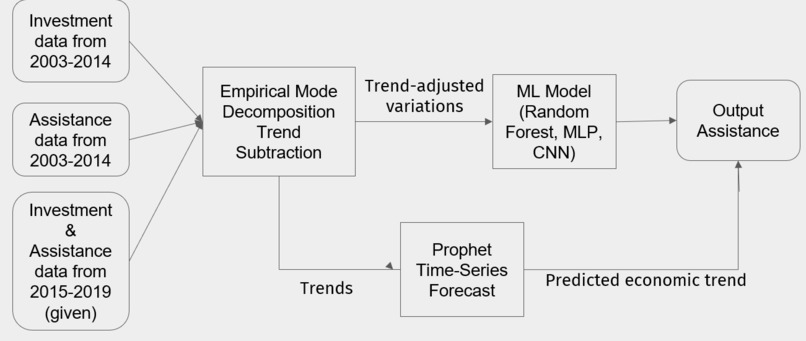
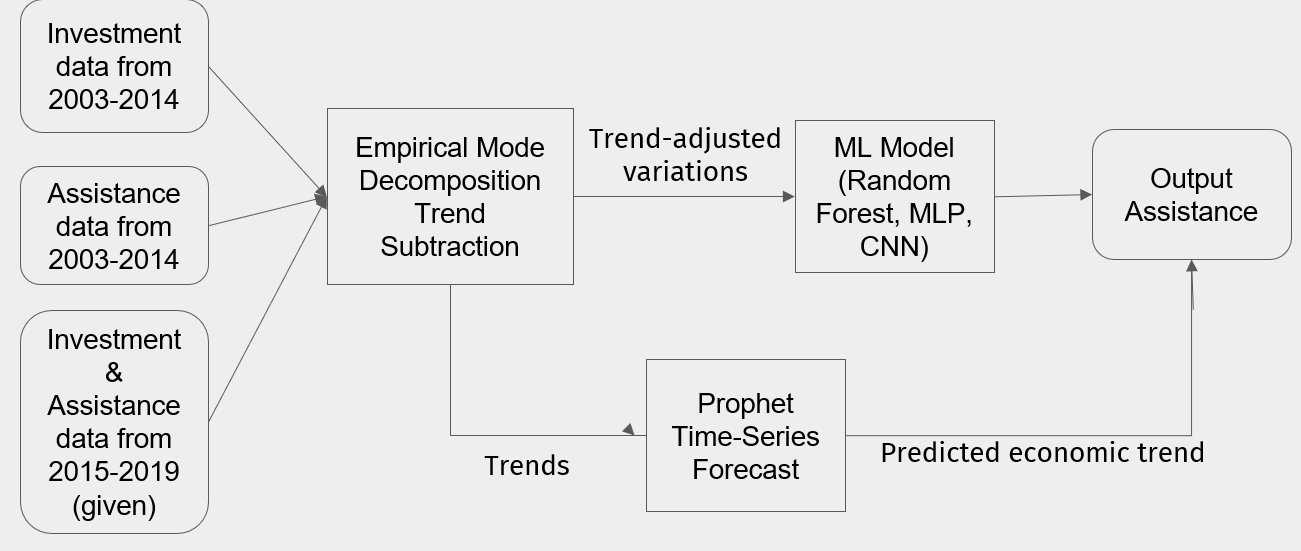
Model archictecture pipeline
-
-
-
Inspiration
Given that it is the year 2019, Chevron is looking ahead and preparing for the next year. With the help of data science, we will develop a model that will provide economic insight into which states have the greatest potential for renewable energy investments and do it in a more explainable manner.
What it does
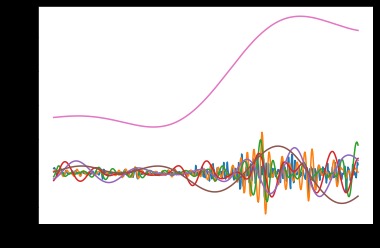
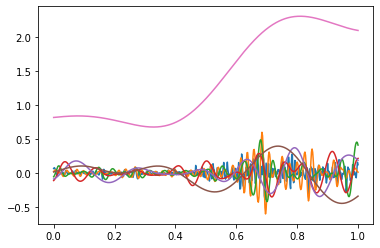
Uses Empirical Mode Decomposition to allow a Machine Learning model to learn the more unpredictable patterns of investment, adjusted for the general trend of the economy. Our system allows for the removal of the changing input-output relationship of this problem, simplifying the decision-making process.
How we built it
We wanted to include the changing dynamics of the economy, such as the same amount of investment in a different state or time period can drastically change what assistance a state gets. Thus, we sought to model the economy and research best practices for time-series predictions. The model was programmed using standard Python data science libraries, Meta's Prophet time-series forecasting library, as well as the "EMD" Python library for Empirical Mode Decomposition.
Challenges we ran into
- Exploding gradient problem when trying to train a DNN for prediction
- Overfitting of DNN models
- Problems with reshaping the dataset and merging external datasets
Accomplishments that we're proud of
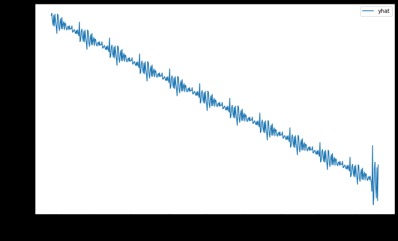
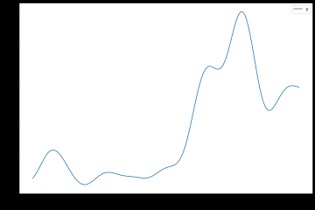
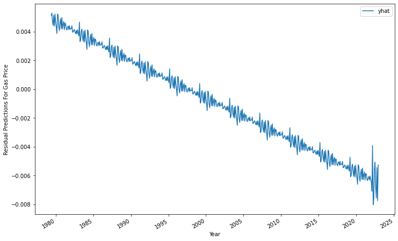
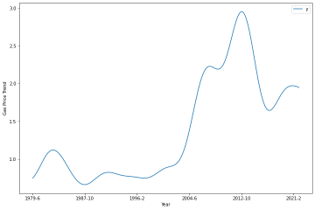
We were able to quite accurately model the trend of the American Economy, spotting visually the effects of the 2008 crisis, Covid-19, and Russia's invasion of Ukraine on gas prices. We also employed signal processing techniques to assess the nature of the data we were given and simplify the time-series dependency that our prediction model had.
What we learned
- Taking into account the trend of the economy allows for a more accurate and predictable model
- Feature selection using Random Forest allowed us to achieve better results.
- Using a longer period of data allows for better time-series prediction

Log in or sign up for Devpost to join the conversation.