Inspiration
During a crisis, information can arrive faster than people can process it. Emergency reports may come from different sources, contain incomplete information, or describe the same incident in different ways. The real challenge is not simply collecting more information — it is understanding what matters most right now.
We built Chetana AI (चेतना) around this idea. Chetana means awareness or perception in Sanskrit. Our goal was to create an AI system that transforms fragmented crisis reports into a clear, prioritized picture that can support faster and better human decisions.
What It Does
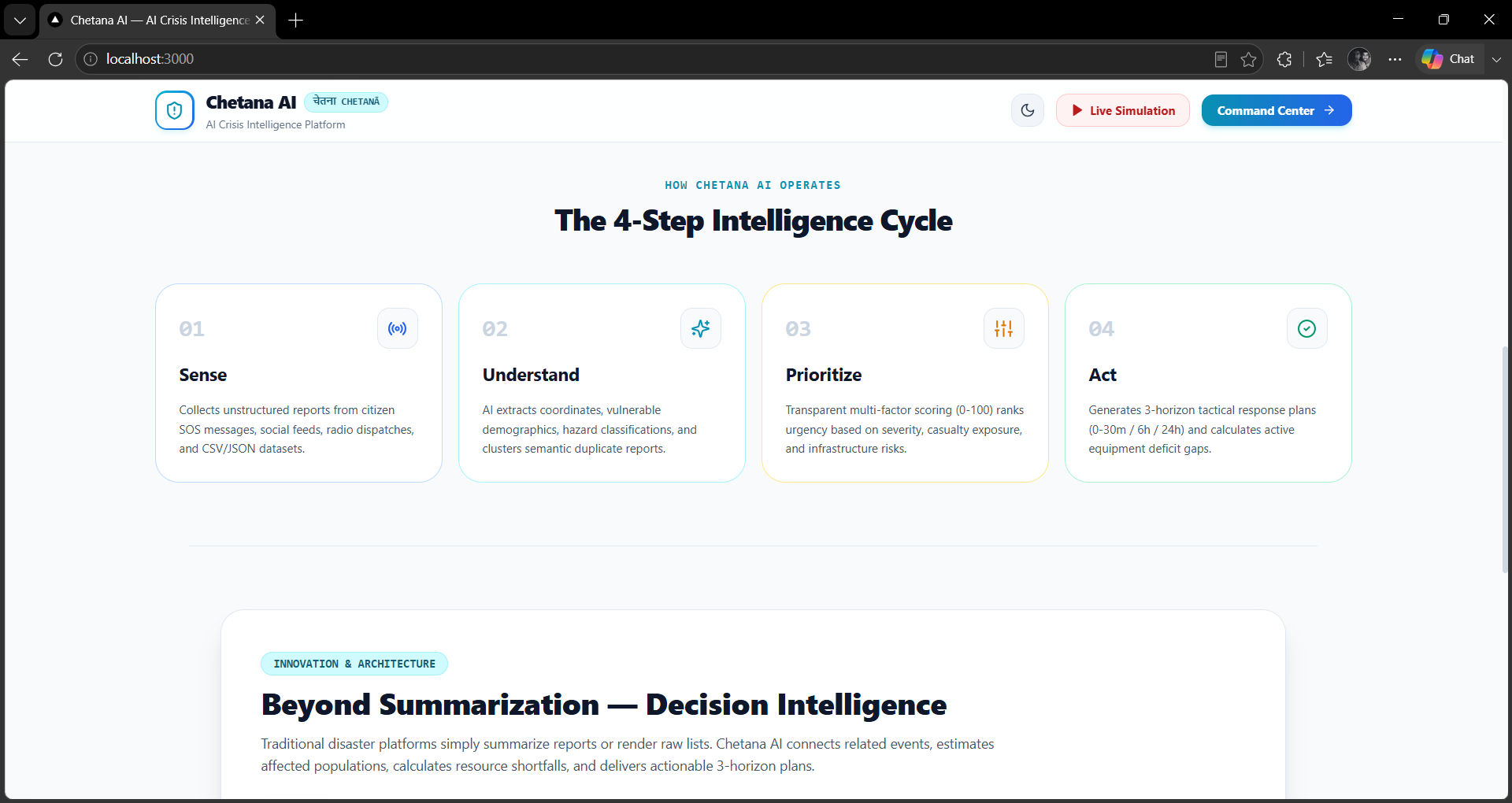
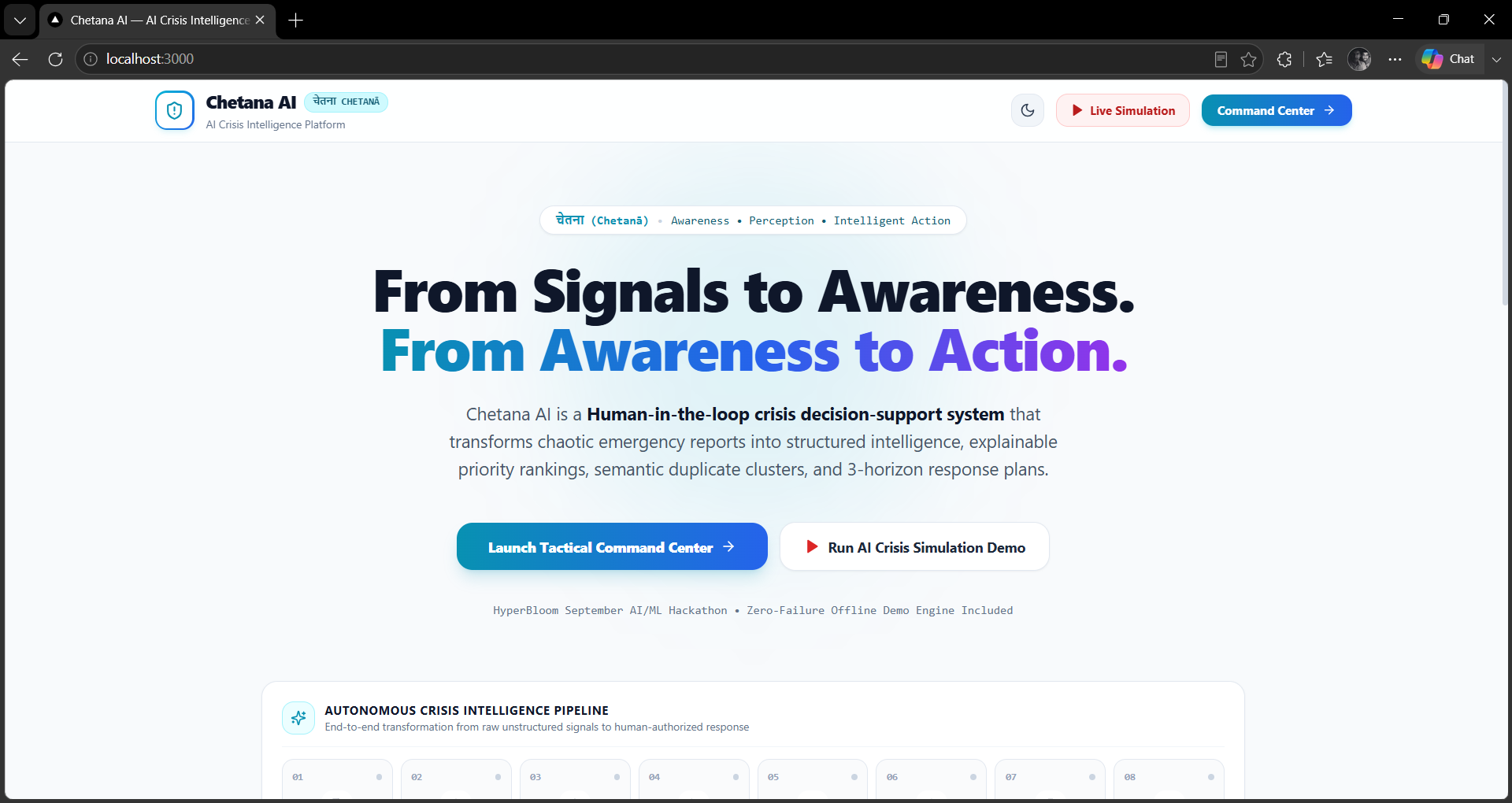
Chetana AI is a human-in-the-loop crisis intelligence and decision-support platform.
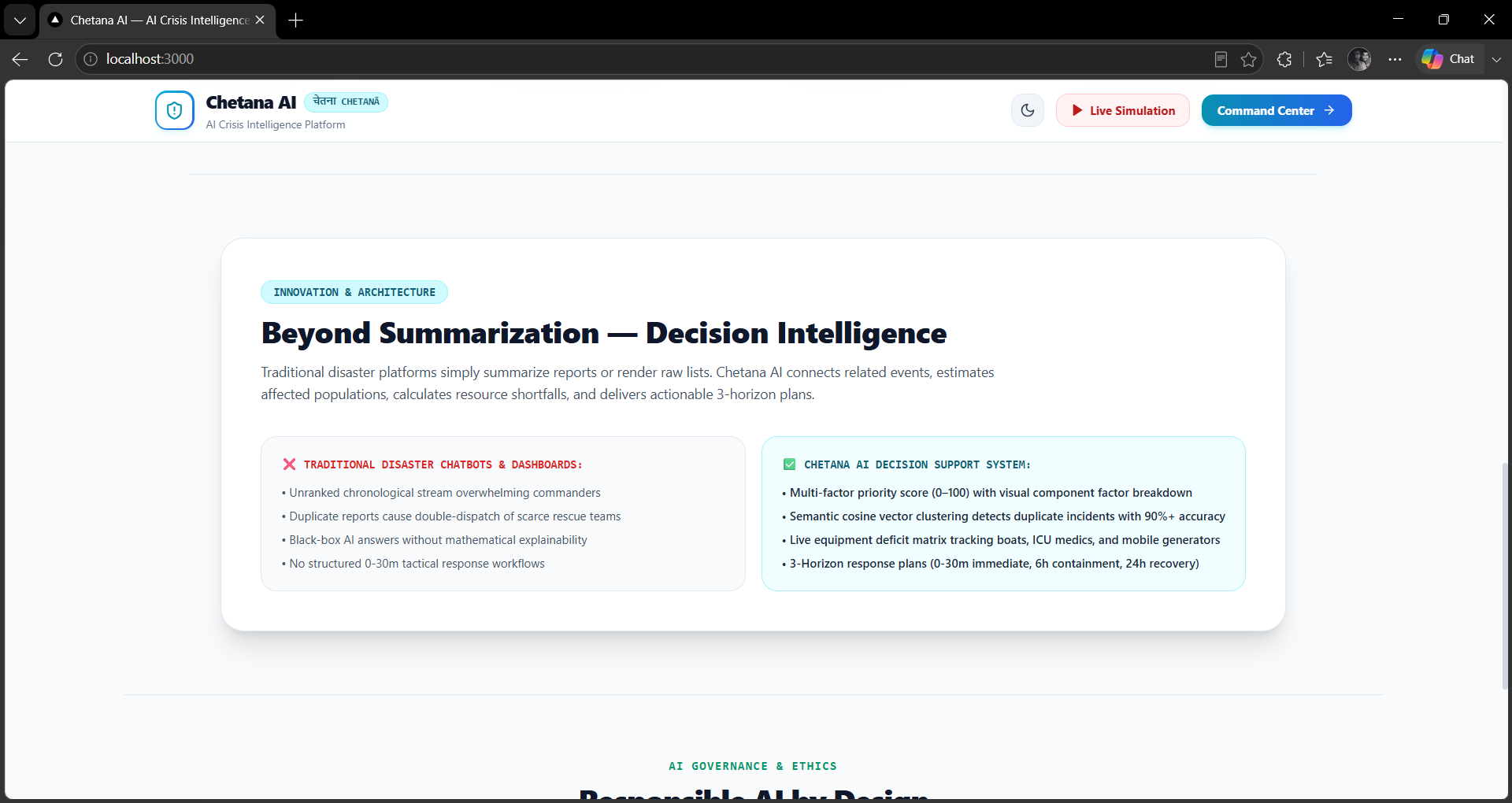
Instead of simply summarizing emergency reports, Chetana analyzes them and turns unstructured information into actionable intelligence.
The platform can:
- Extract incident types, locations, affected populations, vulnerable groups, and infrastructure risks using AI.
- Classify incidents and assess severity and urgency.
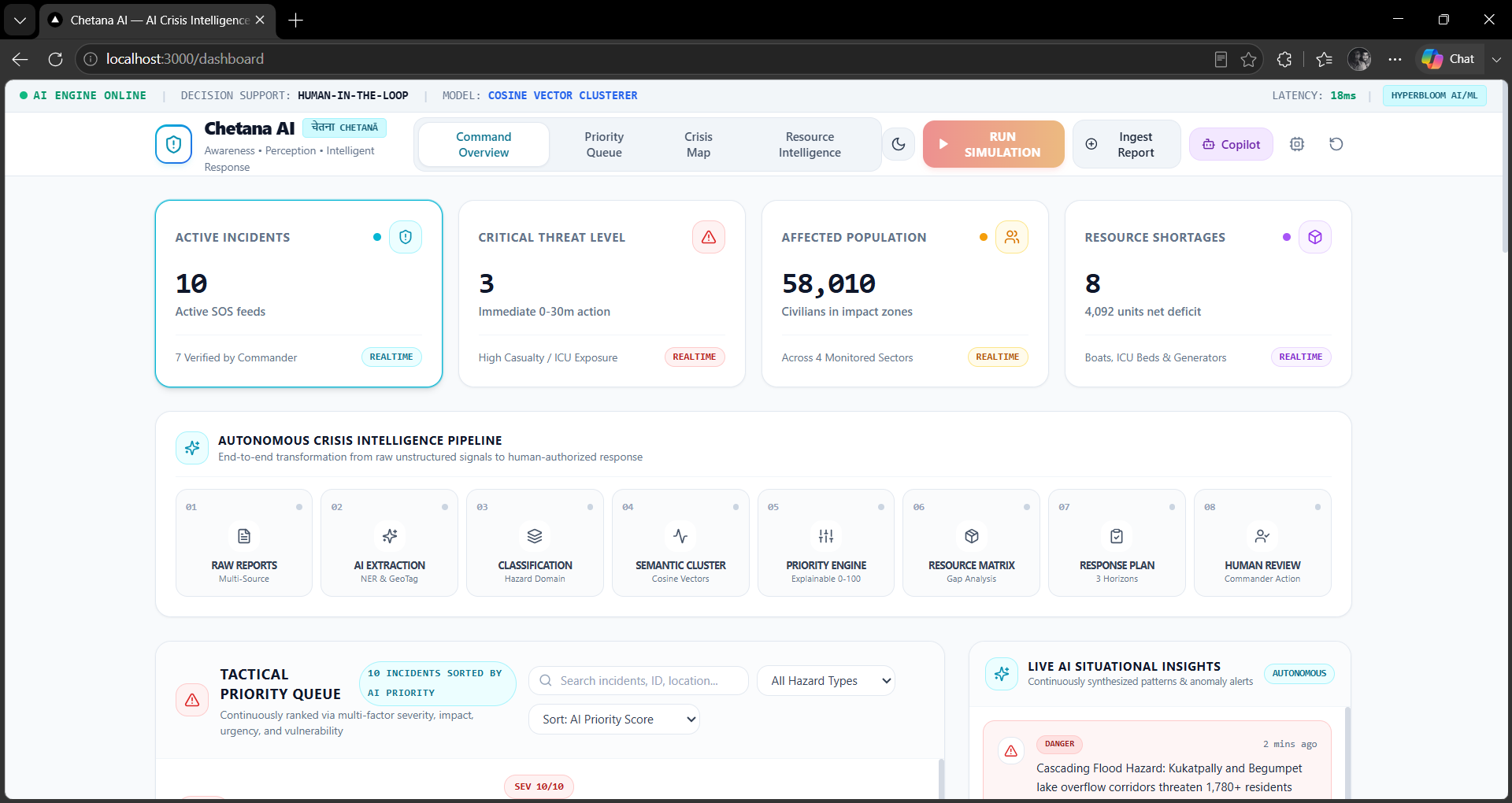
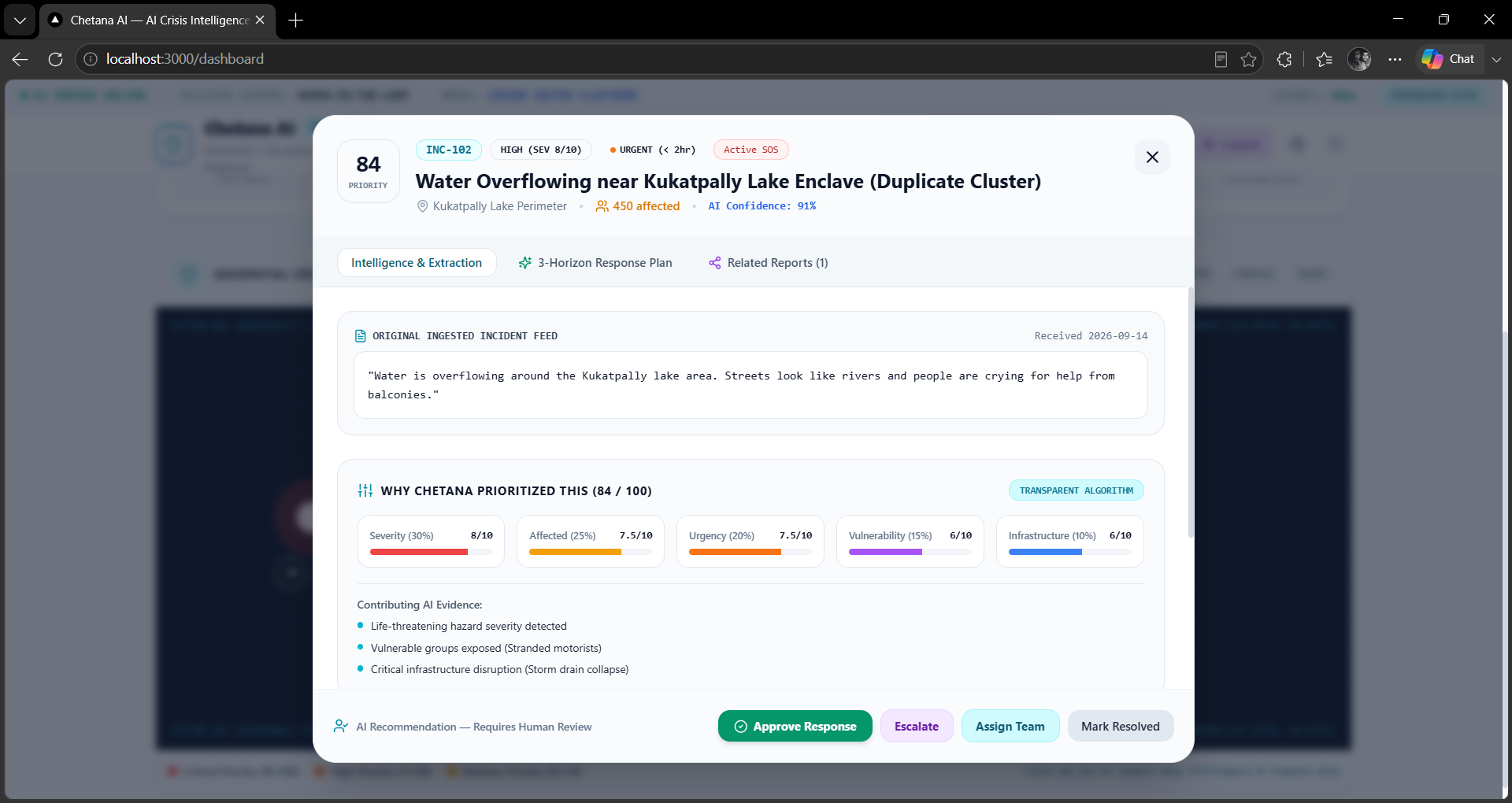
- Calculate an explainable 0–100 priority score.
- Detect potentially duplicate or related reports using semantic similarity.
- Identify required resources and highlight resource shortages.
- Generate structured response plans across three time horizons: 0–30 minutes, 30 minutes–6 hours, and 6–24 hours.
- Provide a grounded Chetana Copilot for querying active incidents using natural language.
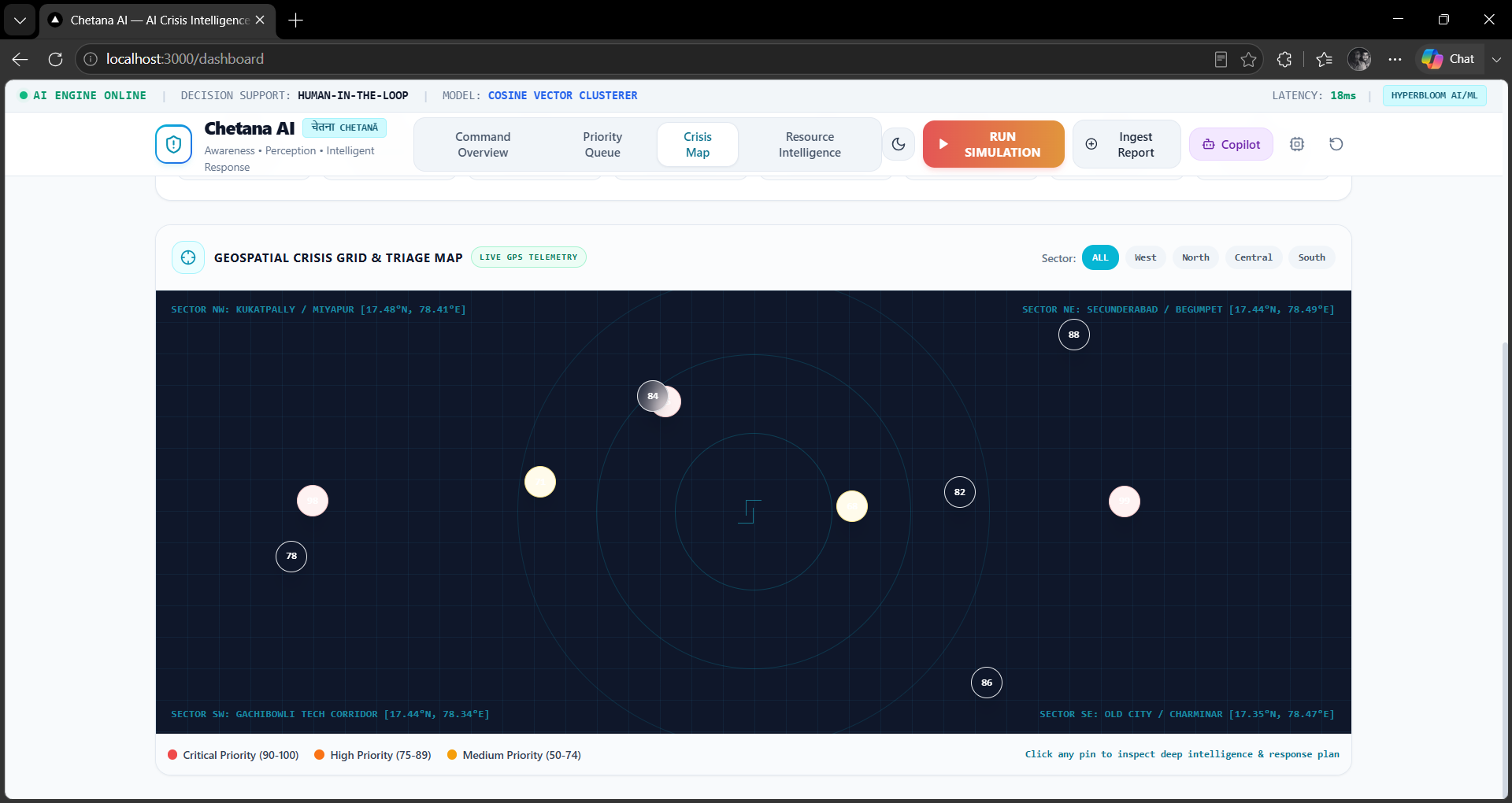
- Visualize incidents through a tactical crisis dashboard and geospatial interface.
Every AI assessment includes a confidence level and is clearly presented as a recommendation requiring human review.
How We Built It
We built Chetana AI using Next.js, React, TypeScript, Tailwind CSS, and Recharts, with a modular AI service architecture.
The AI layer uses a multimodal/LLM-based analysis workflow for structured incident extraction, classification, risk analysis, recommendations, and response-plan generation. Semantic embeddings and cosine similarity are used to identify related reports and reduce duplicate incident handling.
A transparent priority engine combines severity, affected population, urgency, vulnerability, and infrastructure risk:
$$ Priority = (S \times 0.30) + (A \times 0.25) + (U \times 0.20) + (V \times 0.15) + (I \times 0.10) $$
The system also includes a deterministic demo engine so the complete experience can be demonstrated reliably even when an external AI API is unavailable.
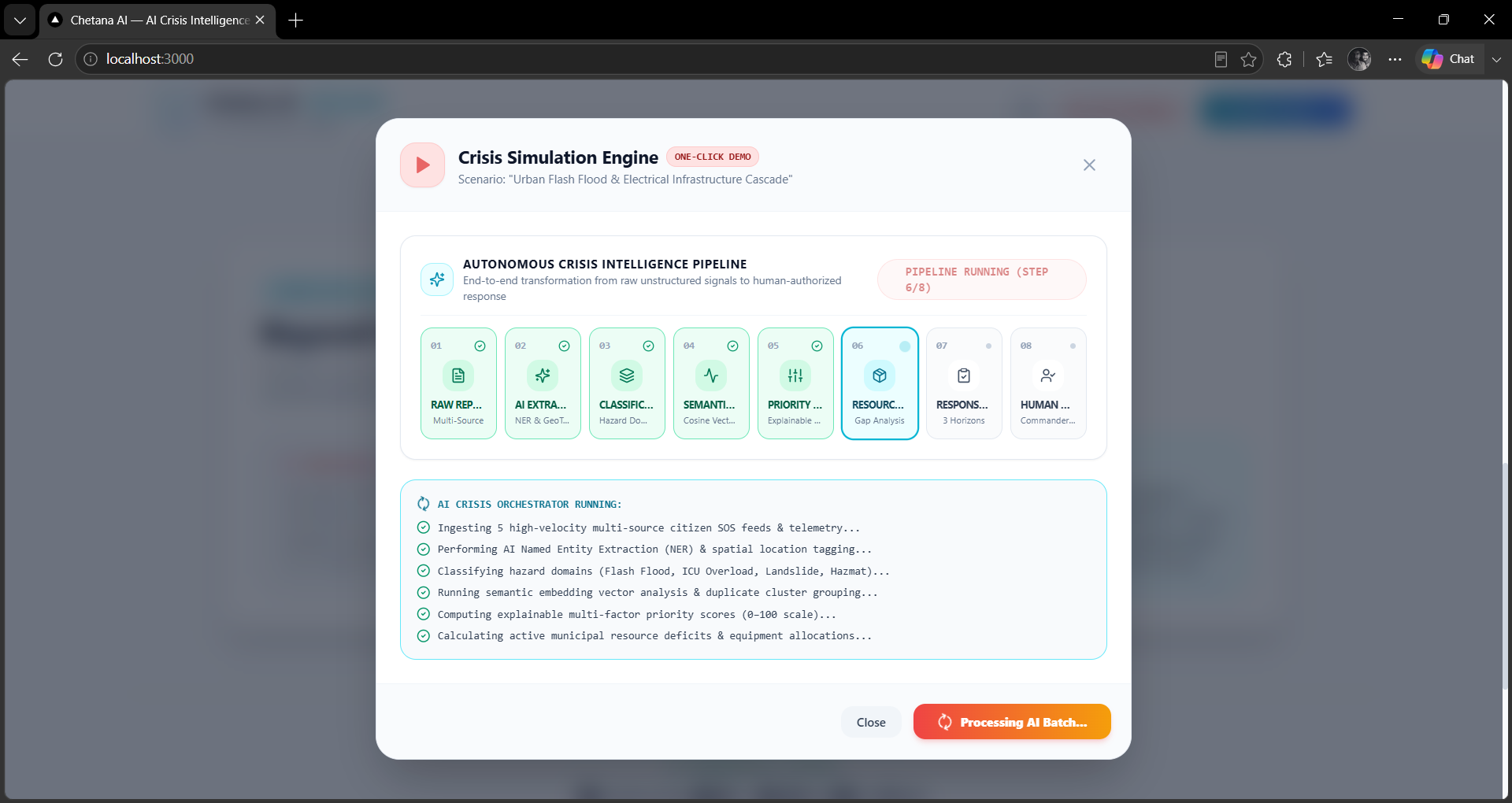
We created a synthetic multi-hazard crisis simulation that allows judges to see the complete pipeline in action: reports enter the system, AI analyzes them, incidents are prioritized, related reports are detected, resource gaps are identified, and a response plan is generated.
What We Learned
One of our biggest lessons was that an effective AI application is not just about generating intelligent text. The surrounding system matters just as much.
We learned how to combine AI outputs with deterministic scoring, structured data, semantic similarity, visualization, and human review. This helped us make AI recommendations more transparent and useful rather than treating the model as a black box.
We also learned the importance of designing for failure. A crisis intelligence platform cannot depend on a single API call working perfectly during a demonstration, so we built a reliable fallback mode while keeping the architecture ready for real AI inference.
Challenges We Faced
The biggest challenge was converting unpredictable, unstructured reports into consistent information that the rest of the application could use.
We addressed this by using structured AI outputs and separating the AI reasoning layer from deterministic application logic.
Another challenge was preventing duplicate reports from appearing as separate emergencies. We implemented semantic similarity using embeddings and cosine similarity so that reports describing the same event can be identified as related.
We also had to balance AI autonomy with responsible decision-making. Chetana therefore uses a human-in-the-loop approach: AI can analyze, prioritize, and recommend, but a human remains responsible for approving or escalating a response.
Why Chetana AI?
Chetana AI is designed around a simple principle:
Sense the signal. Understand the situation. Prioritize the response.
We believe the future of crisis response is not about replacing human decision-makers with AI. It is about giving them better awareness of complex situations when every second matters.
Chetana AI turns fragmented information into actionable intelligence — helping humans understand not only what happened, but what matters next.
Built With
- ai
- css
- embeddings
- gemini
- generative
- leaflet.js
- learning
- machine
- next.js
- postgresql
- react
- recharts
- semantic
- similarity
- supabase
- tailwind
- typescript

Log in or sign up for Devpost to join the conversation.