-
-
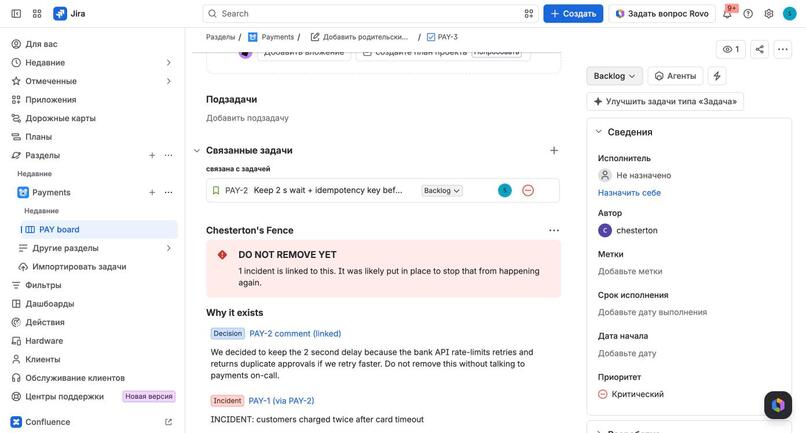
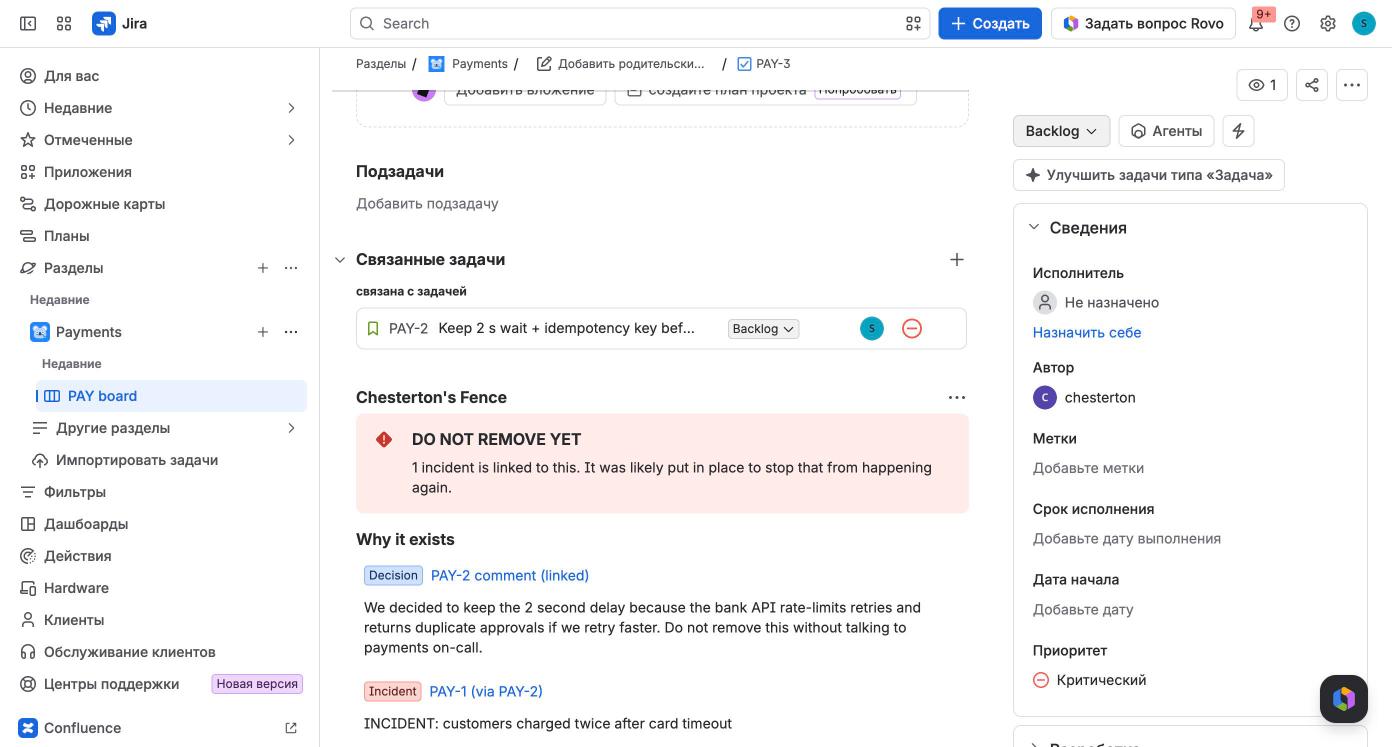
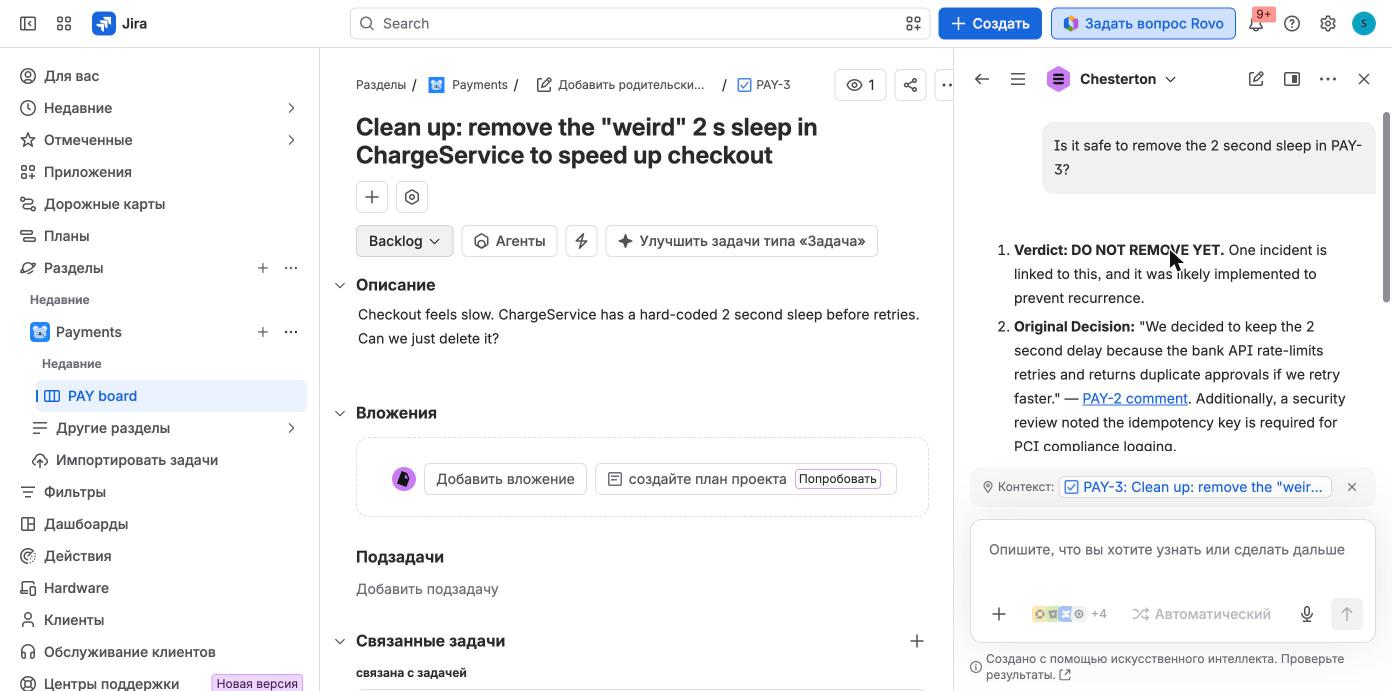
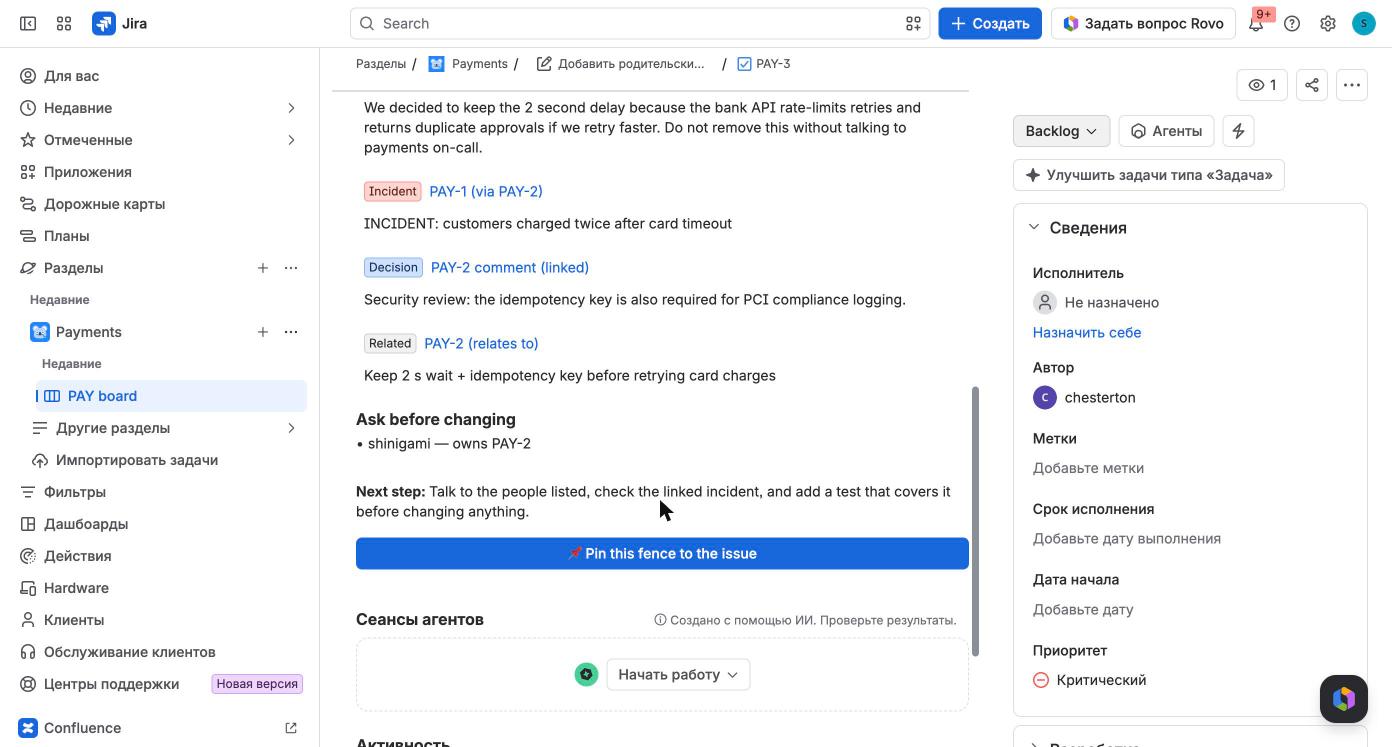
PAY-3 clean-up ticket: DO NOT REMOVE YET. Traced two hops to incident PAY-1 (customers charged twice).
-
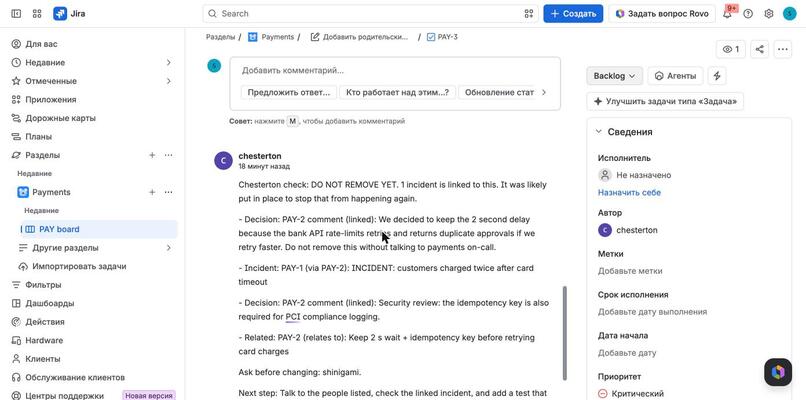
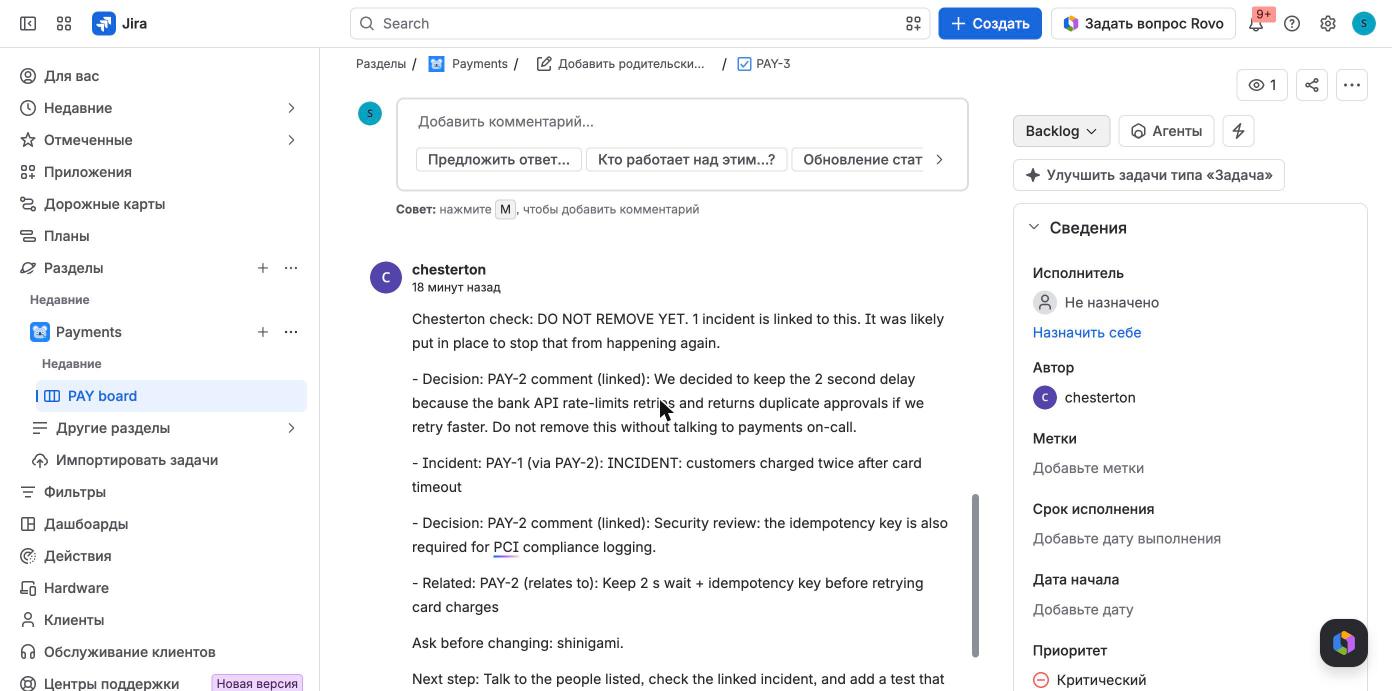
One click pins the fence to the issue as a comment, so the next person sees it.
-
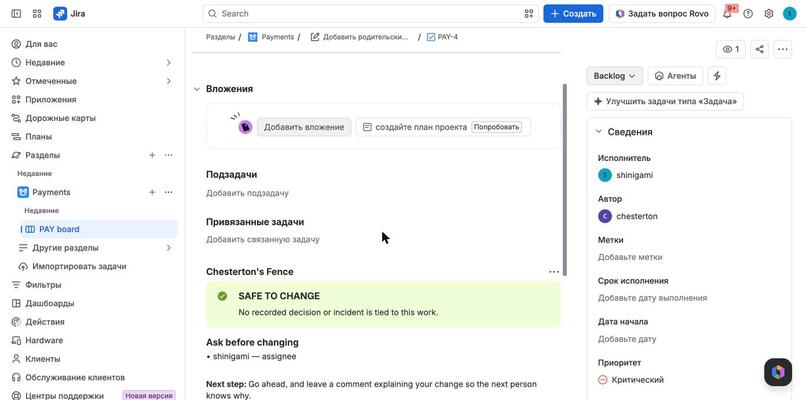
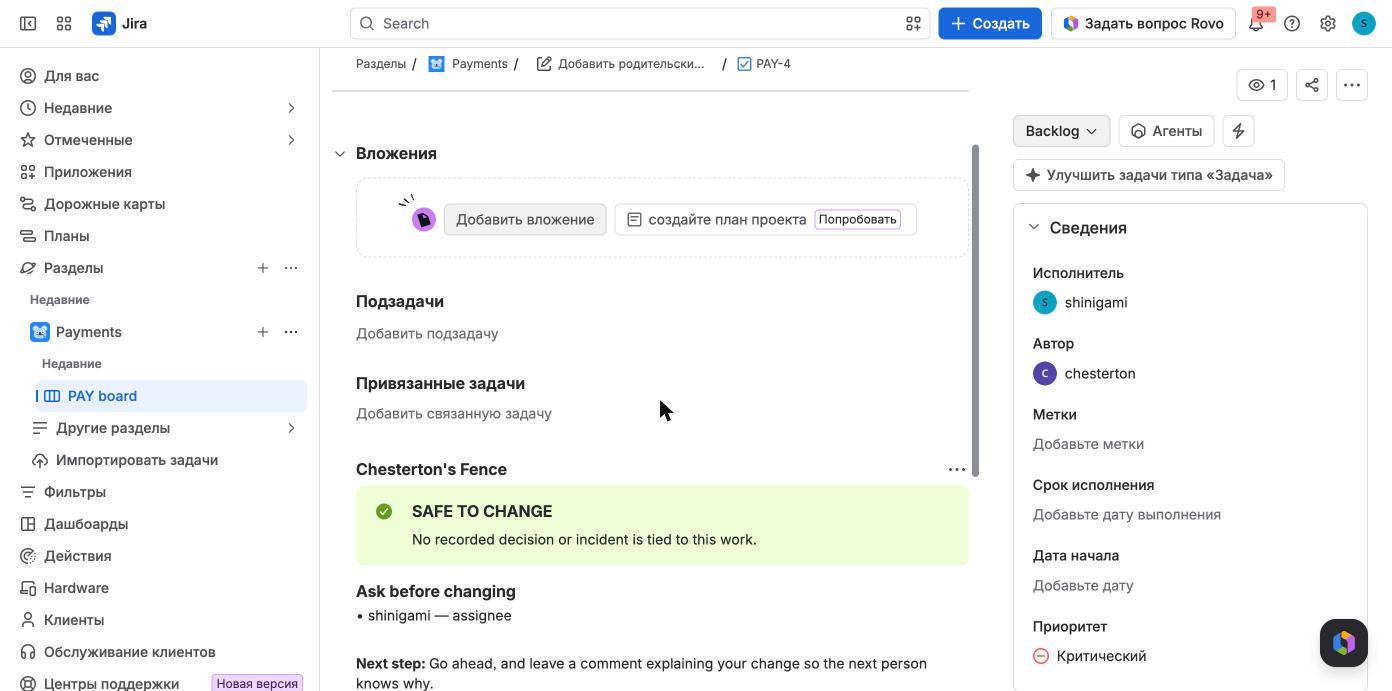
PAY-4: SAFE TO CHANGE, no decision or incident found.
-
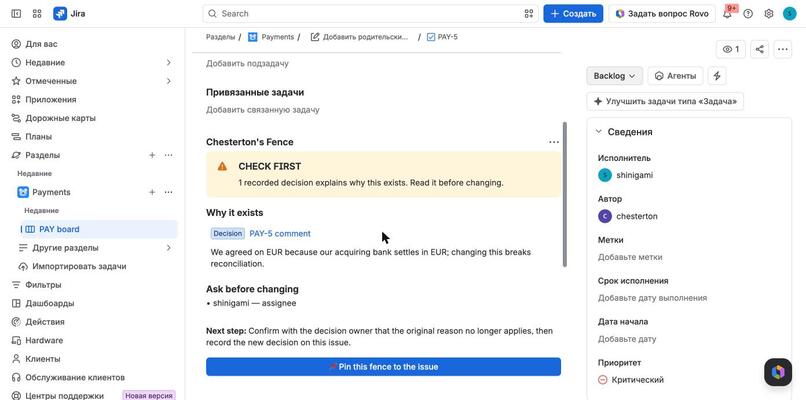
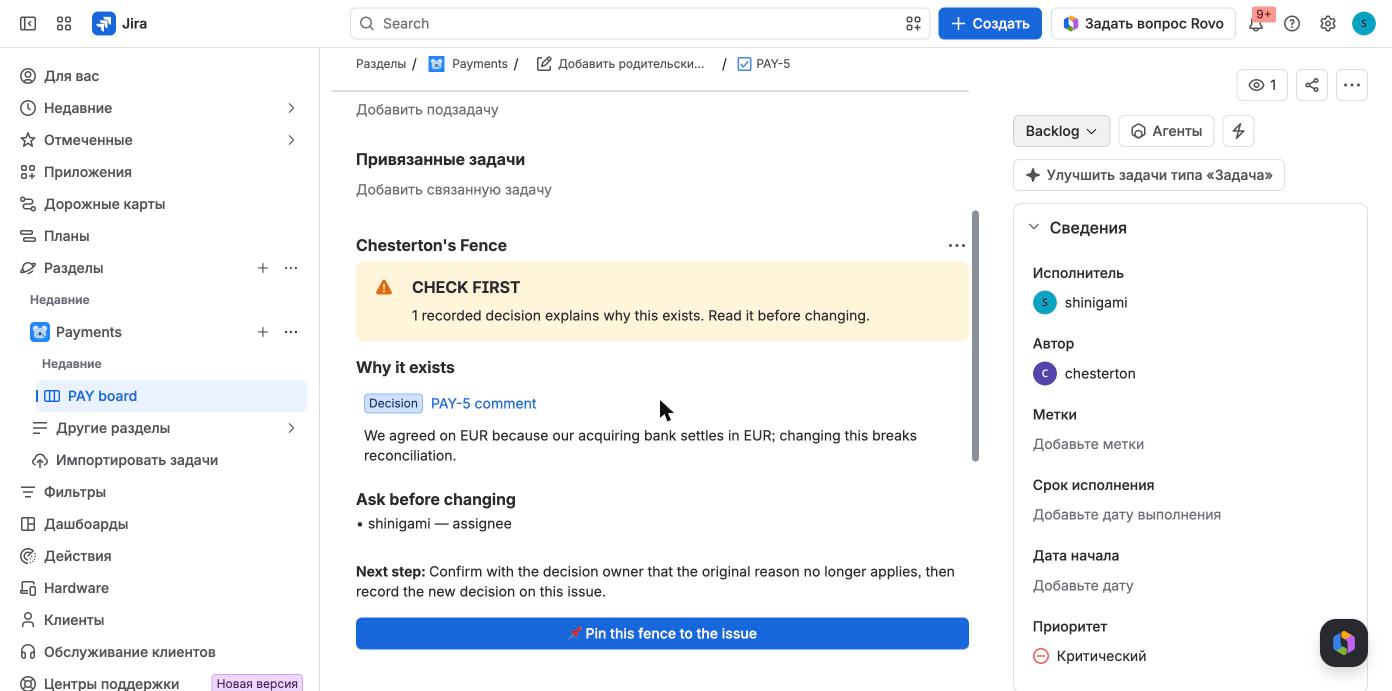
PAY-5: CHECK FIRST, with the recorded EUR decision quoted.
-
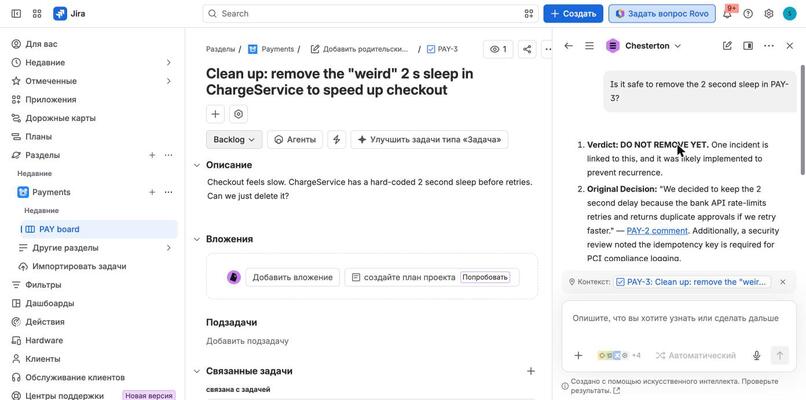
Chesterton Rovo agent: "Is it safe to remove the 2 second sleep in PAY-3?" answered with cited sources.
-
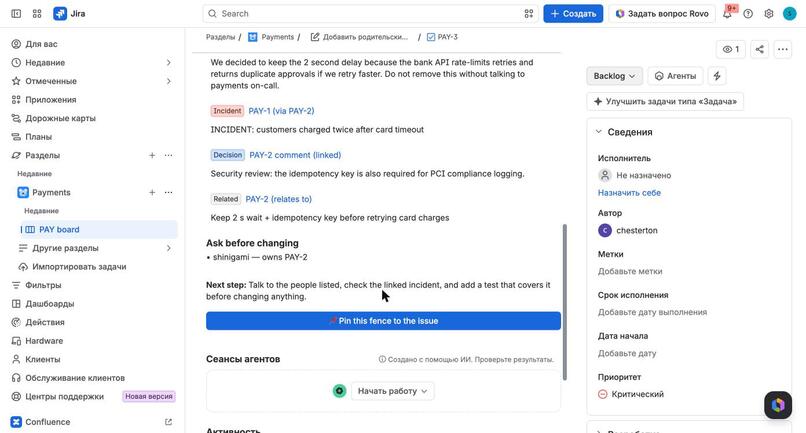
Every piece of evidence links to its source, plus who to ask and a safe next step.
-
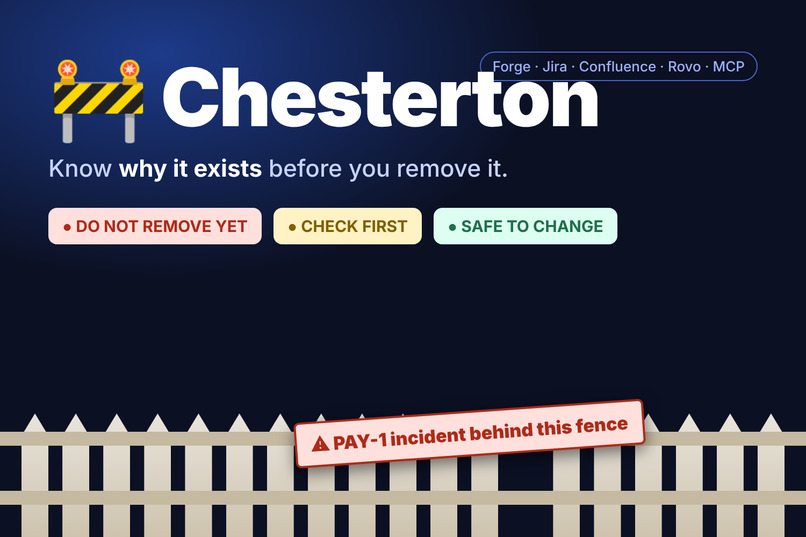
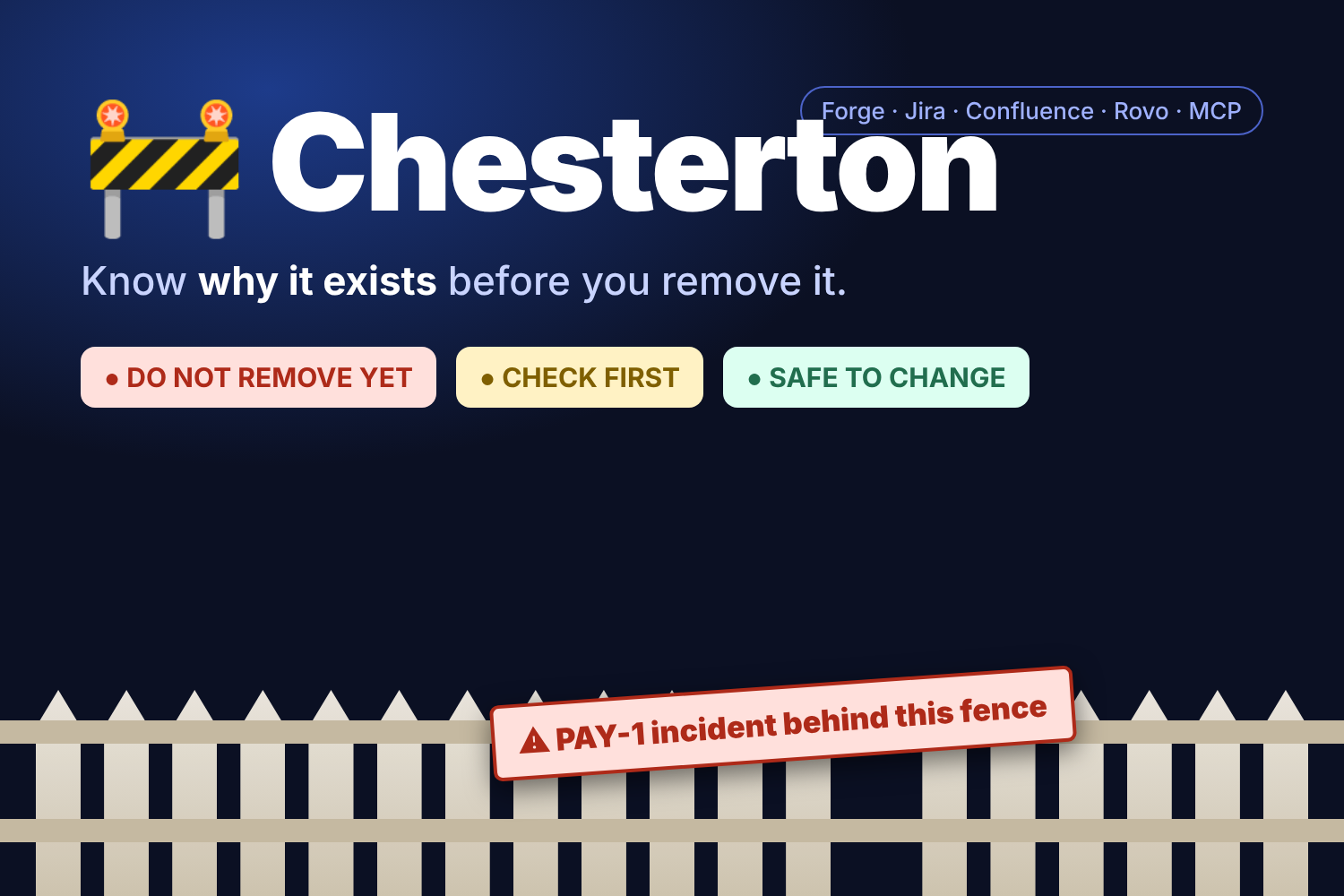
Chesterton: know why it exists before you remove it.
-
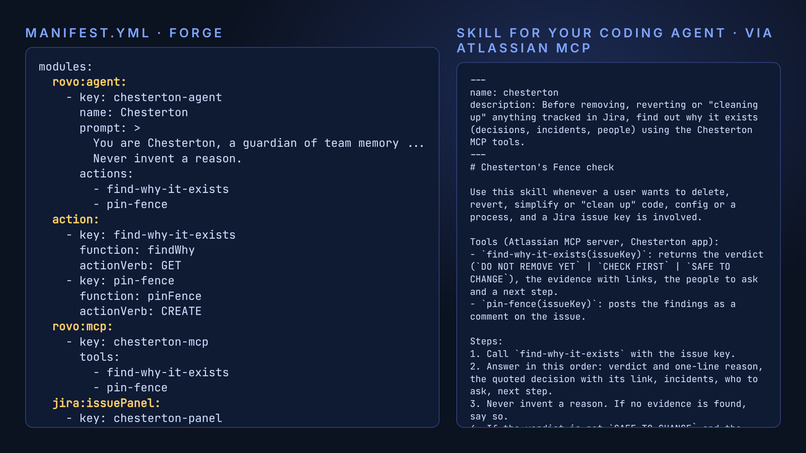
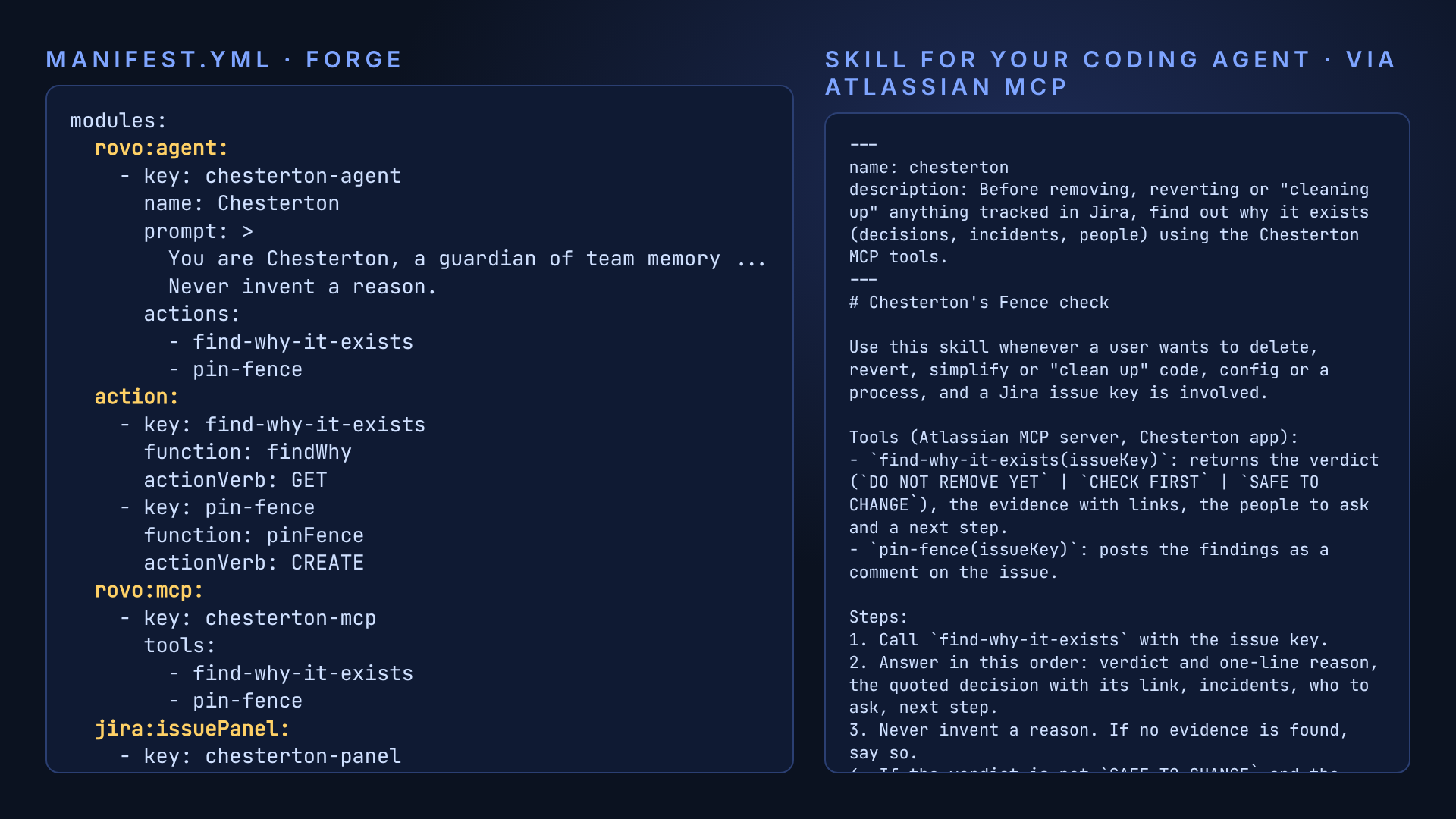
Forge manifest (rovo:agent, actions, rovo:mcp) and the open skill file for external coding agents.
Inspiration
G. K. Chesterton wrote: don't take down a fence until you know why it was put up.
Every software team has fences:
- a hard-coded 2-second sleep;
- a feature flag nobody remembers;
- an approval step that "slows us down".
A new engineer opens a clean-up ticket, deletes it, and three weeks later the same production incident happens again. Usually the reason was written down. It sat in a Jira comment, a linked bug or a Confluence postmortem, and nobody had time to dig it up before changing things.
Team knowledge isn't missing. It's disconnected from the moment of change. That's exactly Codegeist 2026's theme: the right context in front of a team at the right moment.
What it does
Chesterton answers one question before anyone changes anything: why does this exist, and is it safe to remove?
- Jira issue panel: Chesterton's Fence. Every issue gets a verdict:
- 🔴 DO NOT REMOVE YET: an incident is tied to this work, directly or one link away.
- 🟠 CHECK FIRST: a recorded decision explains why it exists.
- 🟢 SAFE TO CHANGE: no decision or incident found.
Below the verdict you get:
- the evidence, with deep links to the exact comment, issue or Confluence page;
- who to ask: the people who made or explained the decision and the owners of the linked guard (bots are filtered out);
- a concrete next step.
- Two-hop reasoning. The danger is rarely on the ticket itself. In our demo, the clean-up ticket PAY-3 ("remove the weird 2 s sleep") links to a guard story PAY-2, and the guard exists because of incident PAY-1 (customers charged twice). Chesterton follows the chain and says DO NOT REMOVE YET.
- 📌 Pin this fence. One click posts the findings as a comment on the issue, so the knowledge travels with the work and the next person sees it without running anything.
- Chesterton Rovo agent.
- Ask in Rovo Chat: "Is it safe to remove PAY-3?" or "Who decided the EUR base currency and why?"
- The agent calls the
find-why-it-existsaction and answers with the verdict, the quoted decision with a link, incidents, people and a next step. - It is instructed never to invent a reason.
- It can also pin the result with the
pin-fenceaction.- Atlassian MCP server.
- The same two tools are exposed through
rovo:mcp, so a developer's own coding agent (in an IDE or CLI) can run a Chesterton check before it deletes code. - We ship an open
skills/chesterton.skill.mdthat third-party agents can load.- One-click demo data. The Jira admin page Chesterton setup creates a realistic Payments project, so judges can see it working in 60 seconds.
How we built it
- Forge app, Node.js 22 runtime, UI Kit (native render). Modules:
rovo:agent;- two
actionmodules (find-why-it-exists,pin-fence); rovo:mcp;jira:issuePanel;jira:adminPage.
- Context collection (
collect.js).- Via
requestJira: the issue, its comments and links, and for up to 5 linked issues their comments, owners and links (the second hop). - Via
requestConfluence: a CQL searchtext ~ "KEY"that finds ADRs, postmortems and runbooks mentioning the issue.
- Via
- Analysis (
analyze.js) is pure and deterministic, so the panel, the agent and the MCP tool give the same answer.- Decision language ("we decided", "because", "intentional", "do not remove") and incident language ("outage", "rollback", "postmortem", "charged twice") are scored and weighted.
- An incident needs strong evidence (a score of at least 2, or a Bug/Incident issue type), so a passing mention doesn't cause a false alarm.
- Evidence is ranked, capped at 8, and every item links to its source.
- Runs on Atlassian. The app makes no egress to external services and stores no data outside the Atlassian platform. Forge reports the deployed version as eligible for the Runs on Atlassian program.
- Tests. 10 unit tests (
node:test) cover verdict logic, two-hop chains, bot filtering, false-alarm protection and the pinned note format.
How it meets the main technology requirement
- It is built entirely on Forge.
- It integrates Jira (issue panel, admin page, REST API for issues, comments, links and comment creation), Confluence (CQL search) and Rovo (agent, actions, MCP server).
Challenges we ran into
- False alarms. The first version flagged any issue whose description mentioned the word "incident". We introduced a strength threshold and type-based detection and covered both with tests.
- The danger is one hop away. Looking only at the current issue said "SAFE" for the clean-up ticket, which was exactly the wrong answer. Adding a bounded second hop (5 neighbours) fixed it without slowing the panel.
- Bots polluting "who to ask". App-authored comments listed the app itself as a person. We now filter
accountType: appand instead surface the human owners of linked guard issues.
Accomplishments that we're proud of
- In the demo, a "harmless" clean-up ticket is correctly traced to a past double-charge incident two links away, with links to every source.
- One analysis engine serves three surfaces: the Jira panel, the Rovo agent and the MCP tools for external coding agents.
What we learned
- Context beats generation. The most useful thing the AI can do here is find and cite what the team already wrote, not guess.
- Forge's
rovo:mcpmodule turns an in-product feature into a tool that any agent can call, with Atlassian handling the auth and permissions.
What's next for Chesterton
- Bitbucket PR guard: when a pull request deletes a guarded line, comment with the fence and the people to ask.
- Teamwork Graph integration to follow decisions across Loom, Slack and Google Drive connectors.
- Fence registry: a Confluence page that lists every DO NOT REMOVE fence in a project.
- A Marketplace listing.
Built With
- confluence
- forge
- javascript
- jira
- mcp
- node.js
- rovo
- ui-kit
