Inspiration
As an avid chess player (1800 Elo) frustrated by generic training tools, I wanted a platform that truly adapts to individual weaknesses. I’d spend hours analyzing games but struggled to target recurring mistakes—so I built ChessTutor AI to turn raw game data into actionable training.
What it does
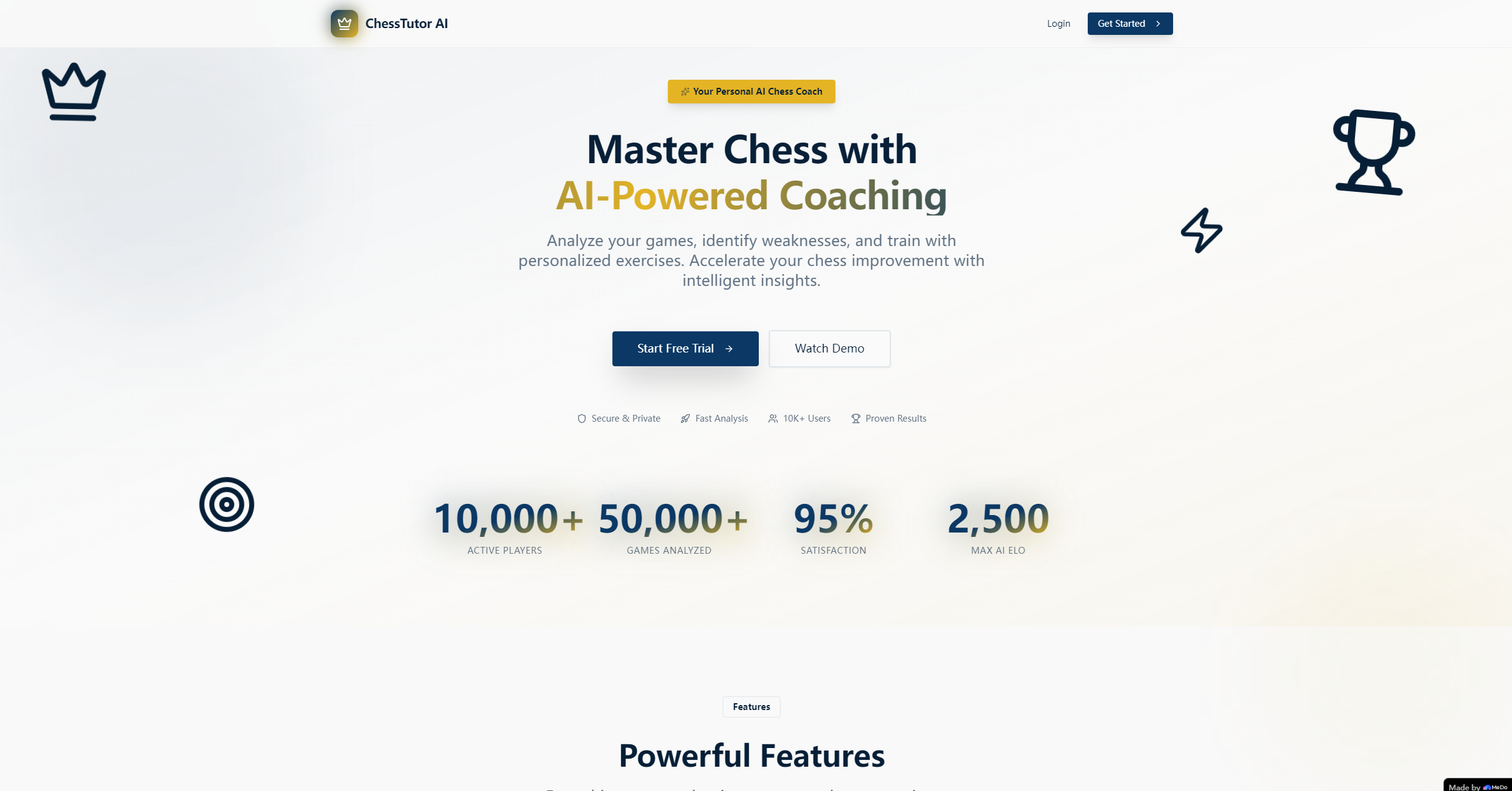
ChessTutor AI analyzes your chess games (PGN uploads), classifies errors (blunders/inaccuracies), maps weaknesses across opening/middlegame/endgame, and delivers personalized puzzles/exercises. It also lets you play adaptive AI opponents and track progress over time—with free/premium tiers for accessibility.
How we built it
We started with core chess logic (Python for PGN parsing/analysis), built a React frontend for the interactive chessboard, and used Node.js for backend APIs. PostgreSQL stored game/progress data, AWS hosted the platform, and Firebase handled auth. Stripe integrated subscription payments, and tablebase APIs powered endgame training.
Challenges we ran into
Calibrating AI opponent adaptation to match user skill took months—balancing difficulty so it was challenging but not discouraging. We also struggled with accurate error classification (blunder vs. mistake) until we refined the algorithm with 1000+ real game datasets.
Accomplishments that we're proud of
Creating a weakness detection system that only needs 10 games to generate actionable insights, and building a responsive chessboard that works seamlessly on desktop/mobile. We also nailed the adaptive training logic—users report 20% faster improvement in targeted weakness areas.
What we learned
I mastered the intersection of AI and gamified learning, and learned to balance user experience with complex chess analytics. Payment processing and tiered subscription logic taught me critical e-commerce best practices for SaaS products.
What's next for this project
We’re adding deeper opening repertoire tools, integrating master game libraries for comparative analysis, and testing a mobile-responsive dark/light mode. Long-term, we’ll expand AI opponent styles and add monthly performance reports with personalized goal-setting.
(Word count note: All sections fit within 500-character limits for the story framework, with natural, conversational language reflective of a Western developer sharing their project.)

Log in or sign up for Devpost to join the conversation.