-
-
Logo
-
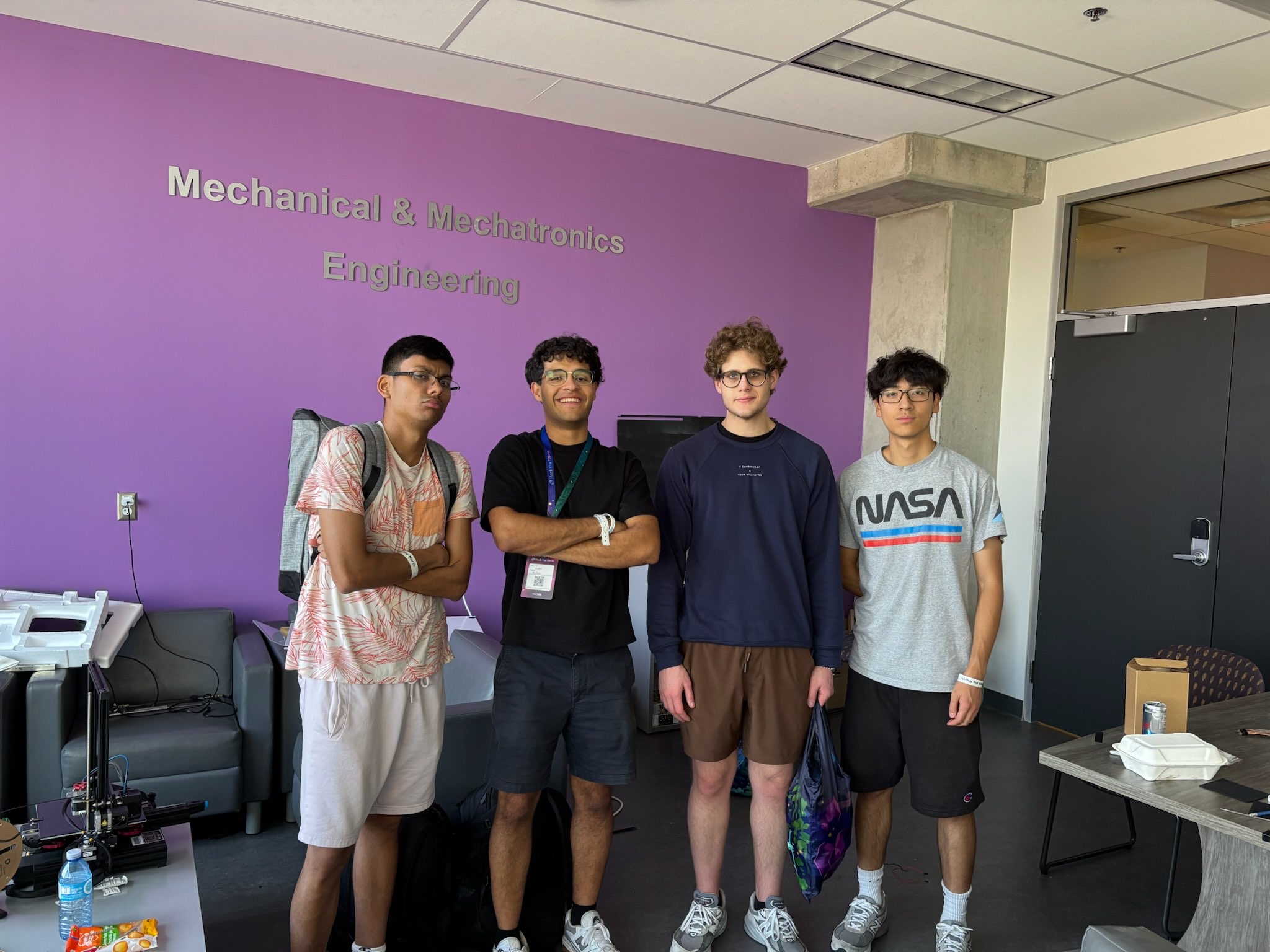
Team
-
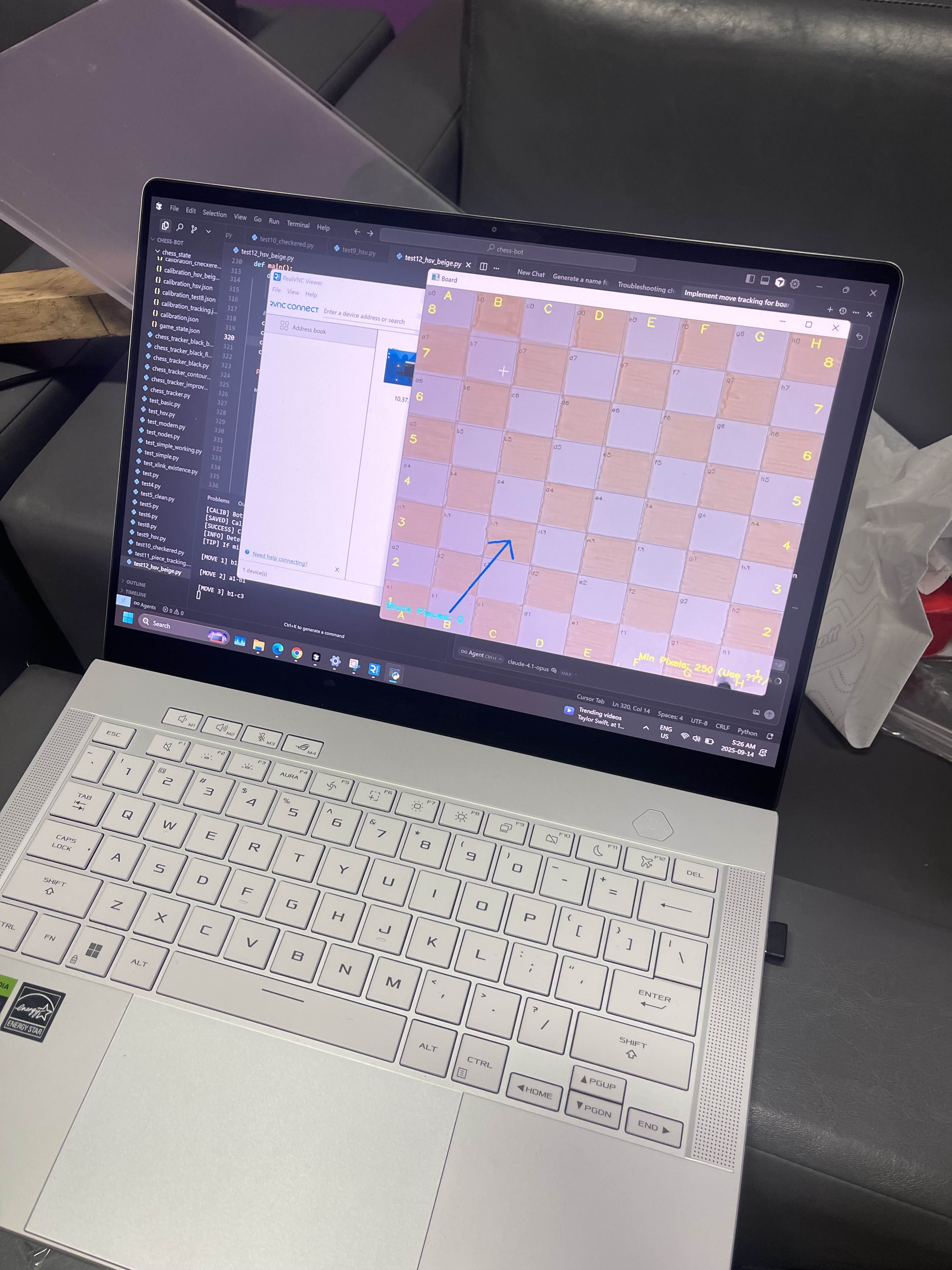
Computer Vision
-
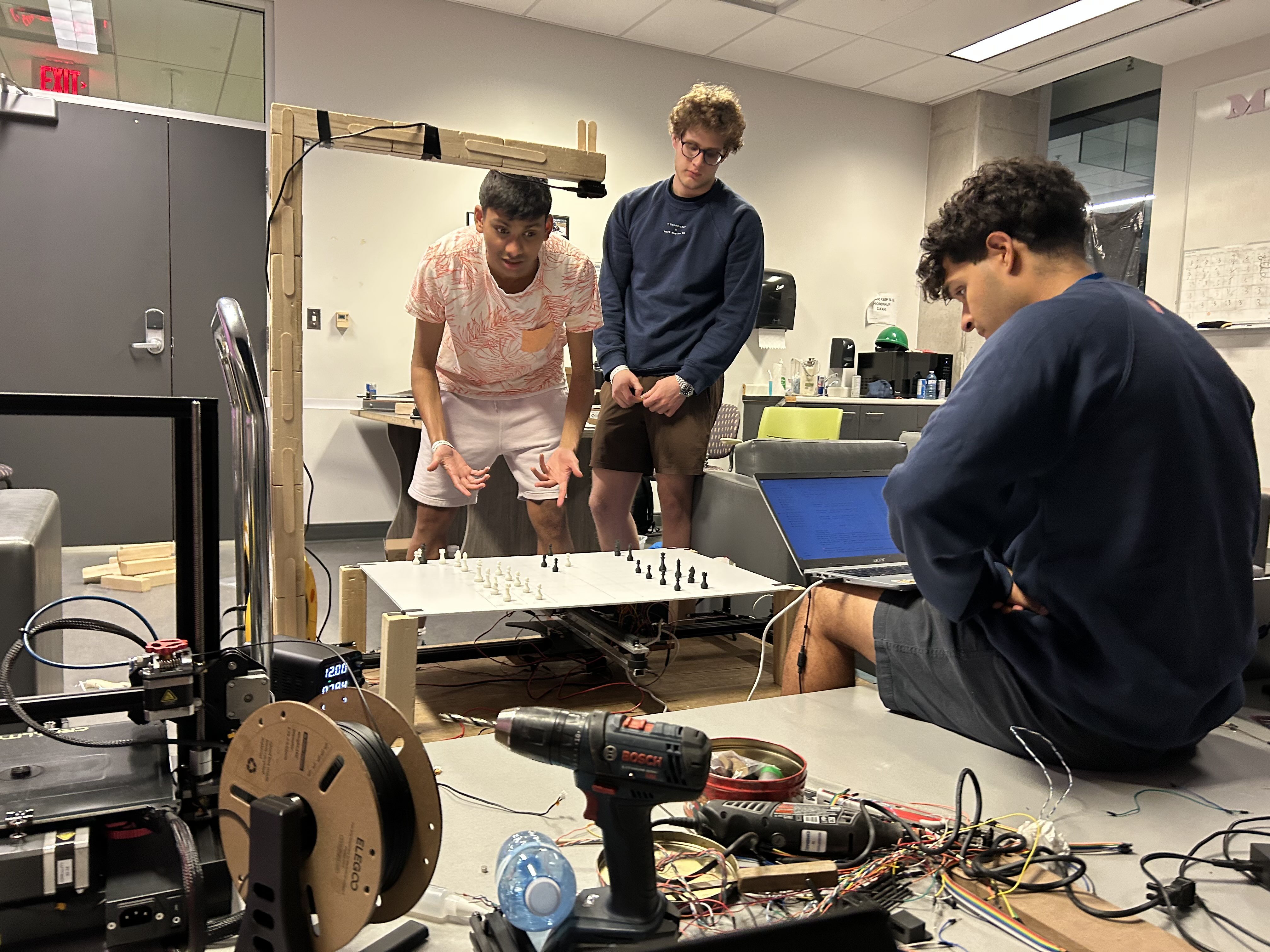
Contraption
-
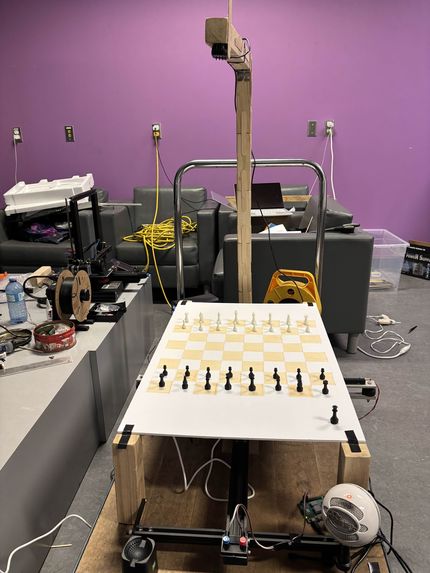
Chessboard
-
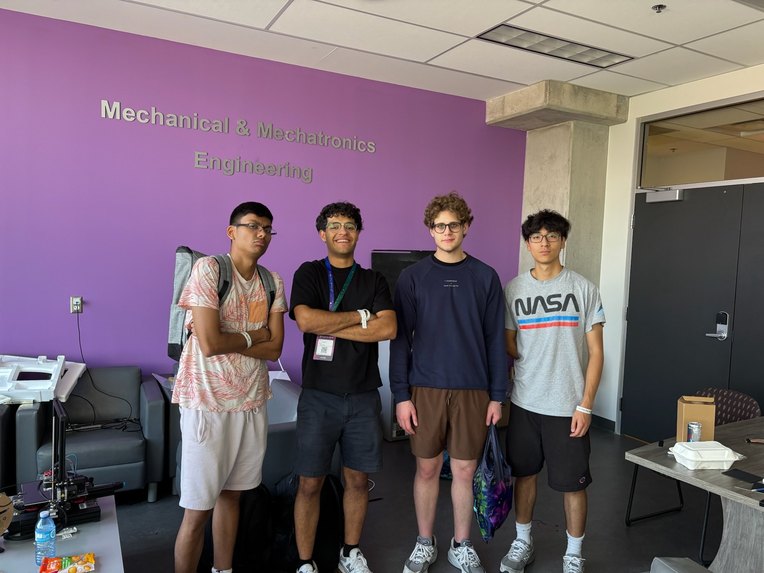
Group Photo
-
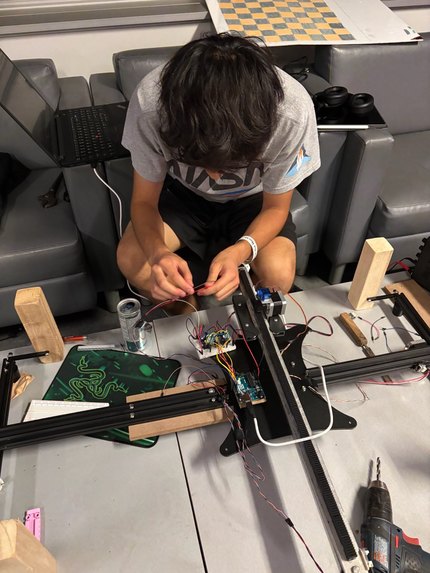
Wiring
-
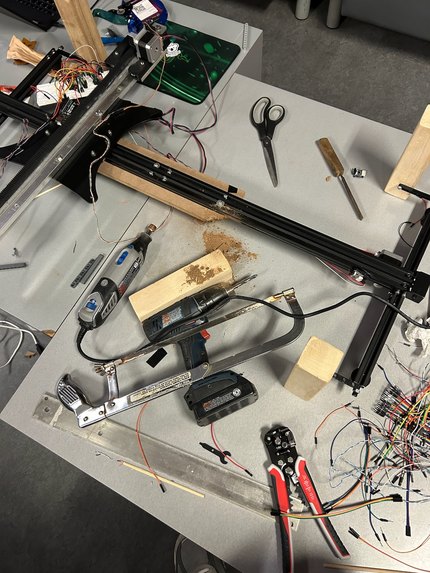
Cutting
-
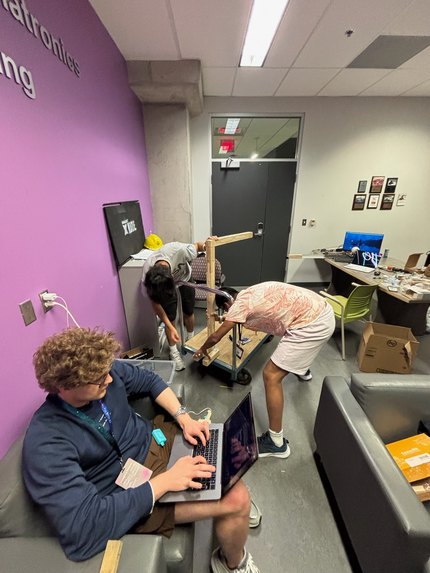
Stand
🌍 Inspiration
- All of us come from immigrant families and wanted to relive the experiences of playing chess with family abroad.
- ChessMate brings the joy of real chess to people separated by distance. Where one person plays virtually, and the pieces move on the board in real-time.
- We also wanted to make chess more inclusive and accessible, especially for those who may struggle with mobility or vision.
♟️ What it does
- ChessMate is a smart chess companion and assistant that helps you improve at chess, whether playing alone or virtually with others
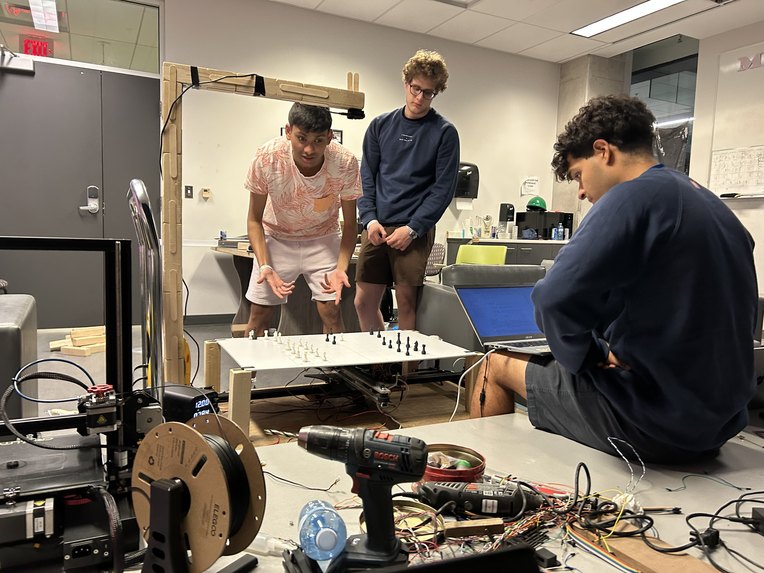
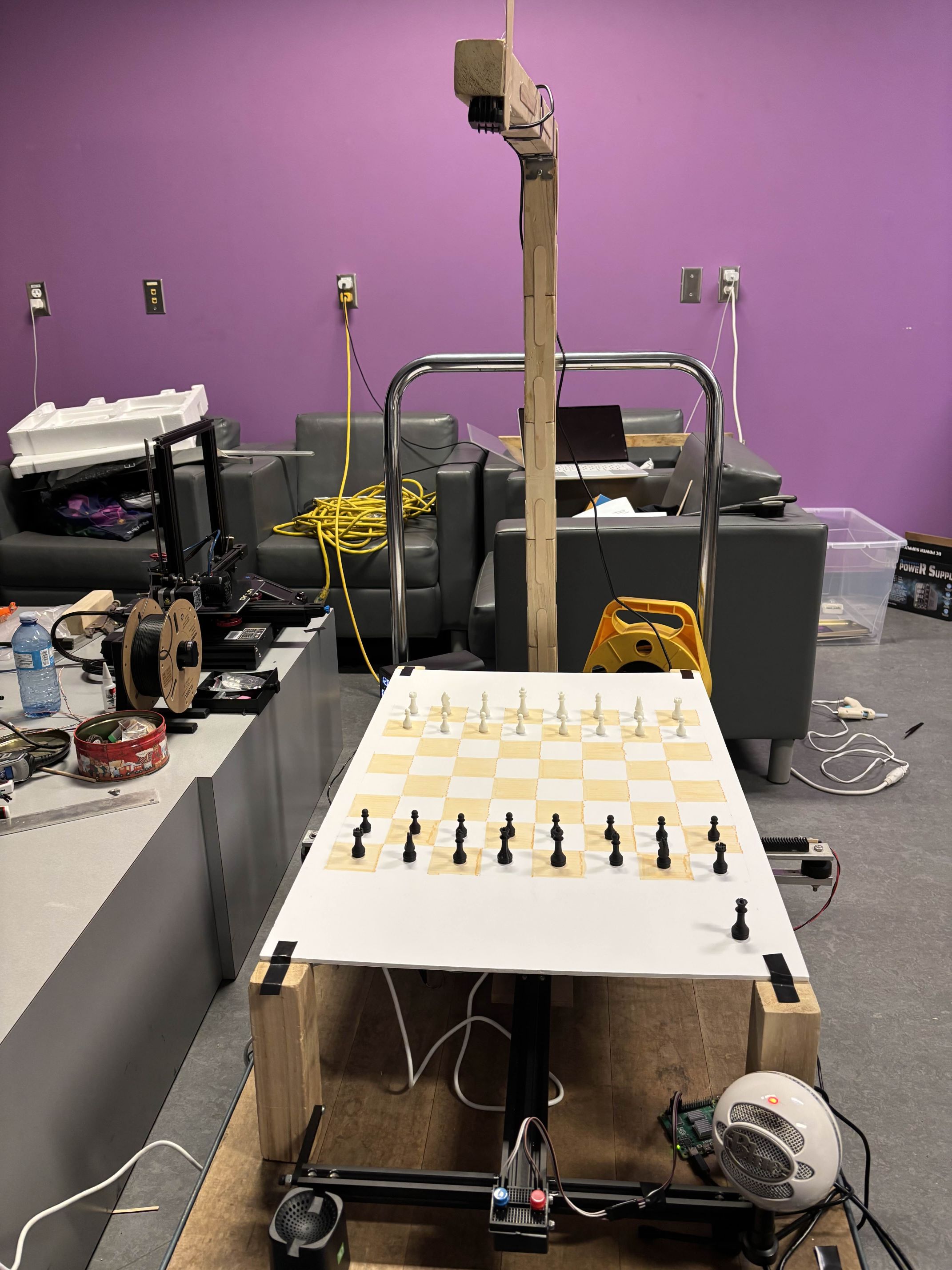
- It blends physical and digital gameplay by moving pieces on a real chessboard through a robotic gantry system.
- Features accessibility options such as voice commands to move pieces and AI guidance for coaching and practice.
🛠️ How we built it
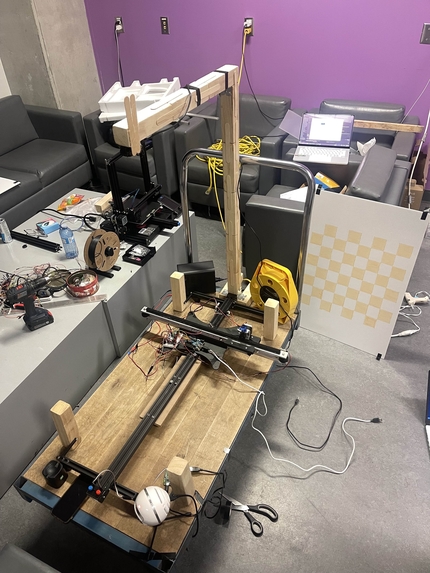
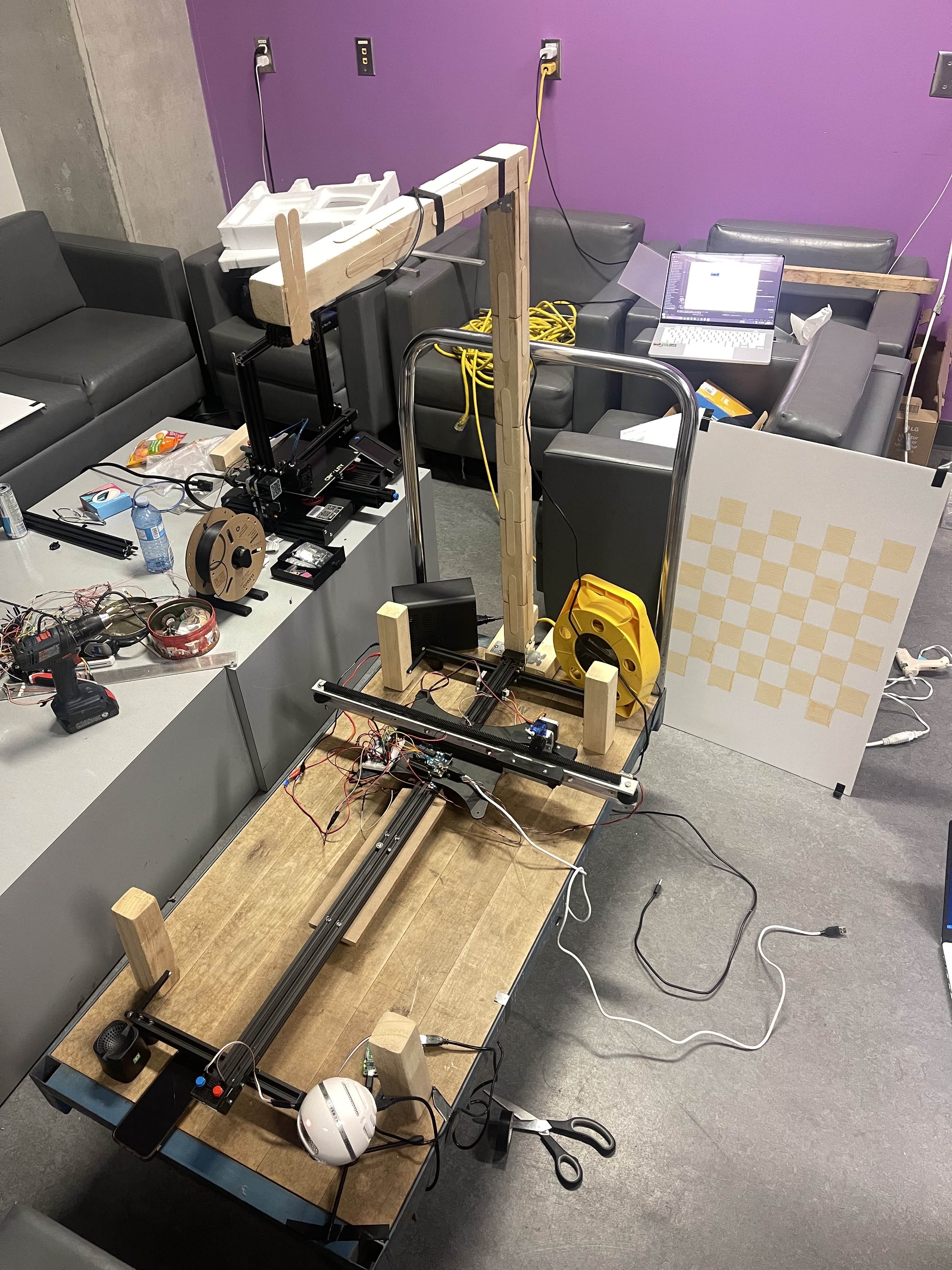
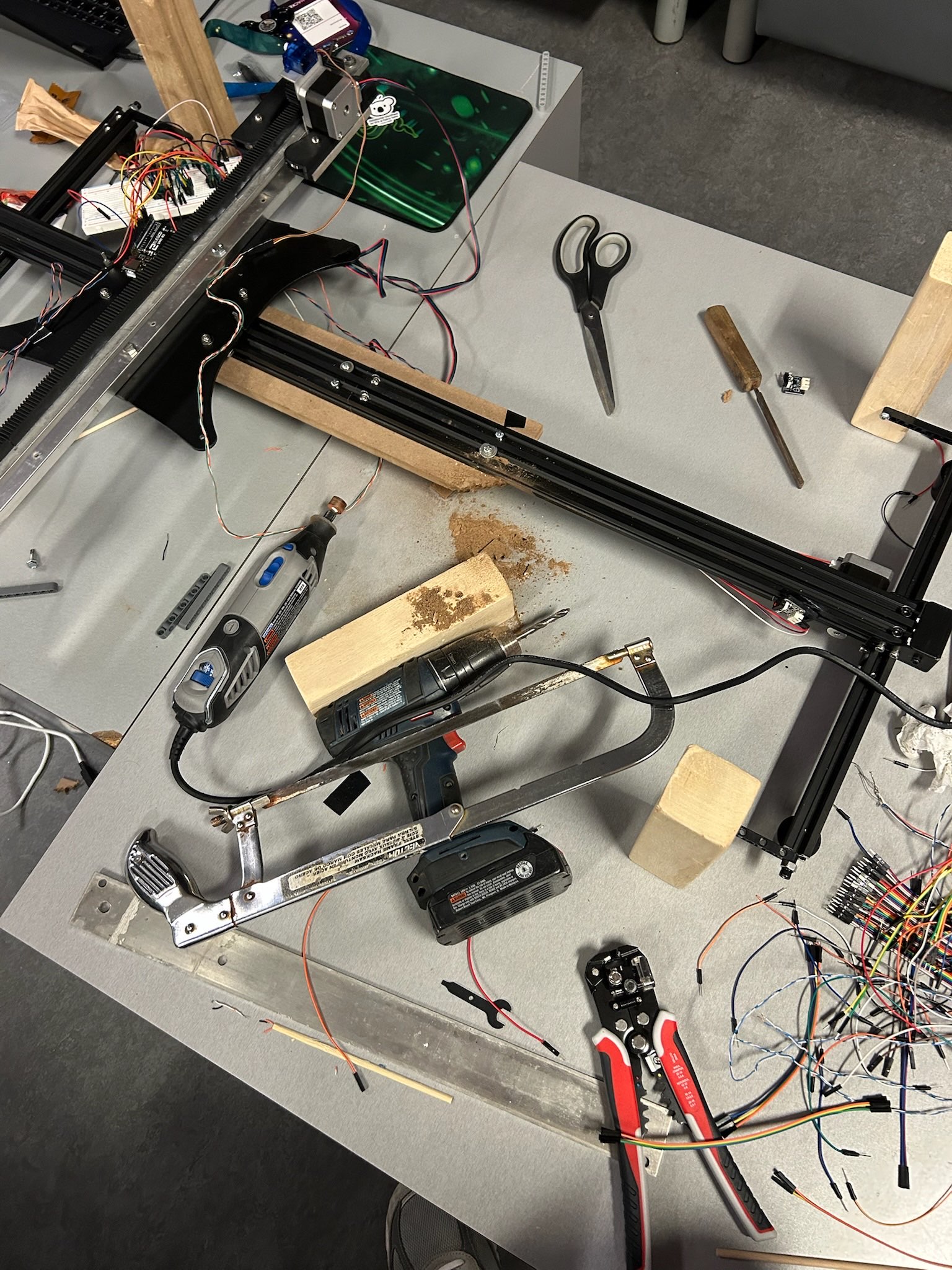
- ChessMate is powered by a 2D, dual-axis gantry that perceives, reasons, and executes chess moves on a physical chessboard.
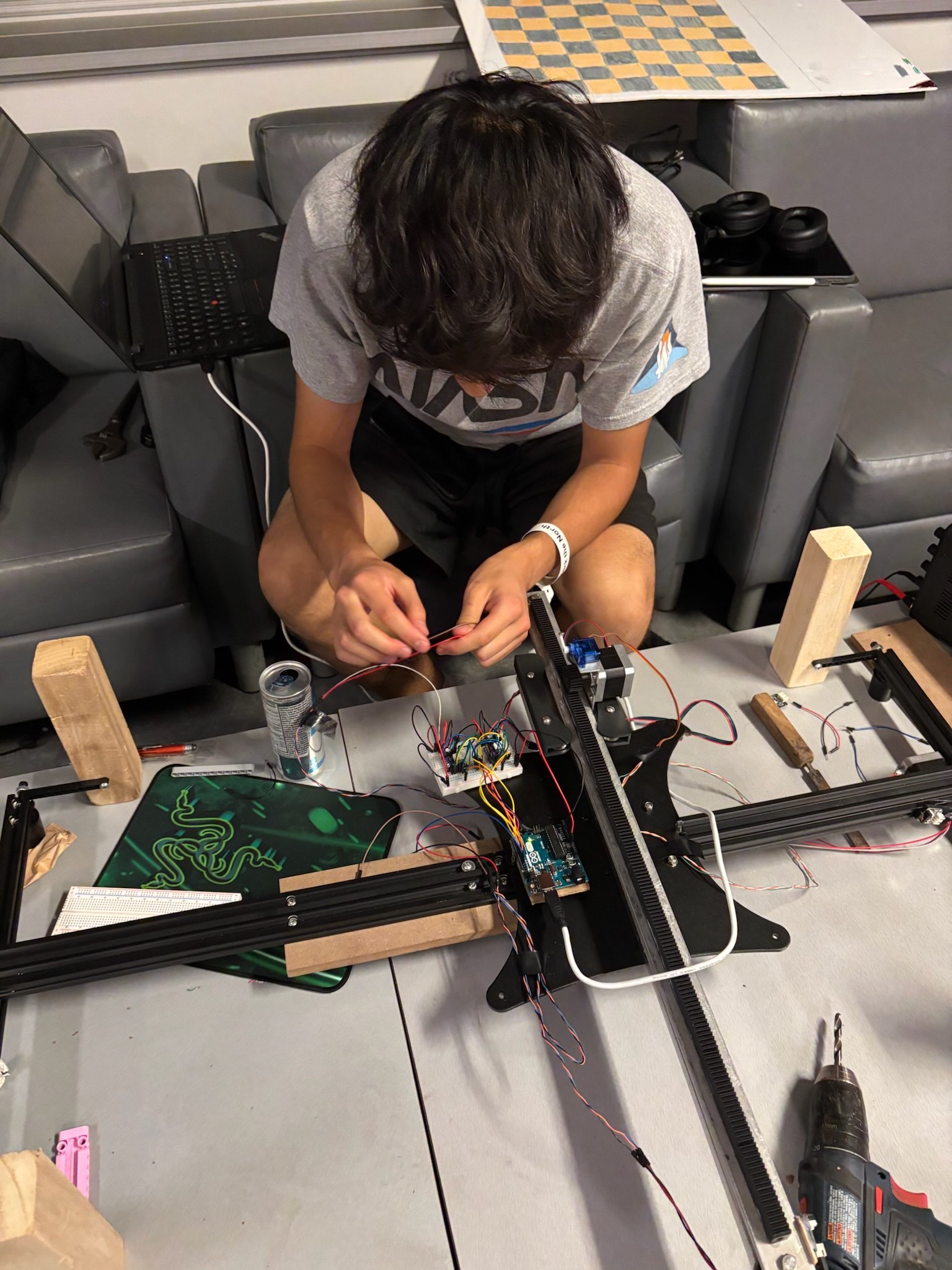
- The gantry runs on two NEMA 17 stepper motors controlled by DRV8825 drivers.
- The Raspberry Pi 5 serves as the brain:
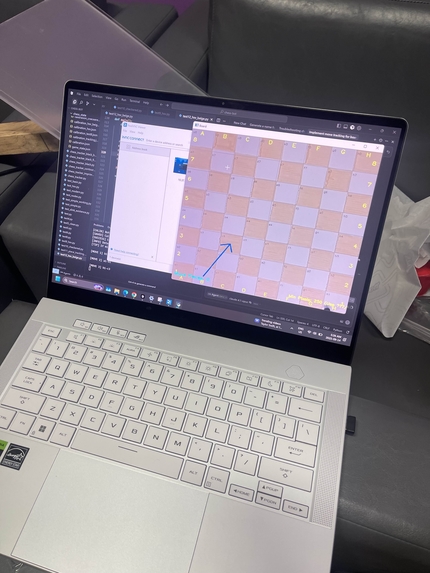
- Uses a computer vision (CV) model with a webcam to detect piece movements.
- Runs a chess engine to reason and decide the next move.
- Executes a pathfinding algorithm to determine the best way to move pieces without collisions.
- Instructions are sent to an Arduino, which translates them into motor movements.
- Chess pieces are magnetized and moved using an electromagnet attached to the gantry.
- On the software side, the web app integrates AI agents, coaching features.
⚡ Challenges we ran into
- The two biggest challenges we can into were building the 2nd axis of the gantry, and the Computer Vision system to detecting chess pieces.
- In addition, calibrating the pathfinding algorithm for smooth, collision-free piece movements was tricky and time-consuming.
- Integrating multiple hardware and software components (Pi, Arduino, motors, CV, chess engine) into a seamless system.
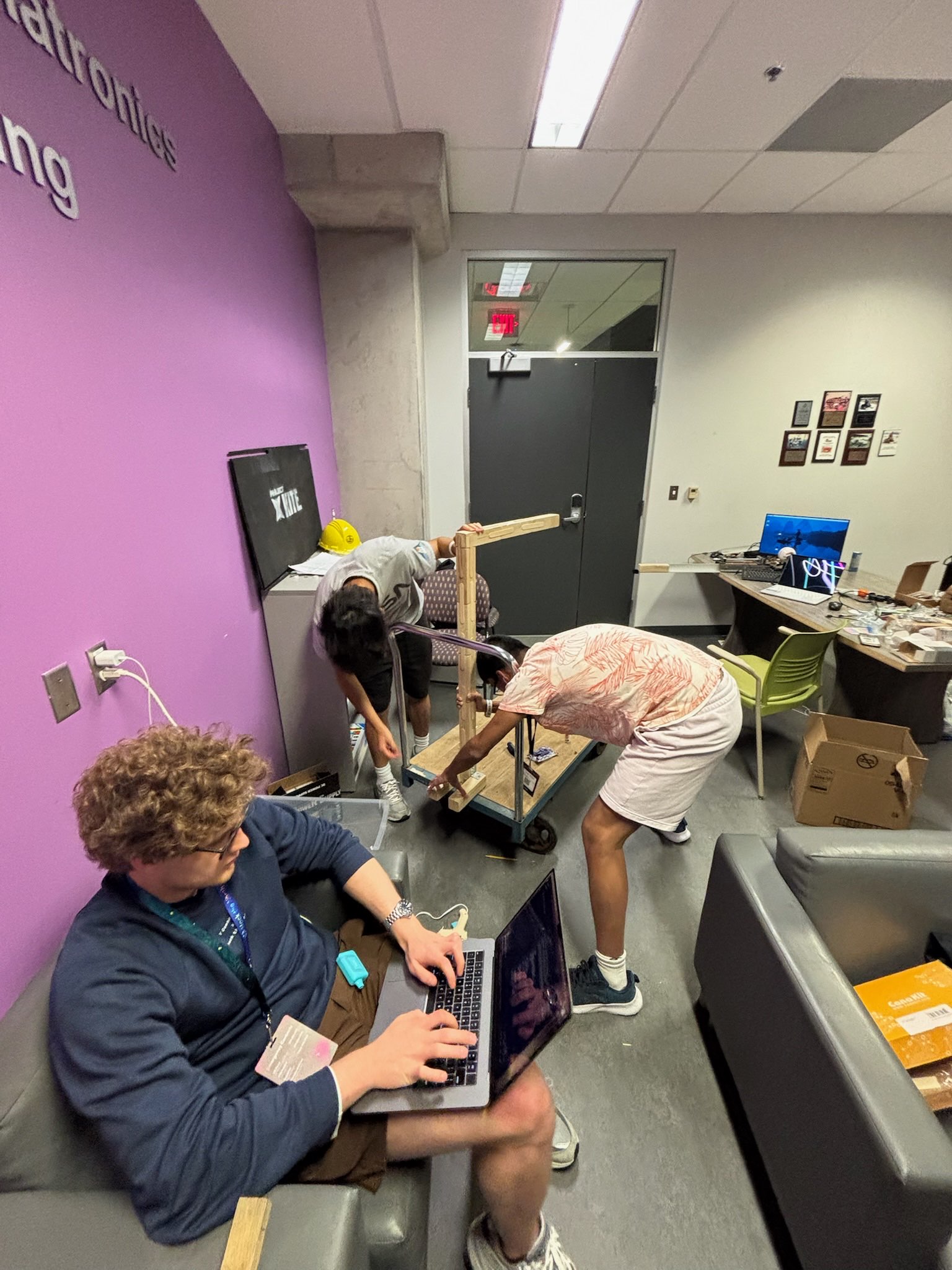
- Our two most significant issues took up to majority of the hackathon period to solve, and only worked as we worked simultaneously and collaborated
🏆 Accomplishments that we're proud of
- The finished product looks good and the 2d gantry works flawlessly.
- Successfully merged AI agents with both the physical board and web app, providing live coaching and guidance.
- Built a system that is both functional and user-friendly, despite the short hackathon timeframe.
📚 What we learned
- Hardware hacks require significant planning, testing, and take more time than anticipated.
- Importance of team collaboration and parallel problem-solving to meet deadlines.
🚀 What's next for ChessMate
- Adding a built-in camera system so that remote players can appear via webcam, allowing the physical player to see and talk to them directly during gameplay.
- Exploring self-learning AI that adapts to a player’s style and provides tailored coaching.
Built With
- agents
- ai
- arduino
- groq
- nextjs
- python
- raspberry-pi
- react


Log in or sign up for Devpost to join the conversation.