-
-

Chessify
-

Starting Position
-
Game


Inspiration
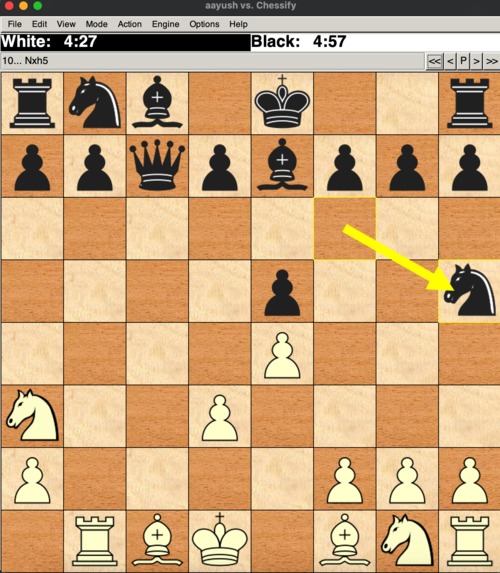
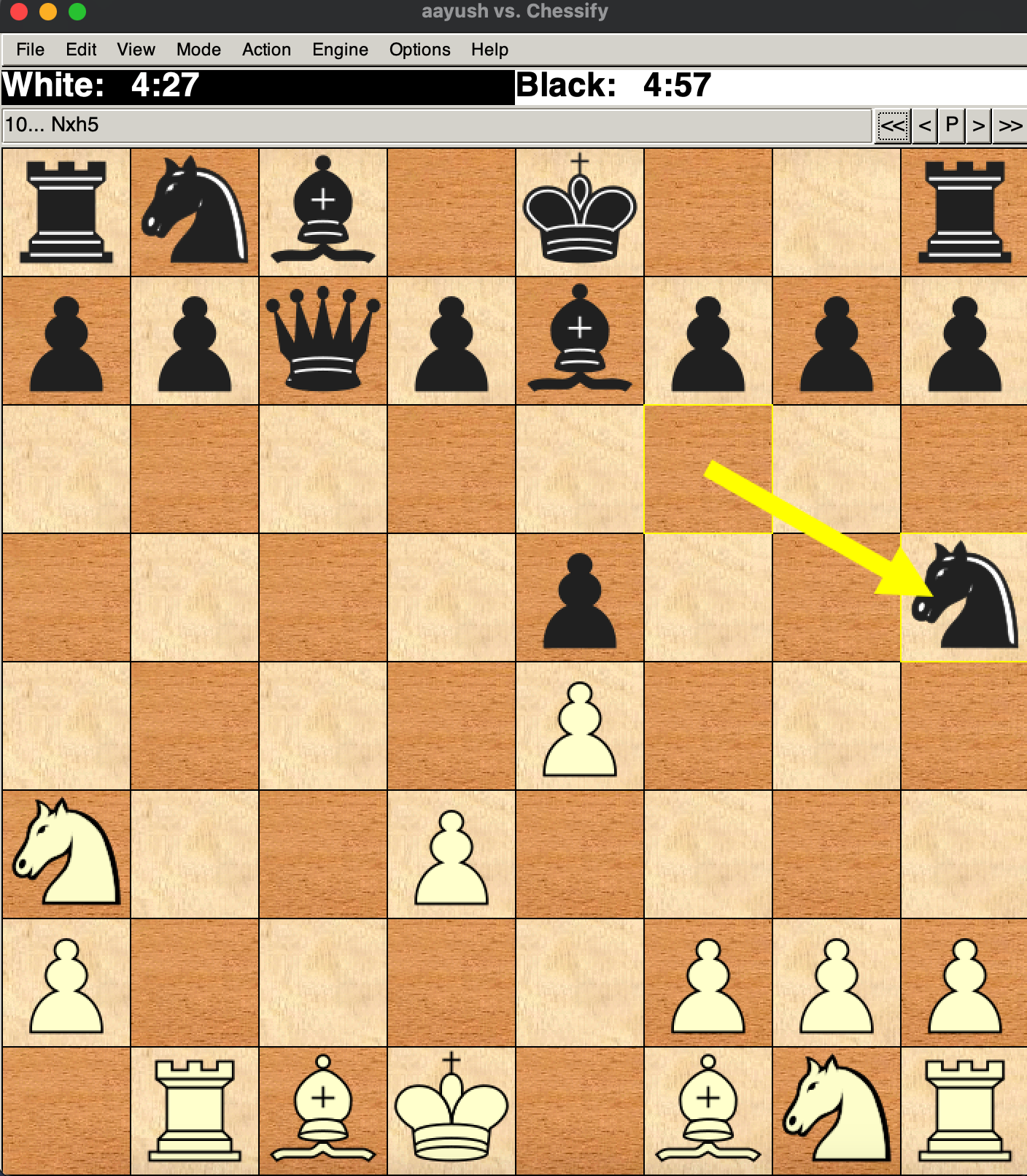
Our inspiration for this project stemmed from the desire to create an advanced chess engine that adheres to the Universal Chess Interface (UCI) protocol. We aimed to develop a robust engine that could be seamlessly integrated with XBoard for a graphical user interface (GUI), providing an engaging and challenging experience for chess enthusiasts.
What it does
Our Chess Engine project offers a powerful chess engine that follows the UCI protocol, allowing it to communicate effectively with various chess GUIs, such as XBoard. The engine processes moves, evaluates board positions, and generates optimal strategies to challenge players at different skill levels. The integration with XBoard provides a user-friendly GUI, enabling users to interact with the engine in a visually appealing and intuitive environment. The engine uses a max depth of 4 and alpha-beta pruning to find the best moves and estimates which player, either white or black, is currently winning.
How we built it
We built the chess engine using Python to ensure flexibility and ease of development. The integration with XBoard was achieved through the UCI protocol, facilitating smooth communication between the engine and the GUI. We implemented a max search depth of 4 and alpha-beta pruning to enhance move selection efficiency and accuracy. Additionally, we used a Python Makefile to streamline the build process.
Challenges we ran into
One of the primary challenges was implementing the UCI protocol correctly to ensure seamless interaction between the chess engine and XBoard. Balancing the computational complexity of the engine with performance was another significant hurdle. Additionally, ensuring that the GUI provided an intuitive and engaging user experience required careful design and testing.
Accomplishments that we're proud of
We are proud of creating a robust and efficient chess engine that can challenge players at various skill levels. The successful integration with XBoard, providing a user-friendly GUI, is a significant achievement. We are also proud of the engine's ability to use a max depth of 4 and alpha-beta pruning to find the best moves and estimate which player is currently winning. Additionally, the use of a Python Makefile simplified our build process, enhancing development efficiency.
What we learned
Throughout this project, we deepened our understanding of Python and the UCI protocol, particularly in building high-performance chess engines. We also gained valuable insights into using Python Makefile for build automation. The project highlighted the importance of efficient communication between the engine and the GUI to provide a seamless user experience. Additionally, we learned the significance of using depth-limited search and pruning techniques to improve move evaluation.
What's next for our Chess Engine
In the future, we plan to enhance the engine's capabilities by incorporating more advanced algorithms and heuristics to improve move generation and evaluation. We also aim to develop additional features such as customizable difficulty levels, real-time analysis, and support for more chess variants. Furthermore, we plan to expand the GUI functionalities, providing users with more interactive and engaging experiences.
Built With
- Python
- Python Makefile
- XBoard
- UCI Protocol
Try it out
GitHub Repo: link
Built With
- chess
- engine
- makefiles
- python
- pyyaml
- uci
- xboard


Log in or sign up for Devpost to join the conversation.