-
-
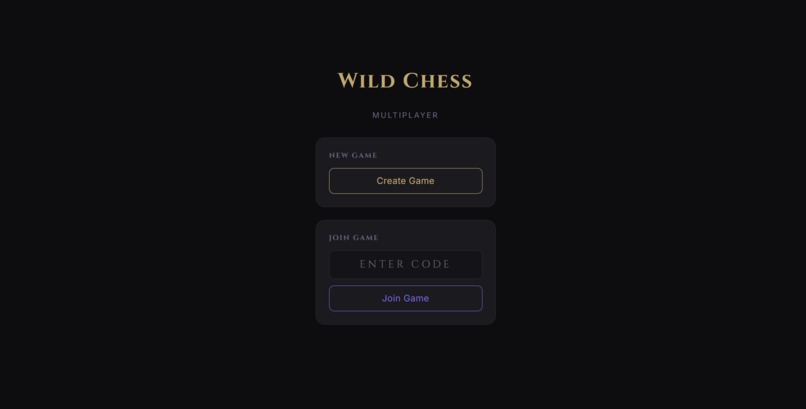
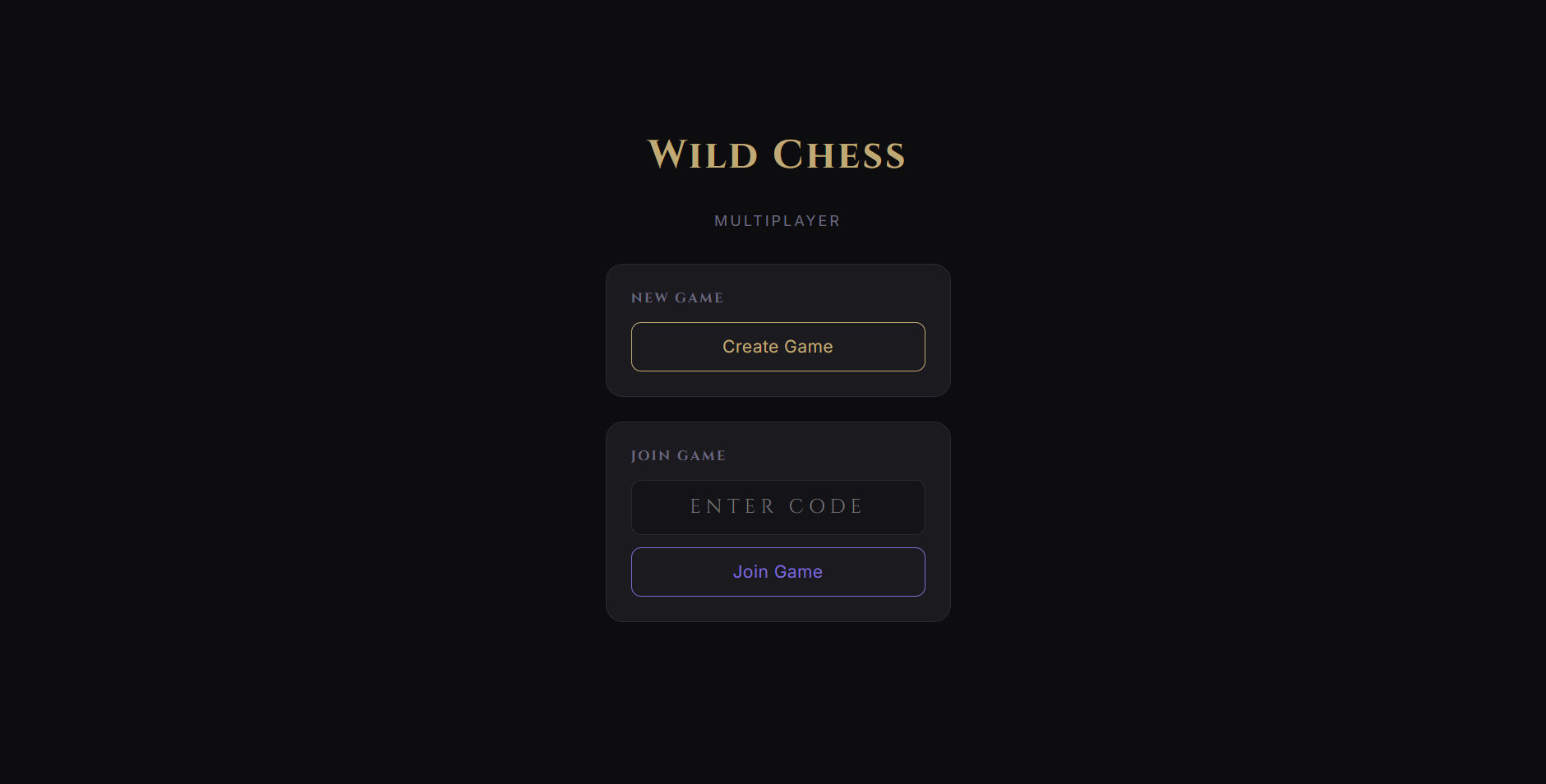
Starting Screen
-
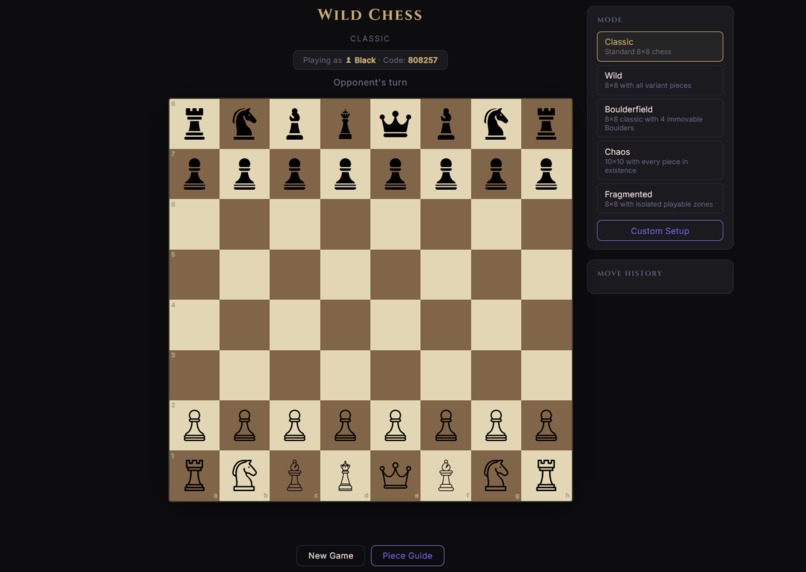
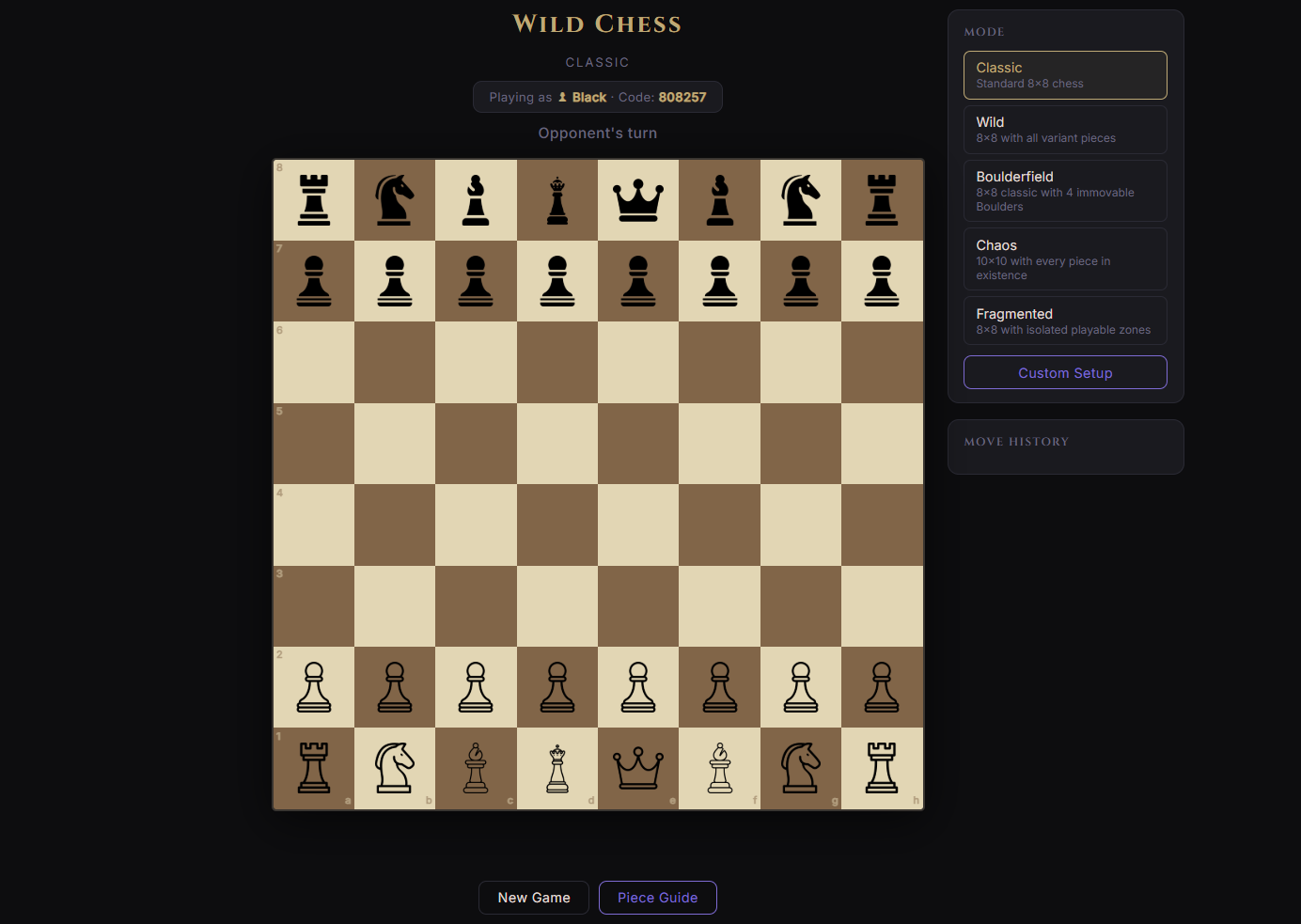
Classic 8x8 Board Set-up
-
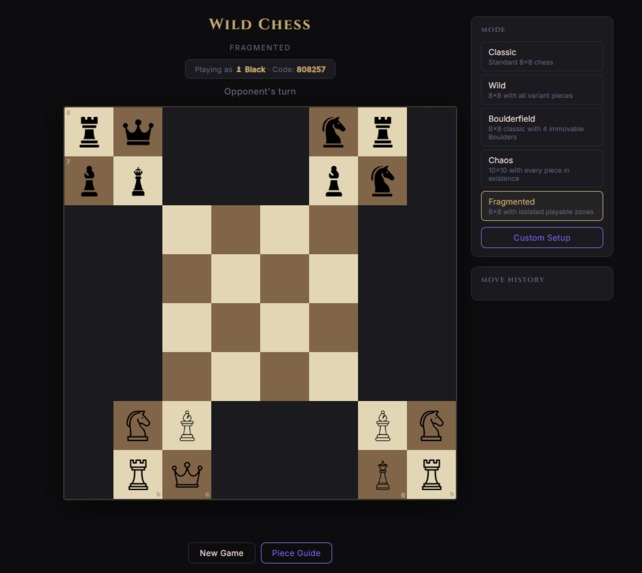
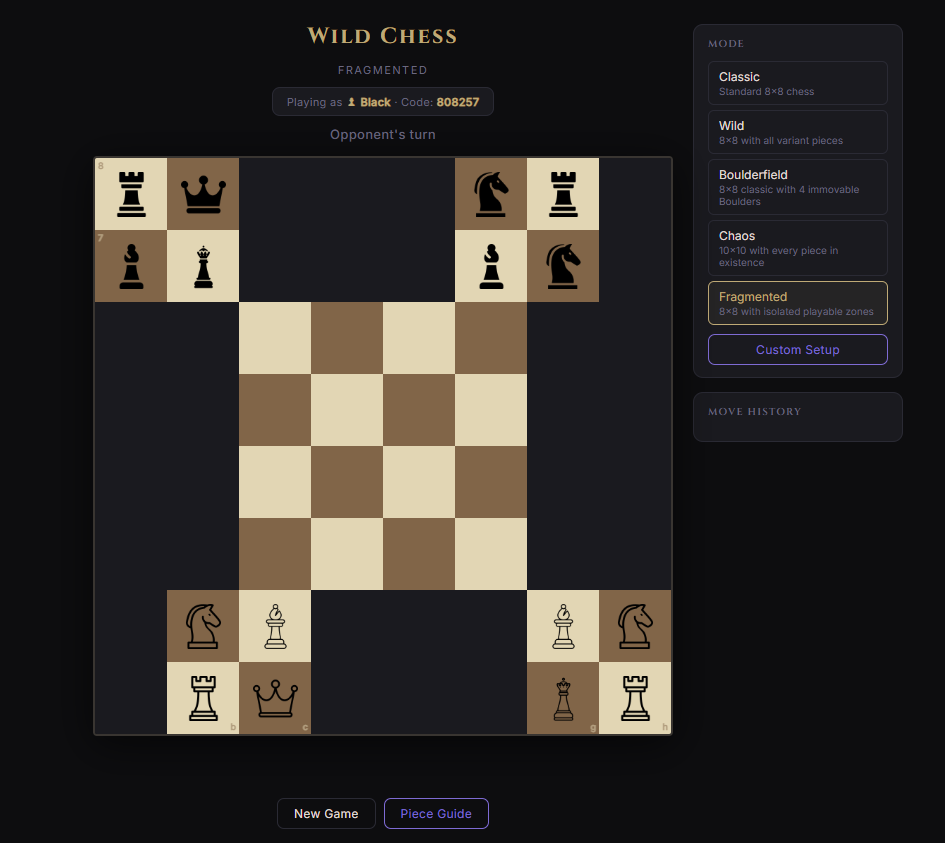
Fragmented 8x8 Board Set-up
-
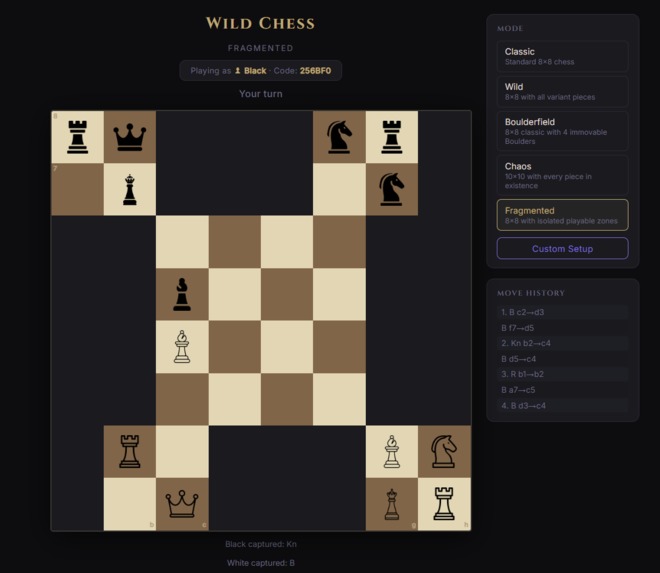
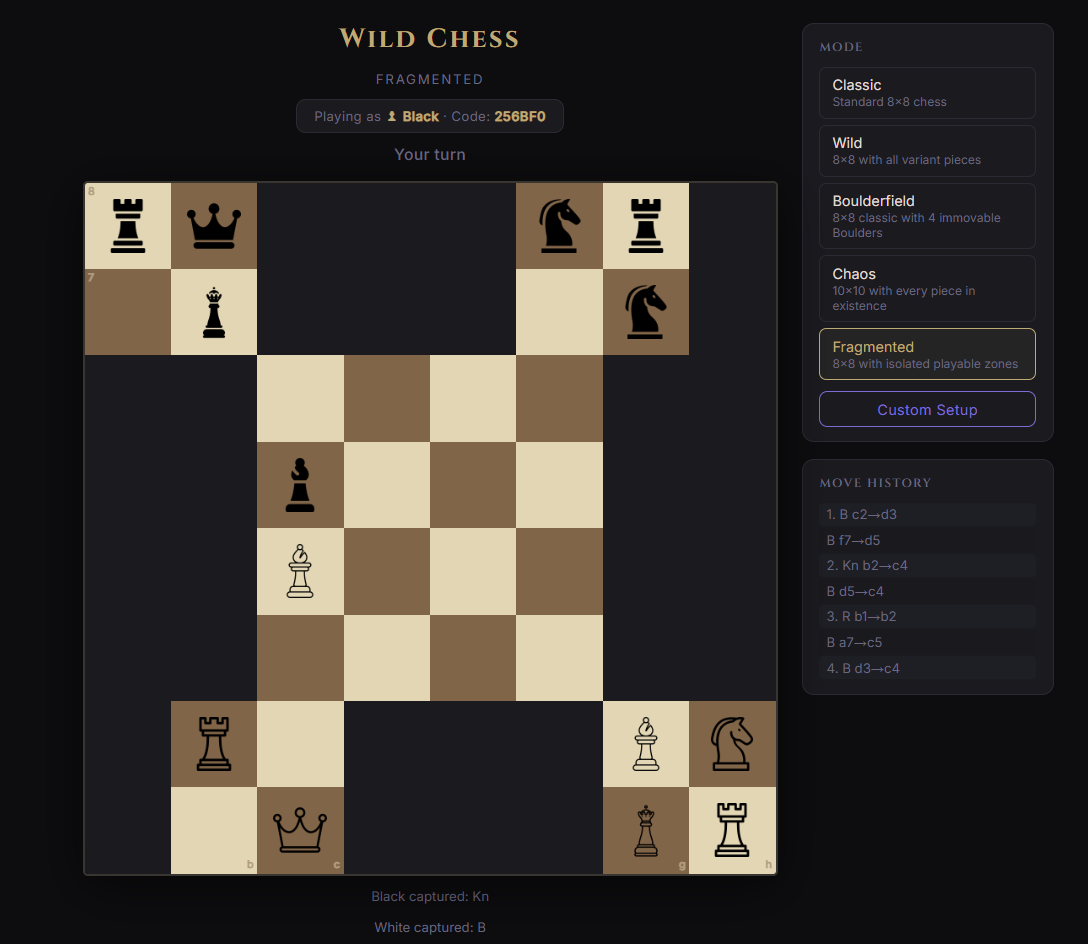
Mid-Game Fragmented Board
-
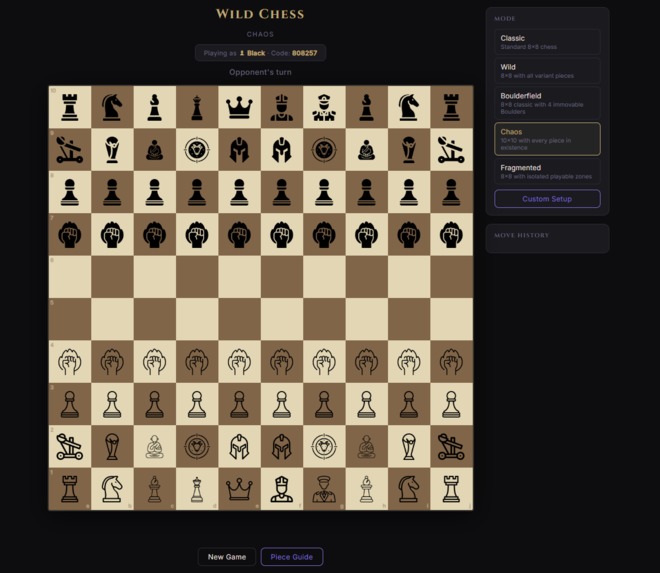
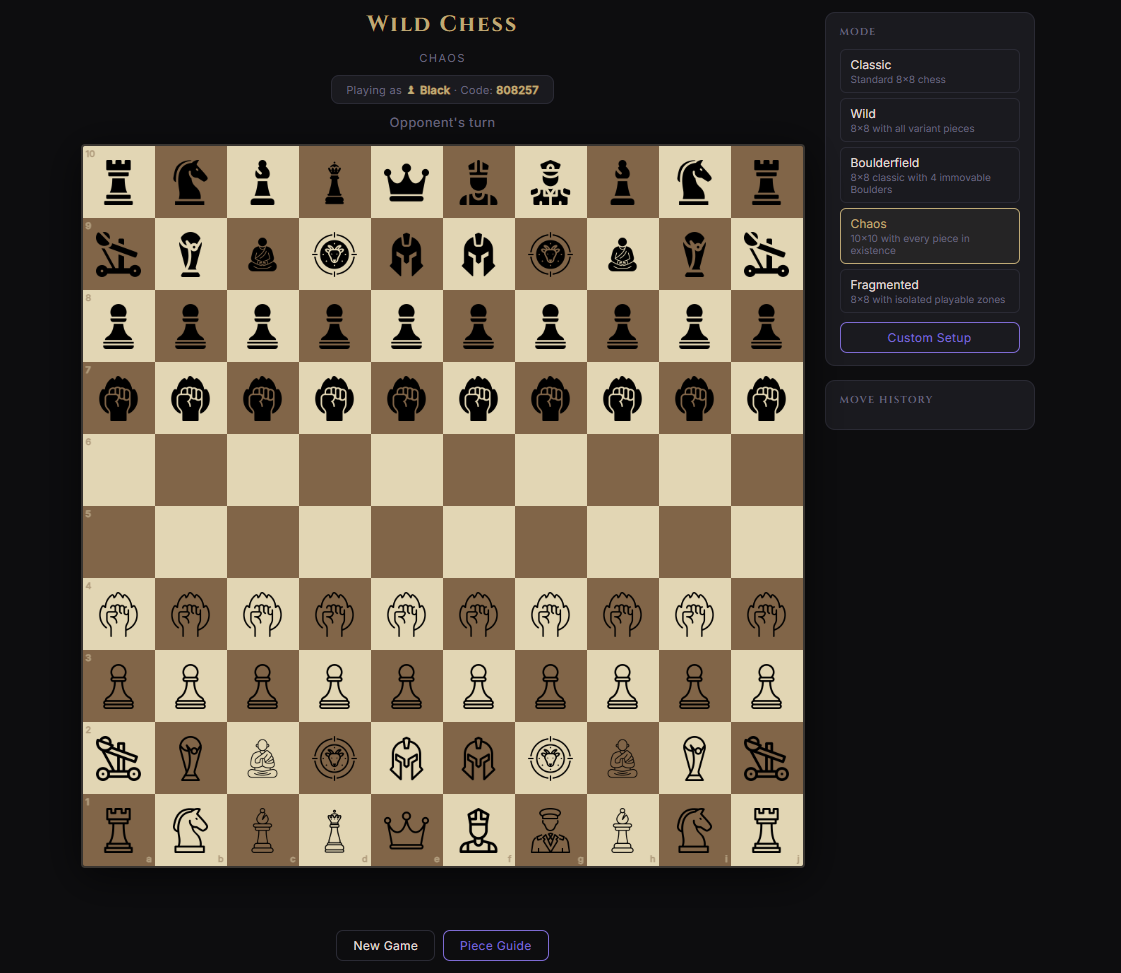
Chaos 10x10 Board Set-up
-
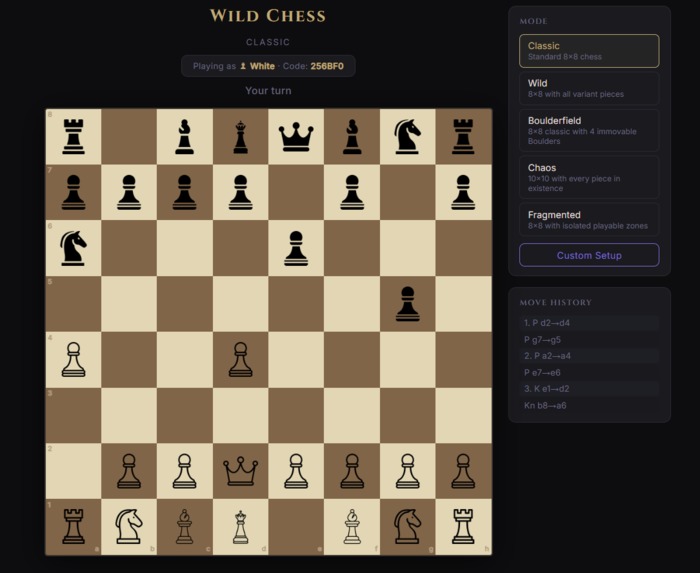
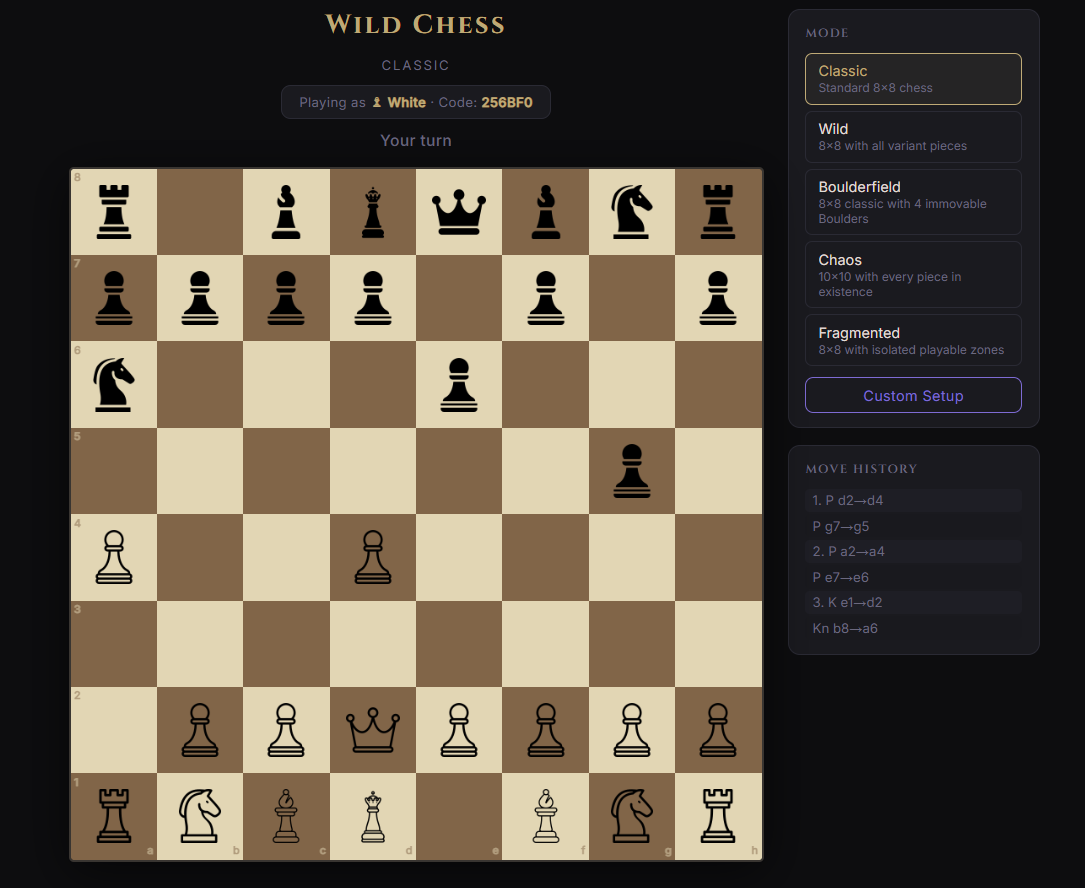
Mid-Game 8x8 Board
Inspiration
The inspiration for this project hits close to home. Growing up, my sister and I played chess constantly: it was my favorite game. But as we got older, she stopped playing with me. The standard game felt repetitive, focusing more on memorizing openings than on actual creativity. We wanted to build an app that recreates chess not just as a game of intense planning, but as a medium for creativity and intuition that players of all ages can enjoy.
What it does
Wild Chess is a playground for chess lovers who are bored of the standard 8x8 grid. It allows players to "mess around" with the game: changing board sizes (6x6, 8x8, 10x10), introducing new piece types with specialized logic, and utilizing custom setups. We’ve added "Wild" and "Fragmented" modes where pieces have aura effects, capture immunities, and unique movement patterns. It's the version of chess you'd invent with your friends if you started making up your own rules.
How we built it
Frontend: React and Vite for a smooth interface. Backend: Node.js and Express to handle multiplayer logic. Real-Time: Socket.io to sync game states instantly. Deployment: Vercel (Frontend) and Railway (Backend). Engine: Separated core rules, piece movements, and rendering into clean modules.
Challenges we ran into
The biggest challenge was the multiplayer aspect. It was a steep learning curve to get WebSockets working so that a move on one screen appeared instantly on the other. Things got even harder when we added custom rules like fragmented boards and pieces with special abilities. We had to make sure both players saw the same board state, even when pieces had unique traits like hit points or aura effects that changed how other pieces moved. Every time a piece moved, the engine had to recalculate everything from scratch to keep the game fair and bug-free.
Accomplishments that we're proud of
We are incredibly proud of the multiplayer synchronization and the successful implementation of the Fragmented board. Building a custom room-based lobby system that mirrors clicks across different devices without lag was a huge win. Most importantly, we are happy that we built a form of chess that is genuinely different and more engaging. It’s a game that we personally love and will definitely be using at least until our Railway trial ends!
What we learned
We learned that software architecture is everything. Keeping the game logic, UI, and server code in completely separate layers saved us a significant amount of debugging time; whenever something broke, we knew exactly where to look instead of digging through tightly coupled code. We also got a much deeper understanding of WebSockets and real-time communication than we expected going in. Move validation turned out to be one of the more deceptively complex problems we tackled. Once pieces start interacting in non-linear ways, like aura effects buffing allied pieces or the Trapper freezing adjacent enemies, the number of edge cases grows quickly and assumptions that held for standard chess stop holding. We also came to appreciate the value of designing a clean public API for a stateful system. The reason multiplayer worked as smoothly as it did was largely because the game engine exposed one consistent interface that both the UI and the server could interact with independently. In hindsight, thinking more carefully about those architectural boundaries from the start would have saved us even more time down the line.
What's next for Wild Chess
We want to expand the piece library even further and perhaps introduce a community creator mode where players can share their own custom variants. We also plan to refine our chess bot to handle the Wild pieces more strategically.
Built With
- express.js
- flaticon
- html/css
- javascript
- lucide
- node.js
- railway
- react
- socket.io
- vercel
- vite


Log in or sign up for Devpost to join the conversation.