-
-
Game Icon
-
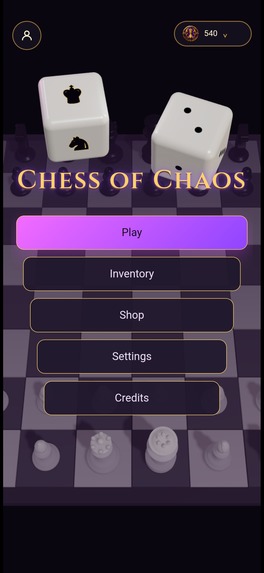
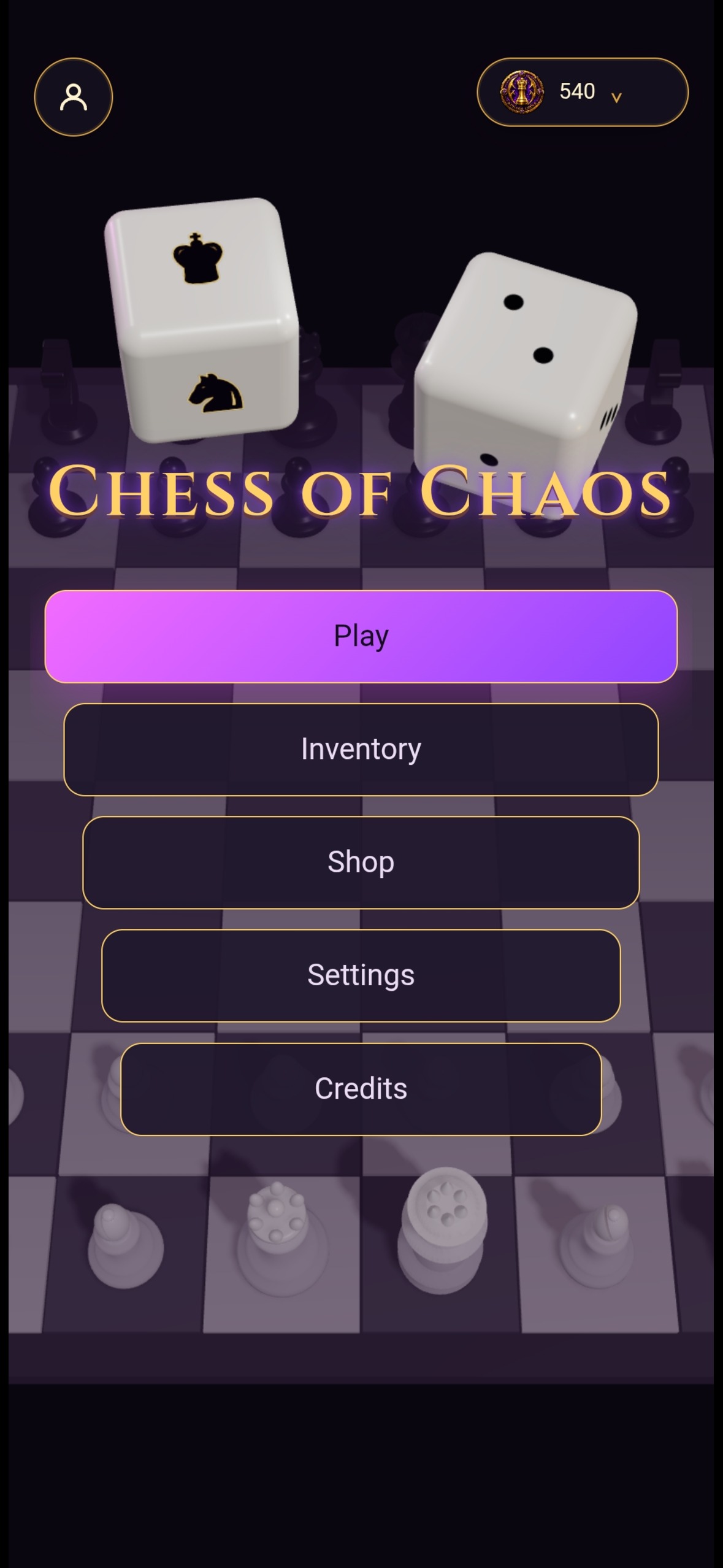
Main Menu
-
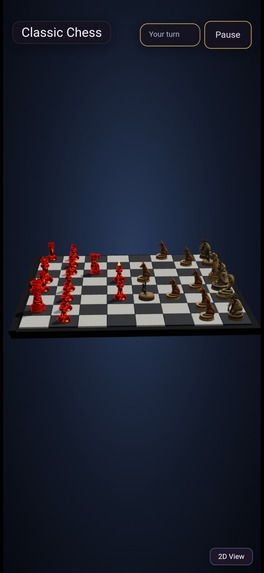
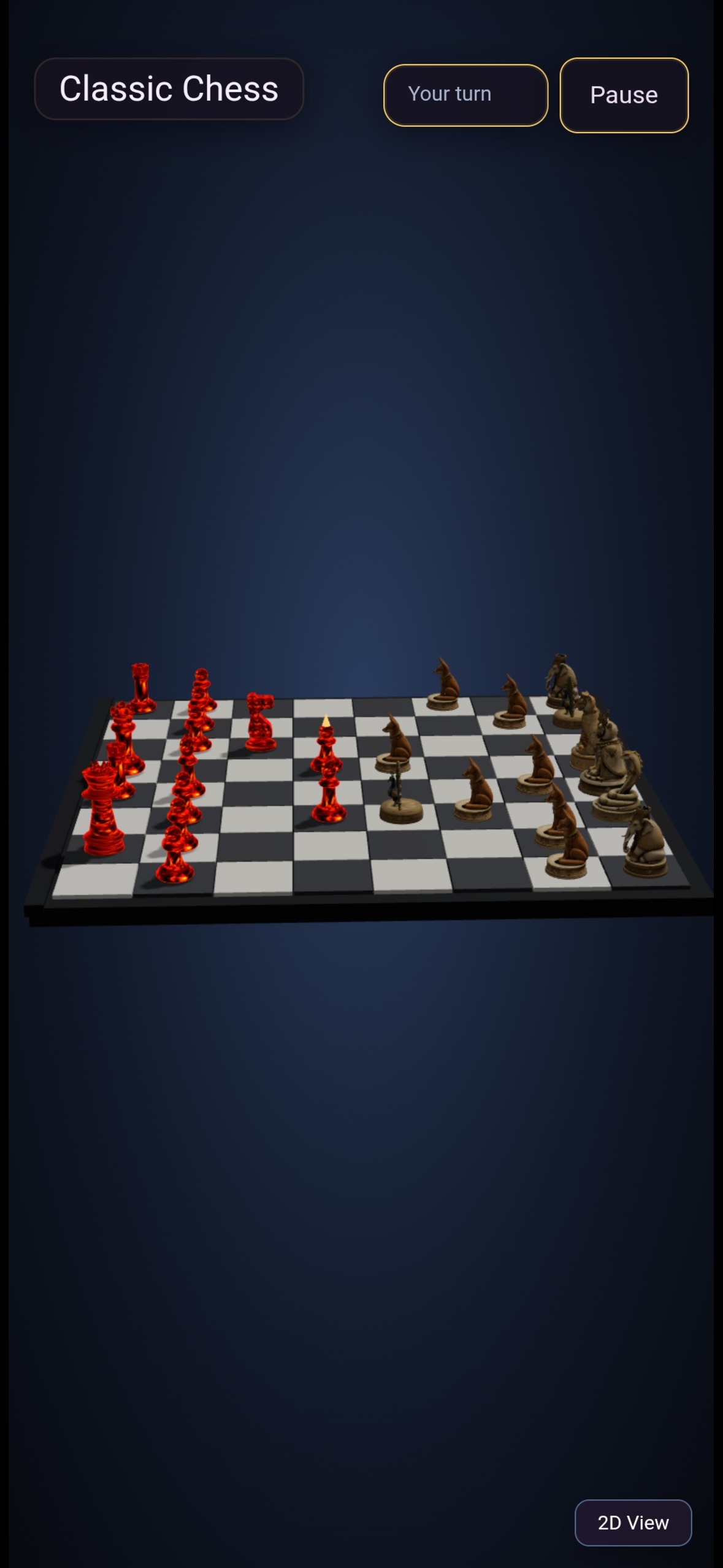
Classic chess with legendary sets
-
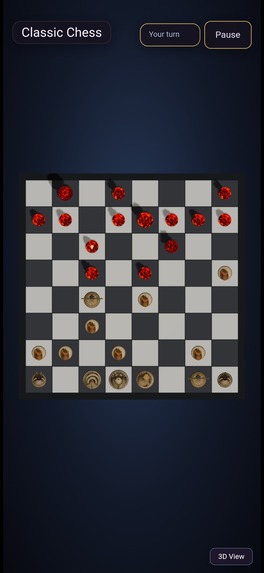
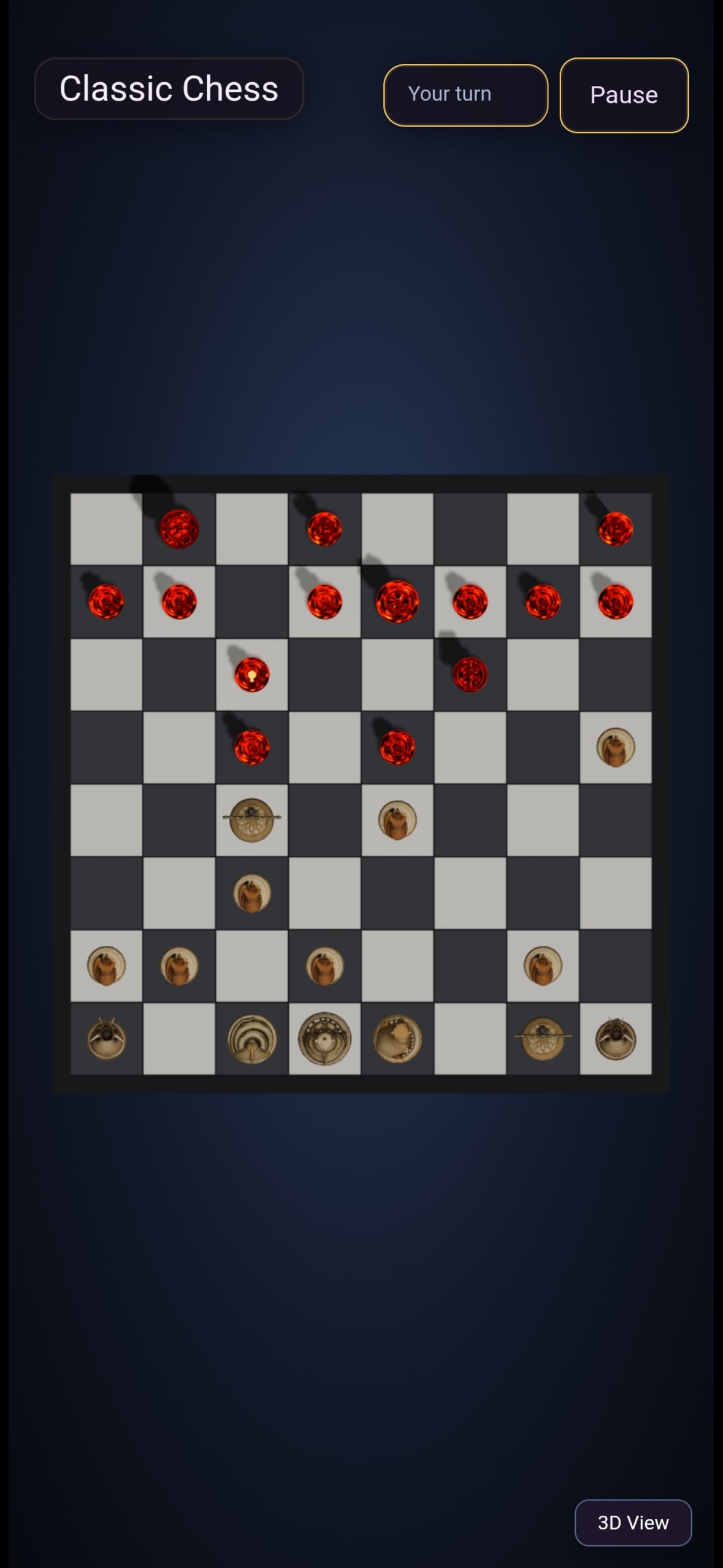
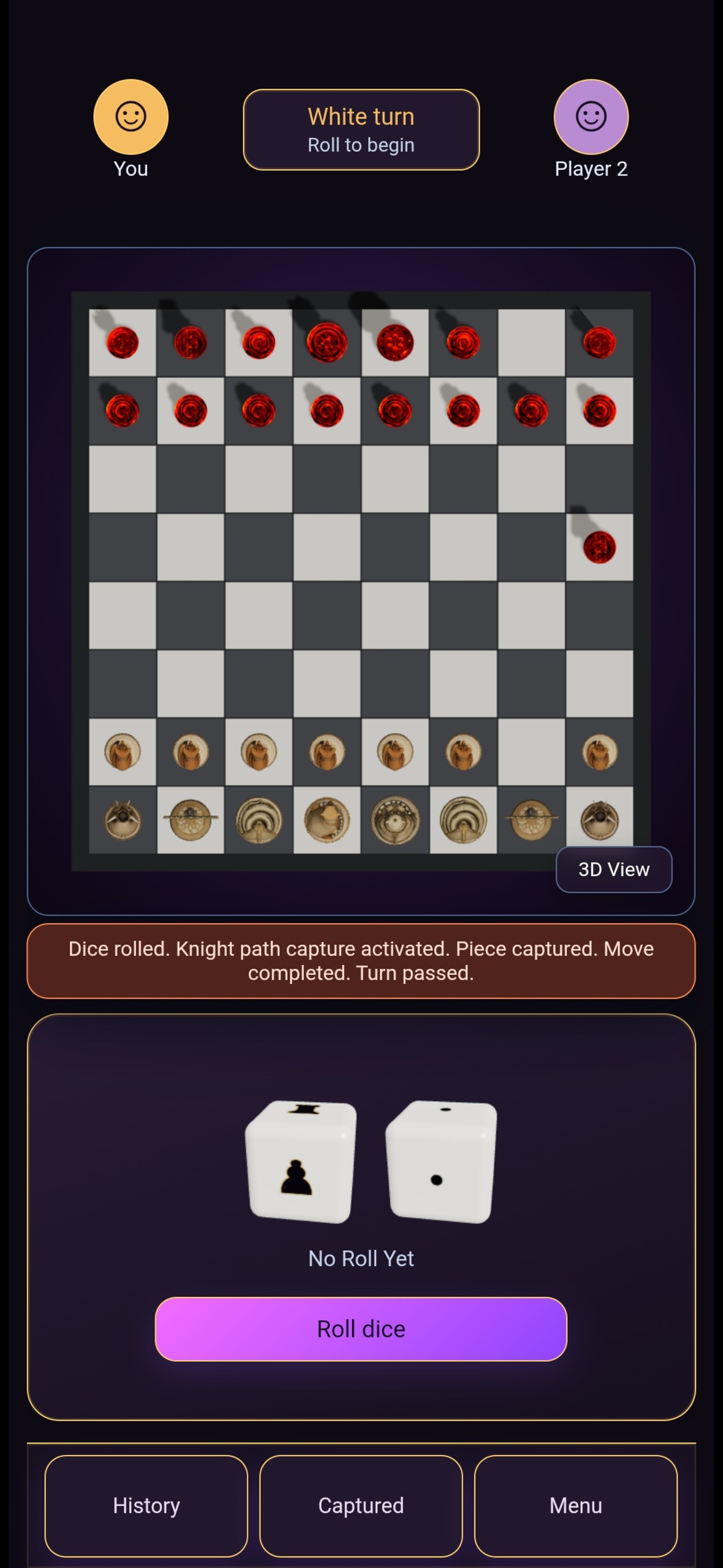
2d view
-
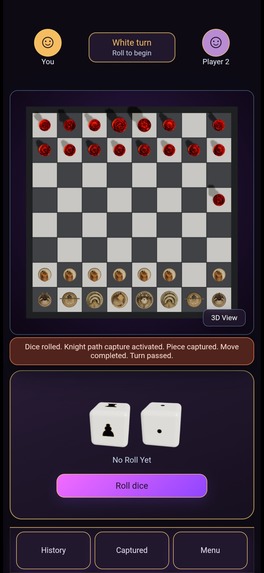
2d view of Chaos mode
-
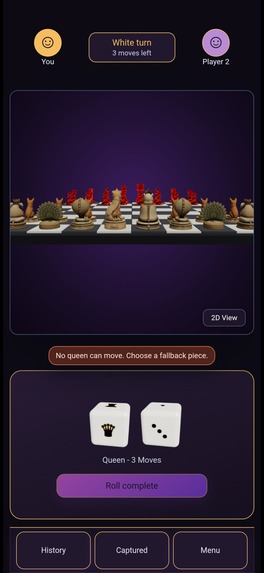
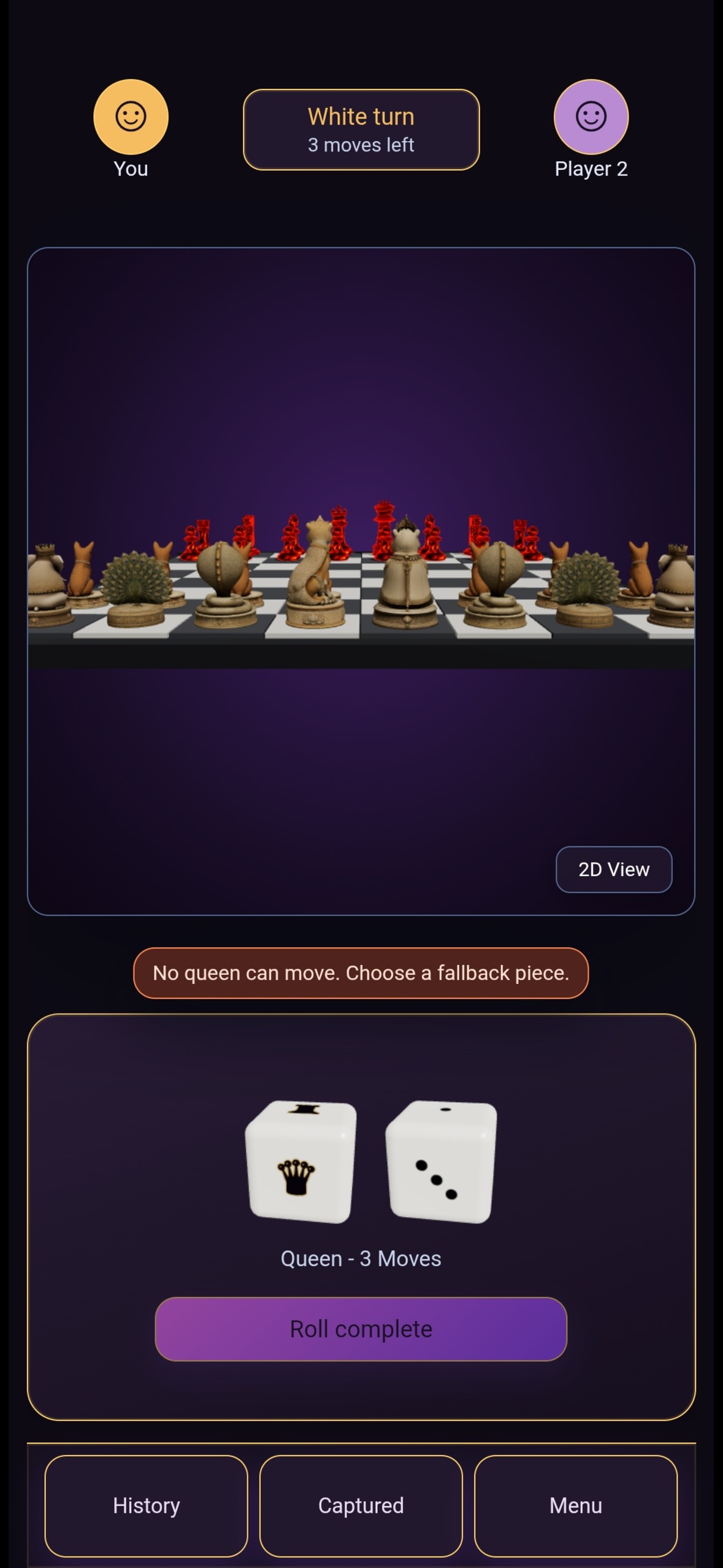
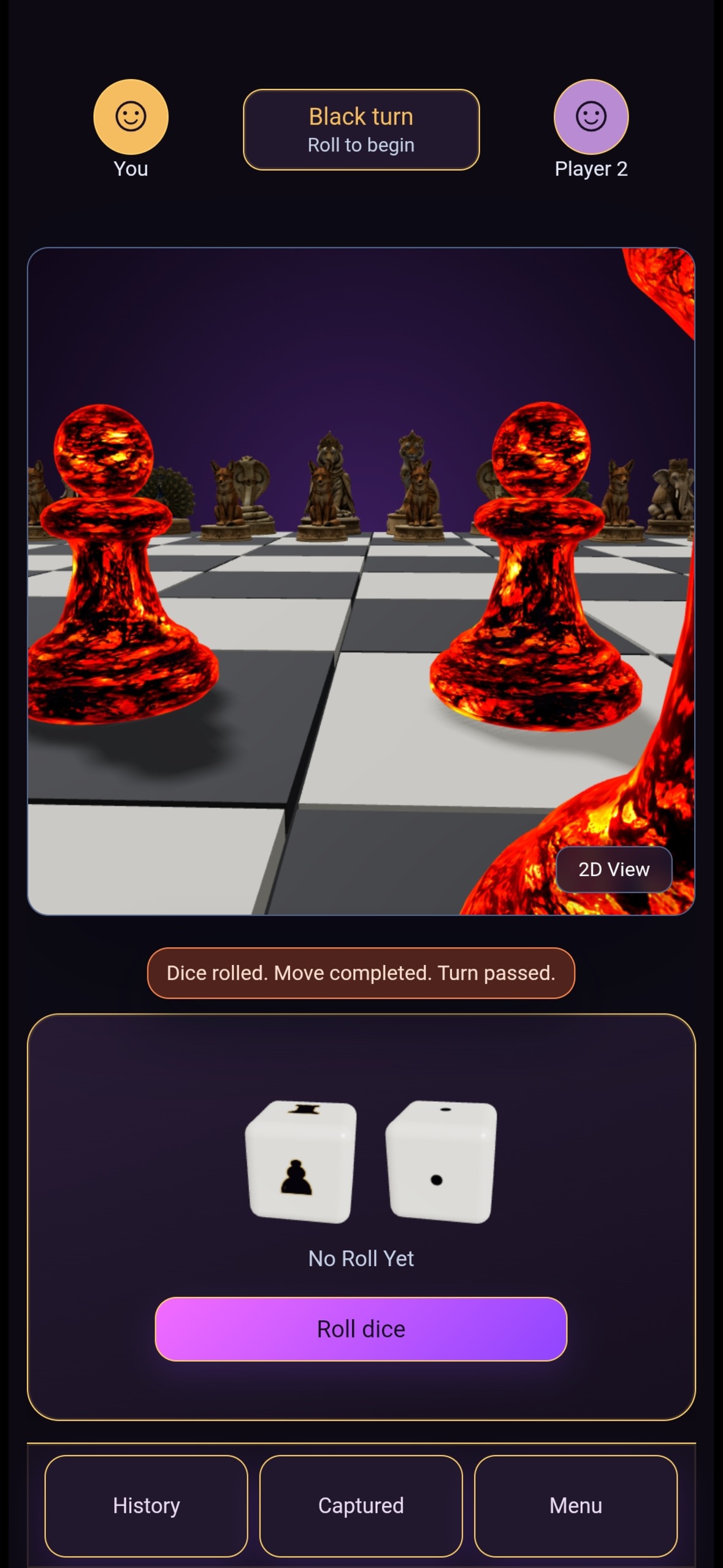
3d view of Chaos mode
-
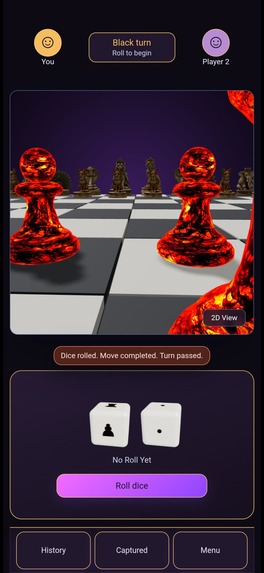
-
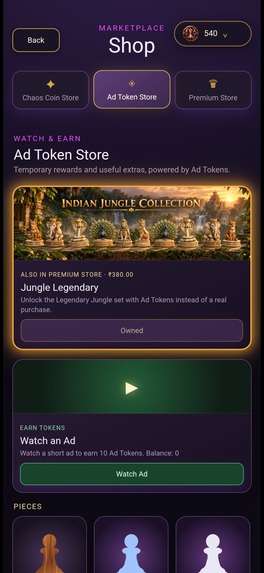
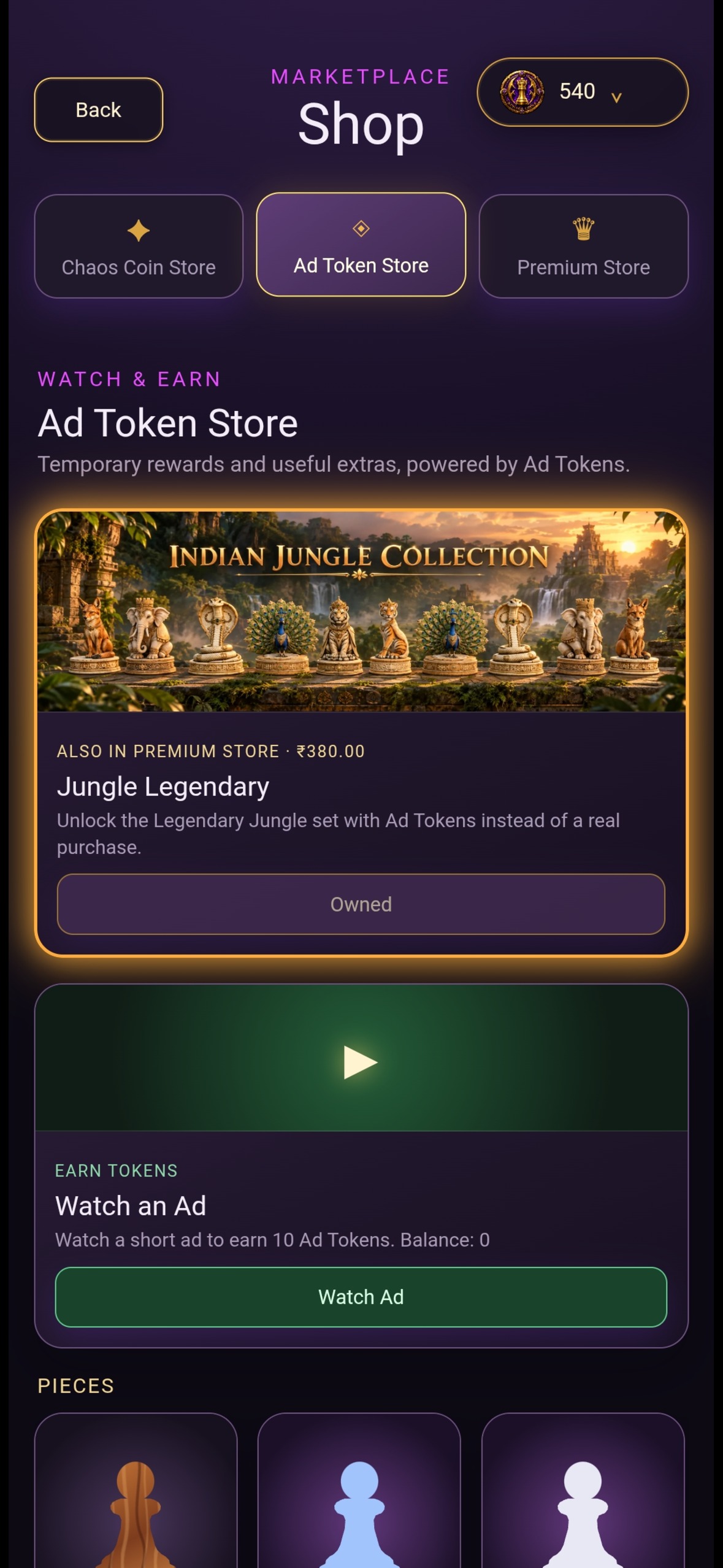
Ad Token Shop
-

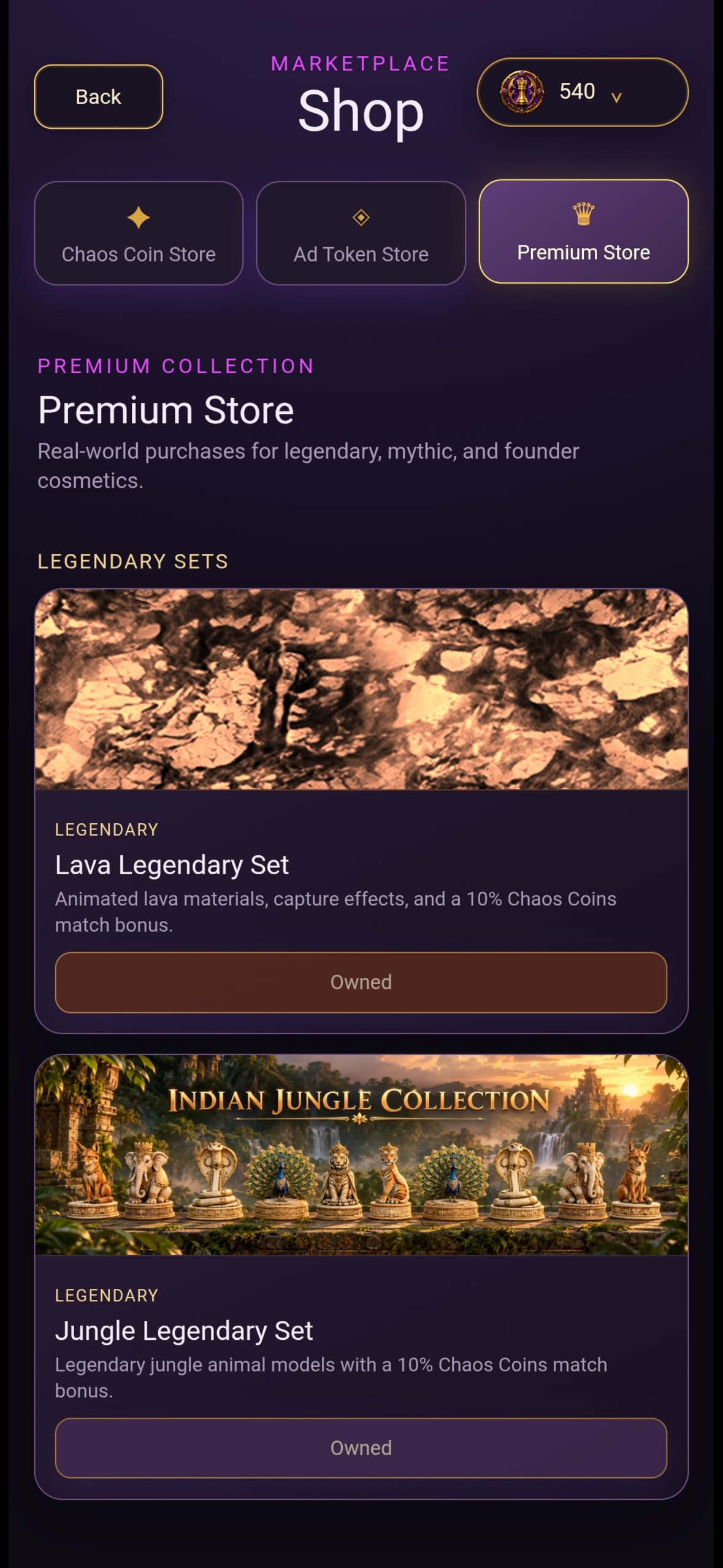
Premium Shop
Inspiration
Chess is a game built around prediction.
You constantly think about what your opponent might do next, calculate possible responses, and try to stay several moves ahead. I liked that part of chess, but I also wondered:
What if I deliberately ruined it?
What if you could not always choose the piece you wanted to move? What if you knew what your opponent could do, but still couldn't reliably predict what they would do? And what if that unpredictability made chess feel more like a fast party board game than a pure game of calculation?
I remembered how dice work in games like Ludo. Dice provide a simple, understandable form of randomness, so I started with an idea for chess where dice would determine what you could do.
But there was a problem: randomness alone was making the game slower and more strategic rather than faster. If every turn involved another roll and another calculation, games could potentially take even longer than normal chess.
That led to a second idea.
What if chess pieces had abilities?
Chess pieces are already soldiers in a battlefield. I wanted to give them abilities inspired by games where individual units have their own special mechanics. I had originally imagined this as a separate chess variant, but eventually I realized that the two ideas could work together.
The result became Chess of Chaos: a chess variant where randomness determines your opportunities, while special abilities create ways to turn those opportunities into unexpected plays.
The two original ideas also leave room for future variants. I can eventually explore the original dice-only concept, chess with abilities but without dice, or hybrid modes where different players operate under different rules. Those variants are intentionally not part of the current release because I want players to first understand and become comfortable with the core Chaos system.
How Chaos Mode Works
Chaos Mode starts differently from traditional chess.
There is no automatic white first move because first-move advantage matters even more when randomness is involved. Instead, players begin with a coin toss.
One player chooses the coin, while the other calls heads or tails. The winner gets the first move. The player who chooses the coin also gets to use their equipped board cosmetic for the match.
Then the chaos begins.
Each turn uses two dice:
- The first die determines which type of piece must move.
- The second die determines how many moves that piece can make during the turn.
The movement count is weighted rather than evenly distributed:
- 1 move - 50%
- 2 moves - 33.33%
- 3 moves - 16.67%
This keeps three-move turns exciting without making them too common.
There is also a fallback system. If the selected piece cannot make a legal move, another eligible piece can be selected instead, allowing the movement count from the roll to remain useful. For example, a rook trapped in its starting corner can be replaced by an available pawn rather than wasting the entire turn.
The result is a system where players have to continuously adapt instead of simply executing a predetermined plan.
Piece Abilities
The dice create the uncertainty, but the abilities are what turn that uncertainty into opportunities.
Pawn - Diagonal Promotion
A pawn normally follows its traditional movement rules, but when it reaches the rank immediately before the opponent's promotion rank, it can move diagonally to reach the promotion rank.
This gives advanced pawns an additional way to create pressure and reach promotion.
Rook - Roll-Off Defense
When an enemy piece captures a rook, a dice roll-off is triggered.
If the attacker wins, the rook is defeated normally. If the rook wins, the attacker is defeated and the rook survives.
Rook-versus-rook captures cancel the roll-off, as do attacks involving the King, keeping the mechanic from becoming too powerful.
Bishop - Conversion
A Bishop that captures an enemy piece within the four ranks on its own side of the board can use its ability to convert that defeated piece and place it on its own side.
Each Bishop can use this ability once.
Converted pieces do not retain their original abilities.
Knight - Double Capture
A Knight can use its ability once to defeat an additional enemy piece along its movement path.
This allows a well-positioned Knight to potentially remove two pieces during one turn.
Queen - Resurrection
The Queen can sacrifice its turn to resurrect a random defeated piece from its own side.
The Queen does not move that turn, making resurrection a strategic trade-off rather than a free advantage.
King - Emperor
The King is the most important piece in chess, but traditionally it is also a piece that players try to keep away from direct combat.
I wanted to reverse that idea.
In Chess of Chaos, the King tracks kills and checks survived.
After accumulating five combined milestones, the King becomes an Emperor.
For example:
- 5 kills
- 5 survived checks
- 3 survived checks + 2 kills
- or any other combination totaling 5
The Emperor can end the match.
This changes how the King is used. Instead of only hiding behind other pieces, the King can become an active part of the battlefield. Every check becomes more complicated because attacking the King can also contribute toward its transformation.
The goal was not simply to make the King stronger. It was to create a reason for players to make aggressive decisions with the piece that normally represents survival.
Classic Chess
Chess of Chaos also includes a traditional Classic Chess mode.
Classic mode currently offers player-versus-AI matches using js-chess-engine, with Medium difficulty as the available AI level.
Players can also use the cosmetics they unlock in Chess of Chaos while playing traditional chess, giving players who prefer standard chess a way to use the game's visual progression without having to play Chaos Mode.
Chaos and Classic are intentionally separate experiences: Classic provides the familiar rules, while Chaos is built around its own custom game system.
Building the Game
The project began as one of my earliest game-development ideas, but the current implementation started with the project being created on July 23, 2026.
What started as a simple board-game idea eventually became a full Android game with a large codebase, multiple systems, 3D presentation, progression, cosmetics, monetization, ads, and multiple game modes.
The game is built with React, TypeScript, and Vite, and packaged for Android using Capacitor. The project also uses Three.js and React Three Fiber for its 3D systems, js-chess-engine for Classic AI, RevenueCat for purchases, AdMob for advertising, Supabase for backend services, and Vitest for automated testing.
The Chaos game engine itself is different from the Classic chess implementation.
I designed the Chaos rules and architecture myself: how turns work, how dice affect movement, how fallback pieces work, how each ability interacts with the board, how the King progresses toward becoming an Emperor, and how all of those systems interact.
I then used an AI-assisted development workflow to implement those designs.
How I Used AI
AI was not given the project and asked to figure out what game to build.
I designed the systems first and directed the implementation.
My workflow was roughly:
Design → architecture → AI implementation → testing → review → refinement → repeat
I would decide what a system needed to do, break it into a manageable implementation, have AI write or modify the code, then test the result myself. When something behaved incorrectly, I would explain the problem, review the proposed fix, cross-check suggestions, and iterate until the implementation matched the intended design.
An important part of this project is that I built it without paying for AI tools or premium AI models. I worked entirely within the free tiers available to me, using tools such as Codex, Claude, Gemini, and VS Code's AI assistance.
That constraint changed how I developed the game. I could not simply give a huge codebase to an AI and expect it to build everything in one pass. I had to plan the architecture myself, keep the project organized, maintain context across sessions, break large systems into smaller tasks, and decide which problems were worth using AI for.
I treated AI primarily as an implementation and debugging partner. I remained responsible for the game design, architecture, technical decisions, testing, reviewing AI-generated code, and deciding what should actually make it into the game.
The result was an AI-assisted workflow where I designed the system and directed the implementation, while AI handled much of the code generation and iteration.
Challenges
The biggest challenge was that I was building the entire project largely by myself.
When you already know how a system is supposed to behave, it is easy to test it according to your own mental model. That can also make it easier to overlook problems that a new player would encounter.
I discovered and fixed most of the bugs I encountered myself, and I believe around 90% of the known issues have been addressed. A few issues identified during testing are still being worked on.
The other major challenge was teaching players how to play.
During early testing, some players jumped straight into a match without spending enough time understanding the new mechanics. They naturally became confused about why a particular piece was selected by the dice or why they had to move it in a certain way.
That taught me something important about game design: a mechanic can make sense to the person who designed it and still be difficult for a new player to understand.
As a result, I am working on a simple onboarding and tutorial system that introduces Chaos Mode gradually instead of expecting players to understand everything from the first match.
What I Learned
The biggest lesson from building Chess of Chaos was that creating a game mechanic is much easier than creating a game around that mechanic.
I initially designed the Chaos rules by balancing them in my head. Once I started implementing them, every mechanic had to interact with every other mechanic. A dice system affects movement. Movement affects abilities. Abilities affect balance. Balance affects the King. The King affects how aggressively players approach the entire game.
That forced me to think less like someone inventing individual features and more like someone designing a complete system.
I also learned the importance of testing ideas with actual players. The tutorial problem was something I could not fully identify from my own perspective because I already understood the rules.
Most importantly, I learned how far an idea can go when it is continuously broken down, implemented, tested, and refined.
Chess of Chaos started as a thought experiment:
"What if I ruined chess?"
It eventually became a complete game system that I can continue expanding with new variants, abilities, modes, and ways to combine the original ideas.
And this version is only the beginning.
Built With
- admob
- android
- capacitor
- cloudfare
- react
- revenuecat
- supabase
- three.js
- typescript
- vite
- vitest

Log in or sign up for Devpost to join the conversation.