-
-
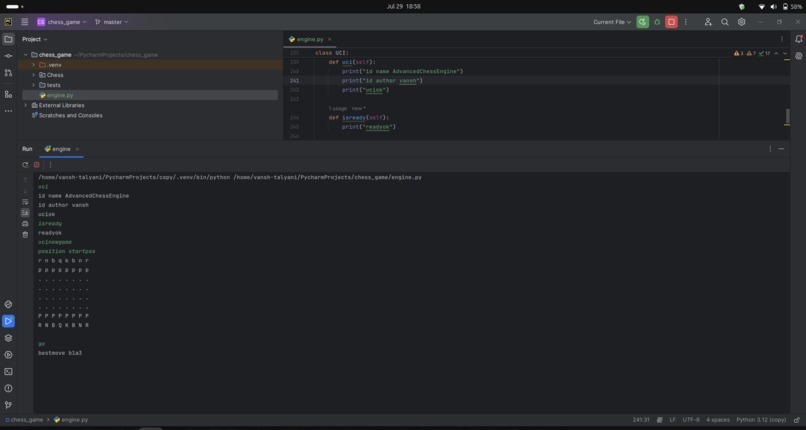
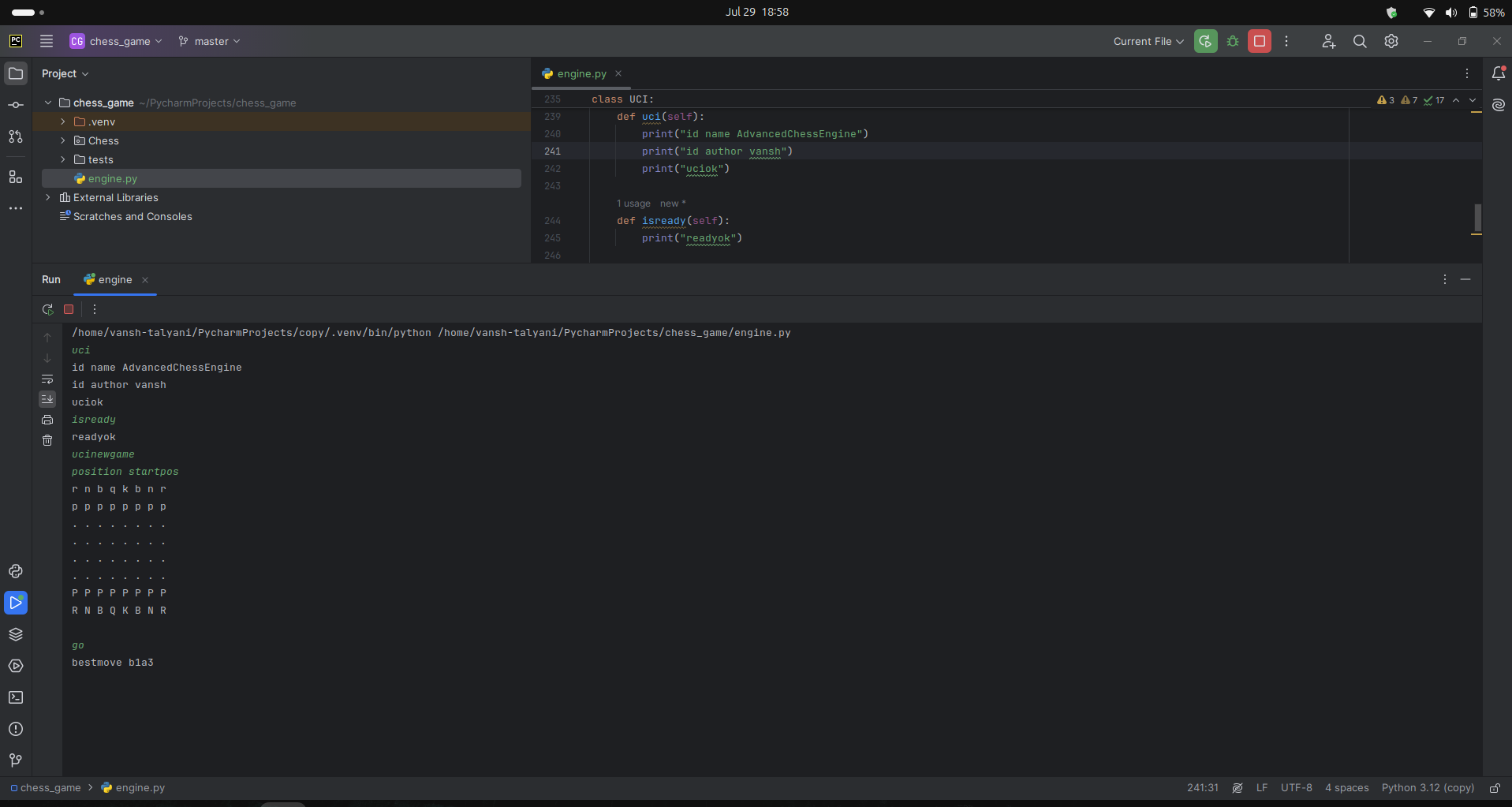
Example of how it works while using the IDE.
Inspiration
Creating a chess engine was inspired by the desire to combine the strategic depth of chess with advanced computational techniques, pushing the boundaries of artificial intelligence to enhance the game for players at all levels.
What it does
A chess engine employs advanced algorithms and evaluation functions to simulate human-like decision-making. It analyzes the game position through deep search techniques and heuristic evaluations, adapting its strategy dynamically to exploit weaknesses and optimize its play, thereby offering a formidable challenge to players of all skill levels.
How we built it
To build a chess engine, I started by understanding key algorithms like Minimax and Alpha-Beta pruning for decision-making. I developed a system to represent the chessboard and generate legal moves, then implemented search techniques to explore possible moves. I created an evaluation function to assess the strength of positions. Moving further on, I referred to renowned projects and sites like Stockfish, Leela Chess Zero, Chess Programming Wiki, Fritz, and The Chess Engine Programming Page. link
Challenges we ran into
Building a chess engine presents several challenges, including implementing an efficient search algorithm to explore the vast number of possible moves and positions within a reasonable time frame. Developing a robust evaluation function to accurately assess complex board positions and strategic nuances is also challenging. Additionally, integrating various components seamlessly and optimizing performance to handle different levels of play require significant effort. Balancing computational efficiency with strong playability and adapting the engine to handle various types of chess strategies and openings can be demanding, often necessitating iterative testing and refinement.
Accomplishments that we're proud of
I am proud of creating a chess engine that combines advanced search algorithms with a sophisticated evaluation function, resulting in a powerful tool for players of all levels. Achieving high performance and accuracy in move analysis, along with seamless integration of various components, showcases our technical expertise. Additionally, our engine's ability to adapt to different strategies and provide insightful feedback demonstrates its effectiveness and the dedication invested in its development.
What we learned
In building the chess engine, I learned the intricacies of implementing efficient search algorithms, crafting a nuanced evaluation function, and optimizing performance to balance accuracy and speed. The process also deepened my understanding of integrating complex components and adapting to diverse strategic scenarios.
What's next for Chess Engine
Next, I aim to enhance the chess engine with advanced machine learning techniques, improve its adaptability to various playing styles, and incorporate more sophisticated evaluation metrics. I also plan to expand its user interface and support for different platforms to reach a broader audience.


Log in or sign up for Devpost to join the conversation.