-
-
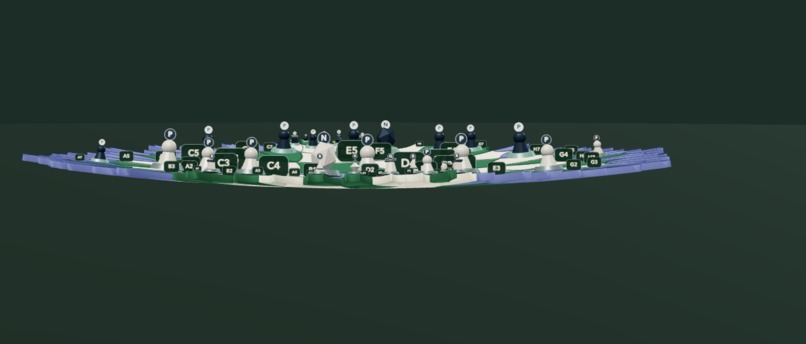
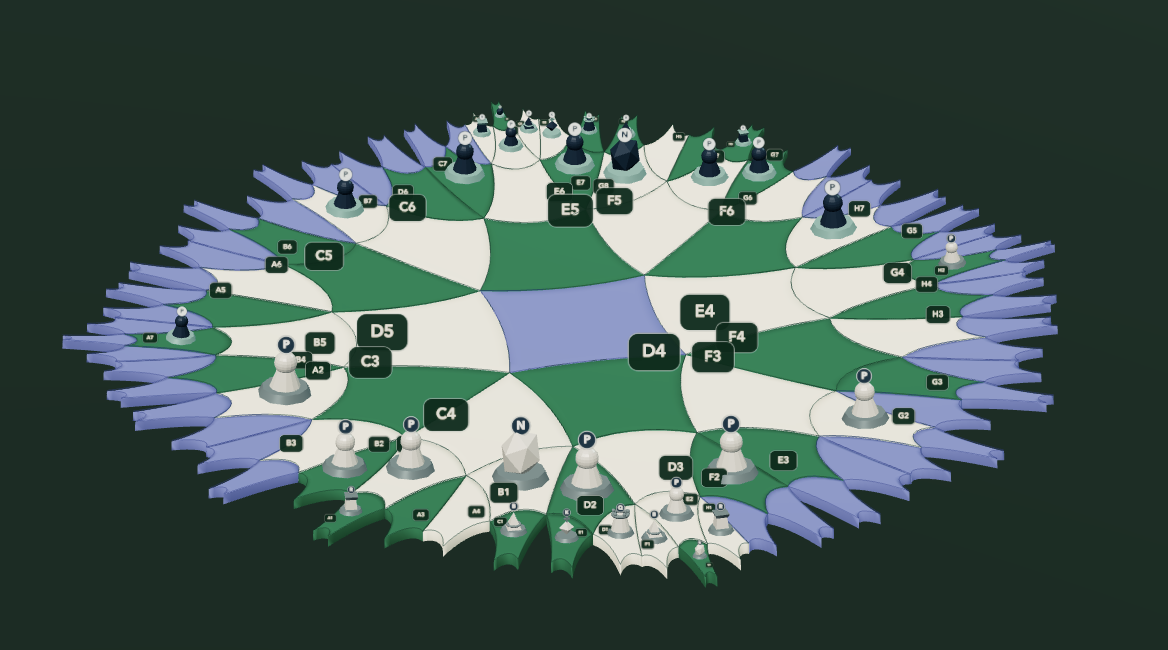
Hyperbolic Shape
-
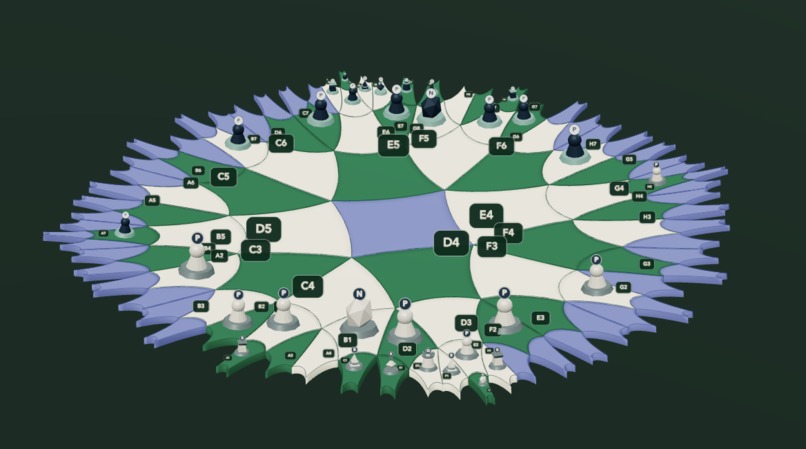
Hyperbolic board
-
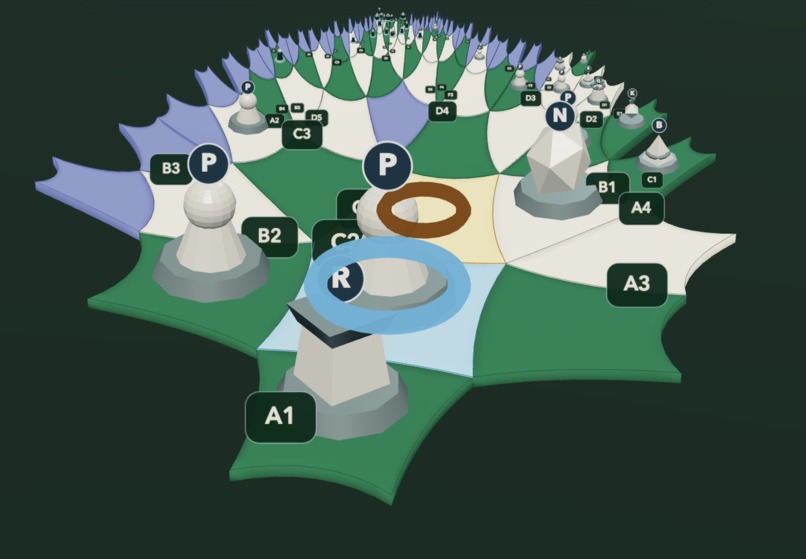
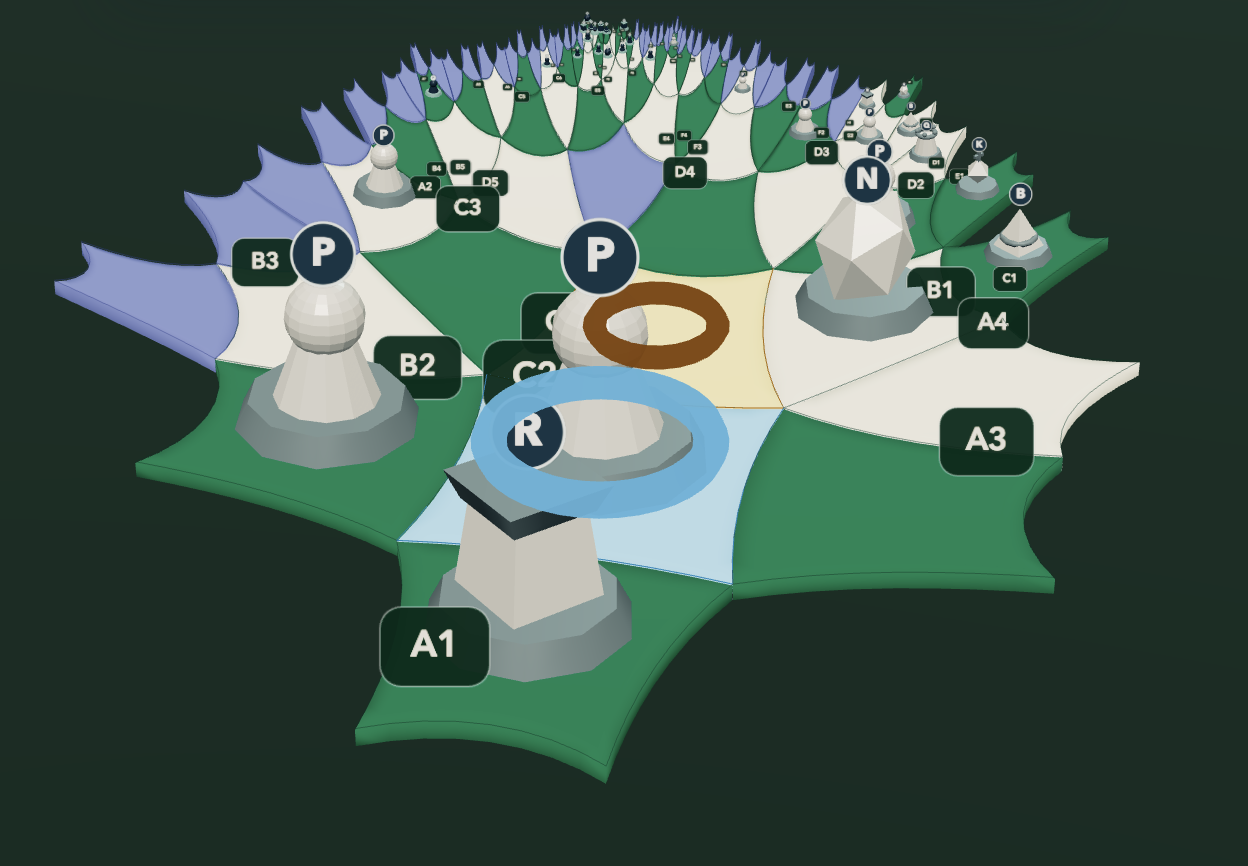
Focused Game Play
-
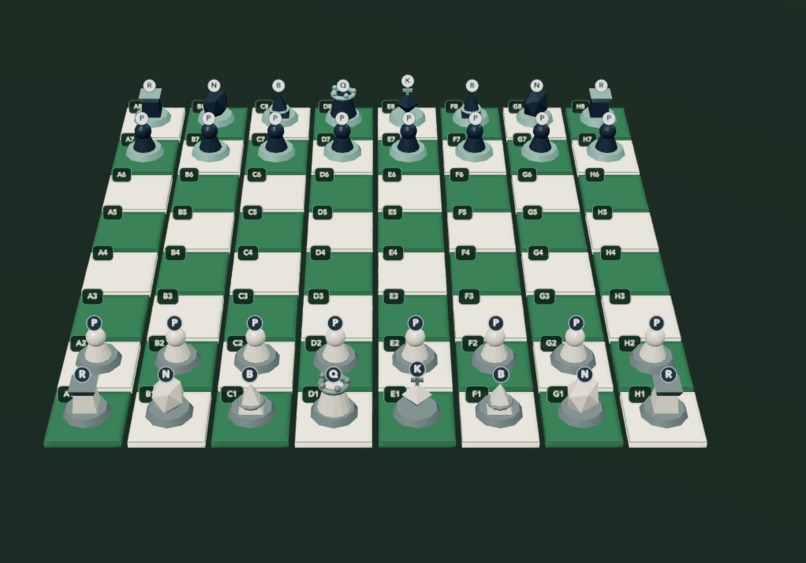
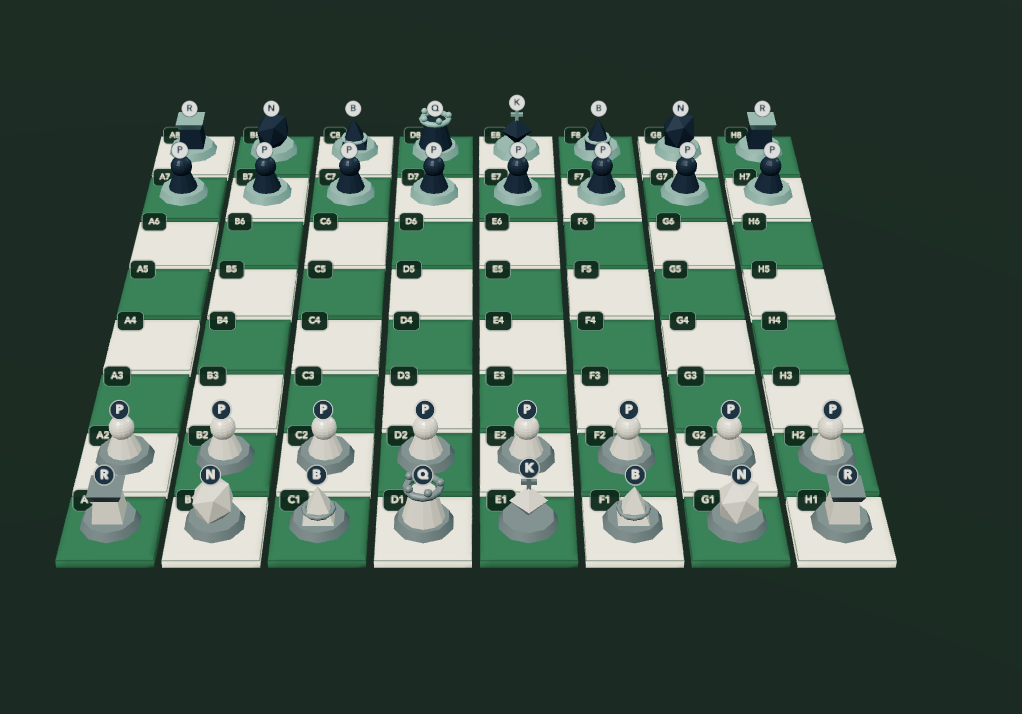
Regular Euclidean board
-
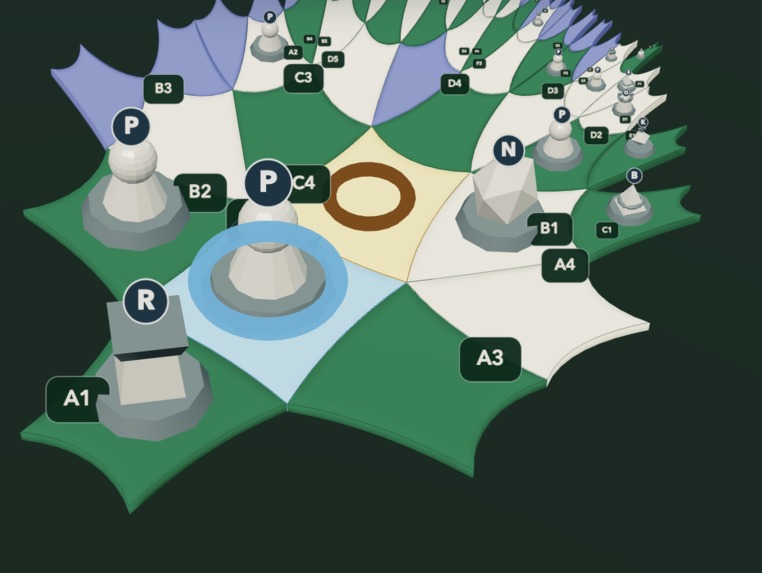
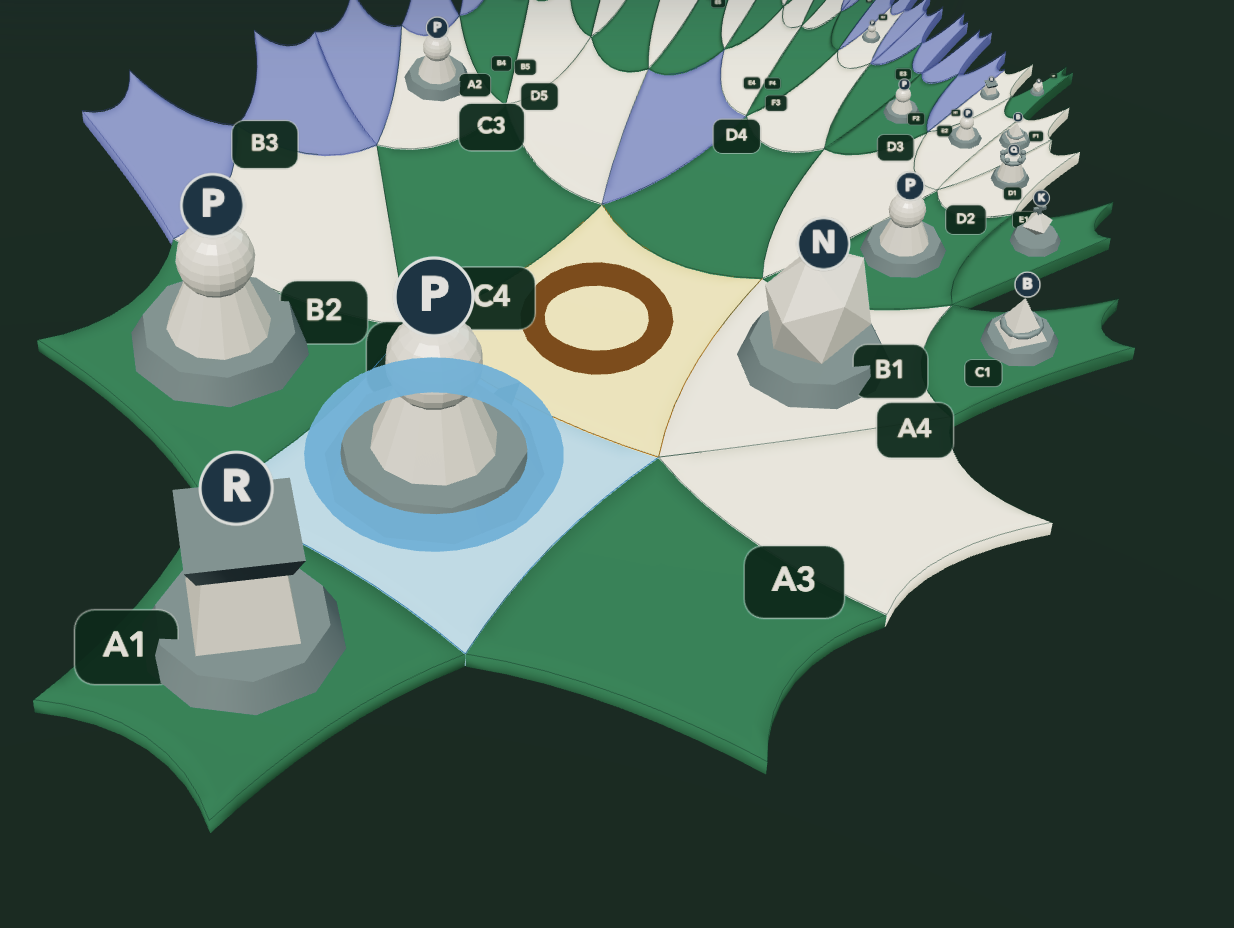
Focused Game Play
-
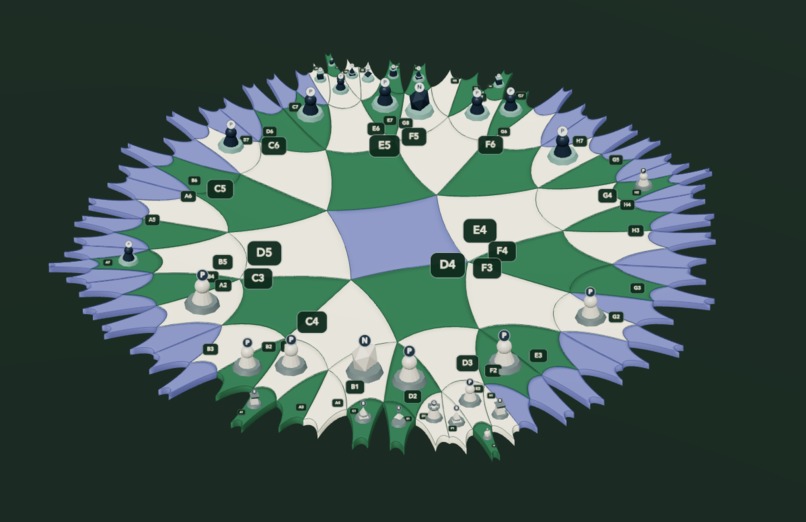
Helicopter view
-
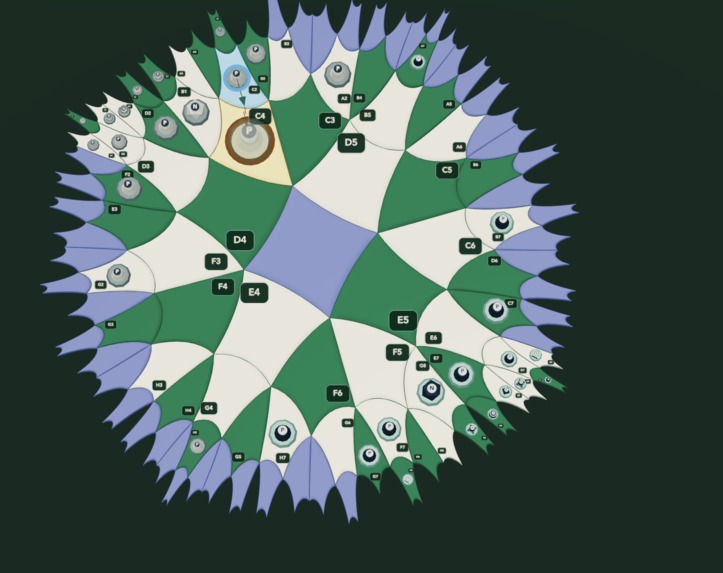
Birds eye view
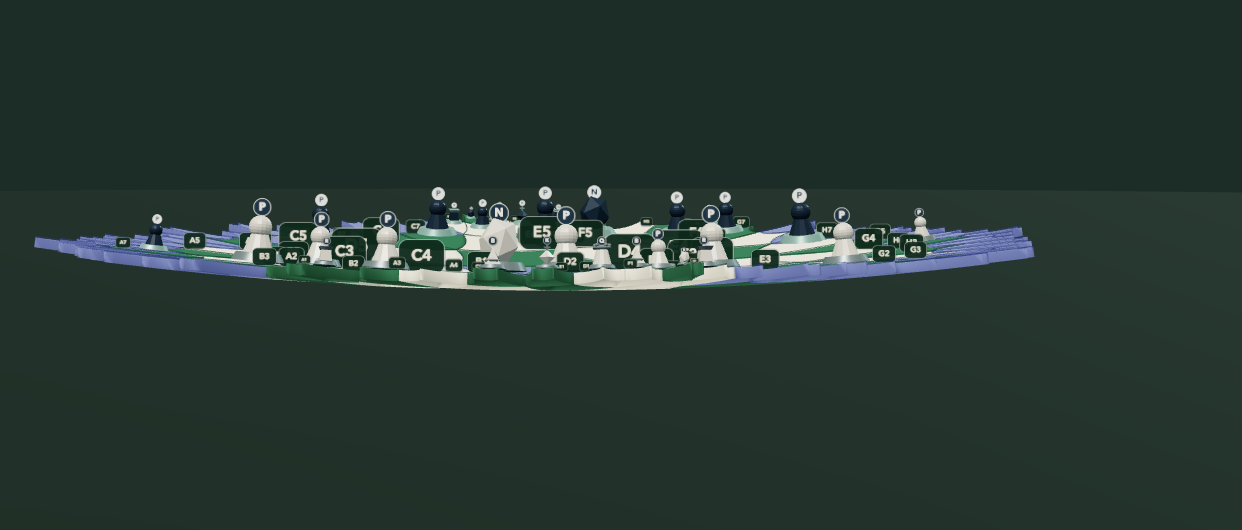
Inspiration
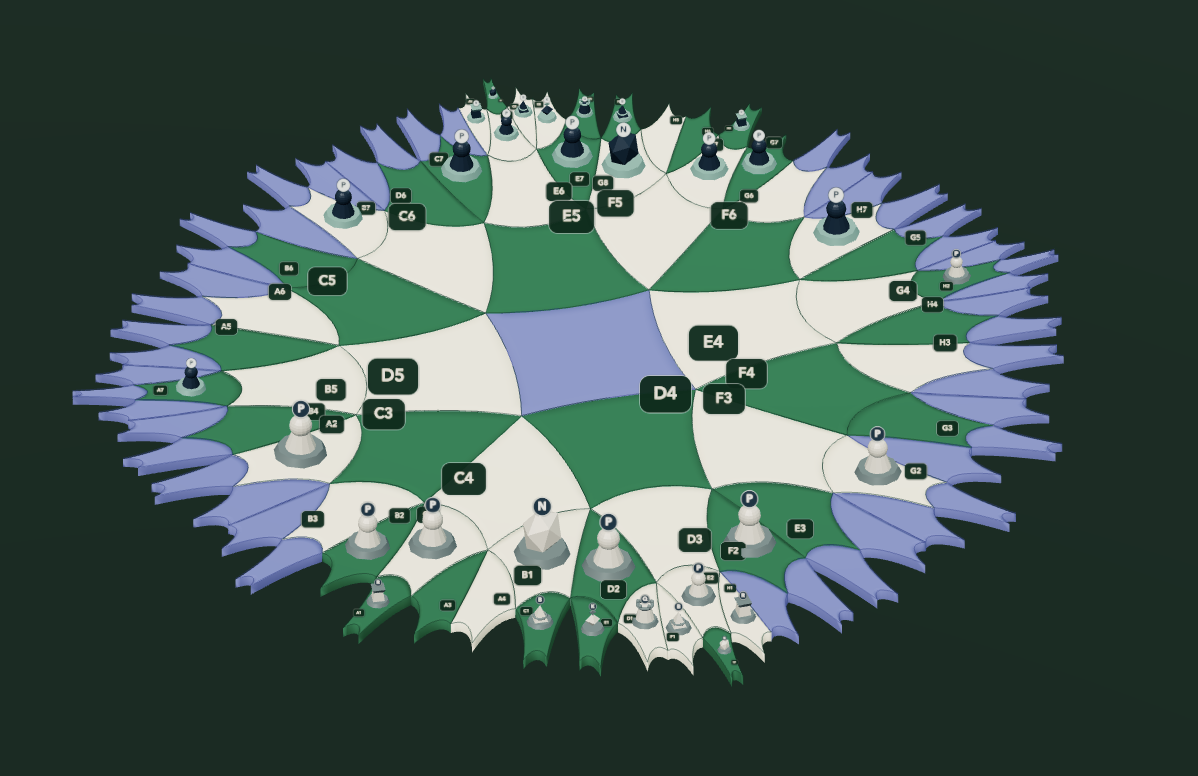
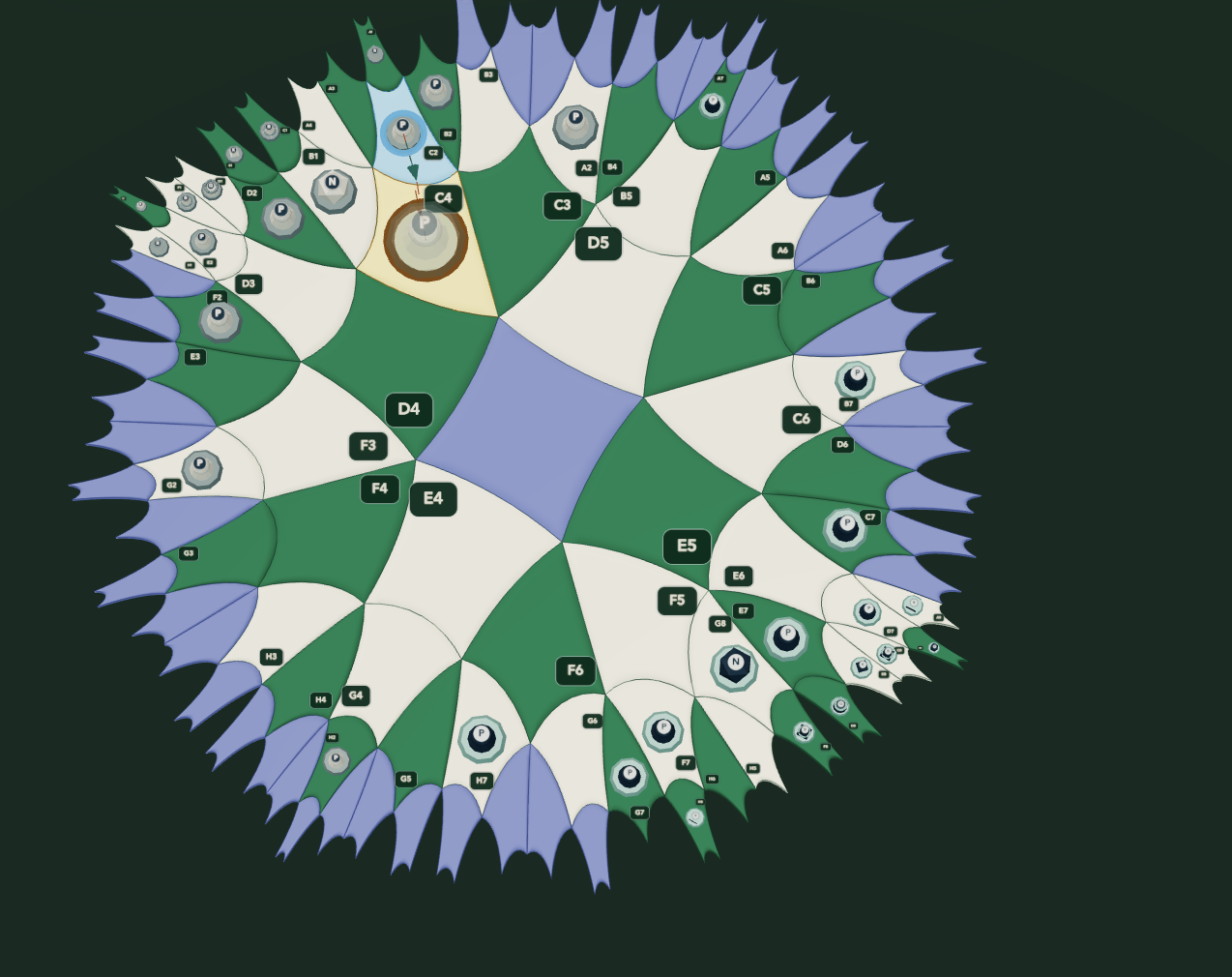
Chess is built around simple spatial rules: rooks move straight, bishops move diagonally, and positioning determines strategy. We wanted to ask a weird question: what happens if the pieces stay the same, but space itself changes? Inspired by non-Euclidean geometry and Escher-like impossible spaces, we created Chess Without Borders to turn abstract mathematical ideas into something players can actually interact with. Instead of explaining curved space through equations, we wanted players to experience it through a game they already understand.
What it does
Chess where you can warp the board itself. Players move familiar chess pieces across Euclidean and non-Euclidean space. Pieces keep their fundamental movement rules, but their paths depend on the geometry around them. A rook still travels "straight," for example, but in curved space that means following a geodesic. Players can manipulate the board's geometry, causing attack paths, distances, and strategies to change in real time. This makes warping space part of both offense and defense.
How we built it
Language: TypeScript Frontend: HTML + CSS + vanilla TypeScript 3D graphics: Three.js for the board, pieces, camera controls, and tile selection Build/dev tooling: Vite 8 Backend: Node.js 24+ Multiplayer: WebSockets, using the ws library Game logic: Custom TypeScript engine shared between browser and server
Challenges we ran into
Our biggest challenge was separating warping space from simply teleporting pieces or visually bending a normal chessboard. We had to think carefully about what "straight," "adjacent," and "distance" actually mean when the underlying geometry changes. We also needed the game to remain understandable: making space weird is easy; making weird space strategic and intuitive is much harder. Another challenge was keeping the mathematical model and the visuals synchronized so that what players see accurately represents the moves they can make.
Accomplishments that we're proud of
We're especially proud that non-Euclidean geometry isn't just a visual effect in Chess Without Borders, it's a core game mechanic. The player can directly interact with geometry and immediately see the consequences on the game. Familiar chess pieces provide an intuitive reference point, making complicated spatial ideas much easier to understand. We're also proud of creating gameplay where a player can look at a familiar chess position, warp the space, and suddenly discover an entirely different strategy.
What we learned
We learned that changing geometry doesn't require changing the fundamental rules of a system. A rook can always move straight, the interesting question is what does "straight" mean in this universe? Building Chess 2 also taught us about geodesics, curved spaces, coordinate transformations, and the challenge of representing non-Euclidean mathematics on a flat screen. Most importantly, we learned that visualization and interaction can make difficult mathematical concepts much more intuitive.
What's next for Chess 2
We have several ideas for expanding Chess 2 beyond our current prototype:
- Chess Bot: Build an automated opponent capable of understanding and strategizing around warped space, not just traditional chess moves.
- More Polished UI & Customization: Improve animations and visual feedback, with changeable backgrounds and board themes.
- Spatial Incentives: Add special regions that reward players for exploring the warped board, such as granting additional warps/geometry shifts when a piece reaches certain locations.
- More Geometries: Introduce spherical geometry and other non-Euclidean spaces with different movement behavior.
Ultimately, we want Chess 2 to evolve from chess played in warped space into a game where controlling space itself becomes part of the strategy.


Log in or sign up for Devpost to join the conversation.