-
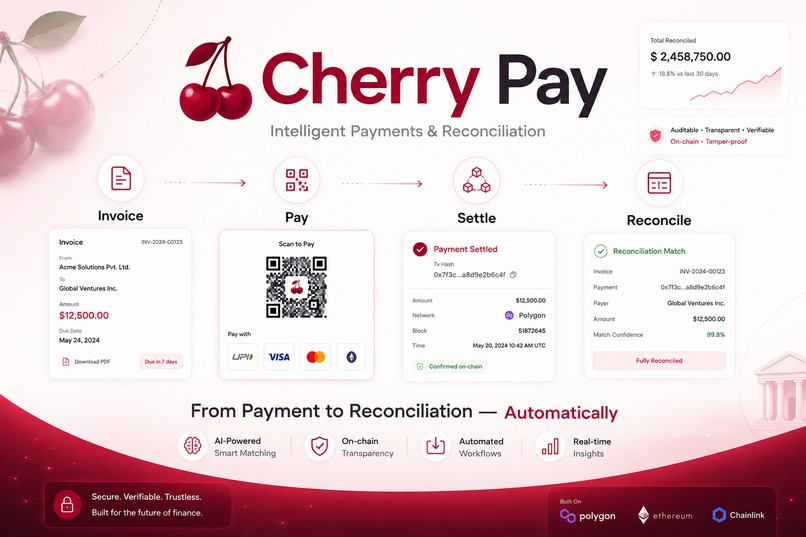
CherryPay - Intelligent Payments & Reconcillation
-
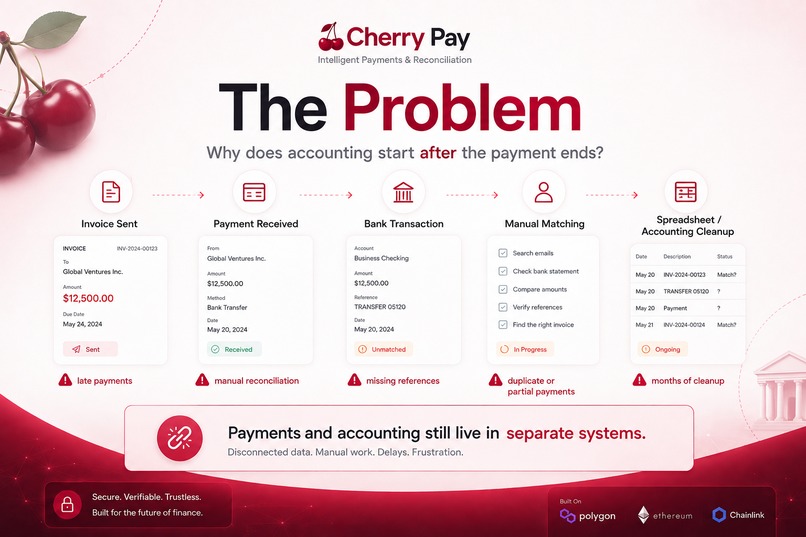
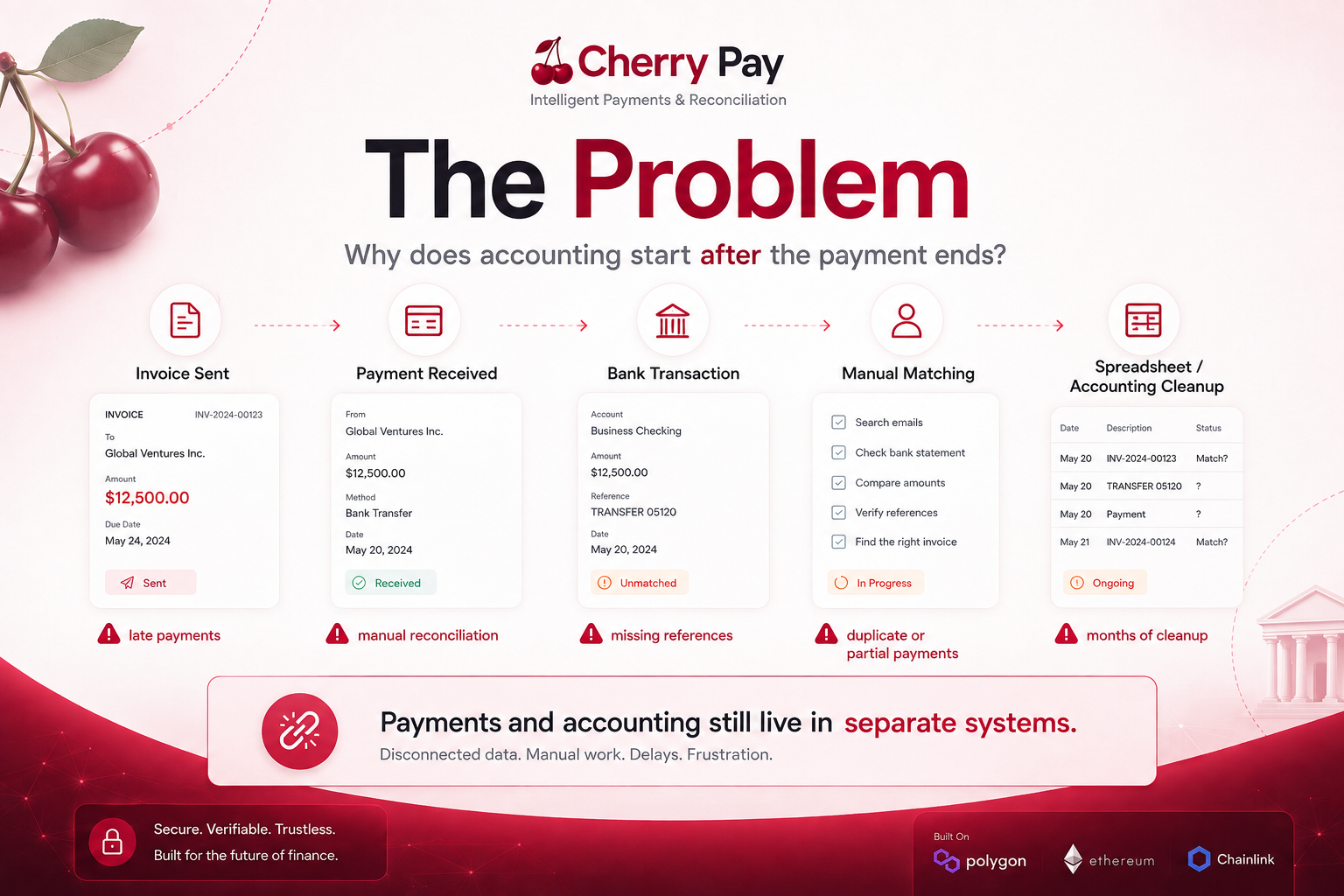
The Problem - Why does accounting start after the payment ends?
-
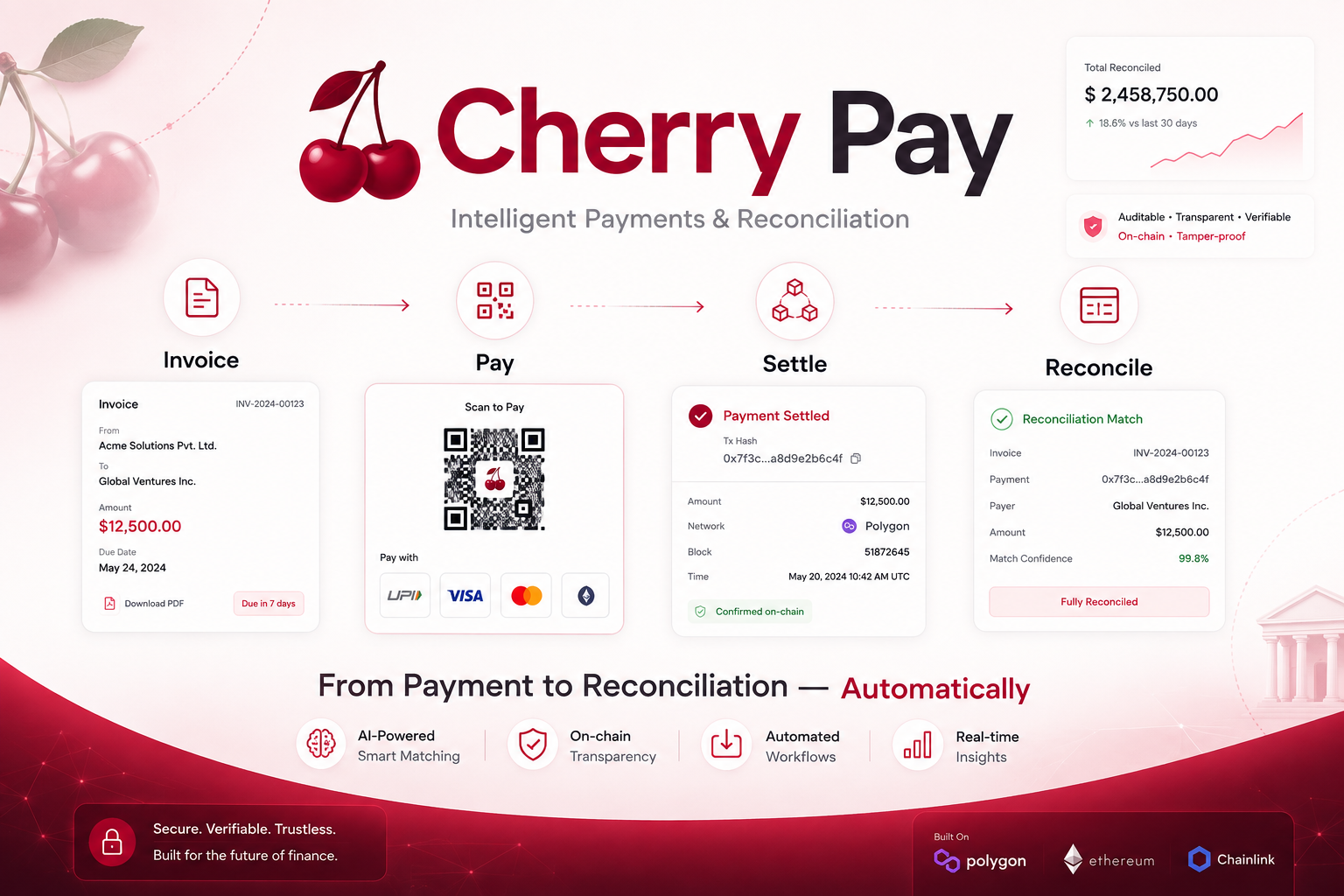
Architecture - How Cherry Pay connects Payment to Reconcillation
-
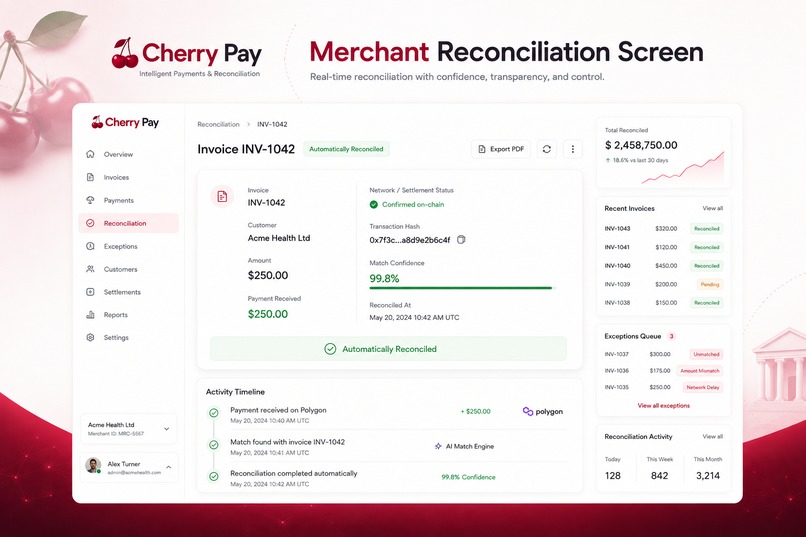
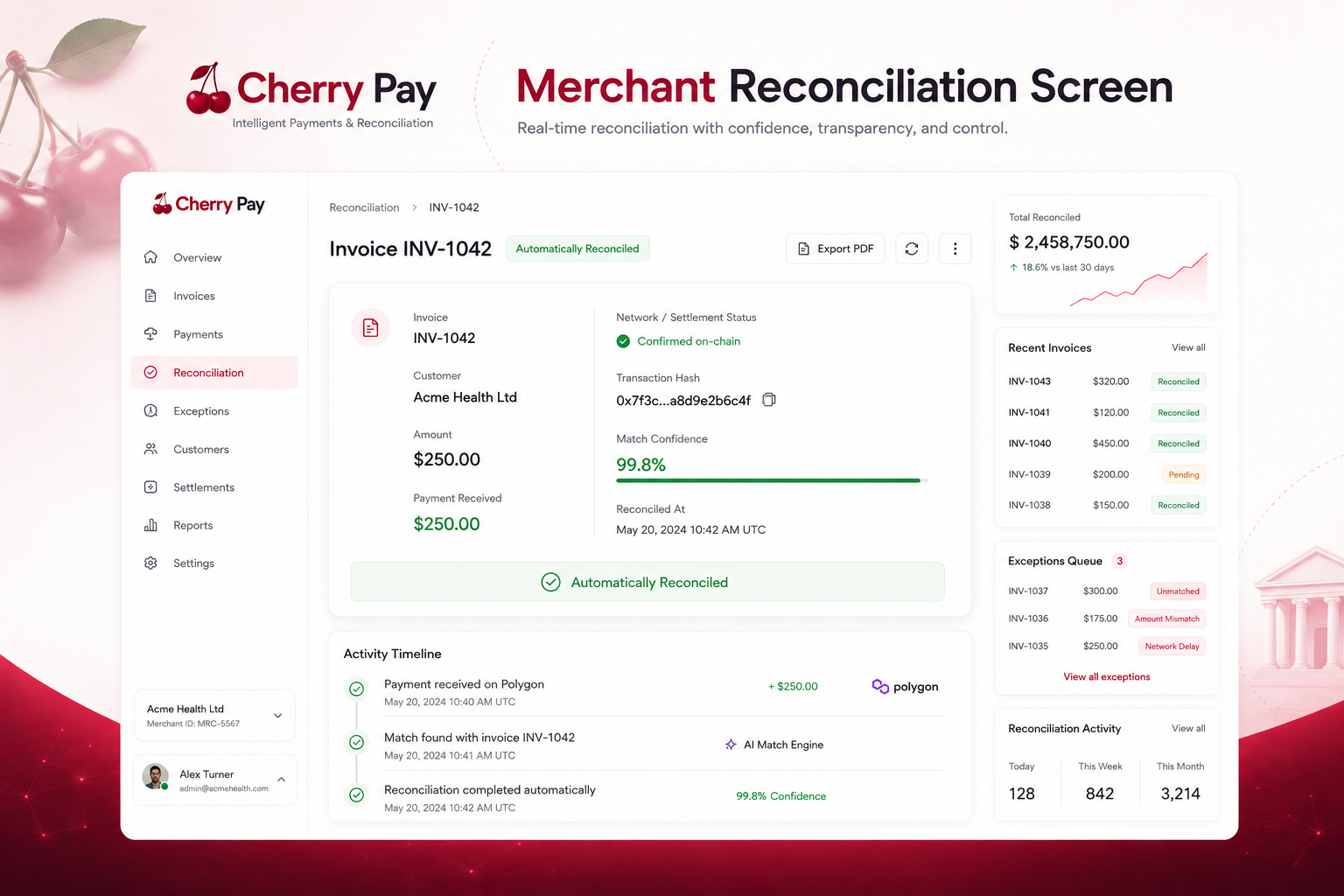
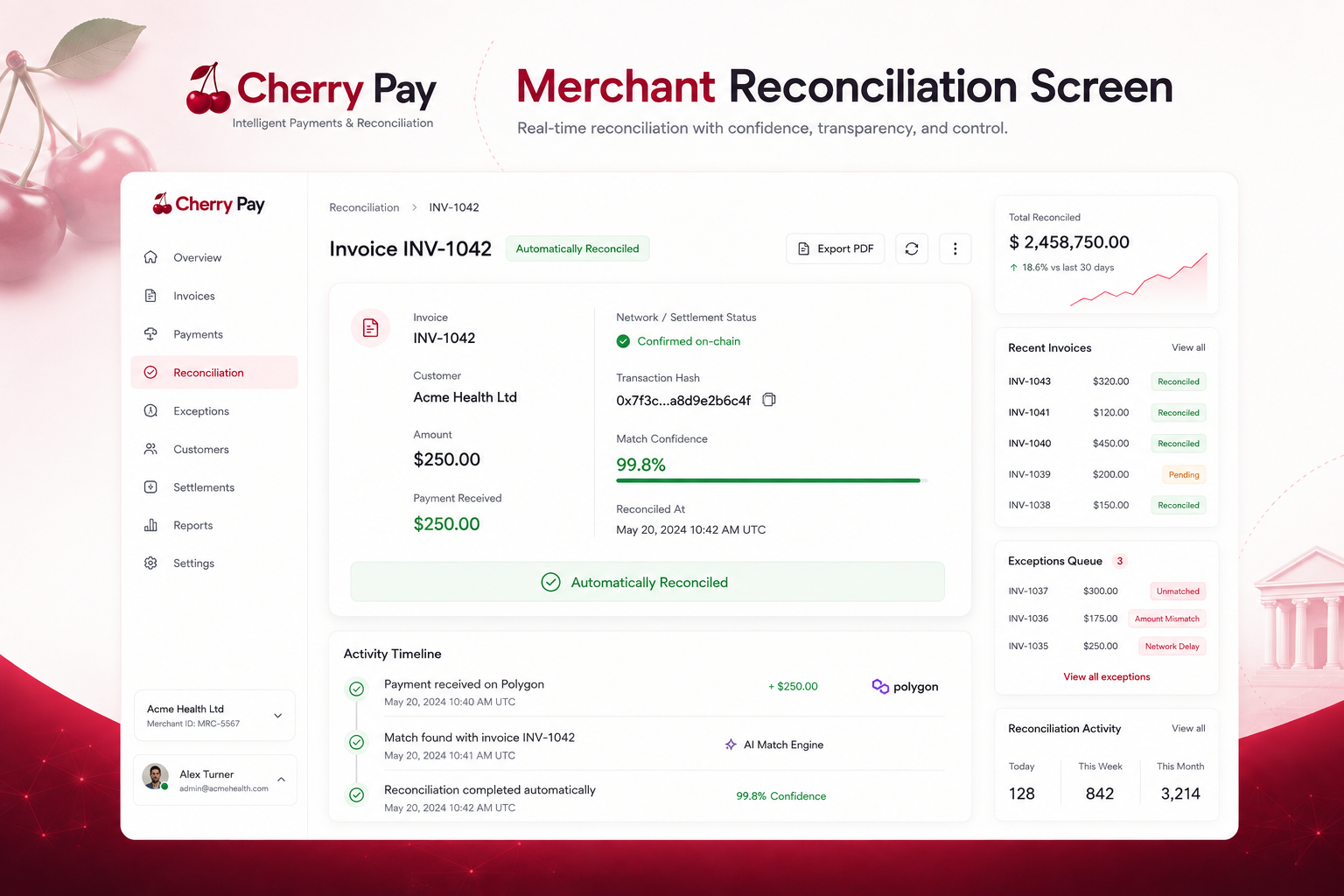
Merchant Reconciliation Screen
-
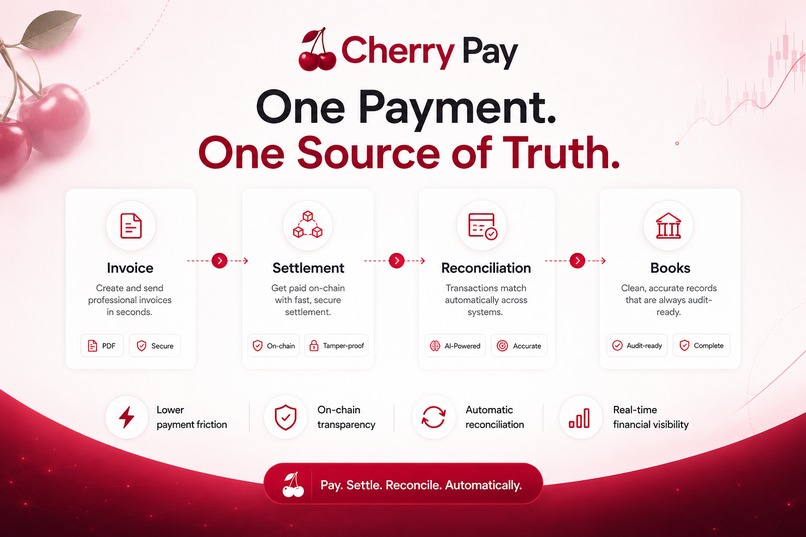
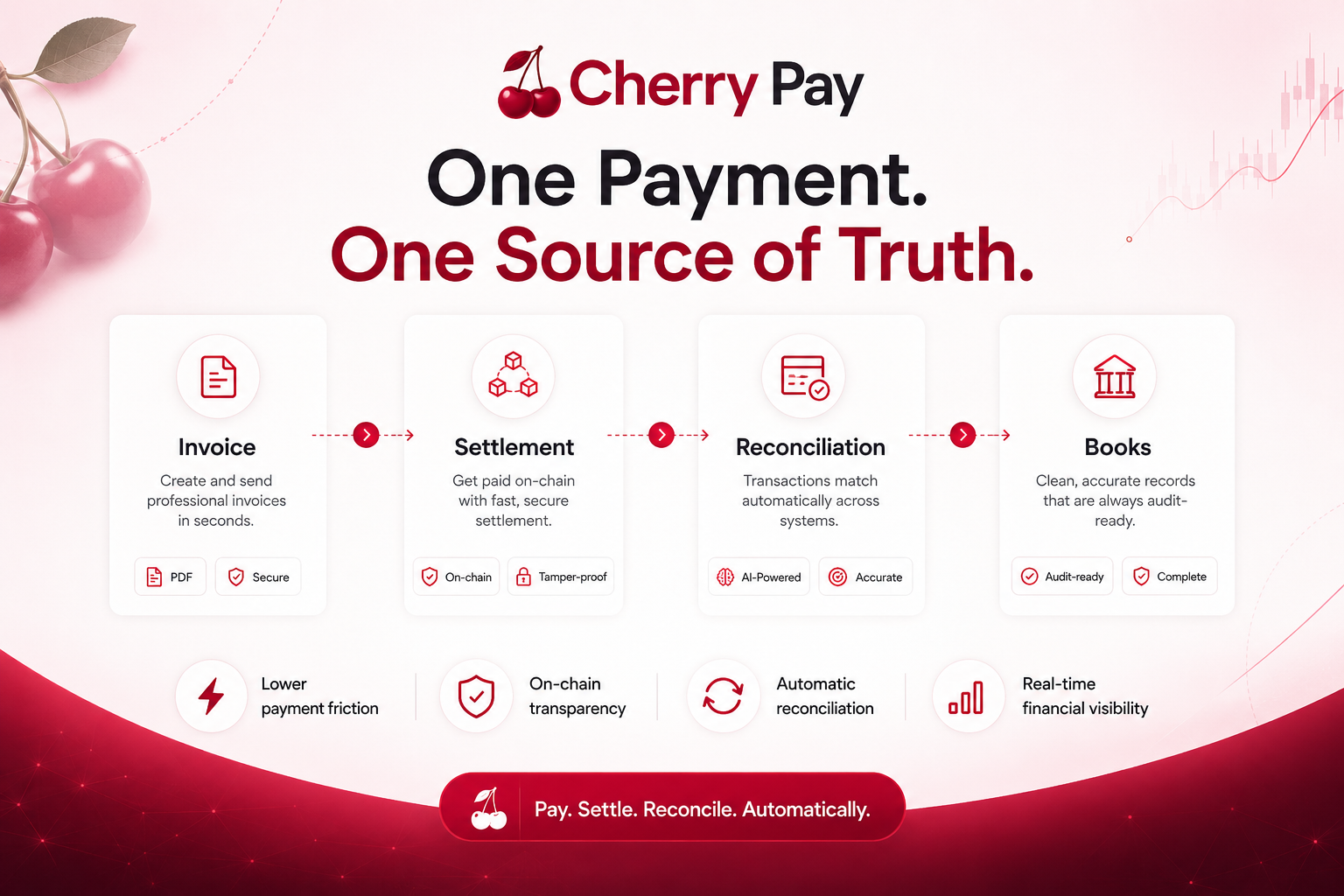
One Payment- One Source of Truth
Cherry Pay - Intelligent Payments & Reconciliation
Inspiration
Cherry Pay was born from a problem we experienced ourselves while running small businesses and community organisations.
Receiving money was rarely the end of a payment. We still had to work out:
- Which invoice had been paid?
- Which customer sent the money?
- Was the amount correct?
- Had a payment been duplicated or partially paid?
- How should the transaction be categorised?
- Had the accounting records been updated?
At one point, completing bank reconciliation and preparing accounts took us several months because transactions had accumulated and needed to be matched retrospectively.
We also saw another recurring problem: invoices could be generated automatically and reminder emails could be sent automatically, but customers could still forget to pay.
We realised that payment infrastructure and accounting infrastructure are still treated as separate systems.
Cherry Pay is our attempt to connect them.
The problem
Businesses currently use separate systems for:
- creating an invoice,
- requesting payment,
- receiving the payment,
- checking settlement,
- identifying the transaction,
- reconciling it against the invoice, and
- recording it in their books.
Web3 can make settlement programmable and transparent, but a blockchain transaction alone does not understand its business context.
A transaction hash can prove that value moved.
It does not automatically tell an accounting system:
"This payment settles Invoice INV-1042 from Customer A."
That missing connection is what Cherry Pay addresses.
What Cherry Pay does
Cherry Pay creates an intelligent payment layer connecting an invoice directly to settlement and reconciliation.
The proposed flow is:
Invoice → Payment Intent → Web3 Payment → Settlement Verification → Intelligent Matching → Reconciliation
A merchant creates an invoice and Cherry Pay generates a unique payment intent.
The customer can then pay through a supported payment rail, including a Web3/stablecoin payment.
Cherry Pay watches for settlement and captures information such as:
- payment reference,
- wallet or payer identity,
- amount,
- currency/token,
- timestamp,
- invoice identifier, and
- transaction hash.
The reconciliation engine then attempts to match the incoming settlement with the correct invoice.
High-confidence matches can be reconciled automatically.
Ambiguous transactions are surfaced to the merchant with an AI-assisted recommendation rather than silently making an accounting decision.
Once confirmed, the invoice is marked as paid and the business has a traceable link between:
invoice → payment → settlement → accounting record.
Why Web3?
Web3 gives us an opportunity to make payments more programmable.
Instead of treating the blockchain simply as another way of transferring money, Cherry Pay uses on-chain settlement as an event that can trigger downstream financial operations.
For example:
Customer
   ↓
Invoice / QR Payment Request
   ↓
Cherry Pay Payment Intent
   ↓
Stablecoin / Web3 Payment
   ↓
On-chain Settlement
   ↓
Settlement Listener
   ↓
Reconciliation Engine
   ↓
Invoice Matched
   ↓
Accounting Ledger Updated


Log in or sign up for Devpost to join the conversation.