-
-

Home
-
Learning
-
Interactive Playing
🛡️ Cheque-a-Fraud
🌟 Inspiration
Fraud and scams are on the rise, affecting young students and adults globally. Many individuals fall victim to phishing scams, identity theft, and financial fraud due to a lack of awareness. This inspired us to develop a solution that not only educates but also engages users in an interactive and gamified way. We wanted to make learning about fraud fun, practical, and memorable, helping users recognize fraudulent tactics before they become victims.
🕵️♂️ What it does
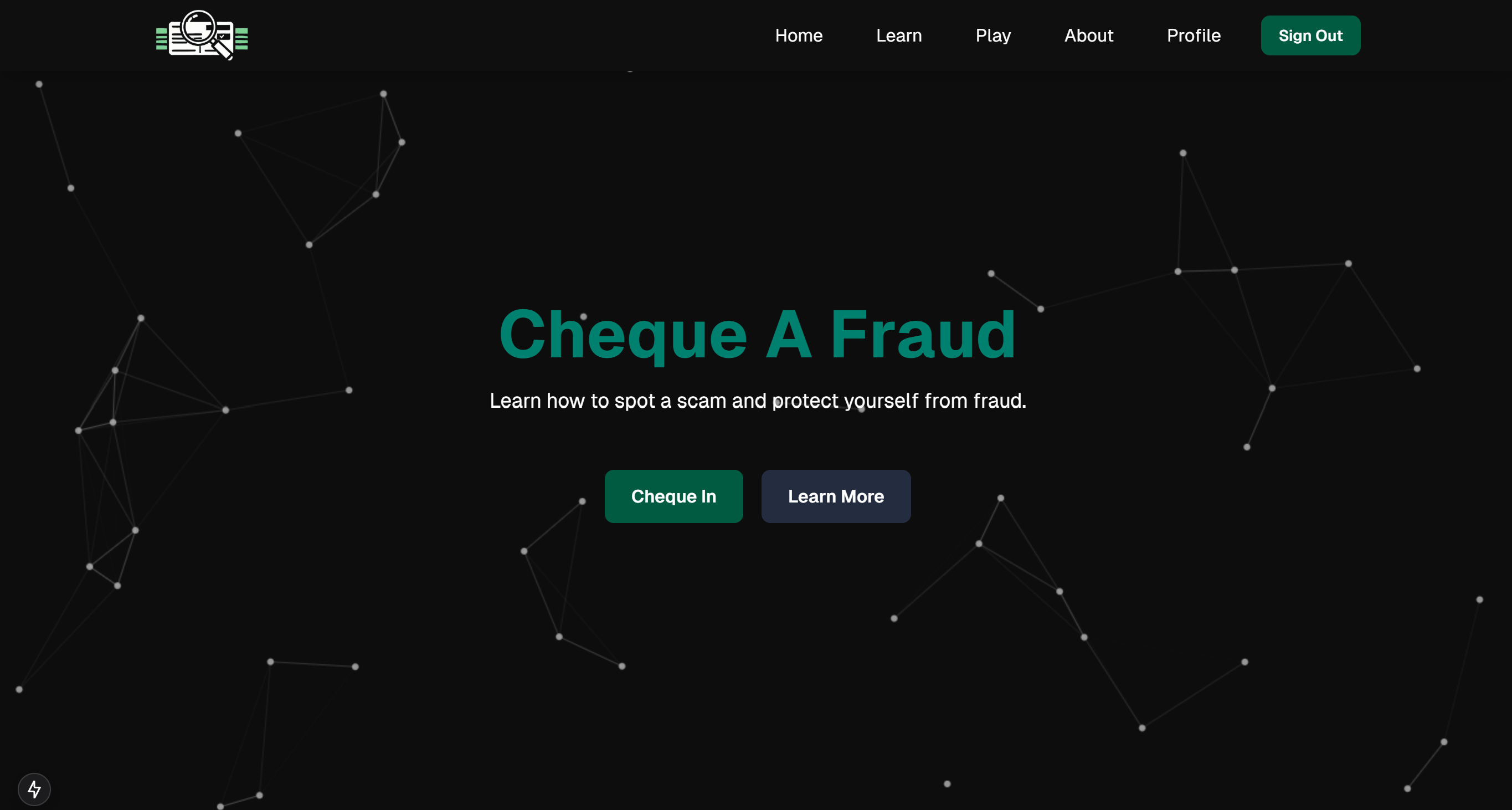
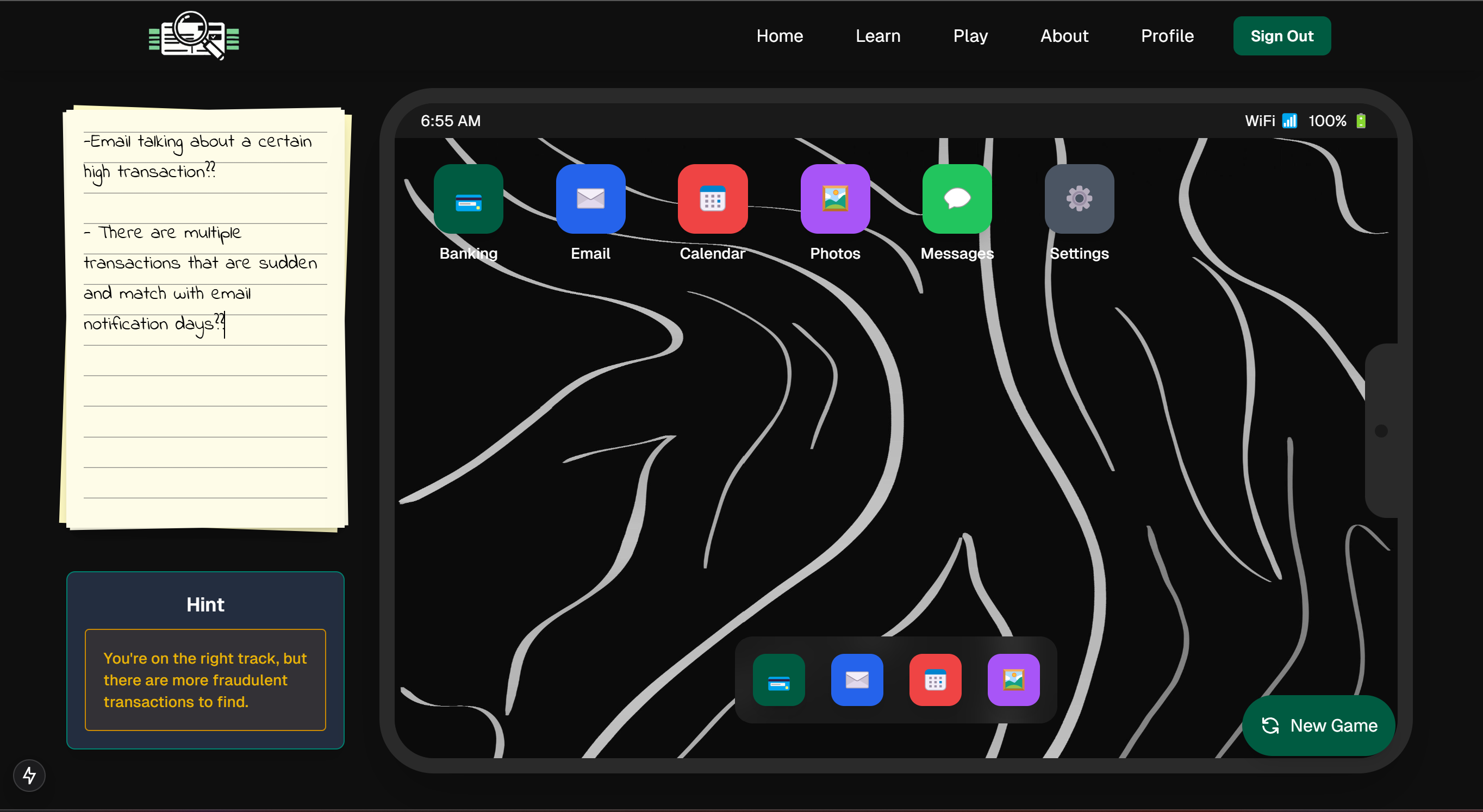
Cheque-a-Fraud is a fraud detection learning platform designed to educate users about different scamming techniques through an interactive experience. The platform consists of two main sections:
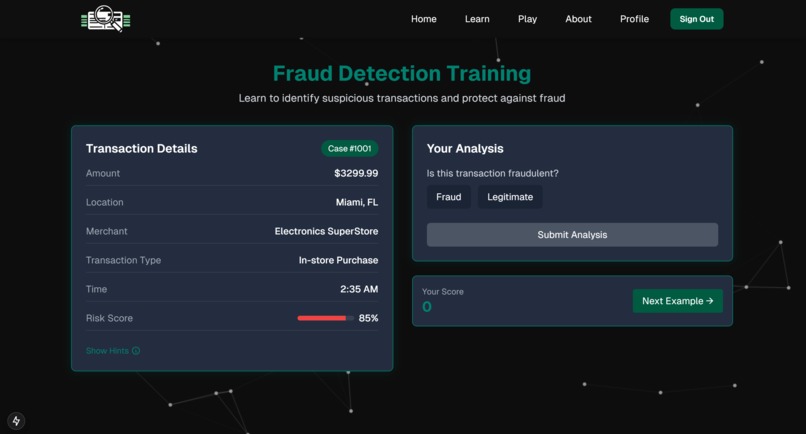
1️⃣ 📚 Learn Mode – Users go through structured lessons where they learn about various fraud types such as card skimming, fake accounts, money laundering, phishing scams, and identity theft. Each transaction comes with key hints and red flags to help users recognize fraud patterns.
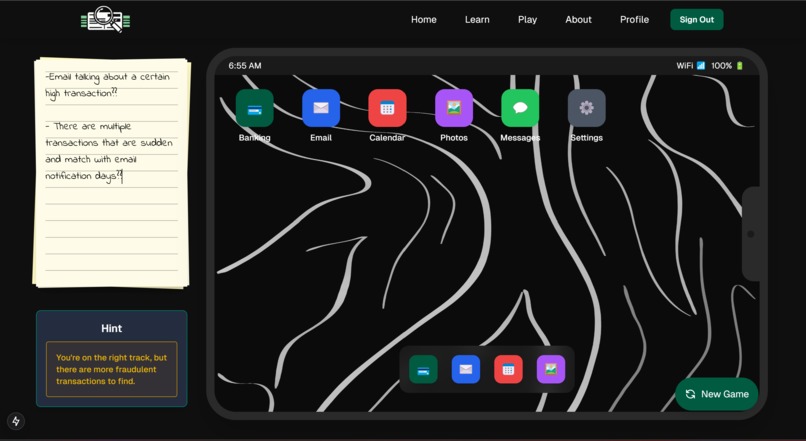
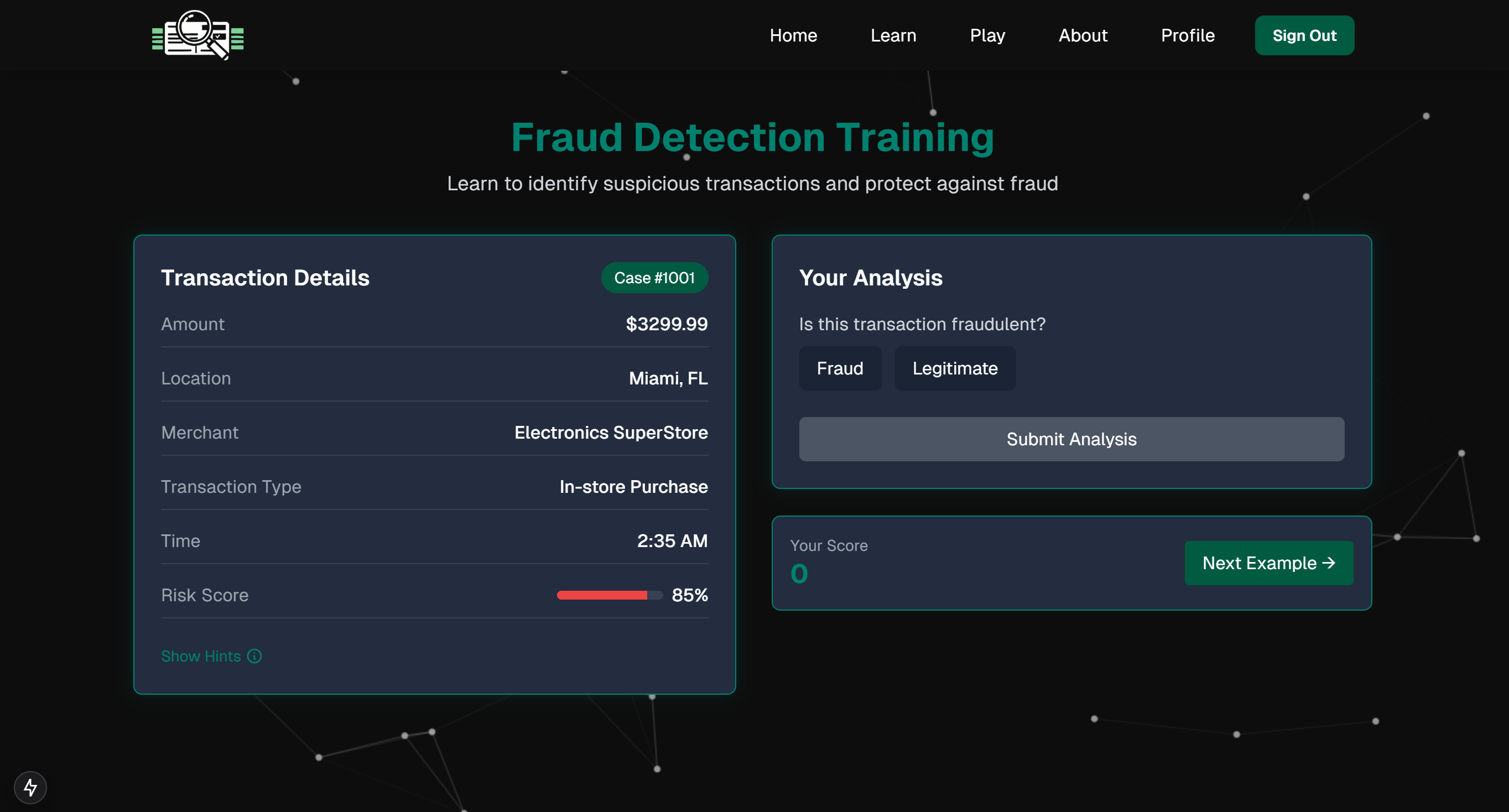
2️⃣ 🎮 Game Mode – Users get to simulate real-world fraud detection by analyzing transactions and deciding whether they are fraudulent or legitimate. AI-generated transactions make each case unique, and users earn points for correctly identifying fraud.
⚙️ How we built it
We developed Cheque-a-Fraud using a modern web tech stack to ensure a smooth, responsive, and scalable experience:
- 🖥️ Next.js & TypeScript – For fast, server-side rendered pages and efficient frontend performance.
- 🎨 TailwindCSS – For sleek, responsive, and highly customizable UI styling.
- ⚛️ React – For interactive UI components that make the game dynamic.
- 🛠️ Next.js API Routes – For handling AI-generated fraud scenarios and game logic.
- 🧠 OpenAI API – For generating AI-powered fraud explanations, ensuring that each case is unique and educational.
The application is designed to mimic a real-world fraud detection system, allowing users to interact as if they were investigating financial transactions on a professional fraud detection interface.
🚧 Challenges we ran into
- Creating Realistic Fraud Scenarios – We had to research actual fraud cases to design authentic-looking transactions that reflect real-world financial crimes.
- Balancing Learning & Fun – Keeping the game engaging while ensuring it remains educational and informative was a tricky balance.
- Optimizing AI Explanations – AI-generated insights needed to be clear and meaningful without overwhelming users with technical jargon.
- Ensuring a Smooth User Experience – Designing an intuitive interface that works seamlessly across devices required multiple iterations.
🏆 Accomplishments that we're proud of
- 🎮 Successfully gamified financial fraud education, making learning engaging and interactive.
- 🤖 Implemented AI-powered fraud analysis, generating unique and realistic fraud scenarios.
- 🚀 Created a seamless, immersive user experience that helps users recognize fraud patterns in a fun way.
- 🌍 Built a tool that can truly make a difference, helping people avoid falling victim to financial scams.
📚 What we learned
- 🔐 The importance of cybersecurity awareness and how easily people can fall for financial fraud schemes.
- 🎭 How fraudsters operate and the psychology behind their tactics.
- 🛠️ Best practices for integrating AI into a gamified learning platform.
- 🎮 How to create engaging educational experiences that blend learning with entertainment.
🚀 What's next for Cheque-a-Fraud
- 📊 Expanding fraud scenarios – We want to include even more real-world fraud types and case studies.
- 🏆 Leaderboard & Competitions – Introducing multiplayer mode where users can compete to detect fraud the fastest.
- 🎁 Reward System – Implementing rewards for correct answers to increase engagement.
- 🔍 Advanced AI for More Personalized Learning – Customizing fraud scenarios based on user skill level.
- 🌎 Multi-Language Support – Making Cheque-a-Fraud accessible worldwide to educate as many people as possible.
🚨 Stay ahead of cybercriminals and protect your finances with 🛡️ Cheque-a-Fraud! 🚀
Built With
- clerk
- next.jsapiroutes
- nextjs
- openai
- react
- tailwindcss
- typescript



Log in or sign up for Devpost to join the conversation.