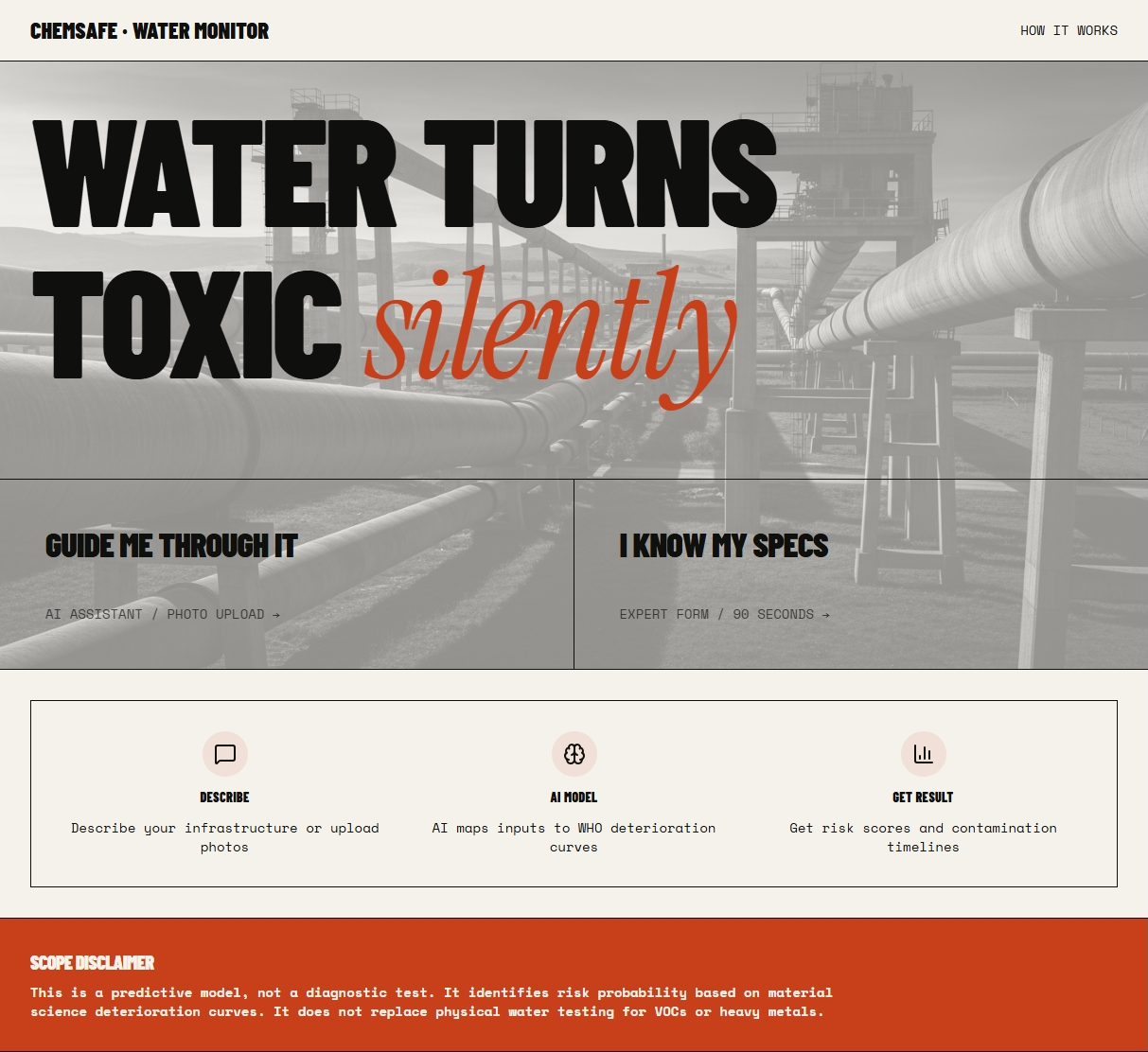
Every year, farmers, fish pond operators, and communities lose crops, livestock, and health to water contamination they never saw coming. The culprit is often the infrastructure itself PVC pipes and polymer joints degrading silently under heat and UV radiation, leaching phthalates, microplastics, and volatile organic compounds into the water supply over months and years. No alarm goes off. By the time fish die or crops fail, the chemical load has been building for a season or more.
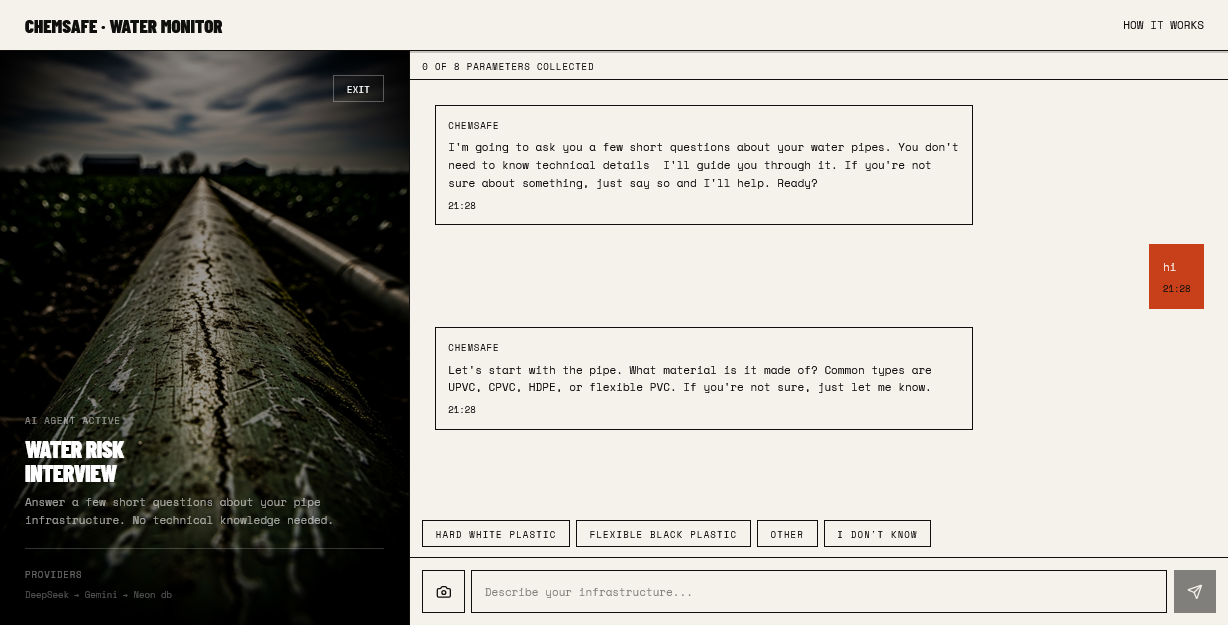
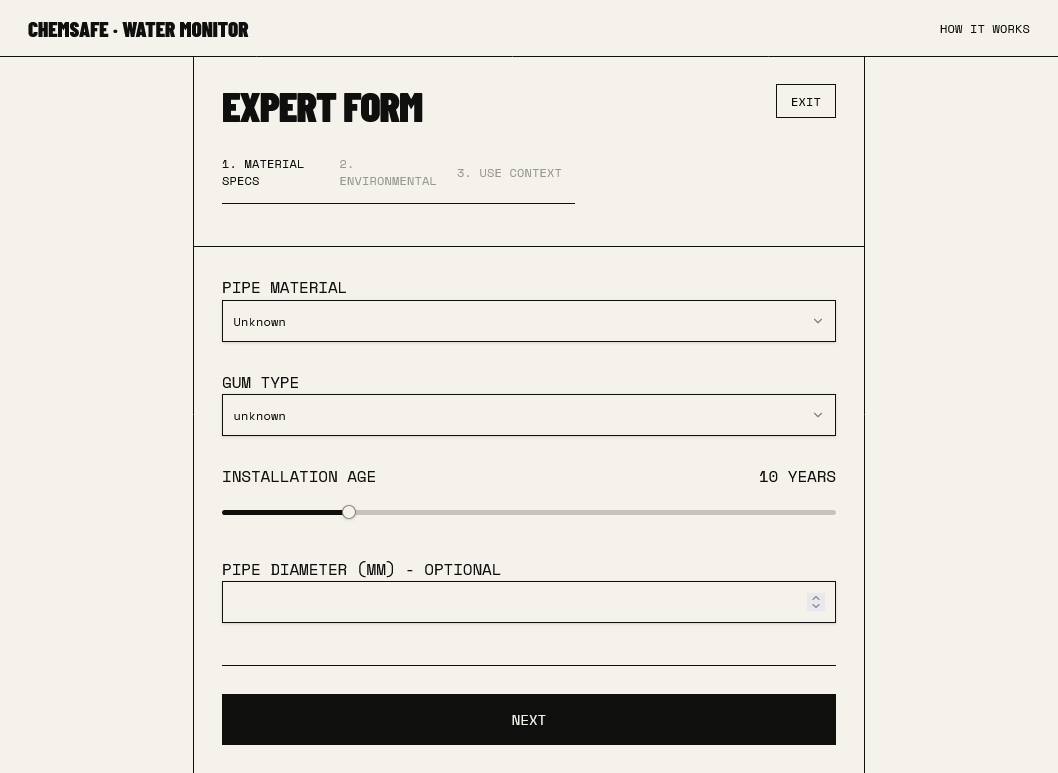
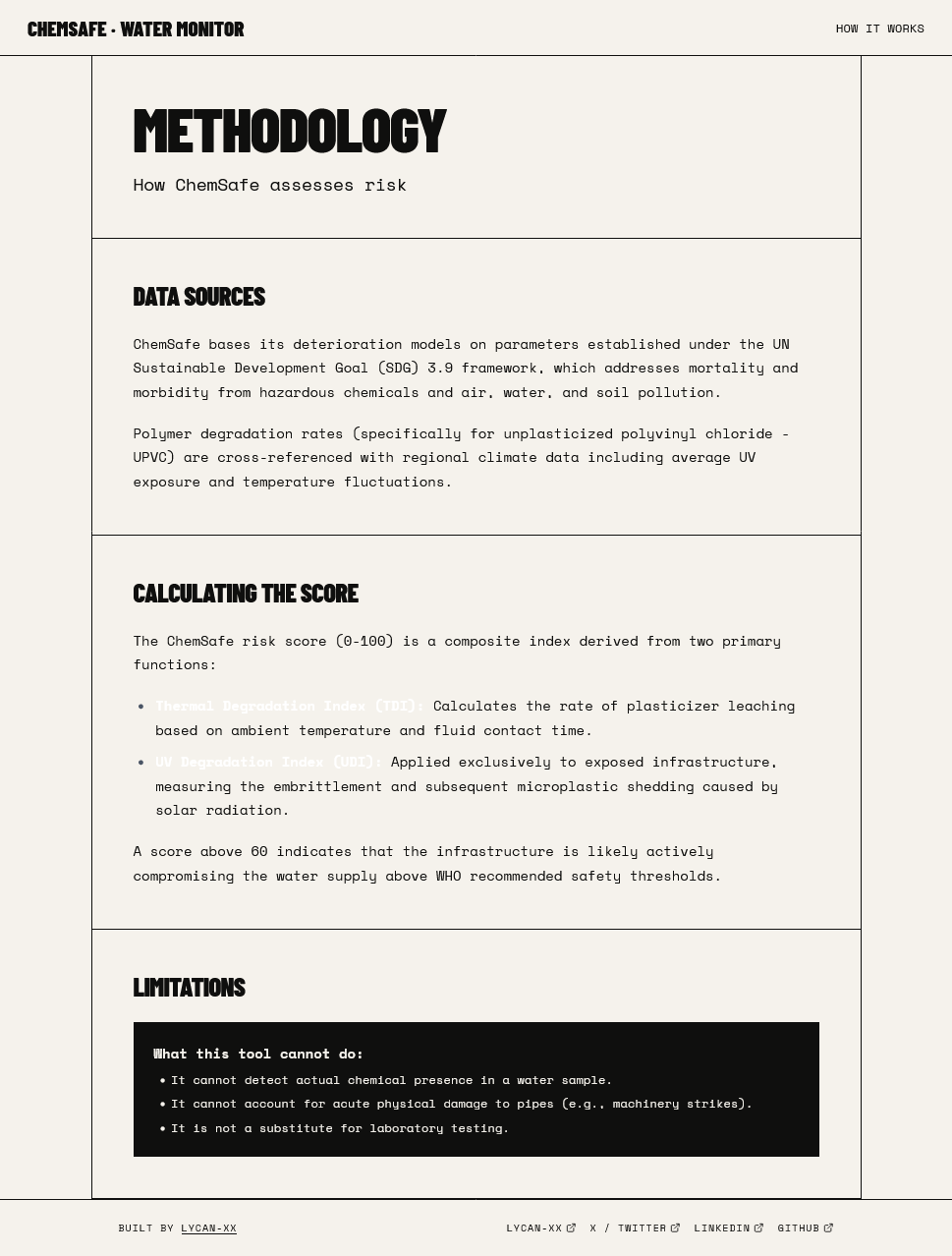
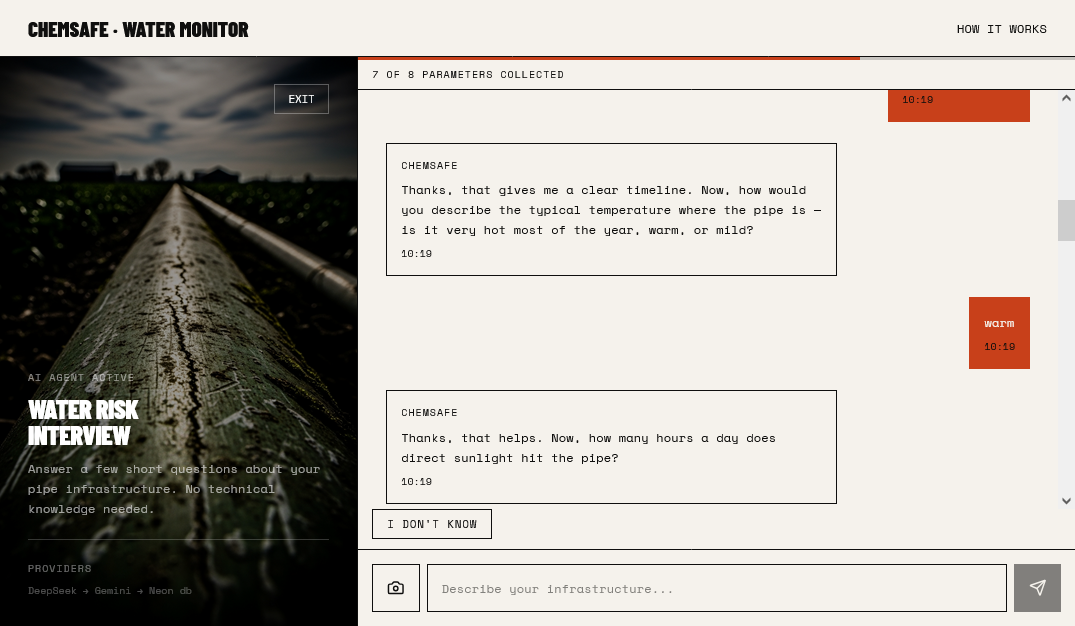
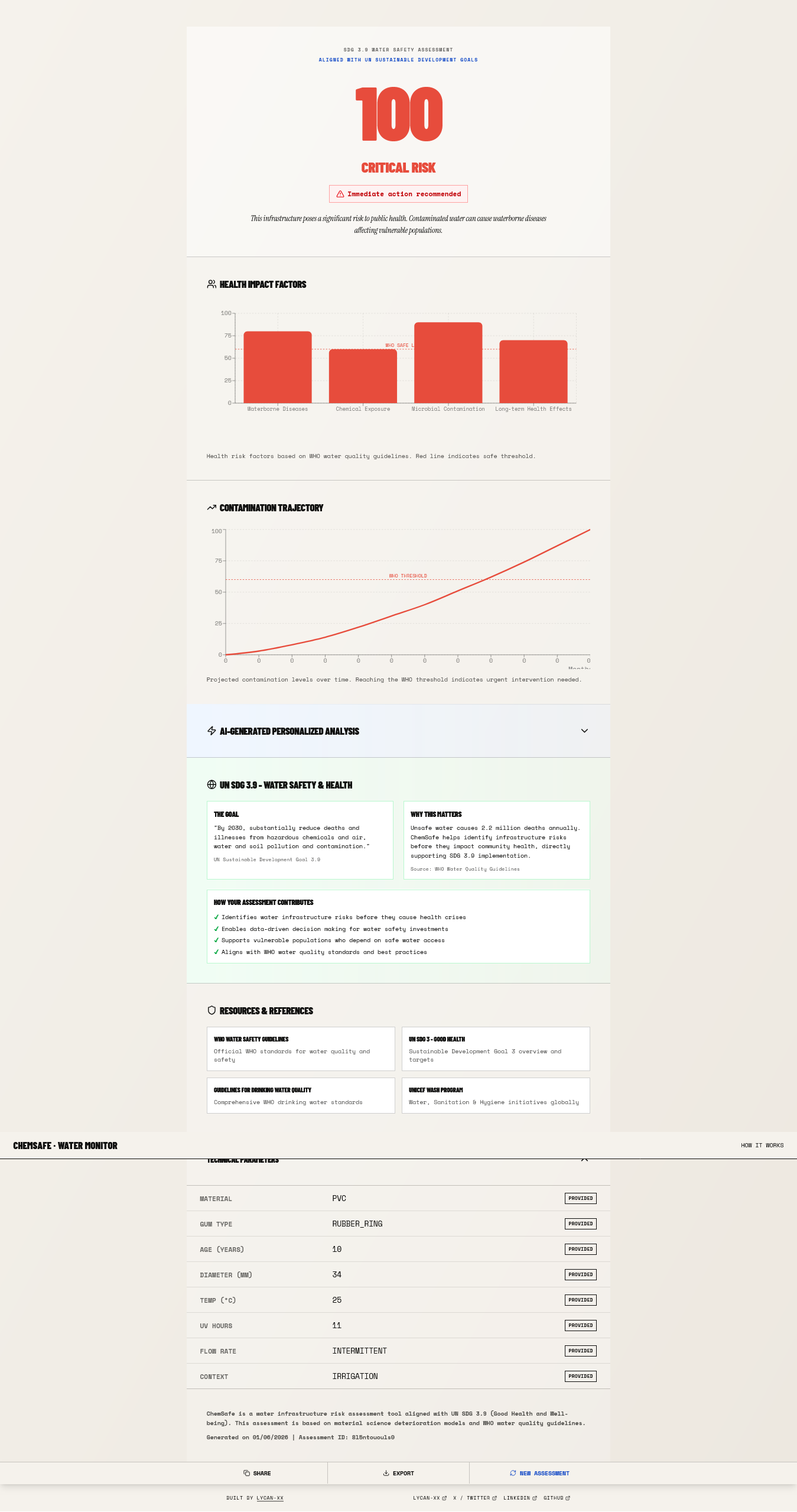
ChemSafe calculates a Leachate Risk Score from infrastructure parameters pipe material, installation age, UV exposure, ambient temperature, flow rate, and use context using polymer degradation chemistry models grounded in WHO SDG 3.9 water safety thresholds. The tool is built for global agricultural contexts: warm climates, limited water-testing access, and ageing pipe infrastructure. Critically, ChemSafe offers two entry paths: a technical form for extension officers and planners who know their specifications, and an AI-guided interview for anyone who doesn't, adapting its vocabulary to the user's literacy level, accepting proxy and observational answers when direct answers aren't available, and using image recognition to identify pipe materials from photos. Both paths feed the same chemistry model and produce the same risk output.
ChemSafe is a Tier 2 tool designed for the technical intermediary layer between scientific data and the communities it serves. It is predictive, not diagnostic: it projects when contamination is likely to begin, not whether it has already occurred. It does not replace physical water testing. What it gives planners, supervisors, and field officers is a decision-making window they currently lack and a shareable, printable record of every assessment they run.
Built With
- deepseek-api
- google-gemini-api
- neon-db
- node.js
- postgresql
- react
- typescript

Log in or sign up for Devpost to join the conversation.