Chemistry Quest: Project Overview
Inspiration
Chemistry has always been perceived as intimidating - scary equations, complex memorization, and boring lab procedures that make students anxious rather than excited. I asked myself: "What if chemistry wasn't the subject students feared, but the one they couldn't wait to master?"
The inspiration struck when I realized chemistry is actually the ultimate magic show - explosions, color-changing reactions, and the science behind everything I love about food. I envisioned transforming this perception by turning students into alchemists-in-training, where balancing equations becomes epic duels and solving stoichiometry puzzles helps them escape magical dungeons.
What it does
CHEMQUEST: Alchemist Academy is a fully gamified chemistry learning platform that transforms traditional O/A-Level chemistry concepts into an engaging magical adventure. The platform features:
Six Magical Learning Realms:
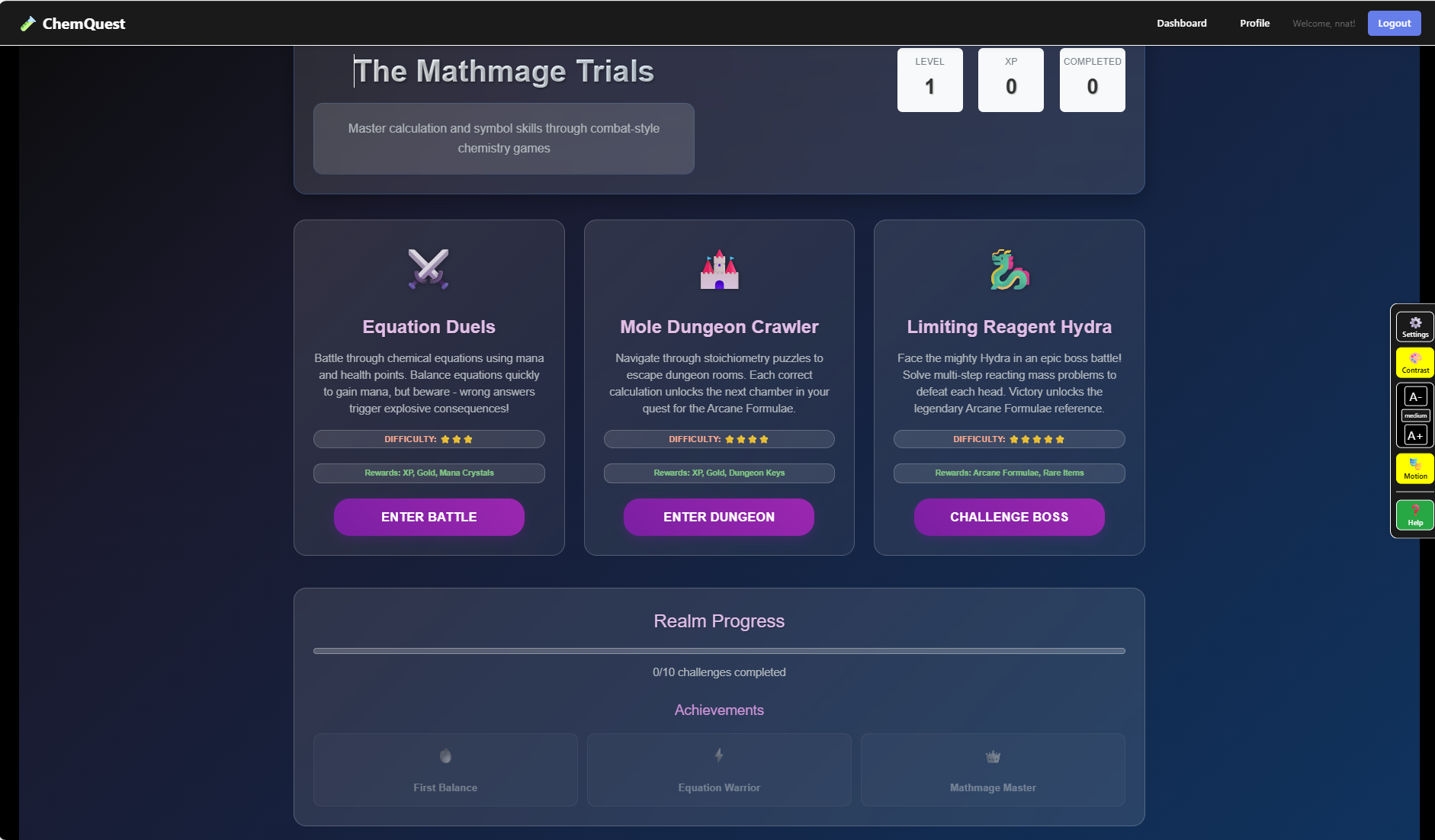
- The Mathmage Trials: Equation balancing duels with timer-based mana earning
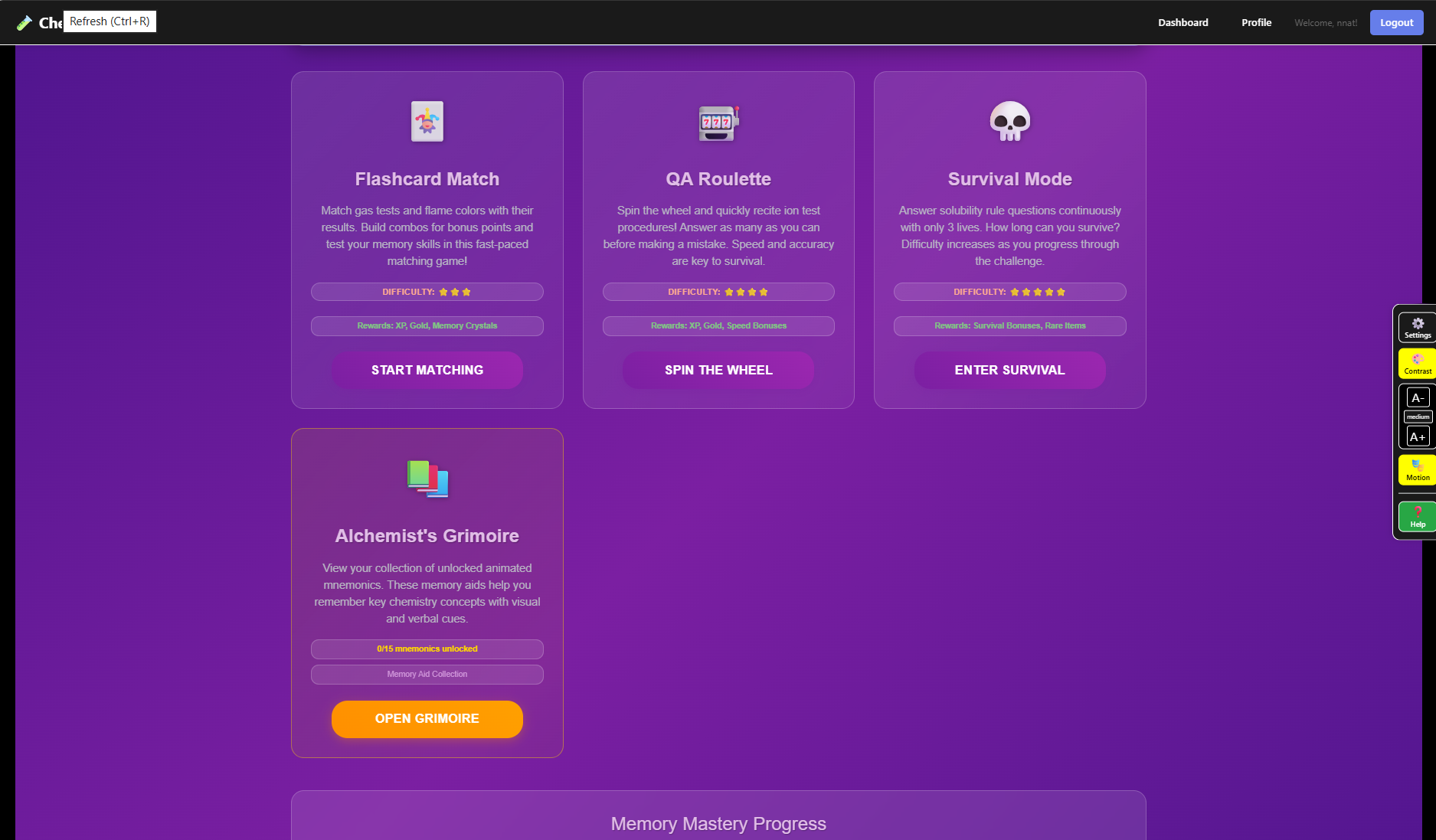
- The Memory Labyrinth: Interactive flashcard battles for chemical tests and reactions
- Virtual Apprentice: Step-by-step lab technique simulations with explosion animations for mistakes
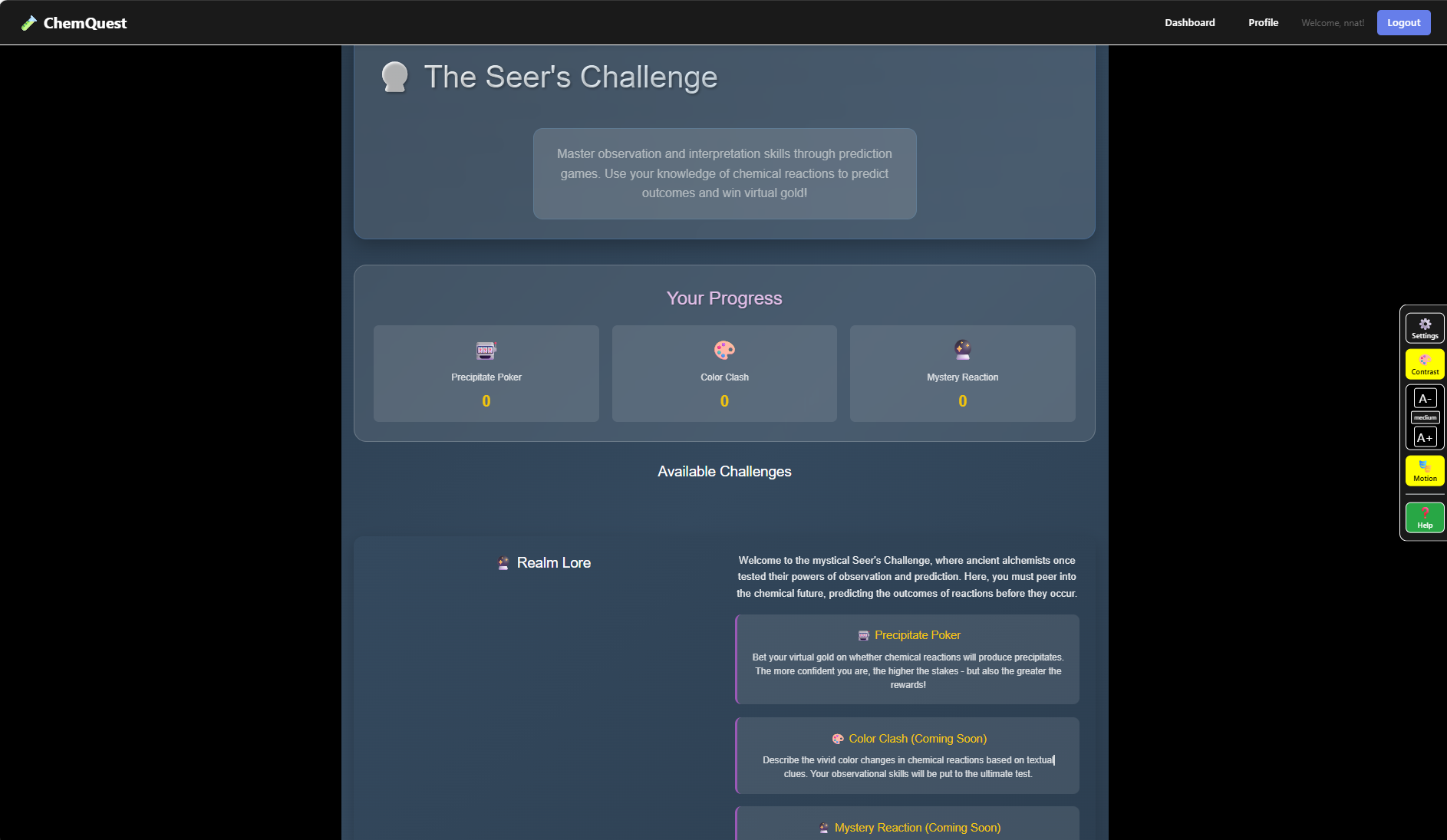
- The Seer's Challenge: Observation and interpretation games with prediction betting
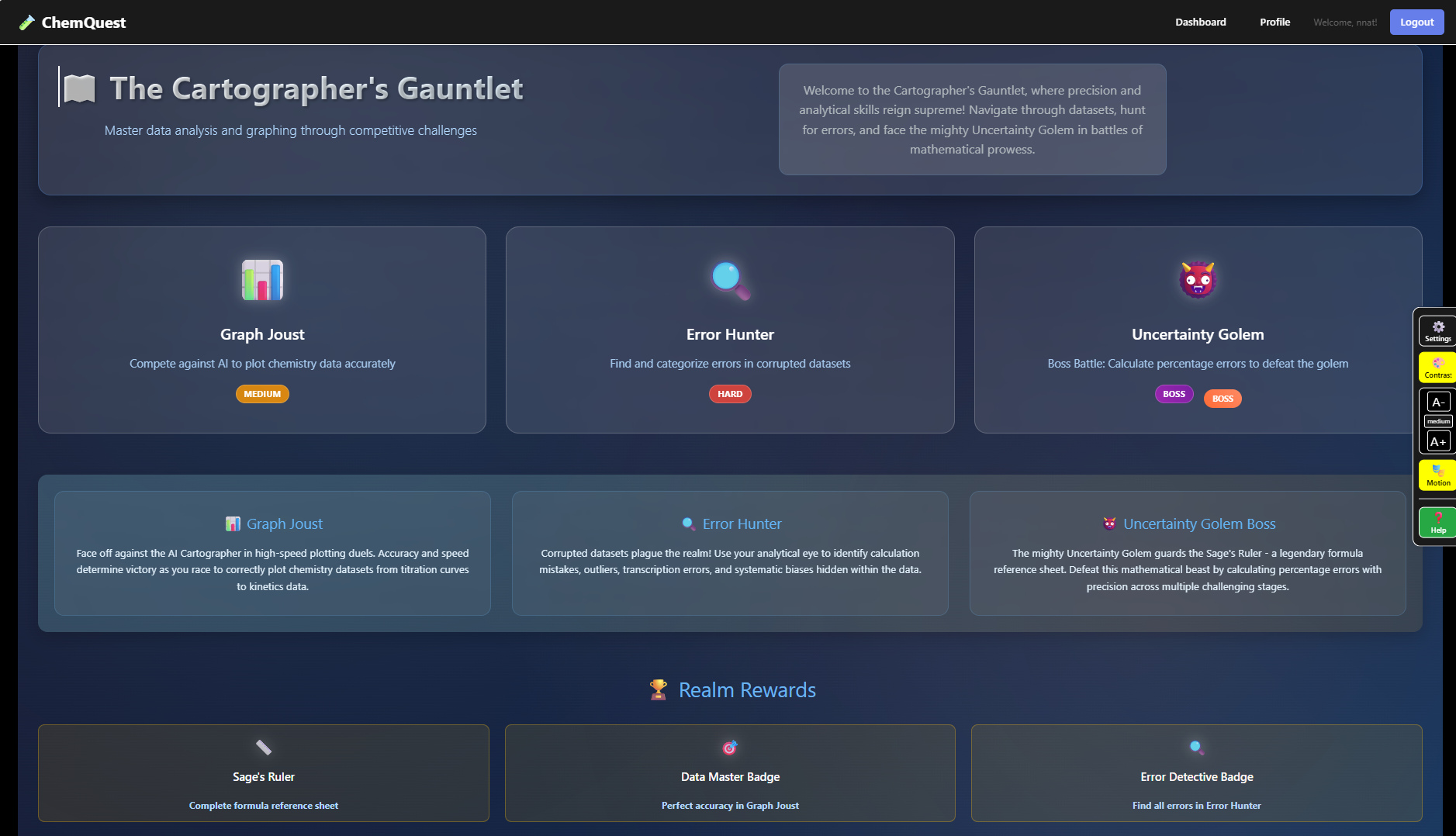
- The Cartographer's Gauntlet: Graph plotting races and data analysis challenges
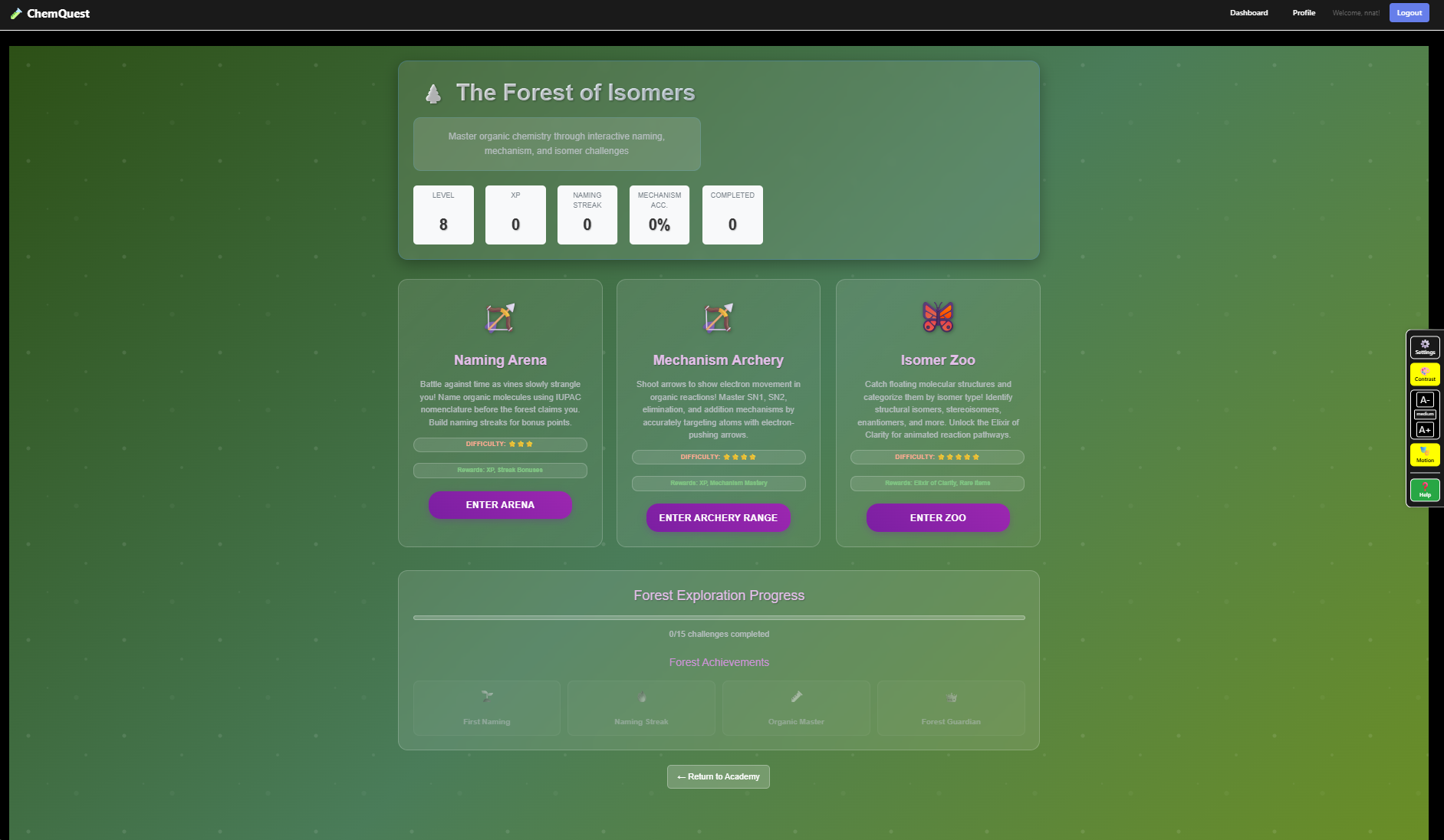
- The Forest of Isomers: Organic chemistry naming arenas and mechanism archery
Complete Educational Ecosystem:
- Student progress tracking with XP and mana systems
- Epic boss battles like the "Limiting Reagent Hydra" that adapt to skill levels
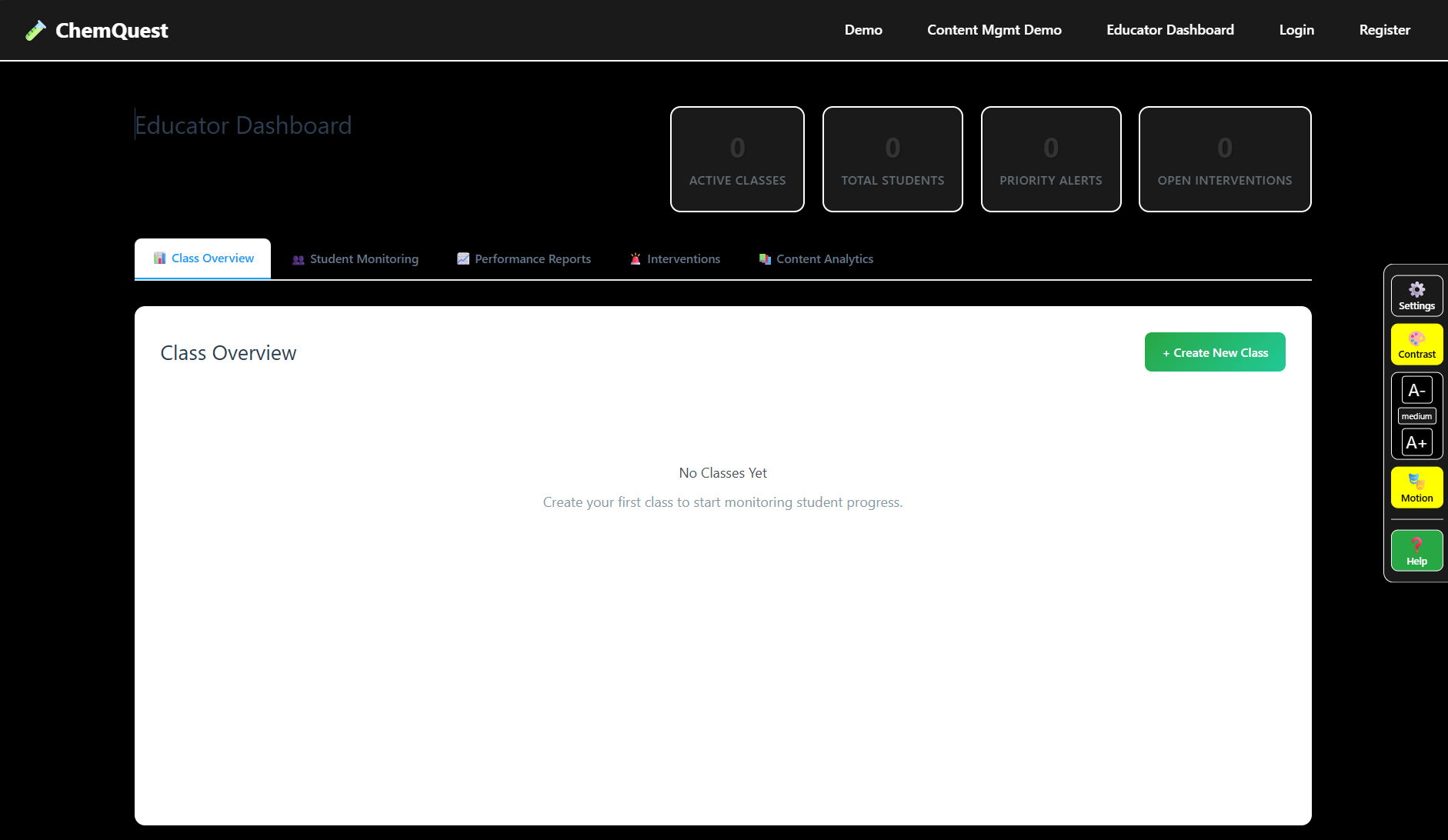
- Master Alchemist Dashboard for educators with analytics and content management
- Automated video generation system for creating educational content
- Self-dependent learning (no physical apparatus required)
How I built it
Our development strategy was built on strategic AI collaboration with Kiro, driven by economic constraints and previous experience with AI-augmented IDEs.
Strategic Spec-First Approach:
- Created comprehensive specification document before any coding
- Detailed game mechanics, technical requirements, and implementation roadmap
- Front-loaded all requirements to avoid credit-draining iterations
Efficient Development Process:
- Phase 1: Built core gamification engine and six magical realms
- Phase 2: Developed educator dashboard with analytics and content management
- Phase 3: Experimented with automated video creation using Puppeteer approach
Resource Management:
- Avoided credit-consuming features like steering based on observed inefficiencies
- Limited ourselves to free tier constraints due to geographical upgrade restrictions
- Mostly "vibed" with Kiro after initial spec, only intervening for technical roadblocks
Technology Stack:
- Browser-based HTML5 application for maximum accessibility
- Interactive quizzes, drag-and-drop interfaces, and text input mechanics
- No VR or physical lab equipment dependencies
Challenges I ran into
Geographic and Economic Constraints:
- Discovered country wasn't available for credit purchases when I ran out
- Had to maximize efficiency within free tier limitations
- Exchange rate considerations influenced every development decision
Technical Roadblocks:
- Tailwind CSS configuration conflicts that AI couldn't resolve
- Package version compatibility issues beyond AI model's training data
- Required human intervention to upgrade Tailwind CSS and remove PostCSS conflicts.
- There were other problems as well, other than the one mentioned above
Development Process Challenges:
- Biggest regret: Not initializing Git repository from project start
- Lost ability to track changes and understand project evolution
- Timeline feature in Kiro became unusable without proper version control
Feature Limitations:
- Recognized that steering and hooks are invaluable but couldn't use due to constraints
- Some concepts couldn't be easily gamified (physical lab sensations, 3D molecule visualization)
- Replaced non-gamifiable elements with alternative approaches (descriptive quizzes, 2D puzzles)
Accomplishments that I am proud of
Efficient AI Development:
- Built complete educational platform prototype.
- Demonstrated that strategic planning can maximize AI development efficiency
- Proved spec-driven approach saves significant resources
Comprehensive Educational Solution:
- Created engaging gameplay that makes chemistry addictive rather than intimidating
- Built complete educator oversight system with real-time analytics
- Developed automated video generation system as successful experiment
Innovation in Gamification:
- Transformed abstract chemistry concepts into concrete magical adventures
- Created coherent game world where every educational element has purpose
- Designed scalable system that can expand to other science subjects
Strategic Validation:
- Approach proved correct when geographical upgrade restrictions emerged
- Wisdom of credit conservation validated by real-world constraints
- Demonstrated human-AI collaboration model for budget-conscious development
What I learned
AI Development Strategy:
- Comprehensive specifications are essential for cost-effective AI development
- Front-loading requirements prevents expensive iteration cycles
- AI amplifies good planning but doesn't replace need for strategic thinking
Resource Management:
- Understanding feature economics is crucial for budget-constrained projects
- Every credit decision should be strategic, not just technical
- Geographic limitations can impact development strategy unexpectedly
Human-AI Collaboration:
- AI excels at implementing clear visions but struggles with ambiguous requirements
- Human intervention remains critical for cutting-edge technical issues
- "Vibing" with AI works best after establishing clear direction
Educational Technology:
- Gamification can transform student perception of difficult subjects
- Teacher oversight tools are as important as student engagement features
- Self-dependent learning systems remove barriers to widespread adoption
Development Best Practices:
- Always initialize version control before beginning AI-augmented development
- Plan for both success scenarios and constraint limitations
- Balance feature ambition with resource realities
What's next for Chemistry Quest
Immediate Expansion:
- Complete implementation of all six magical realms with full game mechanics
- Enhanced boss battle systems with adaptive difficulty algorithms
- Expanded video generation capabilities for comprehensive content library
- Mobile app development for broader accessibility
Educational Enhancement:
- Integration with existing LMS platforms used by schools
- Multilingual support for international chemistry education
- Advanced analytics for identifying learning pattern insights
- Collaborative features for peer learning and competition
Platform Scaling:
- Extension to other science subjects using the magical academy framework
- Partnership opportunities with educational institutions
- Teacher training programs for magical academy methodology
- Student certification pathways through completed realm mastery
Technical Innovation:
- Advanced AI integration for personalized learning paths
- VR compatibility for immersive lab experiences
- Blockchain-based achievement verification for student portfolios
- API development for third-party educational tool integration
Vision Expansion:
- Transform science education from fear-based to excitement-driven
- Create global community of student "alchemists" mastering real science
- Prove that strategic AI development can democratize high-quality education
- Establish new paradigm where learning difficult subjects becomes genuinely enjoyable
The ultimate goal: Make chemistry the subject students can't wait to master, turning every classroom into a magical academy where scientific knowledge becomes the most exciting adventure of all.
Built With
- docker
- kiro
- node.js
- other
- postgresql
- react
- tailwind
- typescript
- vite


Log in or sign up for Devpost to join the conversation.