-
-
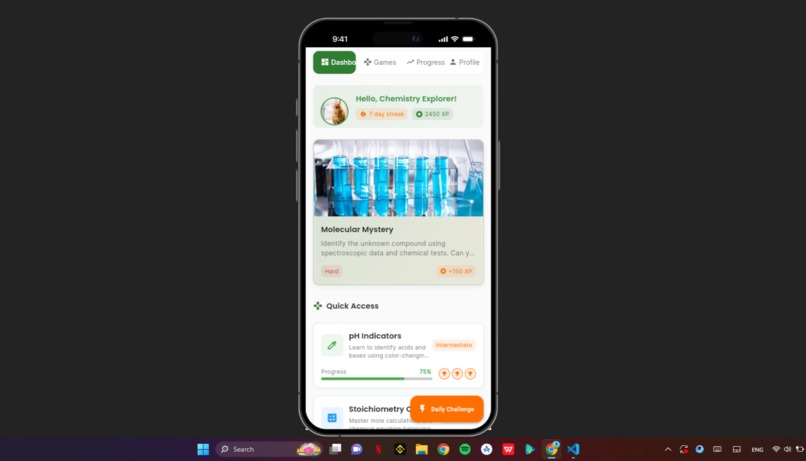
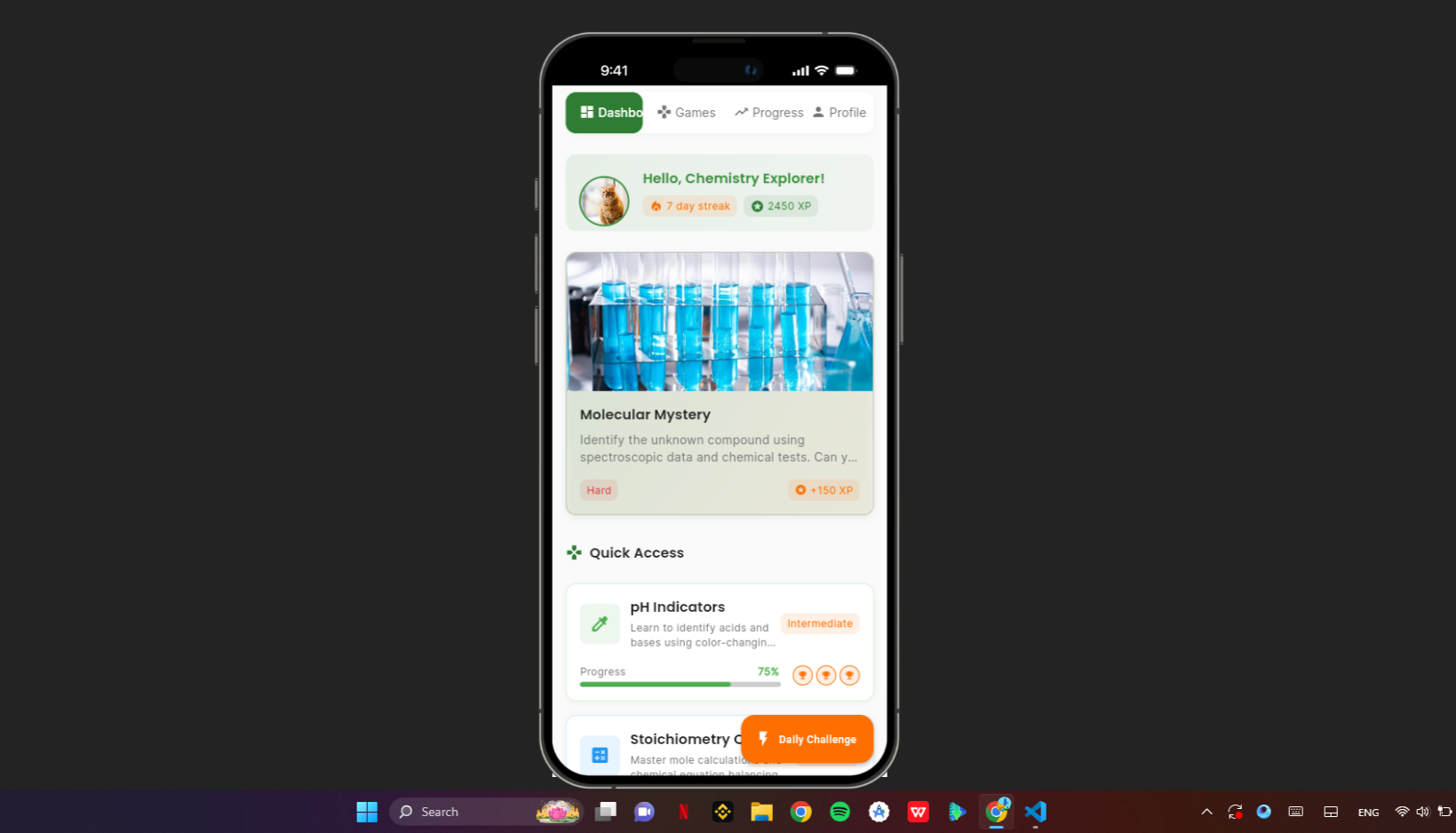
Dashboard page
-
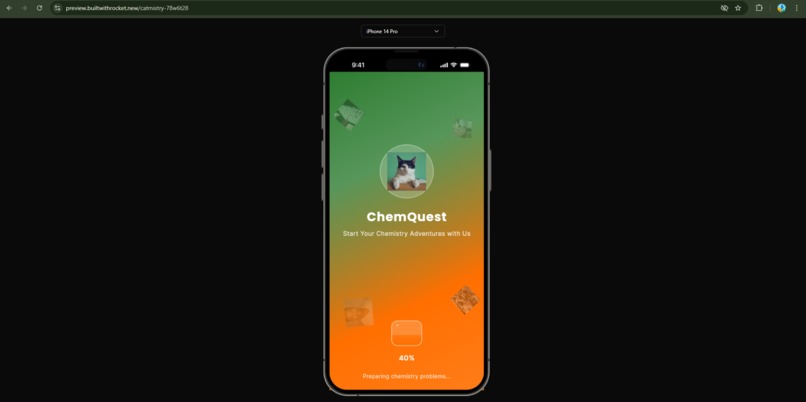
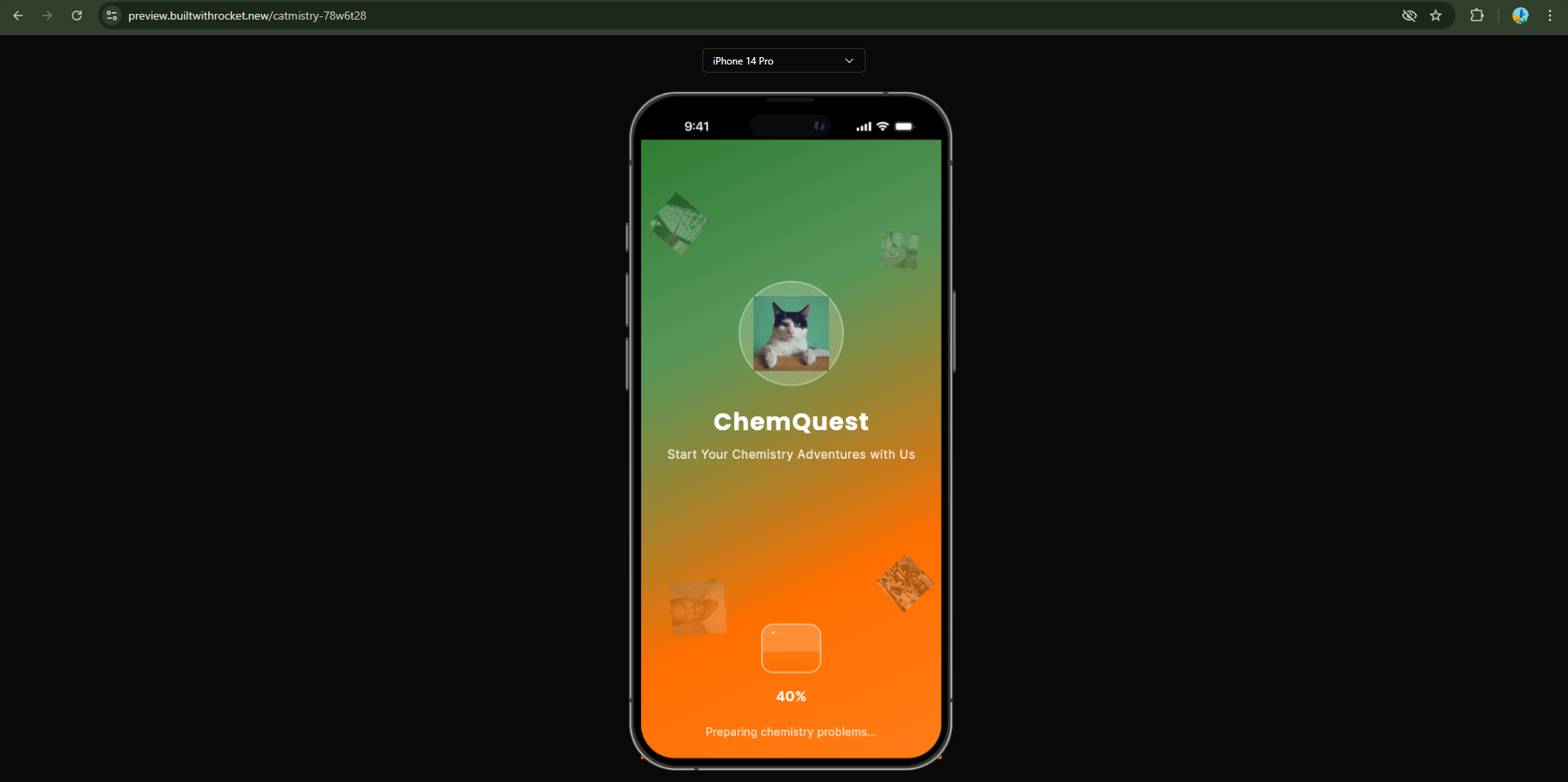
App Slash Screen
-
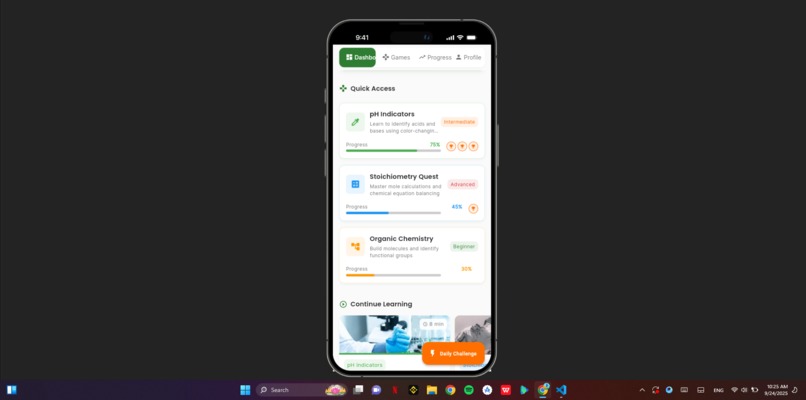
Dashboard page
-
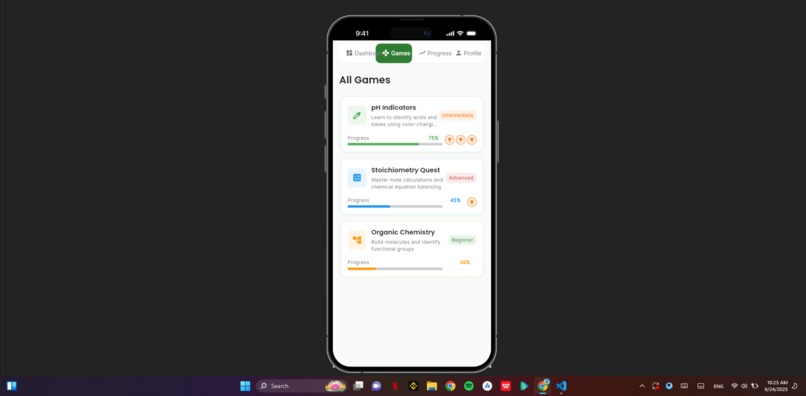
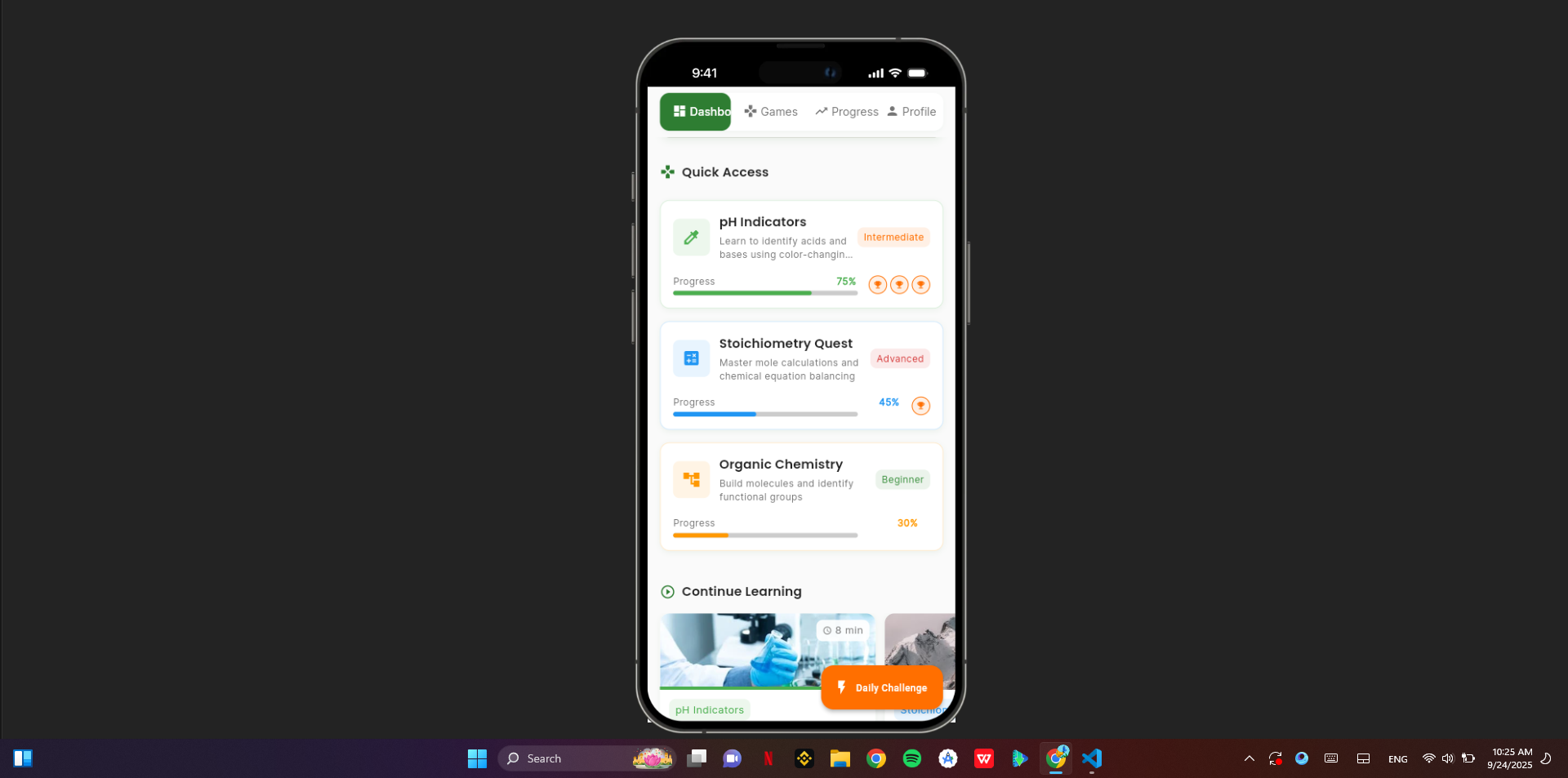
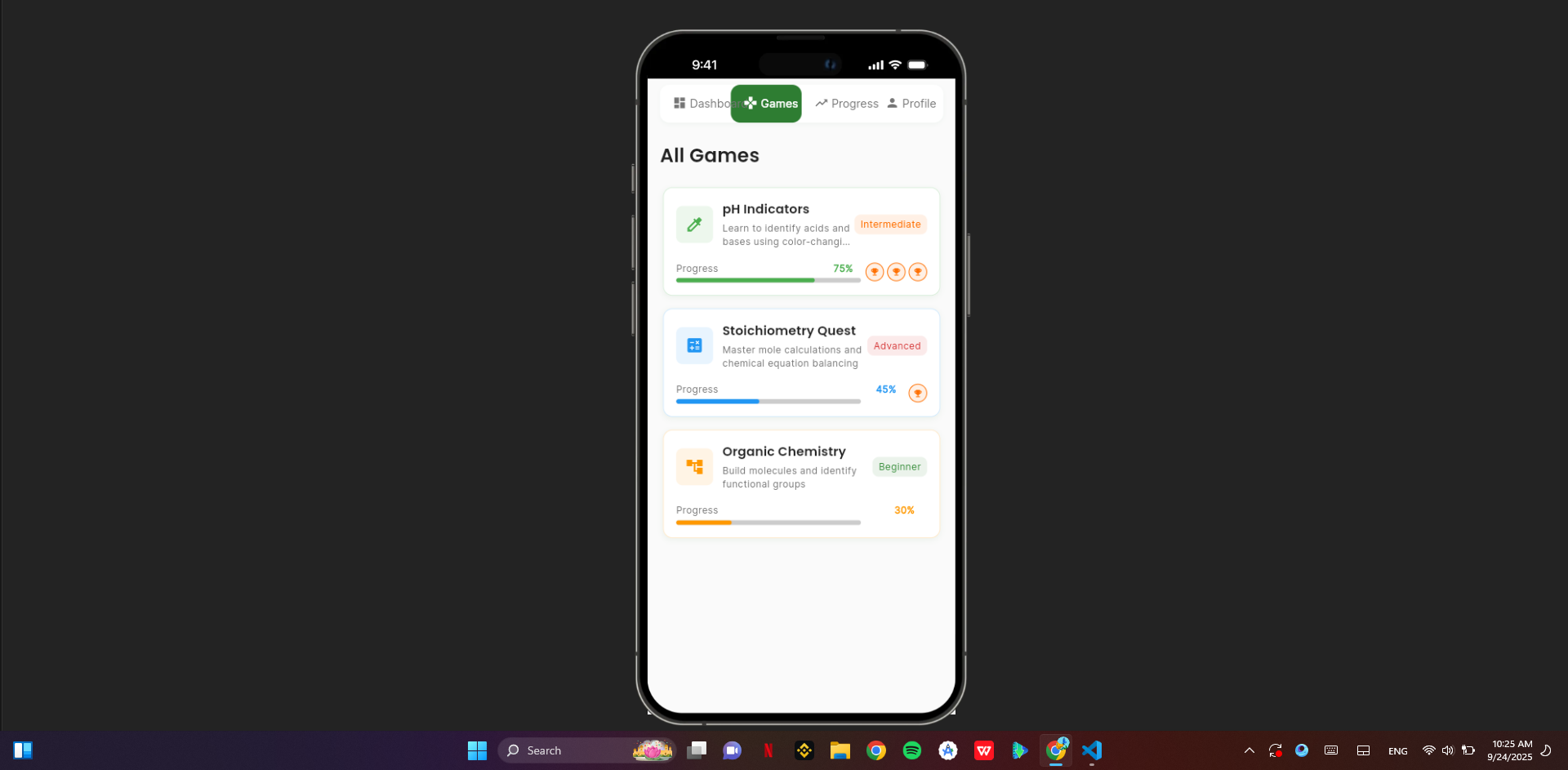
Quick access and Games
-
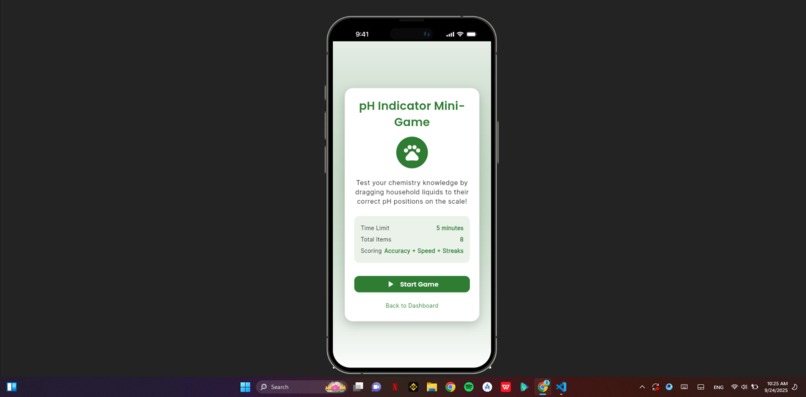
PH Indicator mini game
-
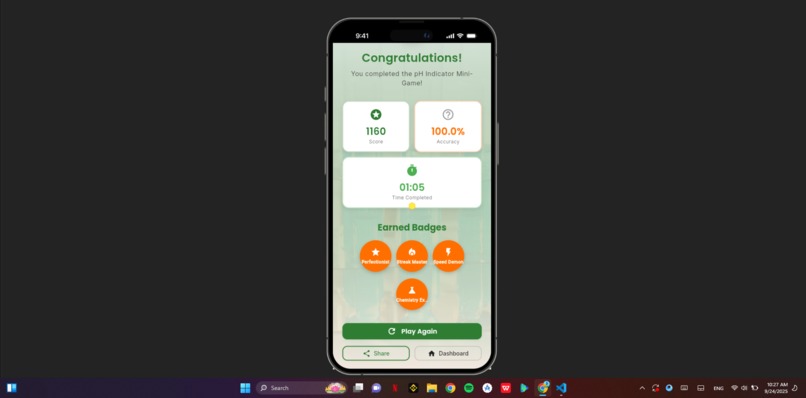
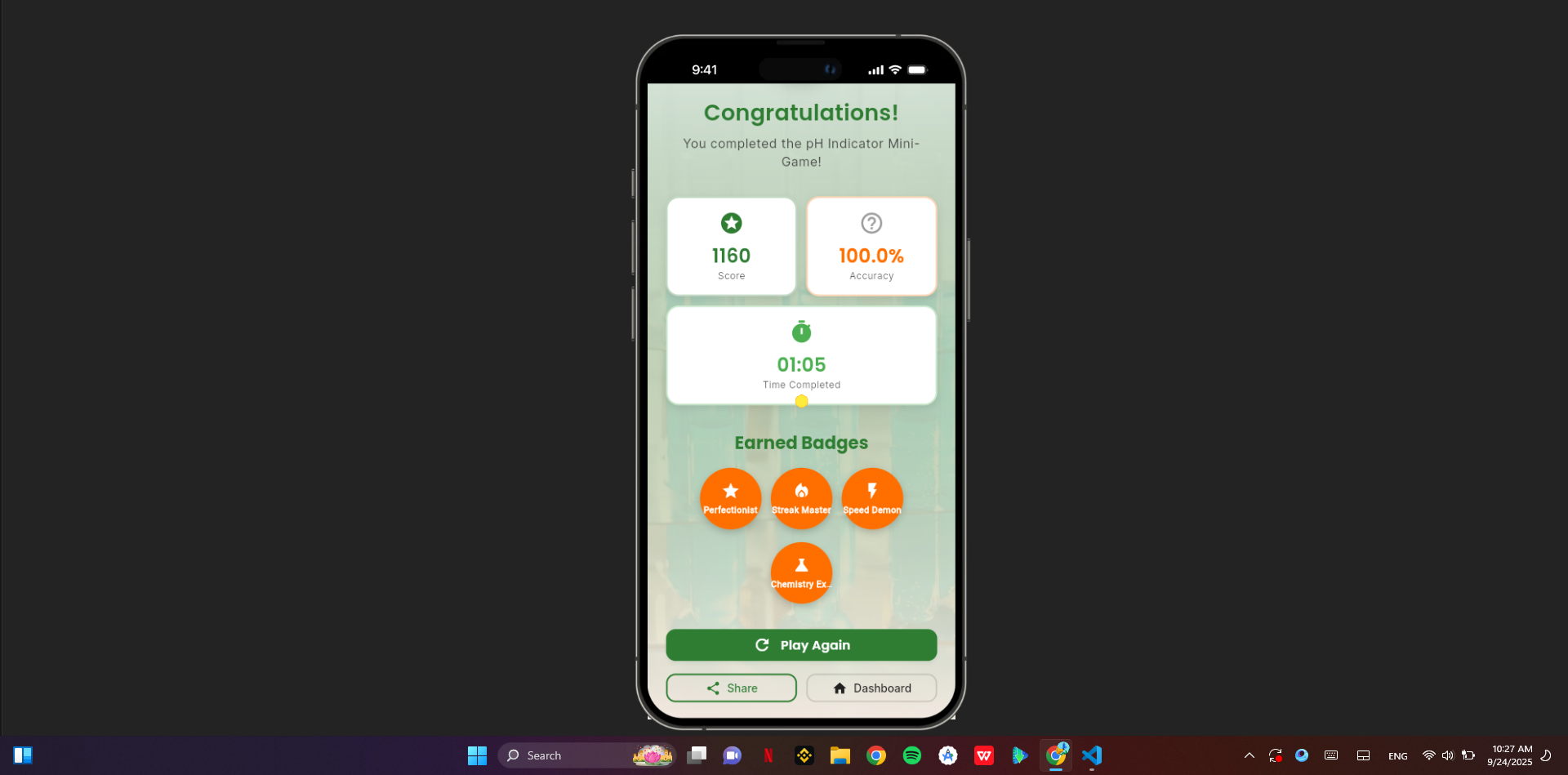
PH Indicator mini game completion
-
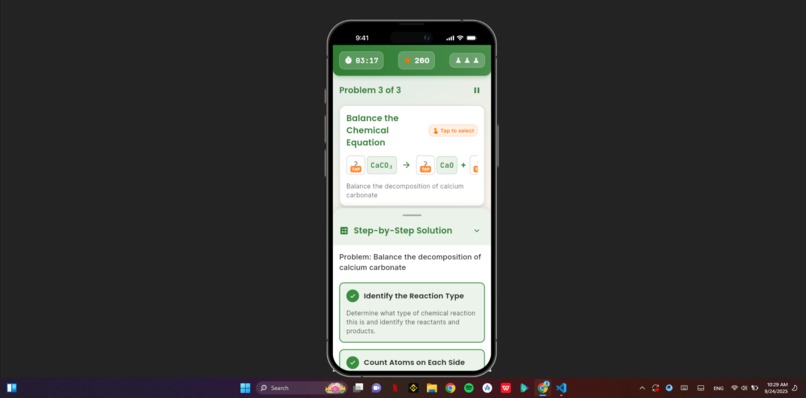
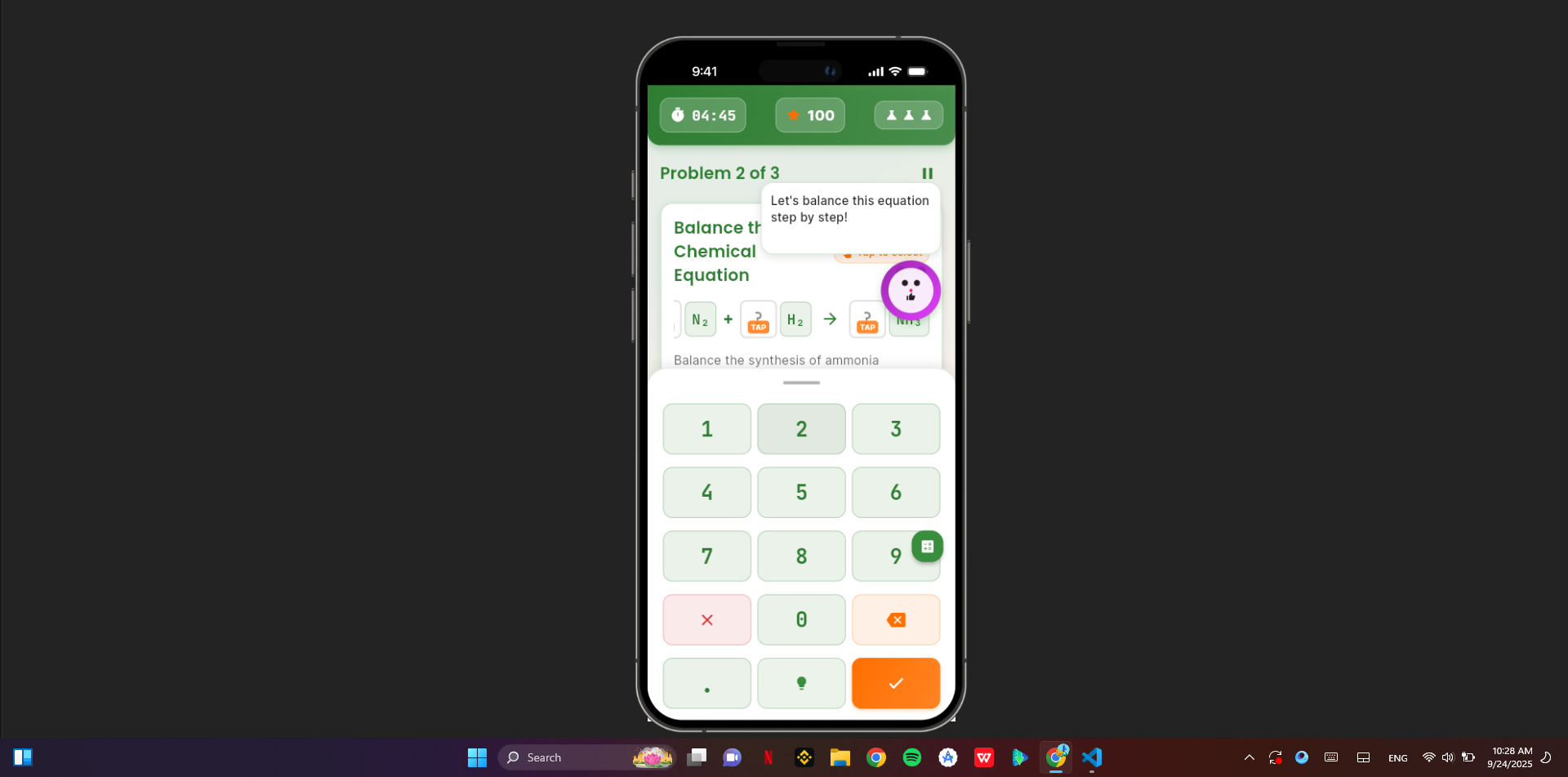
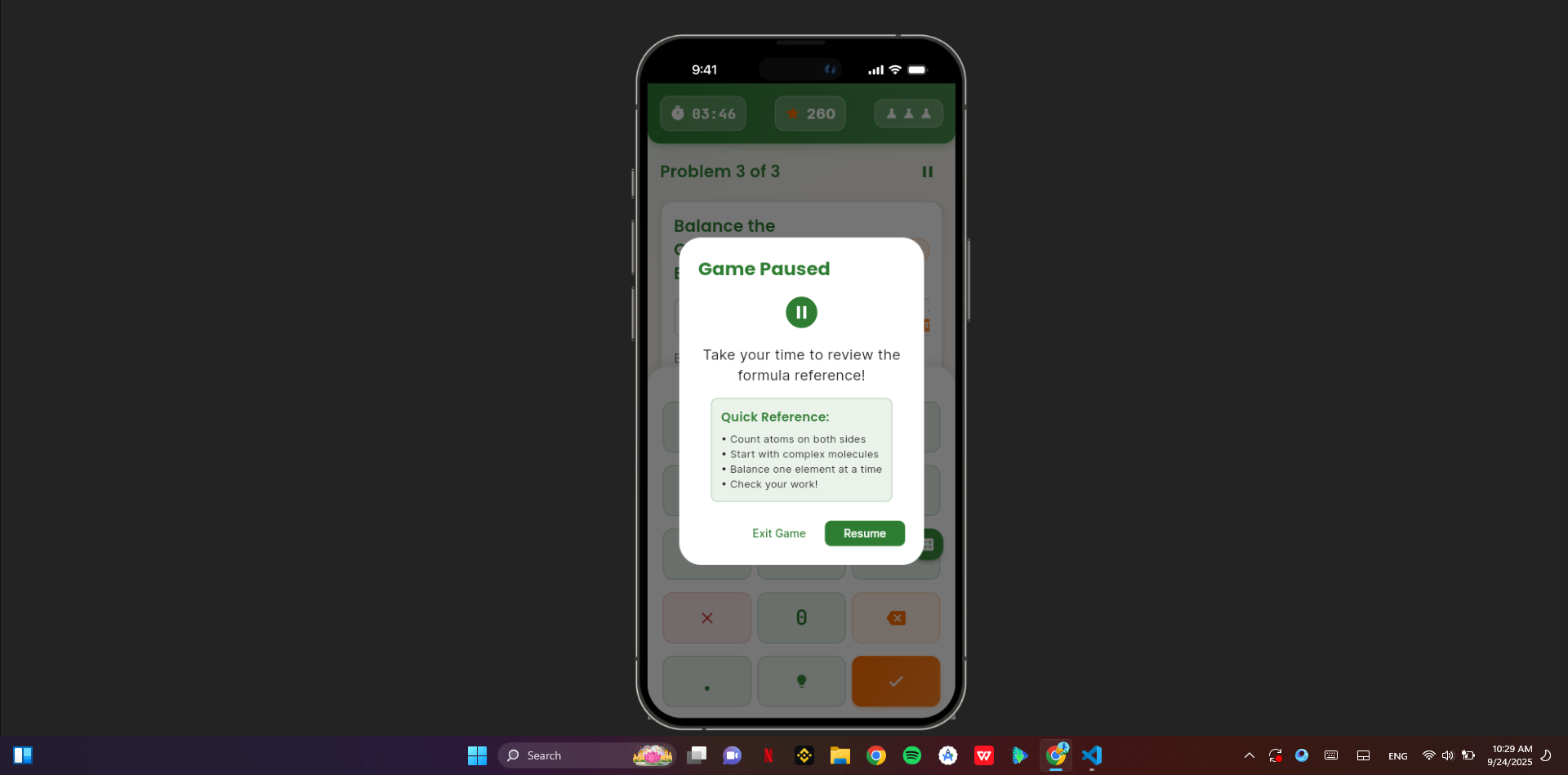
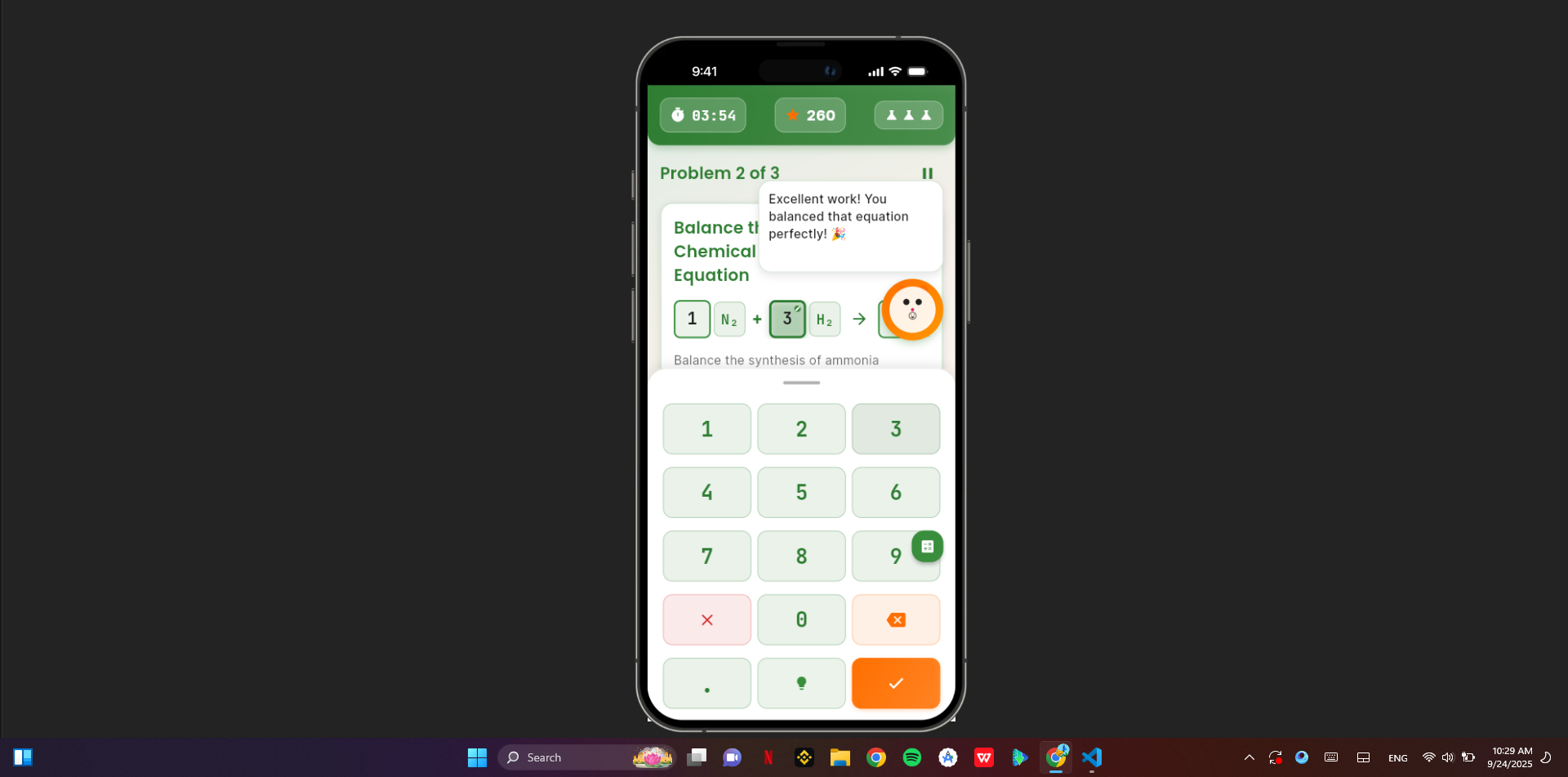
Balancing Equations Stoichiometry Game Quest
-
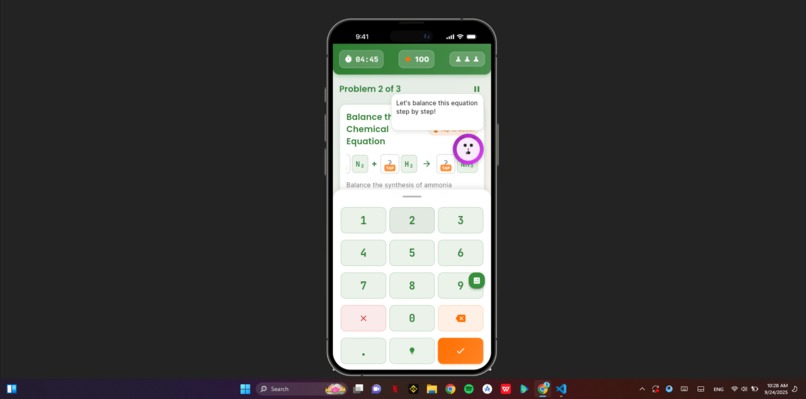
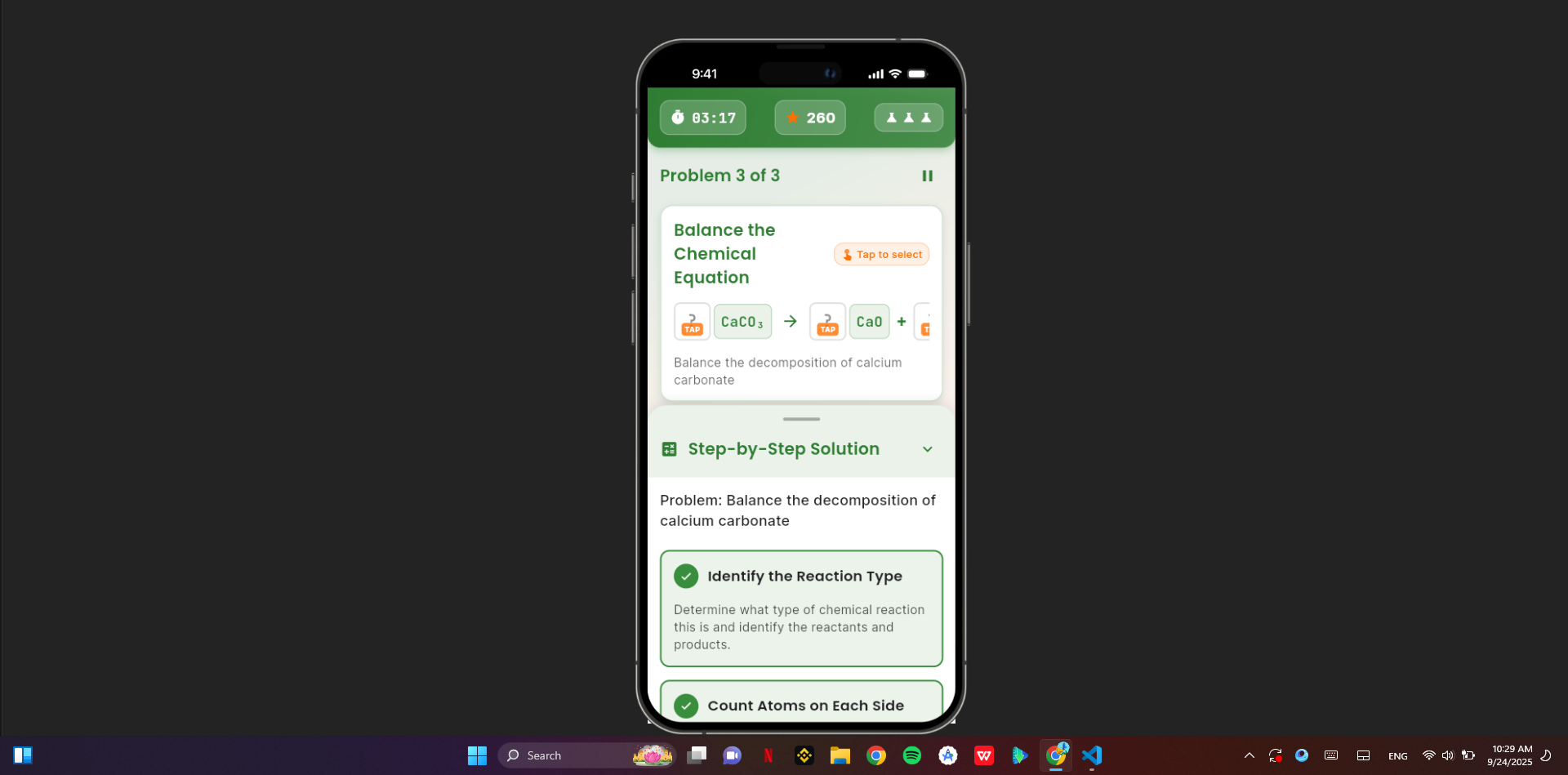
Stoichiometry Game Quest
-
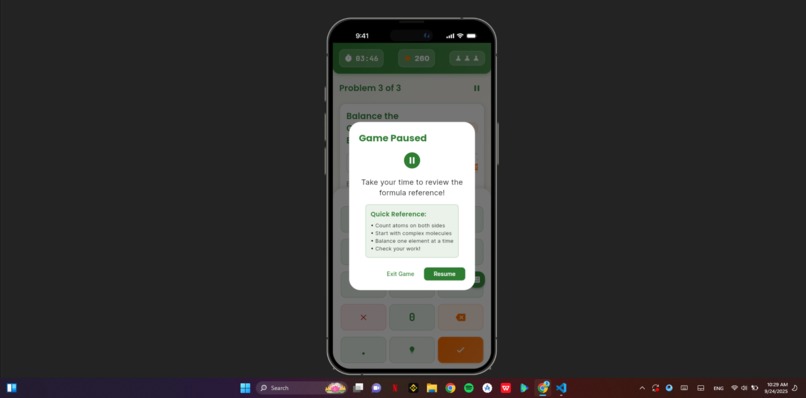
Stoichiometry Game Quest Paused
-
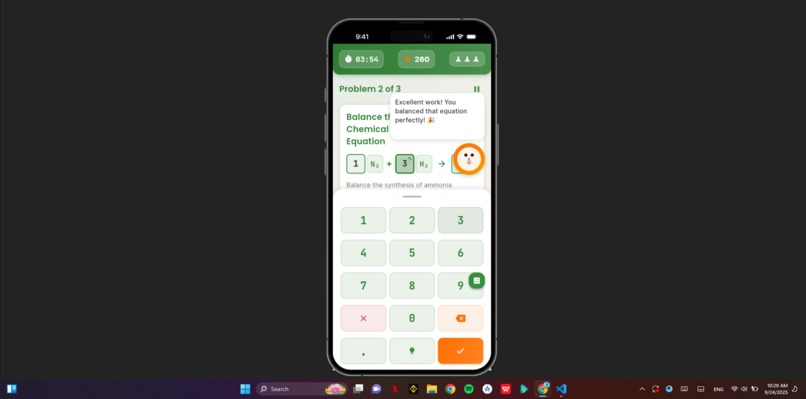
Stoichiometry Game Quest Progress
-
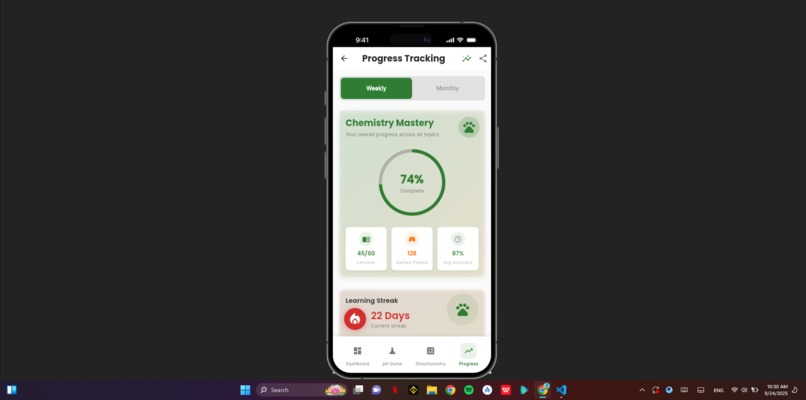
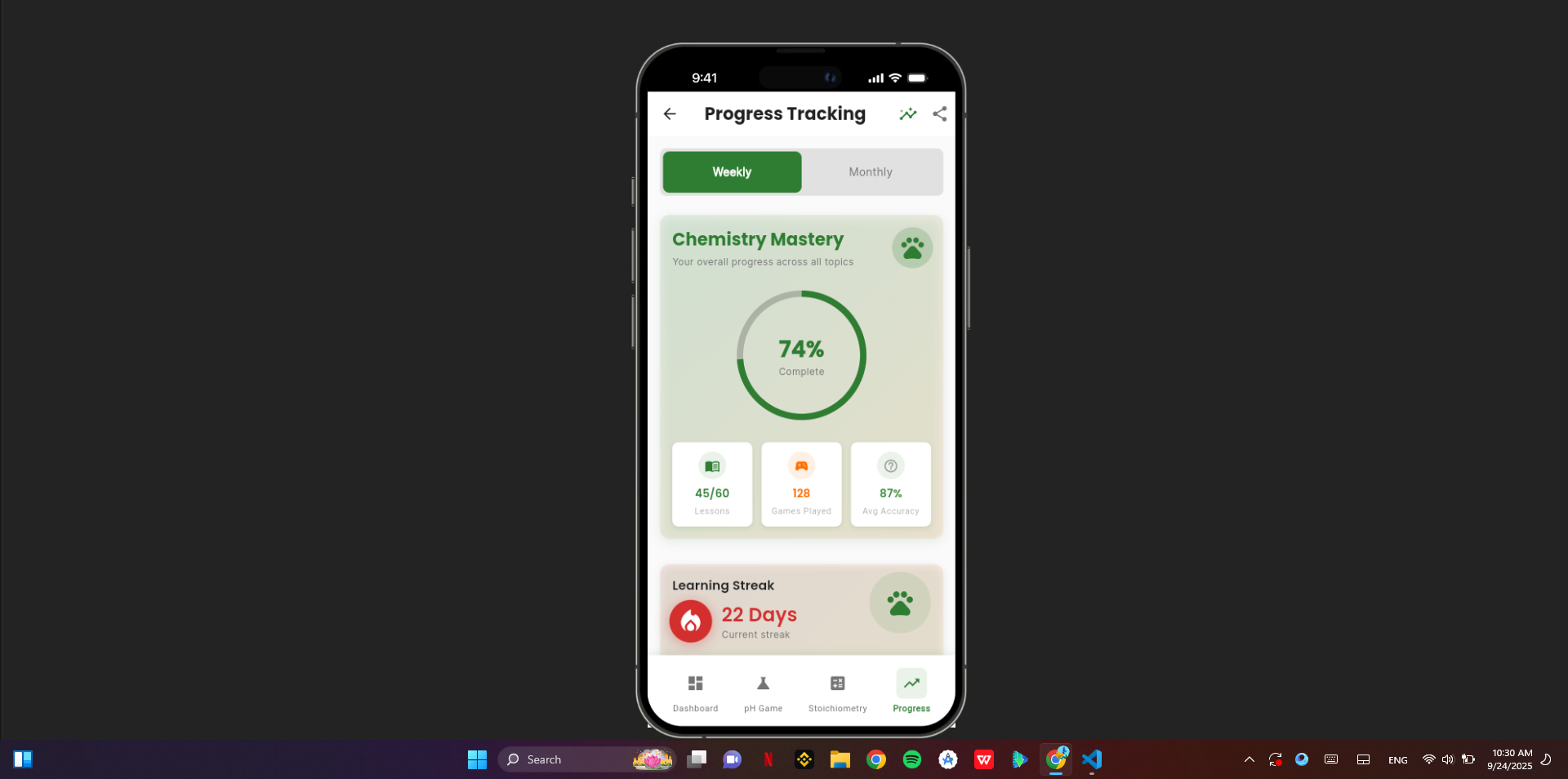
Student Progress Tracking
-
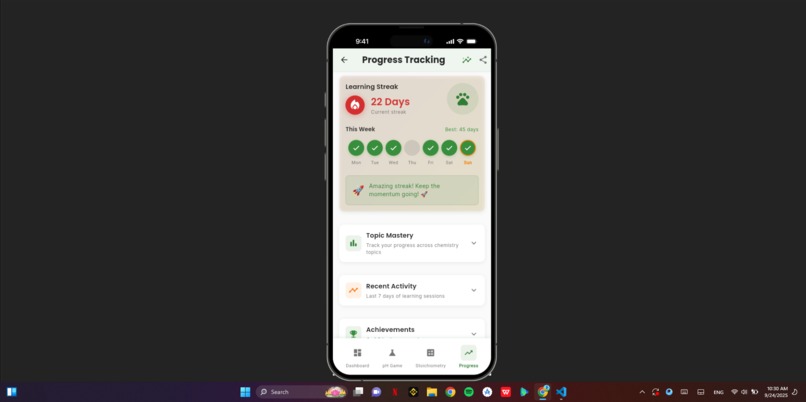
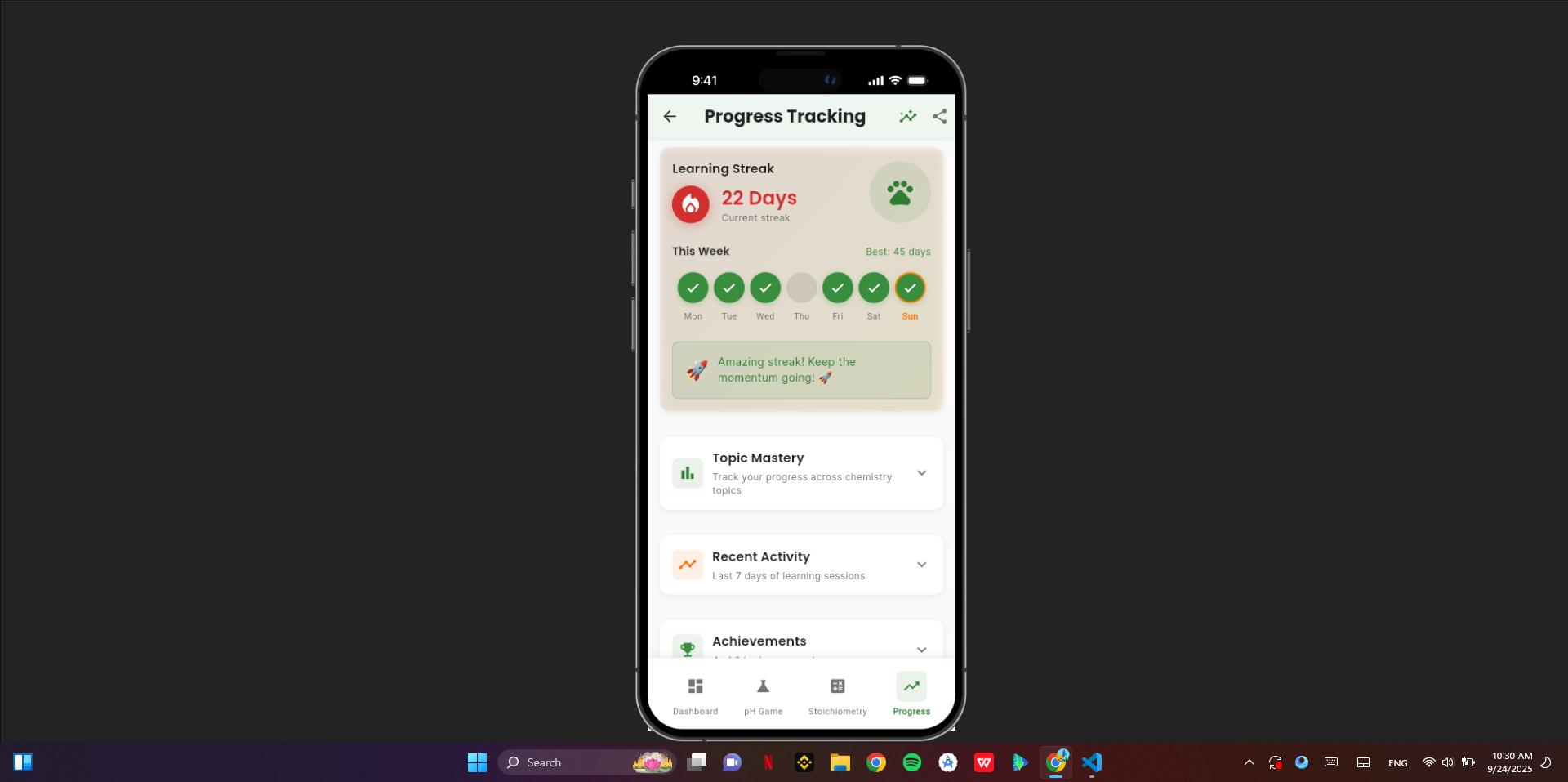
Streaks!
-
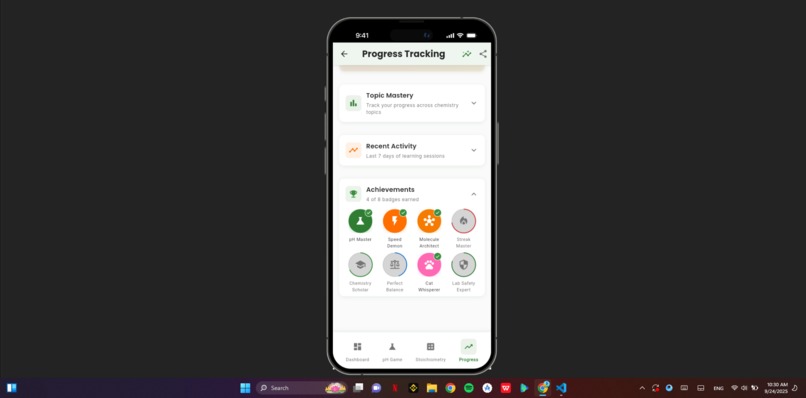
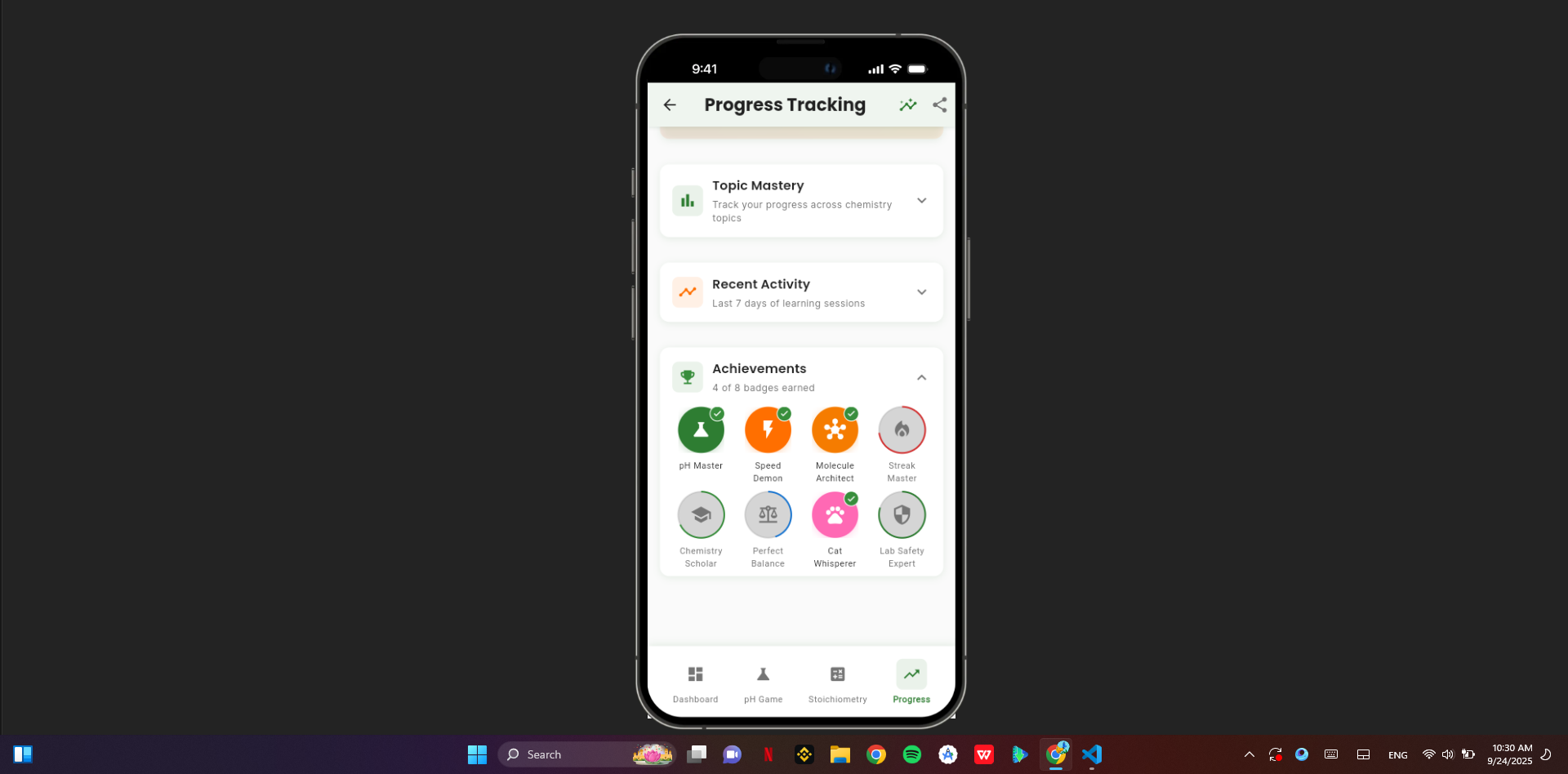
Progress Tracking and Badges Earned

Inspiration
For many students, high school chemistry can seem abstract and challenging. Chemistry education faces a critical challenge: students often struggle with abstract concepts and find traditional learning methods dry and intimidating. We were inspired by the potential to transform chemistry from a feared subject into an exciting adventure. The idea came from recognizing that gamification could bridge the gap between complex scientific concepts and student engagement, making upper-secondary chemistry accessible and fun for ages 14-18. Our goal was to develop a platform that uses playful gamification to demystify chemistry, turning formulas and reactions into an engaging, hands-on experience.
What it does
Chem-Quest is a mobile-first educational chemistry game that revolutionizes how students learn chemistry, turning important chemistry concepts into engaging mini-games. The app features:
- Interactive Mini-Games: pH calculation challenges and balancing equations quests helps turn complex formulas into engaging puzzles
- Bite-sized Learning: Digestible lessons that break down intimidating chemistry concepts
- Progress Tracking: A visual progression system that motivates continued learning
- Curriculum Alignment: All content follows high-school chemistry standards with accurate formulas and calculations.
- Engaging Design: We used bright visuals and cat mascots to reduce learning anxiety and create a welcoming environment.
- A loop of Play → Learn → Practice → Master → Reward. Students earn badges and track their progress as they learn.
How we built it
We leveraged a modern, cross-platform tech stack to create a scalable solution:
- Frontend: Built with Flutter/Dart for cross-platform compatibility (iOS, Android, PWA)
- Architecture: Implemented clean architecture with Provider/Riverpod for state management
- Backend: Integrated Supabase with REST APIs for real-time leaderboards and adaptive question banks
- Data Management: Used local JSON storage for offline-capable question banks and answer keys
- Design: Applied Material Design principles for an intuitive user experience
The development process focused on creating modular, reusable components while maintaining educational accuracy and engagement.
Challenges we ran into
- Educational Accuracy: Ensuring all chemistry formulas, pH calculations, and stoichiometric equations were scientifically accurate and aligned with curriculum standards
- Gamification Balance: Finding the sweet spot between fun gameplay and educational value without compromising learning objectives.
- Cross-Platform Consistency: Maintaining a consistent user experience across different devices and screen sizes
- Performance Optimization: Creating smooth animations and interactions while handling complex chemistry calculations
- User Experience Design: Making chemistry concepts visually appealing and intuitive for teenagers who might have chemistry anxiety.
Accomplishments that we're proud of
- Educational Impact: We successfully transformed abstract chemistry concepts into interactive, engaging experiences
- Technical Achievement: We built a fully functional cross-platform app with offline capabilities and real-time features.
- User-Centered Design: The creation of an anxiety-reducing interface with mascots and bright visuals will make chemistry approachable.
- Curriculum Integration: We achieved the perfect alignment with high-school chemistry standards while maintaining user engagement.
- Scalable Architecture: We developed a modular system that can easily accommodate new chemistry topics and game modes.
- Complete MVP: The delivery of a working prototype with core features including pH games, stoichiometry quests, and progress tracking.
What we learned
Education + Game Design requires a careful balance between entertainment and accuracy.
Educational Technology: We gained deep insights into how gamification can enhance STEM education and improve knowledge retention
Teen engagement thrives when lessons are short, visual, and interactive rather than text-heavy.
Flutter Development: We mastered Cross-platform mobile development with Flutter, which significantly speeds up building for mobile + web simultaneously.
We discovered the specific pain points in chemistry learning and how technology can address them.
Product Development: We experienced the full cycle from ideation to MVP delivery under hackathon constraints.
What's next for Chem-Quest
Short-term Goals:
- Expanded Curriculum: Adding more chemistry topics such as gas laws, redox reactions, and thermodynamics.
- Implement multiplayer features for classroom competition
- Add Teacher tools: A dashboard for teachers to track student progress and assign challenges.
- Integrate AI-powered adaptive learning that adjusts difficulty based on performance
Long-term Vision:
- Scale to other STEM subjects (physics, biology, mathematics)
- Develop partnerships with educational institutions and curriculum providers
- Build a community platform where students can share achievements and collaborate


Log in or sign up for Devpost to join the conversation.