Chelsea AirWatch
Inspiration
Chelsea, Massachusetts is designated as an environmental justice community. Residents live near major traffic corridors, industrial zones, and port activity — all of which contribute to elevated air pollution exposure.
We were inspired by a simple question:
If navigation apps can optimize for time and traffic, why can’t they optimize for health?
Air pollution is invisible, yet its effects are measurable and deeply unequal. Families, elderly residents, and individuals with respiratory conditions often have no accessible way to understand real-time exposure risk at the street level.
Chelsea AirWatch was created to transform environmental data into actionable civic intelligence.
What it does
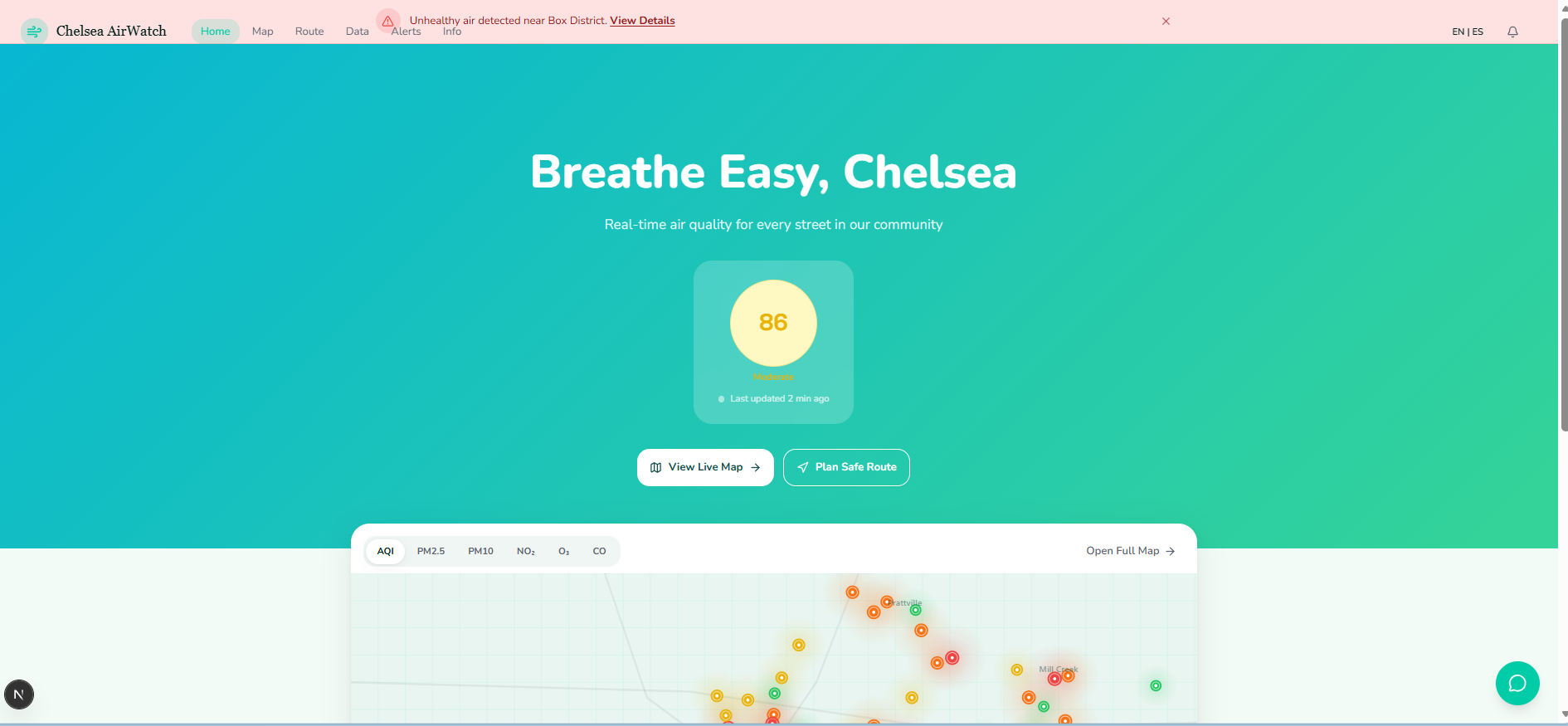
Chelsea AirWatch is an AI-powered routing and visualization platform that:
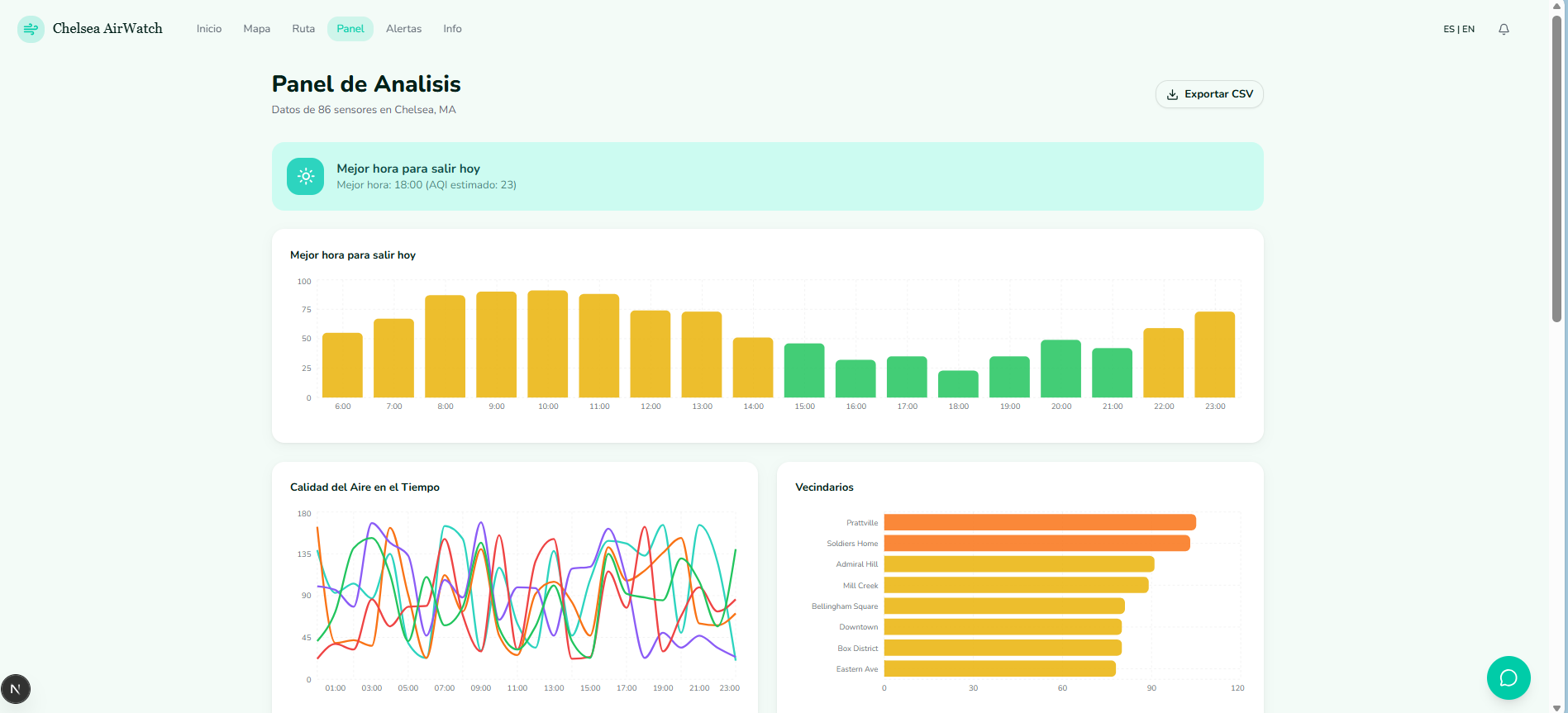
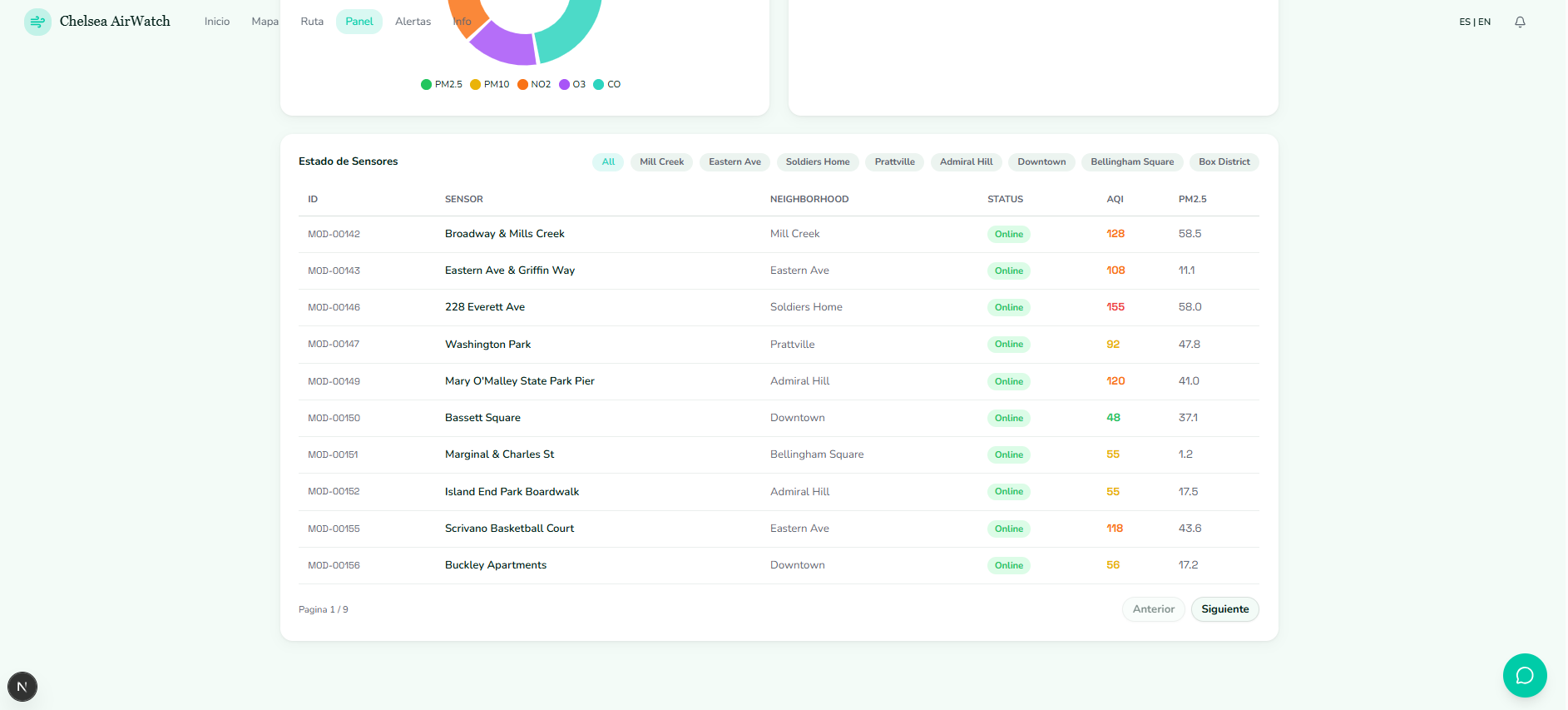
- Displays real-time air quality data on an interactive map
- Overlays a pollution heatmap based on live sensor readings
- Calculates both the fastest route and the lowest-exposure route
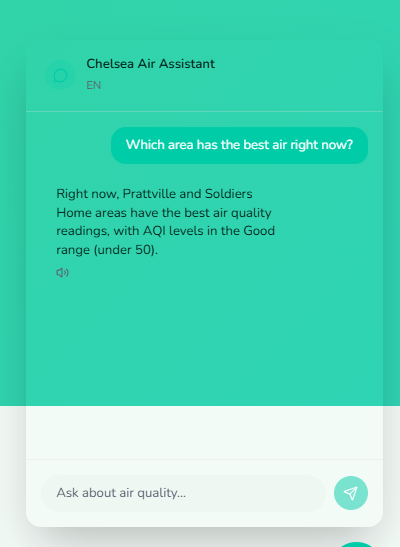
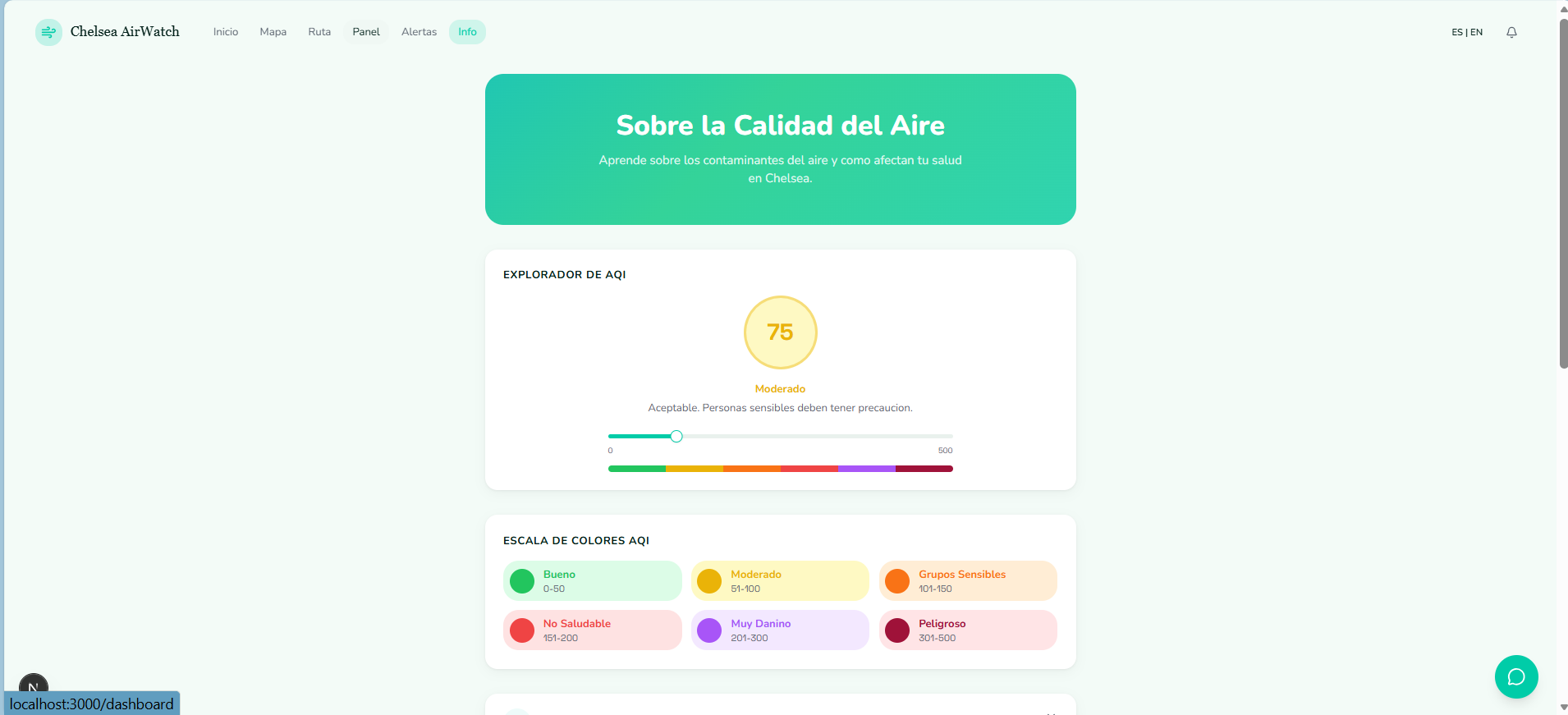
- Explains AQI conditions in plain language using AI
- Provides multilingual voice interaction for accessibility
Instead of minimizing only time, we minimize pollution exposure.
For route optimization, we dynamically adjust edge weights using pollution intensity values:
$$ \text{Adjusted Weight} = \alpha(\text{Distance}) + \beta(\text{AQI Score}) $$
Where:
- $\alpha$ prioritizes travel efficiency
- $\beta$ prioritizes air quality exposure
This allows users to choose between efficiency and health-conscious routing.
How we built it
Frontend: React
Data Source: QuantAI API for live AQI readings
AI Assistant: Gemini API for contextual civic explanations
Voice Accessibility: ElevenLabs API for multilingual interaction
Architecture Overview
- Live AQI data is fetched from QuantAI.
- Sensor readings are processed and interpolated into a heatmap layer.
- Route paths are weighted using pollution-adjusted edge scoring.
- Gemini generates user-friendly air quality explanations.
- ElevenLabs converts responses into multilingual voice output.
Currently, we have a partially deployed local prototype with live visualization, routing comparison, and AI explanations fully functional.
Challenges we ran into
Pollution-Weighted Routing
Traditional routing algorithms minimize distance or time:
$$ \min \sum w_{distance} $$
We modified this to incorporate environmental cost:
$$ \min \sum (w_{distance} + w_{pollution}) $$
Balancing these competing objectives required tuning coefficients to avoid unrealistic detours.
Sensor Density Gaps
Air quality sensors are not evenly distributed. We had to interpolate readings spatially while clearly communicating data limitations.
Translating Data into Meaning
Raw AQI values are not intuitive. Integrating Gemini allowed us to convert technical pollution metrics into health-relevant explanations.
Accomplishments that we're proud of
- Successfully integrating live AQI data into a functioning routing prototype
- Designing a user interface modeled after familiar navigation tools
- Building a multilingual voice-enabled civic AI assistant
- Creating a system centered on environmental justice communities
- Demonstrating that health-aware routing is technically feasible
Most importantly, we treated air quality as a first-class routing parameter.
What we learned
- Civic technology must prioritize accessibility and clarity, not just technical accuracy.
- Data transparency builds trust — especially in environmental justice contexts.
- AI works best when it augments human decision-making rather than replacing it.
- Optimization problems often involve trade-offs between efficiency and equity.
We learned that building civic tools requires thinking beyond code — into policy, public health, and community impact.
What's next for Chelsea AirWatch
With more time and resources, we plan to:
- Integrate predictive AQI modeling for future trip planning
- Expand sensor data sources to improve coverage
- Partner with Chelsea municipal agencies and public health organizations
- Build a community reporting and feedback feature
- Deploy on scalable cloud infrastructure
Long-term, Chelsea AirWatch could serve as a replicable model for environmental justice communities nationwide.
Built With
- air-quality-apis-(e.g.
- built-with:-languages:-python
- ci/cd-pipelines
- css-frameworks-&-libraries:-react.js
- epa-airnow)-other-tools:-git/github-for-version-control
- flask/fastapi
- google-maps-directions-api-/-openrouteservice-api-(for-route-optimization)
- html
- javascript-(es6)
- leaflet.js-or-mapbox-gl-js
- nginx
- numpy
- openaq
- pandas
- plotly/dash-apis:-elevenlabs-(multilingual-voice-guidance)
- server

Log in or sign up for Devpost to join the conversation.