ChefPal – Your AI-Powered Kitchen Companion
Introduction
ChefPal is an intelligent web-based culinary assistant designed to transform the way home cooks and food enthusiasts approach daily meal preparation. Built with the modern user in mind, ChefPal seamlessly integrates recipe generation, smart inventory tracking, personalized meal planning, and nutritional insights—all powered by advanced AI and a clean, responsive interface. Whether you’re a student managing a busy schedule or a home cook trying to reduce food waste, ChefPal brings ease, creativity, and intelligence to your kitchen.
Inspiration
The inspiration behind ChefPal stemmed from everyday challenges faced in the kitchen: not knowing what to cook with what’s on hand, wasting ingredients due to poor planning, and struggling to maintain a balanced diet. During a team brainstorming session, we realized that we could harness AI and modern web technologies to build a solution that is not only helpful but also delightful to use. Our goal was to build something practical yet powerful—an assistant that simplifies cooking while making it more personalized and sustainable.
Key Features
AI Recipe Generator: Enter ingredients you have, and ChefPal suggests creative, step-by-step recipes instantly using AI.
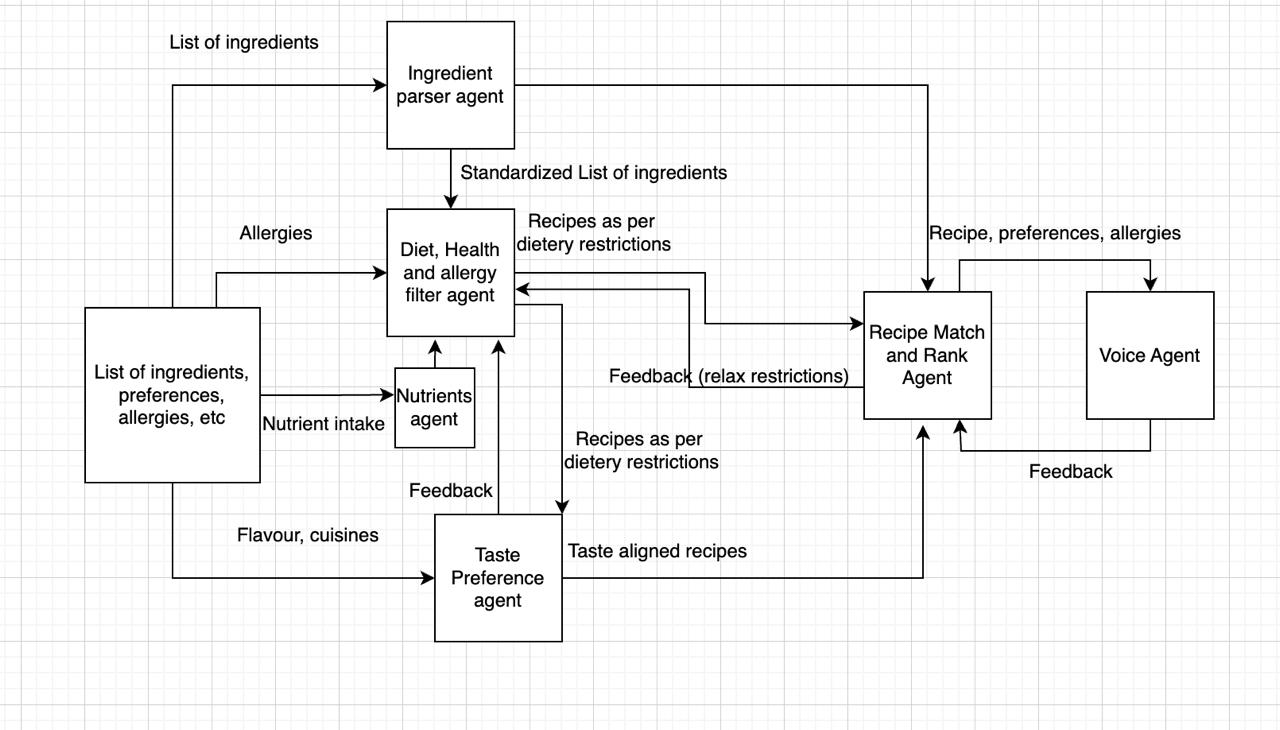
Personalized Recommendations: Get tailored recipe suggestions based on dietary preferences (vegan, keto, gluten-free), previous cooking history, and ingredient availability.
Nutritional Breakdown: Each recipe comes with calorie, macronutrient, and dietary information to help you eat smarter.
Flavour Preferences: Users can access recipes tailored to their flavor and taste preferences—for example, specifying whether they want the dish to be sweet, spicy, and even to what degree.
Mobile-Responsive Design: Optimized for desktops, tablets, and smartphones—so you can cook comfortably from anywhere in your kitchen.
Voice Assistant Support: Interaction with a voice-assisted cooking agent that allows users to speak naturally, receive step-by-step guidance, and hear responses in real-time.
Tech Stack
Frontend: React.js with Tailwind CSS for a modern, responsive UI
Backend: Node.js + Express for a scalable and fast API
Database: MongoDB for flexible storage of user data, pantry items, and recipe records
AI & NLP: OpenAI’s GPT models for recipe generation and dietary interpretation
Authentication: Firebase Auth for secure user login and data protection
Deployment: Vercel (frontend) and Render (backend)
How We Implemented It
We divided the project into modular components:
User Interface Design: Designed intuitive UX flows in Figma, then brought them to life with Tailwind CSS and React.
Recipe Generation Logic: Integrated OpenAI API to accept free-form ingredient inputs and return structured, cookable recipes with step-by-step instructions.
Pantry Management System: Developed CRUD operations for managing ingredients, quantities, and expiration tracking using MongoDB.
Personalization Engine: Tracked user preferences and behaviors, feeding that into a recommendation model to enhance suggestions.
Challenges We Faced
Balancing Creativity with Accuracy in AI Recipes: GPT can be imaginative, which sometimes led to unrealistic or vague instructions. We had to apply post-processing filters and structure prompts carefully to ensure usable outputs.
Ingredient Normalization: Users often input ingredients in various formats (e.g., “2 tomatoes” vs. “tomato”). We built a normalization layer using NLP techniques to clean and standardize data.
Calendar Sync and UX: Making the calendar interactive and intuitive across devices involved significant work with state management and responsive design.
Data Persistence & Sync: Ensuring that pantry data and plans stayed consistent across sessions and devices was a non-trivial backend challenge that we solved using MongoDB’s indexing and efficient REST APIs.
Impact
- Reduced food waste for users by tracking expiring items and offering timely recipe suggestions.
- Helped users discover new dishes and cuisines, expanding their cooking confidence.
- Simplified meal prep and planning—users reported spending 30–40% less time deciding what to cook each week.
What We Learned
- How to integrate and fine-tune AI systems for real-world user needs.
- Effective state management in large React applications.
- The importance of intuitive UX when blending tech with everyday user habits.
- Best practices in secure, scalable deployment and CI/CD pipelines.
Future Scope
- Integration with smart fridges or barcode scanners for automatic pantry updates.
- Voice-enabled cooking assistant mode using Web Speech API.
- Expand AI to offer substitution suggestions and leftover-based cooking.
- Real-time collaborative meal planning for families or roommates.
Conclusion
ChefPal stands at the intersection of technology and daily life—offering users not just recipes, but confidence, inspiration, and organization in the kitchen. It's more than a recipe app; it’s a smart companion for your culinary journey.


Log in or sign up for Devpost to join the conversation.