
💡 Inspiration Every week, over 1 billion meals are thrown away worldwide. Most household food waste doesn't happen out of carelessness—it happens out of decision fatigue. We open our fridge, see a random collection of half-used ingredients—a single bell pepper, leftover chicken, half a lemon—and have no idea what to make. Defaulting to expensive takeout while raw groceries spoil in the background is a friction point every student and family faces daily. We built ChefMint AI to convert that physical kitchen noise into instant, zero-waste culinary utility.
🛒 What It Does ChefMint AI is a physical-to-digital zero-waste cooking copilot:
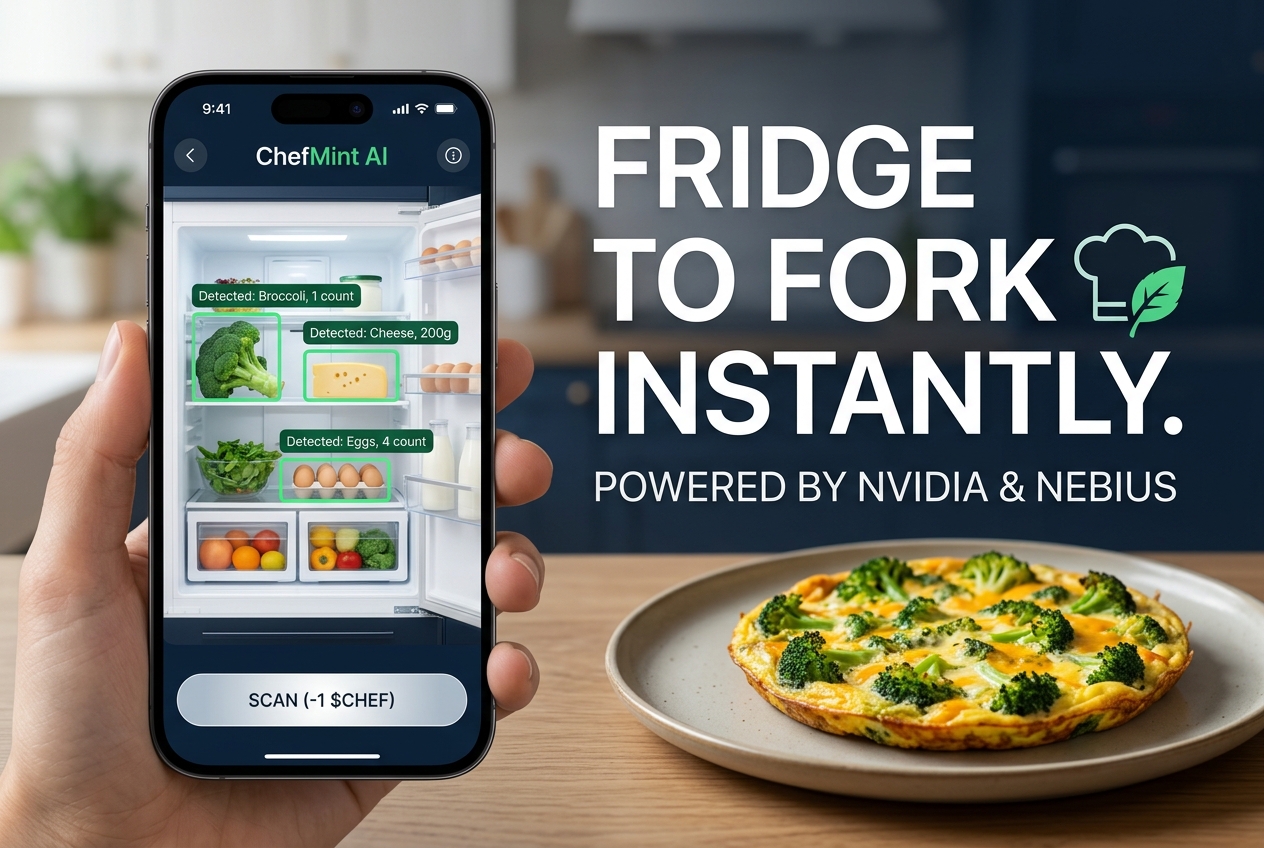
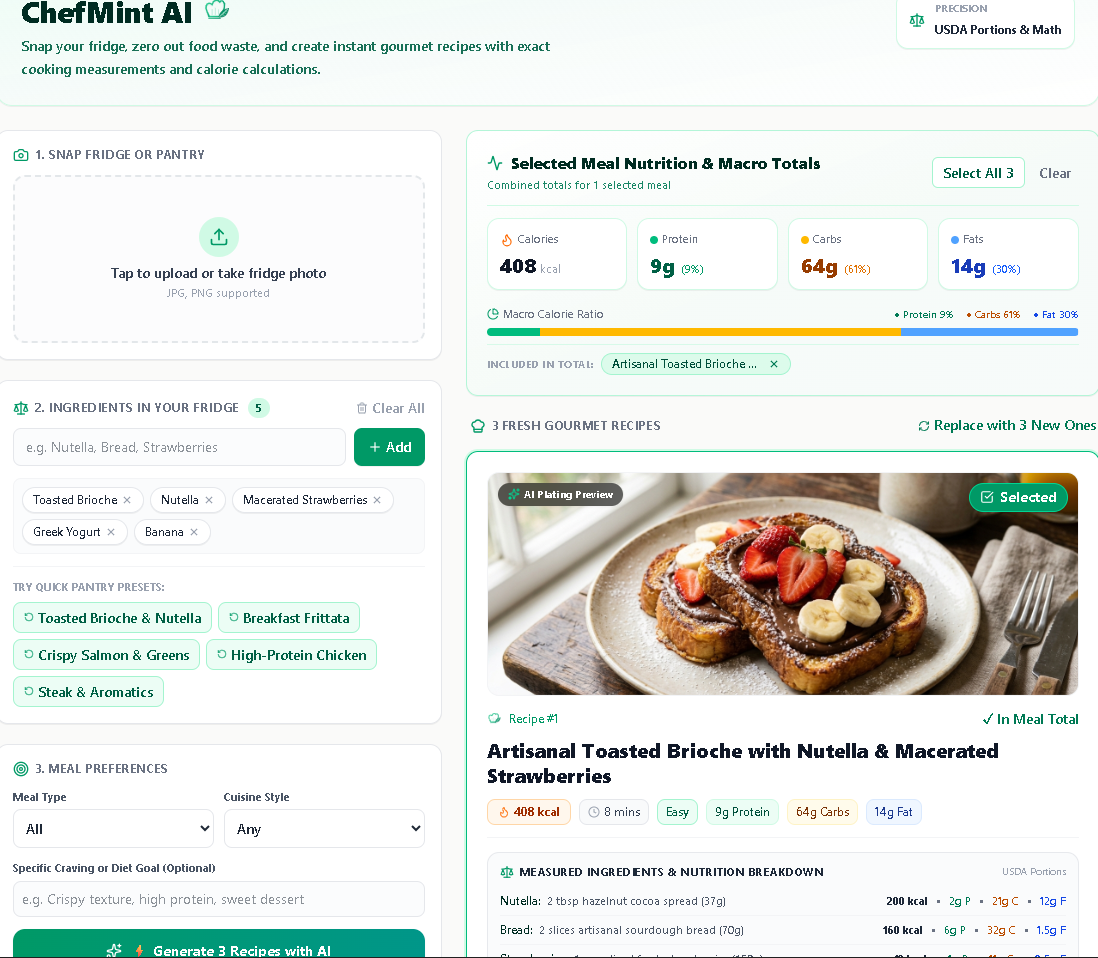
Snap & Scan: Users upload or snap a photo of their fridge or pantry.
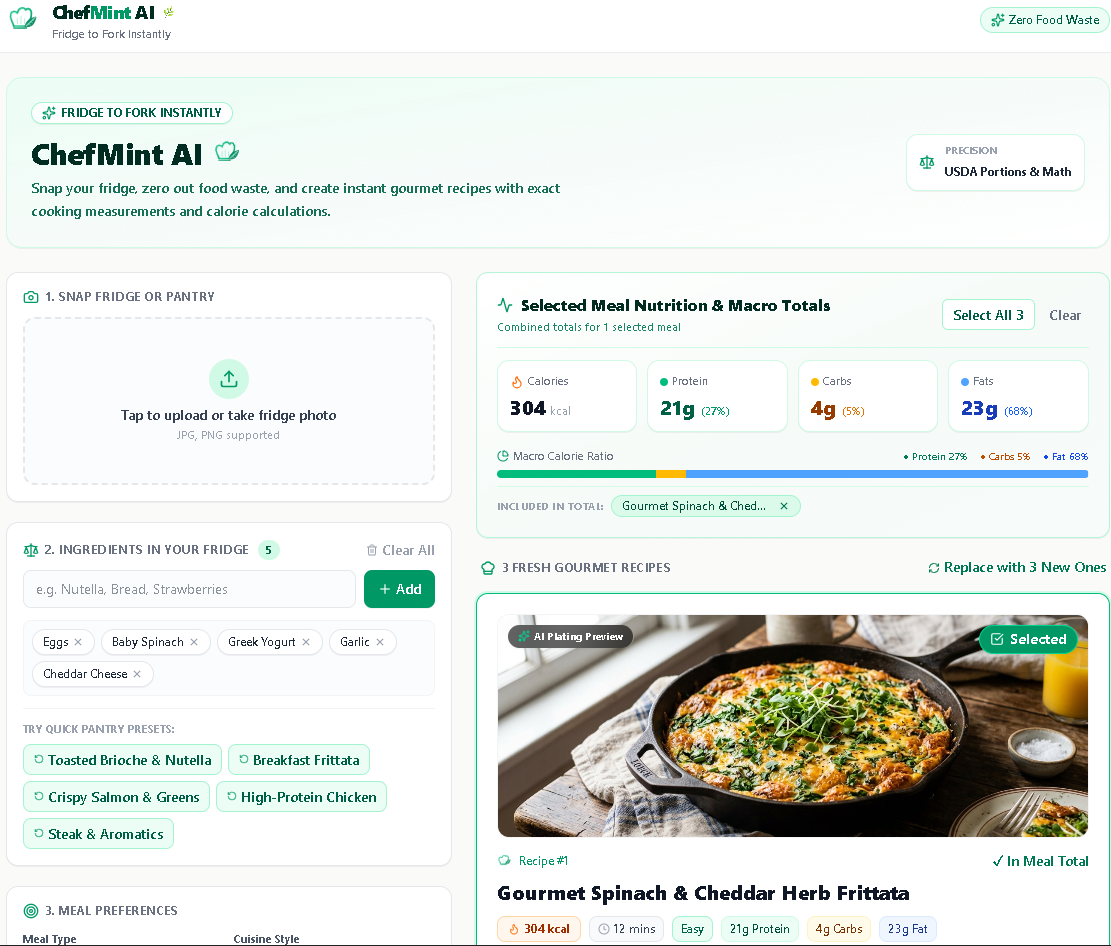
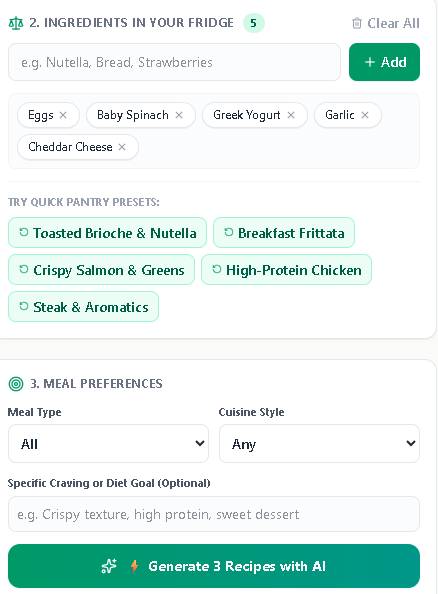
Interactive Ingredient Chips: Advanced vision models scan the image and populate items as interactive, editable visual chips. Users can tap to remove misidentified items or type to add missing pantry goods.
Custom Filter Control: Users select meal types (Breakfast, Dinner, Snack), cuisine preferences (Mediterranean, Asian, etc.), and custom notes (e.g., "High protein").
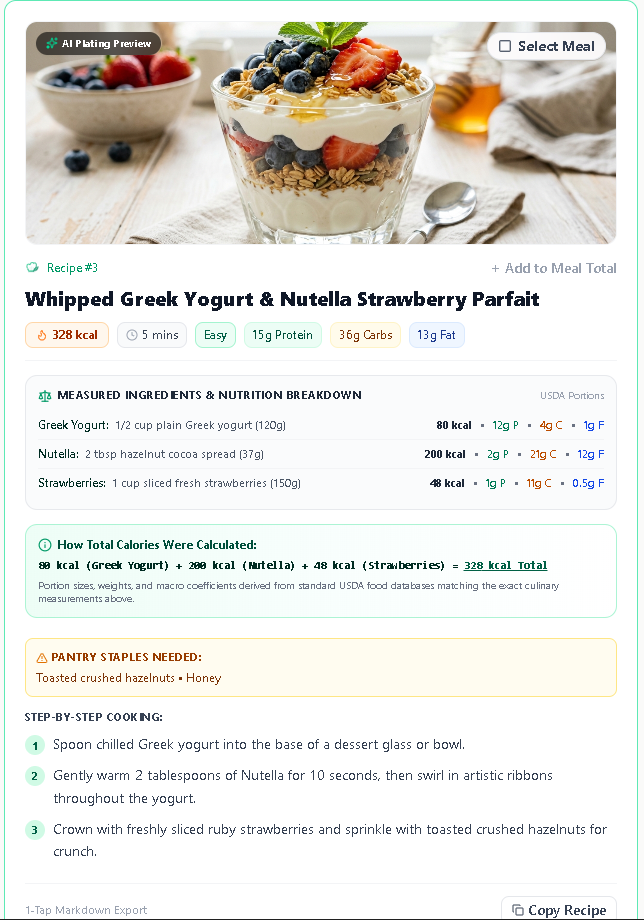
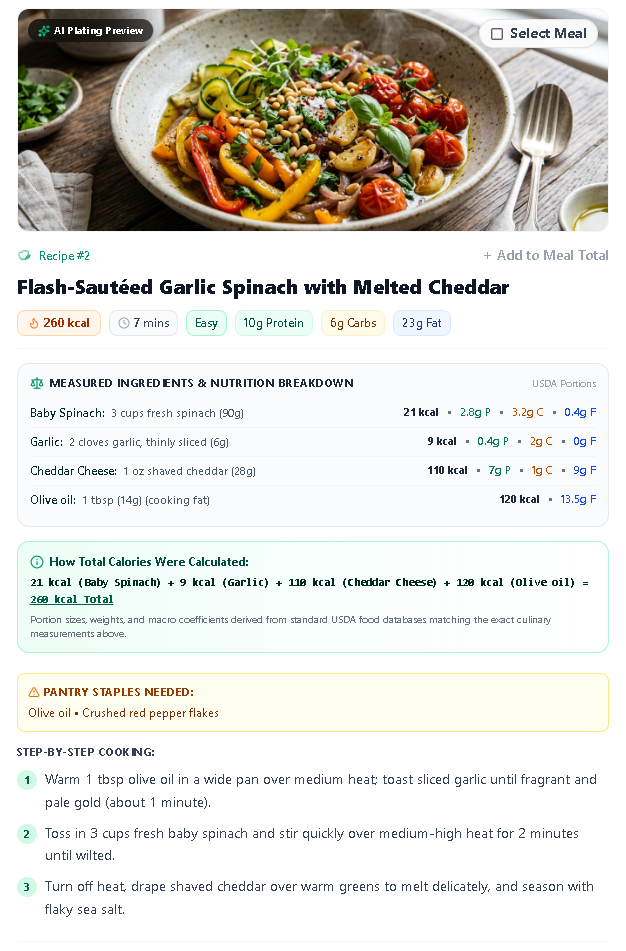
Zero-Waste Recipe Synthesis: The app generates formatted recipe cards complete with prep time badges, macro estimations, numbered step-by-step instructions, and a highlighted callout for missing basic staples.
🛠️ How We Built It Frontend & UX: Built with Python and Streamlit, featuring custom CSS styling for a clean, minimalist, high-whitespace aesthetic.
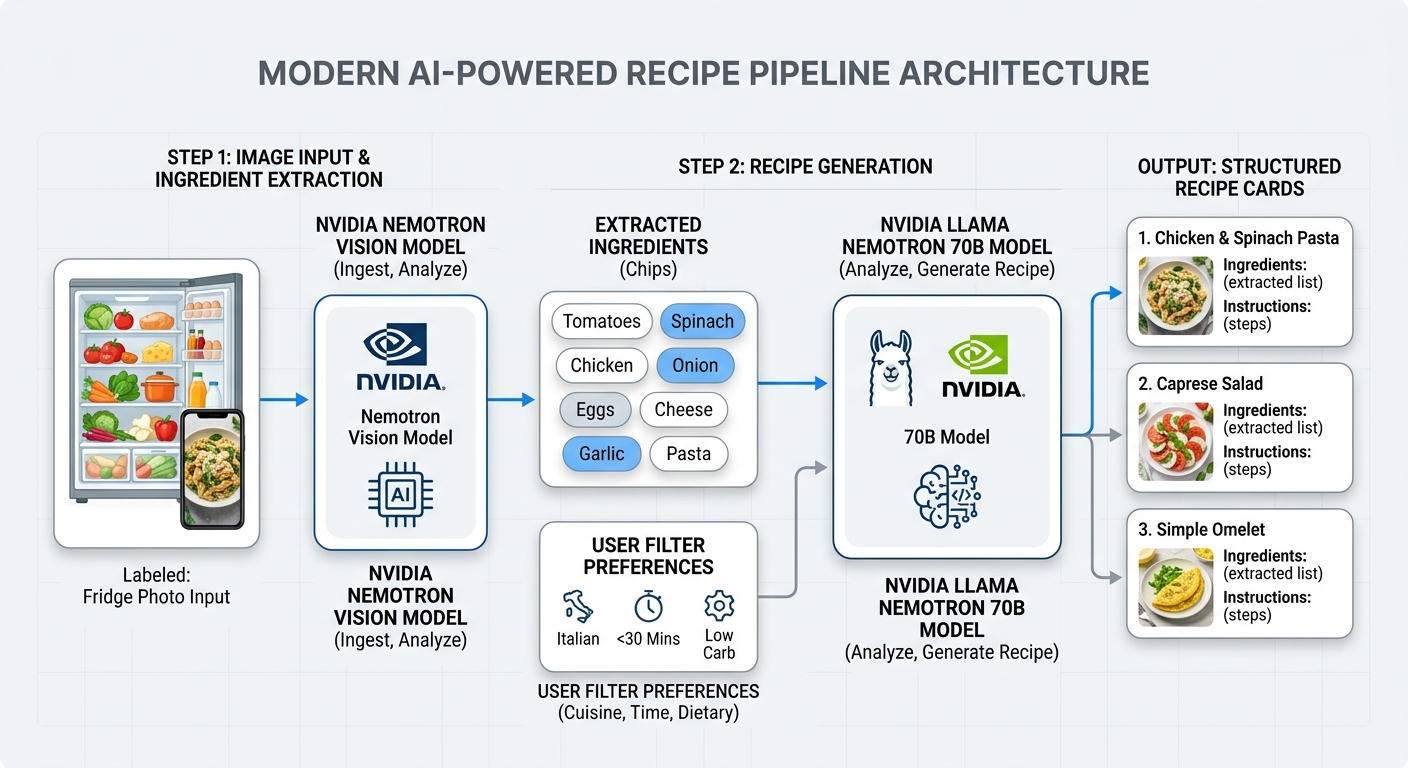
Vision Pipeline: Utilized nvidia/nemotron-3.5-super-vl hosted on Nebius Token Factory for multi-modal image processing, configured to extract raw item lists in under 100 completion tokens.
Logic & Recipe Engine: Powered by nvidia/Llama-3.1-Nemotron-70B-Instruct on Nebius Token Factory, parsing active ingredient chips and user preferences into structured JSON schemas.
State Management: Designed a dynamic session-state management system in Streamlit to handle real-time chip addition, deletion, and parameter injection.
🚧 Challenges We Overcame Unstructured Vision Output: Raw vision LLMs tend to generate conversational, wordy descriptions (e.g., "In this image I see a brightly lit fridge containing..."). We engineered strict zero-shot system prompts to enforce comma-separated outputs that parse cleanly into Streamlit session_state array chips.
Latency & Token Constraints: To keep execution speeds sub-2-second, we architected a two-stage pipeline with strict token caps (max_tokens=100 for vision, max_tokens=450 for logic), drastically reducing latency and conserving API overhead.
🎉 Accomplishments We're Proud Of Achieving sub-2-second end-to-end execution from photo upload to complete recipe card rendering.
Creating an ultra-intuitive chip management UI where physical camera inputs seamlessly blend with manual user adjustments.
Building a full-stack, practical AI application that targets a genuine global issue (UNEP Food Waste Index) without being a generic text wrapper.
📚 What We Learned How to orchestrate multi-model pipelines combining specialized vision models (Nemotron-VL) with high-parameter reasoning models (Nemotron-70B).
The importance of low-token engineering for building fast, practical, real-world user experiences.
🚀 What's Next for ChefMint AI Expiry Date Tracking: Adding OCR text recognition to read printed expiration dates on milk and sauce bottles.
Barcodes & Smart Inventory: Integrating barcode scanning alongside fridge photos to maintain a persistent household pantry log.
Grocery API Sync: Adding a 1-tap button to order missing pantry staples directly via local grocery delivery services.

Log in or sign up for Devpost to join the conversation.