
Inspiration
As college students ourselves, we constantly faced a recurring problem: meal prepping was time-consuming, grocery shopping was expensive, and by the time we figured out what to cook, we’d either be too tired or give up and order food. We wanted to build something that solved this — a tool that not only planned our meals, but optimized for cuisine, cost, flavor, and convenience. That’s how Cheffy was born: a smart, Claude-powered college meal prep assistant that turns your receipt photos and cuisine cravings into affordable, delicious weekly meal plans.
What it does
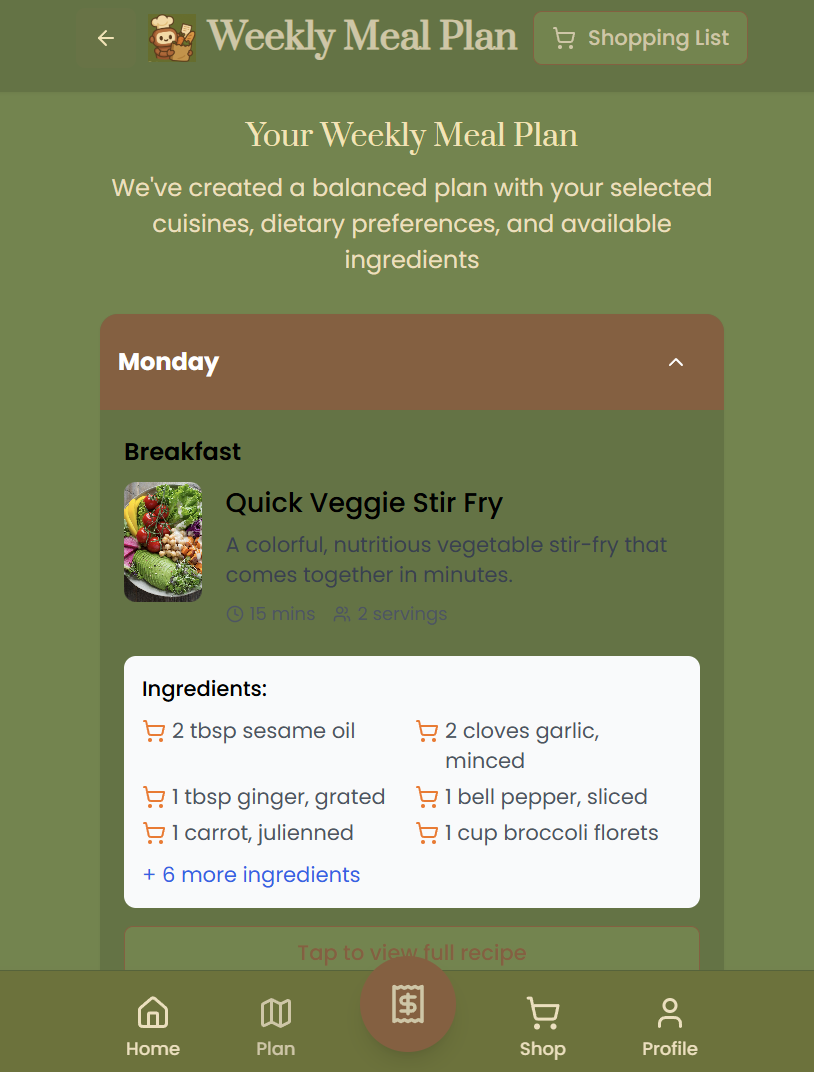
Cheffy helps college students generate cost-effective, personalized meal plans using ingredients they already own. Users swipe through cuisines Tinder-style, upload grocery receipts, and get back a full week of optimized recipes and a consolidated grocery list. Claude powers the backend AI: parsing receipts, understanding dietary preferences, and generating diverse meal options that fit within budget constraints.
How we built it
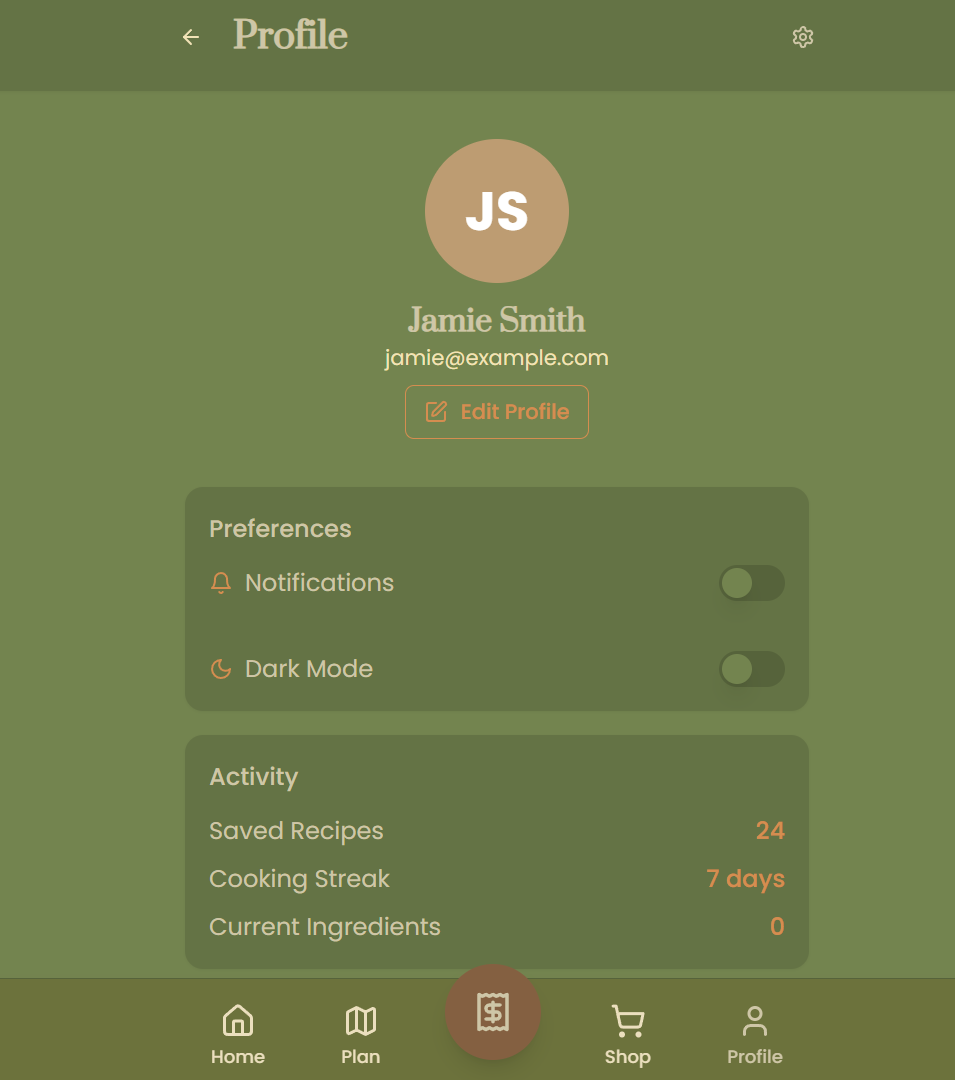
- Frontend: Built using Swift and SwiftUI for a native iOS experience, enhanced with modern UI components like Tailwind CSS (via React for prototyping) and shadcn/ui for responsive cards, modals, and swipeable elements. The interface mimics a Tinder-like gesture-based experience, making cuisine selection intuitive and fun.
- Backend: Claude API is the core of our logic — it performs OCR parsing of grocery receipts, understands ingredient semantics, and generates meal plans based on preferences and available inputs.
- Recipe Engine: We integrated the Spoonacular API to provide thousands of real-world recipes, then filtered and ranked them based on user preferences and grocery inventory.
- Database: We store user preferences, dietary restrictions, scanned receipts, and weekly history to continuously improve recommendations and track grocery trends.
- User Flow:
- User uploads receipt → Claude parses text into structured grocery inventory.
- User swipes to choose preferred cuisines for the week.
- Claude returns a full meal plan + optimized ingredient shopping list. ## Challenges we ran into
- OCR Accuracy: Parsing receipts from different grocery stores required prompt tuning and regex post-processing to improve Claude's text-to-ingredient mapping.
- Ingredient Normalization: Bridging the gap between generic receipt items ("chicken thighs") and structured recipe inputs was non-trivial and needed fuzzy matching logic.
- Balancing Flavor and Cost: Designing a smart planner that suggested flavorful yet cost-effective meals with versatile ingredients required experimentation and feedback loops.
- Mobile UX Optimization: Making swipe gestures feel native while presenting detailed information without clutter was a UI/UX balancing act. ## Accomplishments that we're proud of
- Delivered a functional, Claude-powered app that feels engaging and genuinely solves a real student problem.
- Successfully leveraged generative AI to process unstructured text and convert it into personalized, structured meal plans. ## What we learned
- Prompt engineering is key to working effectively with Claude. Small tweaks led to big improvements in accuracy and usefulness.
- Building around real-world data like receipts means you have to account for a lot of inconsistency — but Claude is excellent at resolving ambiguity. ## What's next for Cheffy
- Automated Grocery Fulfillment: Integrate delivery APIs (Instacart, Amazon Fresh, or peer-delivery apps like Duffle) to close the loop.
- Community Sharing: Enable students to share and remix their Cheffy recipes, like a social cookbook.
- Nutritional Insights: Incorporate calorie/macronutrient tracking and Claude-based nutritional recommendations.
- Gamification: Reward streaks, healthy eating, and reduced food waste with badges or real-world perks.
Cheffy is just getting started — our goal is to make healthy, affordable, personalized eating accessible to every college student, powered by Claude.

Log in or sign up for Devpost to join the conversation.