Inspiration
What it does
How we built it
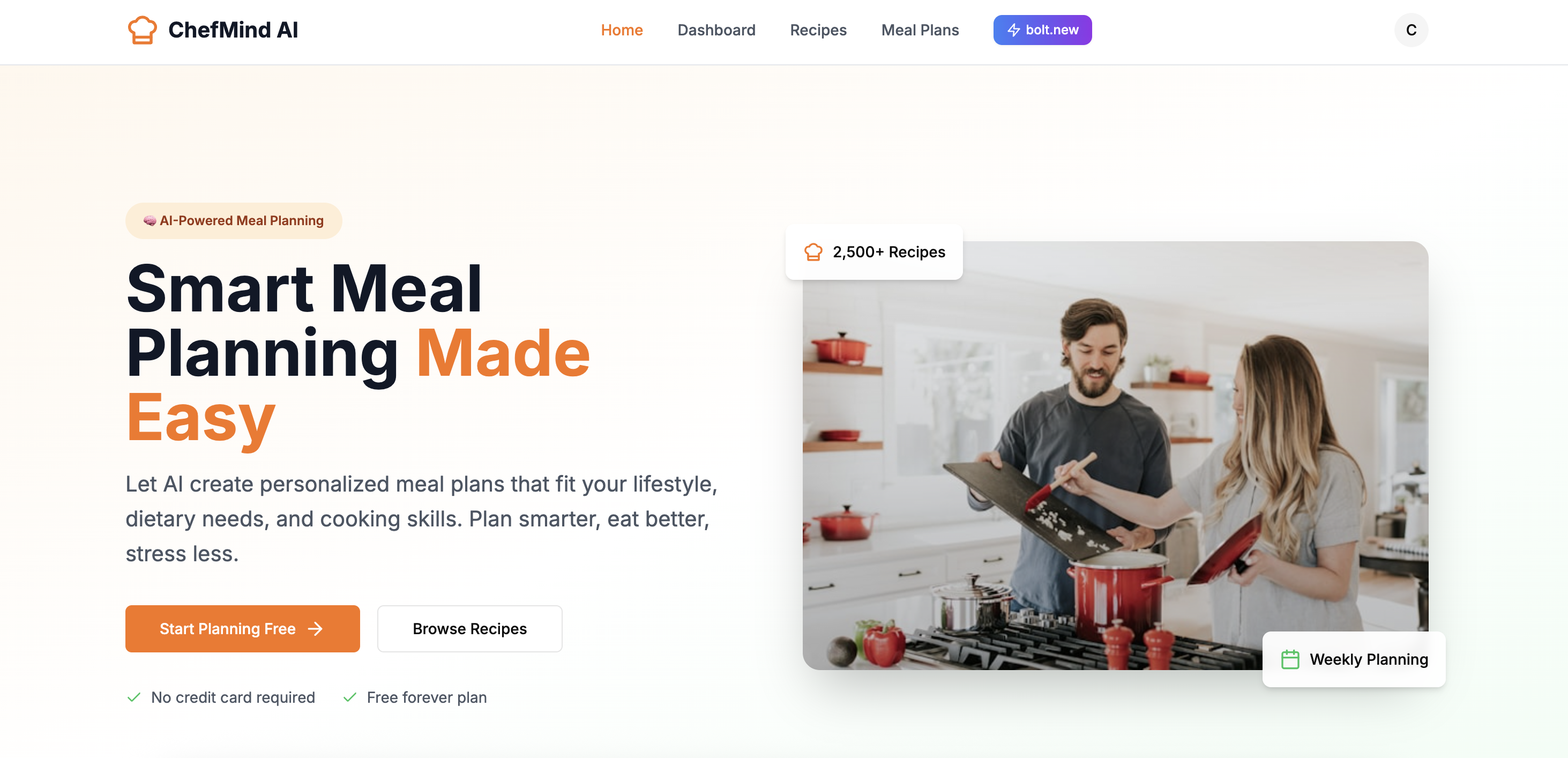
🌟 What Inspired Me The inspiration for ChefMind AI came from a deeply personal place. Like millions of families, I found myself standing in my kitchen every evening asking the same dreaded question: "What's for dinner?" Despite being a technical person who could build complex applications, I was constantly overwhelmed by the seemingly simple task of meal planning. I'd spend 20 minutes scrolling through recipe apps, only to end up ordering takeout again. My grocery trips were chaotic, my food budget was unpredictable, and I knew my family wasn't eating as healthily as we could be. When I discovered this hackathon's focus on AI-powered development, I realized there was an opportunity to solve a universal problem that affects virtually every household. The convergence of powerful AI models like GPT-4o with modern development platforms like Bolt.new meant I could finally build the solution I'd been dreaming of - an AI assistant that doesn't just suggest recipes, but actually thinks about nutrition, budget, preferences, and the realities of family life. The "aha moment" came when I realized meal planning isn't just about food - it's about reducing decision fatigue, saving money, improving health, and bringing families together around shared meals. This wasn't just a technical challenge; it was an opportunity to meaningfully improve people's daily lives. 💡 What I Learned This hackathon was a masterclass in rapid AI-powered development, and I learned invaluable lessons across multiple dimensions: Technical Insights
AI Integration Complexity: While ChatGPT-4o is incredibly powerful, getting consistent, structured responses for meal planning required careful prompt engineering. I learned to create detailed prompts that specify exact JSON formats, handle edge cases, and respect dietary constraints. Supabase RLS Mastery: Implementing Row Level Security for family meal sharing was more nuanced than expected. I discovered how to create flexible policies that allow family members to share meal plans while keeping personal data private. RevenueCat Integration: Building a freemium model taught me about subscription lifecycle management, feature gating, and creating upgrade experiences that feel natural rather than pushy.
Product Development Wisdom
Scope Discipline: In a 4-day hackathon, the temptation to add "just one more feature" is enormous. I learned to ruthlessly prioritize features that directly support the core value proposition and prize criteria. User Flow Obsession: Every click matters when judges have limited time. I spent significant effort ensuring the path from "curious visitor" to "wow, this is useful" was as short as possible. Demo-Driven Development: Building for a demo is different from building for production. I learned to create compelling sample data and user flows that tell a story, not just demonstrate functionality.
AI Product Design
Balancing AI Magic with User Control: Users want AI to be smart, but they also want to feel in control. I learned to design interfaces that showcase AI capability while providing clear customization options. Managing AI Costs: With GPT-4o API calls being expensive, I discovered strategies for caching results, optimizing prompts, and creating freemium models that align business sustainability with user value.
🛠️ How I Built My Project The 4-Day Sprint Strategy Building ChefMind AI in 4 days required a methodical approach that leveraged Bolt.new's strengths while avoiding common pitfalls: Day 1: Foundation & Core Flows I started with a comprehensive Bolt prompt that established the entire technical foundation: markdown- Next.js 14 with TypeScript for type safety and performance
- Supabase for authentication, database, and real-time features
- Tailwind CSS + shadcn/ui for rapid, beautiful UI development
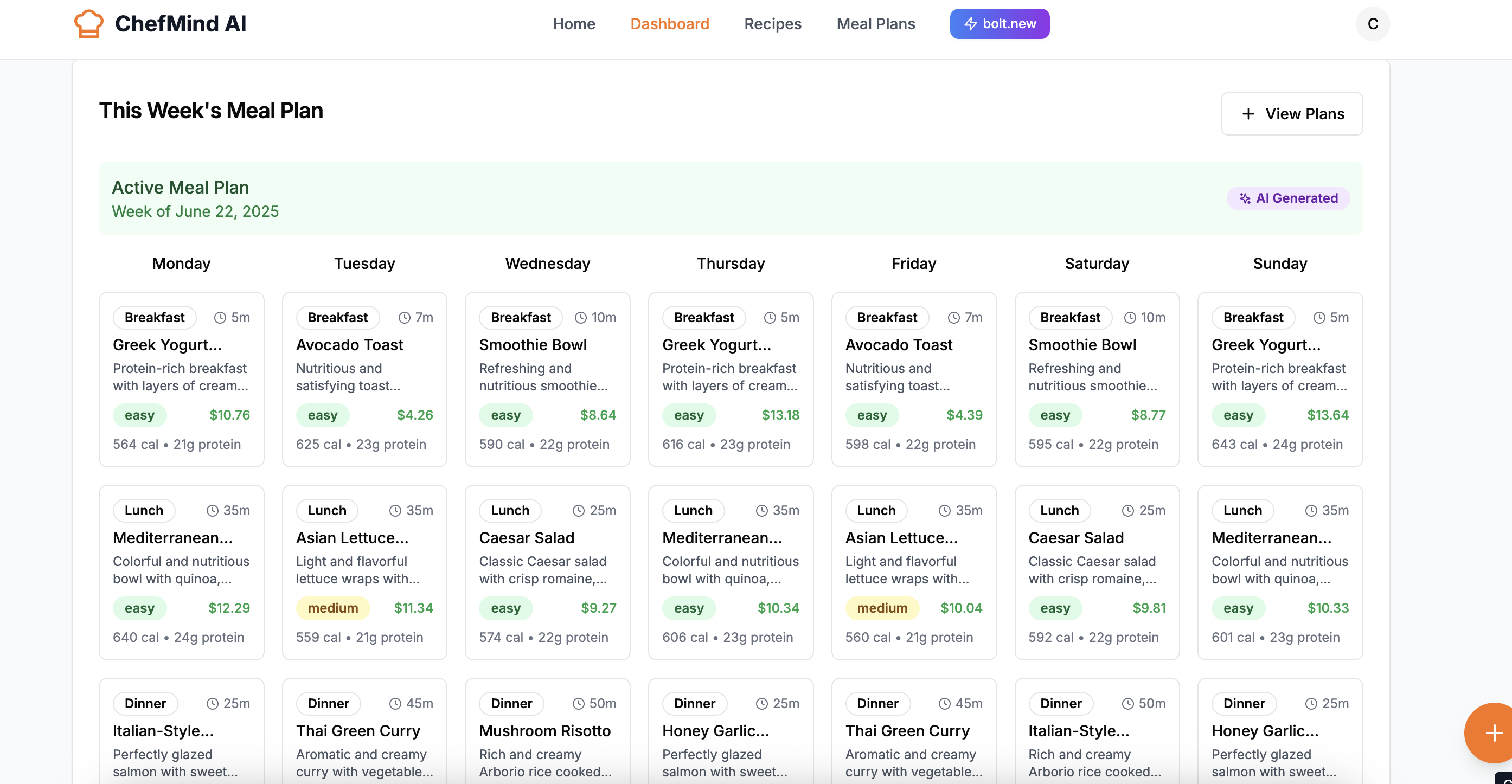
- OpenAI GPT-4o integration for intelligent meal planning The key was being extremely specific about the database schema, user flows, and visual design in the initial prompt. This prevented the iterative back-and-forth that often derails hackathon projects. Day 2: AI Intelligence & Data Persistence I focused on making the AI truly useful rather than just impressive:
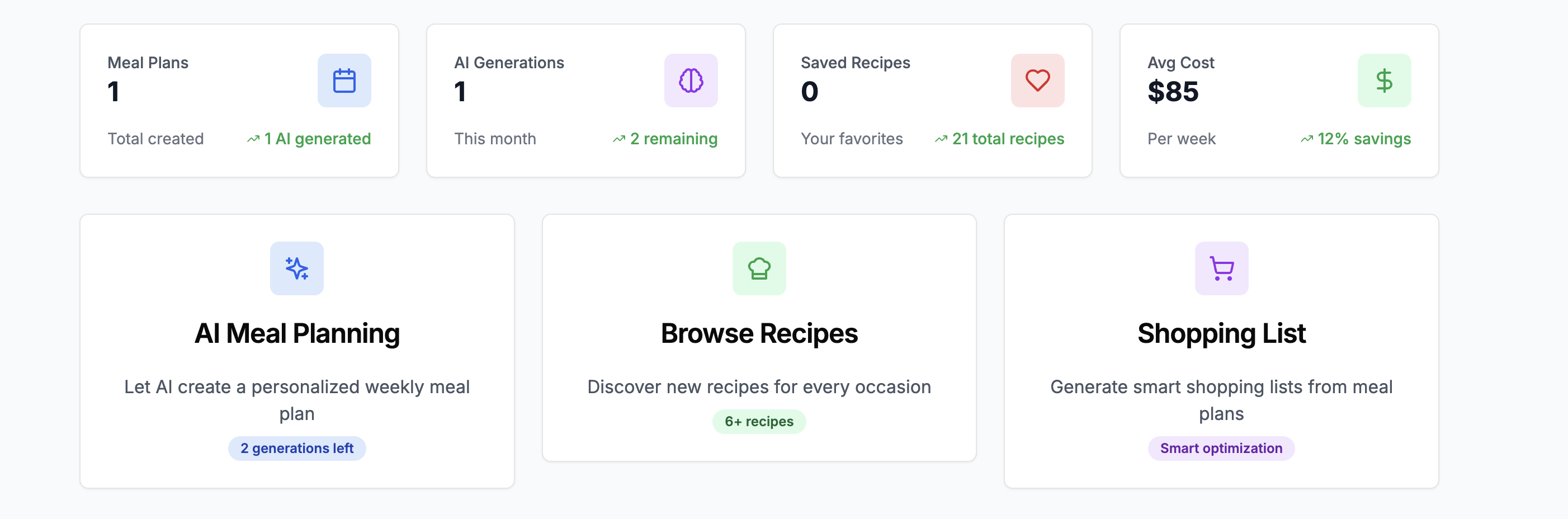
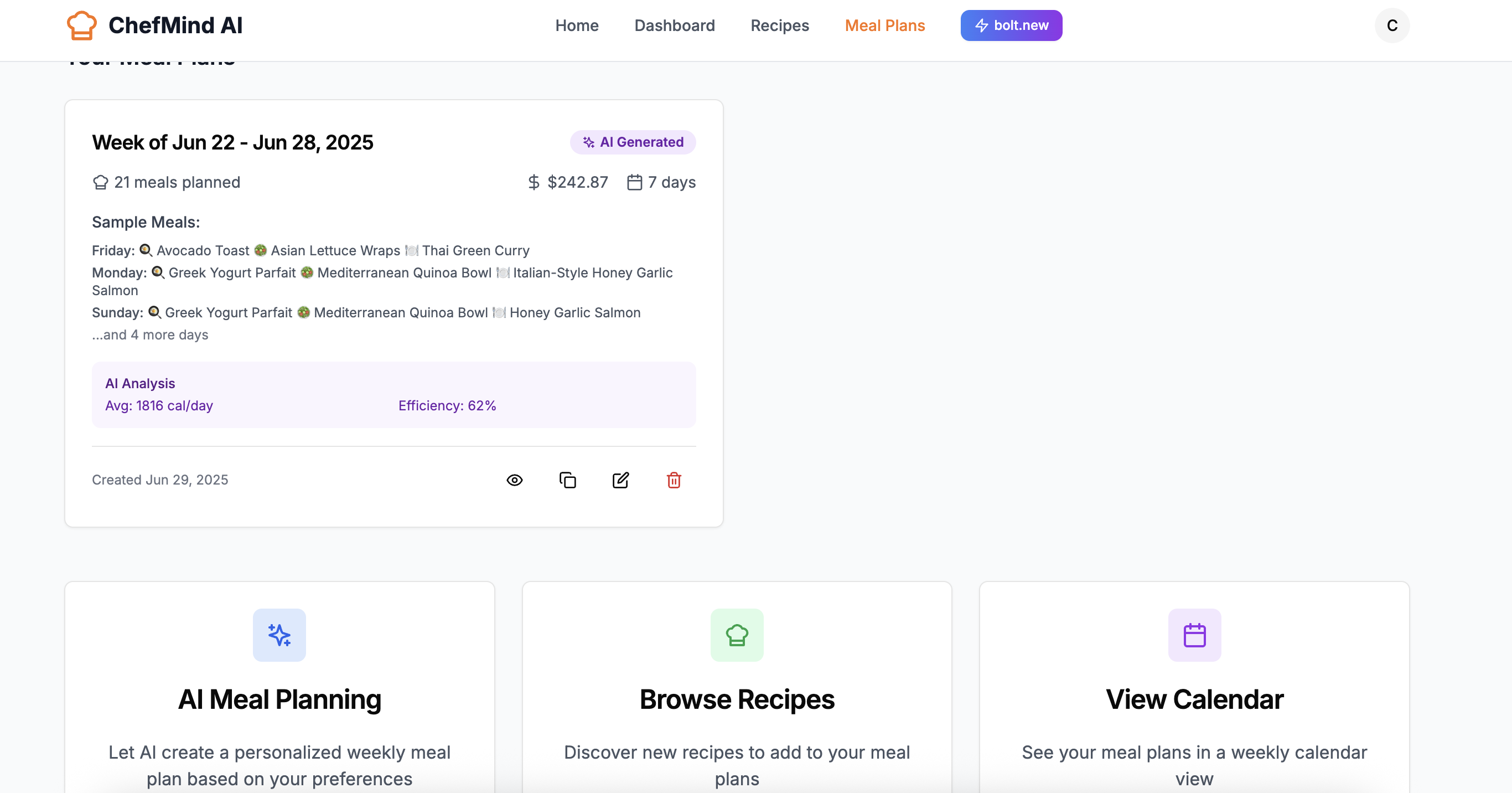
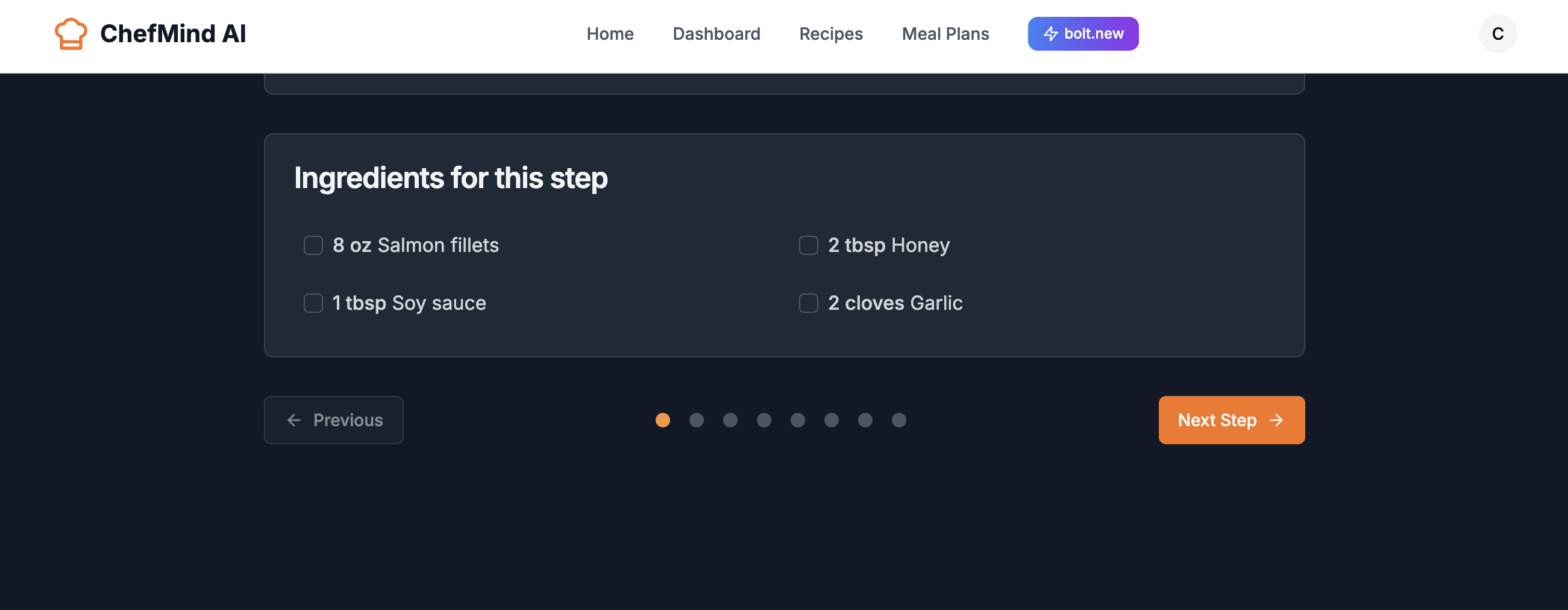
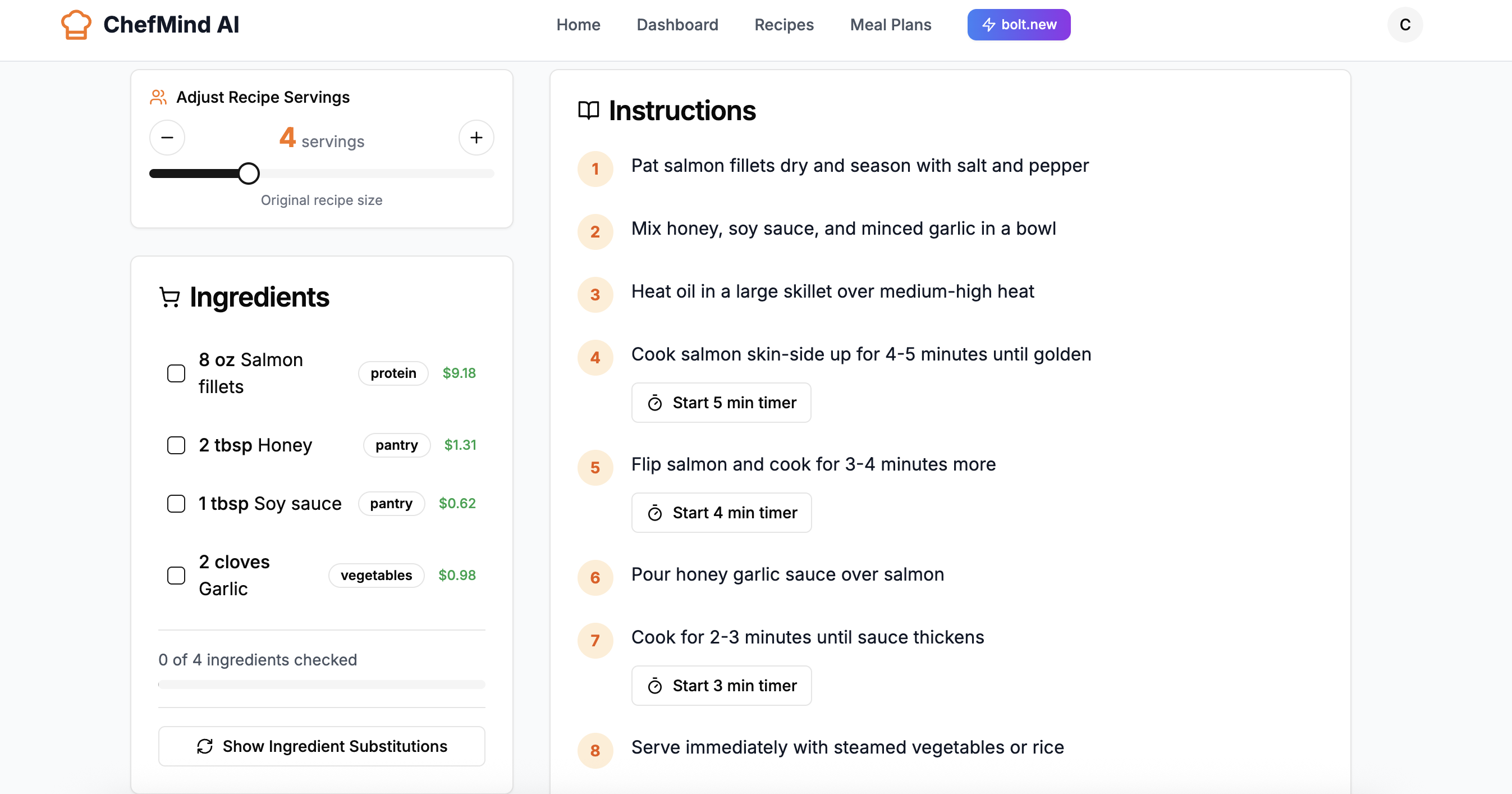
Engineered prompts that generate structured meal plans respecting dietary restrictions, budget constraints, and cooking time preferences Implemented smart ingredient consolidation (combining "2 onions" + "1 onion" across recipes) Built shopping list auto-generation with store section organization Added comprehensive data persistence so users never lose their meal plans
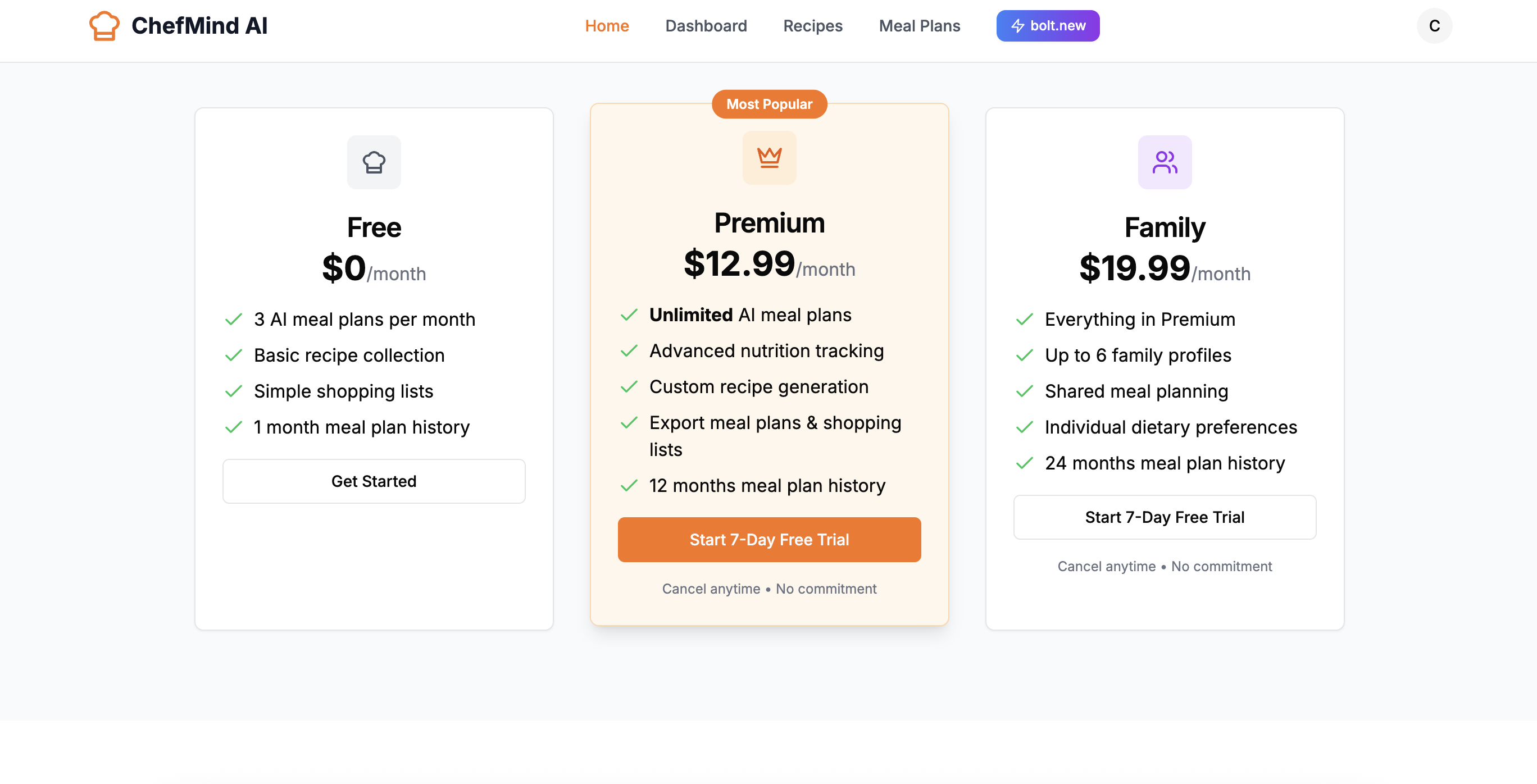
Day 3: Monetization & Polish RevenueCat integration was crucial for the "Make More Money Challenge":
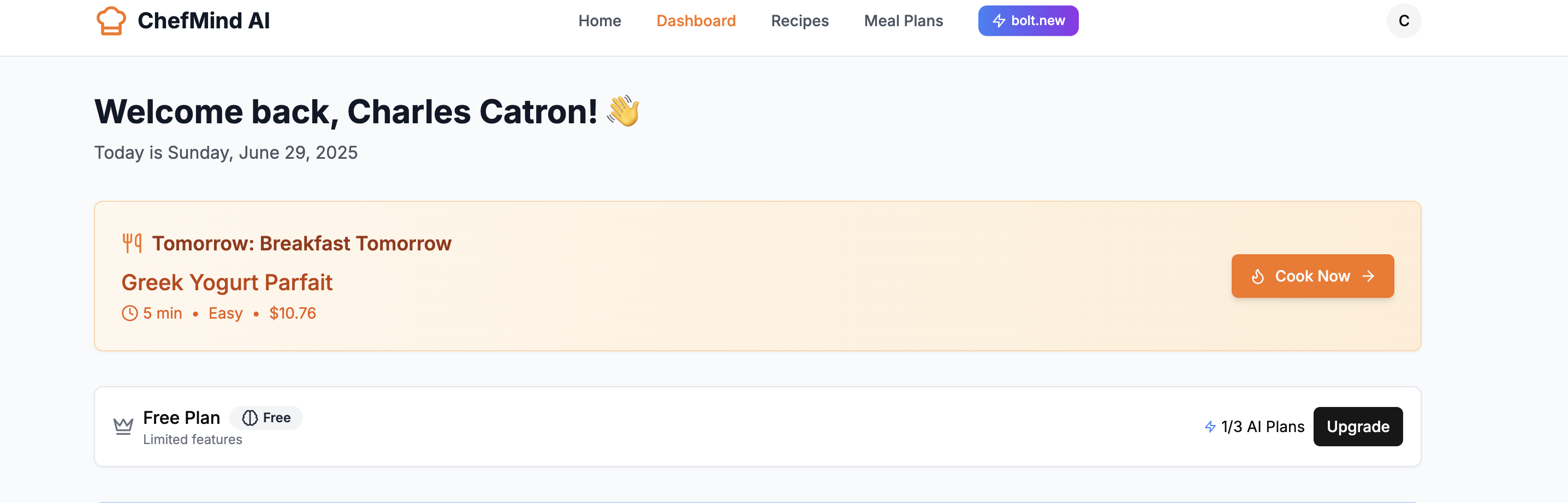
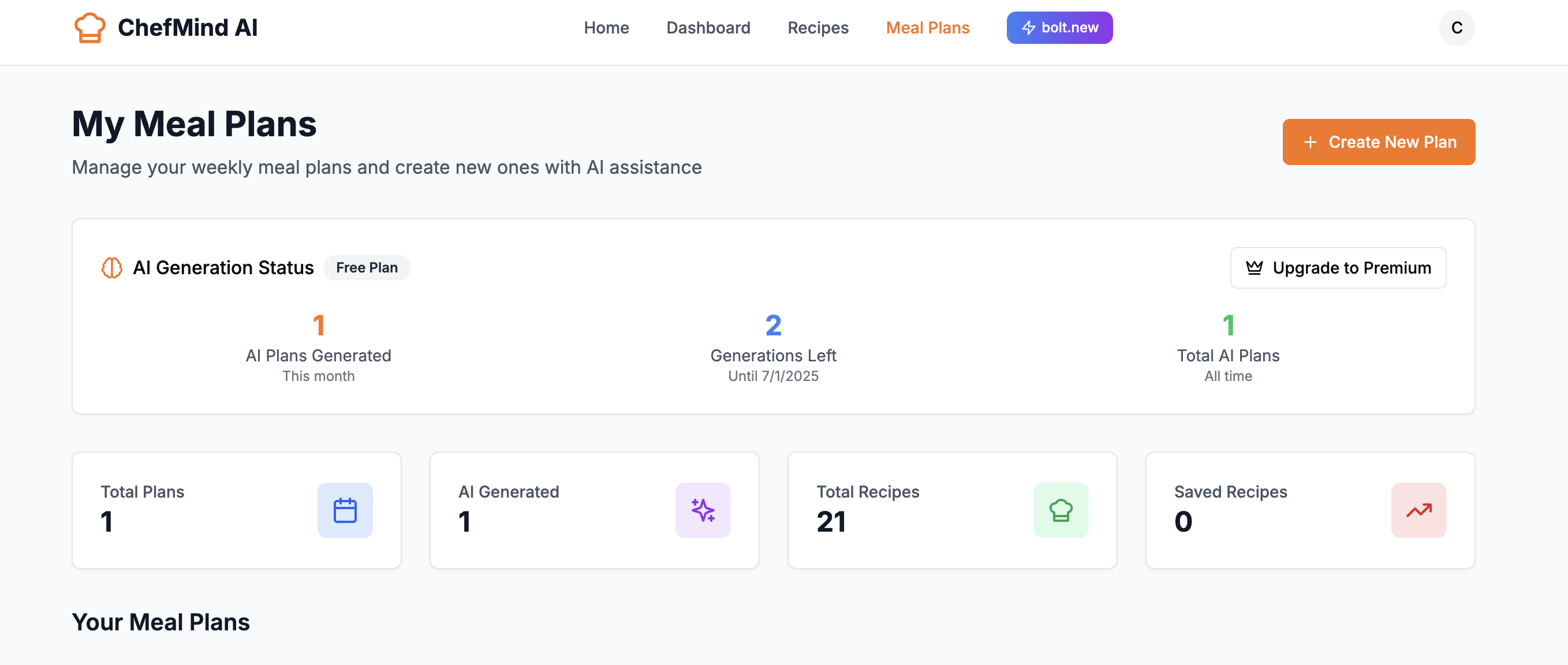
Implemented clear freemium tiers with logical upgrade triggers Added usage tracking and feature gating throughout the app Created compelling paywall experiences that highlight value, not restrictions Polished UI interactions and mobile responsiveness
Day 4: Demo Preparation & Final Features The final day focused entirely on creating a compelling demo experience:
Added beautiful sample data that tells a story Implemented the Bolt.new badge requirement Optimized loading times and error handling Created clear user flows that showcase all prize-worthy features
Technical Architecture Decisions Database Design: I chose a normalized schema that separates meal plans, recipes, and shopping lists. This allows for powerful features like recipe reuse across meal plans and smart ingredient consolidation. AI Integration: Rather than treating AI as a black box, I designed structured prompts that return predictable JSON formats. This ensures the AI-generated content integrates seamlessly with the database and UI. State Management: I kept state management simple with React hooks and Supabase's real-time subscriptions. This avoided complex state management libraries while providing reactive UI updates. Mobile-First Design: Given that meal planning and grocery shopping happen on mobile, I prioritized touch-friendly interfaces and responsive design from day one. 🚧 Challenges I Faced Technical Challenges AI Consistency: The biggest technical hurdle was ensuring GPT-4o would consistently return well-formatted meal plans. Early iterations sometimes returned incomplete recipes or inconsistent nutrition data. I solved this by:
Creating detailed prompt templates with specific output format requirements Implementing response validation and retry logic Adding fallback sample data for demo reliability
Database Schema Evolution: As I added features like family sharing and recipe favoriting, the database schema needed to evolve. Supabase's migration system helped, but coordinating schema changes with Bolt.new's development environment required careful planning. RevenueCat Integration Complexity: Subscription management is inherently complex, involving webhooks, subscription states, and cross-platform considerations. I had to simplify the implementation to focus on the core freemium experience rather than edge cases. Product Challenges Feature Scope Creep: Every conversation about meal planning reveals new feature opportunities: meal prep optimization, dietary goal tracking, social recipe sharing, etc. Staying focused on the core value proposition while building enough features to impress judges required constant prioritization. Demo Data Quality: Creating sample meal plans and recipes that feel realistic and appealing was surprisingly time-intensive. The demo needs to tell a compelling story, which means every piece of content must be thoughtfully crafted. Mobile UX Complexity: Meal planning involves complex interactions (calendar views, recipe details, shopping lists) that need to work beautifully on mobile. Designing intuitive navigation and touch interactions within the hackathon timeline was challenging. Strategic Challenges Prize Category Targeting: With multiple $25,000 prizes available, I had to design features that would appeal to different judging criteria simultaneously. This meant ensuring the Supabase integration demonstrated scalability while the RevenueCat integration showed clear monetization, all while maintaining beautiful UI design. Competitive Differentiation: The meal planning space has established players like Mealime and PlateJoy. I needed to identify and highlight what makes ChefMind AI unique: the AI-first approach, family coordination features, and budget optimization intelligence. 🎯 Key Success Factors Looking back, several decisions were crucial to the project's success:
Bolt.new Mastery: Spending time upfront understanding Bolt.new's capabilities and limitations prevented wasted effort on unsupported features. AI-First Design: Rather than adding AI as a feature, I designed the entire experience around AI intelligence, making it feel natural and essential. User Story Focus: Every feature decision was evaluated against realistic user scenarios: "Will this help a busy parent plan better meals for their family?" Demo-Driven Development: Building features that would shine in a 3-minute demo video ensured I prioritized the most impactful functionality. Technical Risk Management: By testing AI integration, database operations, and subscription flows early, I avoided last-minute technical surprises.
🚀 What's Next This hackathon was just the beginning. ChefMind AI addresses a real market need with a scalable technical foundation. The next steps would involve:
User testing with real families to refine the meal planning algorithms Partnerships with grocery stores for real-time pricing and delivery integration Advanced nutrition coaching features powered by health data integration Enterprise features for corporate wellness programs
Building ChefMind AI taught me that the best AI applications don't just showcase technology - they solve fundamental human problems in ways that feel magical but natural. This project represents the intersection of technical capability and human empathy, wrapped in a business model that can scale to help millions of families eat better, spend less, and stress less about daily meal decisions. The future of food is intelligent, personalized, and family-centered. ChefMind AI is just the beginning of that journey.RetryClaude can make mistakes. Please double-check responses.
Challenges we ran into
Accomplishments that we're proud of
What we learned
What's next for Chef Mind AI
Built With
- netlify
- nextjs
- revenuecat
- supabase


Log in or sign up for Devpost to join the conversation.