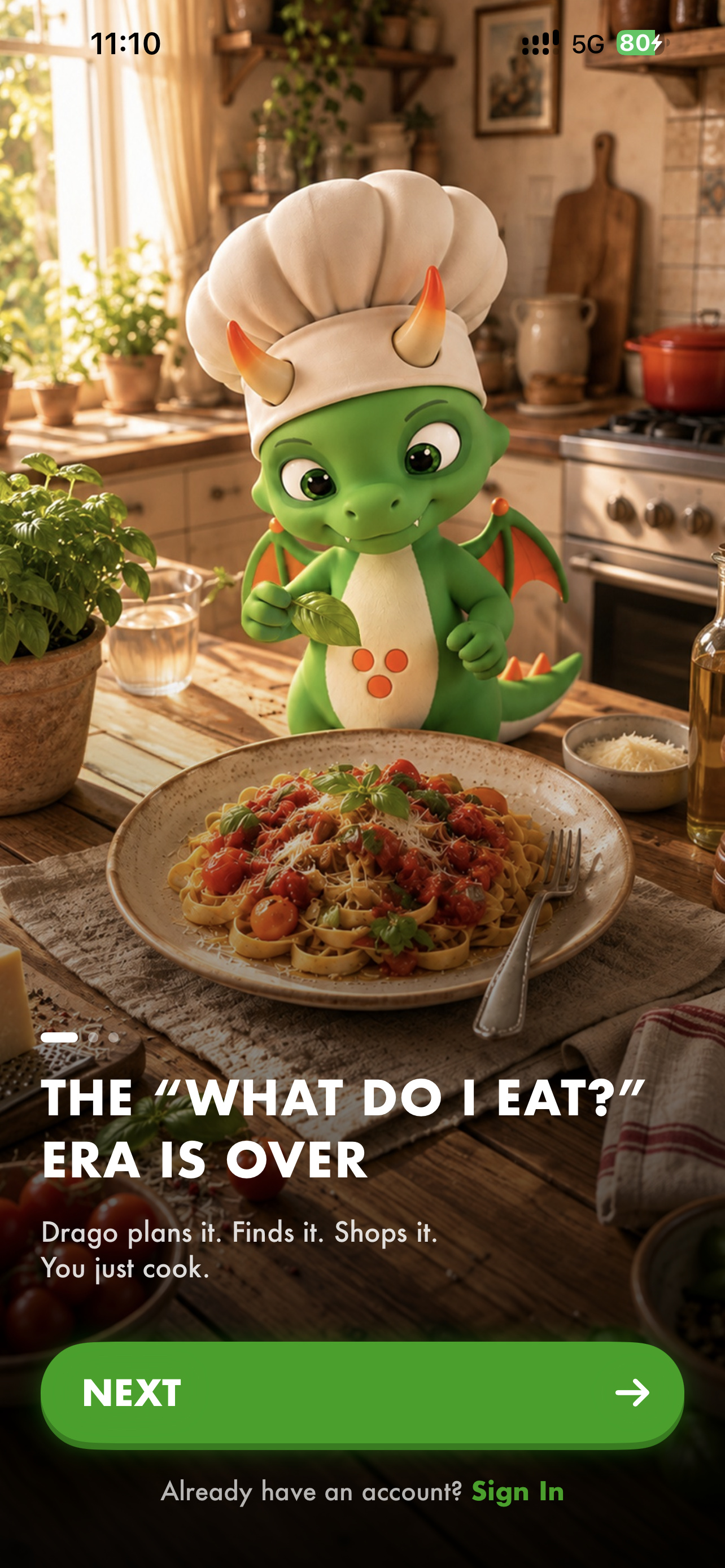
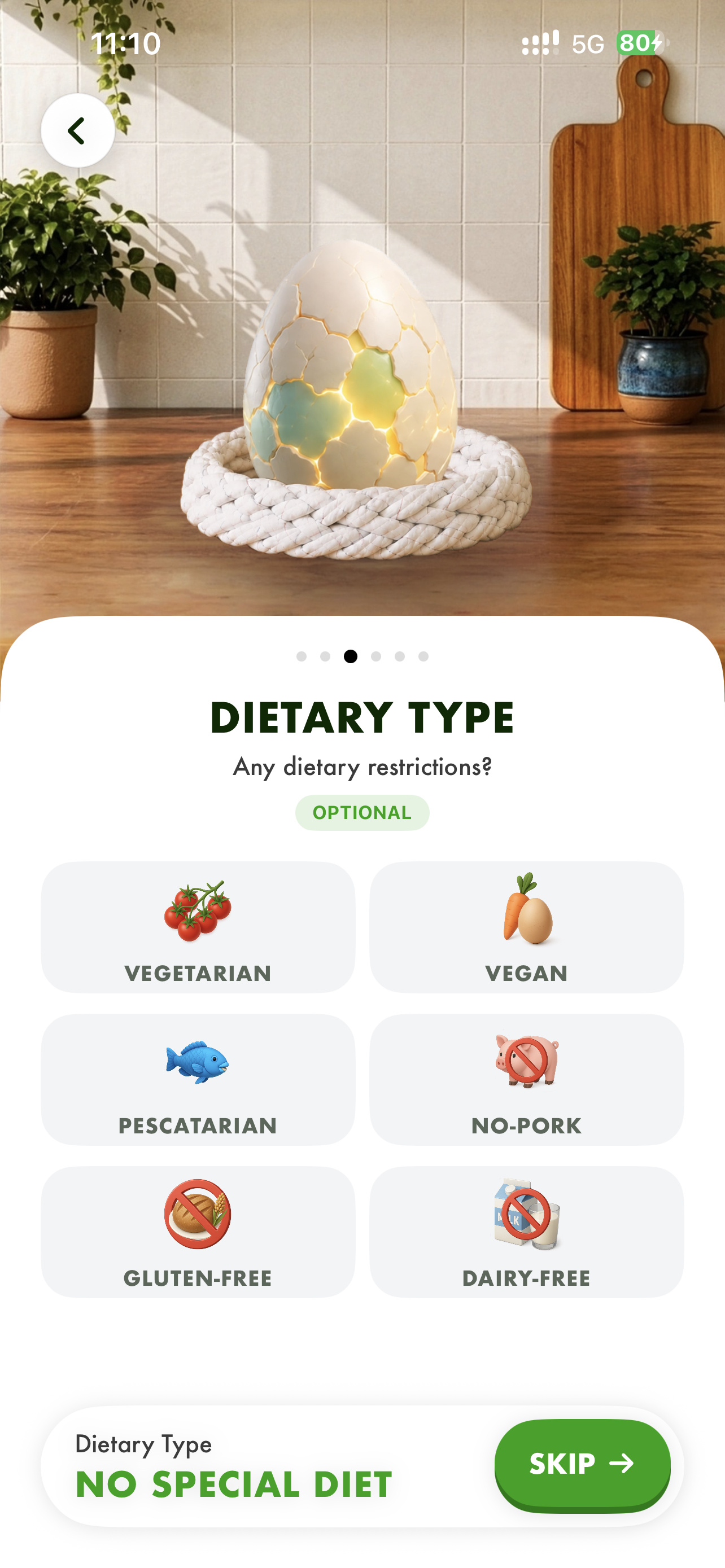
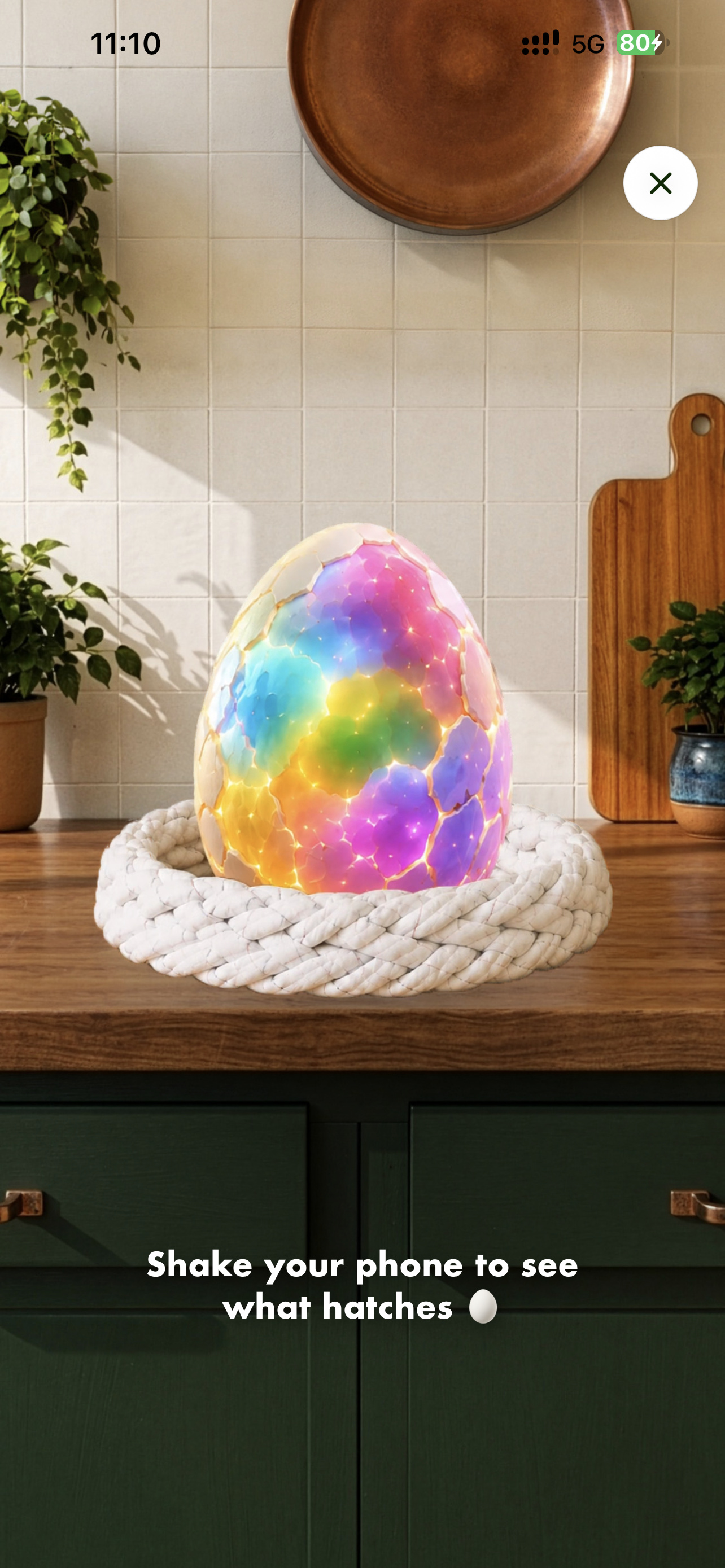
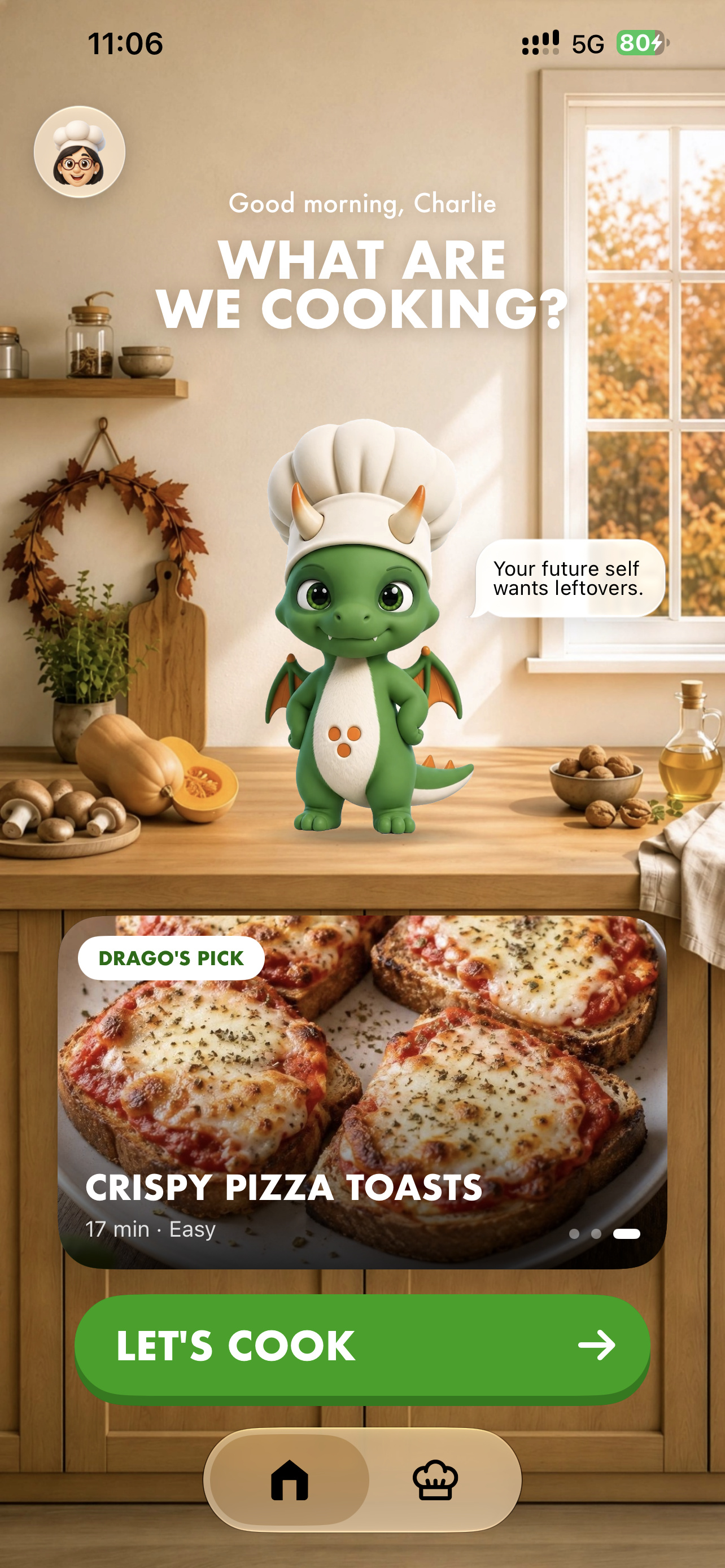
A cooking app for people who don’t really cook. yet.
Inspiration
Whenever I tell my friends I’m building a cooking app, they usually say:
“You? A cooking app? You don’t even cook.”
Fair point. That’s kind of why I built Chef Drago.
When I first lived on my own, lunch was often rice and frozen peas. And dinner was pasta :D After a couple of days, I’d get bored, give up, and spend 20 bucks on a burger on Uber Eats.
I didn’t hate cooking. I just never knew what to cook.
There were already thousands of recipes online, but finding one that matched my ingredients, my mood, my time, and the effort I was willing to make felt like work.
-> I wanted a cooking app for people who don’t really cook yet. Something as fun and easy to start using as Reels or Tinder, but that ends with something more useful: dinner.
What it does
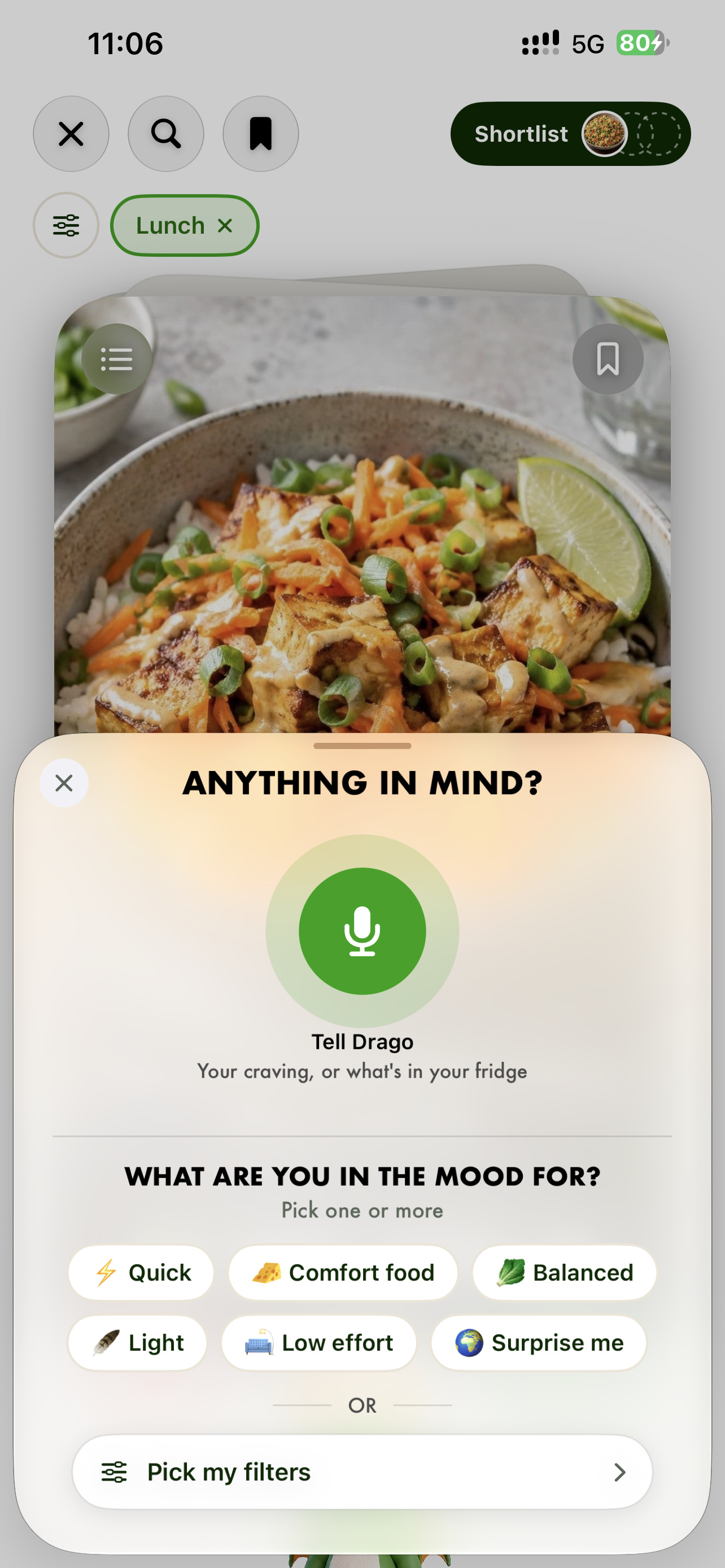
Chef Drago helps you go from “What should I eat?” to actually cooking something.
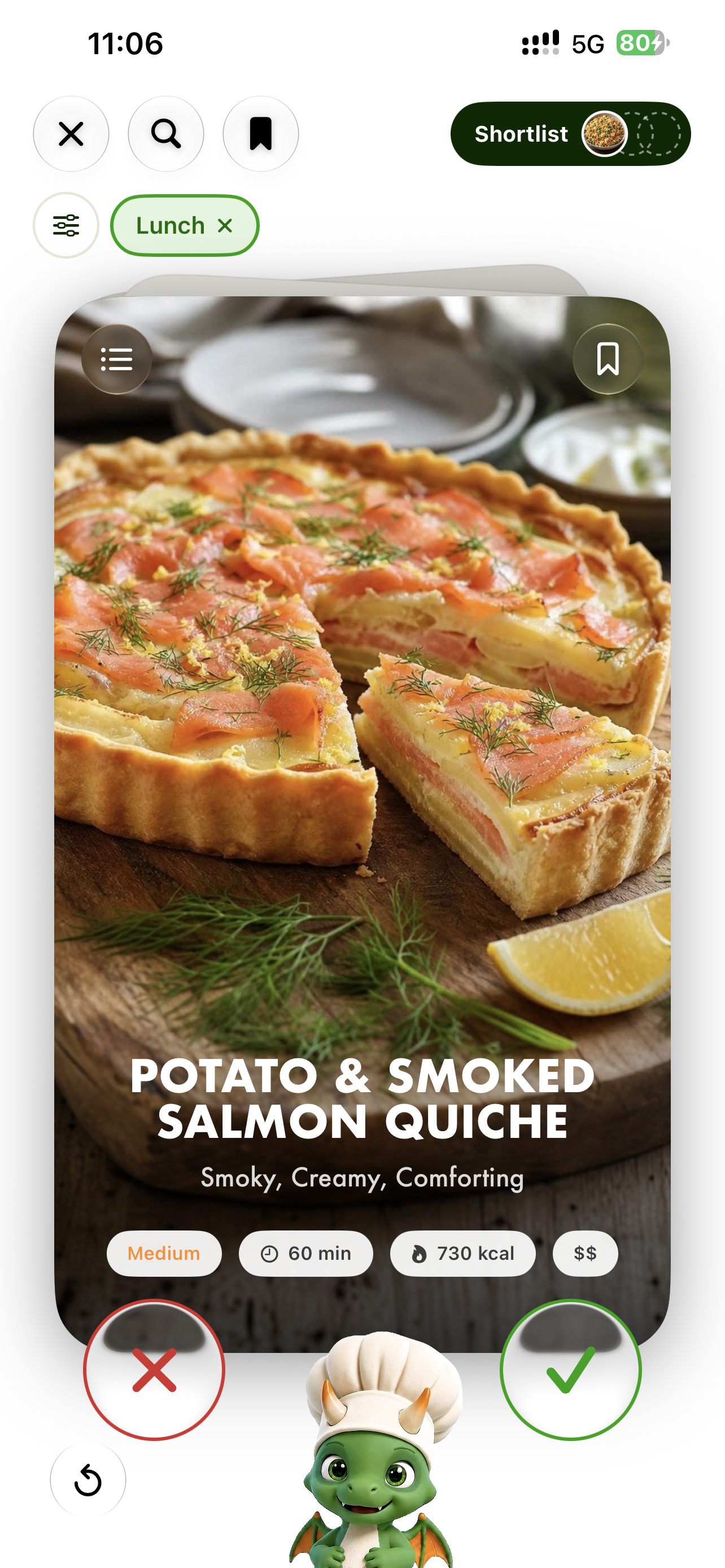
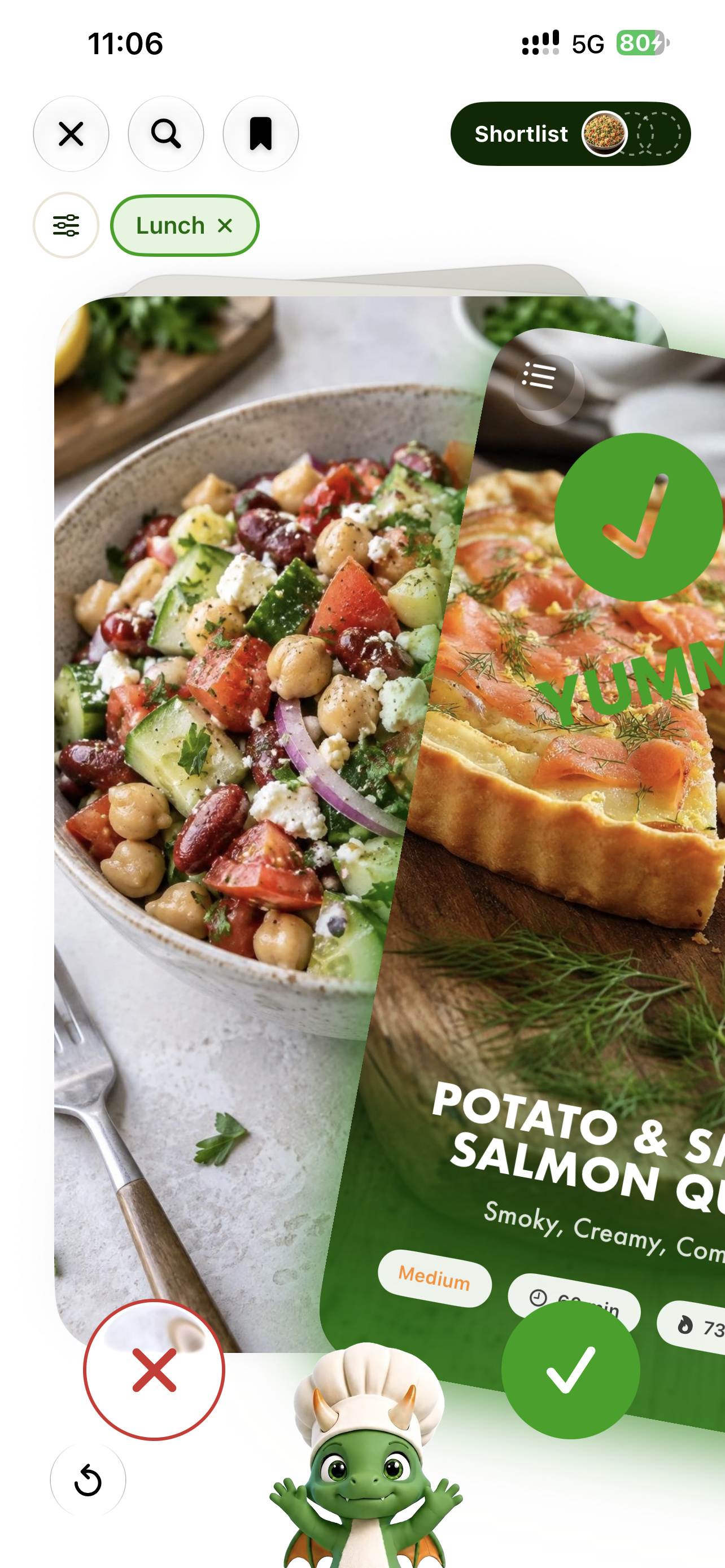
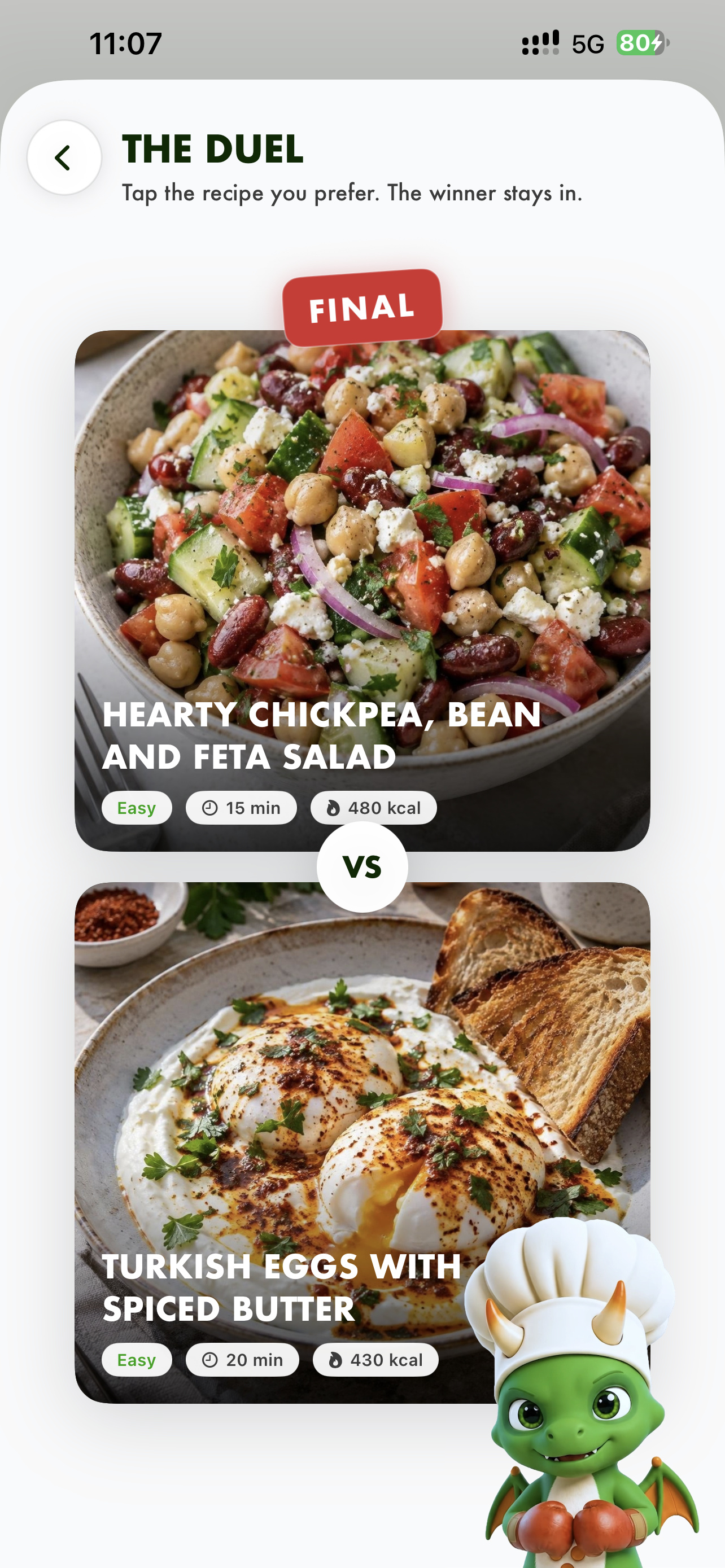
Instead of starting with a giant cookbook or a long questionnaire, you see recipes immediately and swipe through personalized suggestions thanks to an always-learning algorithm. If you know what you want, you can tell Drago: something quick, creamy, balanced, indulgent, or made with what’s left in your fridge. The recommendations adapt.
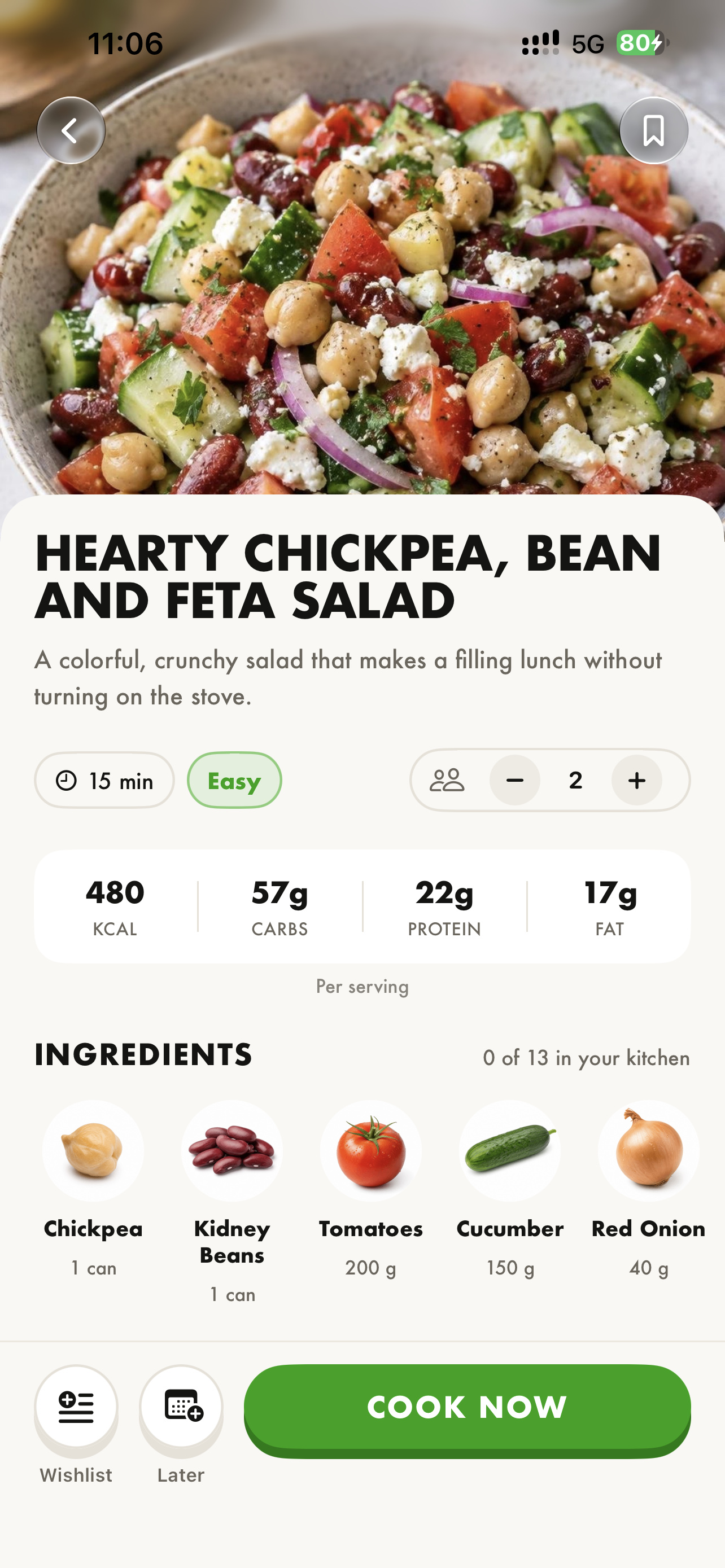
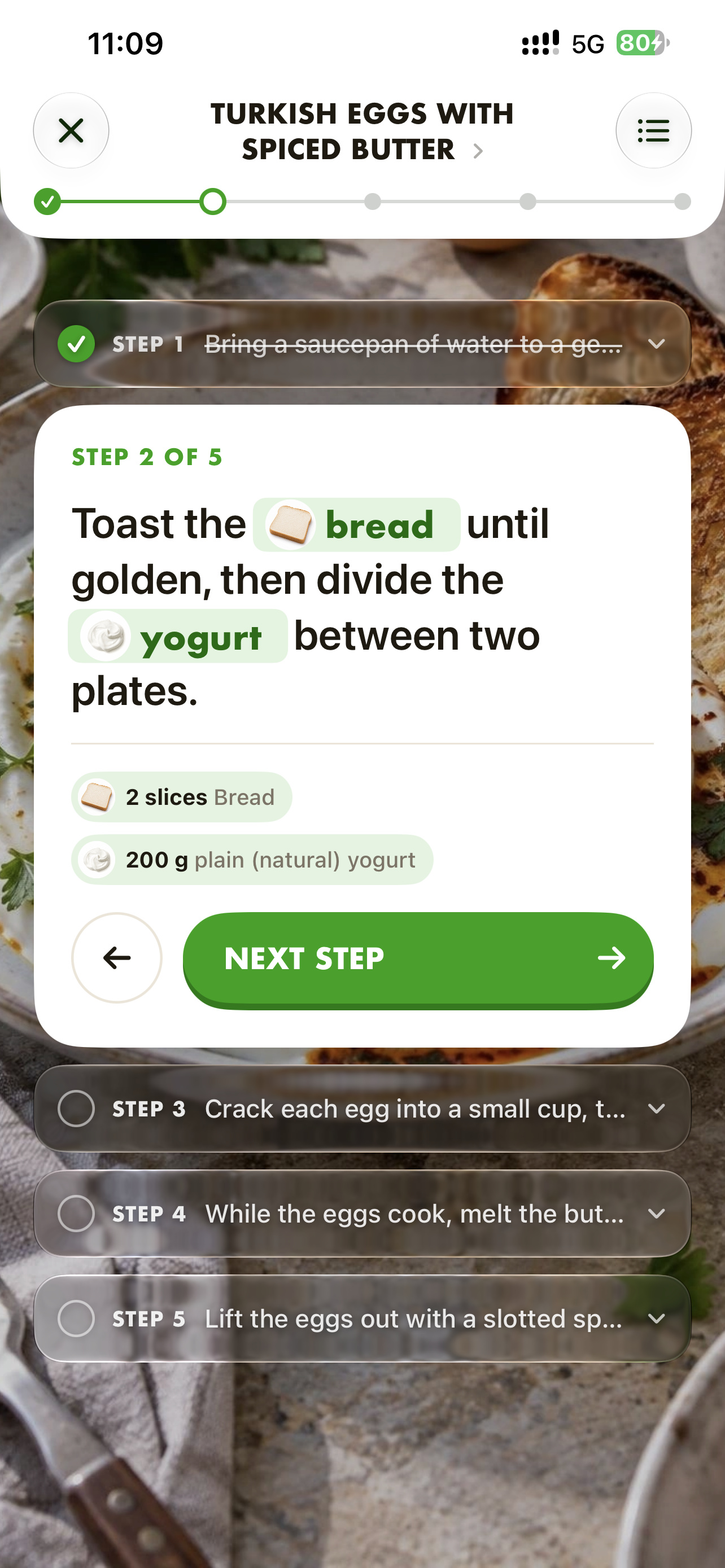
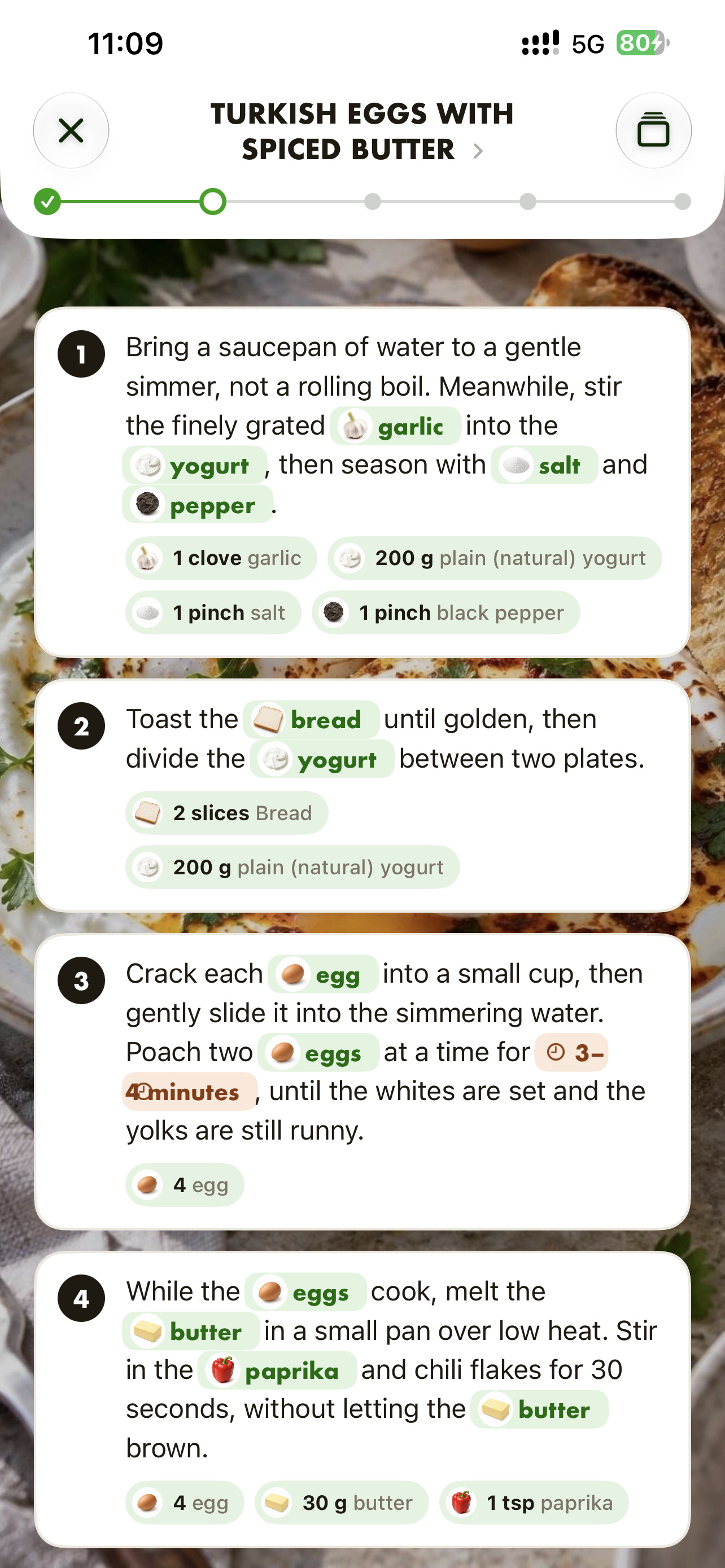
Once you find the right recipe, Chef Drago guides you through cooking it. As simple as it seems!
How I built it
I’m building Chef Drago primarily on my own with SwiftUI and Firebase, while collaborating with Dylan on parts of the visual design.
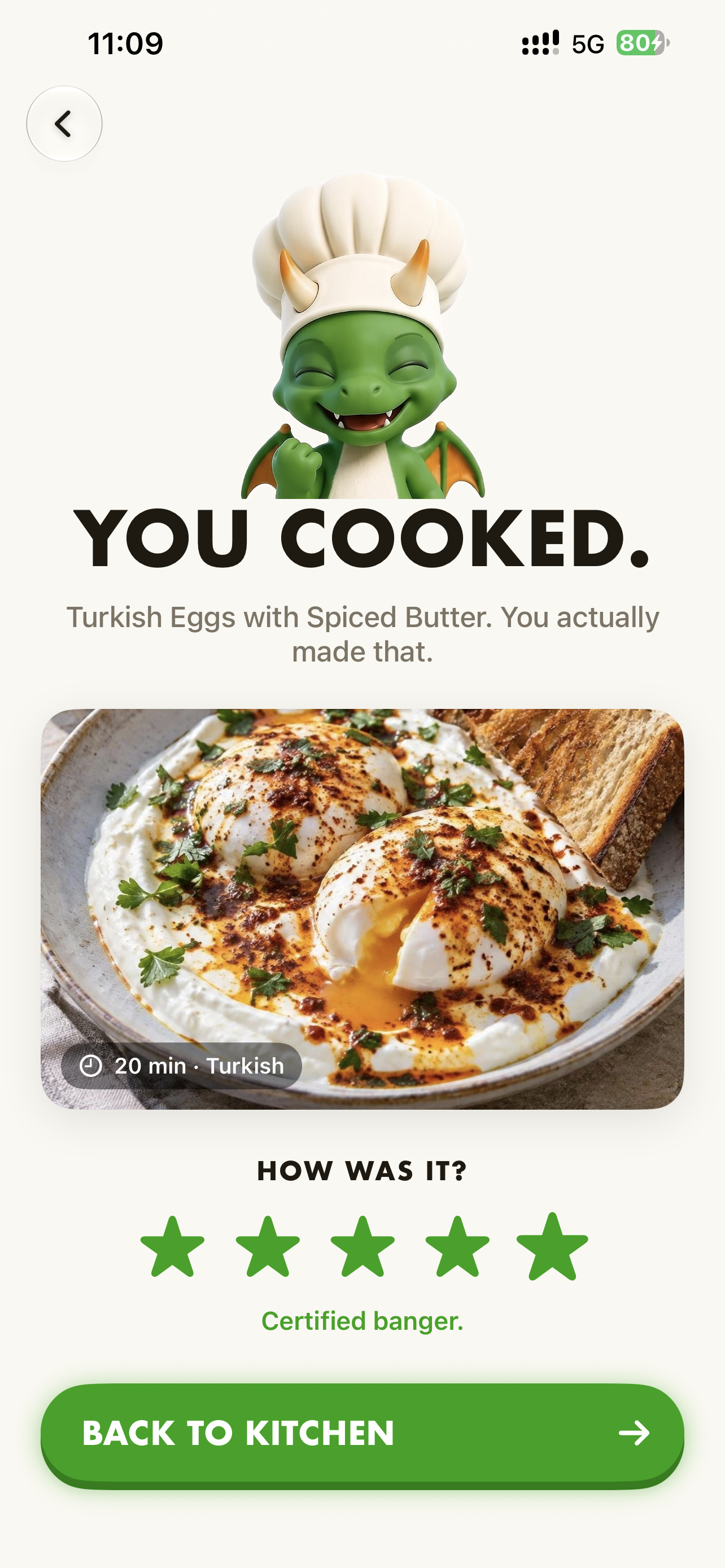
I handle the product, UX, development, recommendation logic, animations, branding, App Store distribution, and user feedback. Dylan helped me refine some screens and, most importantly, designed and created Drago’s 3D mascot assets.
One of the main product principles is progressive personalization.
Rather than asking users to configure everything before they can start, Chef Drago shows recipes first, learns from their choices, and lets them refine recommendations only when they want to.
Challenges I ran into
The biggest challenge was finding the right balance between personalization and simplicity.
After several weeks of building, I had improved the algorithm, added filters, and kept making recommendations more precise. Then I shipped the first version and showed it to friends.
That made me realize I had started to lose the original idea behind Chef Drago: choosing dinner was supposed to become faster and easier, not turn into another configuration process. So I went back and made a major update that reworked the recommendation flow, the filters, and the way users discover recipes.
It meant questioning work I had already spent a lot of time building, but the product now feels much closer to the original idea.
Accomplishments that I’m proud of
The first thing I’m proud of is simply shipping the app instead of keeping it as a prototype. Around 20 people tried Chef Drago during its first five days, before I did any real promotion.
I’m also proud that some of the things I cared about most from the start actually came through when people used it.
Several friends were genuinely surprised by how polished and easy to use the app felt, especially the swipe-based discovery and Drago’s mascot.
That mattered so much to me because one of the hardest parts of the project was making a cooking app feel fun, visual, and approachable, instead of intimidating.
What I learned
The biggest lesson was:
Ship earlier. Learn earlier. (Thanks Charlie for repeating it :) )
When I stayed focused on building for weeks, it became so easy to optimize individual features and slowly move away from the simplicity that made the idea interesting in the first place.
Once I put the V1 in people’s hands, those problems became obvious much faster. -> I realized part of the experience had become too complicated, so I went back and reworked a significant part of the recommendation flow, the filters, and the way users discover recipes. And It's SO much better now :)
I also learned that personalization only helps when it reduces friction.
Too much choices confuse the user
More questions, filters, and data can technically improve a recommendation. But if users have to work before they even see something they want to eat, the product has already missed the point. For Chef Drago, good personalization should feel almost invisible.
What’s next for Chef Drago
First, obiously develop the marketing on Instagram and TikTok to get my app discovered. It got a lot of trend's opportunities.
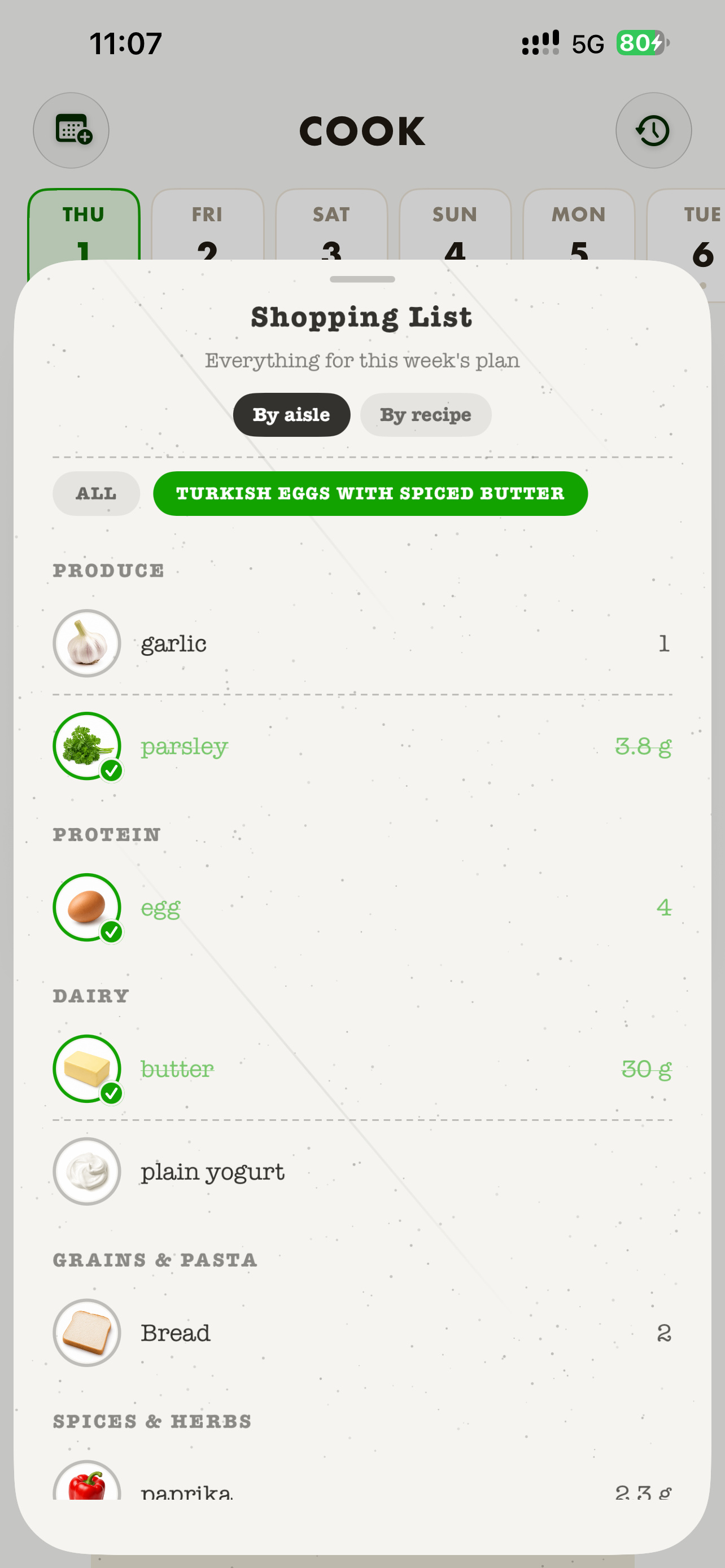
Then, it is to make the journey after choosing a recipe just as simple as finding one.
I’d like Chef Drago to connect with nearby grocery stores, so an ingredient list could eventually become a real grocery order without rebuilding the cart somewhere else.
Local food prices could also make recommendations budget-aware, helping users discover meals that fit not only their tastes, but what they actually want to spend.
Further ahead, I want to explore a more private and playful social layer, and gamification.
Without forgetting, an ad on Times Square ;D (yes I dream big)


Log in or sign up for Devpost to join the conversation.