-
-
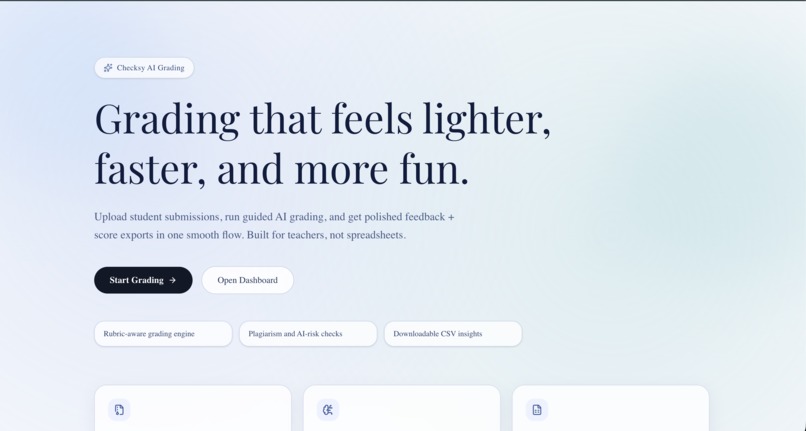
Landing Page
-
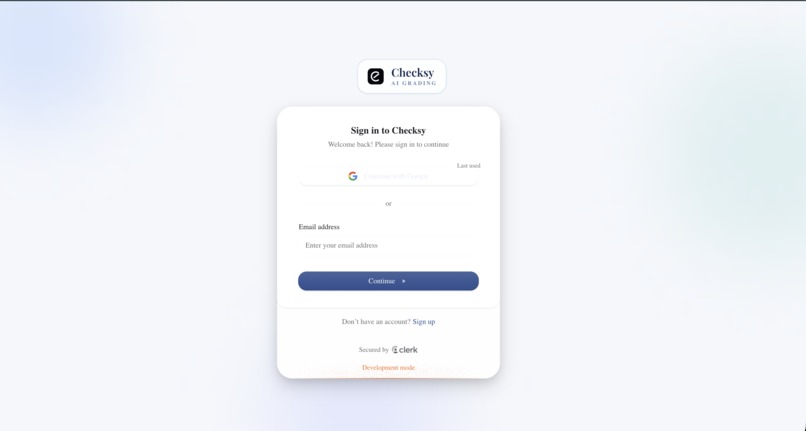
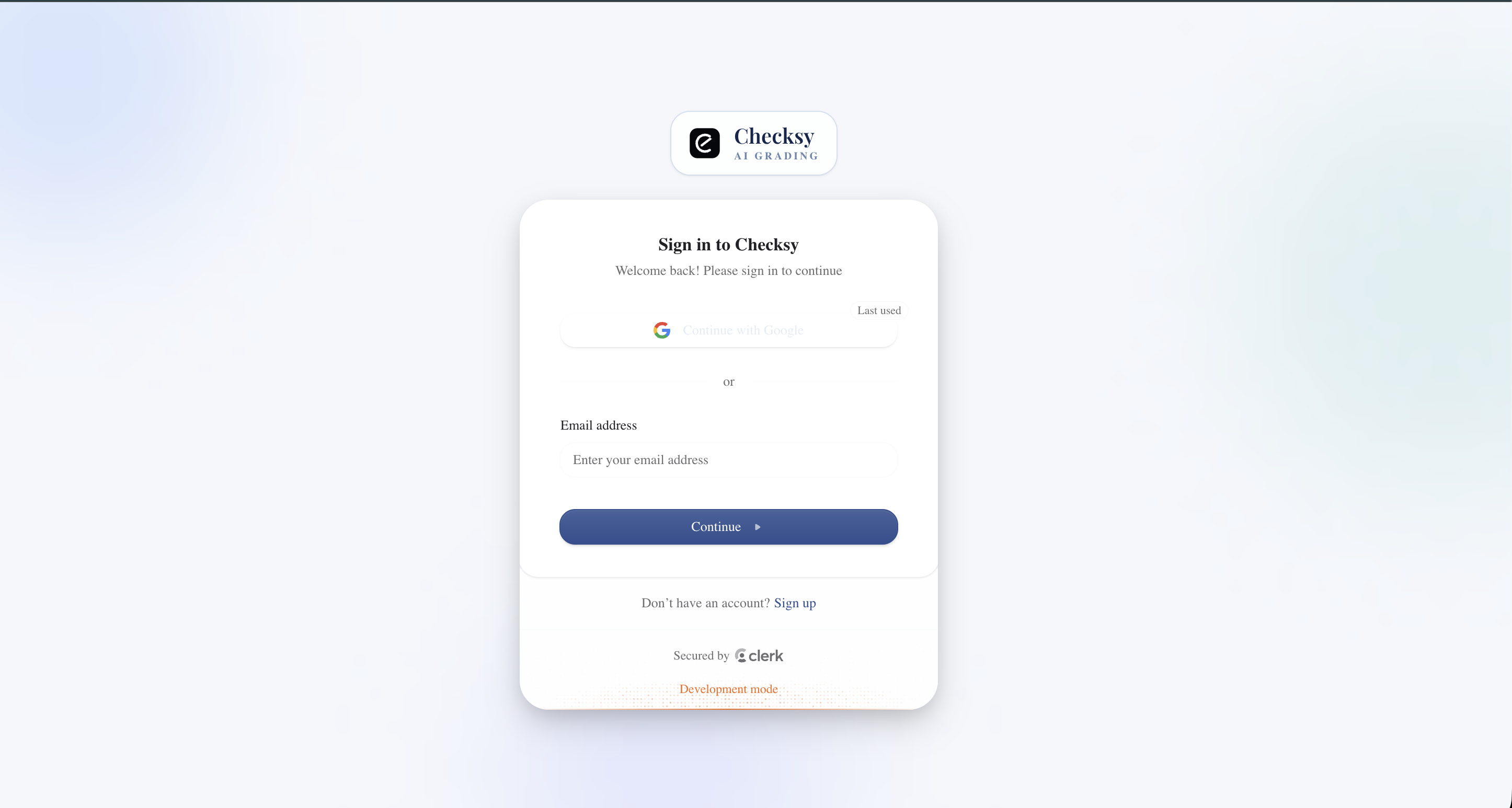
Sign in Page
-
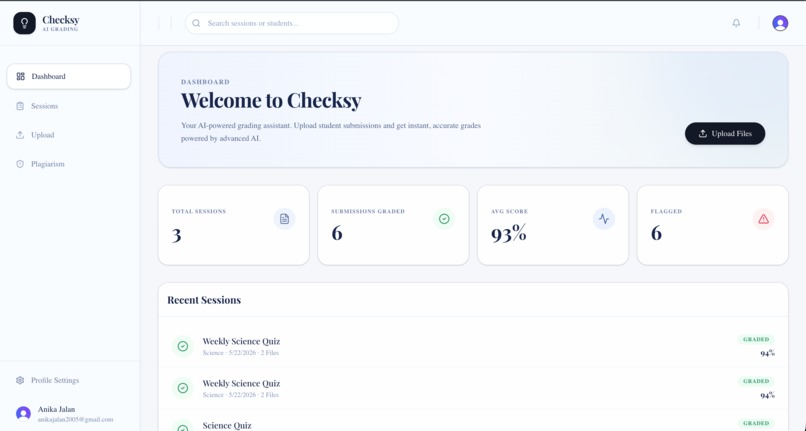
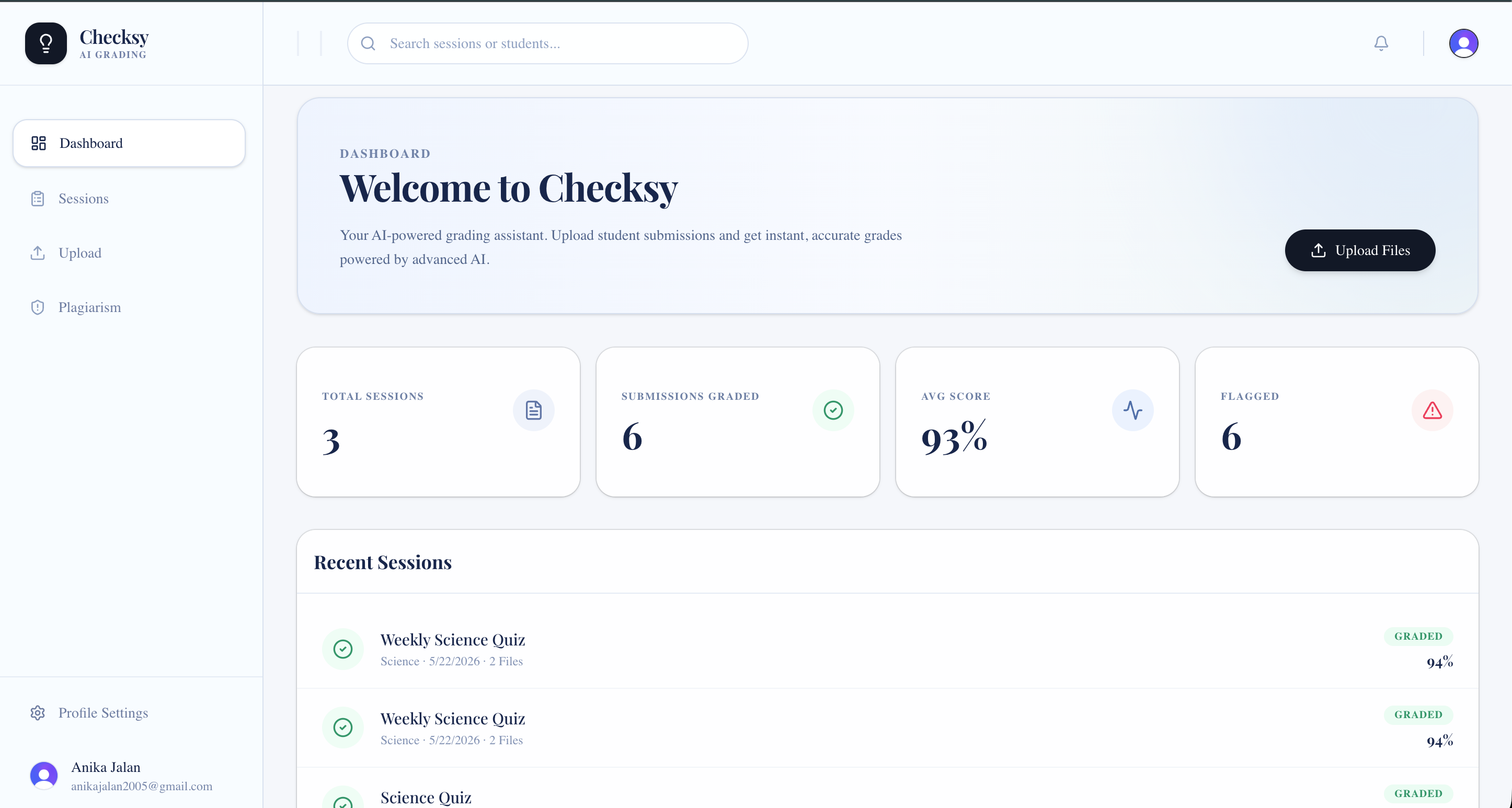
Dashboard
-
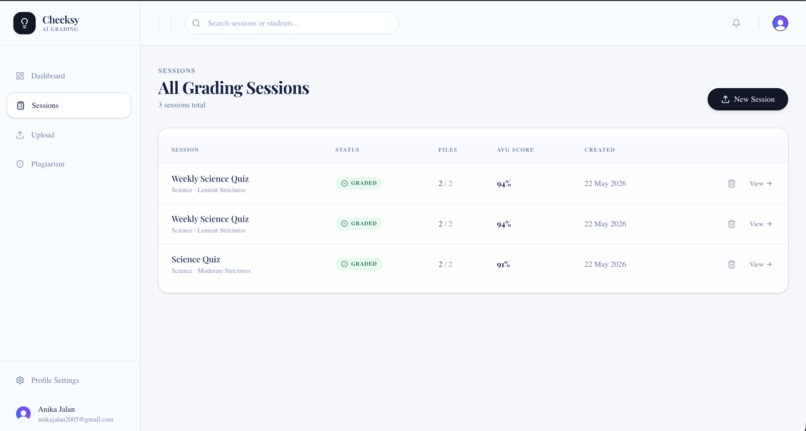
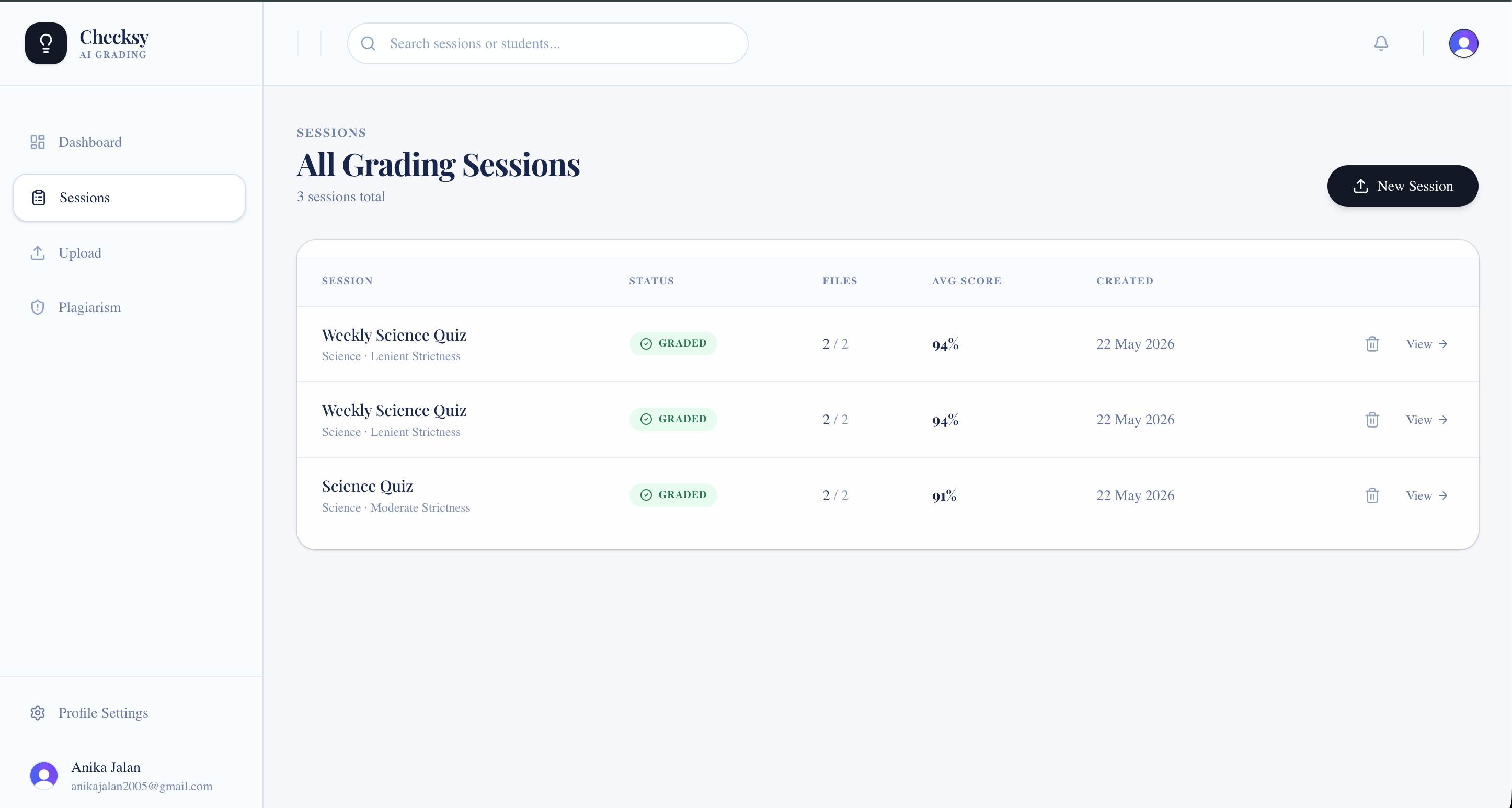
Sessions Page
-
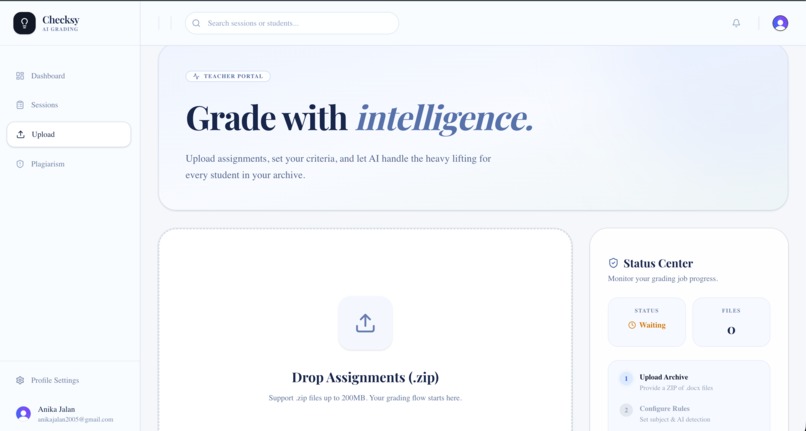
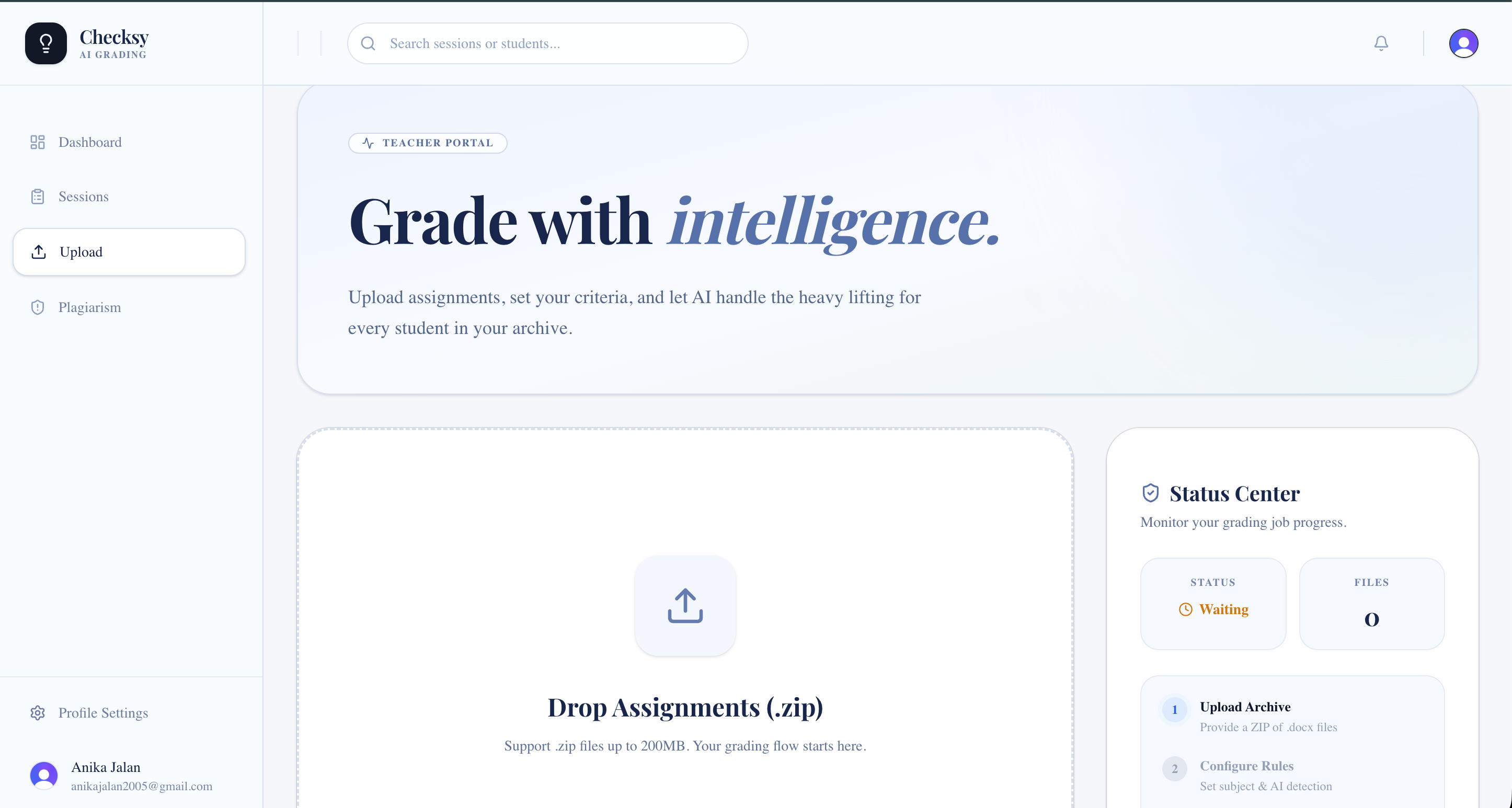
Uploading Page
-
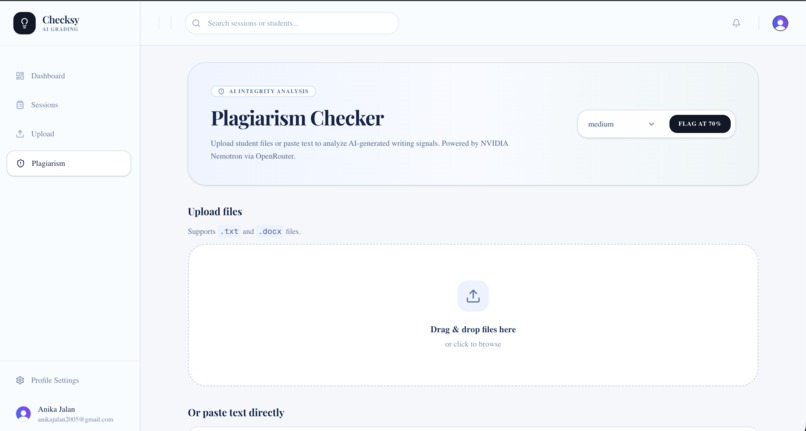
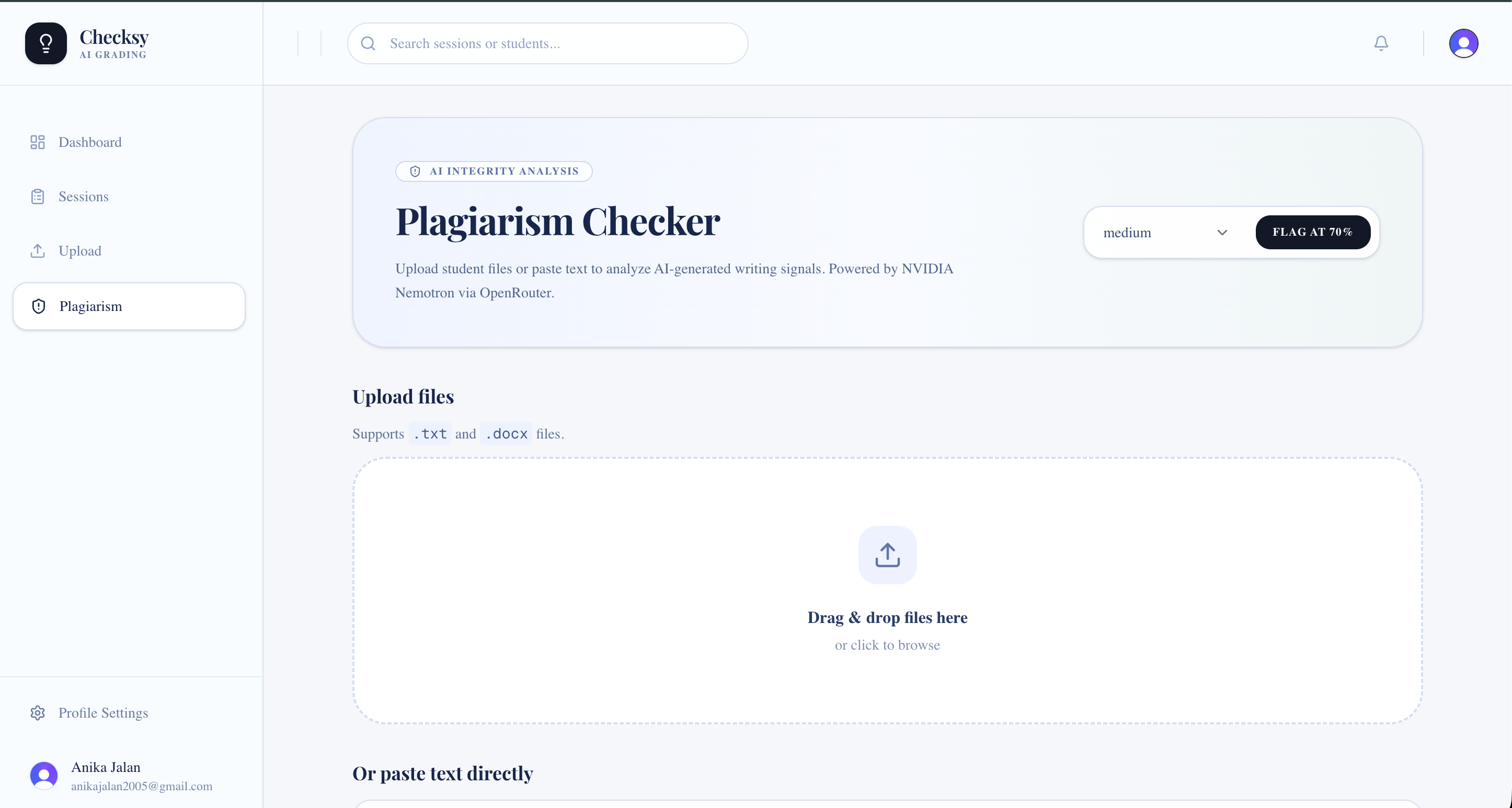
Plagiarism Page
-
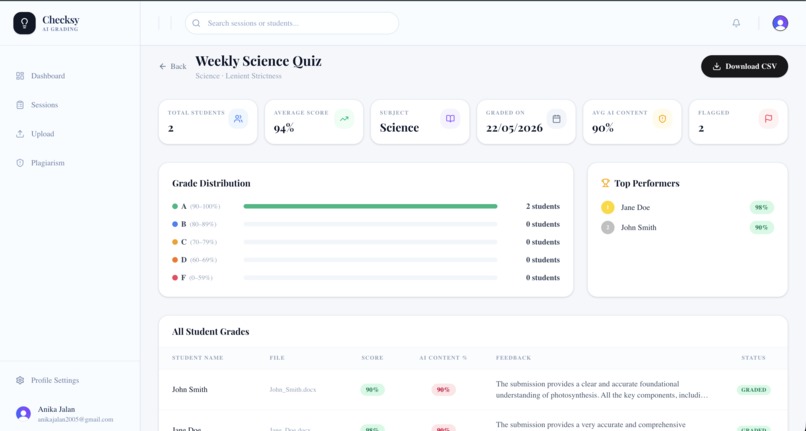
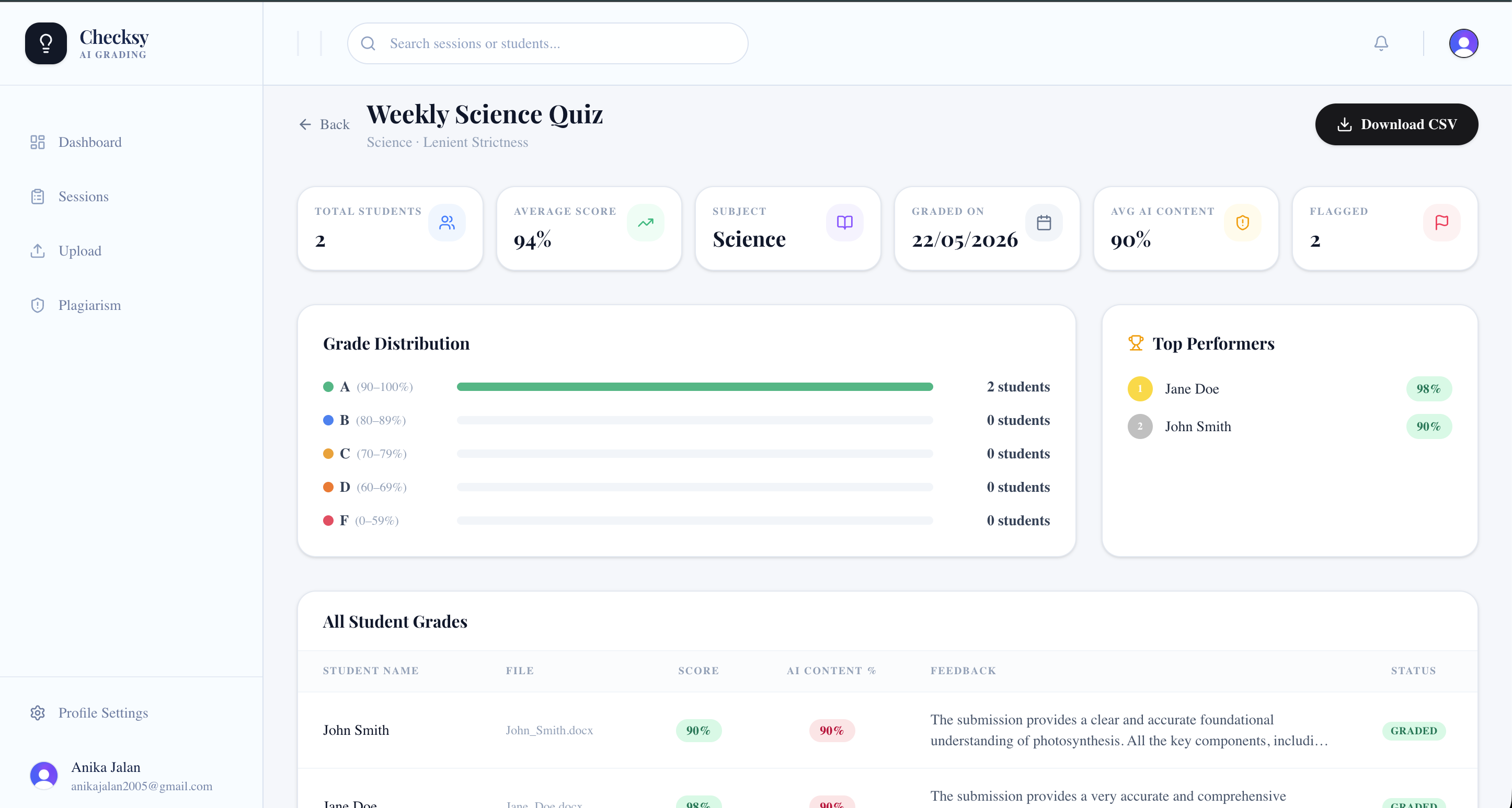
Results
-
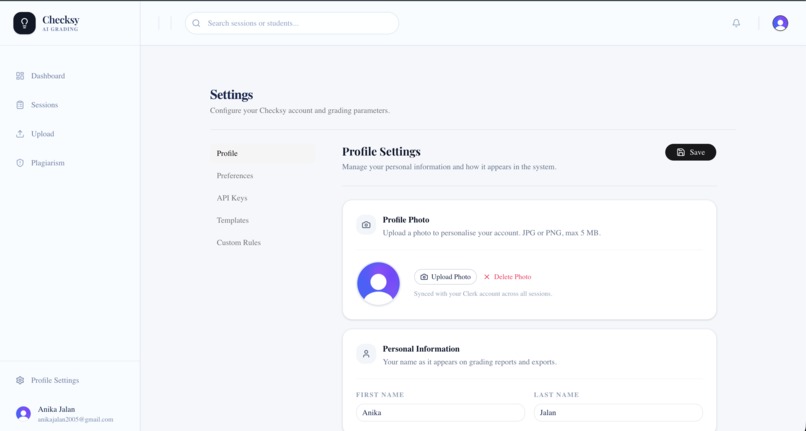
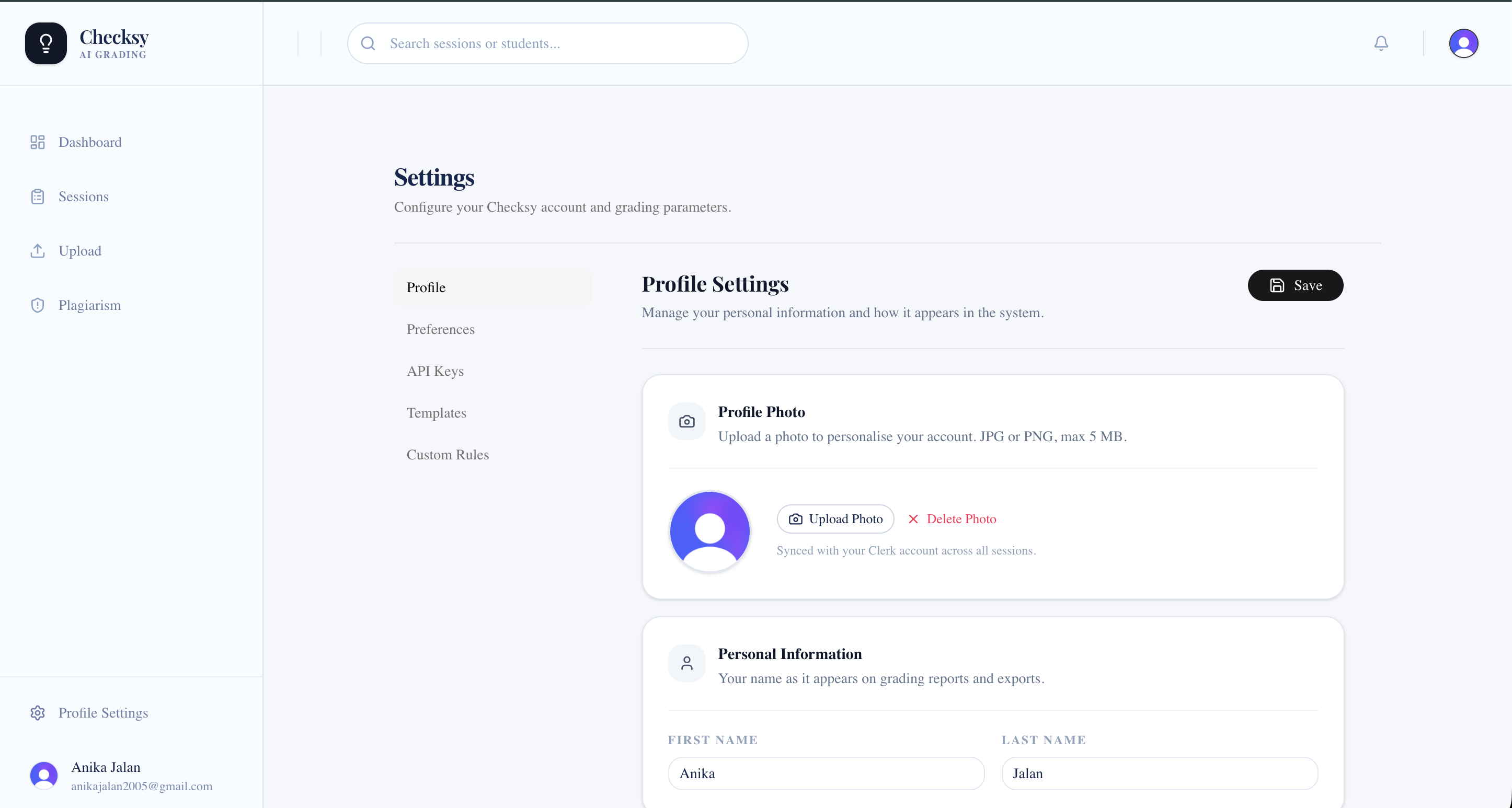
Profile Page
-
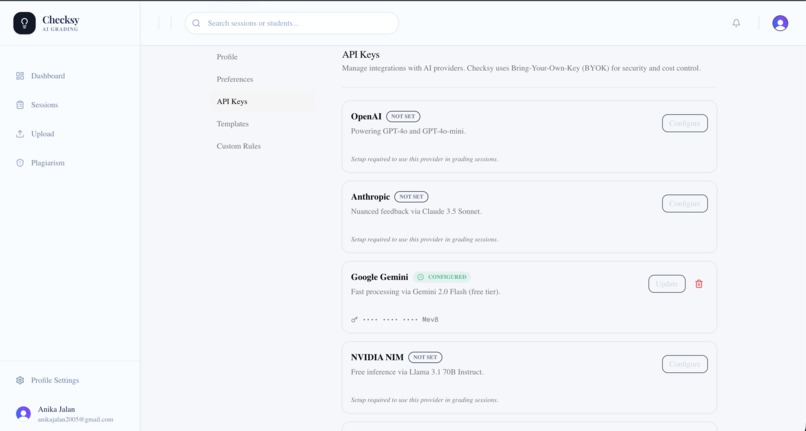
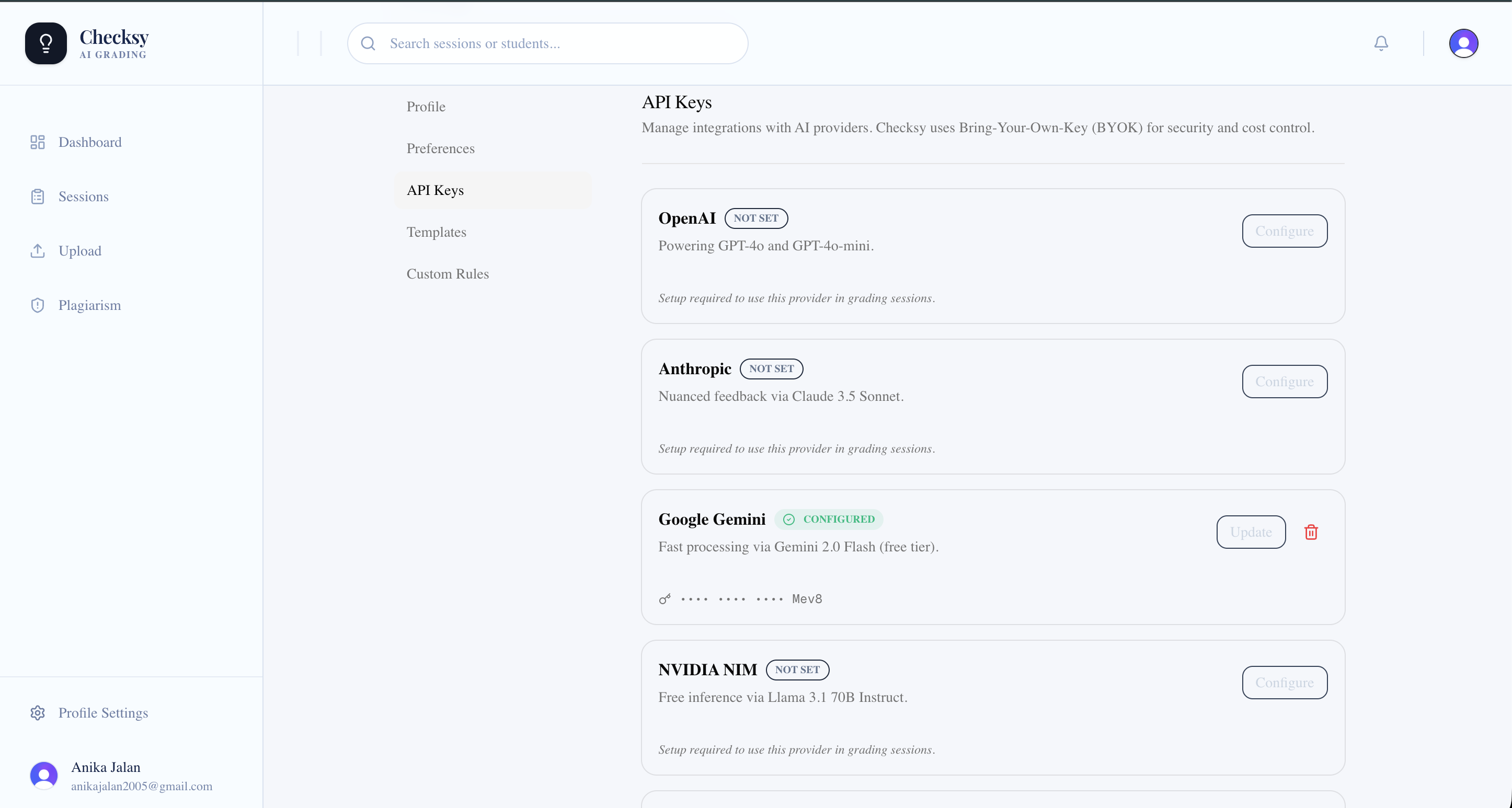
BYOK Configuration Page
-
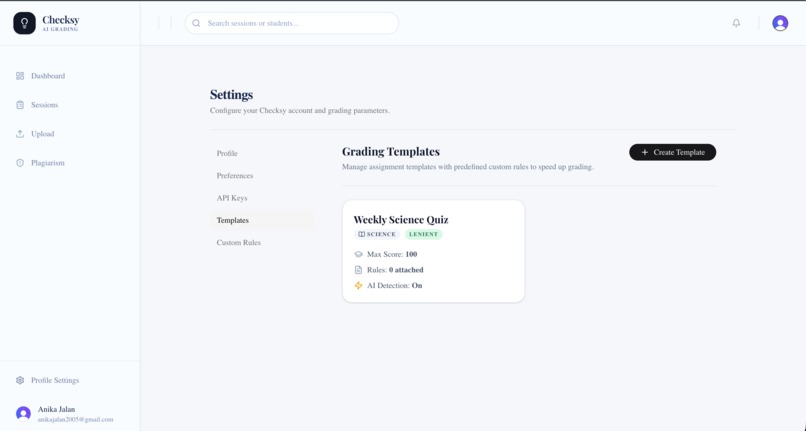
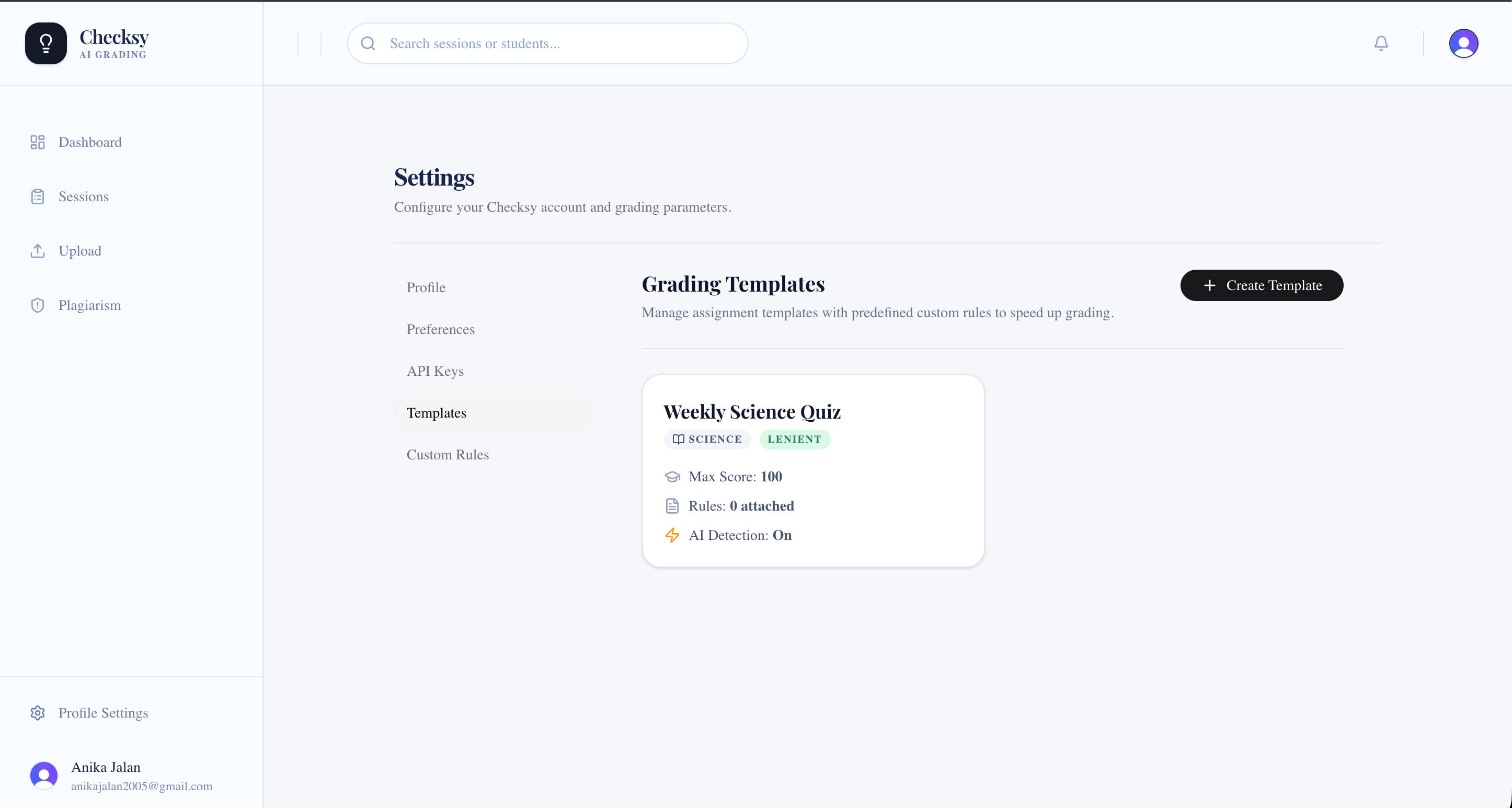
Custom Templates Page
-
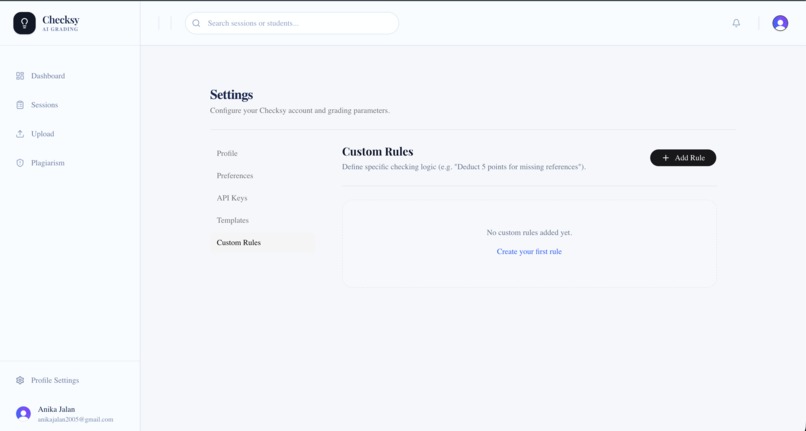
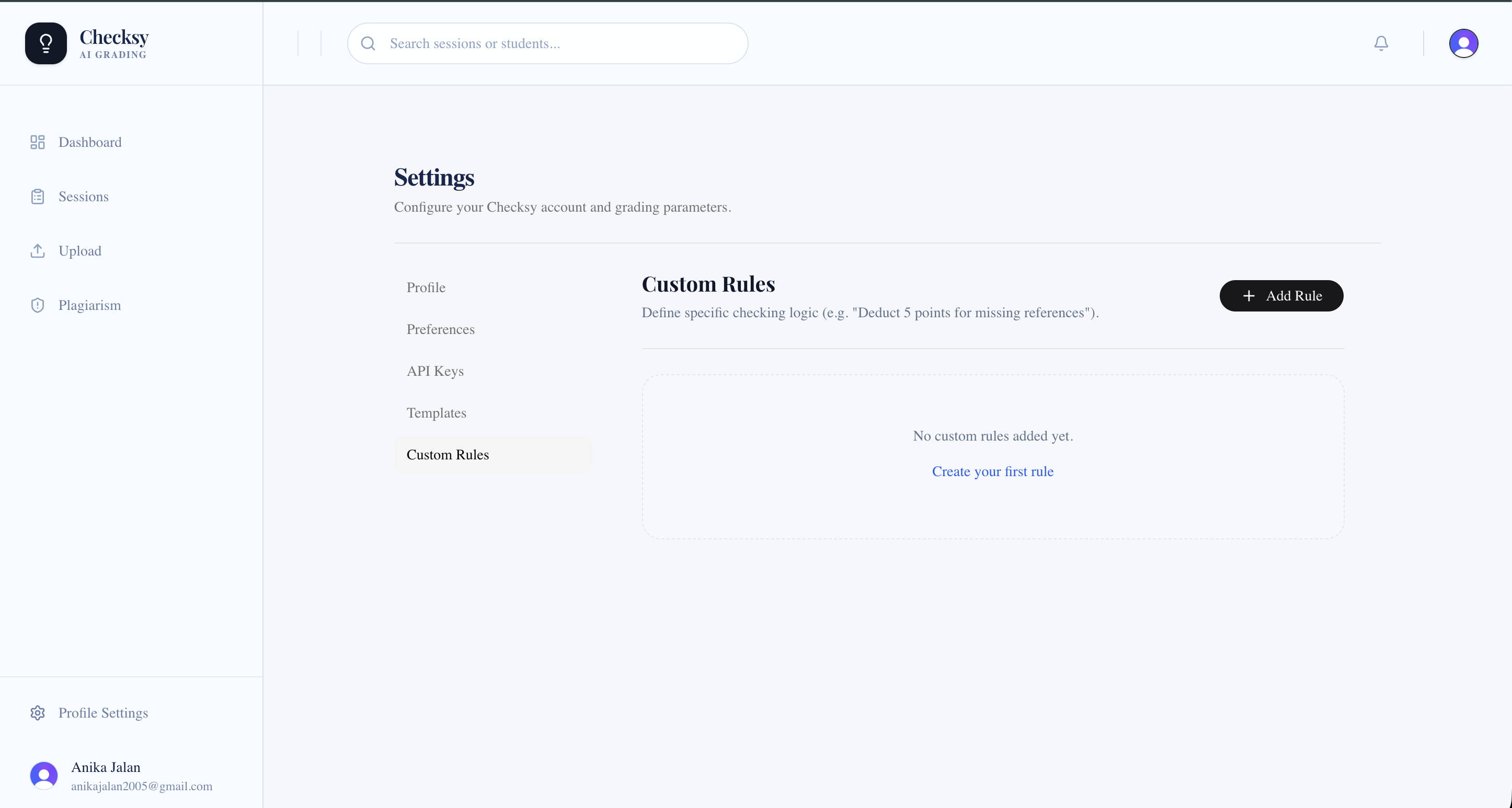
Custom Rules Page
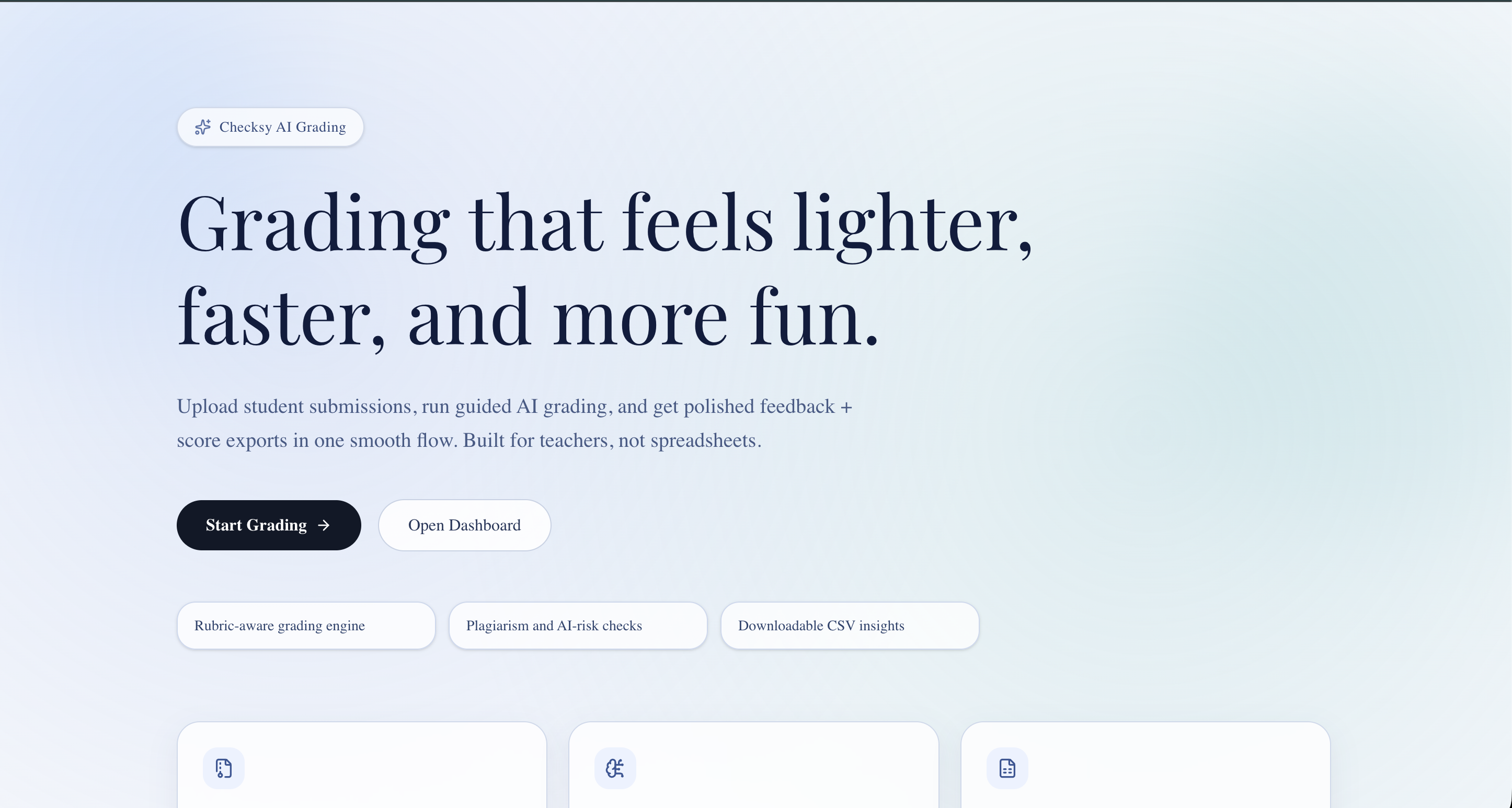
Checksy
Inspiration
Educators spend countless hours grading assignments, often repeating the same evaluation process for every submission. Existing AI tools either provide generic feedback or lack the flexibility to grade according to an instructor's specific rubric. We wanted to bridge this gap by creating an intelligent grading assistant that is customizable, scalable, and accessible.
Our vision was simple: let teachers focus on teaching while Checksy handles the repetitive work of evaluation.
What it does
Checksy is an AI-powered assignment evaluation platform designed to simplify the grading workflow.
With Checksy, educators can:
- Upload individual assignments or batch submissions as ZIP files.
- Create custom grading rubrics tailored to their course.
- Generate detailed, rubric-based feedback for every student.
- Detect AI-generated or plagiarized content.
- Choose from multiple AI providers, including OpenAI, Gemini, Anthropic, Cerebras, and more.
- Use their own API keys through a secure Bring Your Own Key (BYOK) architecture.
- View organized grading reports in a clean dashboard.
By combining automation with customizable evaluation criteria, Checksy delivers faster, more consistent, and transparent grading.
How we built it
We built Checksy as a modern full-stack web application using Next.js and React for the frontend, creating a responsive and intuitive user experience.
The backend uses Next.js API Routes, PostgreSQL, Drizzle ORM, and Postgres.js to manage assignment data, grading templates, and user information.
To support flexibility, we implemented a provider-agnostic AI layer capable of routing requests to multiple large language models while maintaining a consistent grading workflow. Prompt engineering and structured outputs ensure that each assignment is evaluated according to the instructor's custom rubric.
We also built features such as batch ZIP processing, plagiarism detection, and secure BYOK support to give educators complete control over both functionality and privacy.
Challenges we ran into
One of our biggest challenges was ensuring consistent grading across different AI models. Since each model produces responses differently, we had to carefully design prompts and standardize output formats to maintain fairness and reliability.
Building a provider-independent AI architecture was another significant challenge. Supporting multiple LLMs while keeping the user experience seamless required abstraction layers that could handle varying APIs and response formats.
We also tackled efficient batch processing for large assignment uploads, asynchronous evaluation workflows, and secure handling of user-provided API keys.
Accomplishments that we're proud of
- Built a fully functional AI-powered grading platform from scratch.
- Successfully integrated multiple leading AI providers into one unified workflow.
- Implemented customizable rubric-based grading instead of relying on fixed prompts.
- Developed batch assignment processing to save educators significant time.
- Added plagiarism detection alongside AI-generated personalized feedback.
- Created a secure Bring Your Own Key (BYOK) architecture that gives users flexibility and ownership of their AI usage.
Most importantly, we're proud of creating a product that addresses a real problem faced by educators every day.
What we learned
Developing Checksy taught us that building with AI is much more than connecting to an API. Reliable AI systems require thoughtful prompt engineering, structured outputs, and careful evaluation to produce trustworthy results.
We also gained valuable experience designing scalable full-stack applications, managing asynchronous workflows, integrating multiple third-party AI providers, and balancing usability with security.
Perhaps the biggest lesson was that AI works best when it augments human expertise rather than replacing it.
What's next for Checksy
We're excited to continue expanding Checksy into a comprehensive educational assessment platform.
Our roadmap includes:
- Integration with learning management systems like Google Classroom, Moodle, and Canvas.
- OCR support for handwritten assignments.
- Voice and multimedia assignment evaluation.
- Analytics dashboards to help educators identify learning trends and class performance.
- Institution-level deployment with role-based access control.
- AI models fine-tuned specifically for educational assessment.
- Collaborative moderation workflows for multiple instructors.
Our long-term vision is to make Checksy the go-to platform for intelligent, transparent, and scalable academic assessment.


Log in or sign up for Devpost to join the conversation.