-
-
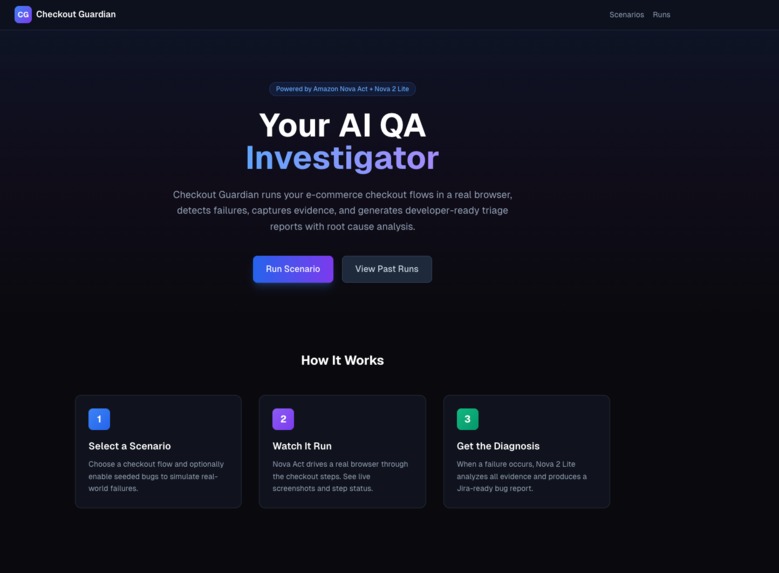
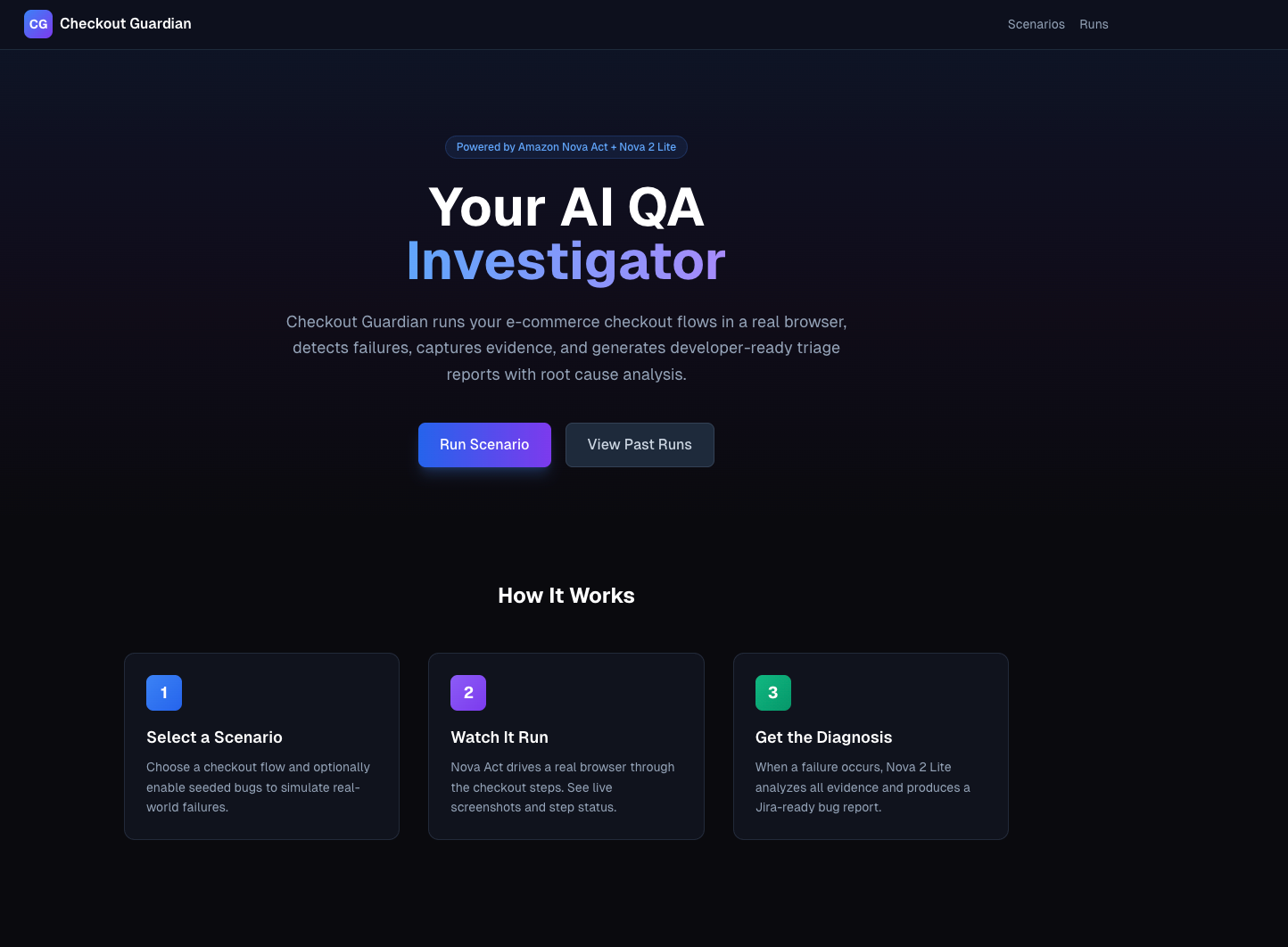
Home Page
-
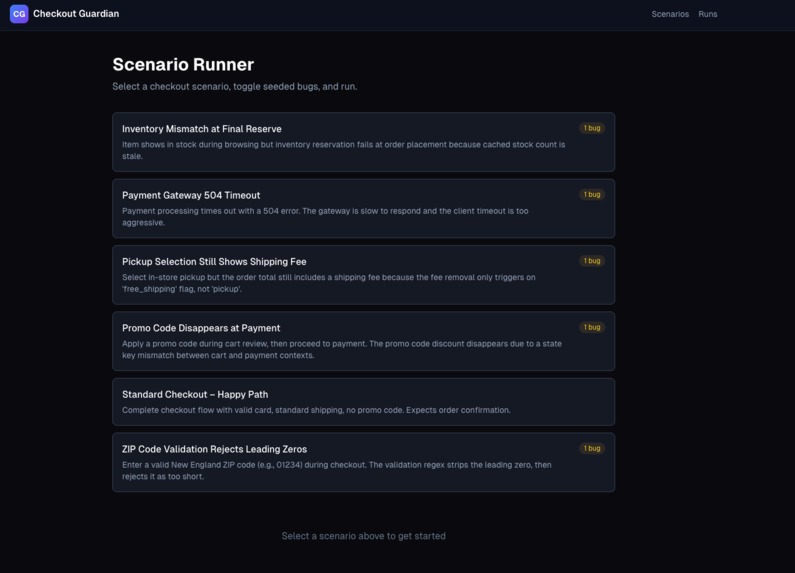
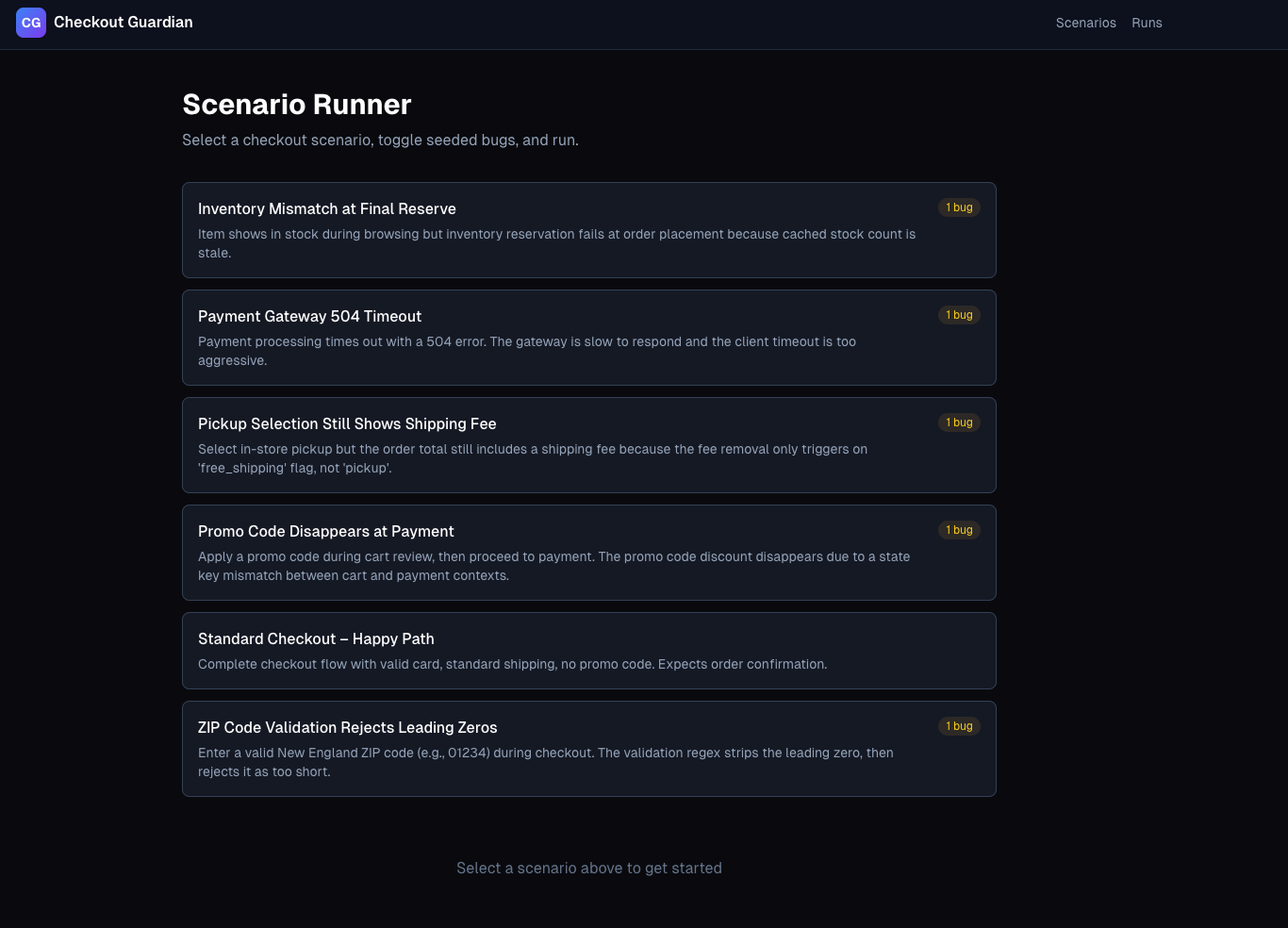
Scenario Runner
-
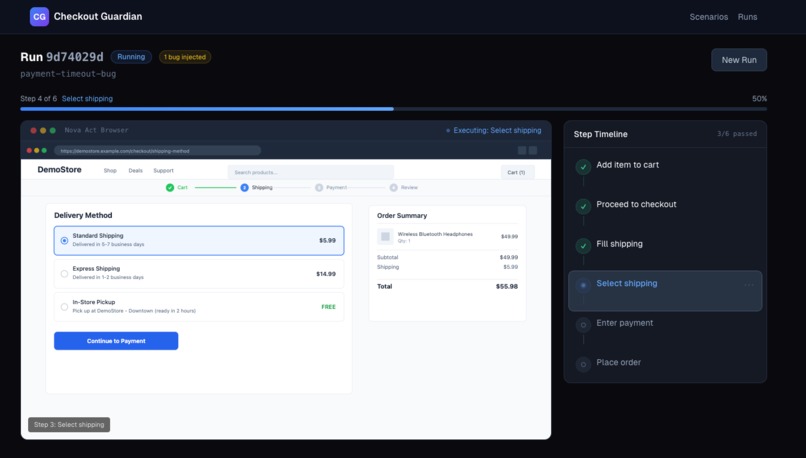
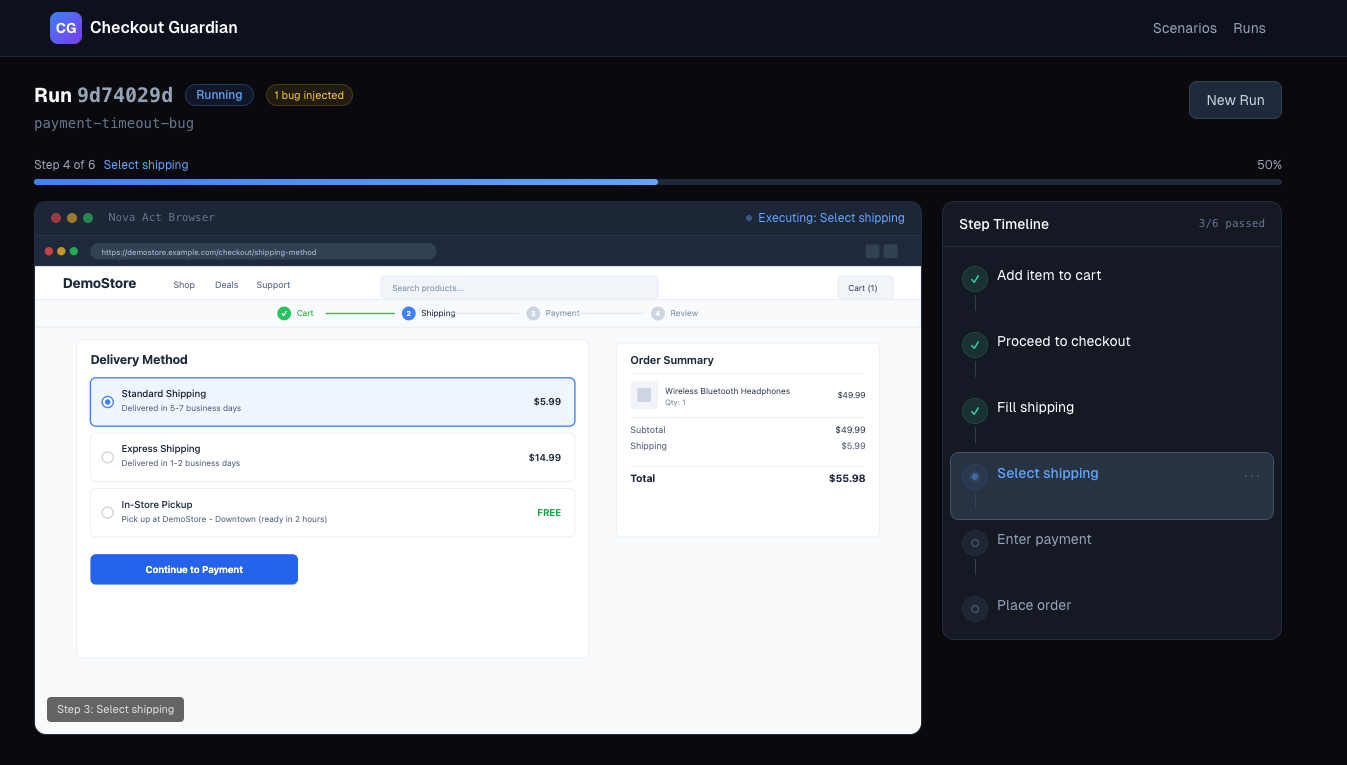
Scenario
-
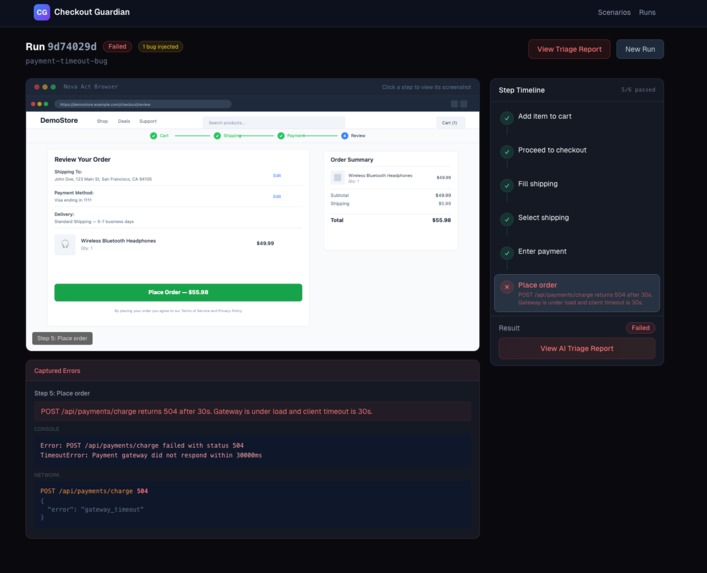
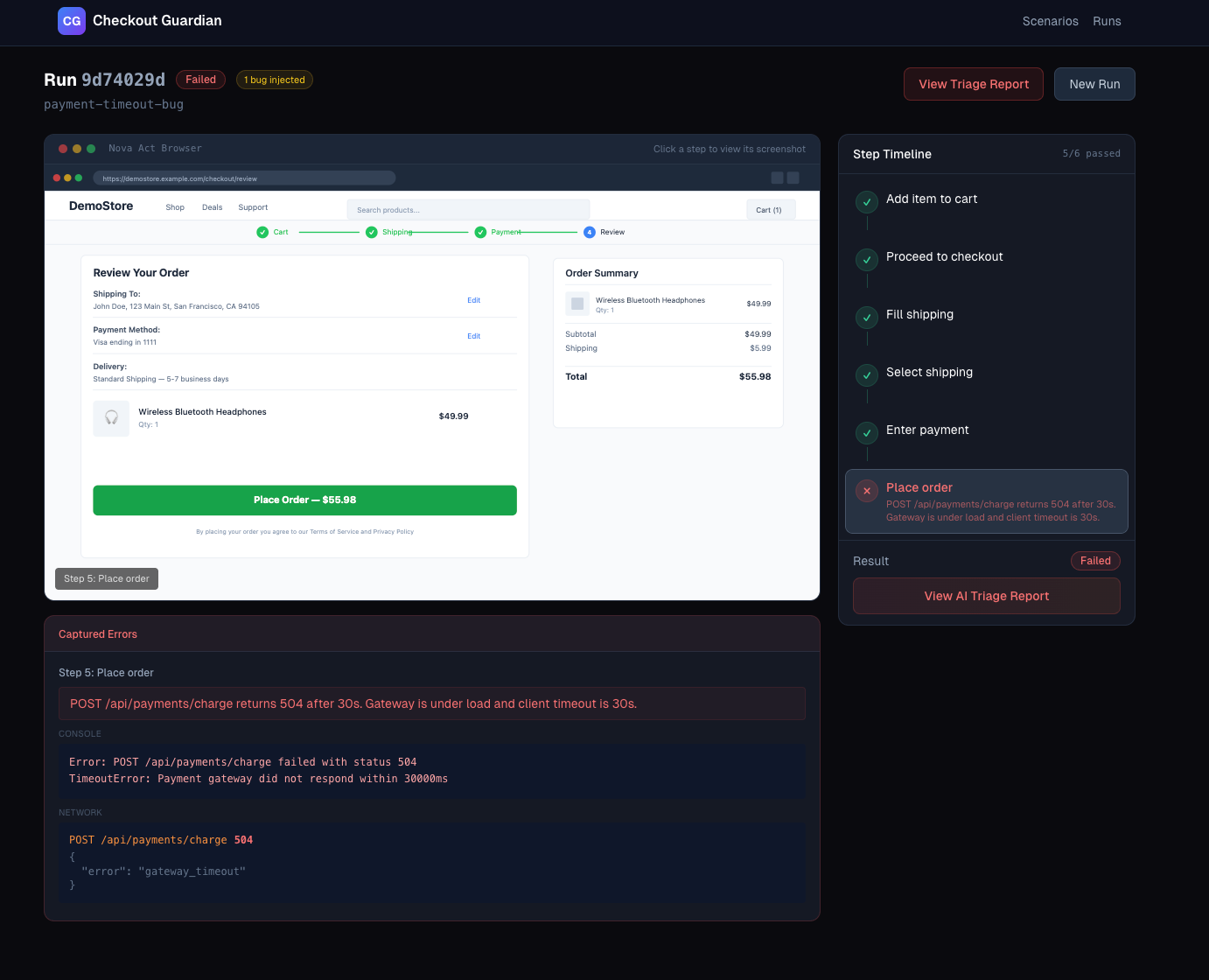
Error Detection
-
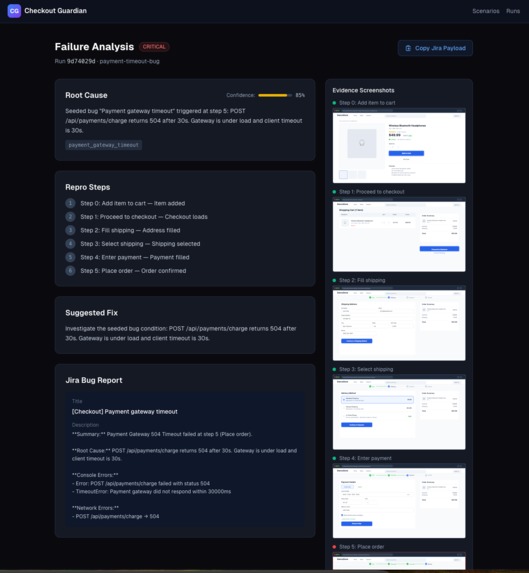
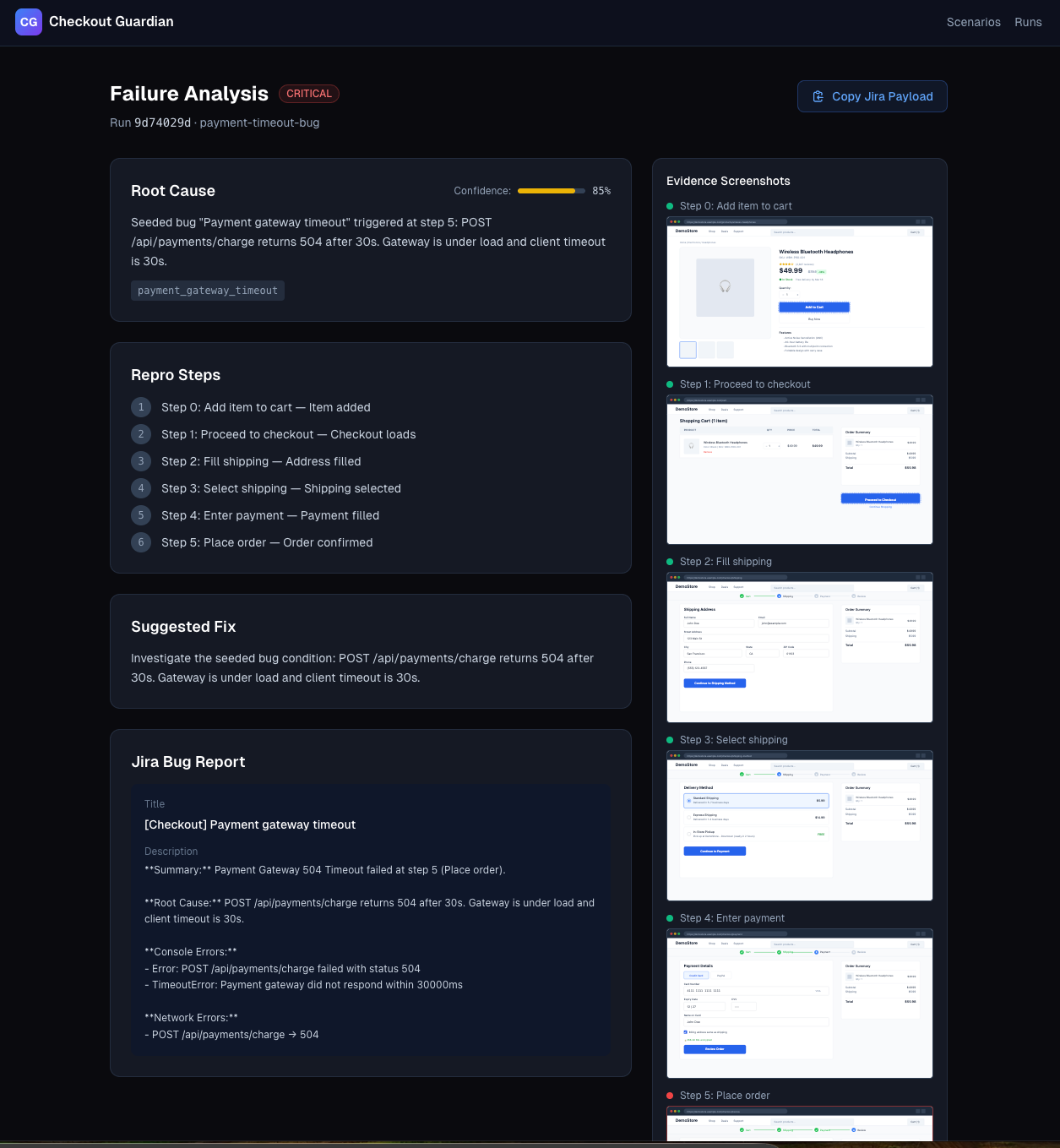
Incident Report
Inspiration
Checkout is the highest-stakes flow in e-commerce. When it breaks, revenue is lost immediately.
But checkout bugs are hard to catch because they span multiple pages, backend services, async state, and third-party systems. Unit tests only cover part of the problem, and manual QA is too slow to run on every release.
We built Checkout Guardian to act like an AI QA engineer: navigate a real checkout, catch regressions, collect evidence, and generate a clear bug report in seconds.
What it does
Checkout Guardian runs end-to-end checkout scenarios in a real browser using Amazon Nova Act and automatically triages failures using Amazon Nova 2 Lite.
The flow is simple:
- Select a scenario such as standard checkout, promo code, shipping, or payment.
- Watch Nova Act navigate the checkout live with screenshots and step-by-step updates.
- If a failure occurs, get an AI-generated triage report with root cause, severity, confidence, reproduction steps, and a copy-paste Jira payload.
The app includes 5 realistic seeded bugs based on real e-commerce incidents:
- promo code state mismatch
- ZIP code leading-zero rejection
- shipping fee logic errors
- stale inventory caches
- payment gateway timeouts
How we built it
- Amazon Nova Act drives a real browser through checkout using natural-language instructions.
- Amazon Nova 2 Lite analyzes screenshots, console logs, network failures, and run history to generate structured triage reports.
- Next.js 14 + TypeScript + Tailwind CSS powers the live dashboard.
- Express + TypeScript manages scenarios, runs, and SSE updates.
- Python worker executes Nova Act sessions.
- Redis 7 handles job queuing and pub/sub.
- PostgreSQL 16 stores runs, steps, artifacts, and reports.
- Standalone Express storefront simulates a realistic e-commerce checkout with deterministic bug toggles.
- Simulated mode lets the full system run locally without AWS credentials for easy demos.
Challenges we ran into
Our biggest challenge was making the bugs feel real. We wanted believable checkout failures with realistic UI states, console errors, and backend behavior, not generic demo errors.
We also had to bridge a TypeScript app layer with a Python automation worker, while keeping the dashboard live and synchronized with screenshots, step status, and artifacts. Supporting both simulated mode and live Nova mode through the same system was another major design challenge.
Accomplishments that we're proud of
- Built a true end-to-end AI QA workflow, not just a mock demo
- Combined two Nova models into one pipeline: execution + triage
- Created a live dashboard with real-time screenshots and run status
- Modeled 5 realistic seeded bugs based on real checkout failures
- Added zero-config simulated mode for fast demos and local development
- Generated copy-paste Jira payloads to turn failures into actionable tickets
What we learned
- Natural-language browser automation is powerful for authoring realistic QA scenarios.
- AI triage works much better when it has the full evidence chain, not just an error message.
- Simulated mode dramatically improved development speed and demo reliability.
What's next for Checkout Guardian
- Support testing on more e-commerce sites, not just the demo storefront
- Add regression detection across deployments
- Run multiple scenarios in parallel across browsers and viewports
- Push triage reports directly to Slack or PagerDuty
- Add visual diffing to catch subtle UI regressions even without hard errors
Built With
- bedrock
- docker
- ejs
- express.js
- next.js
- node.js
- nova
- postgresql
- python
- redis
- sse
- tailwind
- typescript


Log in or sign up for Devpost to join the conversation.