-
-
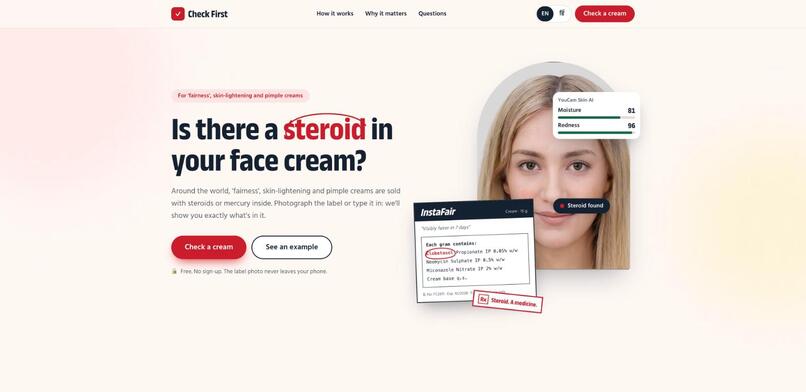
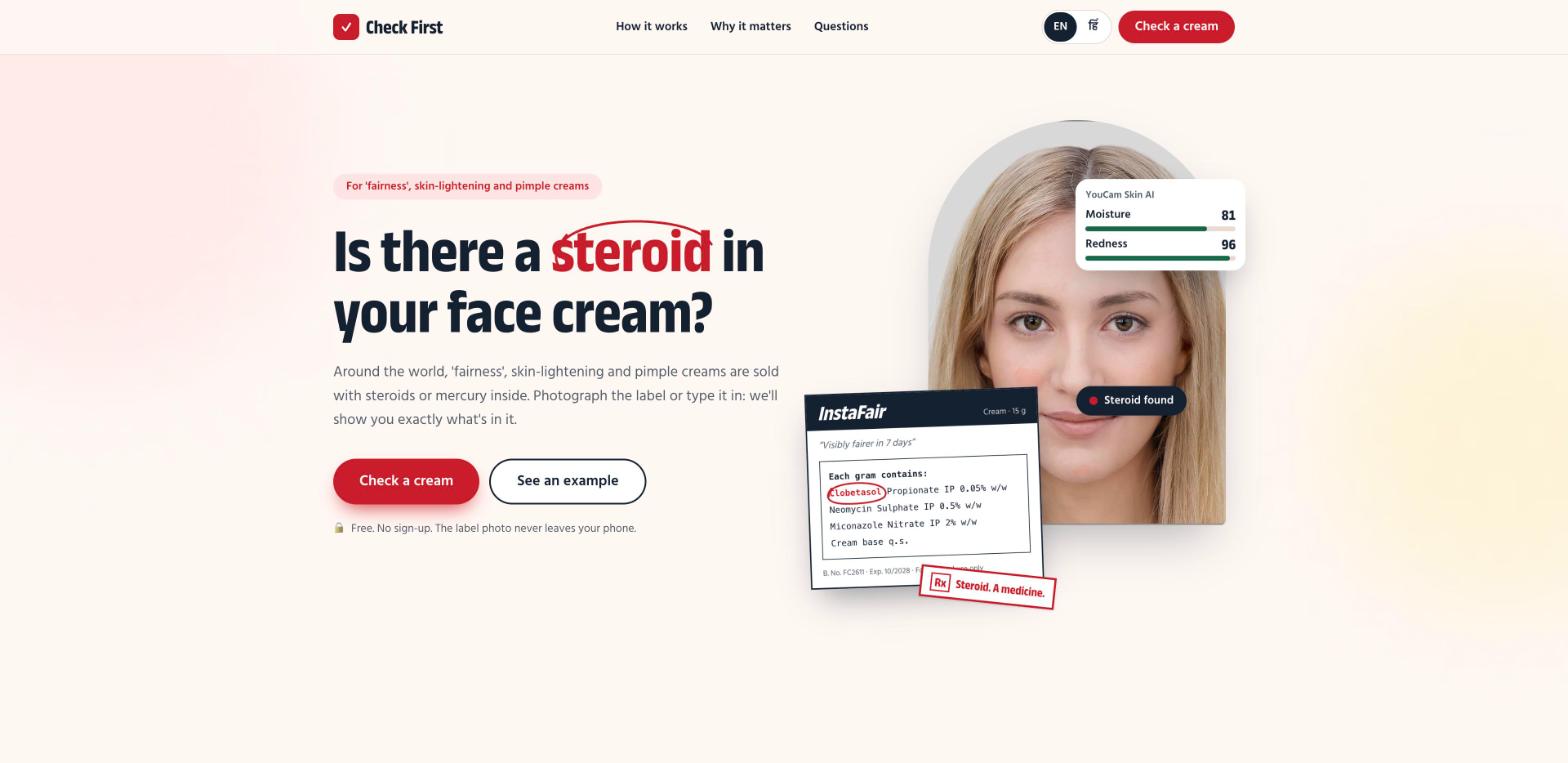
Is there a steroid in your face cream? The pen circles it, the Rx stamp lands.
-
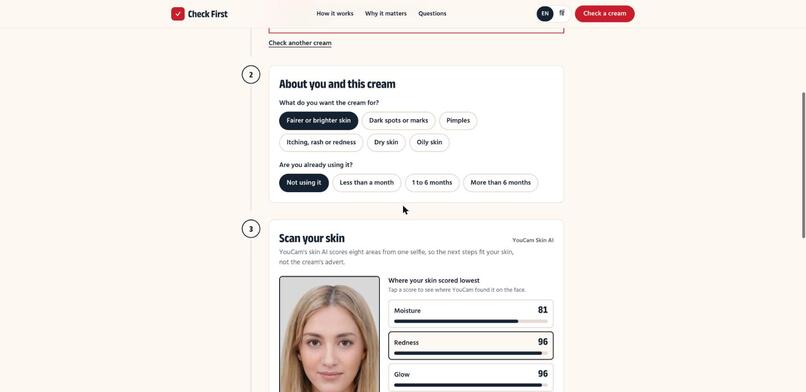
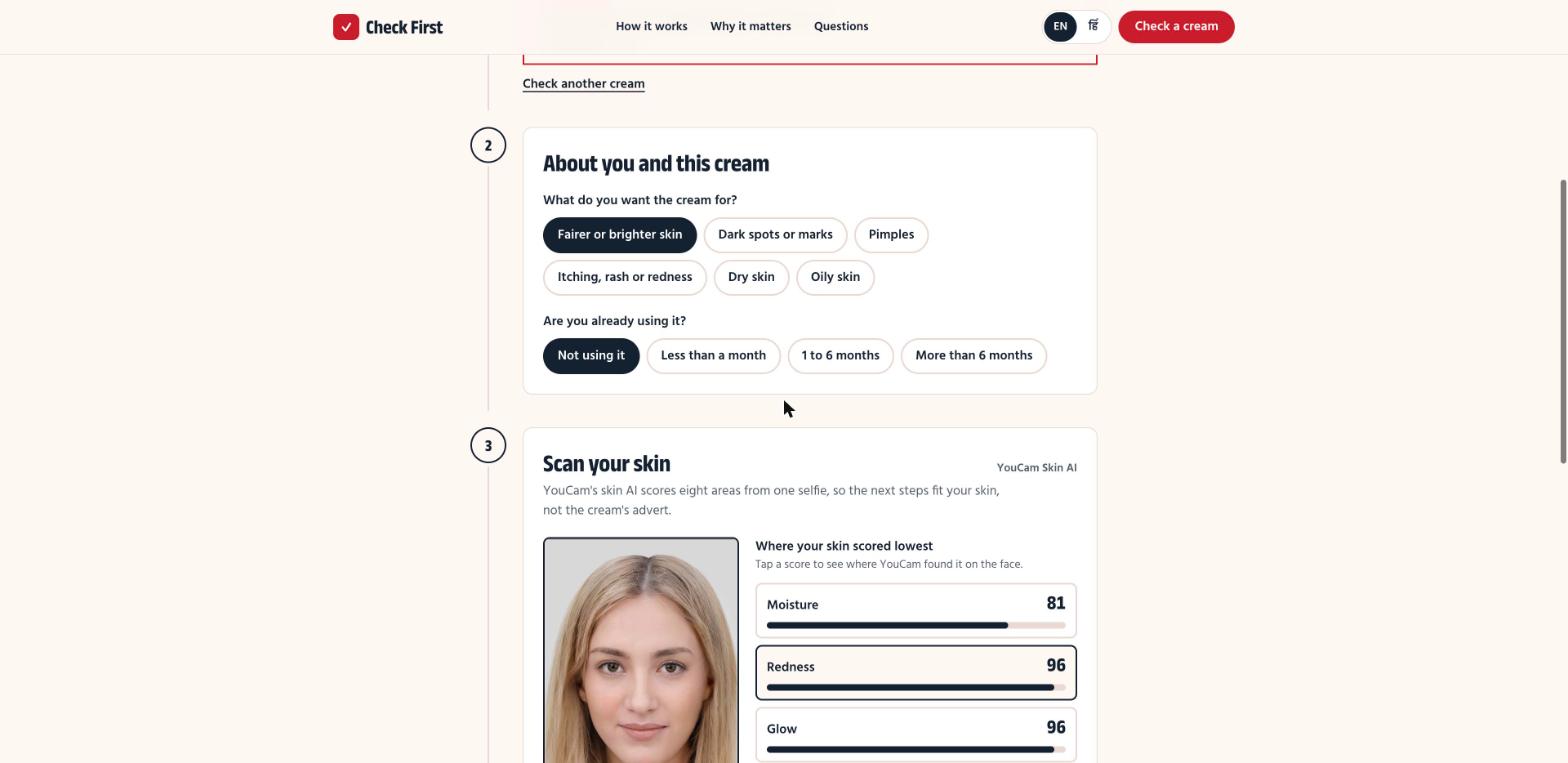
YouCam AI Skin Analysis: eight raw scores from one selfie, with masks on the face.
-
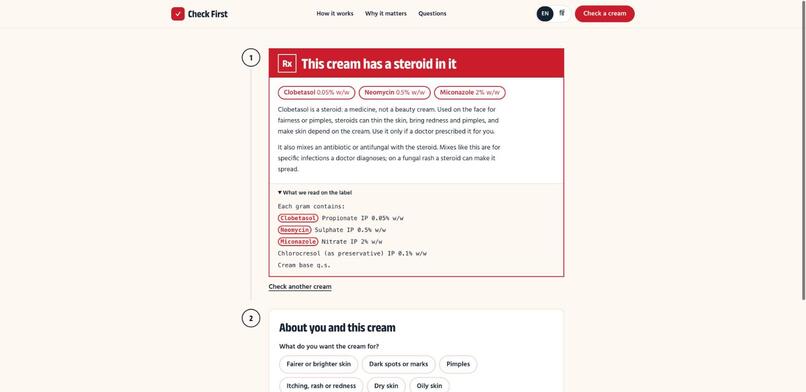
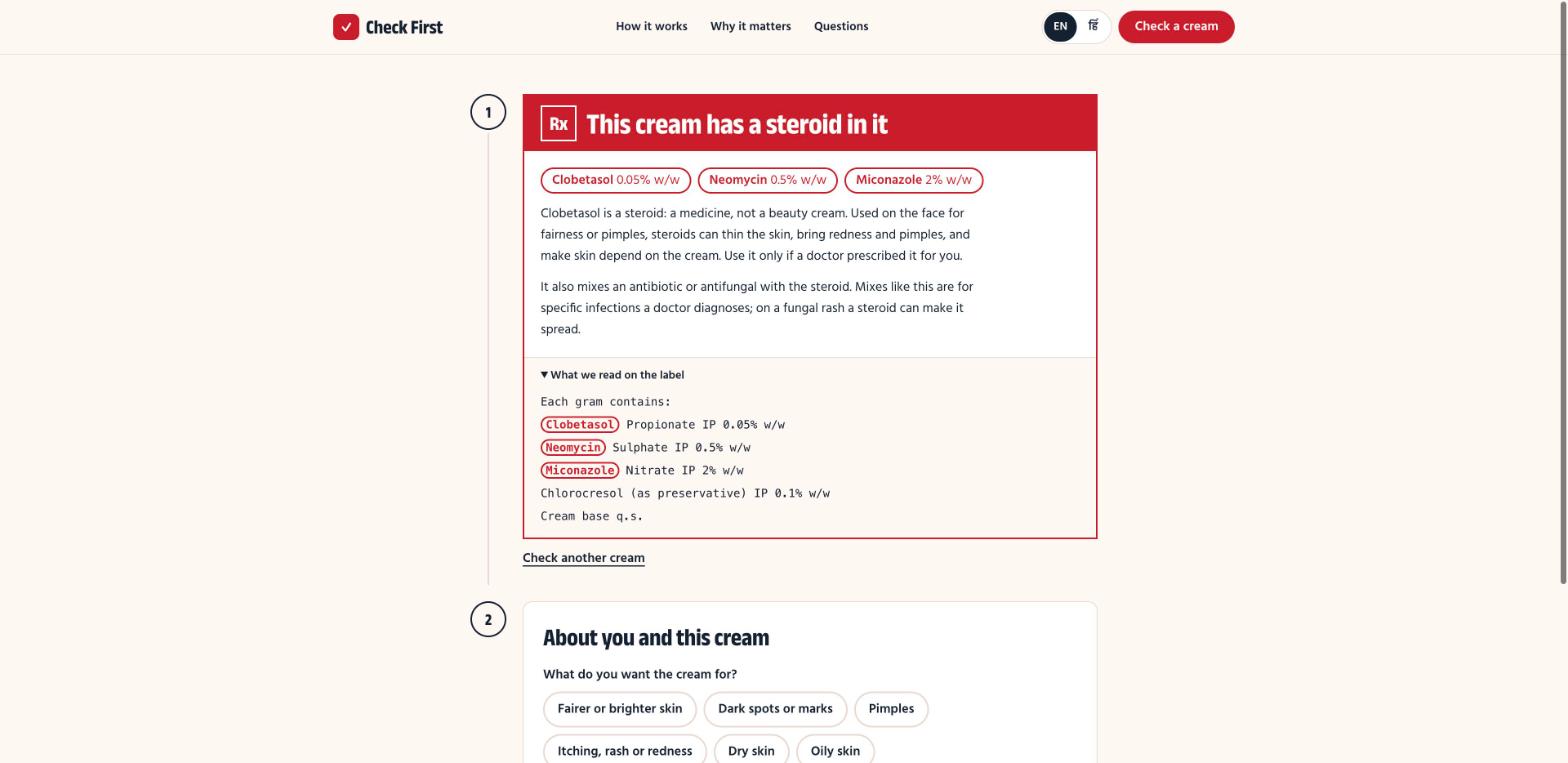
Label check: clobetasol, a steroid, plus an antibiotic and antifungal, explained plainly.
-
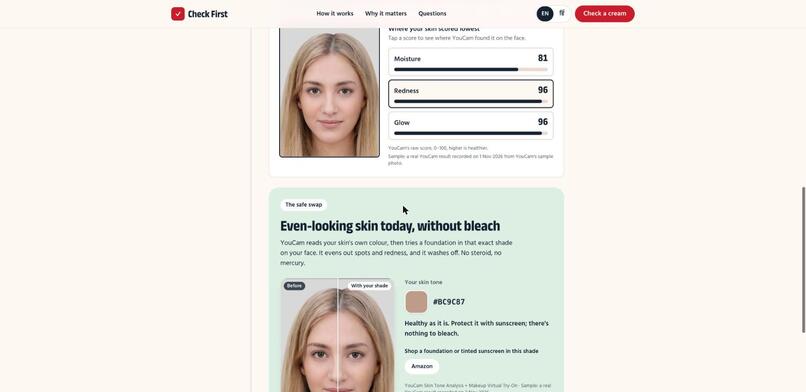
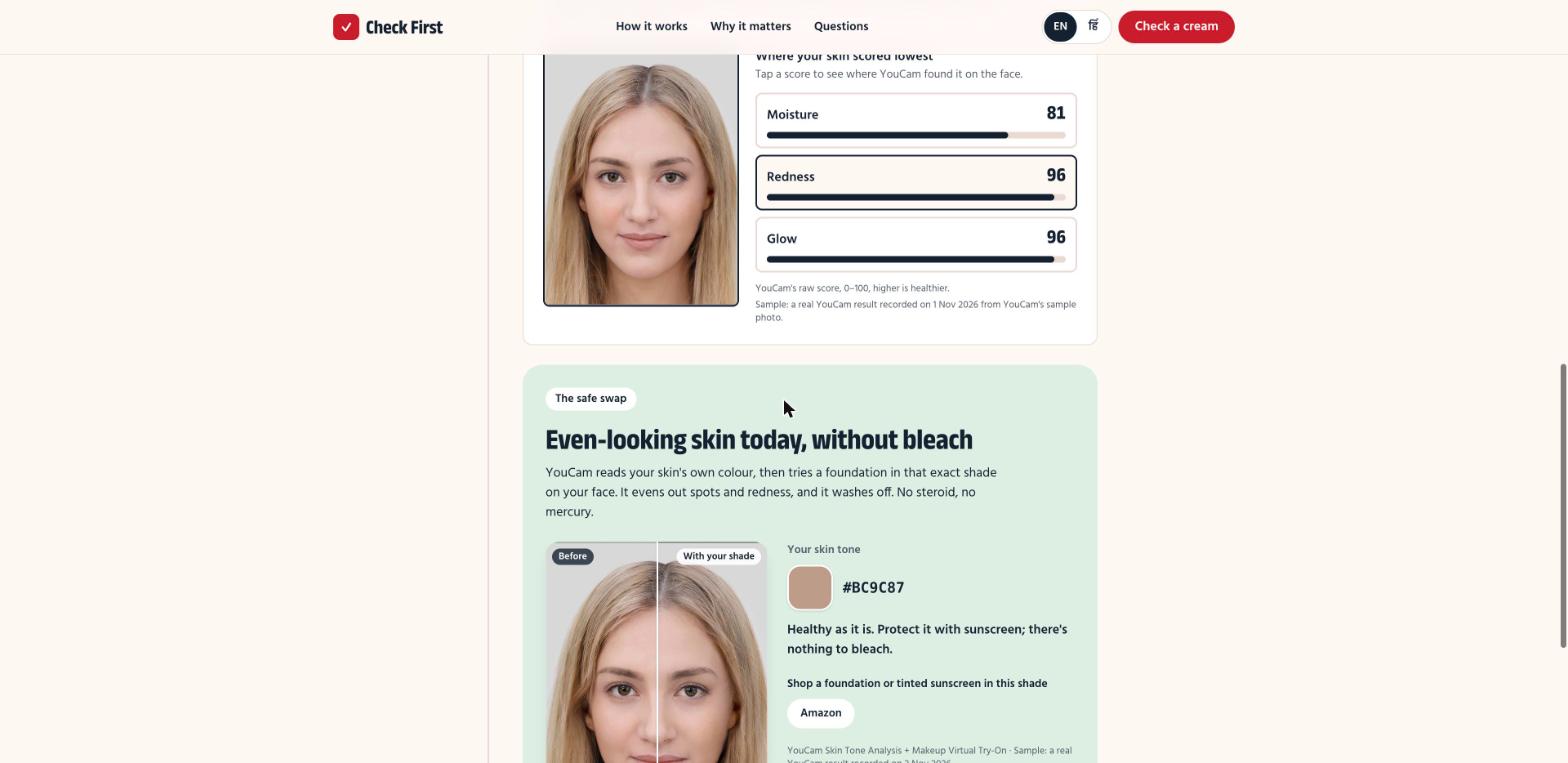
The safe swap: YouCam Skin Tone + Makeup Try-On, a foundation in your exact shade.
Inspiration
More than 1 in 4 people worldwide have used a skin-lightening product (a pooled analysis of 68 studies across Africa, Asia, Europe, the Middle East and North America, World Congress of Dermatology 2023). Many of these "fairness" and pimple creams are not cosmetics at all. They contain potent steroids like clobetasol, or mercury.
In India, 14 topical steroids have needed a prescription since March 2018, yet combination creams with clobetasol, an antibiotic and an antifungal are still sold over the counter as beauty creams. Mercury is banned in cosmetics under the Minamata Convention, yet the WHO says mercury creams still reach people online and in markets.
People don't buy these creams because they want a steroid. They buy them to fix something real: dark spots, pimples, uneven tone. So a label checker alone isn't enough. We wanted to answer two questions at the moment of purchase: what is actually in this cream, and what does my skin actually need instead?
What it does
- Read the label. Photograph the ingredients panel or type it in. The label is read on the phone with on-device OCR; the photo never leaves the device. Check First finds 23 topical steroids, mercury salts, hydroquinone, retinoids, and antibiotics or antifungals mixed with a steroid, and circles each one with the strength printed next to it.
- Explain it plainly, in English or Hindi. What the medicine is, why it isn't a beauty cream, India's prescription rule when it applies, and if you're already using it: don't stop suddenly, see a dermatologist.
- Scan your skin with YouCam AI Skin Analysis. One selfie gives eight scores (acne, spots, redness, texture, pores, oiliness, moisture, glow), with YouCam's mask showing where on your face each one is. We show YouCam's raw score, not the inflated UI score.
- The safe swap, with YouCam Skin Tone Analysis and Makeup Virtual Try-On. YouCam reads your skin's real colour, then tries a foundation in that exact shade on your face, with a before/after slider. Even-looking skin today, no bleach, and a link to shop that shade. Your skin tone is healthy: protect it, don't bleach it.
- Next steps and a card for your doctor. Safer cosmetic steps for your goal and your lowest scores, what to look for on a label (each with a shop link and "check its label here before you buy"), and a printable card to take to a dermatologist.
How we built it
- Next.js 16 + React 19 + Tailwind 4, deployed on Vercel.
- Three YouCam APIs, chained on one upload: the selfie is uploaded once via the File API; the same
file_idfeeds AI Skin Analysis (v2.1), then Skin Tone Analysis, then Makeup VTO with a foundation palette set to the measured skin colour. The API key never leaves the server. - On-device label reading with tesseract.js, plus a hand-written rule set of 23 topical steroids (with Indian label spellings), mercury salts and other medicines, and the 2018 Schedule H list.
- No AI writes medical text at runtime. Every verdict and step is written by hand in English and Hindi, and the care plan never says "cure".
- Works without a key: real YouCam results recorded on 1 and 2 Nov 2026 power the sample path, so judges can try the full flow at no cost. Live mode is rate-limited per IP and falls back to the sample when units run low.
- 20 Vitest tests for the label rules and the care plan.
Try it (judges)
Open the live site and press See an example, pick a goal, then Use the sample face (or take a selfie for a live YouCam scan), then Show it on my face and drag the slider. Finish with Show my next steps for the plan and doctor card.
Challenges we ran into
- Reading real labels: "Clobetasol Propionate IP 0.05% w/w" sits next to look-alike words, and OCR misreads letters on curved bottles. We match exact names first and flag near-misses as "possibly, check the label" instead of guessing.
- Being honest with skin scores: YouCam's
ui_scoreis generous by design, so we show the raw score. - Telling someone their cream contains a steroid without scaring them into stopping suddenly, which can make skin flare. Every flagged result points to a dermatologist and a card to bring.
Accomplishments that we're proud of
- A real, global health problem, with sources, turned into a flow that takes about a minute.
- Three YouCam APIs that each do one job in one story: check the cream, see your real skin, swap to a safe product.
- Bilingual from the start, and private by design: the label photo never leaves the phone.
What we learned
The value of the skin APIs isn't the score; it's what you do next. Pairing Skin Tone Analysis with a foundation try-on turned "your skin tone" from a number into a safe, shoppable alternative to bleaching.
What's next for Check First
- Live camera mode: circle the steroid directly on the box as you point the phone at it.
- More languages (French and Swahili for West and East Africa, Tamil, Bengali) and each country's prescription rules.
- A pharmacy mode, so chemists can check a cream at the counter before they sell it.
Built With
- next.js
- react
- tailwindcss
- tesseract.js
- typescript
- vercel
- youcam
