
Inspiration
Caring for someone you love can be surprisingly difficult when you aren't physically with them. A parent may forget a medication, miss a check-in, or simply have an unusual day, while the person responsible for them has no easy way to know whether everything is okay.
We started with a simple question:
“How can we help families know that their loved ones are okay without making either side constantly monitor an app?”
We found that existing solutions often focus on individual pieces such as health tracking, medication reminders, or remote monitoring. We wanted to bring those pieces into a more human-centered care loop: notice → remind → confirm → coordinate → escalate.
Care is built around the idea that the goal isn't to generate more health data or notifications. The goal is to give families confidence when everything is fine, and make sure someone takes action when it isn't.
What it does
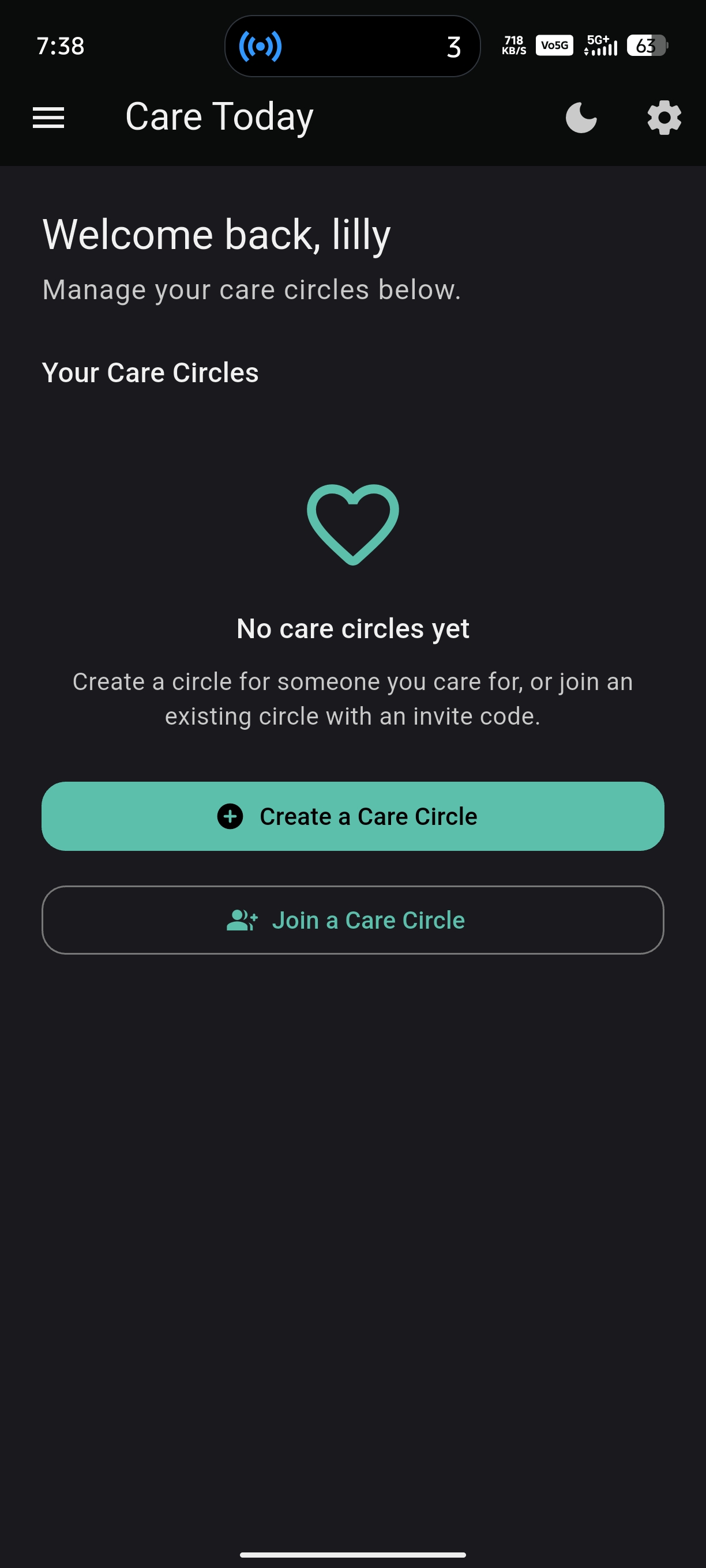
Care connects people who need support with the people responsible for looking after them.
A dependent gets an intentionally simple experience focused on the things that matter:
- Medication reminders
- Daily check-ins
- A simple “I'm OK” interaction
- A clear “I need help” action
- Important reminders designed to require as little navigation as possible
Caregivers get the bigger picture:
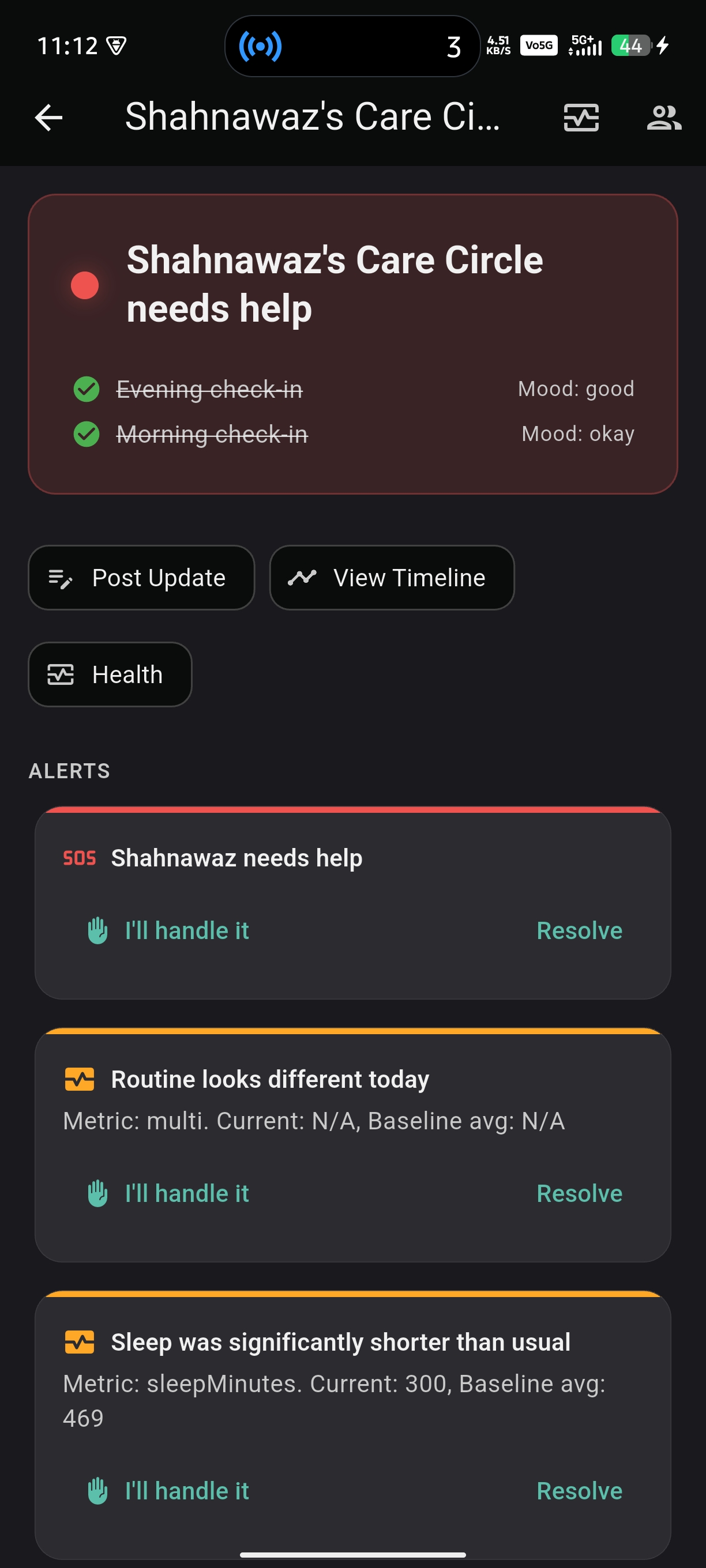
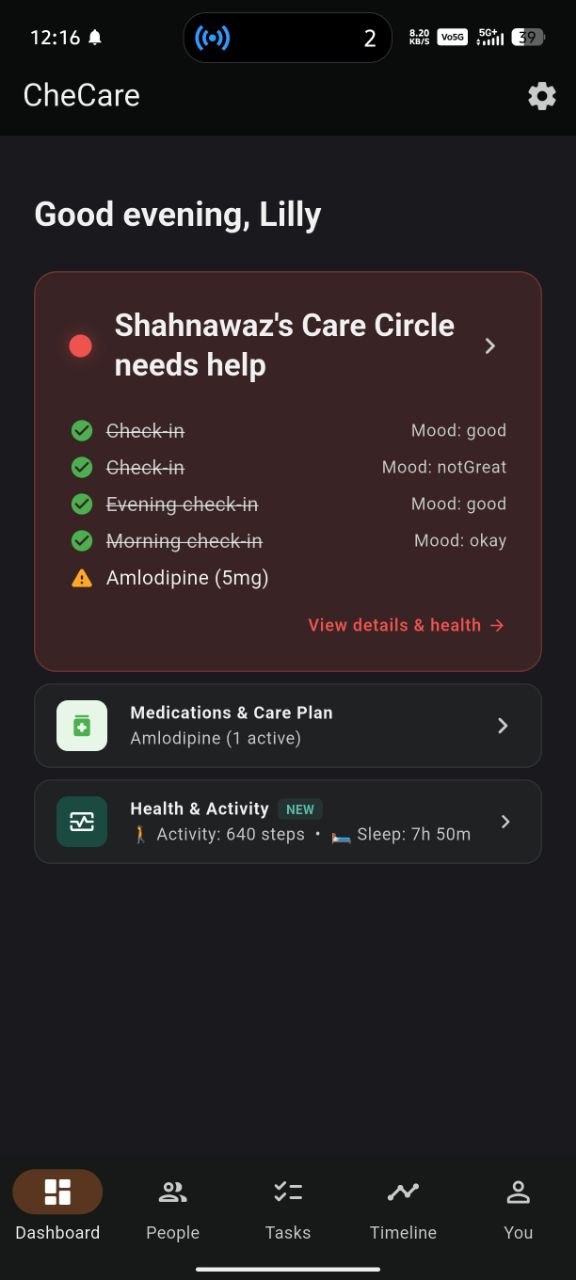
- A clear care status
- Medication and check-in status
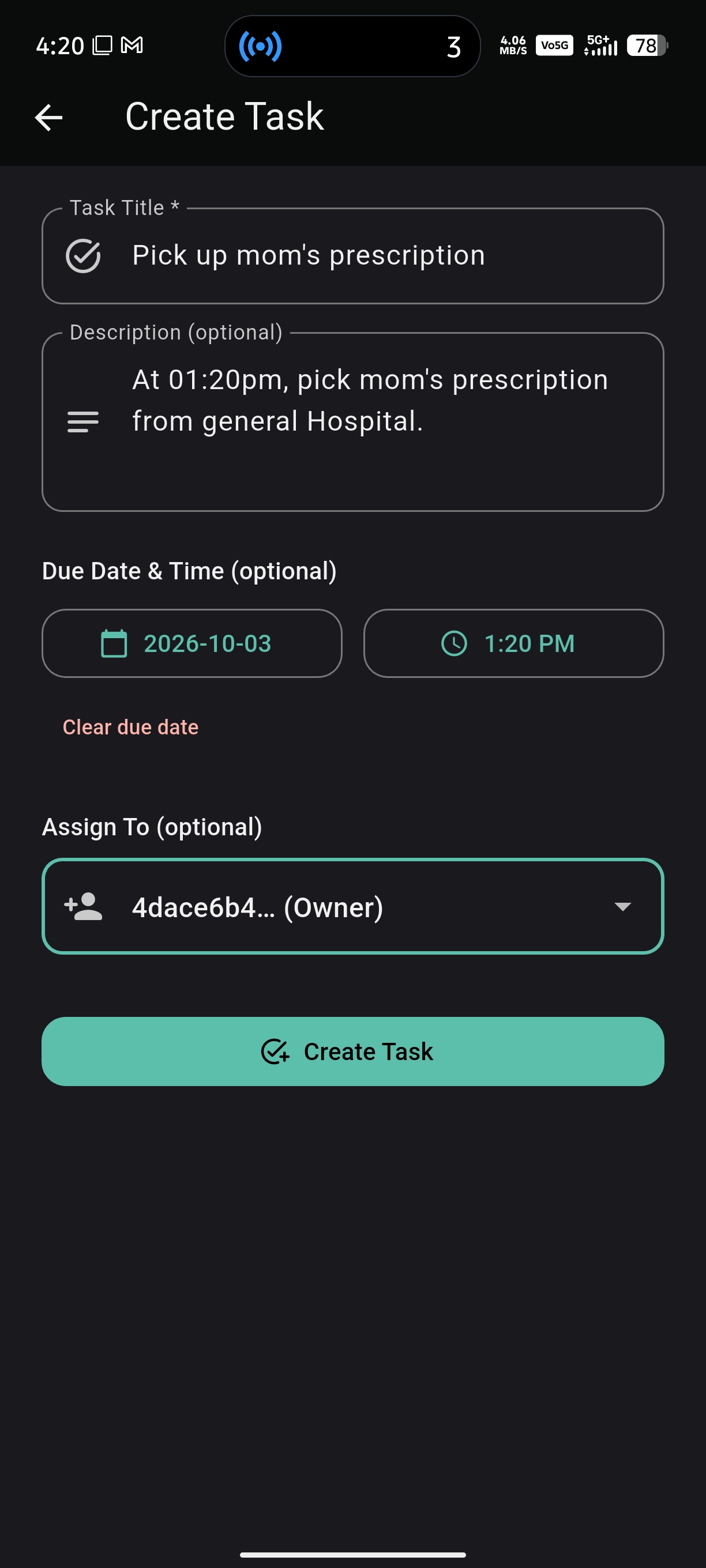
- Care tasks and assignments
- Alerts when something needs attention
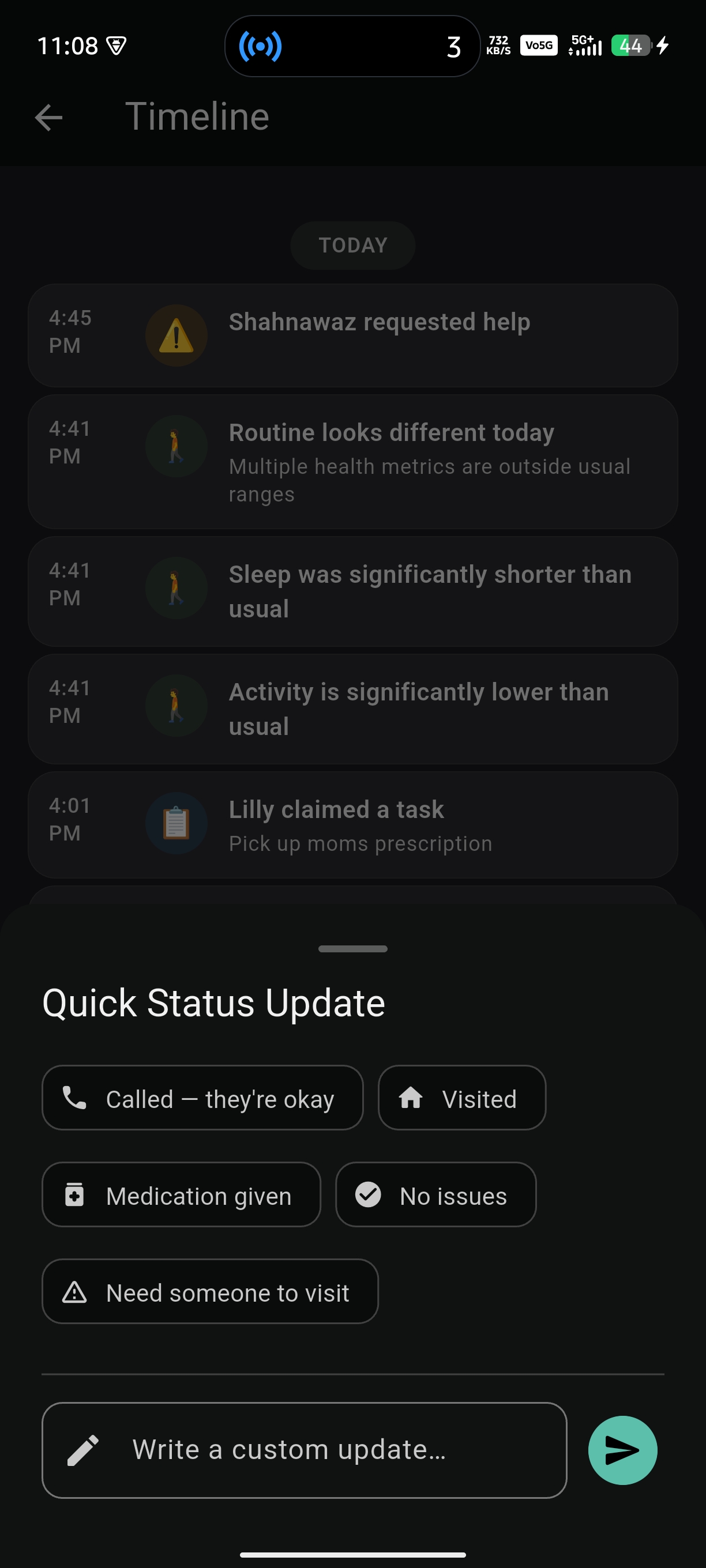
- A shared care timeline
- A Care Circle so multiple family members can coordinate
The key idea is that a missed action becomes actionable information. Instead of simply saying that something was missed, Care can notify the appropriate caregiver so someone can follow up.
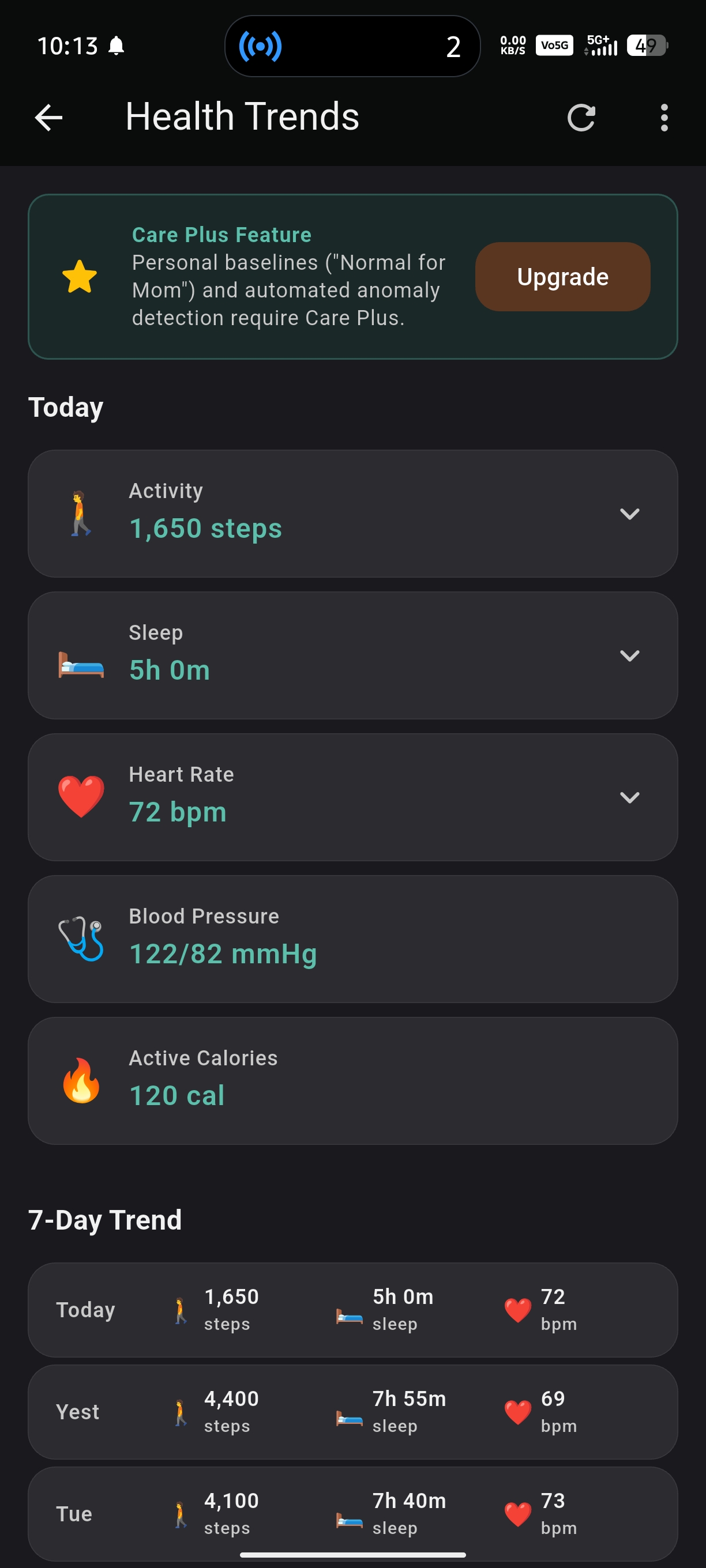
Health information can also provide context, helping caregivers understand changes from a person's normal routine rather than forcing them to interpret a stream of raw numbers.
We also use notifications as part of the care workflow rather than treating them as an afterthought. The aim is to let caregivers respond to important events with minimal friction.
How we built it
We designed Care around two fundamentally different experiences.
The dependent experience is intentionally simple, with large, clear actions and minimal navigation. The caregiver experience provides the more detailed status, history, tasks, alerts, and coordination tools.
The core architecture connects:
- User and care relationships
- Care plans and routines
- Medication reminders
- Daily check-ins
- Care tasks
- Care Circle coordination
- Health data
- Alerts and escalation
- Push notifications
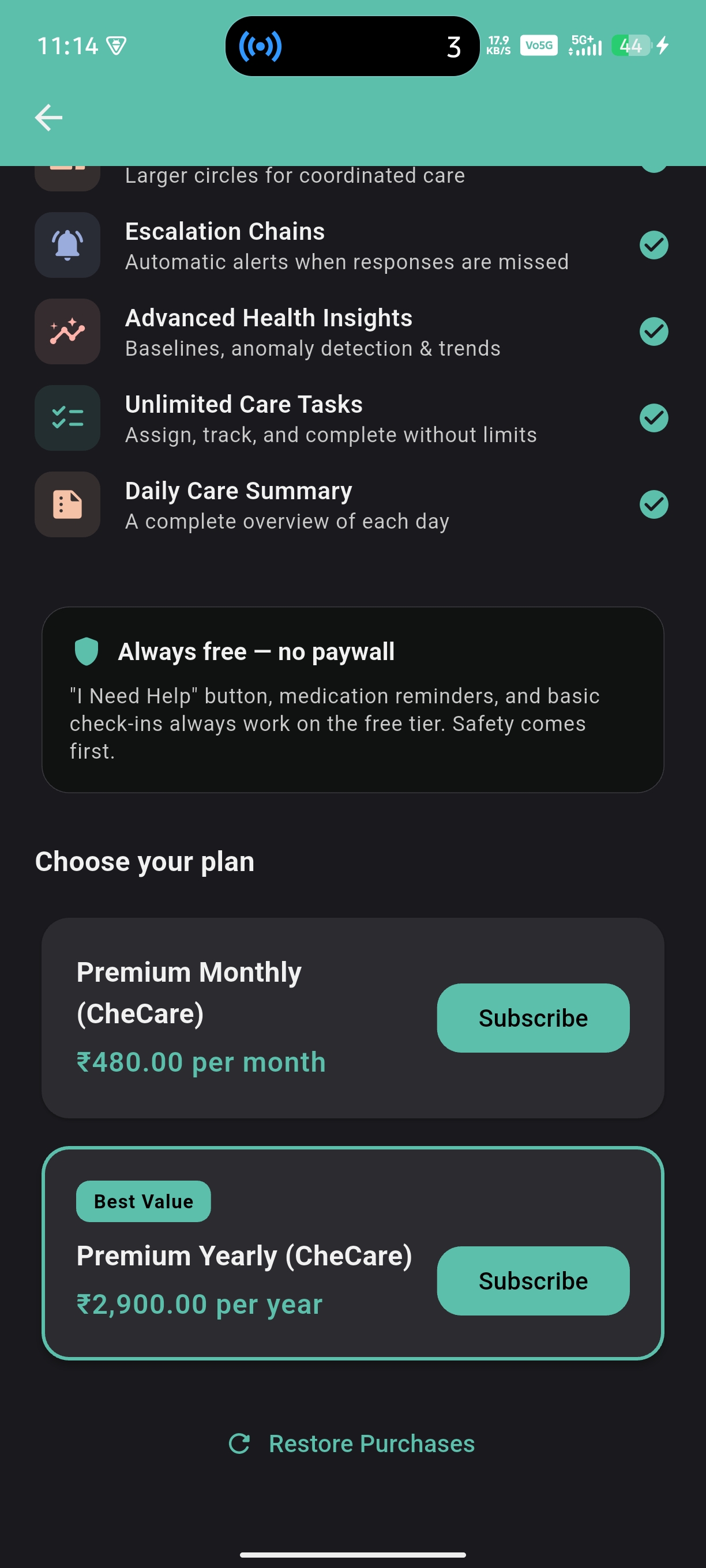
- RevenueCat-powered monetization
We integrated OneSignal into the care workflow so notifications can bring important events directly to caregivers instead of requiring them to constantly open the app.
We also integrated RevenueCat to handle the app's premium access and monetization layer, satisfying the hackathon's requirement while keeping the core care experience focused on helping families.
Rather than trying to build an AI doctor or diagnose medical conditions, we focused on detecting meaningful changes and turning them into understandable actions.
Challenges we ran into
The hardest challenge was deciding what not to build.
There are countless directions a caregiving app could take: health monitoring, medication management, emergency assistance, communication, appointments, location tracking, AI insights, and more. Trying to include everything would have made Care complicated for the very people who need it to be simple.
Another challenge was designing for two very different users. A caregiver may want detailed information and history, while a dependent may only need one large button saying “I'm OK.” We had to deliberately keep complexity on the caregiver side rather than pushing it onto the dependent.
We also had to think carefully about notifications. A missed medication or check-in can matter, but interrupting someone constantly would make the app frustrating. This led us toward different levels of urgency and reserving more intrusive interactions for genuinely important events.
Finally, we had to balance the ambition of the idea with the reality of a hackathon. We focused on building the core care loop rather than trying to solve every problem surrounding caregiving.
Accomplishments that we're proud of
We're proud that Care evolved from a simple health-monitoring idea into something more focused: a system for coordinating care.
The concept of the Care Loop became the foundation of the product:
Notice → Remind → Confirm → Coordinate → Escalate
We're particularly proud of the separation between the dependent and caregiver experiences. The person receiving care shouldn't have to understand the complexity behind the system. They should be able to respond to a reminder, check in, or ask for help with minimal effort.
We're also proud of making the Care Circle a central part of the experience. Care shouldn't depend on one person constantly watching a dashboard. When something needs attention, the system should help the right people understand what happened and who is handling it.
Most importantly, we designed Care around a simple outcome:
When everything is okay, families should feel reassured. When something isn't okay, someone should know what to do next.
What we learned
We learned that building a useful caregiving product isn't primarily about collecting more data. It's about turning information into clear, timely action.
We also learned that simplicity is not the absence of functionality. It often means putting complexity somewhere else. A caregiver can handle detailed information, while the dependent may need nothing more than a large “I'm OK” button.
Another important lesson was that notifications can be part of the product experience itself. A good notification doesn't merely announce that something happened. It can help someone decide what to do next.
Most importantly, we learned to think about caregiving as a loop rather than a dashboard. The real value comes from what happens after a signal is detected: someone is reminded, someone responds, someone takes responsibility, and the care circle knows the situation is handled.
That is what we want Care to make easier: helping people care for the people who matter to them, even when they can't always be there.

Log in or sign up for Devpost to join the conversation.