-
-
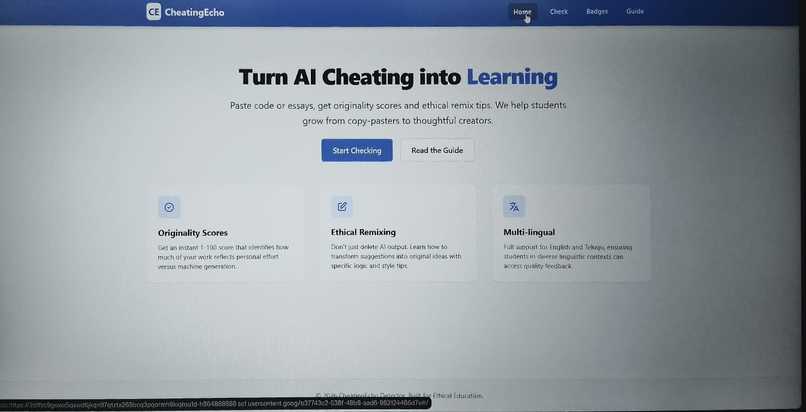
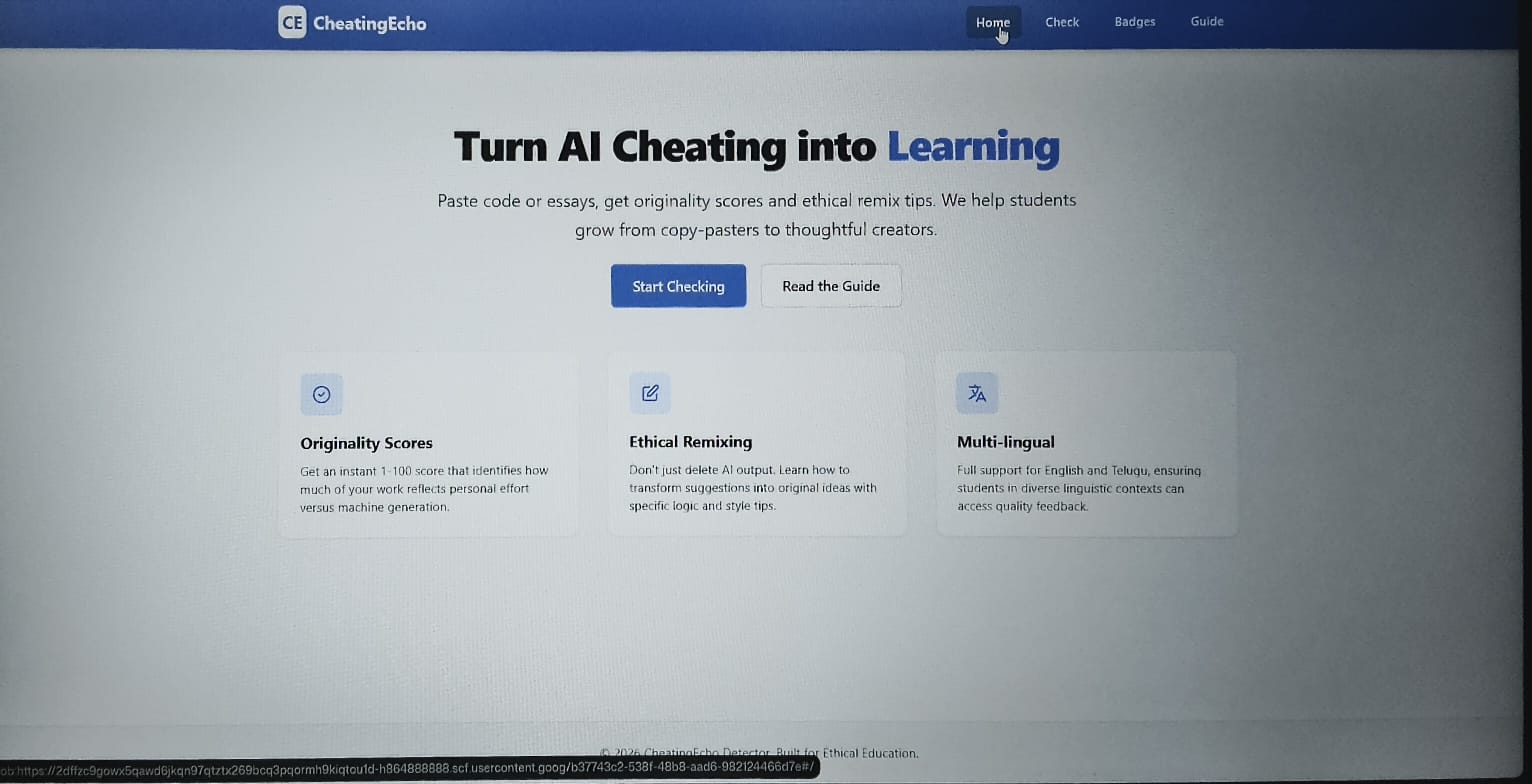
HOME PAGE
-
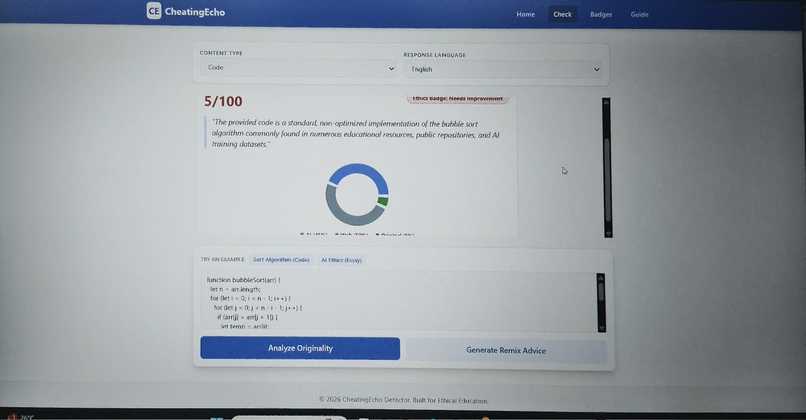
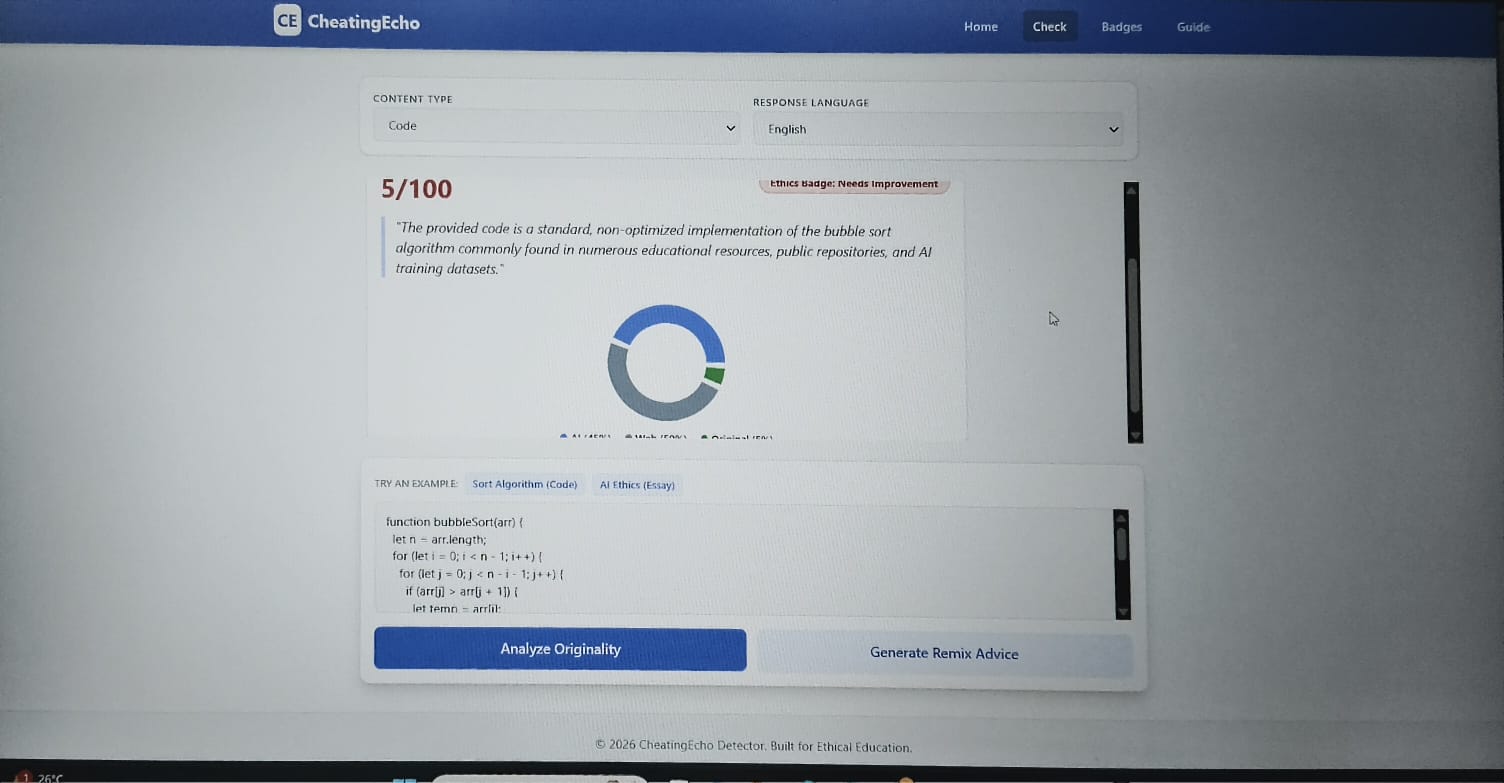
ANALYZE THE CODE
-
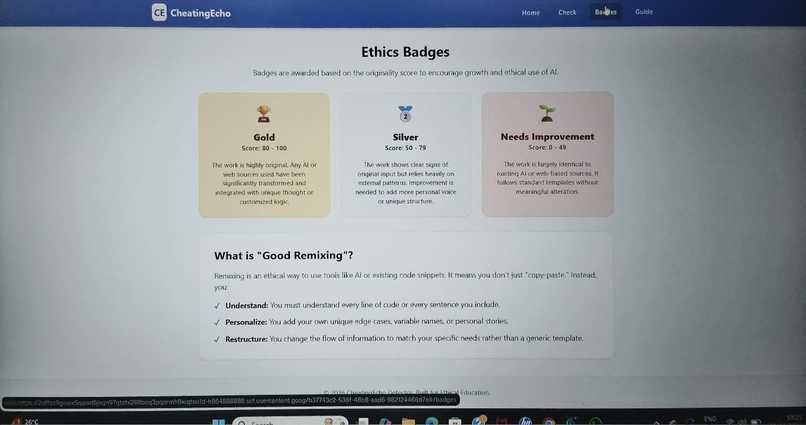
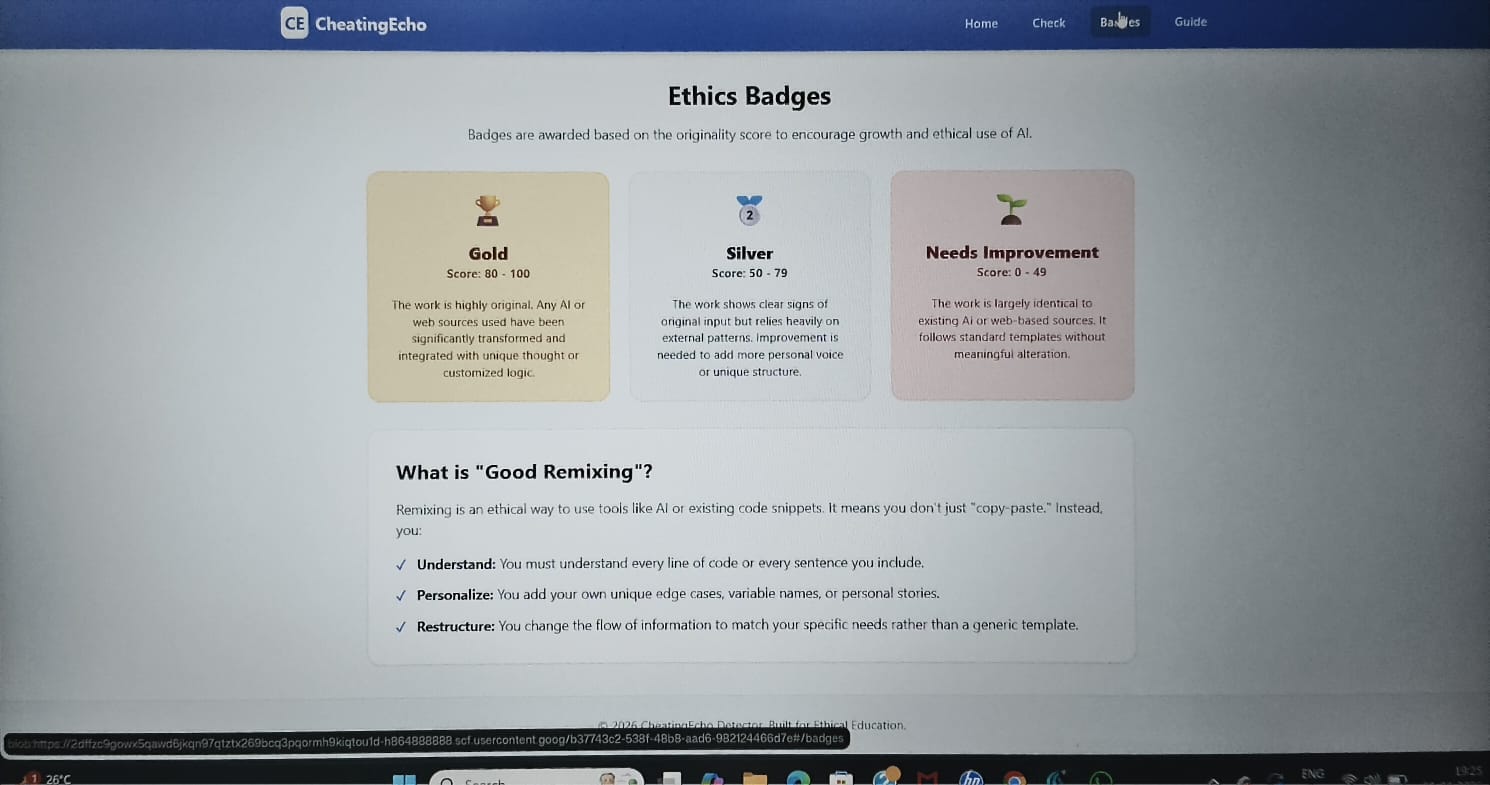
Ethic Badges
-
-
Inspiration..
AI tools made it very easy for students to generate essays and code in seconds, while teachers are under pressure to detect cheating with tools that are often unreliable and can falsely accuse honest students. In India and globally, studies and news reports show AI-assisted cheating is rising fast and can even help cheaters outperform honest students, which is unfair and demotivating. I wanted a solution that does not just “catch” students, but teaches them how to use AI responsibly and develop their own thinking.
What it does
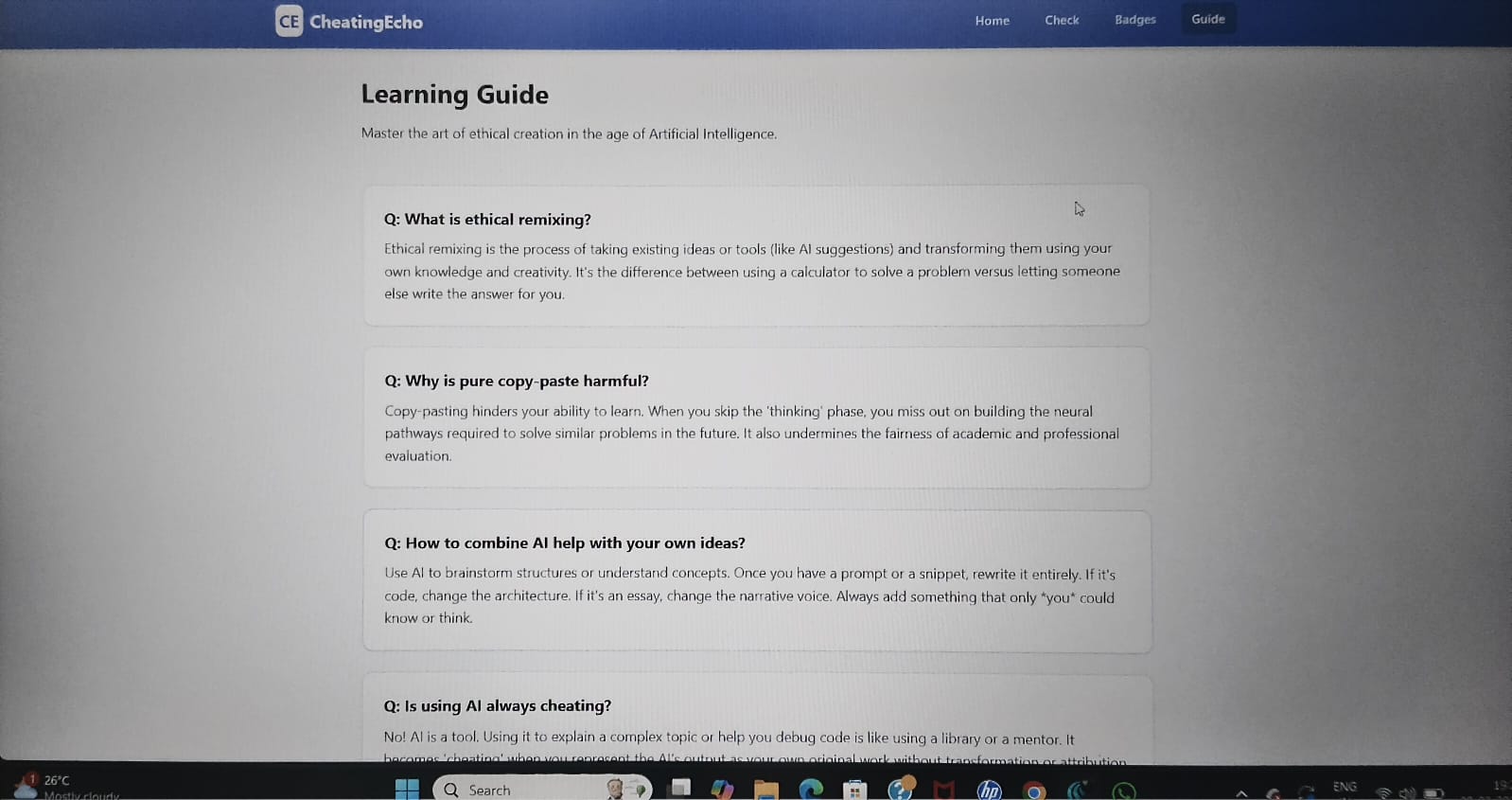
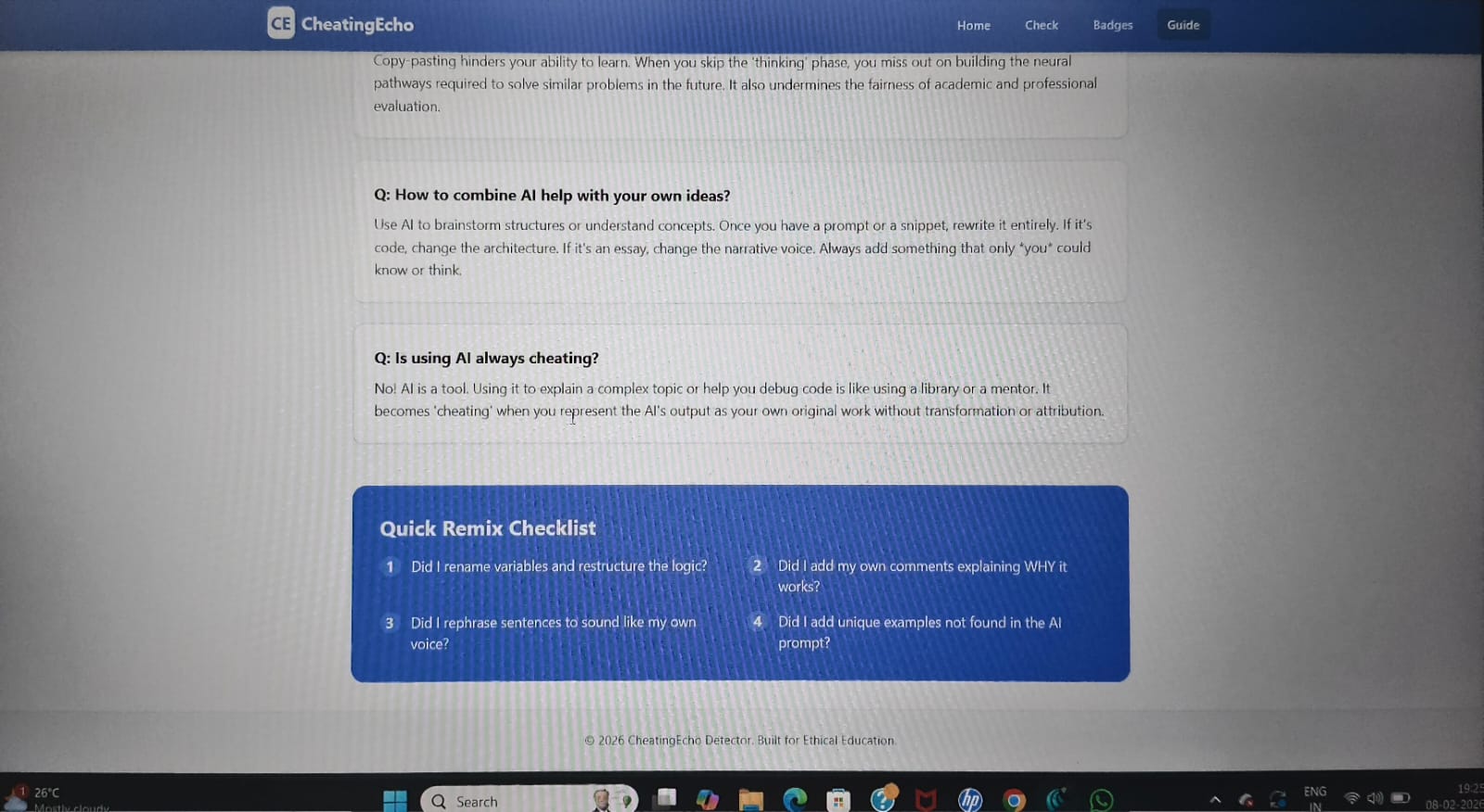
CheatingEcho Detector is a web app where teachers or students paste code or text and get an originality score (1–100) with a clear explanation of how AI-like, web-copy-like, or student-like it looks. It also generates remix advice that shows students how to rewrite or refactor their work (for example, changing loop structure or adding their own examples) to increase originality instead of blindly copy-pasting. The app awards Ethics Badges (Gold / Silver / Needs Improvement) to gamify integrity, and supports English and Telugu so Indian colleges can use it in their own language on mobile/low-bandwidth devices. It is designed as a friendly helper for both teachers and students, not a purely punitive detector.
How we built it
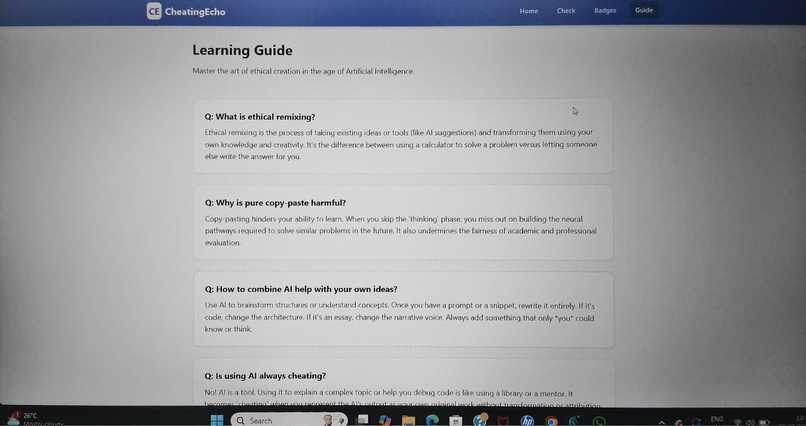
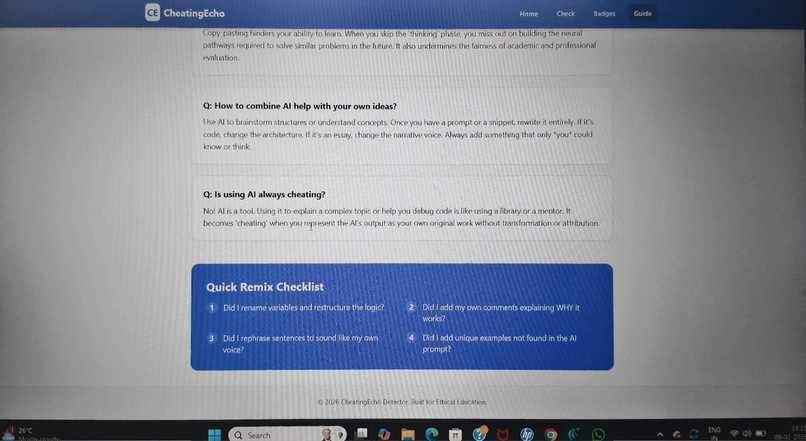
Ibuilt CheatingEcho Detector as a responsive web app using Google AI Studio for the conversational logic and UI scaffolding, then customized the flows for education use. The frontend is implemented with standard web technologies (HTML, CSS, JavaScript) to keep it lightweight and mobile-first. The core analysis is handled by an AI model (Gemini) that looks at style patterns, repetition, structure, and prompt-like cues to generate an originality score and narrative explanation, plus step-by-step remix suggestions. The app structure follows a simple multi-page layout: Home, Check, Badges, and Guide, with all actions wired so every button either runs an analysis, shows a result, or navigates clearly between pages.
Challenges we ran into
One big challenge was that AI detectors in general are known to be imperfect and can create false positives, so I had to design the experience to be advisory, not absolute. Another challenge was converting the AI’s raw analysis into explanations that normal teachers and students can understand without technical jargon. Balancing bilingual support (English/Telugu) with a clean UI on small screens was also tricky, especially while keeping the app fast for low-bandwidth users. Finally, deciding how to represent the originality score and “likely origin” without overclaiming required careful prompt tuning and testing.
Accomplishments that we're proud of
I’m proud that CheatingEcho Detector treats AI cheating as a teachable moment instead of only a disciplinary issue. It doesn’t just say “this is AI,” it shows concrete ways to improve and encourages students to build their own voice and coding style. I’m also proud of the Ethics Badge system, which turns integrity into something visible and positive that students can aim for. Building a bilingual, mobile-friendly experience that still feels simple for teachers is another achievement, especially given the complexity of the topic.
What we learned
I learned that building tools for education is not only a technical problem; it’s also about trust, fairness, and communication between teachers and students. Research and articles on AI cheating and detectors showed that purely punitive tools can damage relationships and are often unreliable, so designing with “human impact” in mind is critical. I also deepened my skills in prompt engineering, structuring AI outputs into clear UI components, and thinking about low-resource contexts (shared devices, low bandwidth, multiple languages). Finally, I realized how important it is to be transparent about AI limitations while still delivering useful guidance.
What's next for CheatingEcho Detector
Next, I want to integrate CheatingEcho Detector with learning management systems (LMS) and college portals so teachers can check multiple submissions at once and track originality trends over a semester. I also plan to add student accounts where they can store their badges and revision history as a portfolio of honest learning. Another direction is to support more Indian languages and richer code analysis (starting with C, Python, and JavaScript) so the tool can give even more specific remix suggestions for programming courses. Long term, CheatingEcho Detector could partner with colleges to become a standard “integrity coach” that teaches students how to collaborate with AI instead of hiding it.
Built With
- ai
- css
- gemini
- html
- javascript
- studio


Log in or sign up for Devpost to join the conversation.