-
-
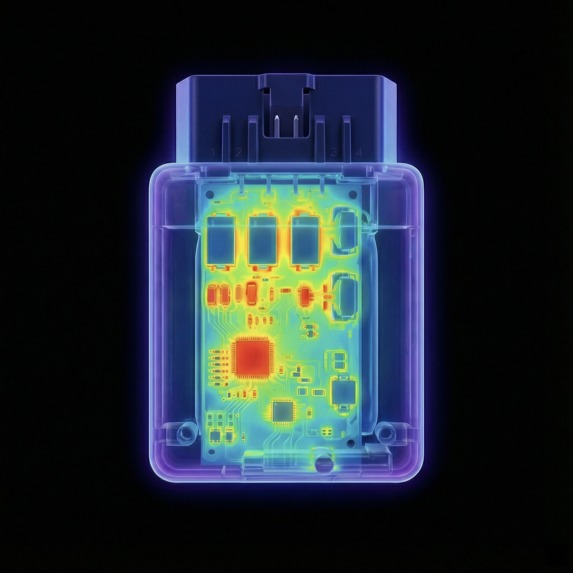
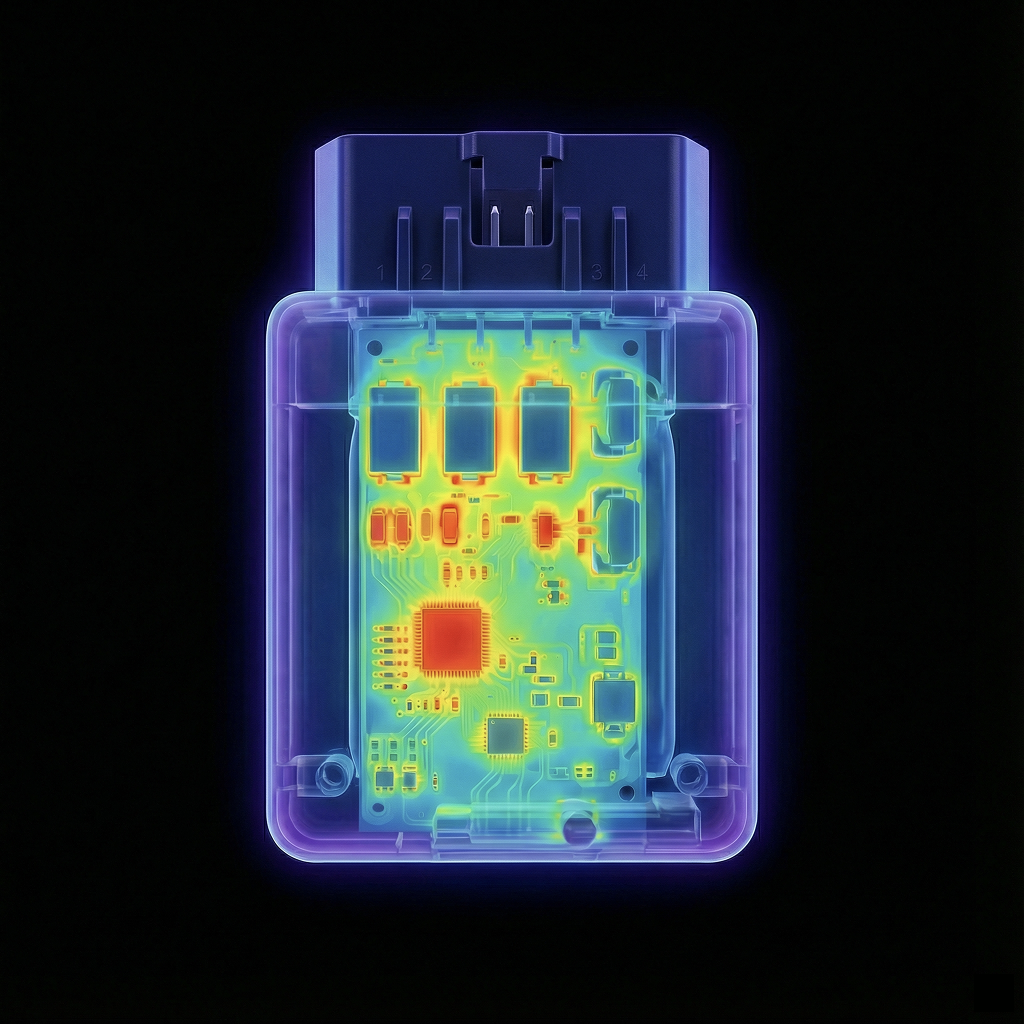
OBD Adapter Thermo
-
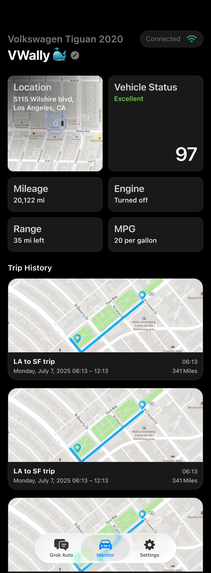
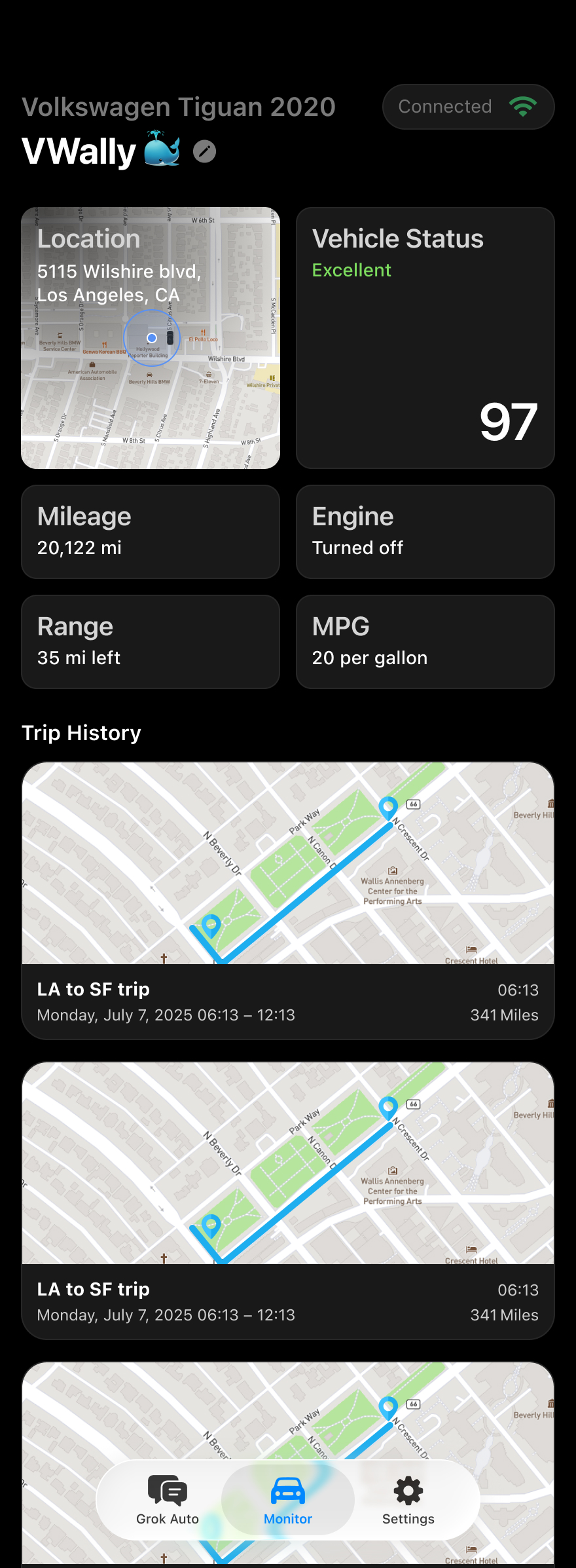
UI Diagnostics Dash
-
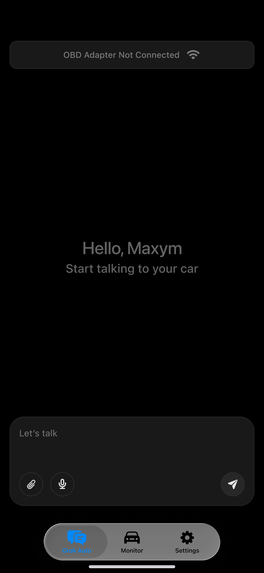
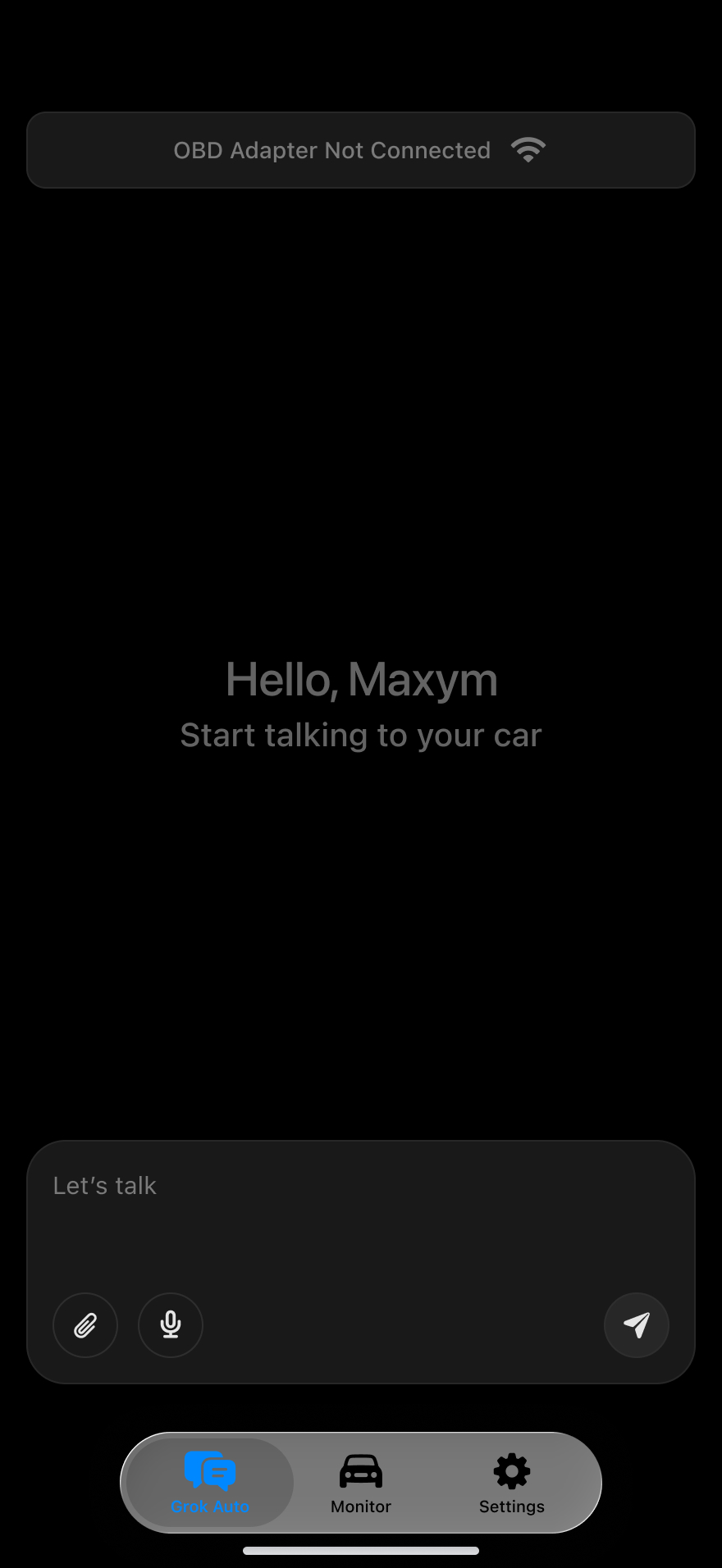
UI Chat
-
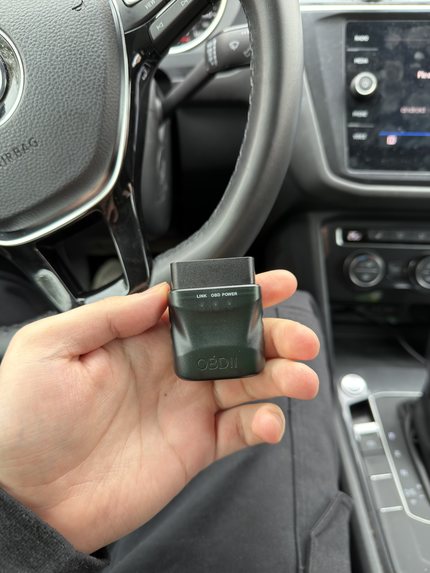

ChatOBD Hardware
-
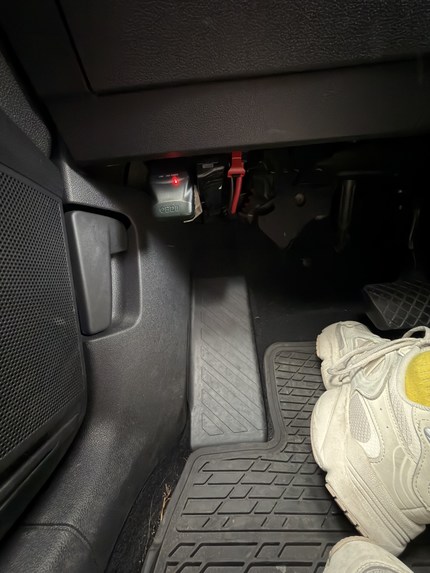

Plugged in
Inspiration
When Grok launched as a built-in assistant for Teslas, it raised a simple question:
Why should only Tesla drivers have access to an intelligent, real-time automotive companion?
Every car manufactured after 1996 already exposes its data through a universal OBD2 port. A twenty-dollar Bluetooth dongle can unlock it. That led us to a clear insight:
If Teslas get Grok, then every car can have its own AI-powered co-pilot.
But we didn’t want to stop at diagnostics. We wanted something that actually knows your car. Something that grows with you, remembers your trips, analyzes your driving patterns, and reacts in real time.
That became the foundation for this project.
What It Does
Our app connects to any OBD2 dongle and transforms an ordinary car into a personalized, conversational assistant that:
- Reads real-time OBD2 data
- Understands diagnostic codes in plain language
- Builds long-term memory about your trips, issues, patterns, and preferences
- Tracks your driving history (distance, speed trends, efficiency, etc.)
- Gives your car a personality that makes interactions engaging instead of sterile
- Routes tasks to multiple agents (mechanic, parts, maintenance, insurance)
- Provides location-aware context using map data
- Fetches real-time information using tool-calling through the XAI Grok API
In short:
We give any car the intelligence and personality most people associate only with high-end vehicles.
Backstory
When Tesla announced that Grok was coming natively to their cars, it highlighted an uneven gap in the automotive world. On one side: premium vehicles with integrated AI assistants. On the other: millions of everyday cars with no intelligence at all.
Yet mathematically, nothing prevents intelligence from entering those cars:
[ \text{Car Intelligence} = \text{OBD2 Data} + \text{AI Reasoning} + \text{Long-Term Memory} + \text{Real-Time World Knowledge} ]
OBD2 gives us the vehicle data, local storage gives us memory, and the XAI Grok API gives us real-time awareness of the world around the driver.
Because Grok can:
- Use tool calling to pull data from the web
- Analyze real-time content from X
- Use semantic search to understand sentiment, recommendations, and trends
- Integrate location information to ground its context
It becomes the connective tissue between your car and the world.
This means your car can now tell you:
- What people on X are saying about a part you're considering
- Real-time weather or road conditions for your route
- Whether a nearby mechanic is reputable
- If a specific warning pattern is trending among owners of your model
- Up-to-date recalls or known issues
- Live information about gas prices, EV chargers, or traffic alerts
This is no longer “just diagnostics.”
This is a car that’s aware of itself and the world around it.
How We Built It
1. iOS App with SwiftUI
We built a clean hybrid UI that combines a chat interface with a live telemetry dashboard.
2. OBD2 Integration
Using a Swift OBD2 library, we connect to generic Bluetooth dongles and decode PID data such as:
- RPM
- Coolant temperature
- Speed
- Voltage
- Fuel trim
- Emissions readiness
- Fault codes
3. Multi-Agent Architecture
We created task-specific agents for:
- Diagnostics
- Maintenance
- Emergency response
- Parts lookup
- Driving behavior analysis
- Insurance workflows
Each agent has its own toolset and decision logic.
4. AI Memory Layer
We persist data such as:
- Past trips
- Recurring issues
- Patterns in driving style
- Changes in vehicle metrics
- User preferences
This memory is factual and timestamped to avoid hallucinations.
5. Personality Engine
Users can choose between communication styles. Tone adapts, but technical accuracy remains intact.
6. XAI Grok API with Tool Calling
This is the layer that makes the assistant feel alive.
We used Grok’s tool calling for:
- Web search
- Real-time data gathering
- X API lookups
- Semantic analysis of public sentiment
- Location-based queries
This allows the car to answer questions like:
- “What are people saying about this engine misfire problem on X?”
- “Is this repair shop trustworthy?”
- “Is there a weather alert near my destination?”
- “Is this part known to fail?”
Grok enhances the assistant’s world knowledge just as OBD2 enhances its mechanical understanding.
Challenges We Faced
1. Standardized OBD2 Data That Isn’t Standard
Different cars respond differently to the same PIDs.
Normalizing noisy data took effort.
2. Real-Time Processing
We had to balance OBD2 polling speed with AI latency without breaking UX.
3. Multi-Agent Routing
The system must know when to switch between diagnostic mode, conversational mode, or safety mode. Getting that logic right was nontrivial.
4. Memory Integrity
We needed a memory system that stores facts reliably and prevents the model from inventing history.
5. Integrating Real-Time Data from Grok
Tool-calling is powerful but easy to misuse.
We had to design structured queries so the assistant retrieves the right type of information every time.
What We Learned
- Grok’s real-time world awareness radically enhances a car assistant.
- Long-term memory leads users to treat the assistant as a companion, not a tool.
- Even cheap OBD2 dongles unlock a surprising amount of useful data.
- Multi-agent architectures reduce confusion and improve reliability.
- Combining car telemetry with real-time web and X data opens up use cases that didn’t exist before.
Looking Ahead
We plan to expand into:
- A custom OBD2 hardware dongle
- Predictive maintenance using time-series models
- A plugin ecosystem for third-party agents
- Safety alerts and roadside assistance workflows
- A driver coaching system for efficiency and safety
The mission stays the same:
Your car should know more, help more, and feel smarter.
And with AI, that’s finally possible for everyone.
What's next for ChatOBD - Powered by Grok
Built With
- figma
- grok
- swift
- swiftobd
- swiftui
- xai
Log in or sign up for Devpost to join the conversation.