-
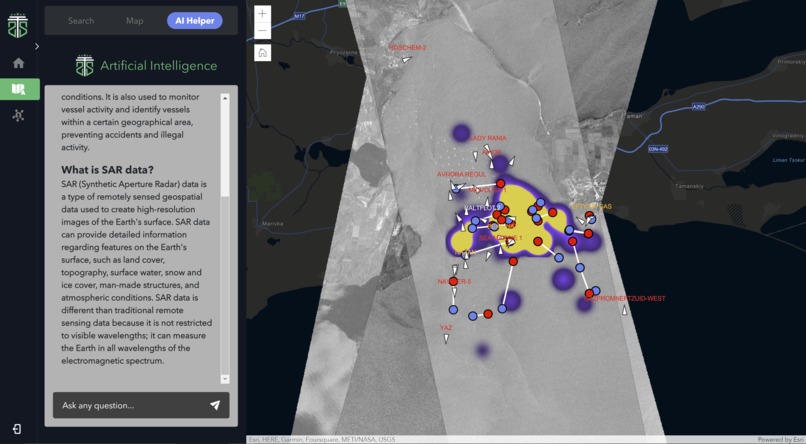
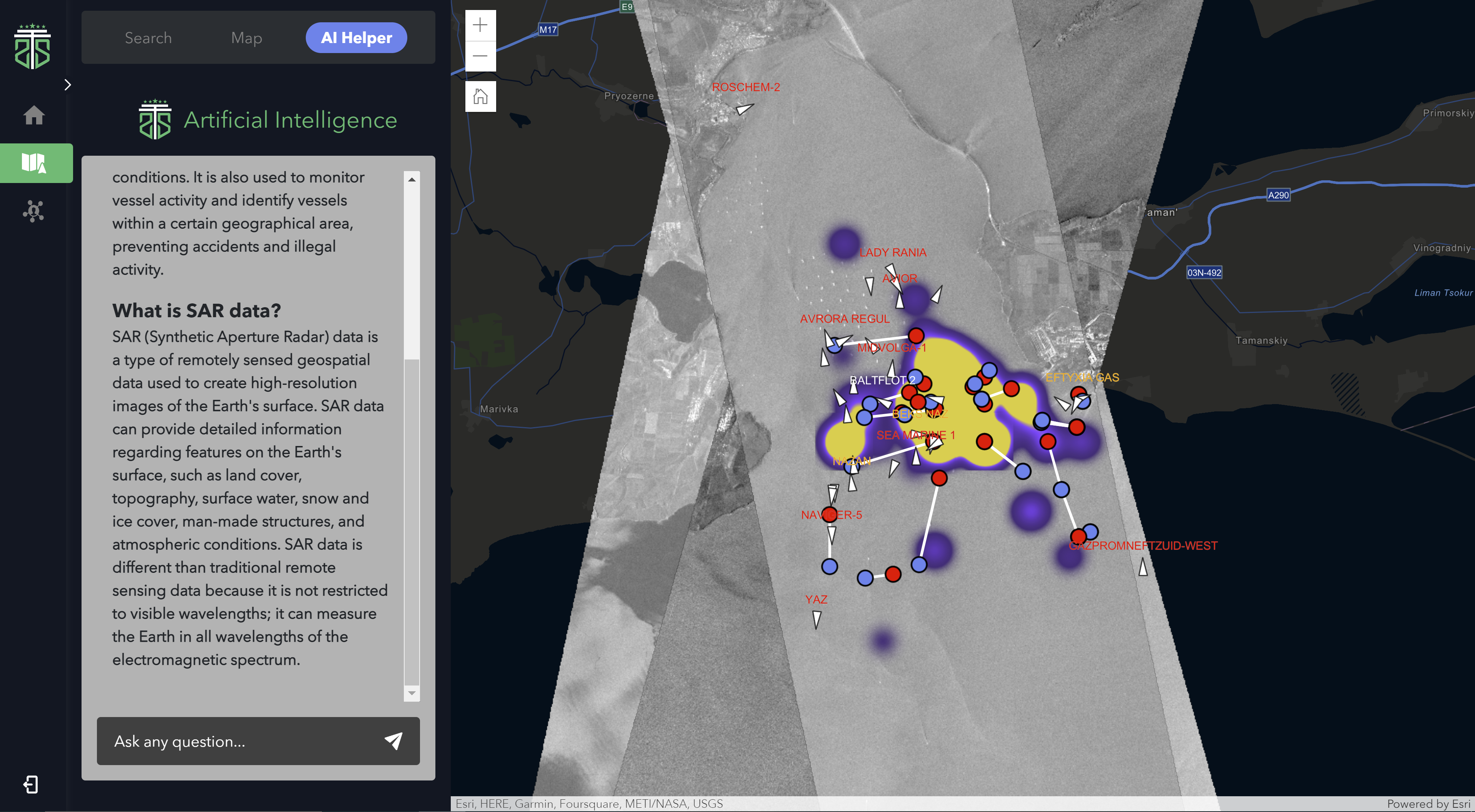
Demo of SpaceChat integration with dashboard
Inspiration
SpaceChat was created to provide a more efficient and user-friendly solution for monitoring and tracking oil tanker data and using machine learning models to detect potential illegal activities. The integration of ChatGPT's natural language processing capabilities into a user-friendly online dashboard can allow for quick and easy questioning and drill downs on the owners of these tankers as well as analytics on frequency.
What it does
SpaceChat integrates ChatGPT into an online dashboard, allowing users to ask questions about oil tanker locations, illicit activity locations, and other information to try and uncover illegal oil trade activity.
This allows humans to immediately interact with complex data via natural language so actions can be taken against the owners of these tankers in real time.
How we built it
SpaceChat was built by integrating OpenAI's language model ChatGPT into an online webpage dashboard with an up to date embedded vector database. This allows for users to ask natural language questions about oil tanker information and its owners, including location, ship type, and frequency to uncover potential illegal oil trade activity. Additional data sources and functionality were also integrated into the platform to enhance its capabilities.
Challenges we ran into
We identified 3 data sources that could provide valuable insight to ChatGPT so that a user could ask targeted questions about tankers and their region or travel.
These 3 data sources needed to be correlated then merged into a single database and imported into Pinecone, our vector database. This presented a challenge in determining which types of questions could be answered based on how the database information is structured. Integrating priority on the databases was also an area that we had to focus on fine tuning since OpenAI already has their own data set that is outdated.
Accomplishments that we're proud of
We are most proud that the tool we built can better help uncover illegal oil and potentially arms transactions by sanctioned countries which causes real economic and other damages.
What we learned
Creating a product that integrates multiple data sources and provides relevant information to users in a conversational manner was a learning experience in several areas including:
- Data engineering: merging and cleaning multiple data sources into a unified database
- Natural language processing: understanding the intent and context of user queries
- User experience: creating a user-friendly interface for asking and receiving information
What's next for SpaceChat
SpaceChat will become more valuable as it continues to learn from additional user input, logic programming, and data source integration.
There are a number of potential future uses for SpaceChat, including:
- Government agencies - Use SpaceChat for enforcement
- Hedge Funds - Make trading decisions
- Illegal oil trade - Estimates based on data
- Gone Dark - Which oil tankers have suspiciously disappeared?
- Report Generation - Create automatic reports around potential illicit activity
Built With
- ai
- api
- javascript
- python

Log in or sign up for Devpost to join the conversation.