-
-
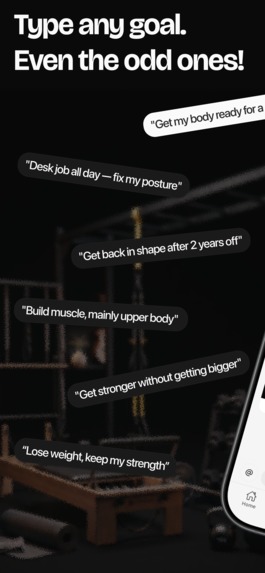
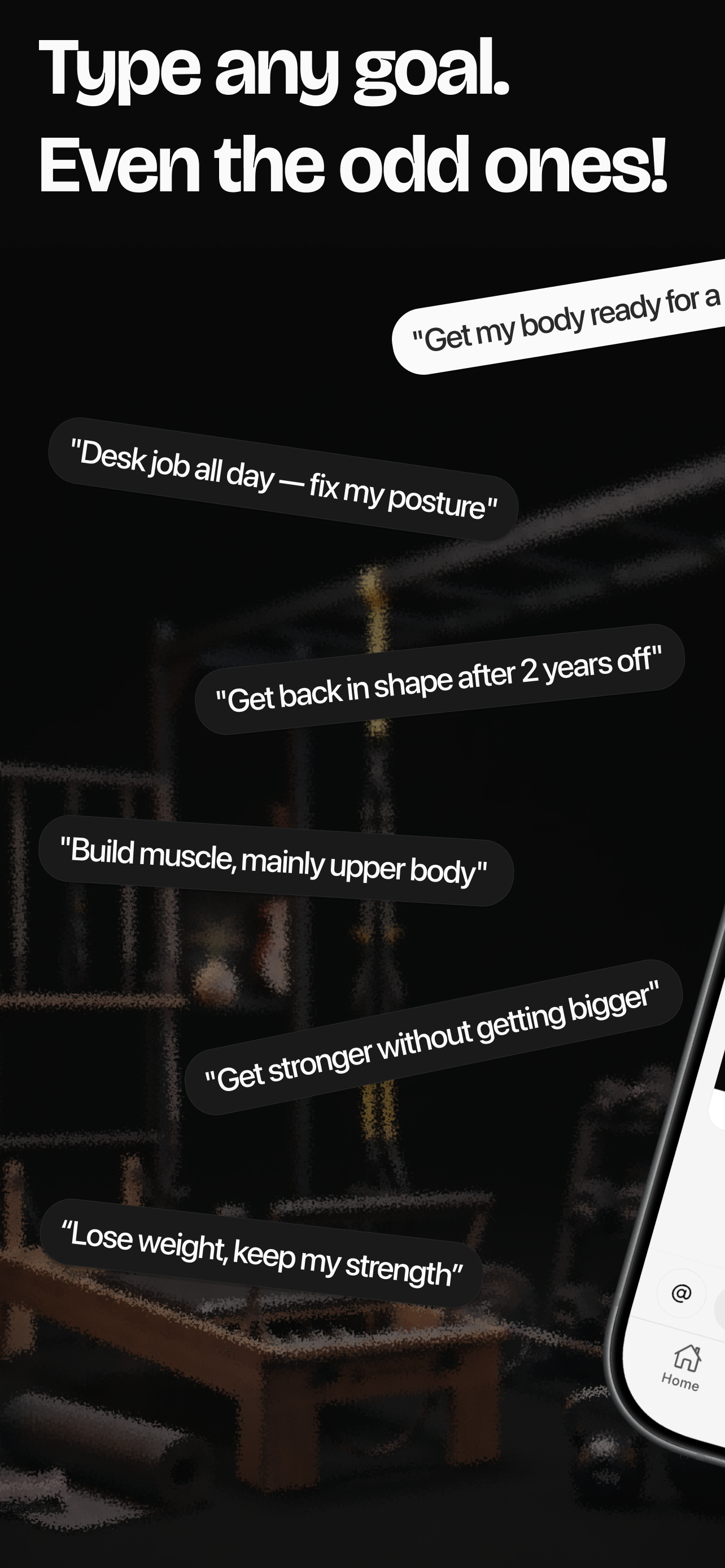
Tell Gymity your goal in your own words.
-
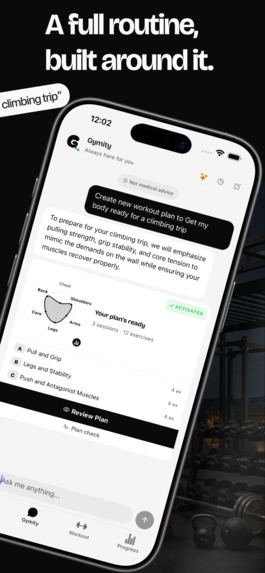
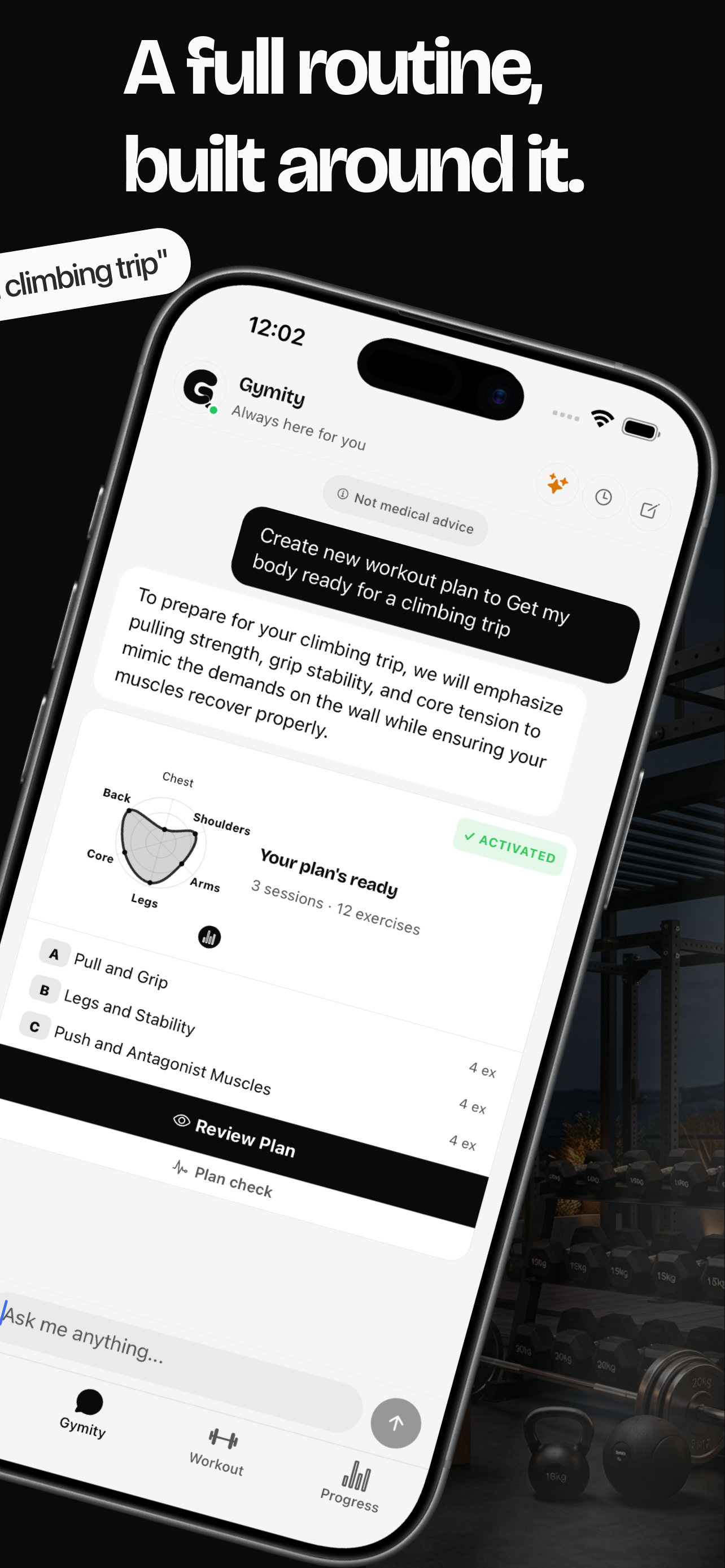
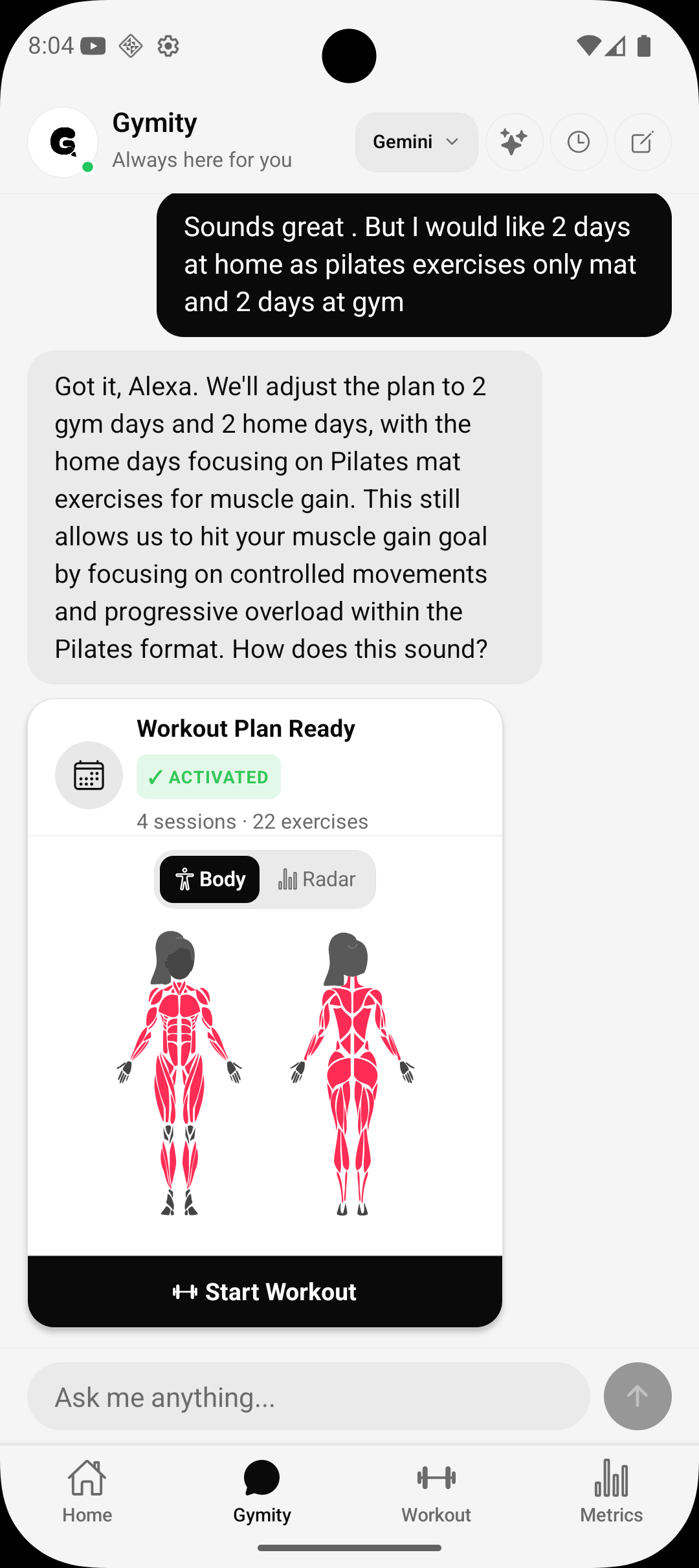
Ask for a plan in chat, review the week, then save it.
-
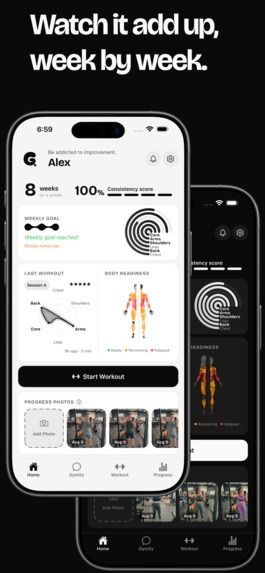
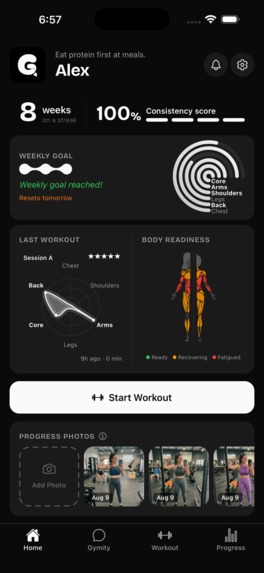
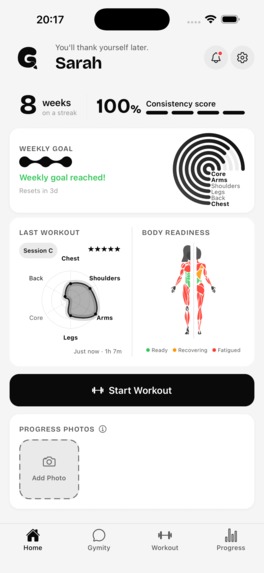
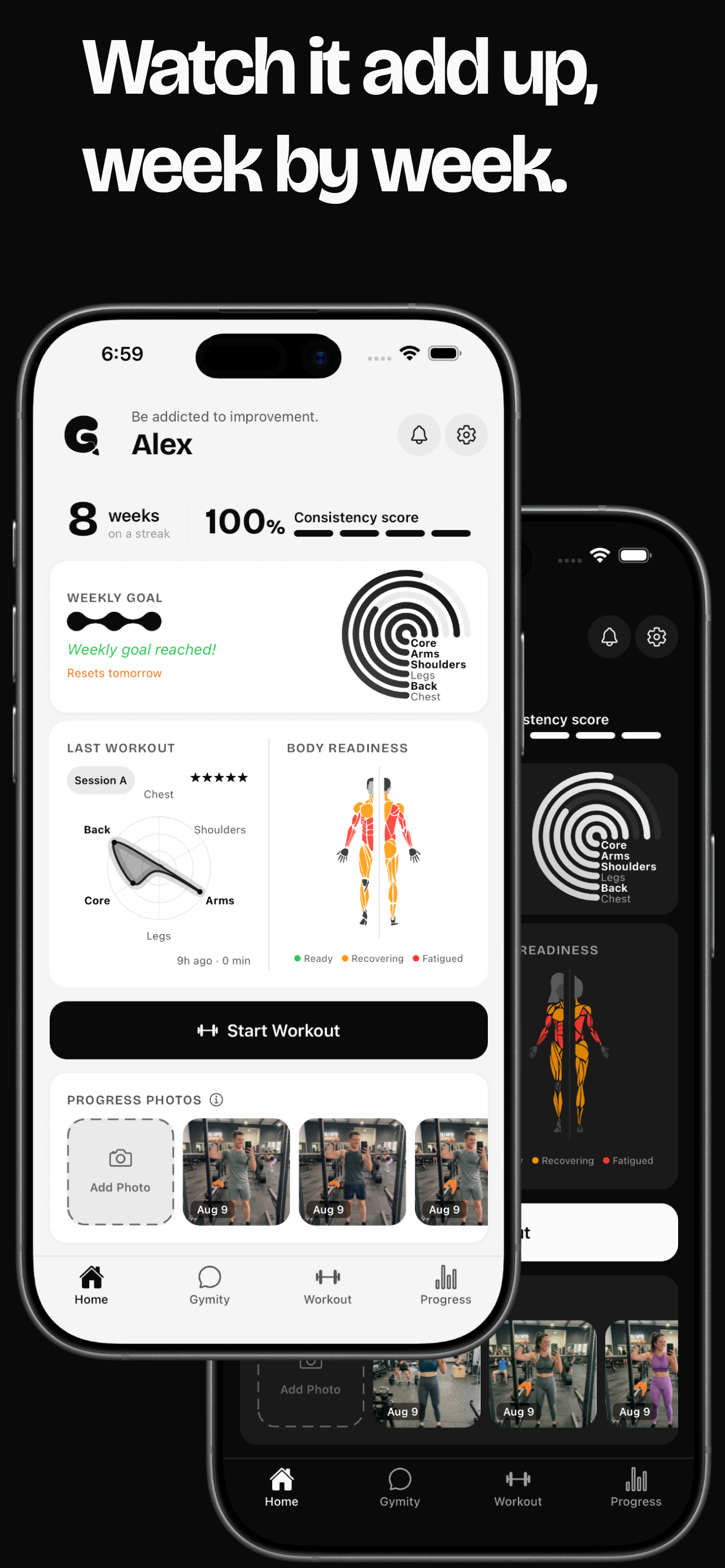
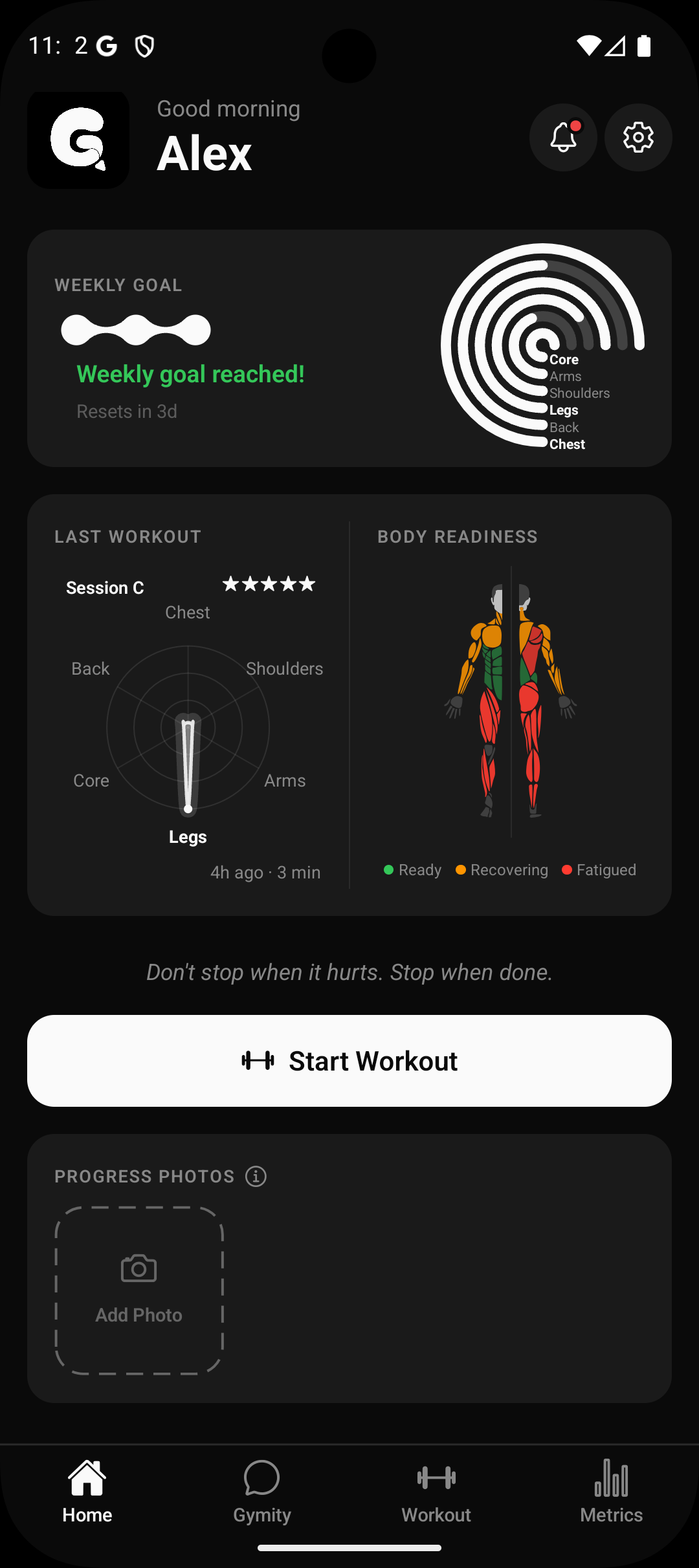
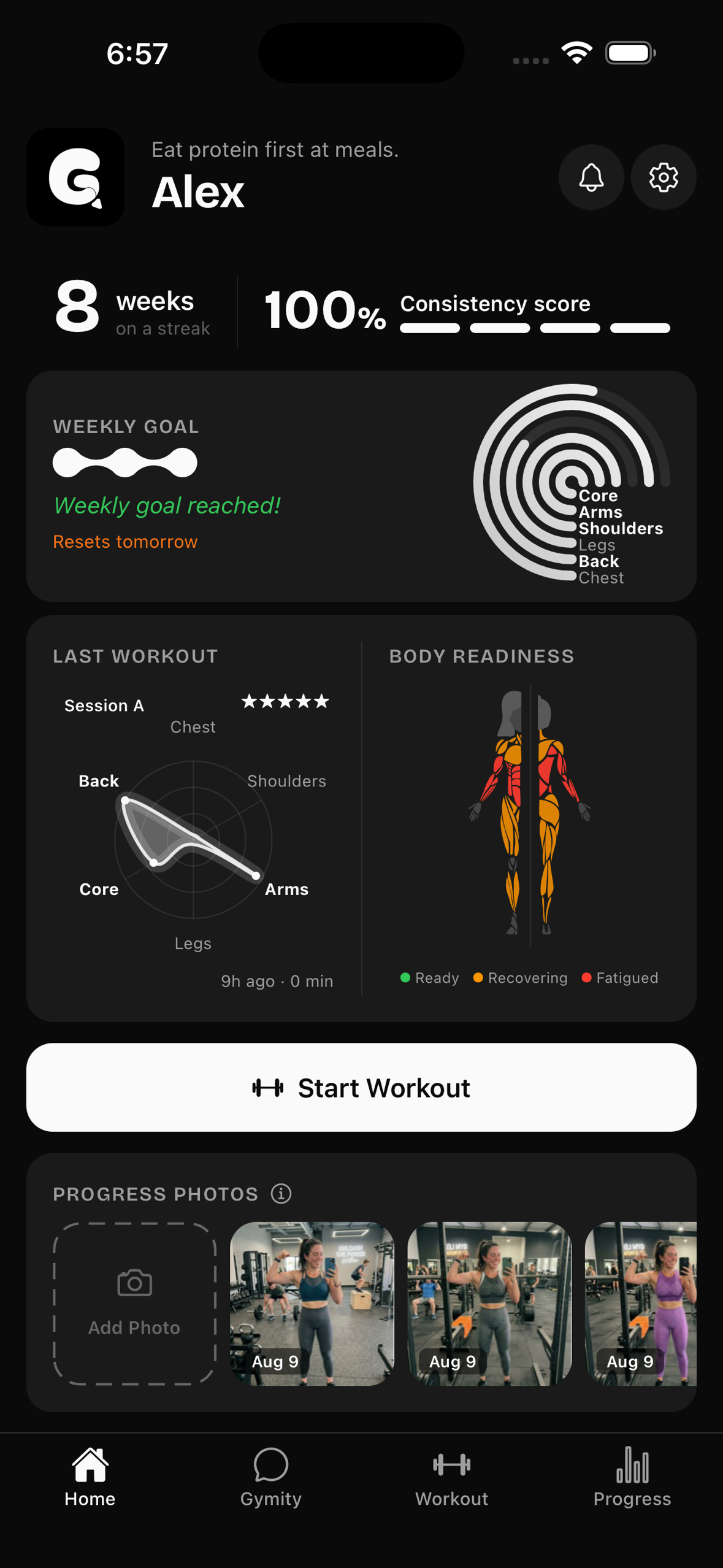
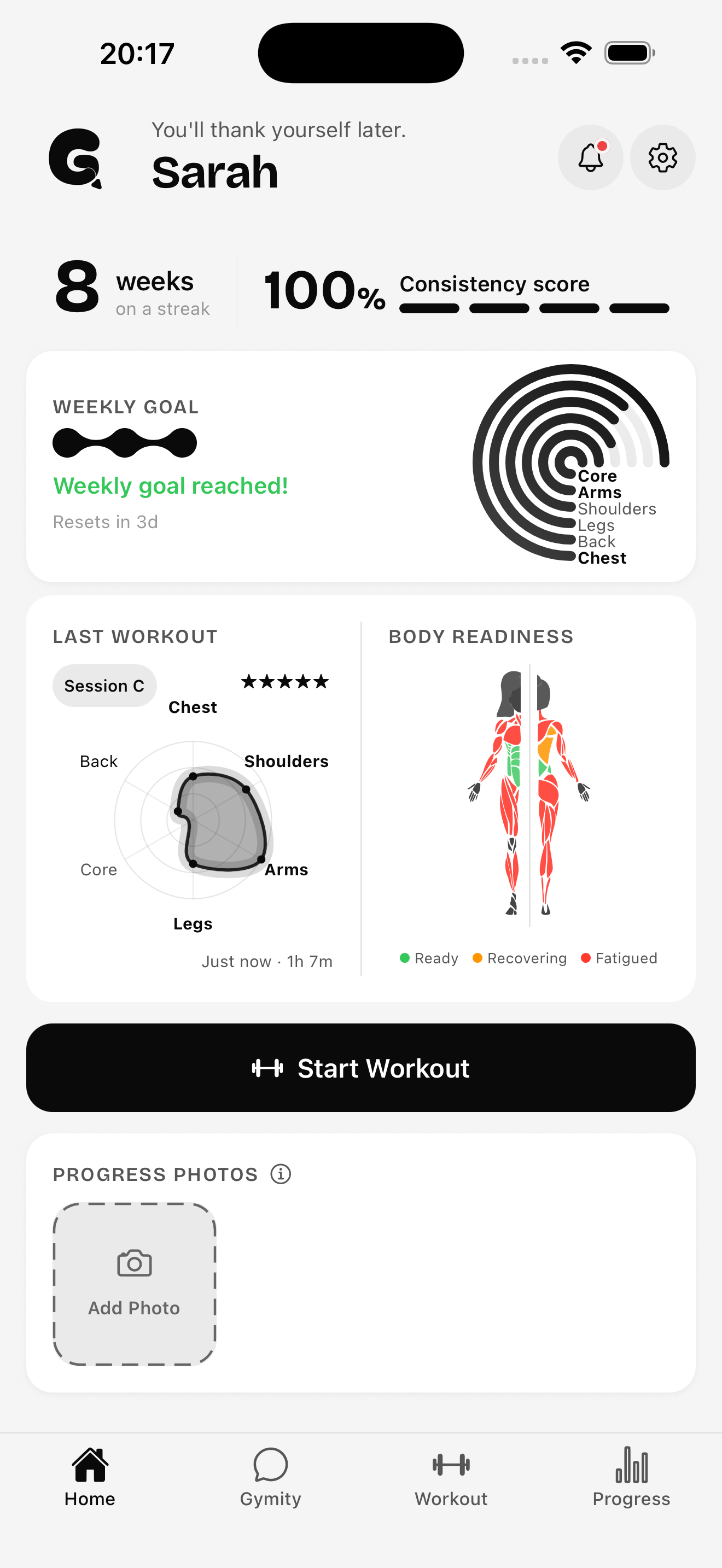
One clear Home screen: readiness, your next session and one action.
-
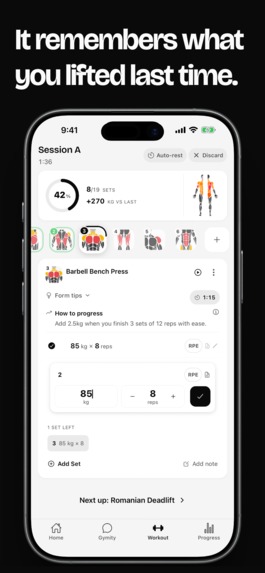
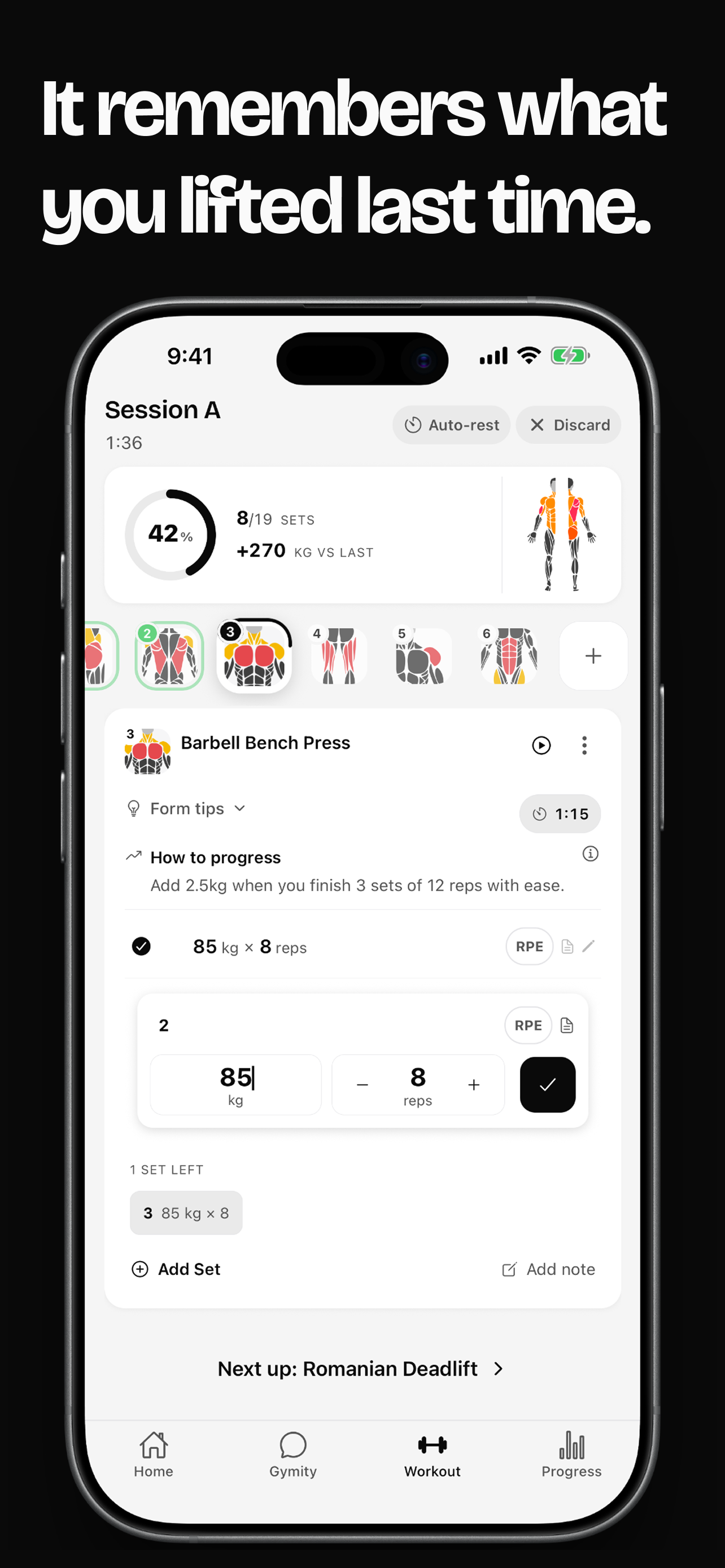
Log a set once; your coach can use that history next time.
-
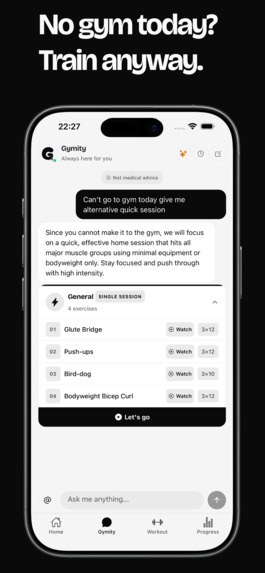
When plans adapt to real life, consistency gets easier.
-
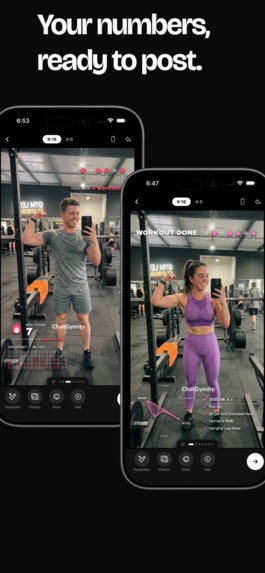
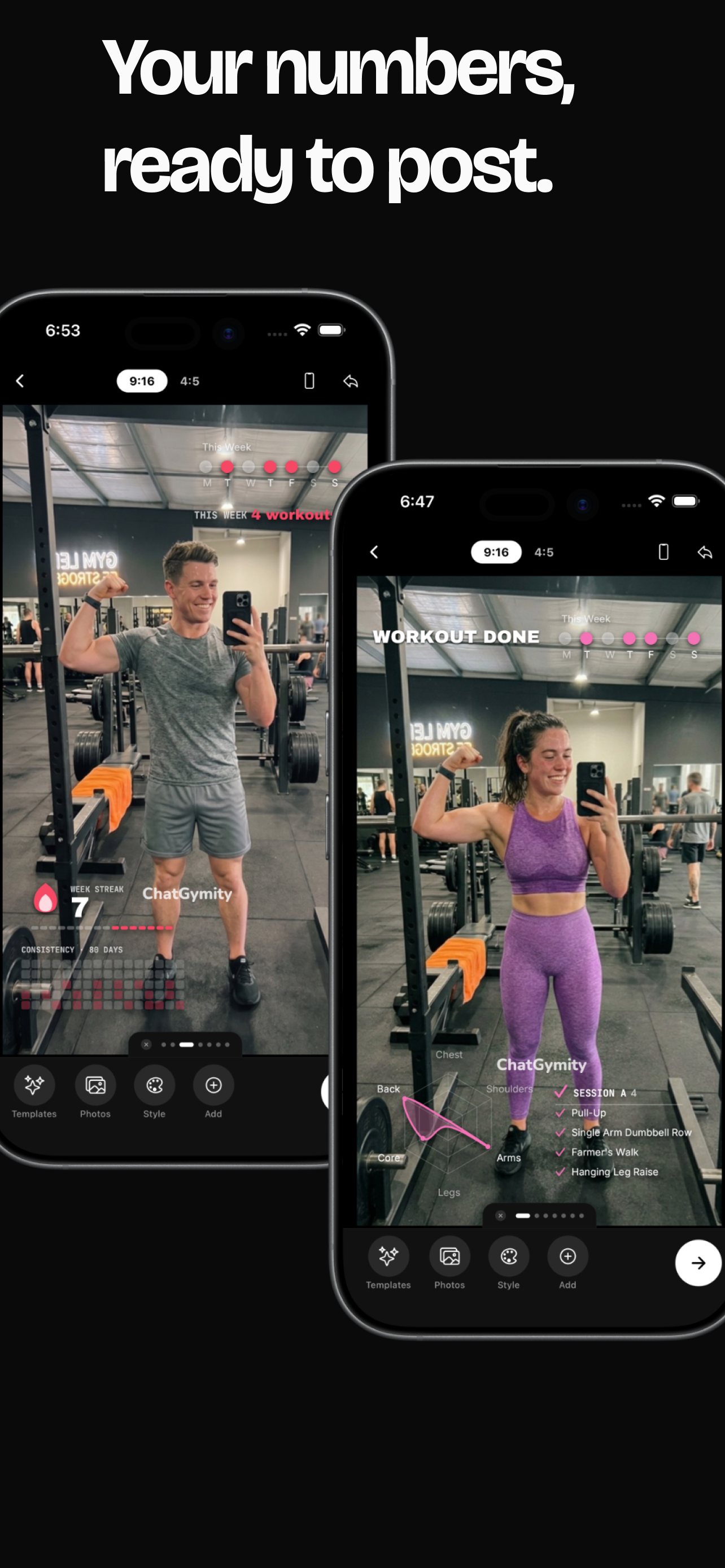
Workout share cards combine your photo with your real training numbers.
-
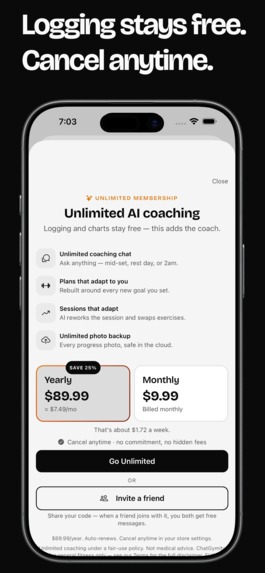
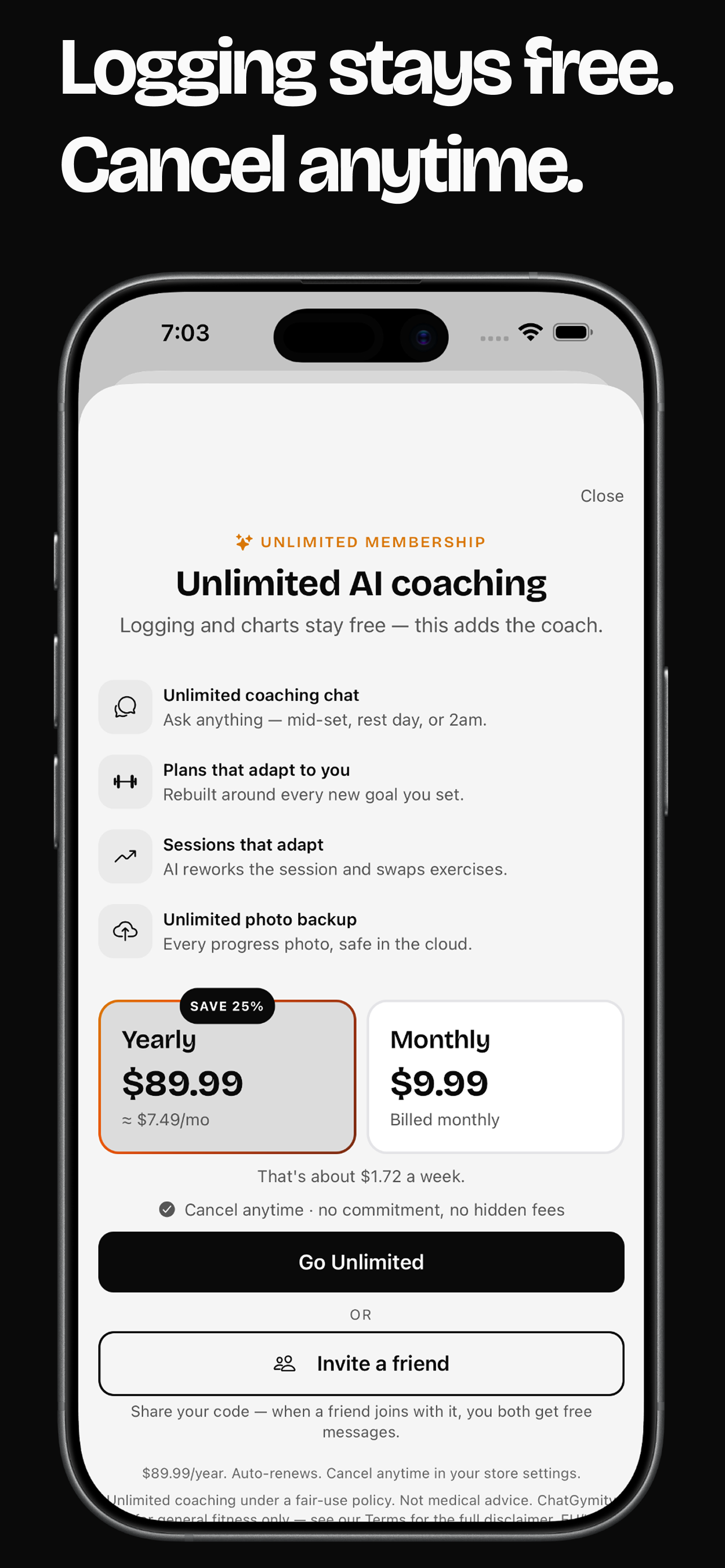
Paywall
-
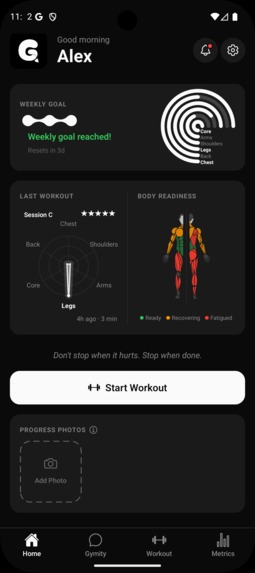
Home in dark mode: recovery and the next session at a glance.
-
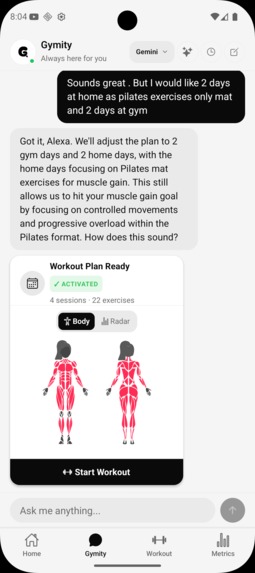
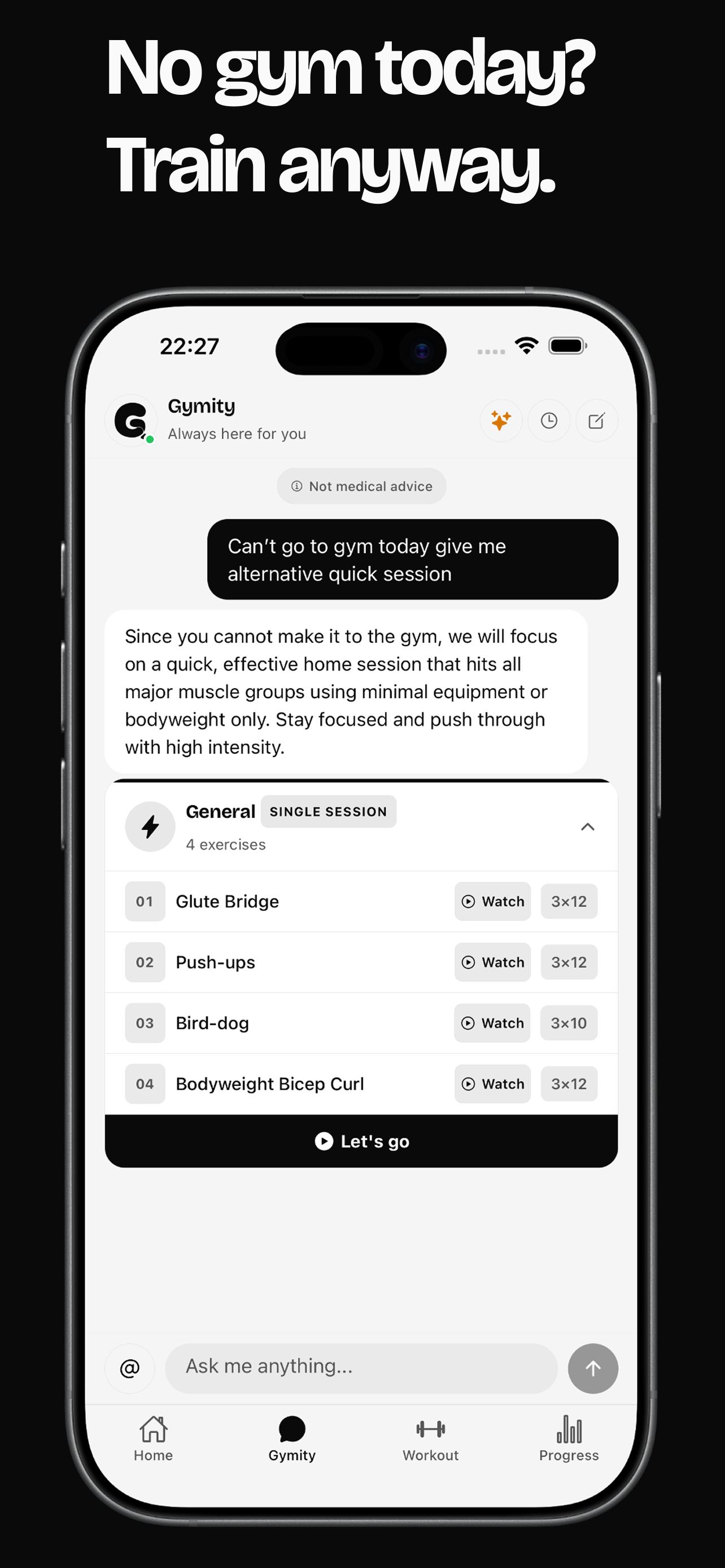
A request for two home sessions and two gym sessions in one plan.
-

Light Mode Icon 1024
-

Dark mode icon 1024
-
1179x2556 No Device
-
-


Inspiration
When the company I worked for shut down, I struggled to find my next software engineering role while AI was rapidly changing the industry. I founded Lootlift Ltd afterward, and I'm its sole employee.
My first idea was a hardware-based way to make training at gyms more engaging. I built and piloted it. The pilot showed promise, but delivery restrictions made the hardware difficult to obtain, so I couldn't take that product forward yet.
I began building ChatGymity as a separate app people could use wherever they train. I also knew the problem firsthand: I used AI to plan workouts, copied the plan into a logging app, then manually explained my results back to the AI. The coach, plan, and training history never stayed connected.
Shipaton gave me the push to turn a year of work in my repository into ChatGymity's first public release. For the past three months, I've worked long days—often around 13 hours—to get it into people's hands.
What it does
One connected loop: plan, train, understand your progress, and adapt when life changes.
Plan in your own words. Tell Gymity about your goal, experience, equipment, and limitations in your own words. Choose Talk it through for a guided conversation or Quick plan for a faster draft. Review the week before saving it, adjust it, and see why each exercise is there. A plan check looks for gaps against your goal. Later changes are visible as revisions, and an earlier plan can be restored.
Adapt to real life. A traveler who normally trains at a gym might have only a hotel room and twenty minutes today. Home shows their last workout, recently trained muscles, and one Up Next session. Tell Gymity what's up lets them explain the change and ask for a one-off session without losing their weekly plan—or revise the plan if the change is lasting.
Train with context. During training, previous numbers sit beside current sets, with rest and exercise timers built in. If an exercise isn't possible, tap Replace exercise for AI-suggested alternatives and choose one that works. Gymity can also answer questions about recent logged workouts, so its advice has context from what the person actually did.
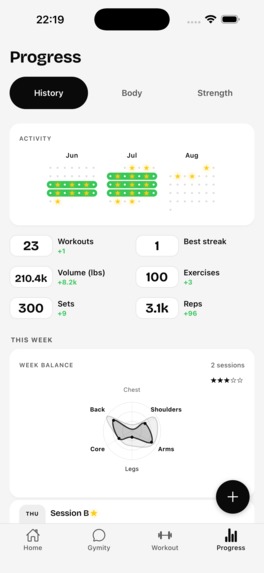
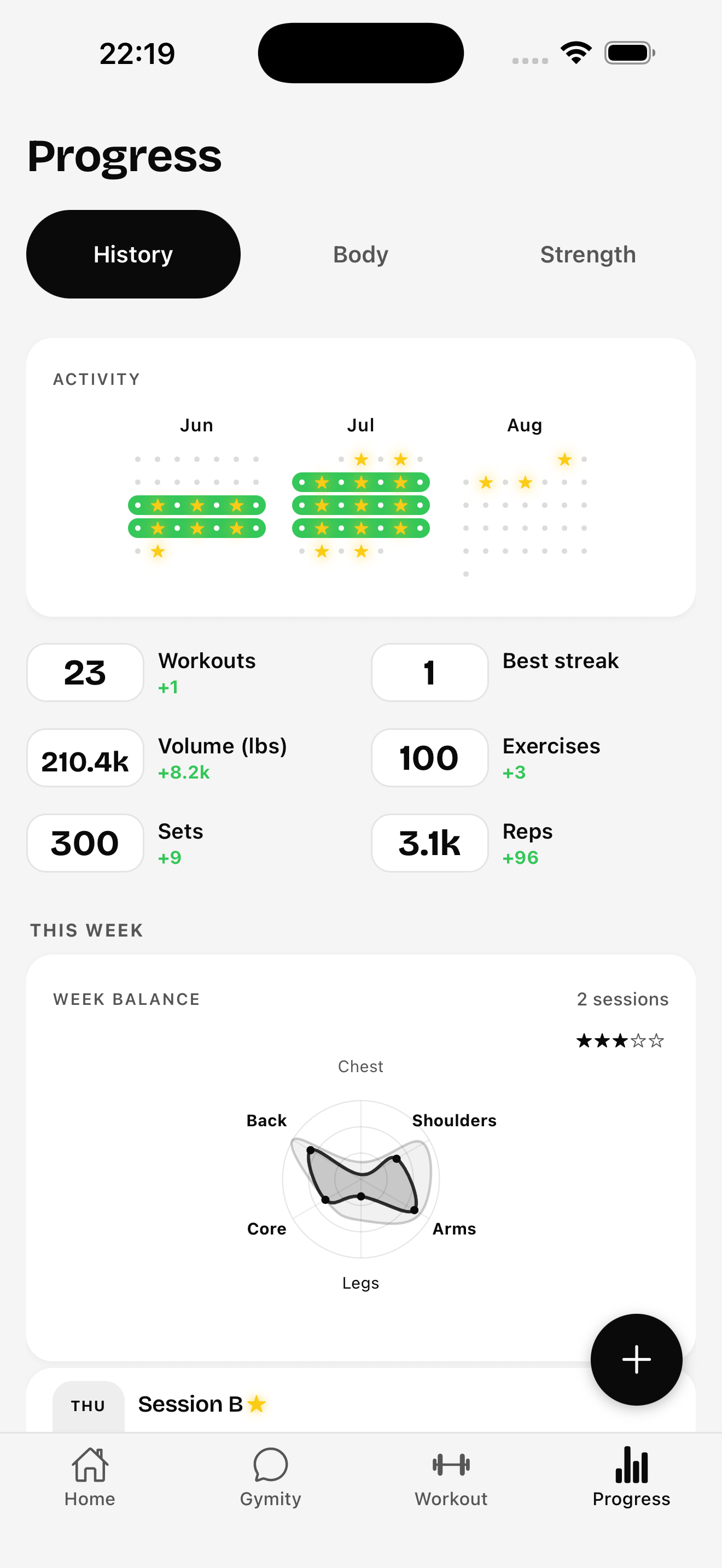
Understand and share progress. Afterward, per-exercise charts, weekly muscle views, body measurements, an eight-week consistency meter, and a weekly-goal streak make progress easier to understand. Progress photos can become post-workout share cards with real training numbers, or be used in the photo editor to make something more personal. Existing training history can be imported from supported CSV exports.
How we built it—and what we learned
I built the iOS and Android app with Expo and React Native, a FastAPI and Postgres backend, and RevenueCat for purchases. The server checks paid access for AI actions rather than trusting the phone's purchase state alone.
Earning trust. After launch, I learned that an AI plan has to earn trust. People reasonably questioned whether it understood what they expected a good plan to look like. That led to Talk it through and a question before saving a draft: “Does this look like what you expected?” The purpose is to find out where a plan misses the person's expectations, not assume that a convincing response is enough.
Minimal, not empty. Early screens also overwhelmed people with text. I worked toward a minimal design that still carries useful information: icons make actions easier to find; color communicates a state rather than decorating a screen; small animations guide attention, show movement, or celebrate progress. Making something both restrained and informative was harder than it looked.
Testing the coach. I audited generated plans after launch and found repetitive prescriptions that didn't respond well enough to different goals and experience levels. I added plan-quality checks and evaluation against the person's own request in version 1.1.1. We also changed single-exercise edits into targeted operations after seeing that rewriting a whole plan for one small change could accidentally lose other exercises.
Launch and business model
Without a paid-ad budget, I shared ChatGymity in relevant WhatsApp groups. Eighty-two people created accounts in launch week; as of September 18, there are 114. Their early use helped shape the guided interview and the clearer design.
New accounts start with three free AI messages. A monthly or annual subscription unlocks ongoing AI coaching and unlimited cloud backup for progress photos. Before subscribing, people can earn extra AI messages by inviting friends; when a friend joins with their code, both receive six.
What's next
I'll keep learning from how people use their plans and workouts until recurring revenue can sustainably fund marketing. My next product goal is a smartwatch companion that makes logging sets and following a workout less disruptive—people shouldn't have to keep reaching for their phone mid-session.
With users' permission, I want to explore whether watch sensor data can add useful context to training. It could make celebration cards richer and give Gymity more to consider when answering questions about a workout. I'll test whether that context actually improves the advice before making that claim. The watch app and sensor integration are future work, not features in today's release.
Built With
- asyncpg
- digitalocean
- docker
- eas
- expo-notifications
- expo.io
- fastapi
- firebase-cloud-messaging
- gemini
- next.js
- openai
- postgresql
- posthog
- pydantic
- python
- react-native
- react-native-skia
- revenuecat
- sentry
- server-sent-events
- supabase
- typescript
- vercel
- zustand

