Inspiration
People use AI conversations as an informal workspace for months. Over time, active projects become mixed with old versions, repeated decisions, forgotten tasks and unrelated questions. Existing chat lists show chronology, but they do not reconstruct the current operational state of a project.
What it does
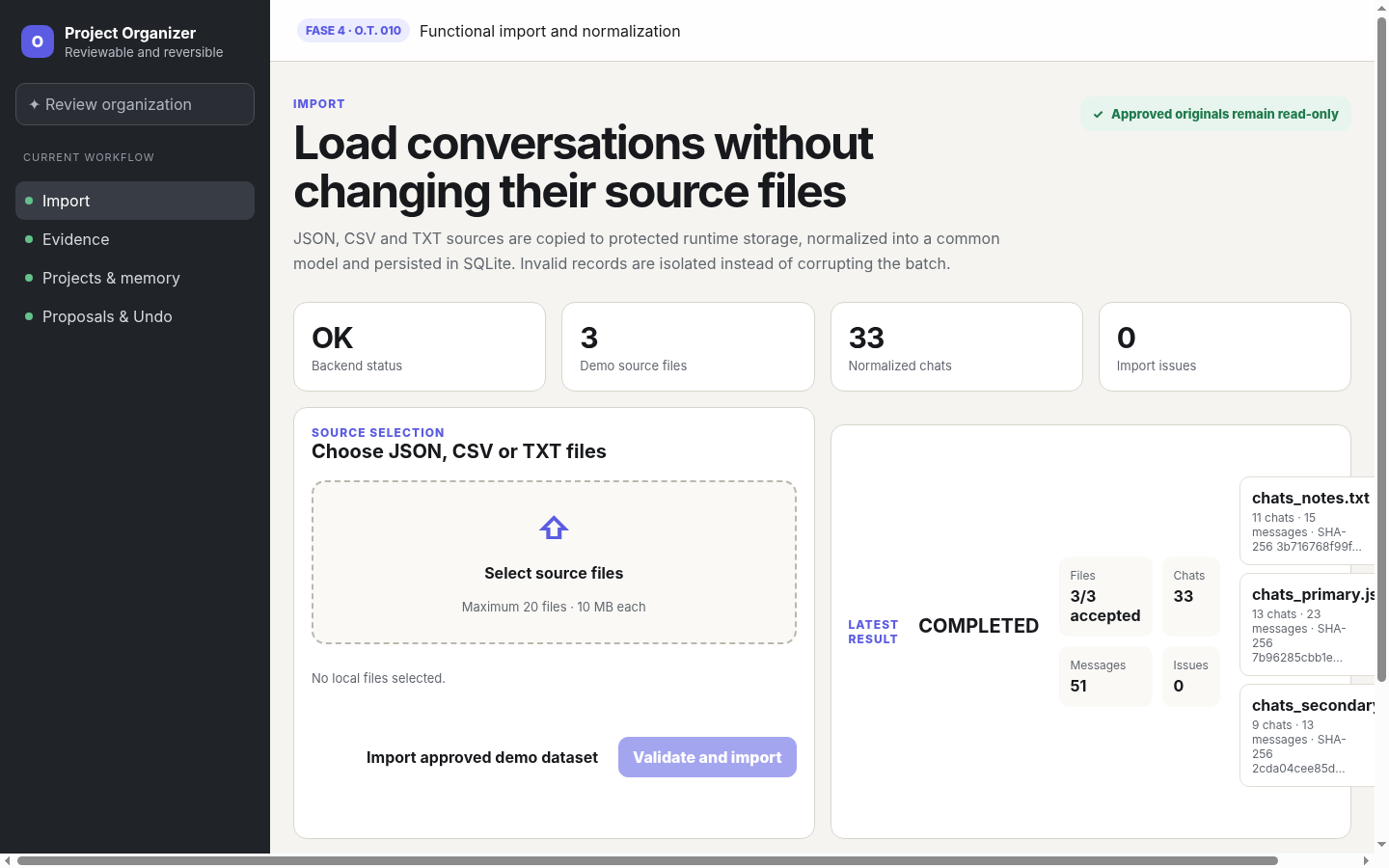
ChatGPT Project Organizer imports JSON, CSV and TXT conversation exports, preserves protected source copies, normalizes chats and messages, extracts deterministic evidence, and uses GPT-5.6 to reconstruct projects and operational memory.
It identifies current and obsolete versions, approved and superseded decisions, pending tasks, project states, duplicates and ambiguous memberships.
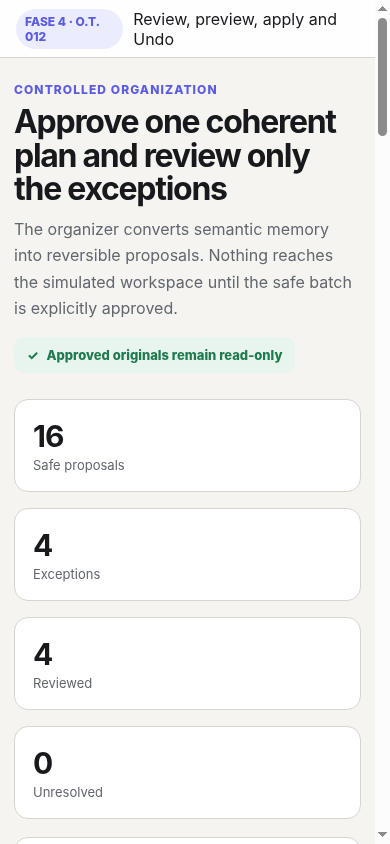
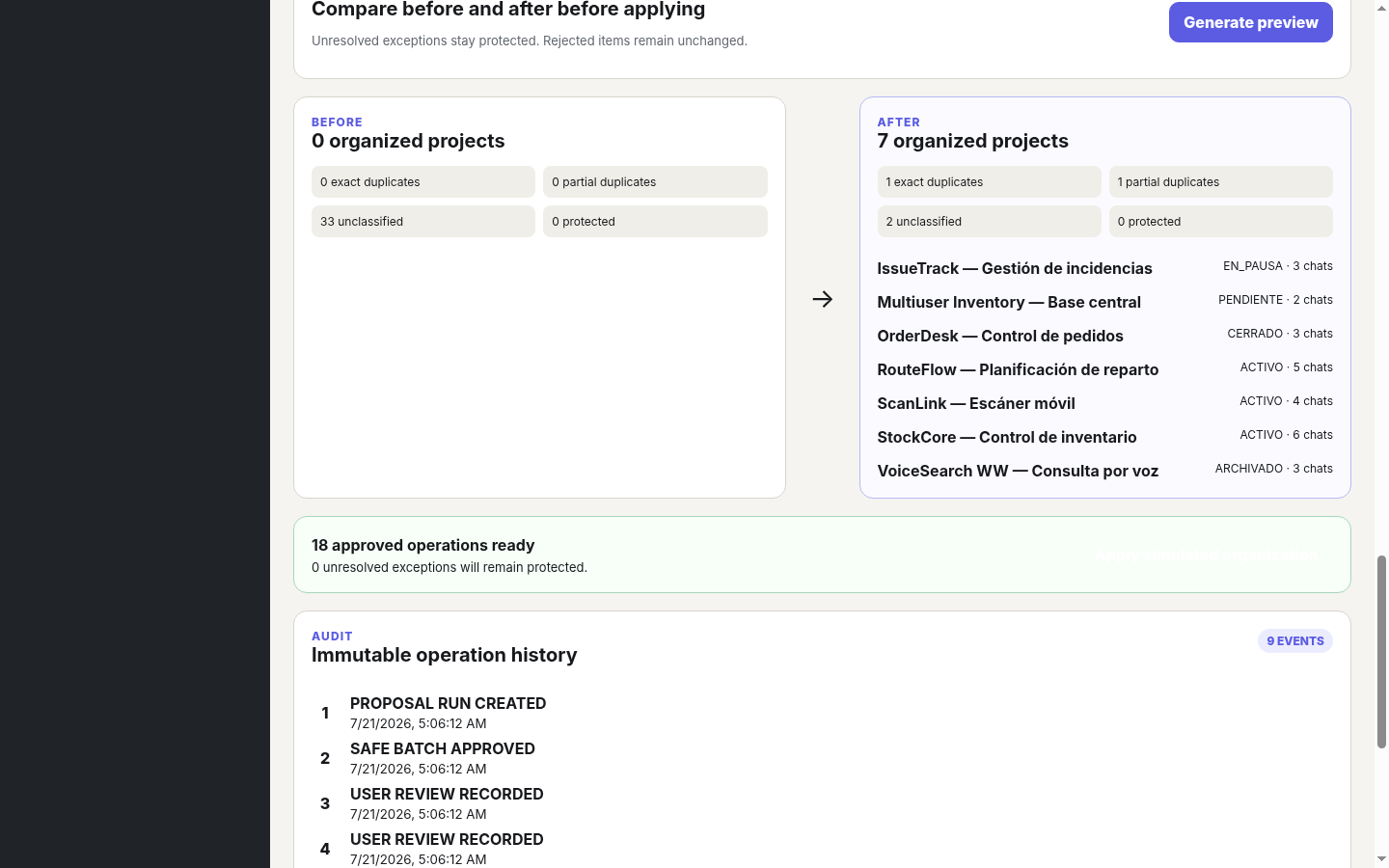
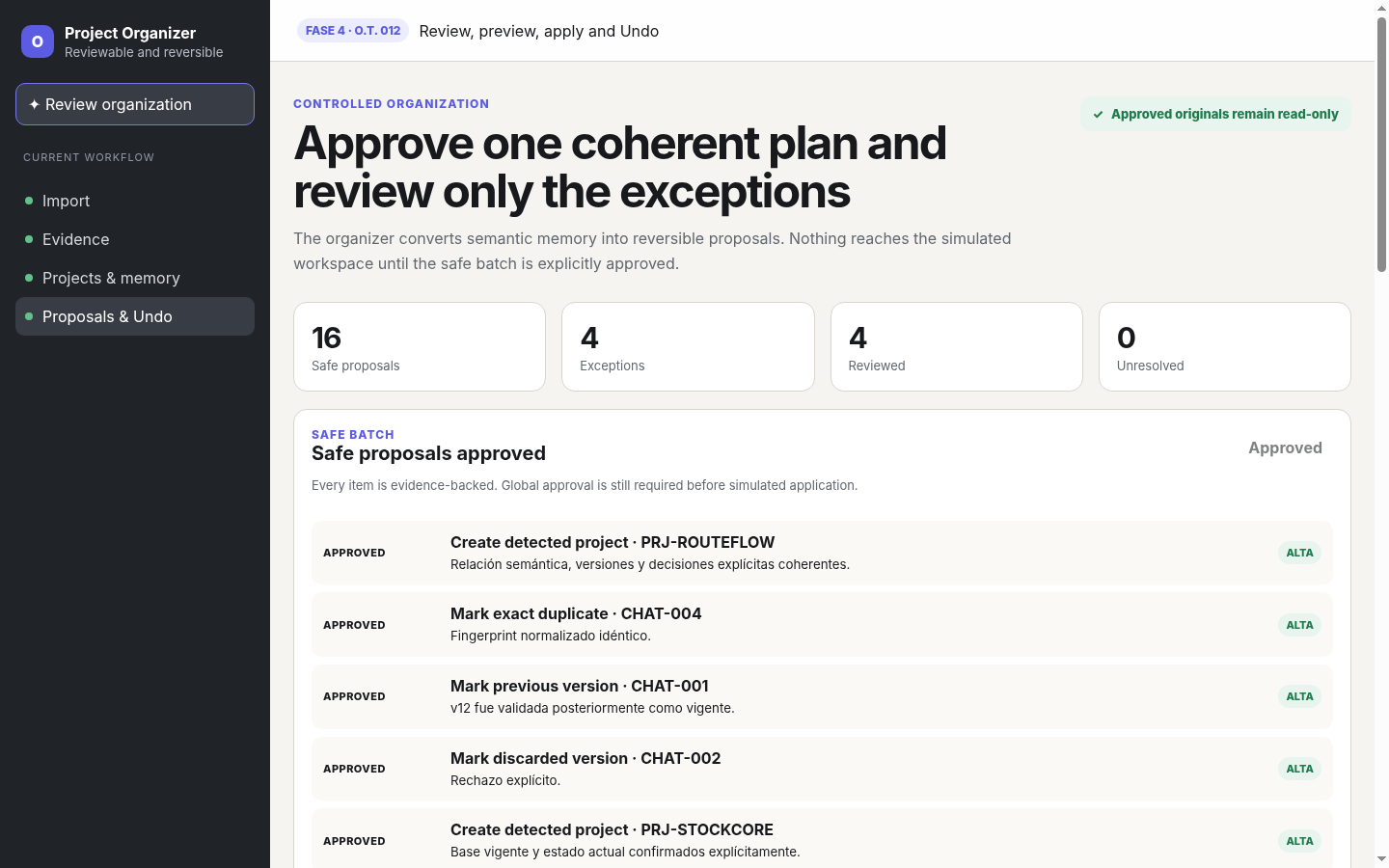
Instead of asking the user to organize every chat manually, it generates one global proposal. Safe operations can be approved as a batch. Only exceptions require individual correction or rejection.
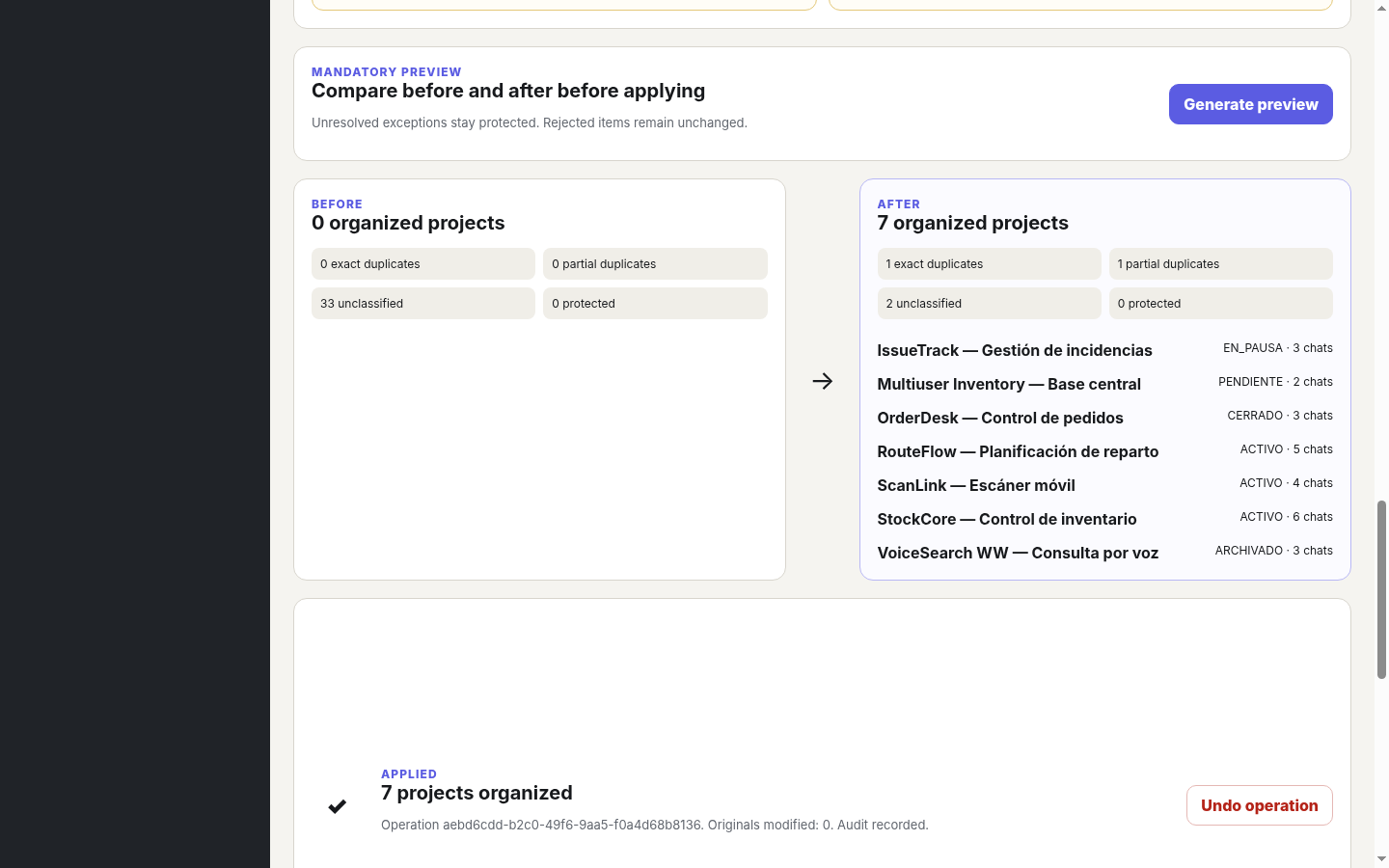
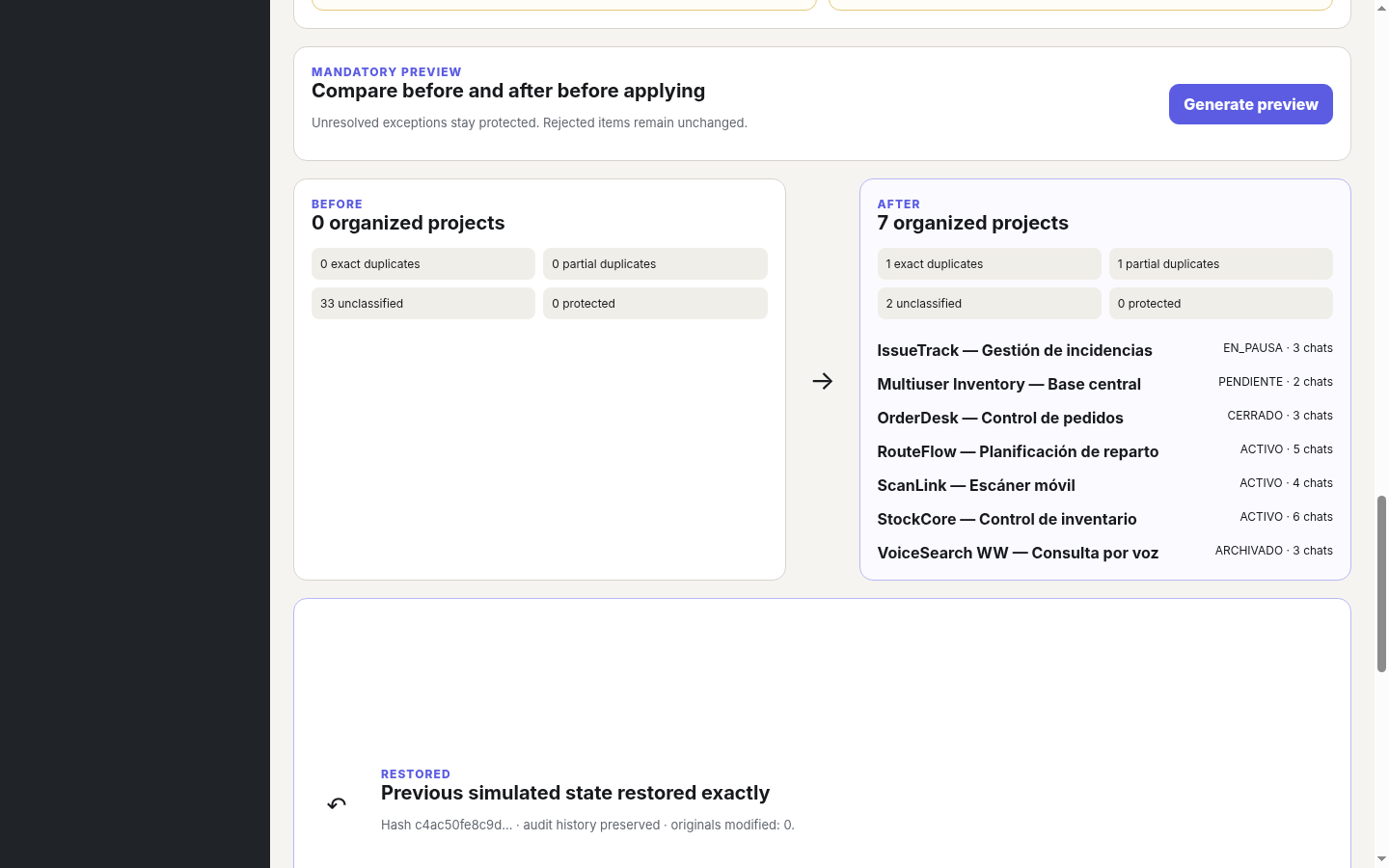
A mandatory preview shows the simulated before-and-after state. Authorized operations are applied only to a derived workspace, every action is recorded in an audit trail, and the complete state can be restored with exact Undo. Original conversations are never modified.
How we built it
The frontend uses React, TypeScript and Vite. The backend uses FastAPI, Pydantic, SQLAlchemy and SQLite.
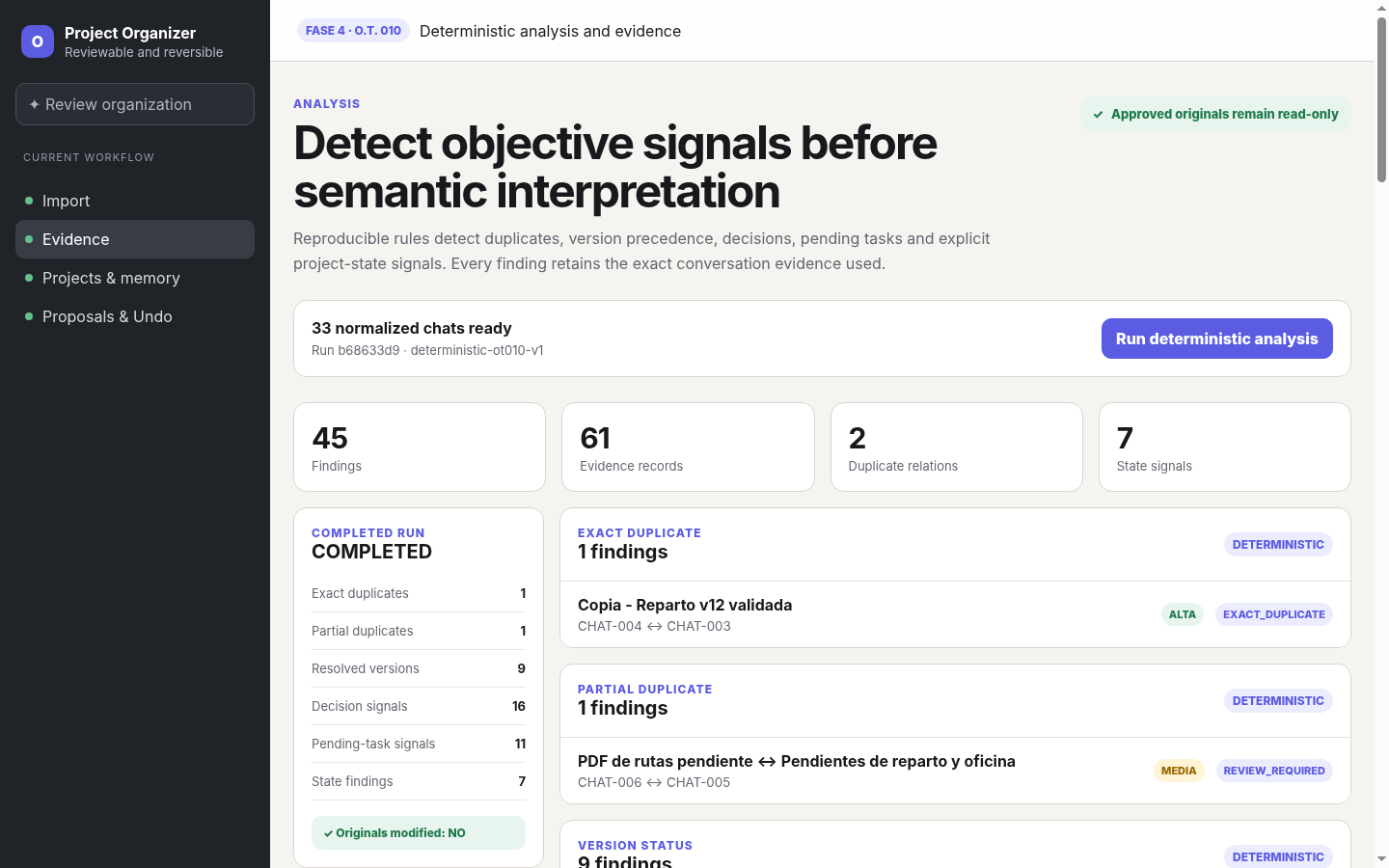
Deterministic services manage import integrity, chronology, duplicate detection, evidence, state hashing, simulated apply and Undo.
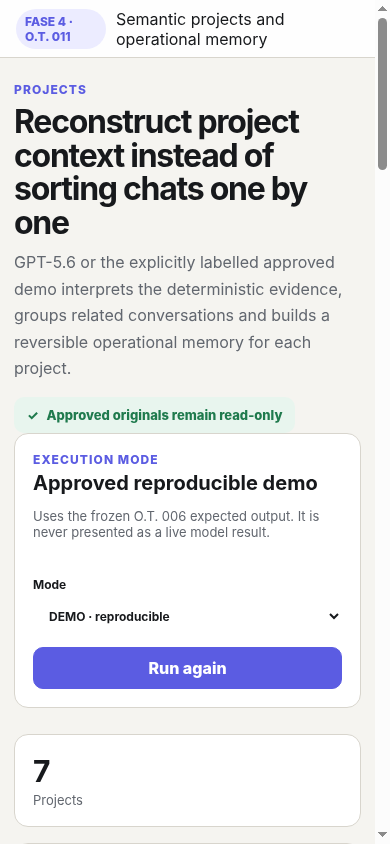
GPT-5.6 is integrated through the OpenAI Responses API using responses.parse and Pydantic Structured Outputs for semantic project reconstruction.
The demonstration also includes a clearly labelled precomputed mode for reliable evaluation without external services. LIVE mode becomes available when an OpenAI API key is configured securely on the backend.
How Codex was used
Codex served as the primary engineering agent throughout the project.
It accelerated the monorepo foundation, API contracts, React interface, import adapters, deterministic evidence engine, GPT-5.6 integration, reversible workflow, automated tests, clean-install validation and final documentation.
Human decisions controlled the product scope, immutable-originals rule, evidence precedence, review-by-exception workflow and approval gates.
How GPT-5.6 was used
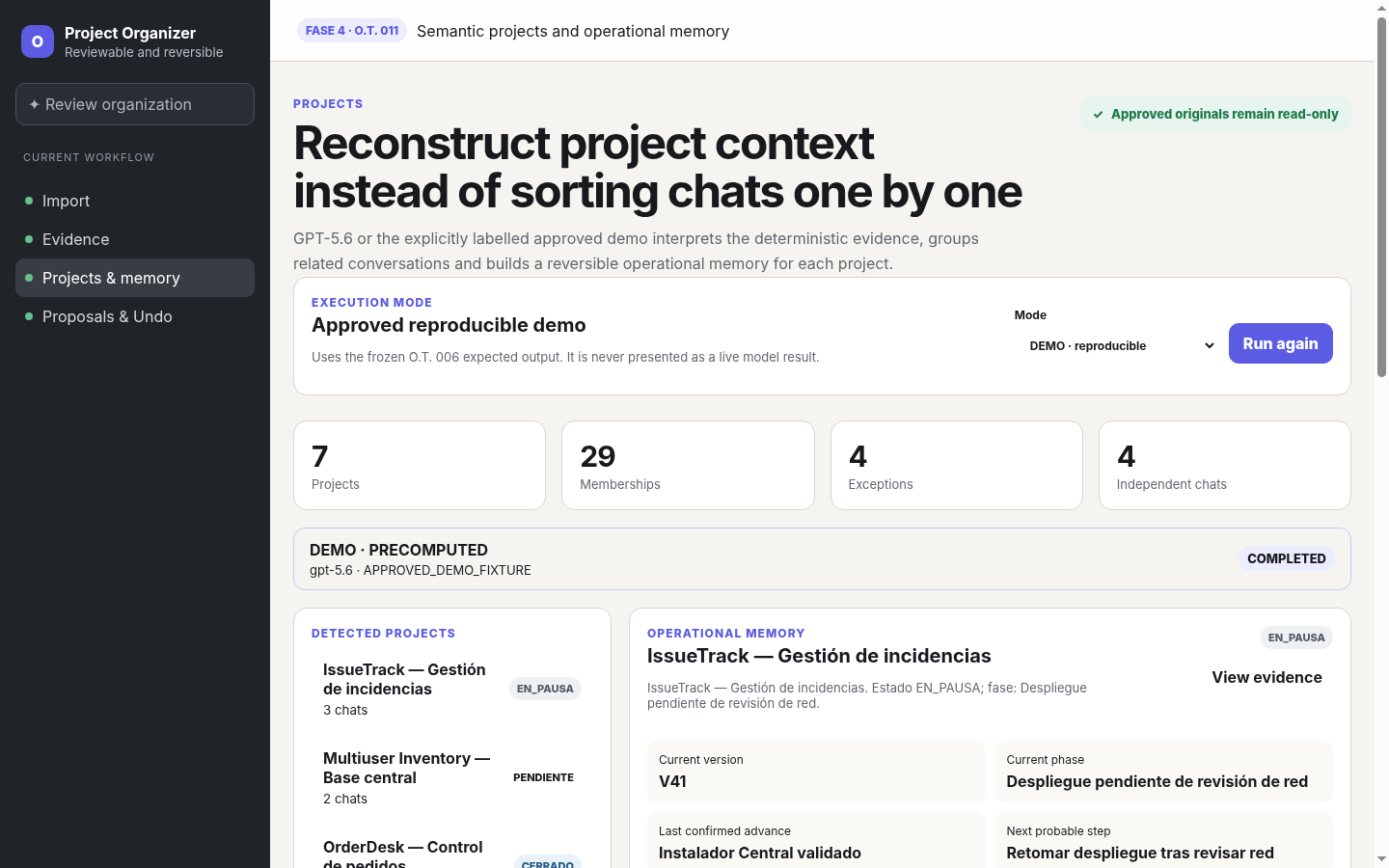
GPT-5.6 reconstructs semantic project identity and operational memory from normalized conversations combined with deterministic evidence.
It returns projects, states, versions, decisions, tasks, blockers, memberships and exceptions through a strict Structured Output contract.
GPT-5.6 cannot directly modify the workspace. Deterministic application code validates its output and exclusively controls proposals, review, apply, audit and Undo.
Challenges we ran into
The main challenge was combining semantic interpretation with deterministic safety.
A language model can understand context, but project organization must remain reproducible, auditable and reversible.
We solved this by separating six layers:
- Immutable source conversations.
- Normalized conversation data.
- Deterministic findings and evidence.
- Semantic project memory.
- Reviewable organization proposals.
- Simulated state, audit snapshots and exact Undo.
Accomplishments that we're proud of
- A complete end-to-end workflow.
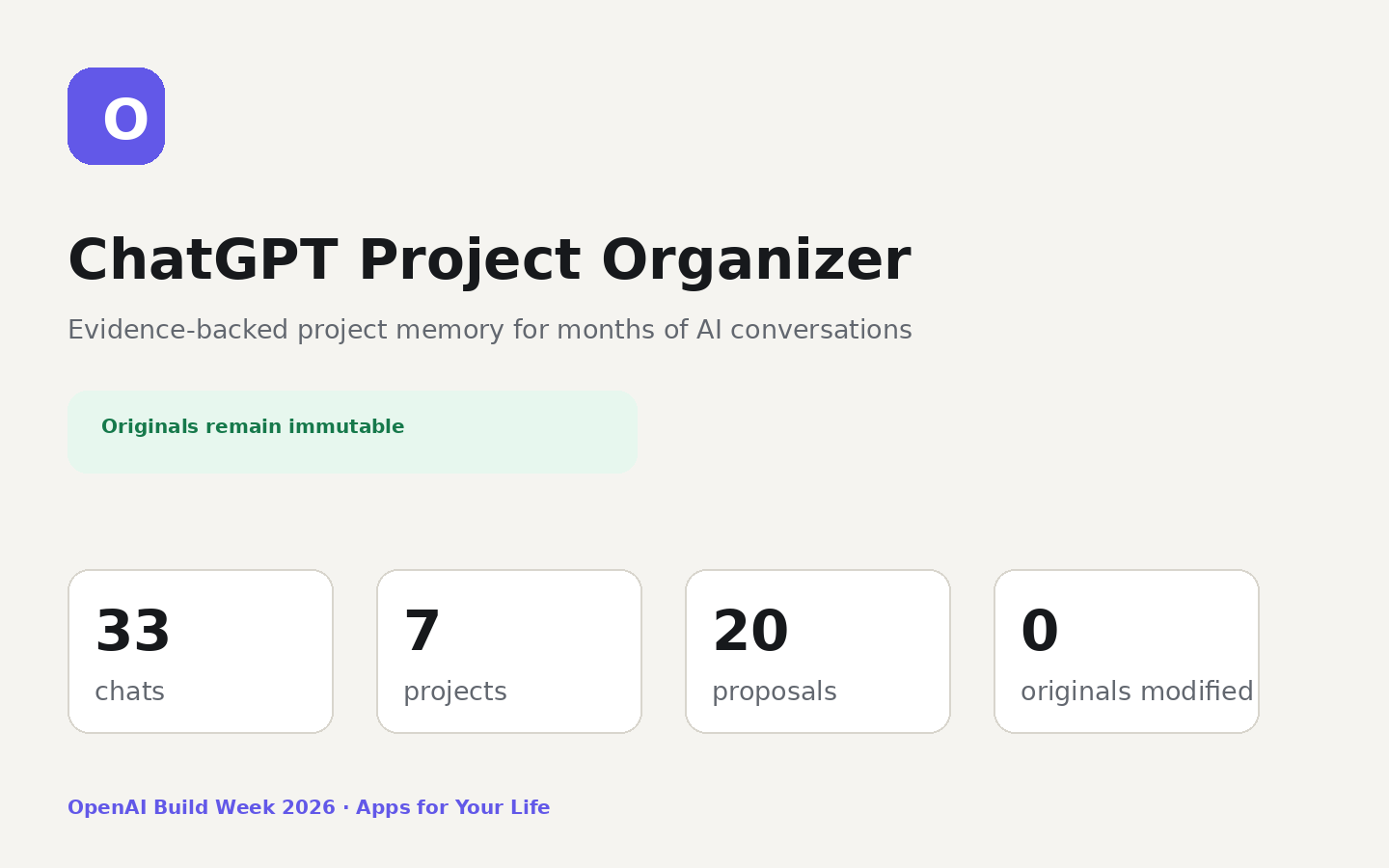
- A 33-chat anonymized canonical dataset with expected results.
- 45 deterministic findings and 61 evidence records.
- 7 reconstructed projects and 29 project memberships.
- 20 organization proposals using review by exception.
- Exact Undo verified through matching SHA-256 state hashes.
- 63 backend and contract tests.
- 4 frontend tests.
- 50 integrated acceptance cases.
- Successful clean installation from the final ZIP.
- Zero production npm vulnerabilities.
- Original conversations modified: zero.
What we learned
AI organization is most useful when it reduces manual review without removing human authority.
The strongest design was not automatic reorganization. It was automatic interpretation combined with explicit approval, visible evidence, mandatory preview, complete auditing and reversibility.
What's next
Future development could include:
- Direct user-authorized conversation connectors.
- Incremental analysis of new conversations.
- Richer project timelines.
- Collaborative review.
- Confidence calibration.
- Optional native integration with conversation platforms.
Built With
- codex
- fastapi
- gpt-5.6
- openai
- pydantic
- python
- react
- sqlalchemy
- sqlite
- typescript
- vite

Log in or sign up for Devpost to join the conversation.