-
-
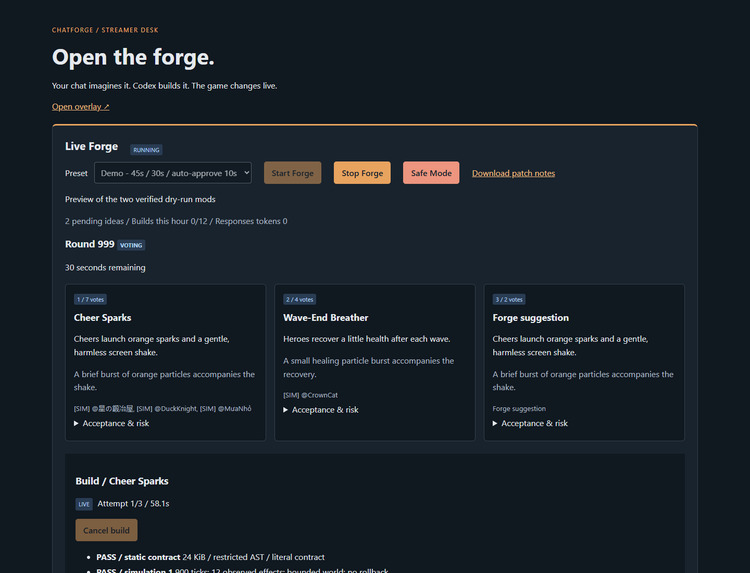
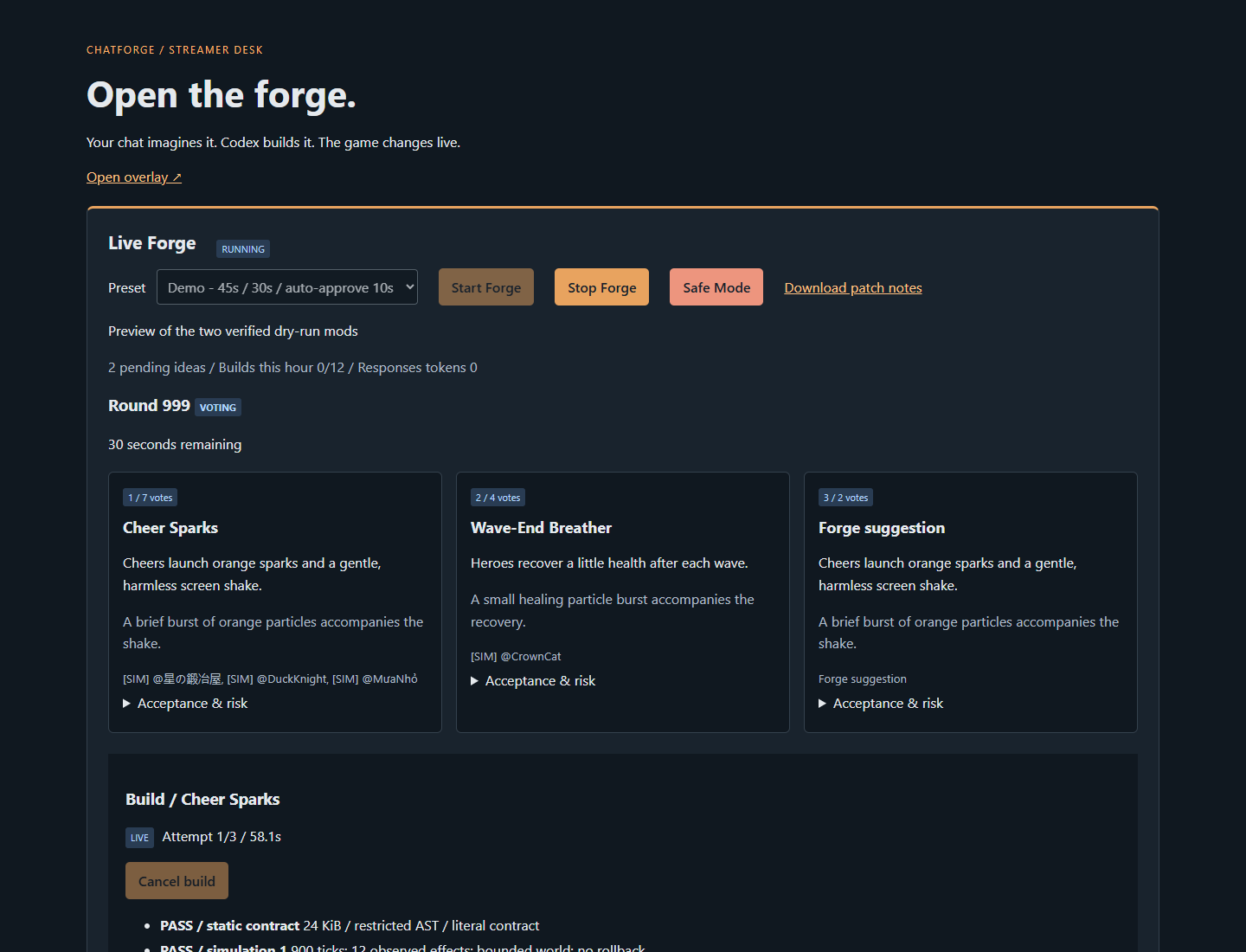
Streamer dashboard: approve, veto, roll back and control the forge
-
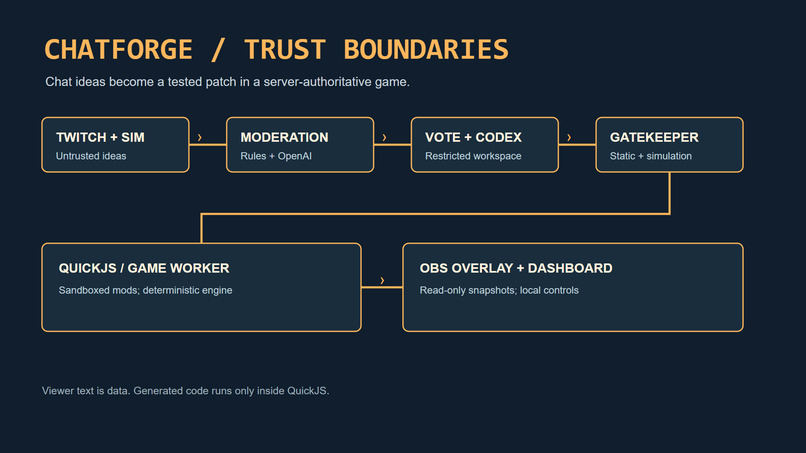
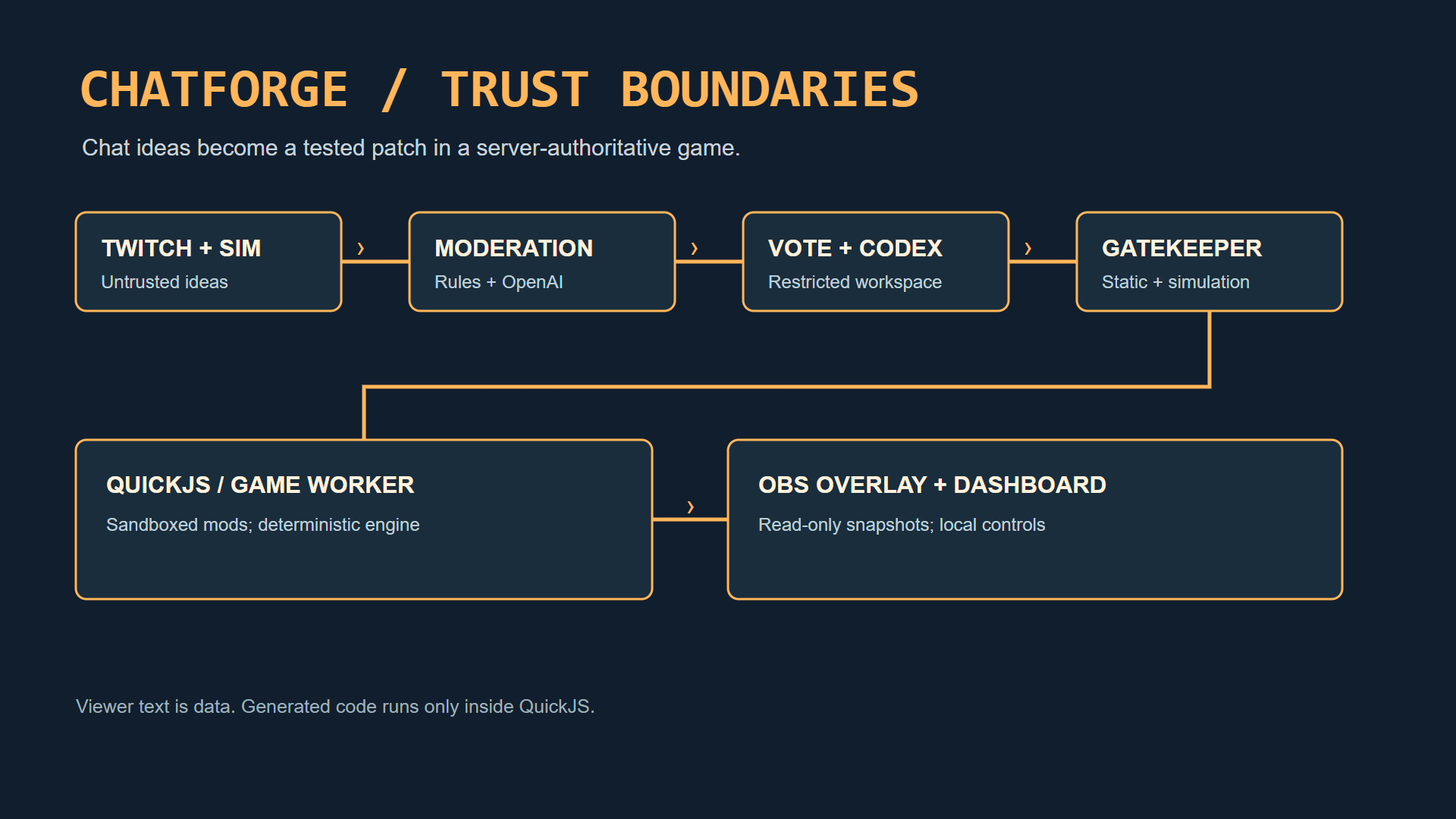
Architecture and trust boundaries: chat → moderation → Codex Builder → Gatekeeper → QuickJS sandbox
-
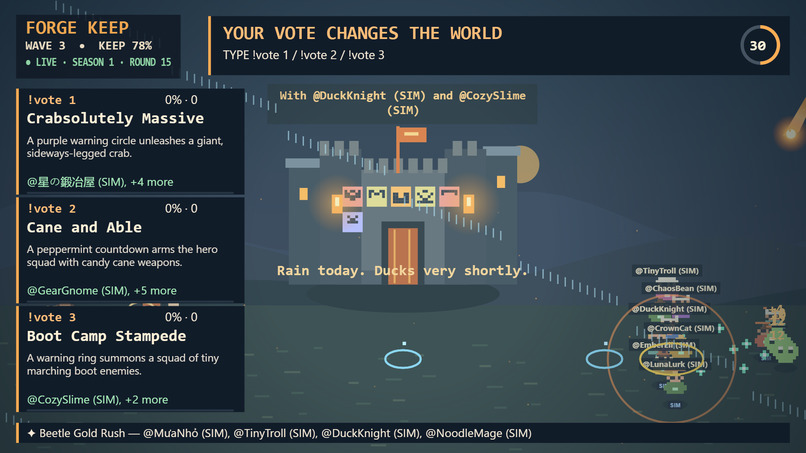
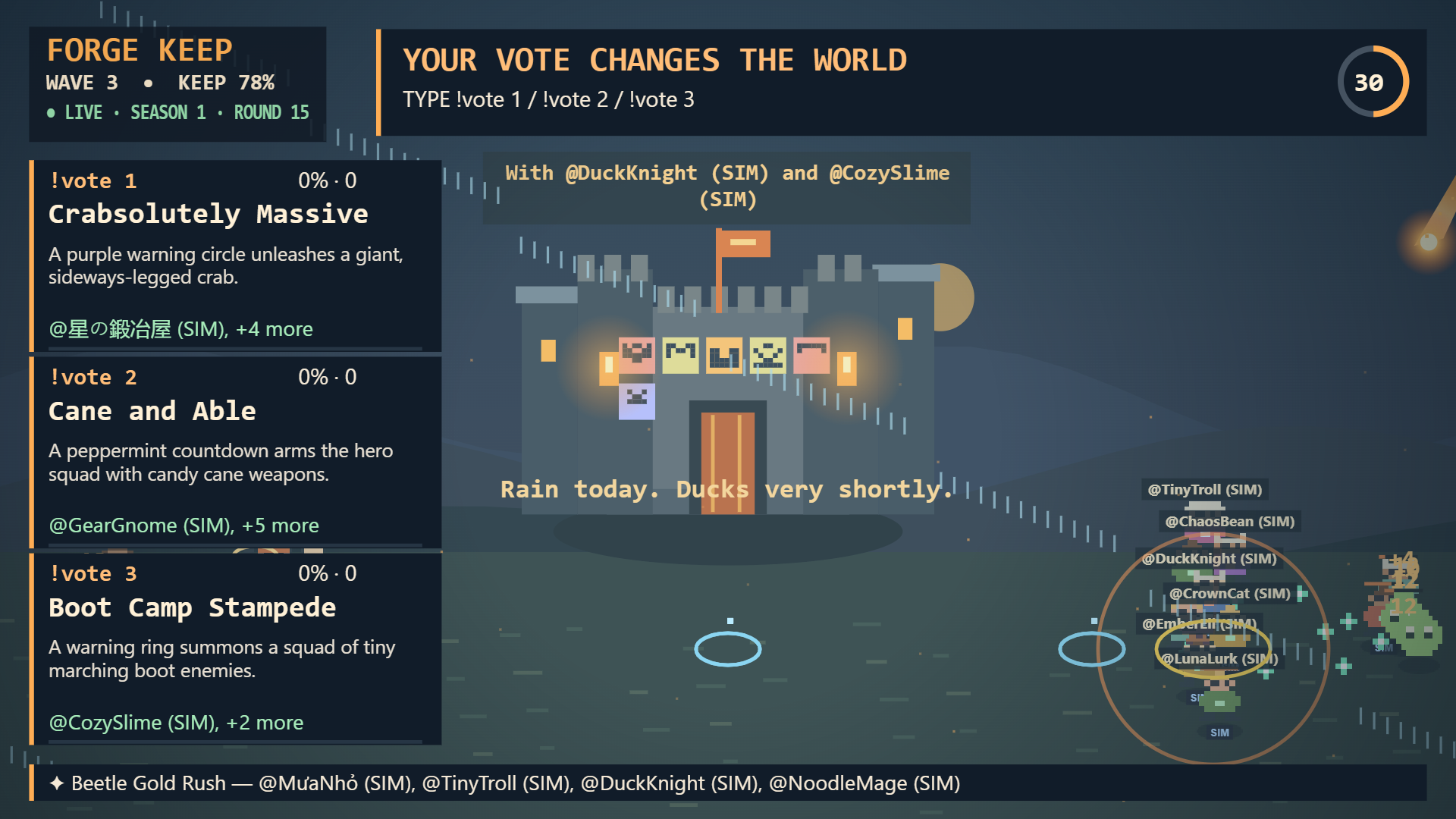
Chat votes on three Producer cards built from viewer ideas
-
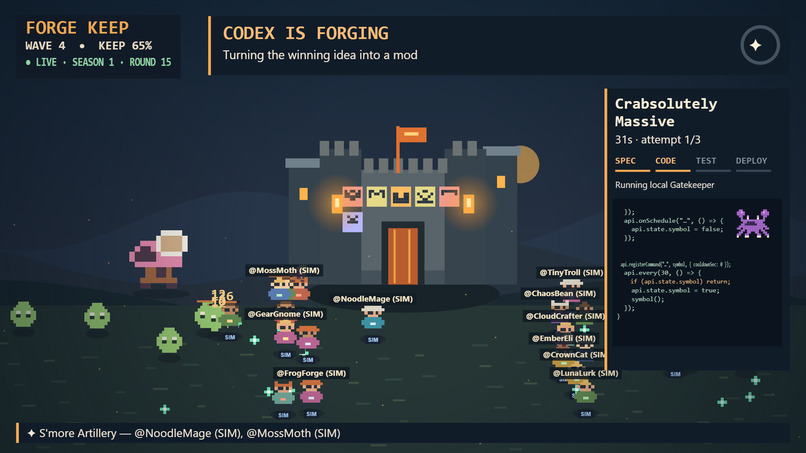
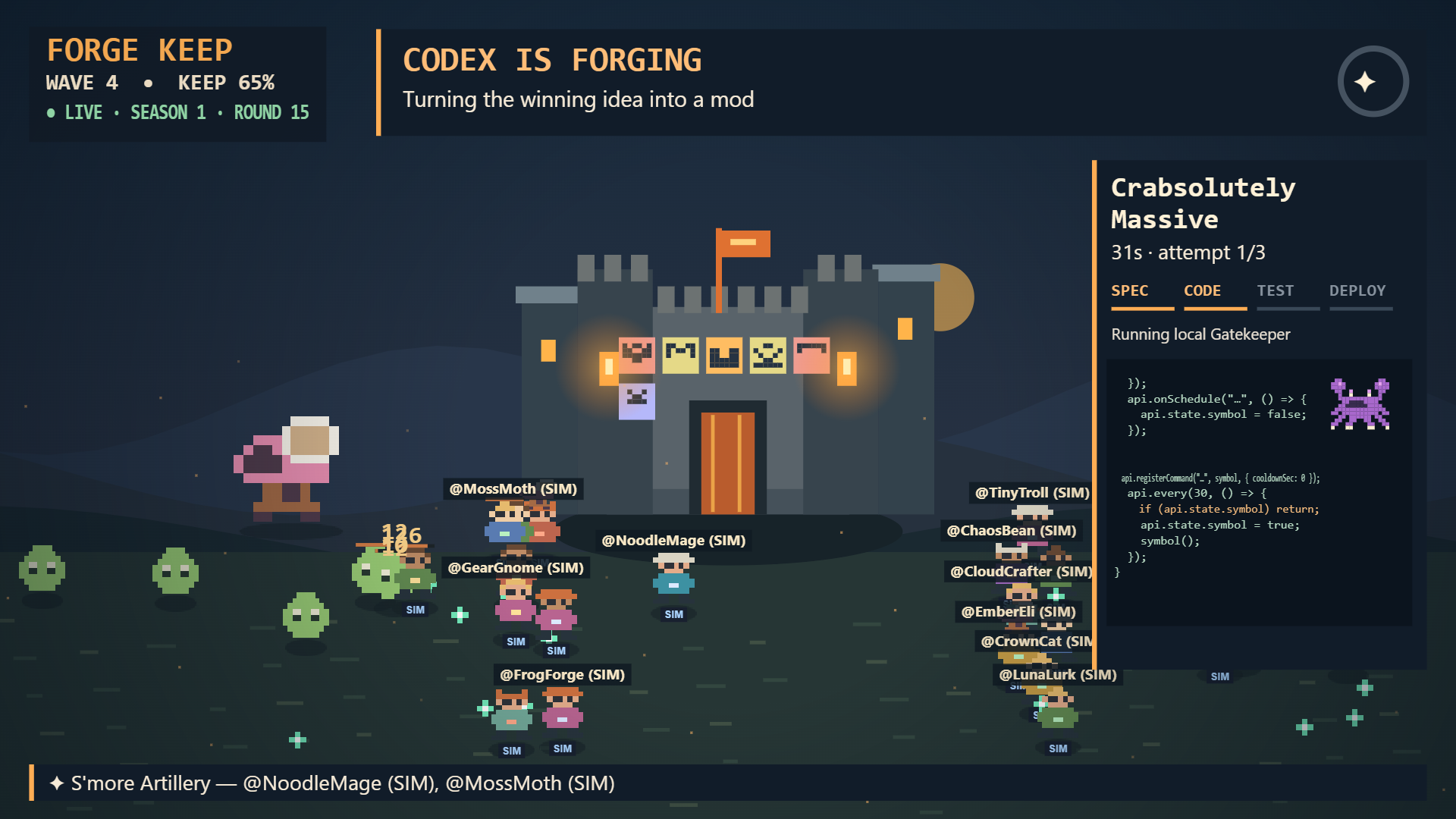
Codex SDK writes the mod live: sanitized code tail and sprite preview on the HUD
-
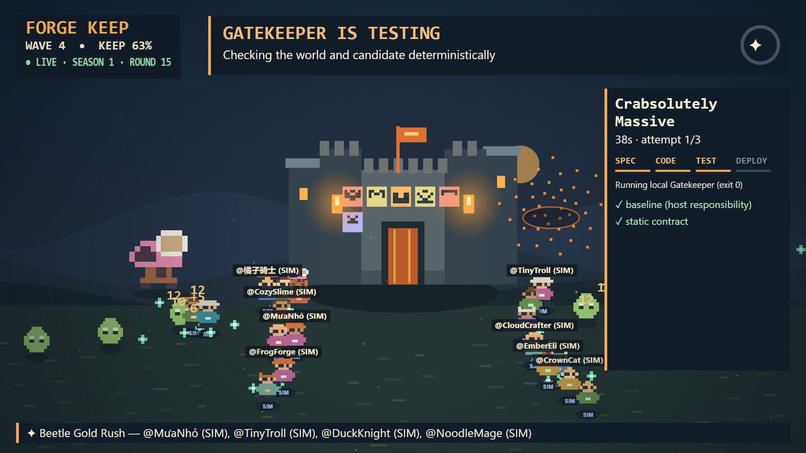
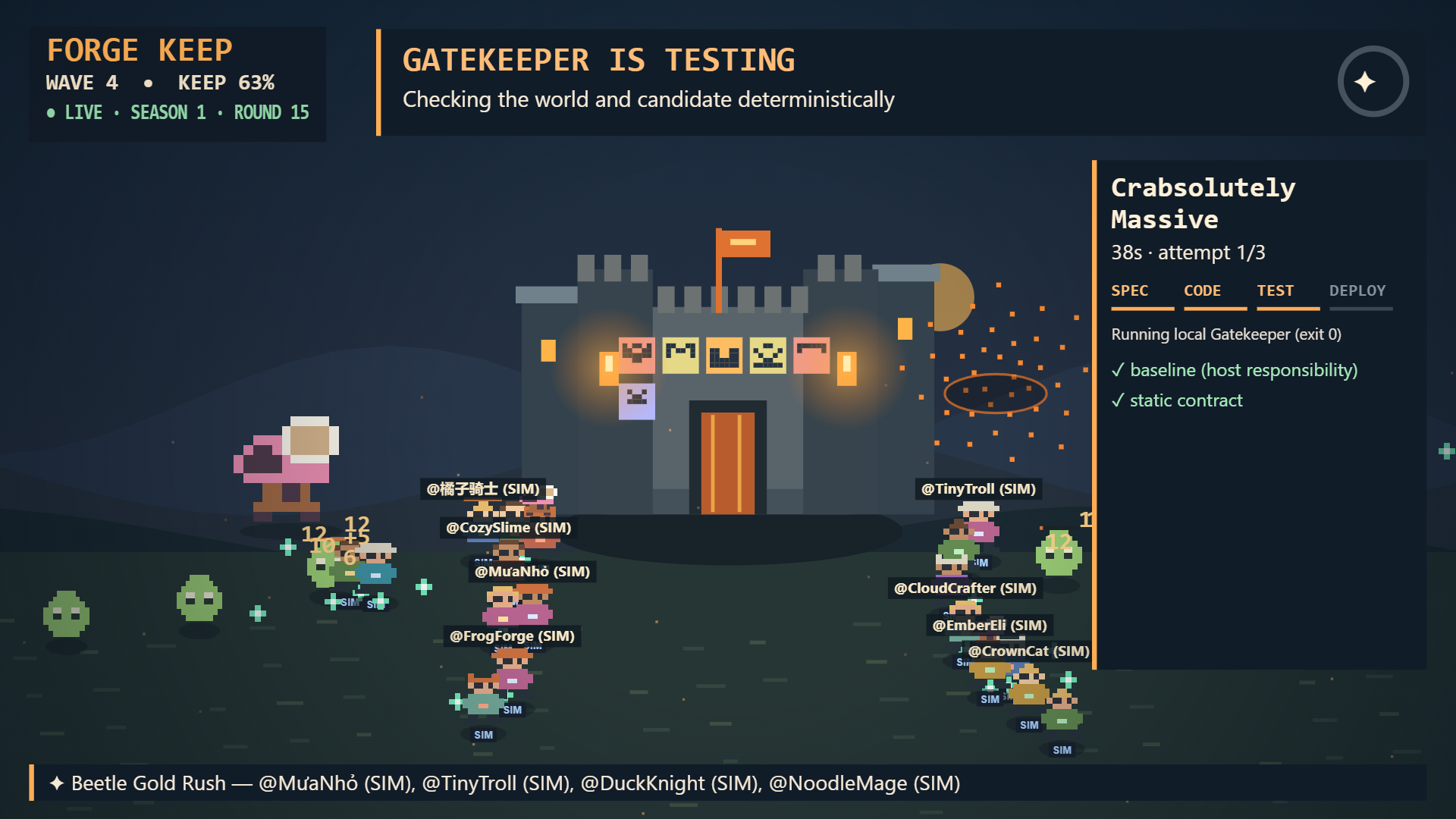
Gatekeeper: static checks, two 900-tick simulations, determinism and spectacle score
-
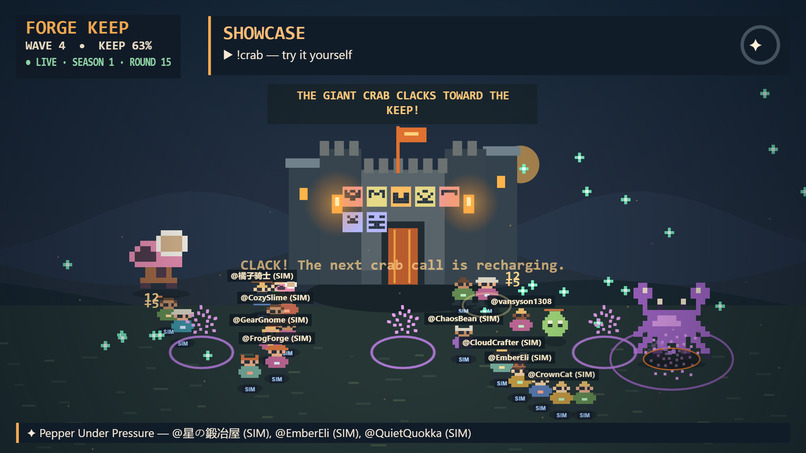
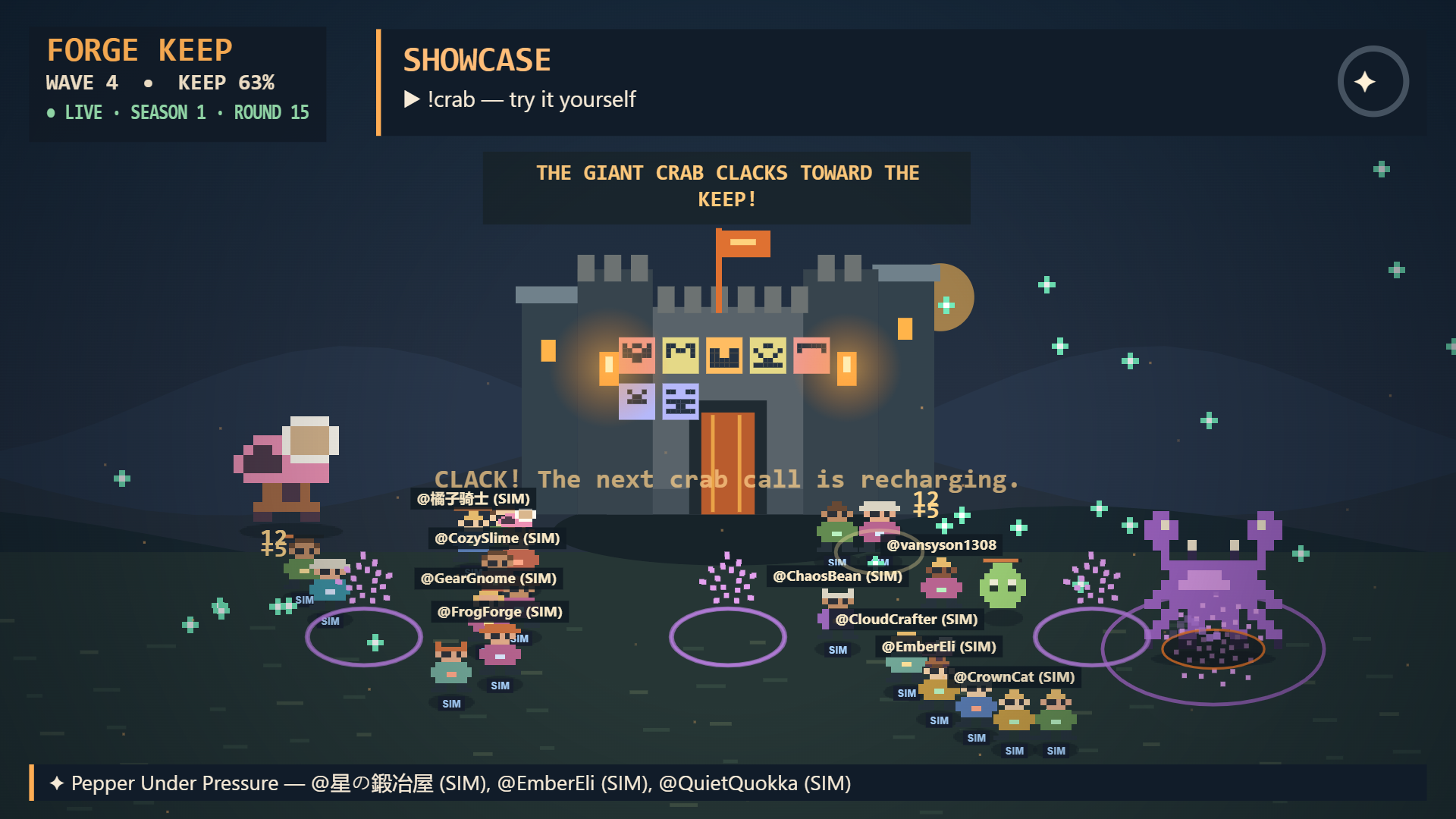
Showcase: the shipped mod runs in Forge Keep, credited to its viewer
Inspiration
A livestream is usually a finished game with a chat beside it. We wanted a small community to change the game together while everyone watches the result appear.
What it does
ChatForge turns Twitch chat into the game's dev team:
- Viewers pitch features with
!idea. An AI Producer turns the best ideas into three cards, and chat votes with!vote. - The winning idea becomes a real mod written live by the Codex SDK.
- A deterministic Gatekeeper tests the mod before it can join the running Forge Keep game.
- The overlay shows the build as it happens, credits the viewer who pitched the idea, and showcases the result. Chat can then trigger the new feature with its own command.
- Unsafe ideas are refused by local rules and OpenAI moderation before they reach the broadcast.
- The keep and patch history persist between streams. If a mod fails live, the game rolls back to the last good checkpoint.
How we used Codex
- Codex built ChatForge. Codex built the project from an empty folder in one main thread, guided by the lead prompts preserved in
brief/prompts/. The build log is indocs/CODEX_JOURNEY.md. - Codex is the live Builder. Inside the product, a separate Codex SDK Builder writes each winning idea as a single-file mod in a restricted workspace. It works against a typed mod API, and failures are repaired automatically within a retry budget. The overlay shows a sanitized tail of the code and a sprite preview while Codex works.
- The final fixes and the video edit were finished outside Codex after the plan's Codex allowance ran out. These are documented in the journey log.
How we built it
- A Node server receives Twitch EventSub events, runs the round state machine, and owns SQLite persistence.
- A worker thread runs the deterministic game. Mods run only inside QuickJS and talk to the game through a command buffer.
- The Gatekeeper runs static checks, two 900-tick simulations, a determinism hash and a spectacle score.
- A Canvas overlay renders snapshots, and a React dashboard gives the streamer control.
Challenges we ran into
- Keeping untrusted input away from the host. Chat text and generated code must never reach host execution, so ideas pass rules and moderation and code passes static and simulation checks.
- Rollback without losing the world. We had to preserve world state when a live mod is rolled back.
- Making the build watchable. A 45–60 second build needed to be interesting on stream.
- Fixes found on real streams:
- A mod could consume its own cooldown when deployed.
- Real viewer ideas could lose to the simulated crowd.
- A failed curation could stall a round.
Accomplishments we're proud of
- A 45-minute SIM-only soak shipped 21 of 21 real builds.
- A Twitch + SIM run shipped 3 of 3 on the first attempt, with a 40.3 s median build.
- In the final demo take, a real Twitch idea from @vansyson1308 became card one, won the chat vote, and shipped as Keep Calm and Roar, credited to that account.
- 249 automated tests pass. A live moderation regression check matched all 26 expected decisions.
These are measured runs, not claims that every generated mod will pass.
What we learned
The on-stream moment matters as much as the compiler result. We also learned to:
- label simulated contributors clearly,
- fail closed when moderation is unavailable,
- report real test limitations instead of presenting a staged result as live.
What's next for ChatForge
Broader accessibility and mod-authoring tools, plus better admission checks and observability based on real streams.
Run it yourself: see the README in https://github.com/vansyson1308/chatforge. Viewers tagged (SIM) are a labelled simulated crowd; @vansyson1308 is a real Twitch account.

Log in or sign up for Devpost to join the conversation.