-
-
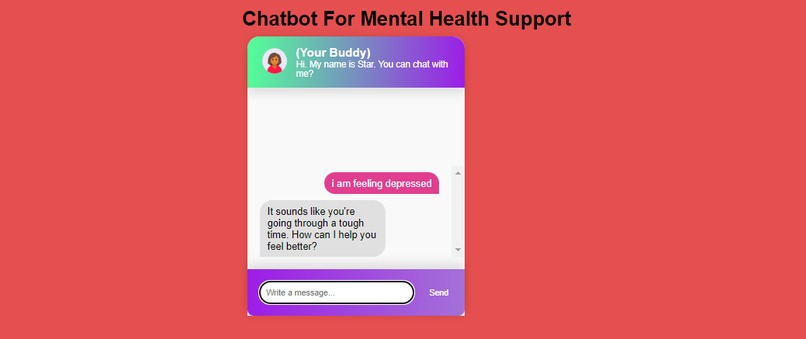
UI Design

Inspiration
As a student of computer science and machine learning, I was inspired to use my skills to make a positive impact on mental health. I decided to build a chatbot that could provide information and support to those struggling with mental health conditions.
What it does
it does gathered a dataset of mental health-related information, including common conditions, treatments, and resources. I then used this dataset to train a natural language processing (NLP) model, which would allow the chatbot to understand and respond to user inputs. I chose to use a pre-trained language model such as GPT-3 and fine-tuned it on my dataset to improve its performance.
How we built it
I integrated the NLP model with a chatbot platform such as Dialogflow or Botkit, to handle user inputs and generate responses. I also incorporated machine learning (ML) techniques, such as sentiment analysis, to better understand the user's emotional state and provide more personalized support.
Challenges we ran into
One of the biggest challenges I faced was finding a way to clearly convey that the chatbot was not a substitute for professional medical advice and that users should seek professional help if they are in crisis. To address this, I included a disclaimer at the beginning of the chatbot's conversation and made sure to include resources for professional help throughout the chatbot's responses.
Accomplishments that we're proud of
Successfully gathered a comprehensive dataset of mental health-related information, including common conditions, treatments, and resources. Trained a natural language processing (NLP) model on the dataset, allowing the chatbot to understand and respond to user inputs effectively.
What we learned
Through building this chatbot, I learned about the importance of accessible mental health resources, the potential for chatbots to provide support in this area, and the challenges of developing a conversational AI. I hope that this chatbot can help those struggling with mental health conditions find the information and support they need.
What's next for Chatbot For Mental Health
There are several next steps that can be taken to further improve and expand the chatbot for mental health. Some potential ideas include:
Continuously updating and expanding the dataset to ensure that the chatbot has the most current and accurate information on mental health conditions, treatments, and resources. Incorporating more advanced machine learning techniques, such as deep learning, to improve the chatbot's ability to understand and respond to user inputs. Integrating the chatbot with other platforms, such as social media or messaging apps, to make it more accessible to a wider audience. Adding new features to the chatbot, such as a symptom checker or a journaling feature, to provide additional support and resources to users. Conducting user testing and gathering feedback to improve the chatbot's performance and user experience. Providing more resources for professional help, that are easily accessible for the users. Overall, there is a lot of potential for this chatbot to make a positive impact on mental health and there are many ways to continue to develop and improve it.


Log in or sign up for Devpost to join the conversation.