-
-
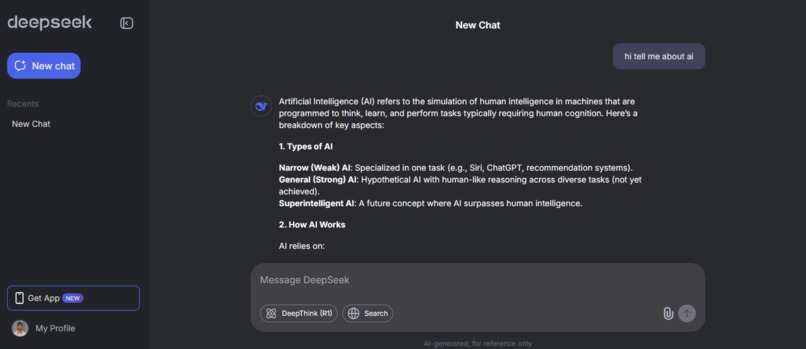
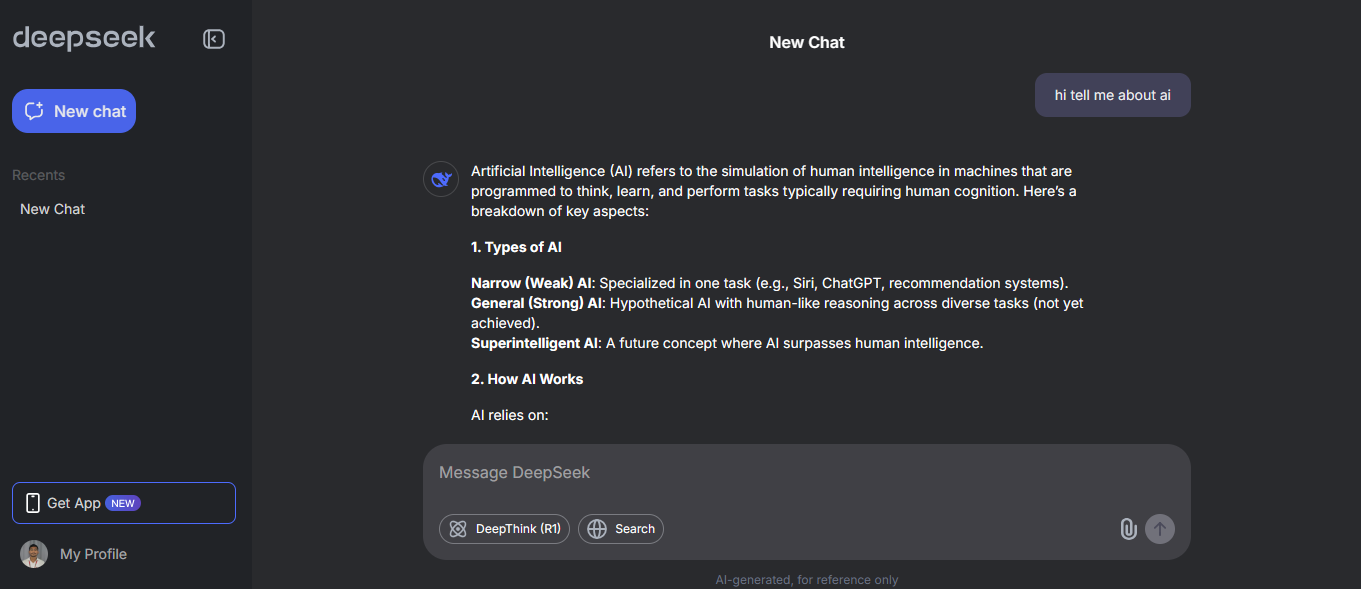
the interface of the project
Inspiration
About the Project: DeepSeek Clone
Inspiration
The inspiration for building a DeepSeek Clone stemmed from the growing demand for effective search engines in specialized domains. DeepSeek, as a search engine, serves a niche purpose by providing users with in-depth and accurate search results, much like how traditional search engines work but tailored for a more focused audience. As someone passionate about building tools that can make complex data easier to access, I decided to create a clone of DeepSeek, incorporating features that would enable users to find relevant, high-quality content based on their queries.
What I Learned
Throughout the development of this project, I learned and honed various skills:
- Web Scraping: Understanding how search engines gather and organize data was crucial, and I explored web scraping techniques to collect information from various sources.
- Search Algorithms: I gained insight into how search algorithms prioritize results and how to optimize content to deliver the most relevant answers to users.
- Backend Development: Using Flask for the backend, I learned how to create a search engine that handles user requests efficiently, communicates with the database, and retrieves the most relevant results.
- Frontend Design : I worked on creating a user-friendly interface that could handle search queries, display results, and allow users to interact with the system in a way that’s both simple and intuitive.
- Database Management: Building a database to store indexed data for fast retrieval and understanding how to structure it for efficient querying was a significant learning experience.
How I Built the Project
- Backend: I used Flask as the web framework for the backend. The backend handles user search requests, queries the database, and processes the information before returning it as search results.
- Search Algorithm: I implemented a basic ranking algorithm that ranks results based on their relevance to the user's query. I focused on keyword matching and scoring, considering factors like frequency and position of search terms.
- Web Scraping: I used BeautifulSoup and requests libraries to scrape data from various websites. This data was then indexed into the database to allow quick retrieval.
- Database: I used SQLite for local storage and indexing, ensuring that data could be efficiently searched using a combination of SQL queries and Python logic.
- Frontend: I built the user interface with HTML, CSS, and JavaScript, ensuring that users could type in queries, view results, and refine searches easily.
- Additional Features: I integrated search suggestions based on user input to help refine queries, similar to the autocomplete feature found in many modern search engines.
Challenges Faced
- Data Collection: One of the biggest challenges was scraping relevant and high-quality data. Many websites have anti-scraping measures, which made it difficult to retrieve accurate content consistently.
- Handling Large Data Sets: As the search engine grew, managing and processing large amounts of data became difficult. Optimizing database queries and ensuring fast retrieval without compromising accuracy was a major hurdle.
- Search Relevance: Ensuring that the results returned were actually relevant to the user’s query required refining the ranking algorithm. It was challenging to strike the right balance between speed and accuracy.
- Frontend-Backend Communication: Ensuring smooth communication between the frontend and backend while handling multiple search requests was tricky. I had to ensure that the search results were displayed efficiently without overloading the server.
- SEO and Indexing: Properly indexing and ranking content to ensure it was displayed in the right order required thorough testing. I had to fine-tune the scoring and ranking mechanisms to improve the relevance of results.
Future Enhancements
- Advanced Search Algorithms:I plan to improve the ranking algorithms by incorporating machine learning models to better understand user intent and rank search results more accurately.
- Web Scraping Improvements: I aim to implement more robust scraping methods to handle modern websites with dynamic content and anti-scraping measures, like JavaScript rendering.
- User Personalization: Adding user-specific search history and preferences to improve the accuracy of results based on previous searches.
- Mobile Optimization: Currently, the project is web-based, but I plan to optimize the user interface for mobile devices for better accessibility.
This project allowed me to delve deep into search engine architecture, web scraping, and data handling, providing me with practical knowledge that I can apply to future projects. It also highlighted the complexity of building efficient search engines and the importance of balancing usability, accuracy, and performance.
What it does
How we built it
Challenges we ran into
Accomplishments that we're proud of
What we learned
What's next for Chat Bot
Built With
- bootstrap-**platforms:**-local-development
- built-with**-**languages:**-python
- css
- google-custom-search-api-(optional)-**other-technologies:**-git-&-github
- heroku-(optional)-**cloud-services:**-none-(local-deployment)-**databases:**-sqlite
- html
- javascript-**frameworks:**-flask
- jinja
- requests
- sqlalchemy-**apis:**-beautifulsoup

Log in or sign up for Devpost to join the conversation.