-
-
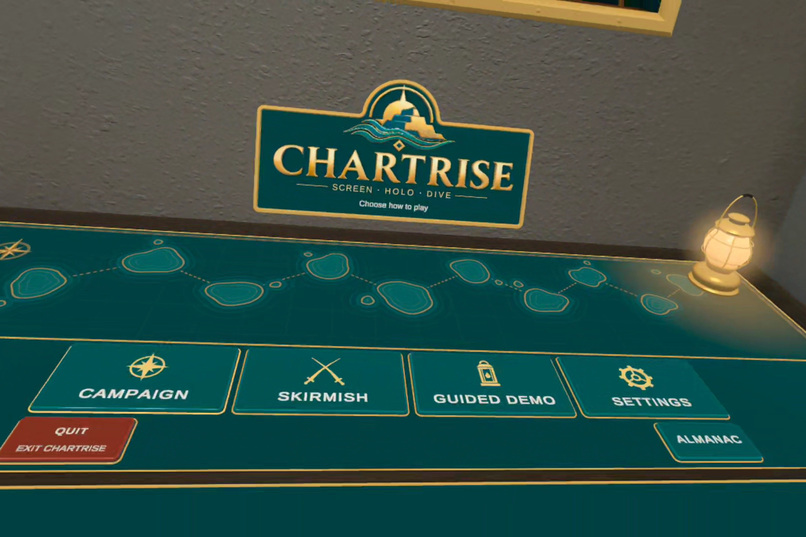
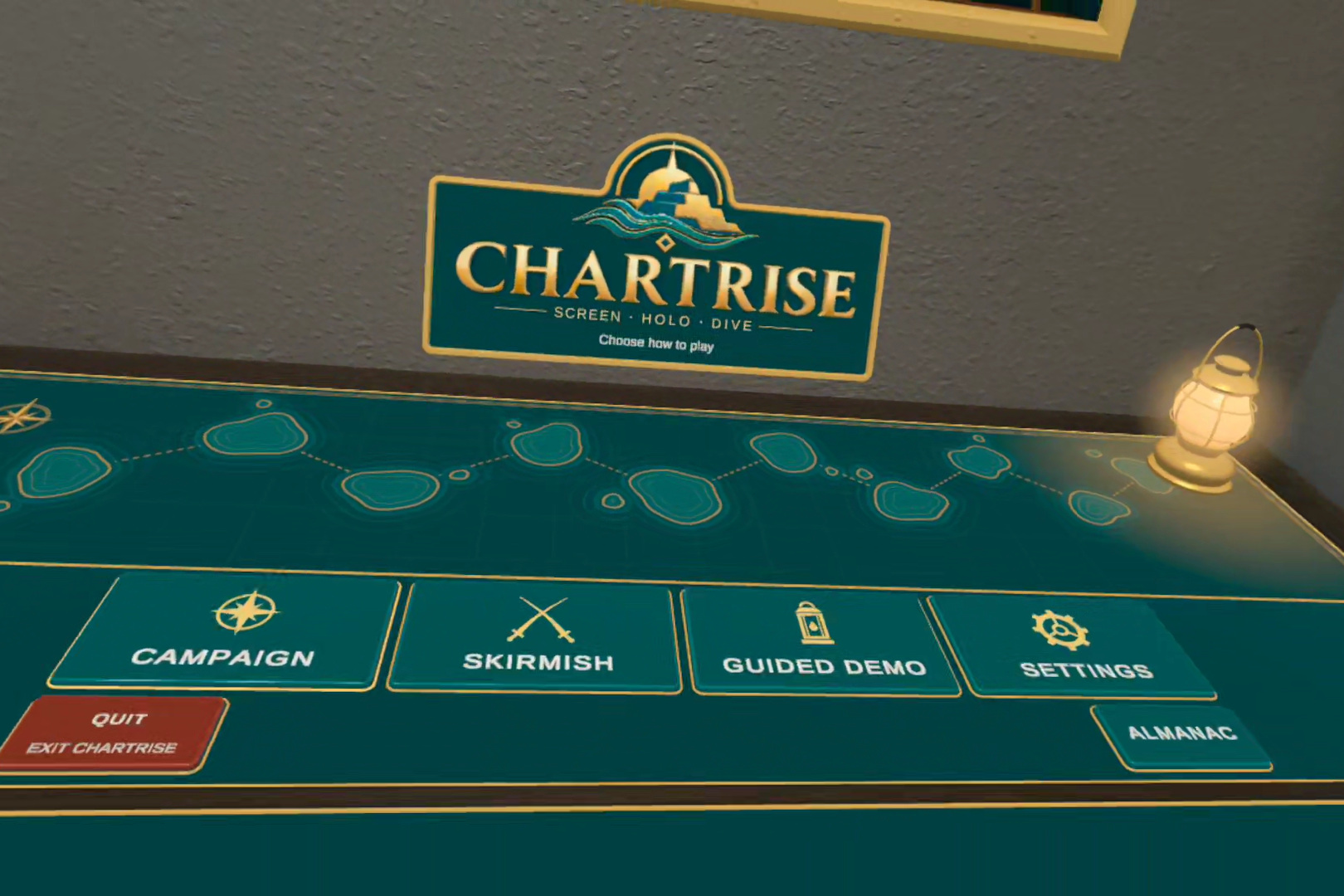
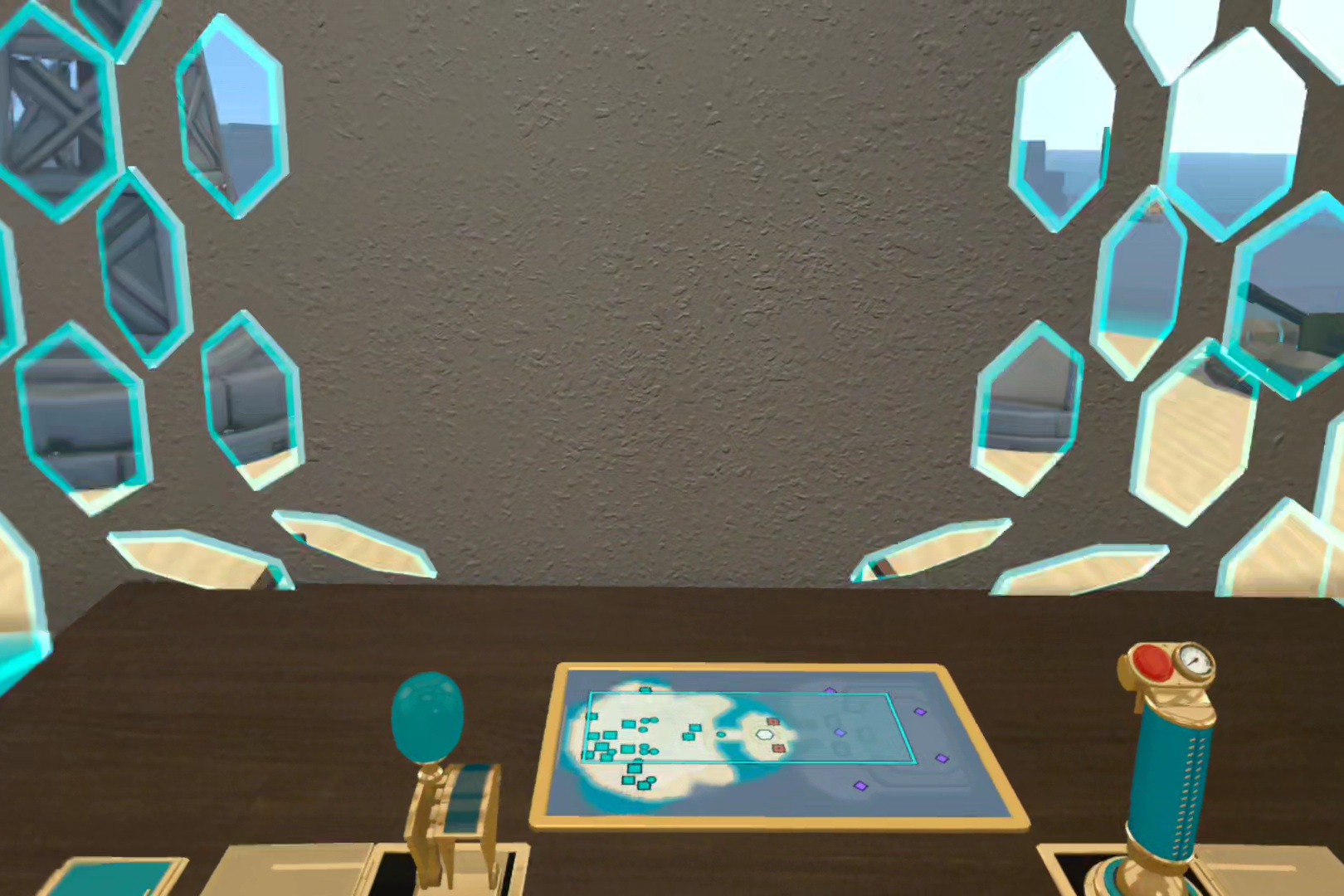
The menu lies on your real desk: the title's plaque, the keys, the lantern.
-
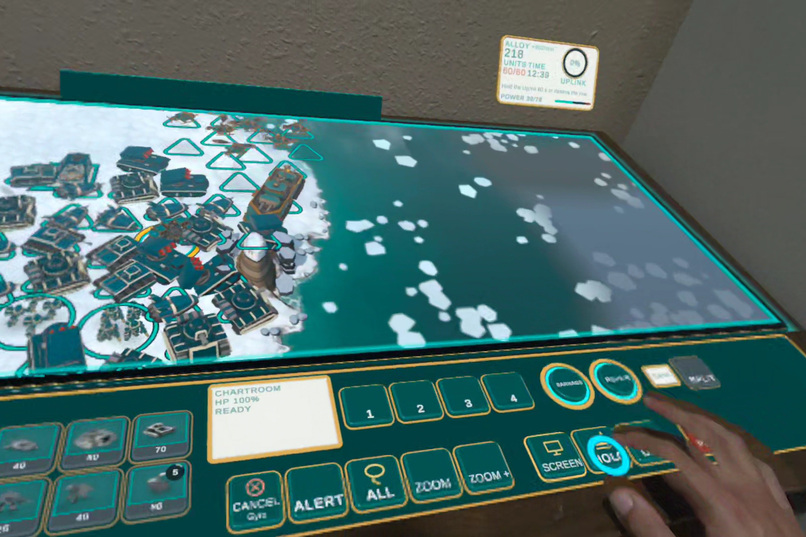
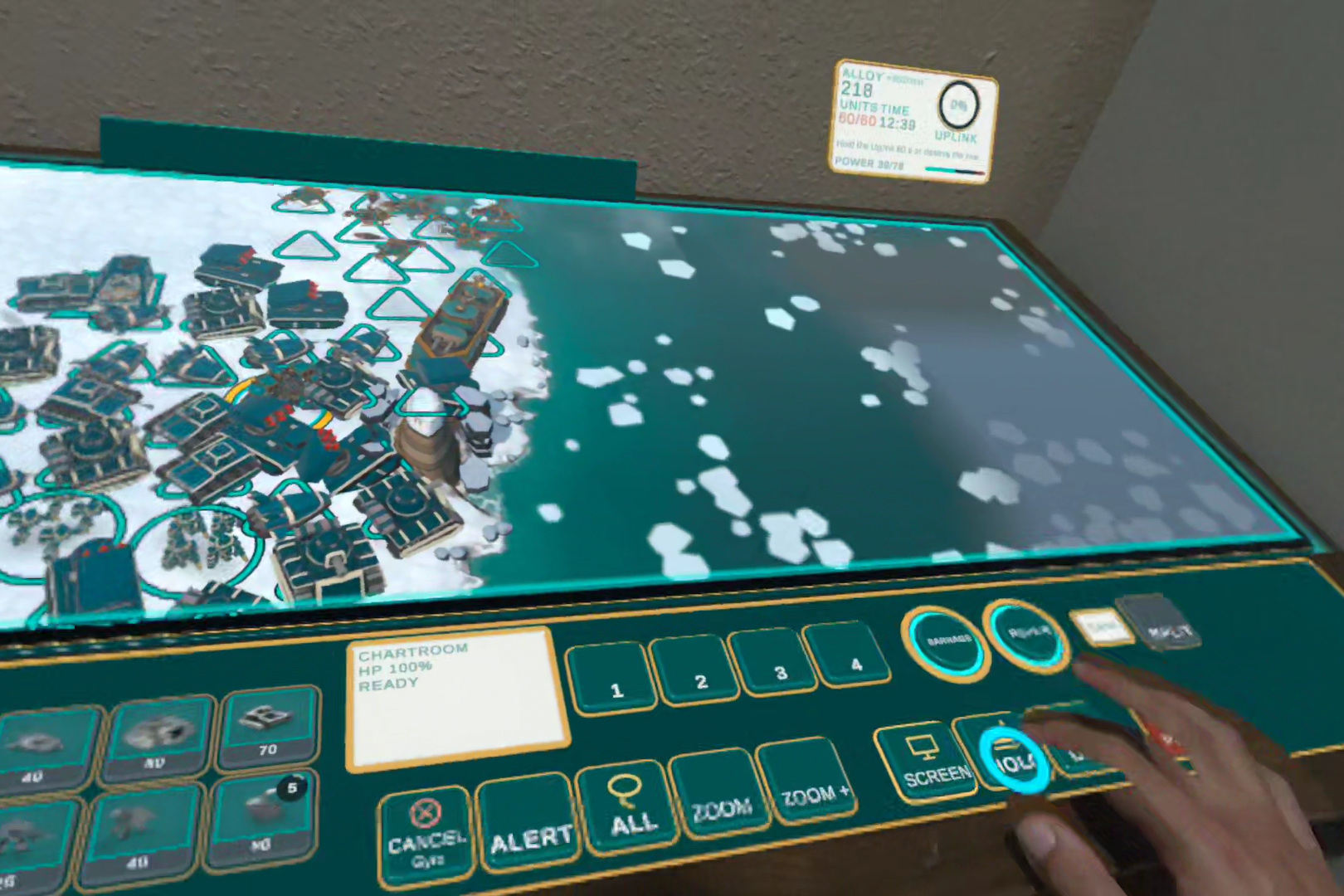
A finger presses HOLO. Every key lies on the real desk, so the desk is what you feel.
-
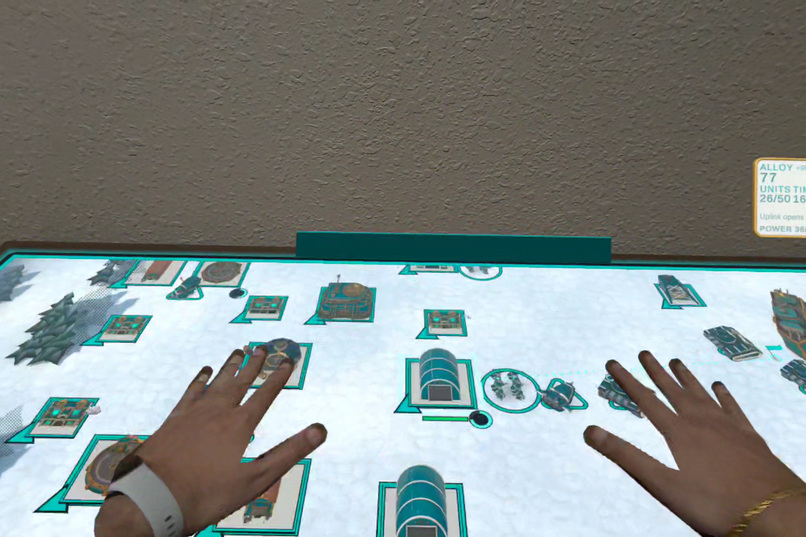
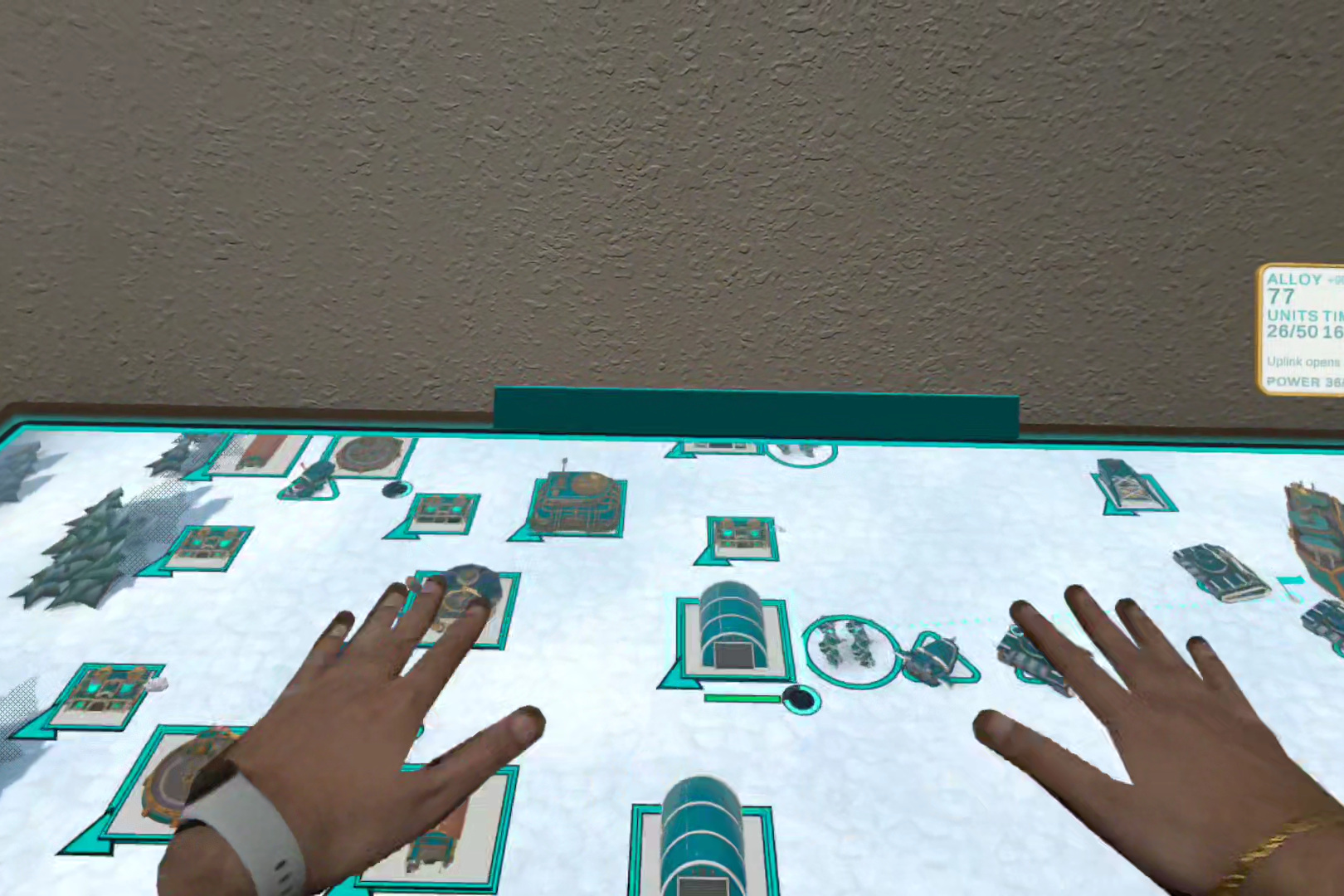
Two flat hands zoom the map.
-
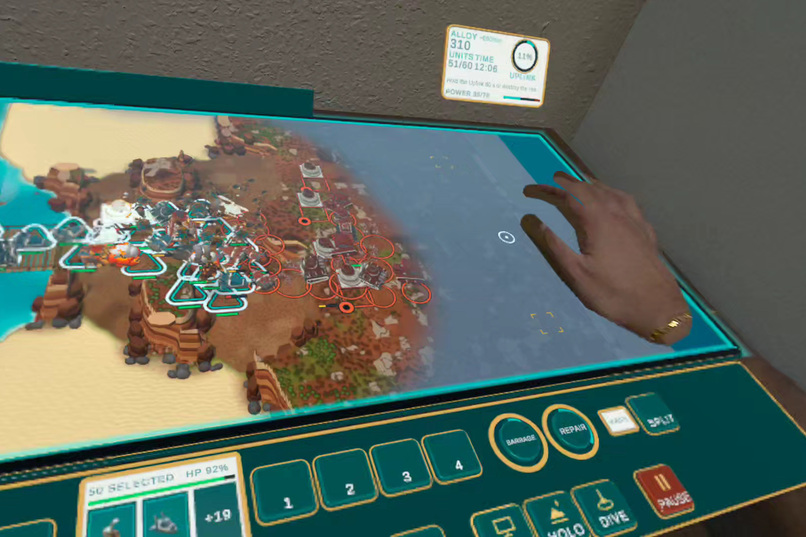
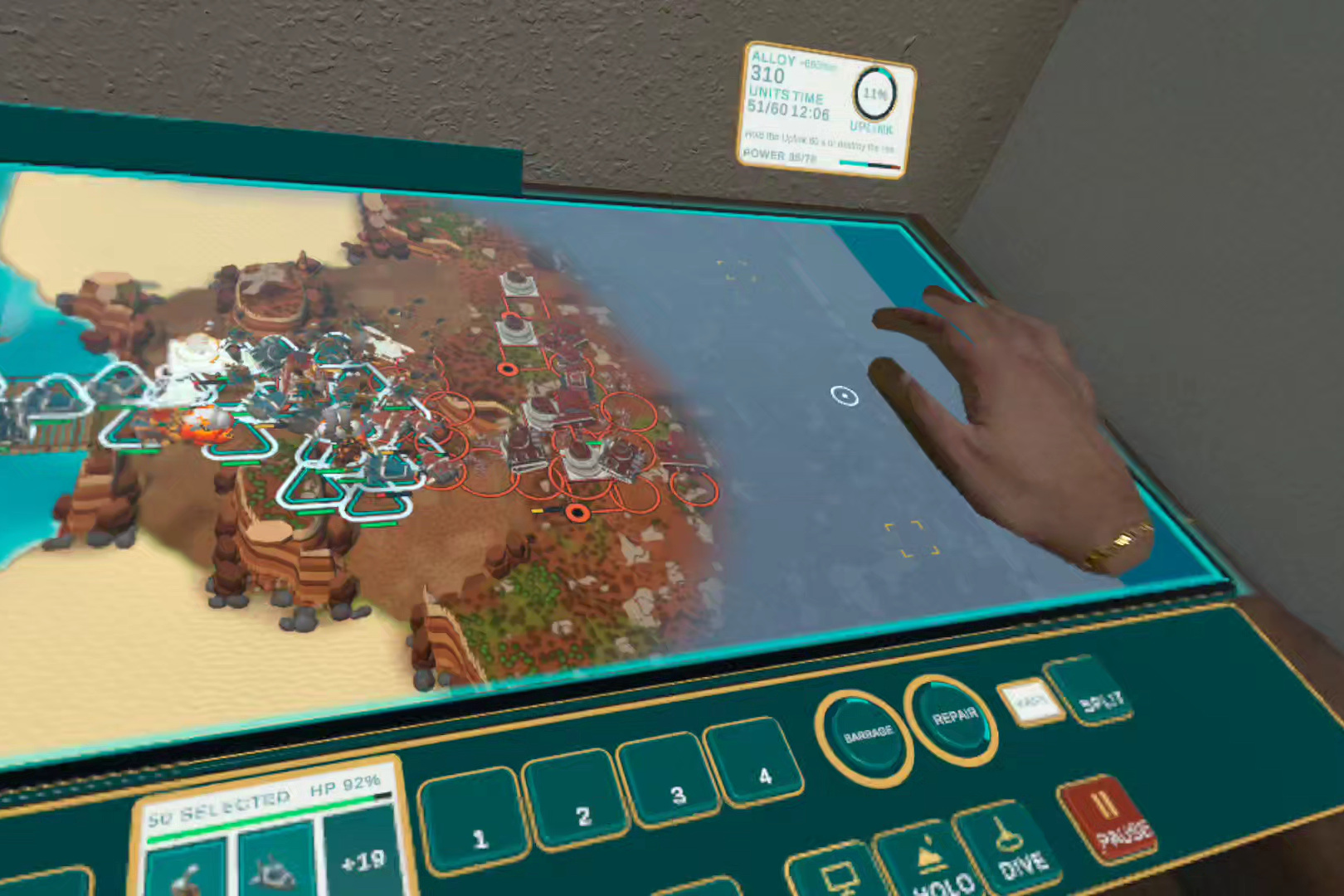
SCREEN: the army crosses the bridges into the enemy's base.
-
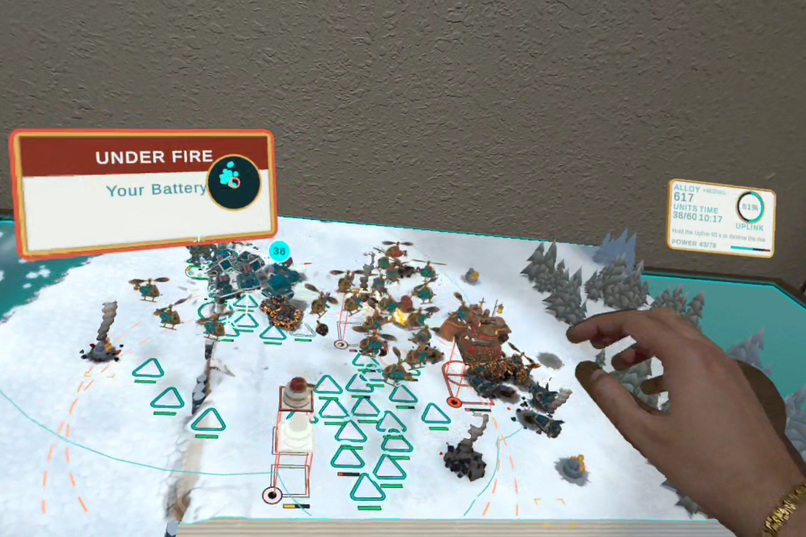
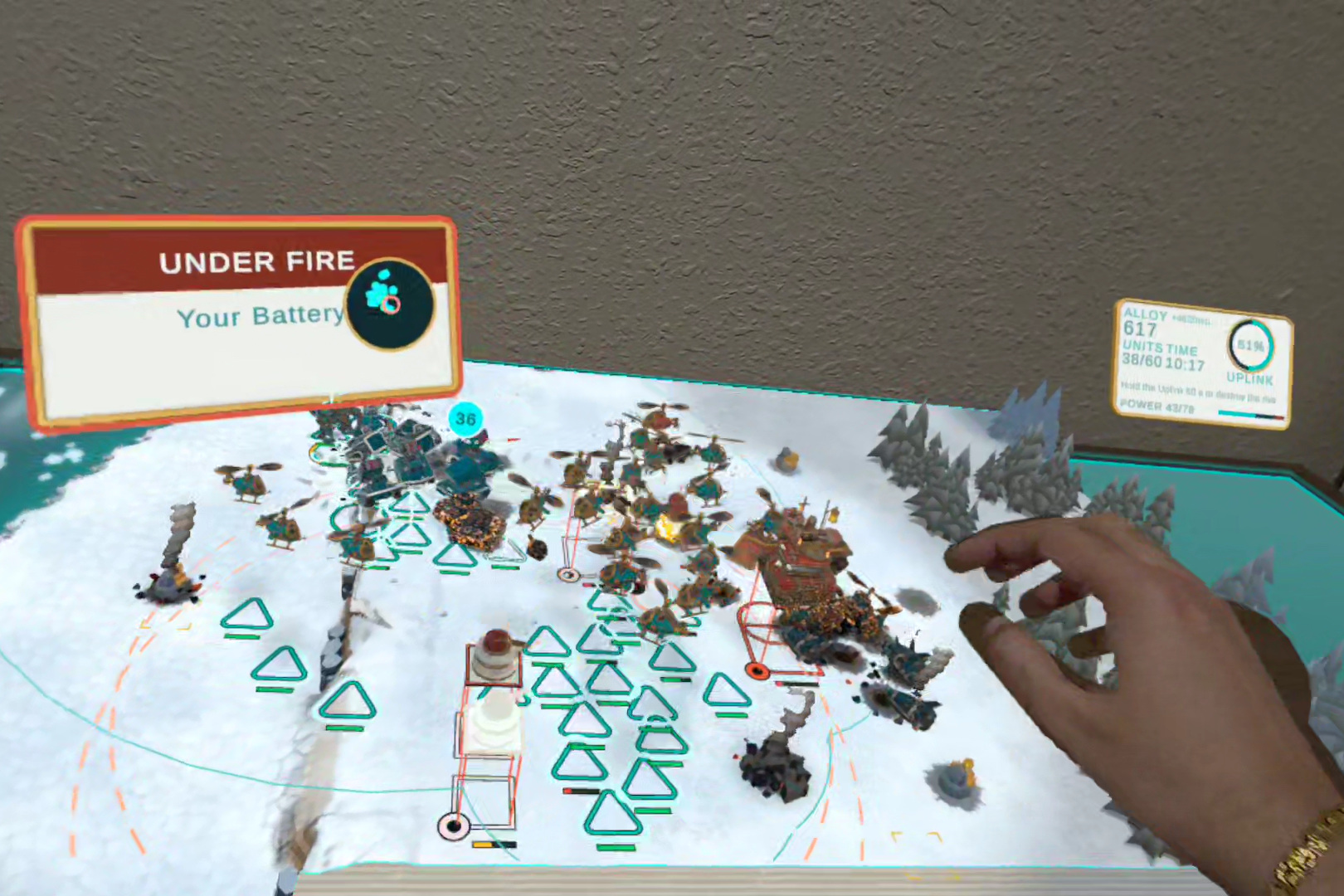
HOLO: the same fight standing up off the desk, and an UNDER FIRE card to touch.
-
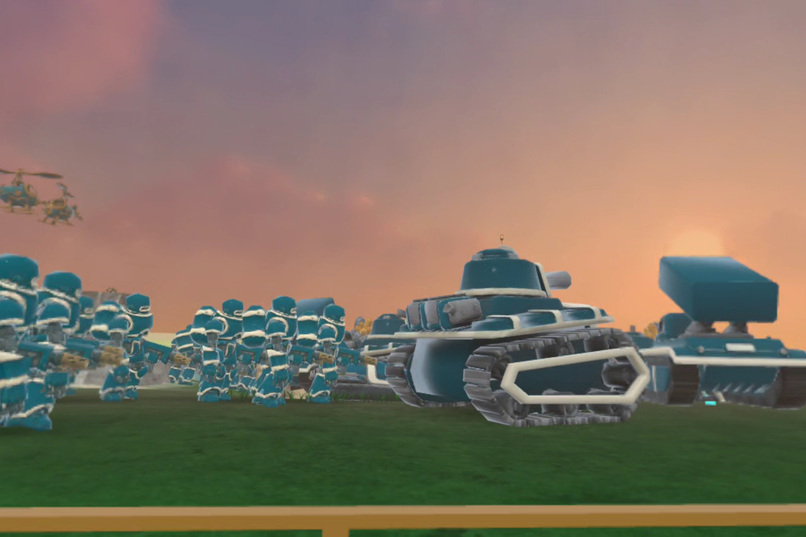
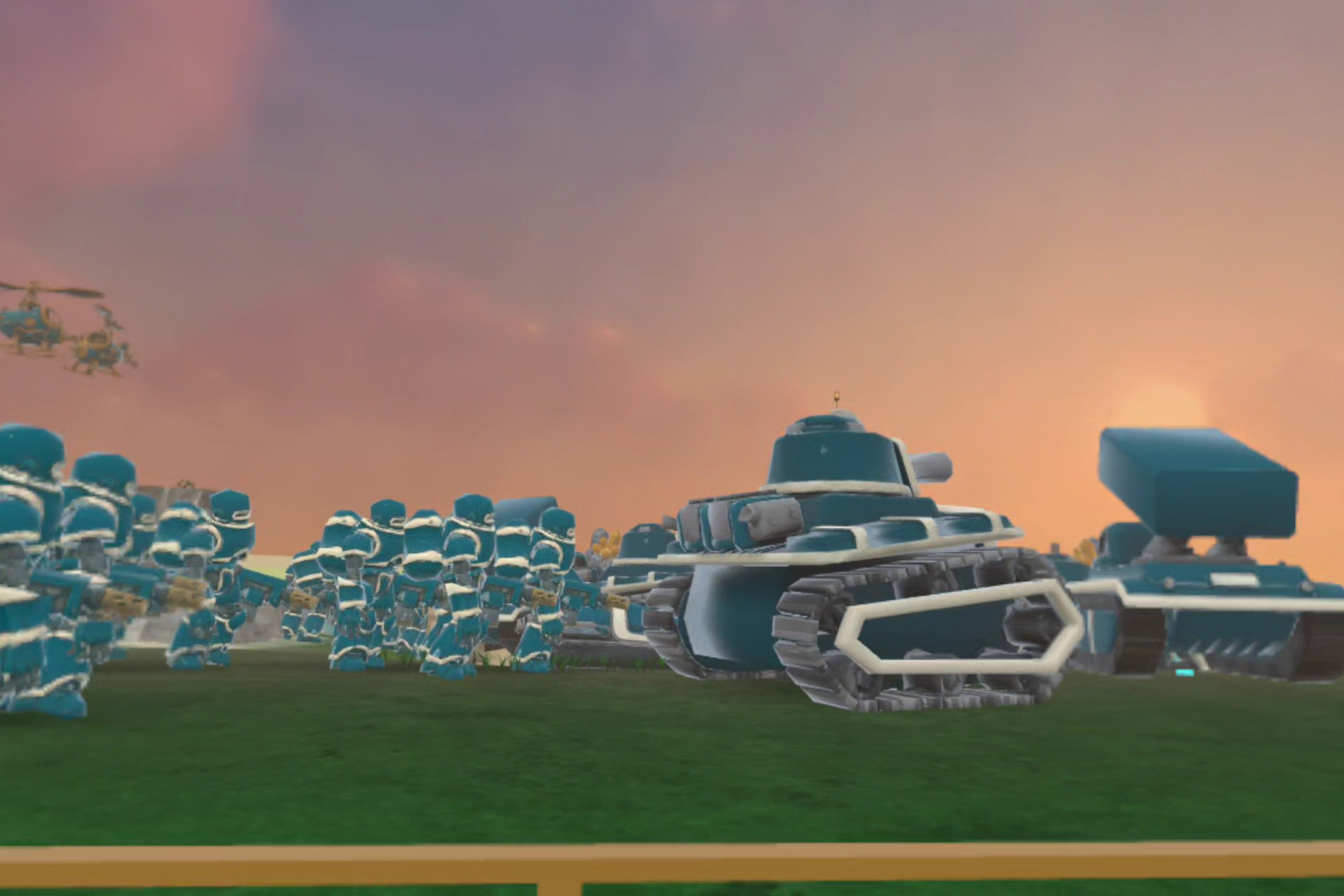
DIVE: inside the battle, with the army at its real size.
-
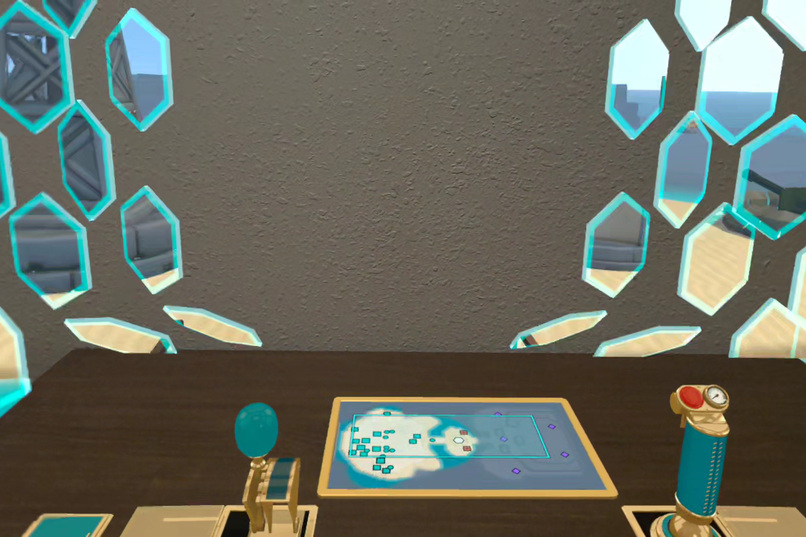
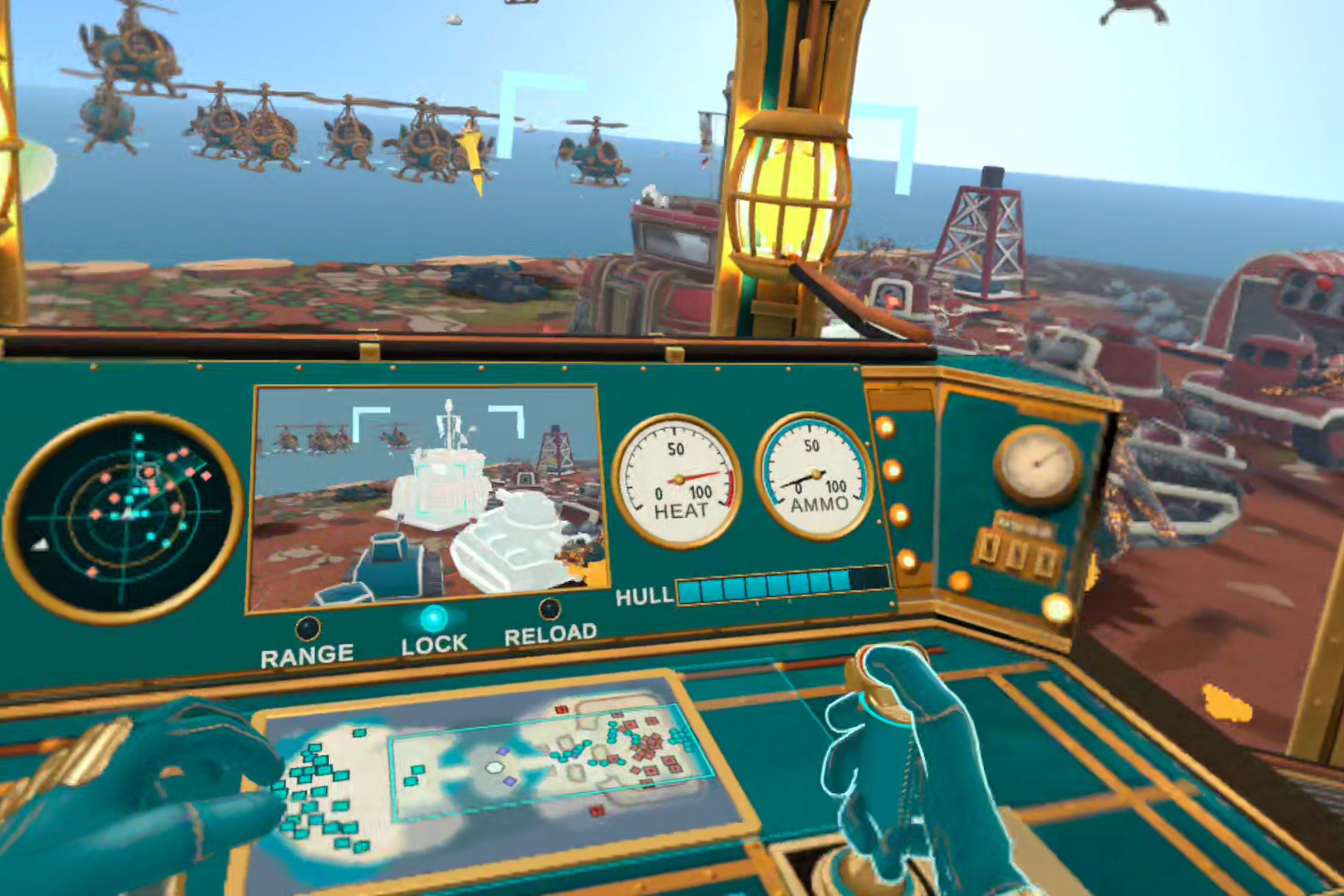
RIDE: the board gives way, a throttle and a stick rise from the desk, and the cockpit closes in.
-
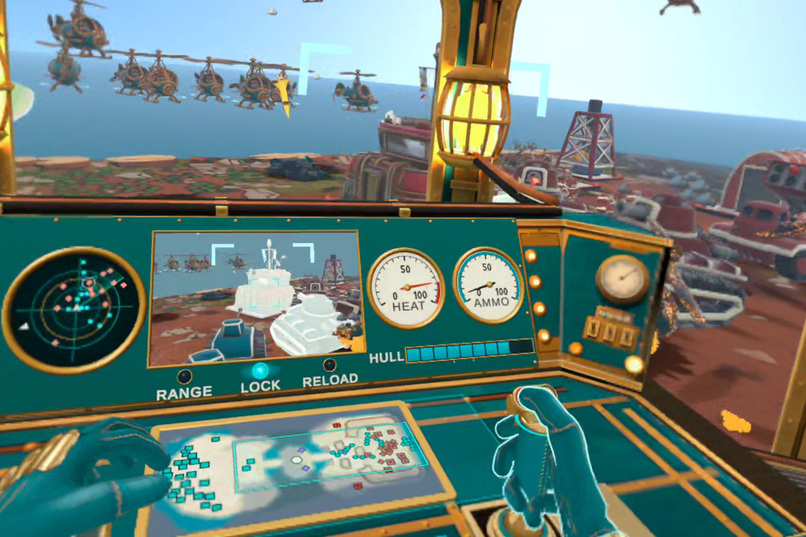
The Navigator's cockpit in a skirmish's last fight, gyros overhead.
-
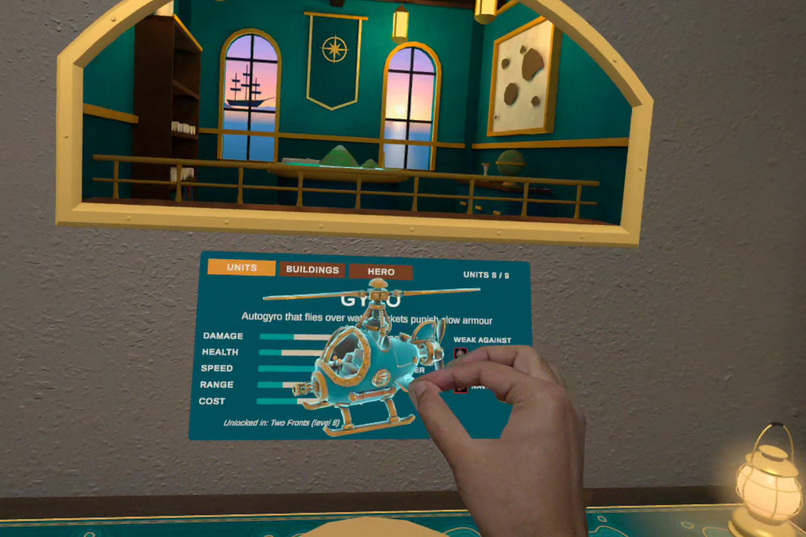
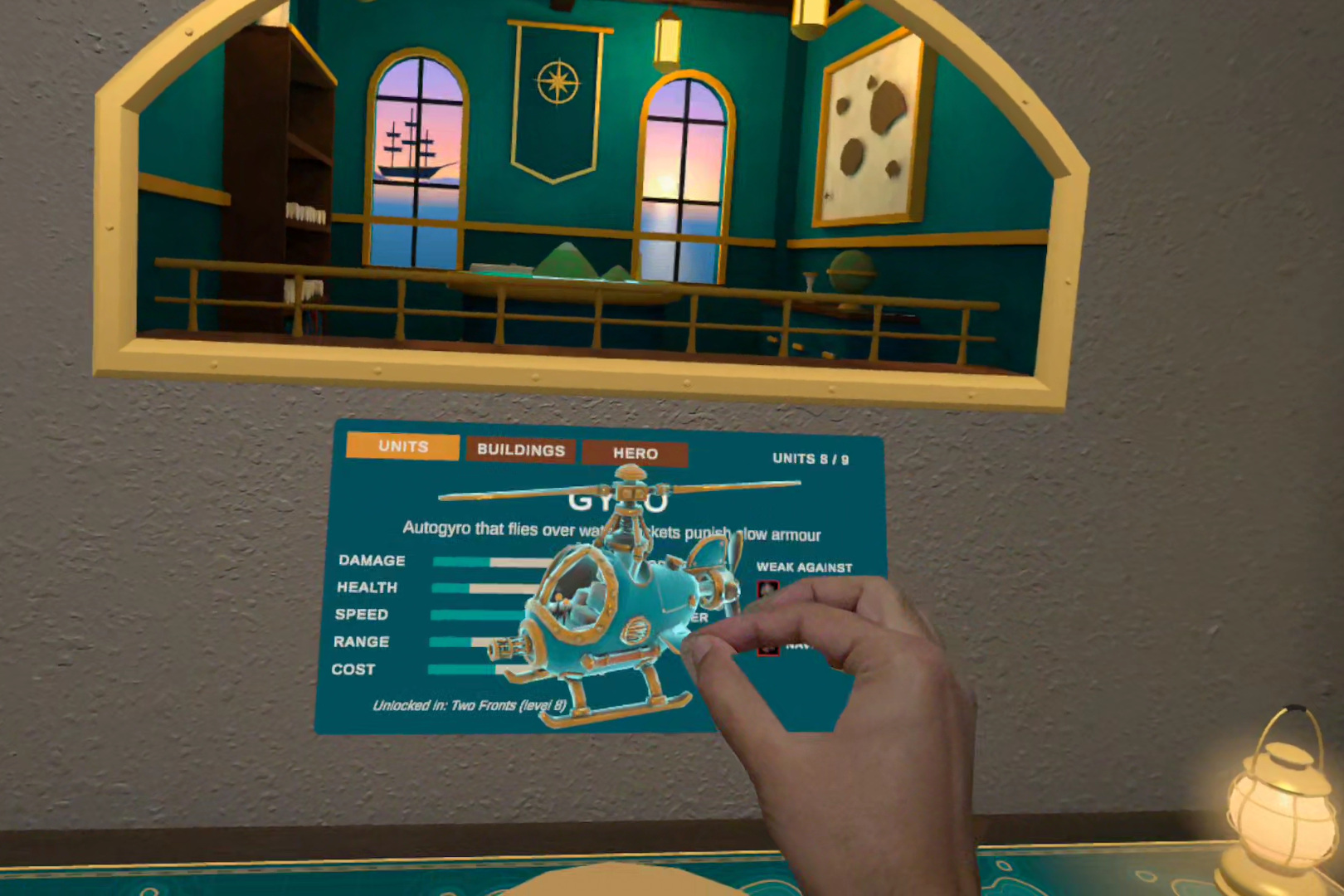
The Almanac: pick up any unit as a hologram, under the chart room's window on your own wall.
-
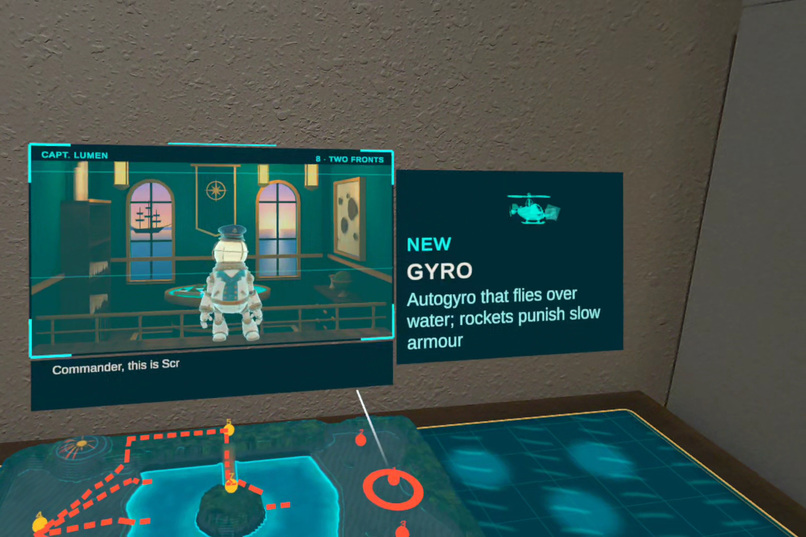
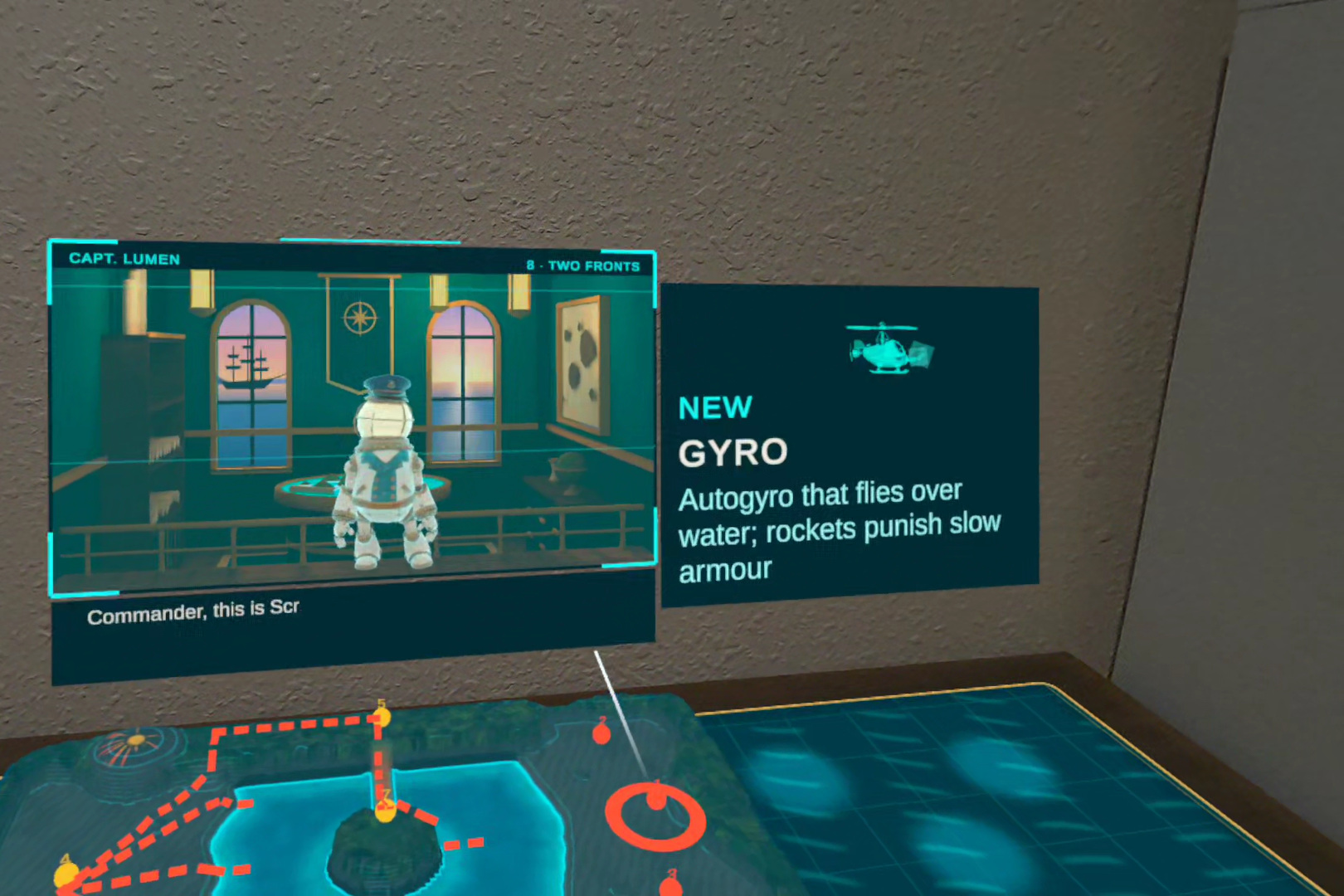
Captain Lumen's briefing, with the chart as a hologram map.
Inspiration
I grew up on PC strategy games, and I always wanted to play one on a real table, like generals leaning over a war map. Mixed reality finally makes that possible. Most hand-tracked games ask you to press buttons floating in the air, and your finger goes right through them. I wanted the opposite: no floating menus, just keys that sit flat on your desk, so your finger always lands on something solid.
What it does
Chartrise puts a sea war on your desk. You build a base, train tanks, hovercraft and infantry, and take the islands back.
- If you can use a tablet, you can play it. Almost everyone already knows how to use a phone or a tablet: tap to pick, slide to move. Chartrise works the same way, only the tablet is a big game screen lying on your desk, and every button is a key on the real table. That makes hand tracking feel sure and easy, even for people who have never held a VR controller. We call it Tangible UI.
- Three views of one battle. It starts as a big, sharp game screen lying on the table. Tap HOLO and the battle rises off the table as a 3D hologram you can lean into. Tap DIVE and you are inside it, with tanks the size of real tanks. The battle never stops while you switch.
- Everything by hand. Tap a unit to pick it, tap the map to send it. Lay your palm on the map and slide it to scroll, like moving a paper map.
- A campaign led by Captain Lumen, with voiced briefings in a chart room, and a rival, Scrapjaw, who cuts in on your screen.
- Ride your hero. Climb into the Navigator, a walking mech, and fight from its cockpit with your own hands on the controls.
- It teaches itself. A ghost hand shows each gesture once, the Almanac shows every unit as a hologram, and Drill School has short practice fights.
How I built it
Unity 6 with Meta's XR SDK, OpenXR and XR Hands, on Quest 3. Passthrough shows your real room. The Depth API finds your desk, and a spatial anchor remembers where you put the board. Units and buildings were modelled in Blender and with Tripo and Meshy. The voices were made with ElevenLabs. I worked with AI coding agents (Claude) on the code, and tested every build myself on the headset, recording each session and fixing what I found.
Challenges
- Making a tap on a real desk feel reliable. Everyone presses differently, so the game learns where your fingertips stop.
- Keeping the frame rate smooth in big fights with lots of smoke and fire.
- Things that worked on the computer but broke on the headset, like a whole squad of soldiers that turned invisible.
What's next
Bigger maps with room for bigger bases, New units, Season 2 & 3 Campaigns, a four-army skirmish mode and most importantly MULTIPLAYER!