-
-
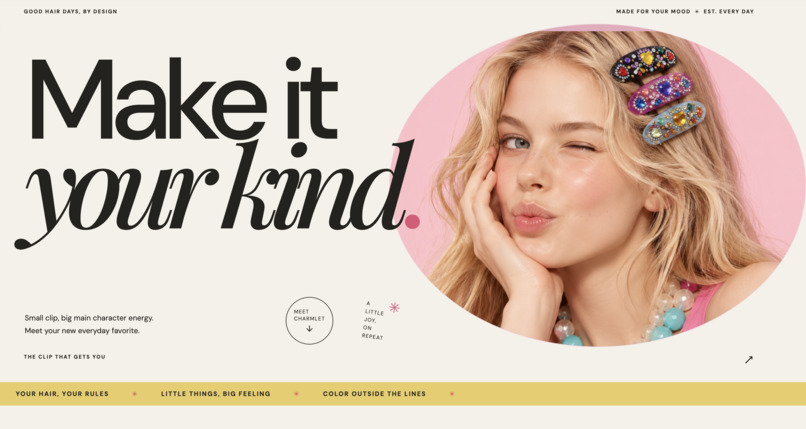
Home page1
-
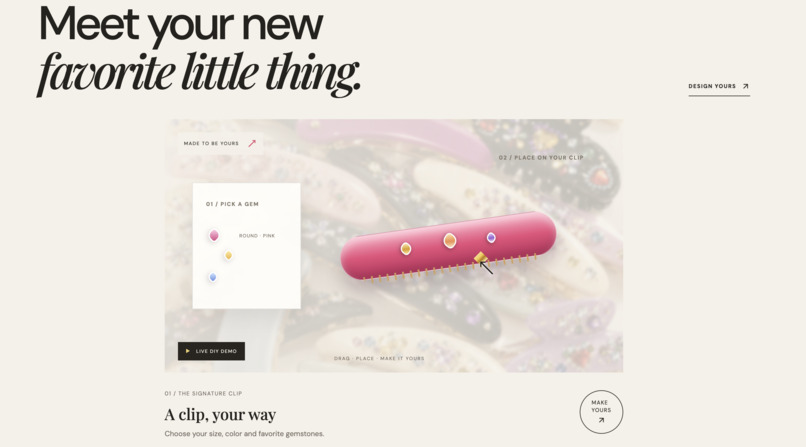
Home page2
-
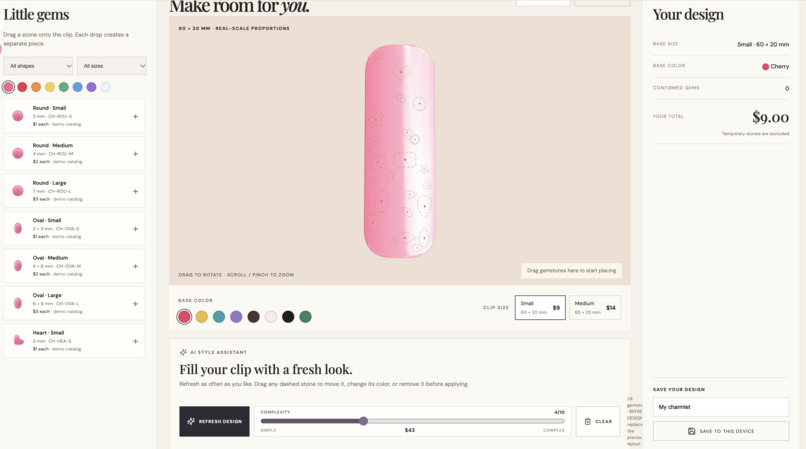
DIY studio1
-
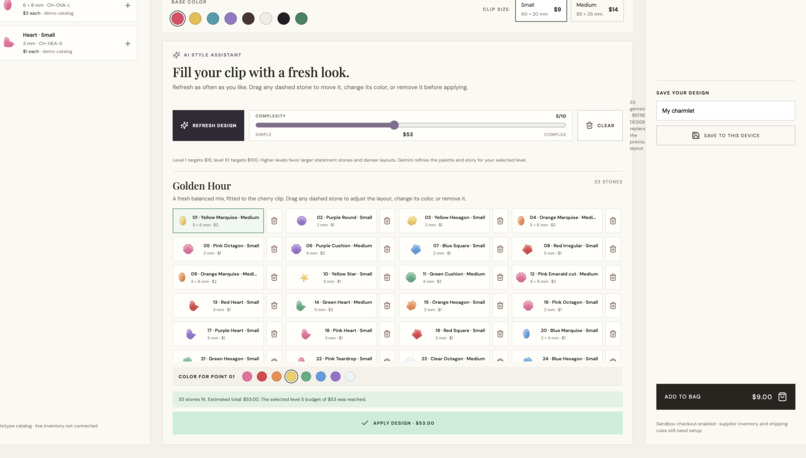
DIY studio2
-
DIY studio3
-
Checkout
-
Paypal1
-
Paypal2
-
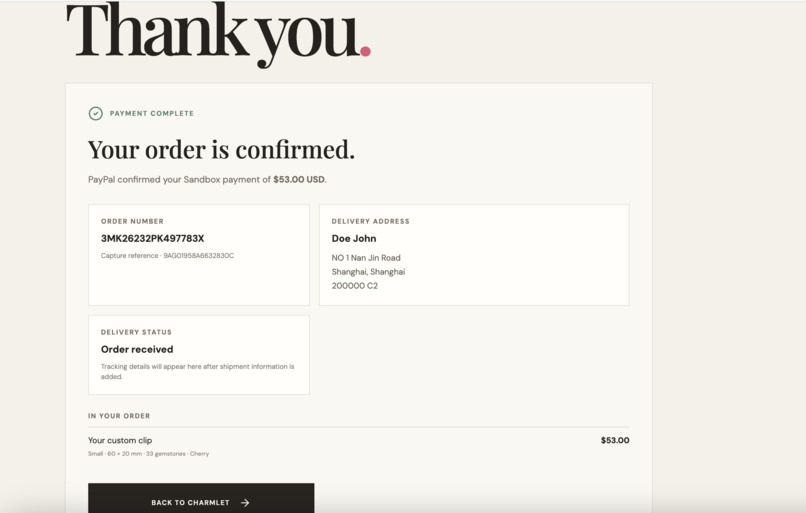
Order status
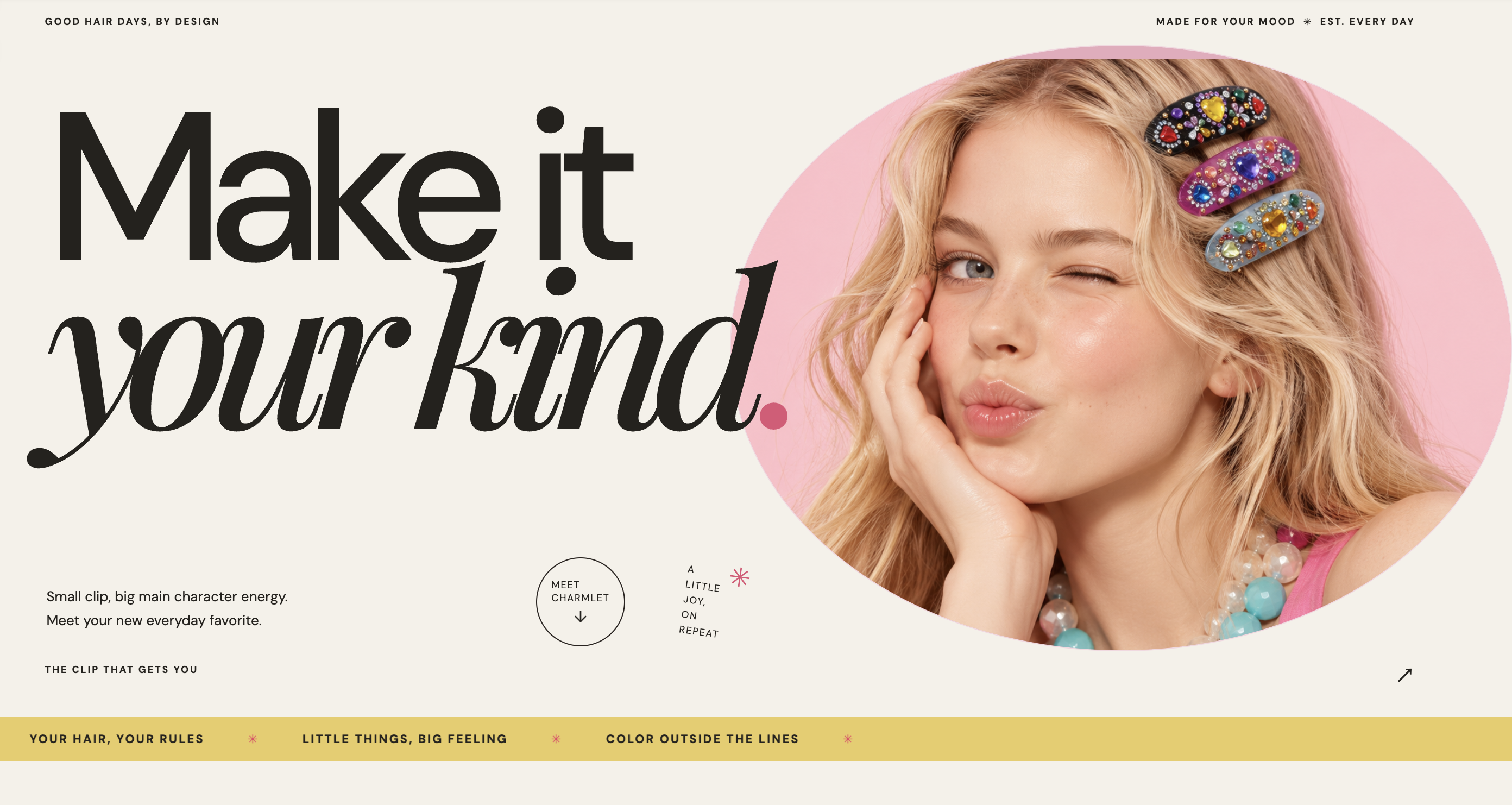
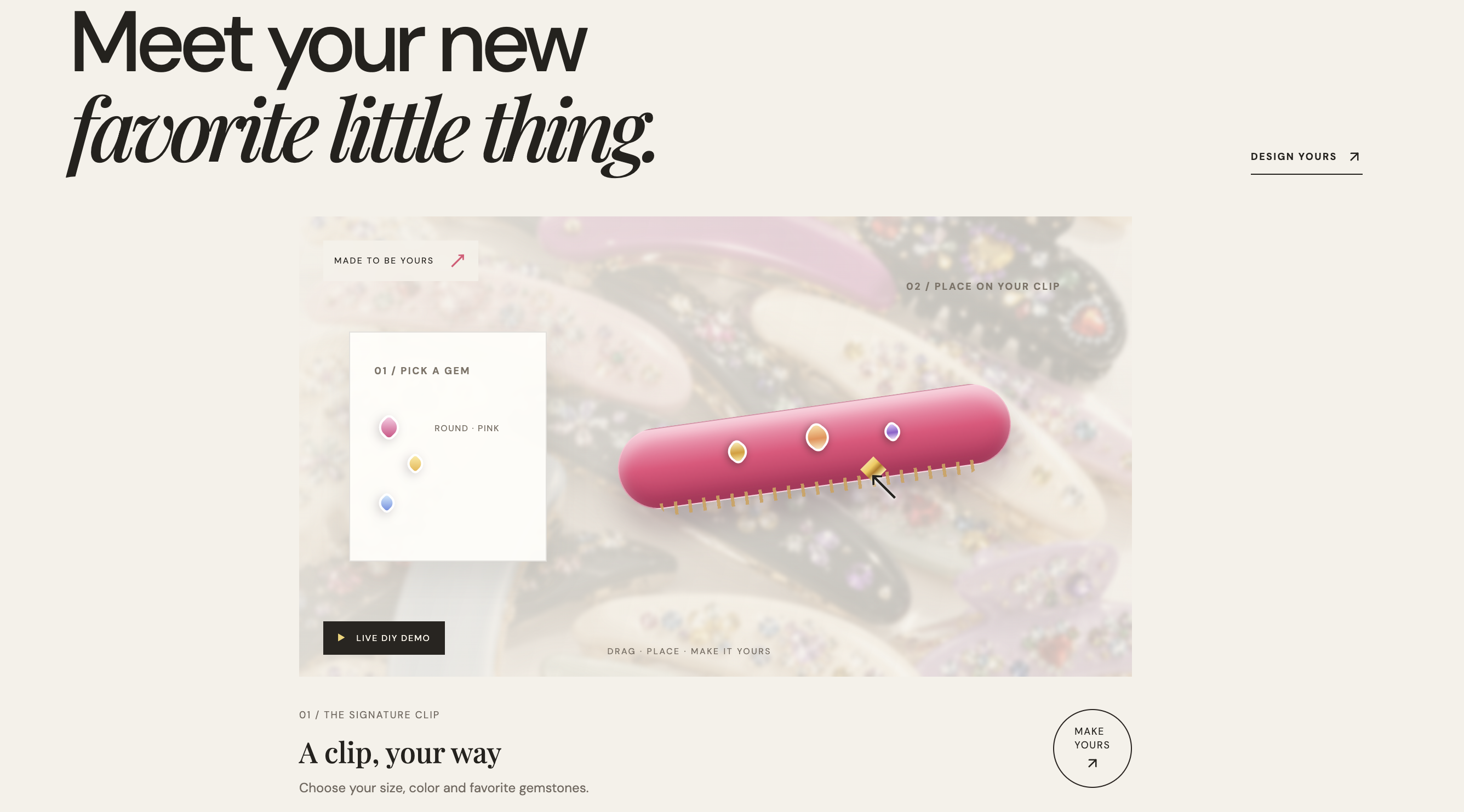
Inspiration
I come from the traditional consumer products and design industries, and I had never written code before starting CHARMLET. Online shopping has become part of everyday life, but it can feel repetitive: customers often browse finished products and follow the same path from discovery to checkout. I wanted to bring some of the hands-on fun of shopping in person to the web.
As AI creates new possibilities for interactive experiences, I imagined a playful DIY studio where customers could design a hair clip that feels personal to them. That idea became CHARMLET.
What it does
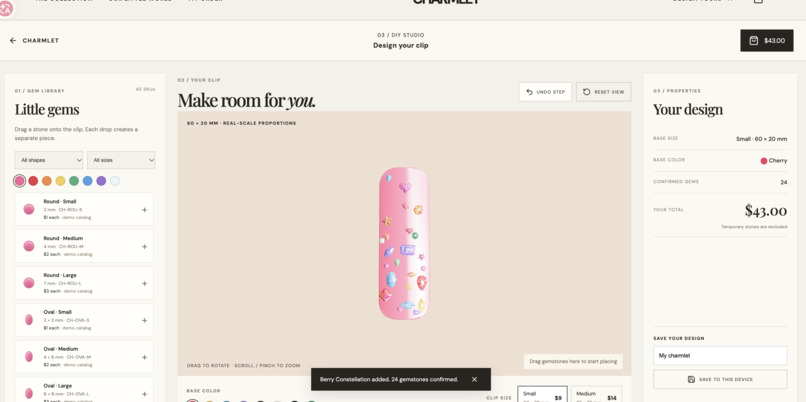
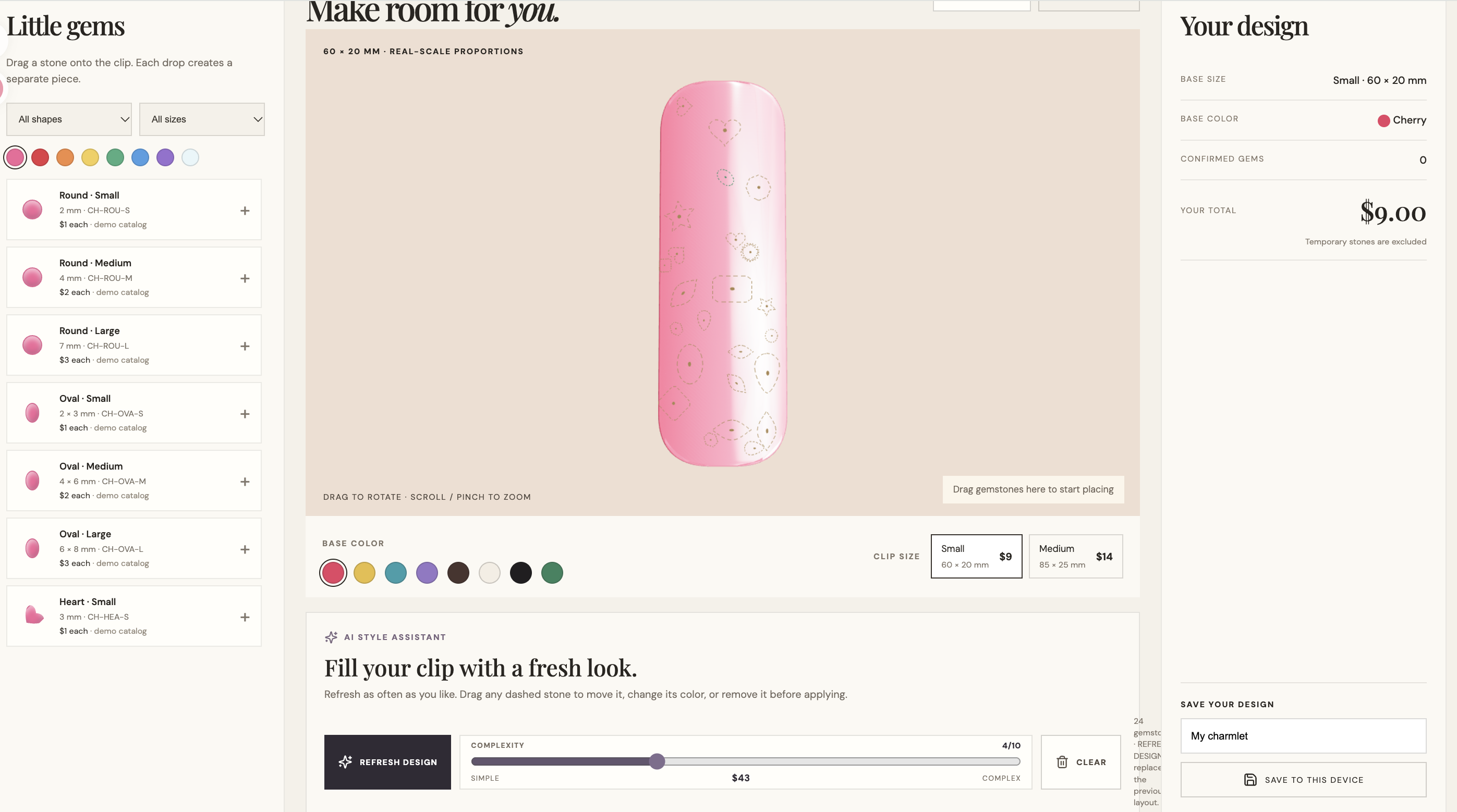
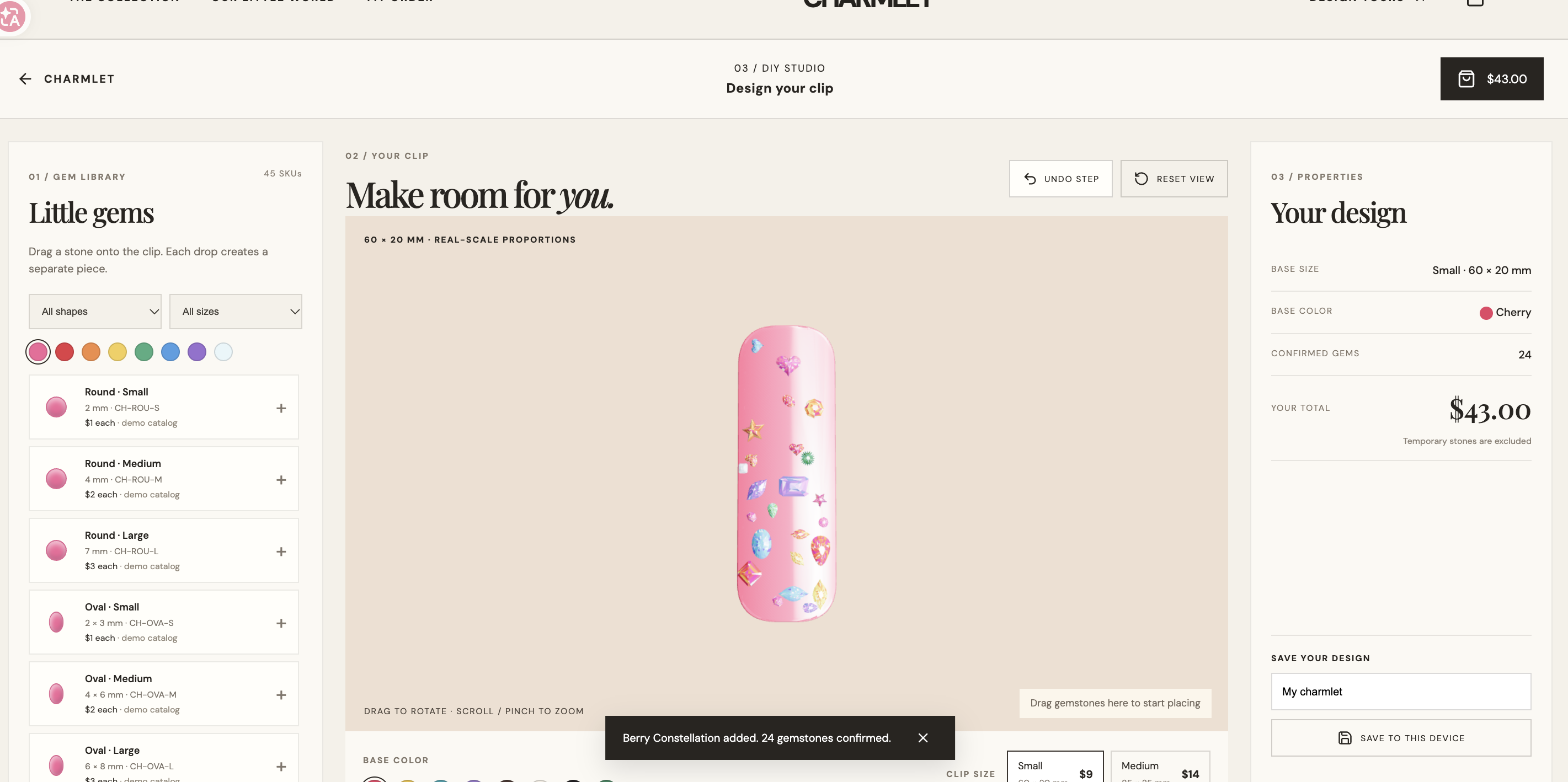
CHARMLET is an online hair-clip customization experience. In the 3D DIY Studio, customers can choose a clip size and base color, browse gemstones by shape and fixed size, and arrange them on the clip. The studio checks placement and pricing as they design.
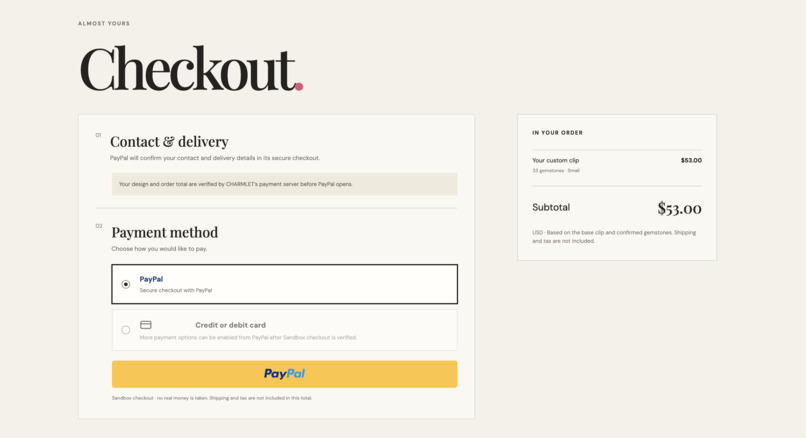
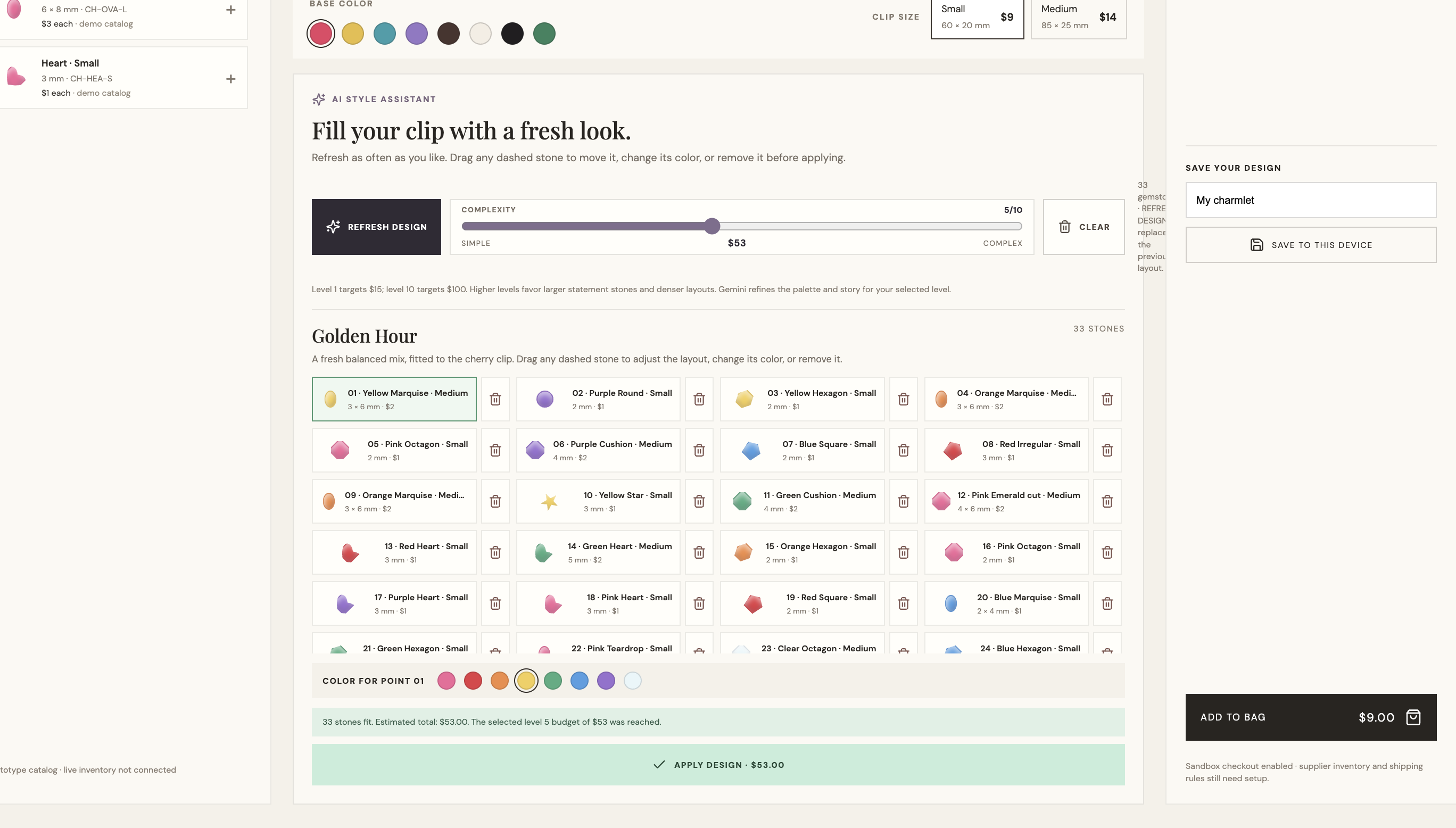
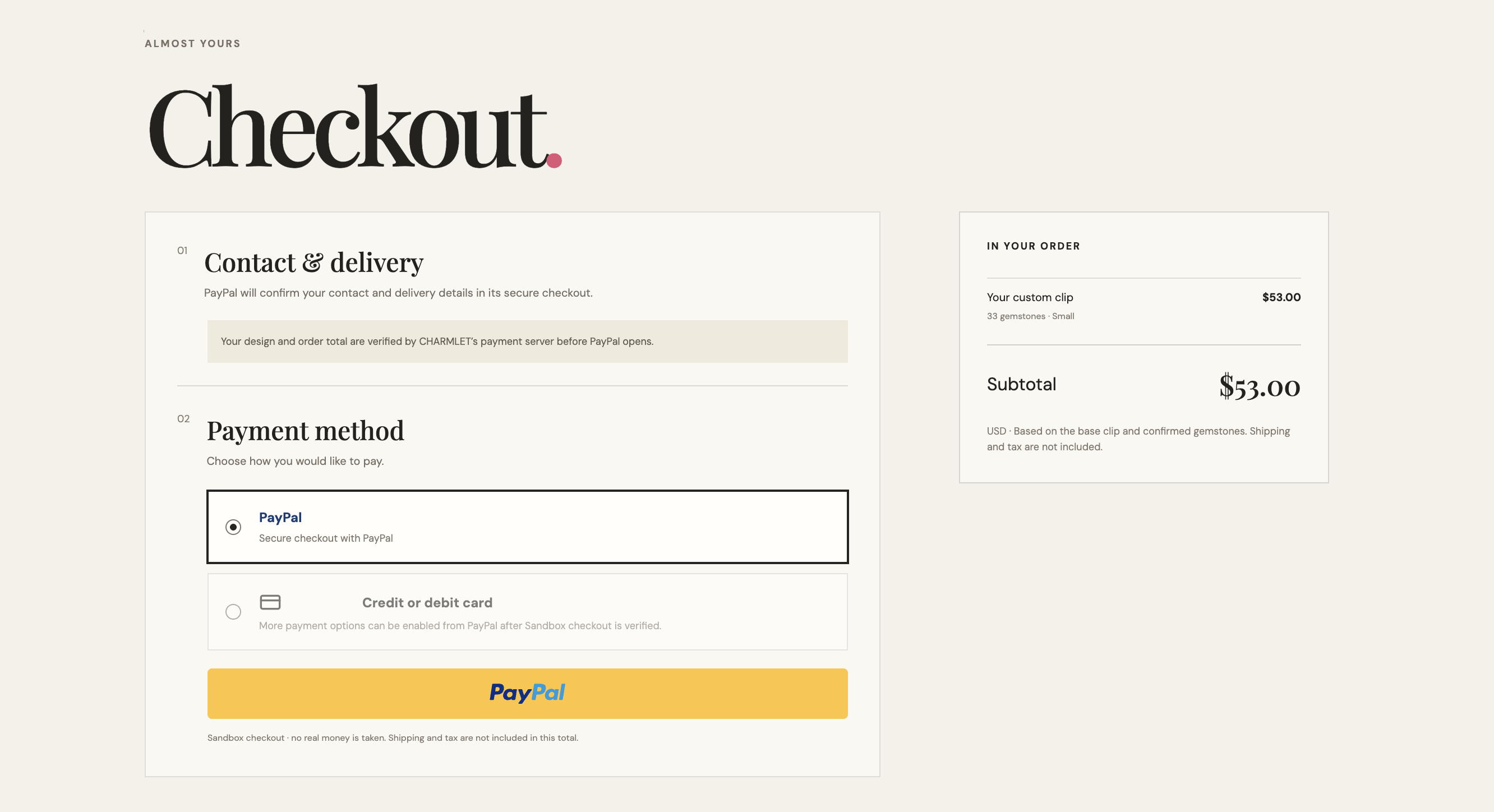
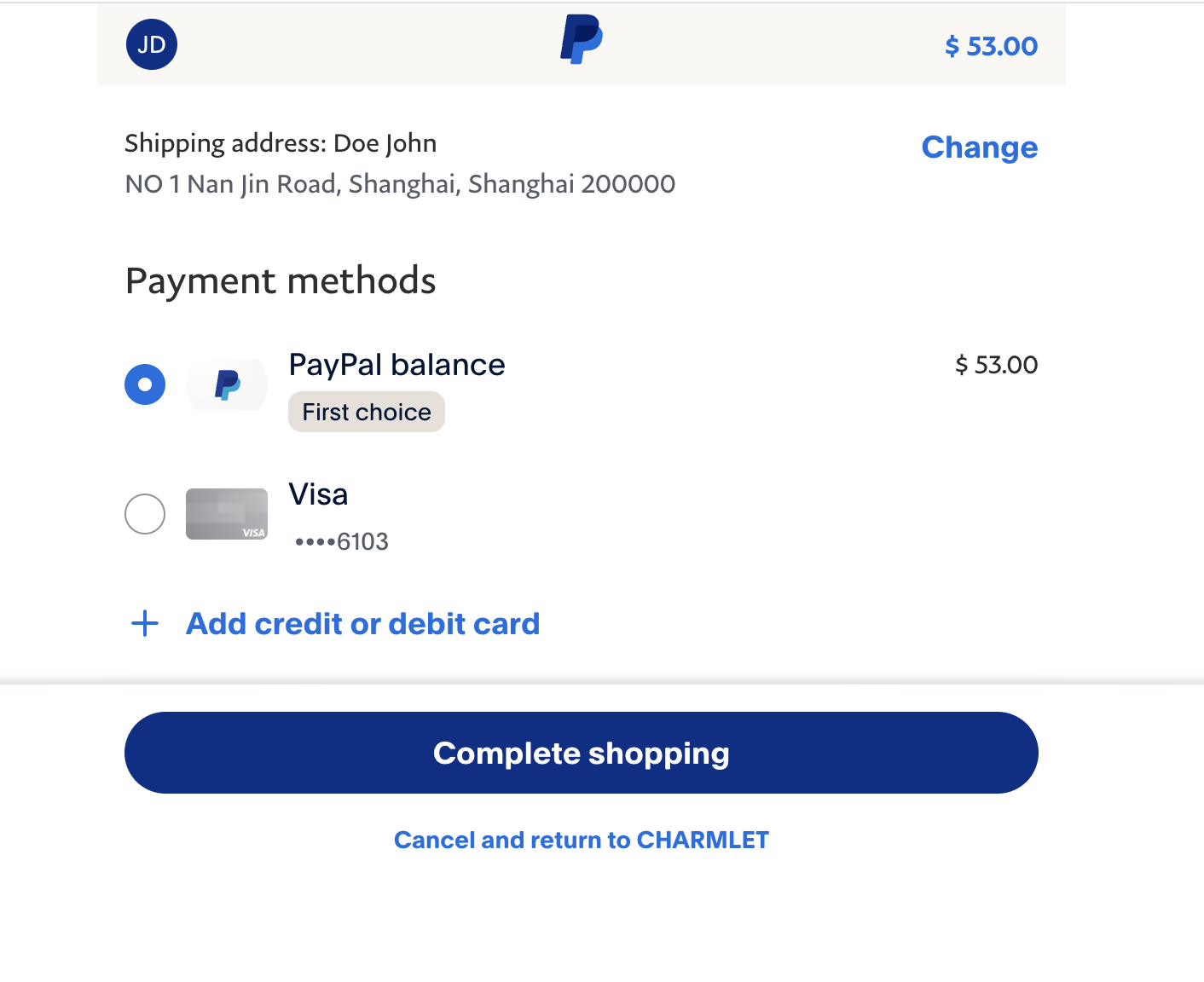
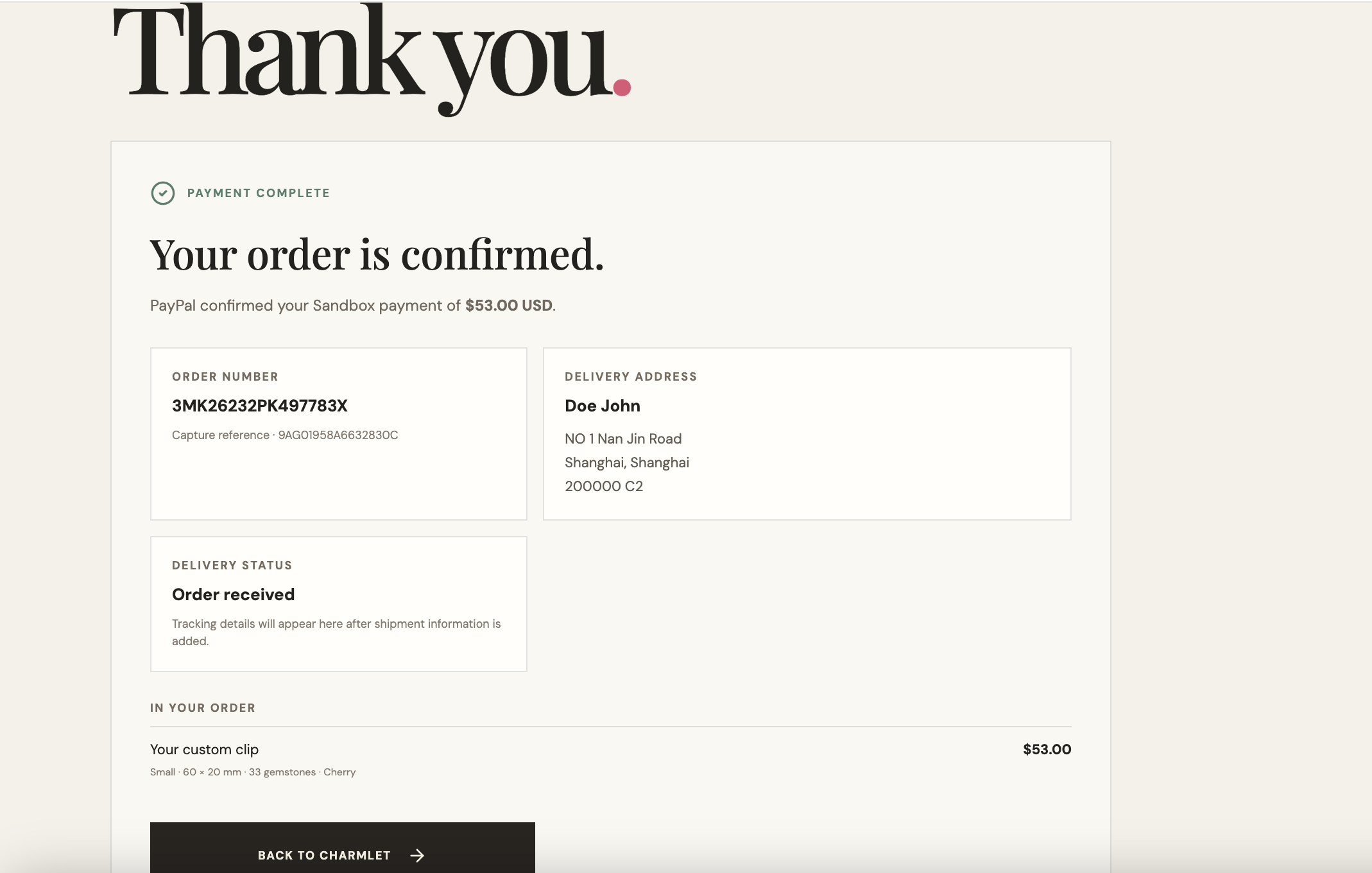
Customers can also ask the AI design assistant for inspiration, then adjust gemstone colors, move or remove stones, and choose a preferred level of design complexity and budget. When they are ready, they can add their design to the bag and try the PayPal Sandbox checkout.
How we built it
I built CHARMLET with React, React Three Fiber, Three.js, and Vite. The 3D DIY Studio lets customers choose a hair-clip size and base color, select gemstones from a fixed catalog, and arrange them on the clip. The studio checks gemstone placement against the clip’s usable surface and other stones, and calculates the price from the catalog.
The AI design assistant combines a studio-generated layout with Google’s Gemini API. The studio’s built-in algorithm chooses the gemstones and their positions; Gemini refines their color palette and writes a short style description. The layout generator remains available if Gemini cannot be reached.
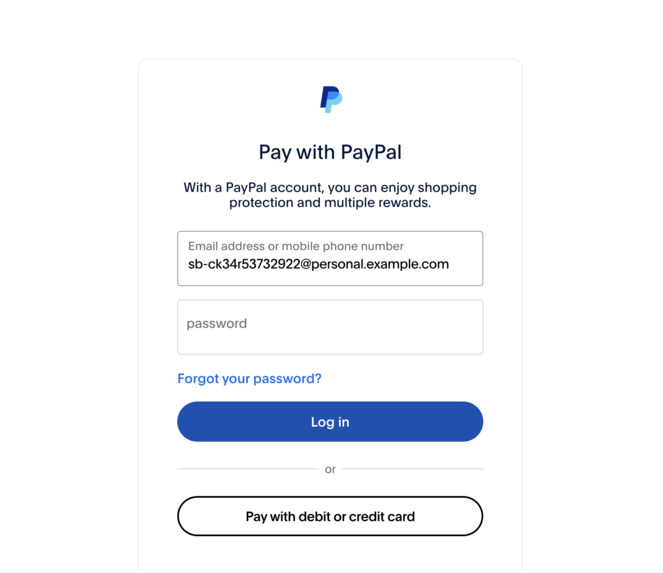
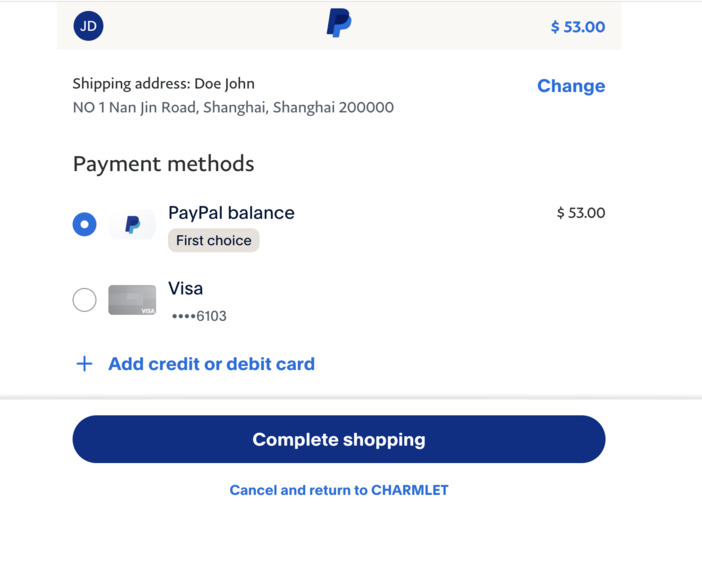
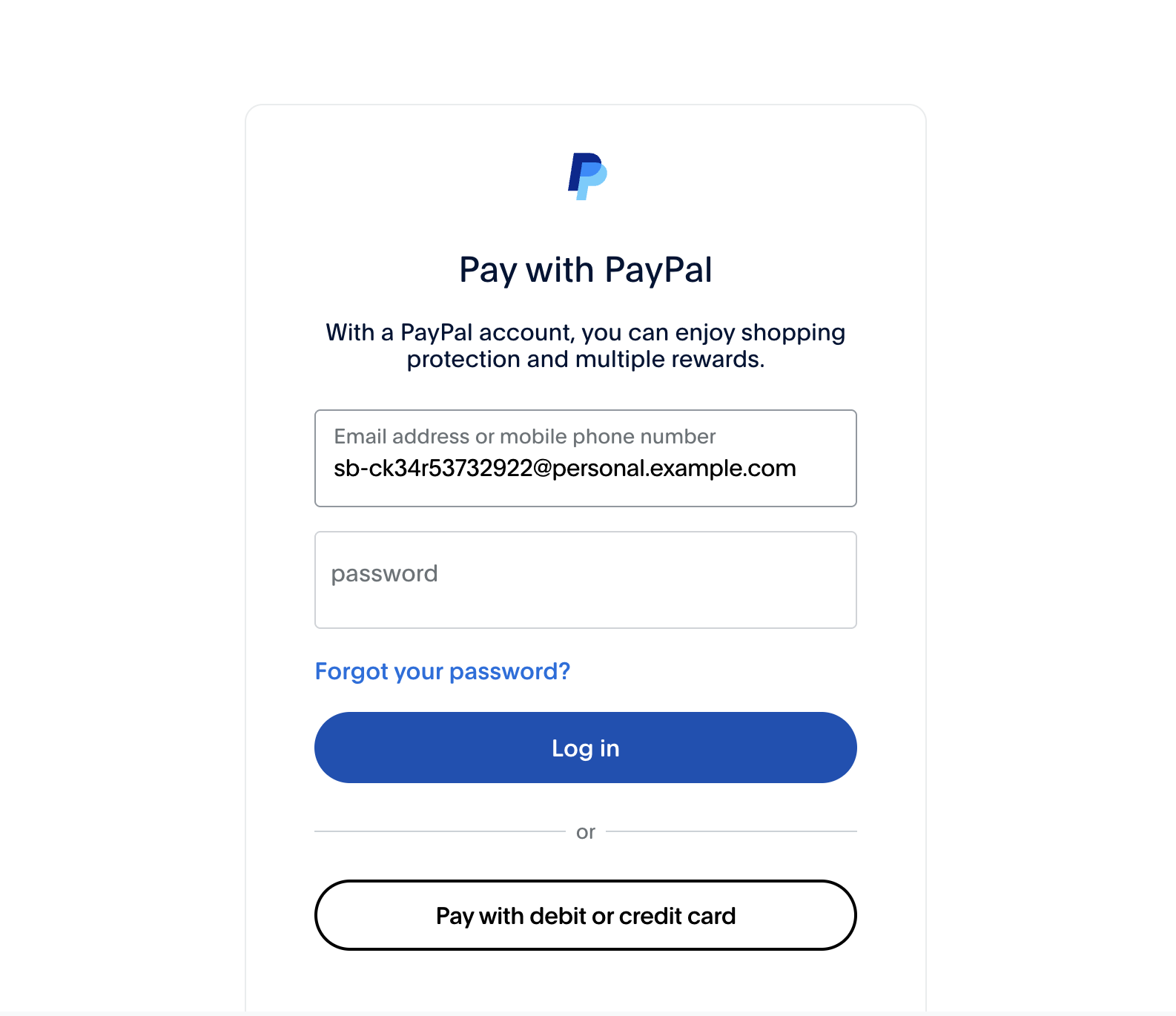
I integrated PayPal’s JavaScript SDK and Orders API in the Sandbox environment to create and capture test payments. CHARMLET is deployed on Render, with payment and Gemini credentials configured as environment variables.
ChatGPT and Codex helped me plan the project, write and debug code, and understand the tools as I built it.
Challenges we ran into
This was my first time building a website, creating a 3D experience, and deploying a web application. At the start, I did not know what steps, tools, skills, or assets the project would require. I spent a day organizing the concept and describing the experience I wanted before turning it into a working plan.
The DIY Studio took many rounds of refinement. I adjusted product dimensions and interaction details, then repeatedly tested the experience to make gemstone placement and pricing clearer. Keeping the development environment running reliably also took time.
PayPal integration and deployment were another major challenge. The Sandbox checkout did not work at first, and I spent nearly a day tracing the issue with AI assistance. I had confused the credentials for a PayPal app with another set of account credentials. Resolving that taught me how PayPal’s developer tools fit together and how to test a checkout flow safely with Sandbox.
Accomplishments that we're proud of
I’m proud that I took CHARMLET from an early idea to a working, deployed web experience—even though I started with no coding experience. I brought together product design, an interactive 3D studio, an AI stylist, and a PayPal Sandbox checkout in one project.
The process also gave me new ideas for my own business: how interactive online experiences might help customers connect with products, support international sales, and create new ways to bring designed products to market.
What we learned
I learned how to take a product idea from an early concept to a deployed web experience. Along the way, I learned about planning a project, working with a web framework, building an interactive 3D interface, integrating an AI API, and connecting a payment provider.
I also learned that AI can help me take on unfamiliar technical work by explaining concepts and helping me debug. At the same time, product decisions and the customer experience still need careful human direction.
What's next for CHARMLET
Next, I want to refine the 3D design experience, add more customizable product categories, and improve the checkout and order flow. I hope to build on China’s supply-chain strengths to turn customers’ designs into real products and bring personalized shopping experiences to people around the world. Over time, I’d also like to help other brands give their customers the same opportunity to take part in designing products, instead of only browsing finished items.
Built With
- 3d-customization
- chatgpt
- codex
- e-commerce
- gemini-apis
- generative-ai
- javascript
- openai
- paypal-checkout
- paypal-sandbox
- react
- react-three-fiber
- three.js
- vite
