-
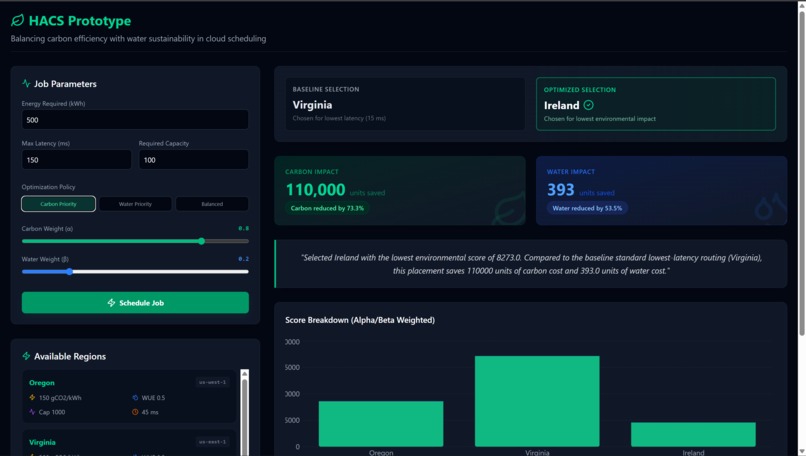
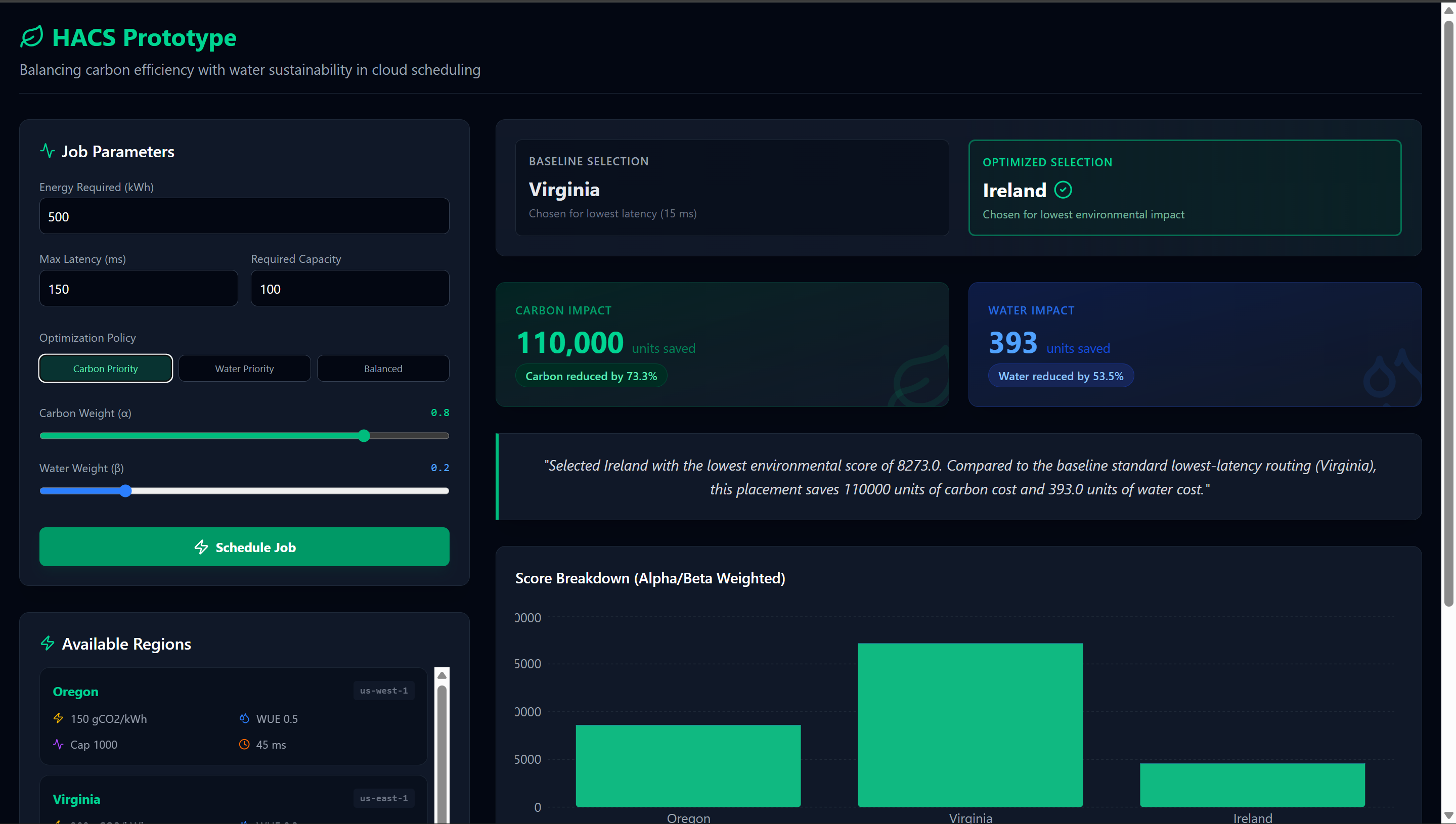
HydraSched dashboard showcasing job input controls and real-time sustainability optimization interface.
Inspiration
Cloud computing is often seen as a solution to reduce environmental impact, especially by optimizing for carbon efficiency. However, while exploring this space, we realized a critical gap — most scheduling systems focus only on reducing carbon emissions while completely ignoring water consumption.
Data centers rely heavily on water for cooling, and routing workloads to certain regions can significantly increase water stress, especially in already water-scarce areas. This hidden trade-off inspired us to rethink how cloud scheduling should work.
We wanted to build a system that does not solve one environmental problem by creating another.
What it does
HydraSched is a hydrocarbon-aware cloud scheduling system that intelligently assigns workloads to data center regions by balancing both carbon emissions and water consumption.
For every incoming job, the system:
evaluates multiple cloud regions calculates carbon cost and water cost applies a weighted optimization model filters regions based on latency and capacity constraints selects the most sustainable region
It also compares results with a baseline scheduler (lowest latency) and clearly shows the environmental savings achieved.
How we built it
We designed HydraSched as a full-stack prototype:
Backend Built using Flask Implements the scheduling logic and scoring engine Uses a mock dataset of global data center regions Exposes APIs for region data and scheduling decisions
The scoring model is defined as:
carbon_cost=E×CI water_cost=E×(WUE+PUE×EWIF)×(1+WSF) final_score=α×carbon_cost+β×water_cost
Where:
E = energy required CI = carbon intensity WUE,PUE,EWIF,WSF = water-related metrics α,β = policy weights Frontend Built using React + Vite Styled with Tailwind CSS Data visualization using Recharts Interactive UI with sliders for policy control
The interface allows users to:
input job parameters adjust carbon vs water priority visualize region comparisons see optimized vs baseline decisions analyze environmental savings Deployment Backend deployed on Render Frontend deployed on Vercel Connected via REST APIs Challenges we ran into
One of the main challenges was designing a model that balances two competing sustainability factors in a way that is both simple and explainable.
Another challenge was ensuring that the system remains realistic. Instead of optimizing purely based on environmental metrics, we had to include real-world constraints like latency and capacity.
We also faced deployment challenges while connecting the frontend and backend across different platforms, handling environment variables, and ensuring seamless API communication.
What we learned Sustainability in computing goes beyond carbon — water is equally critical Trade-off optimization is essential in real-world systems Full-stack deployment requires careful handling of environments and APIs Explainability is key when building decision-making systems What’s next for HydraSched Integrate real-time data from cloud providers Include additional factors like cost and energy pricing Implement dynamic policy adjustment based on real-world conditions Expand into a production-ready cloud optimization layer 🏗️ Built With React Vite Tailwind CSS Recharts Flask Python Gunicorn Render (backend hosting) Vercel (frontend hosting) 🔗 Try it out
👉 Live Demo: https://hydrocarbon-aware-cloud-scheduling-hacs.vercel.app
👉 GitHub Repo: https://github.com/Dharan-K/Hydrocarbon-Aware-Cloud-Scheduling-HACS-

Log in or sign up for Devpost to join the conversation.