ChargeFlow ⚡
Inspiration
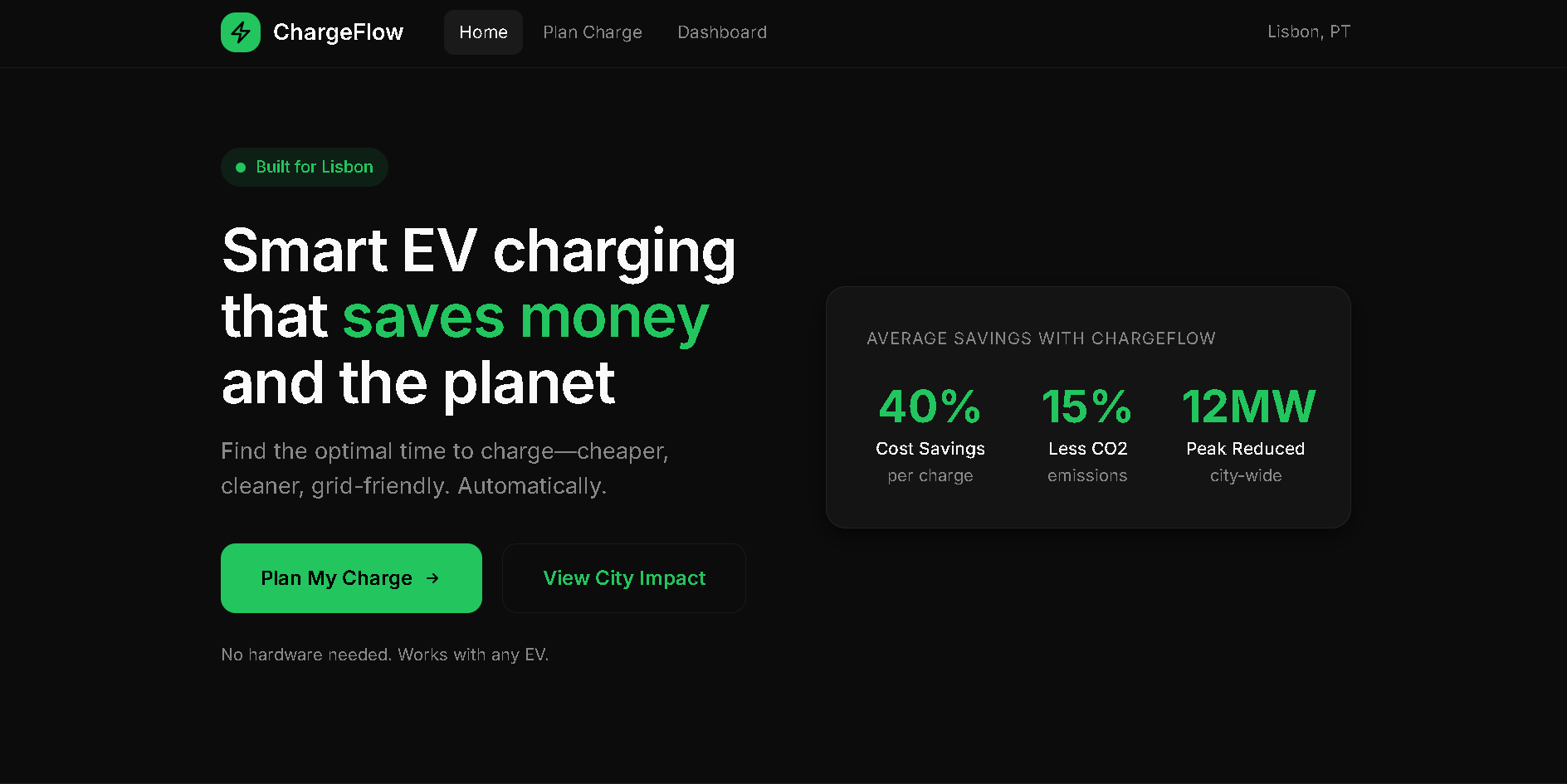
Lisbon is rapidly adopting electric vehicles, but most EV charging still happens during peak hours—when electricity is most expensive, most carbon-intensive, and most stressful for the grid.
As cities push toward sustainability, we saw a growing mismatch between when people charge and when energy is clean and affordable. Today's solutions either optimize for cost alone or rely on expensive infrastructure upgrades. We wanted a smarter, software-first approach.
ChargeFlow was inspired by a simple question:
What if every EV charger in a city could work together as a coordinated energy asset?
What It Does
ChargeFlow is an intelligent EV charging planner that schedules charging when electricity is:
- Cheapest
- Cleanest
- Most grid-friendly
Instead of optimizing for a single metric, ChargeFlow balances economic, environmental, and infrastructure goals to produce schedules that work for drivers and cities.
How It Works
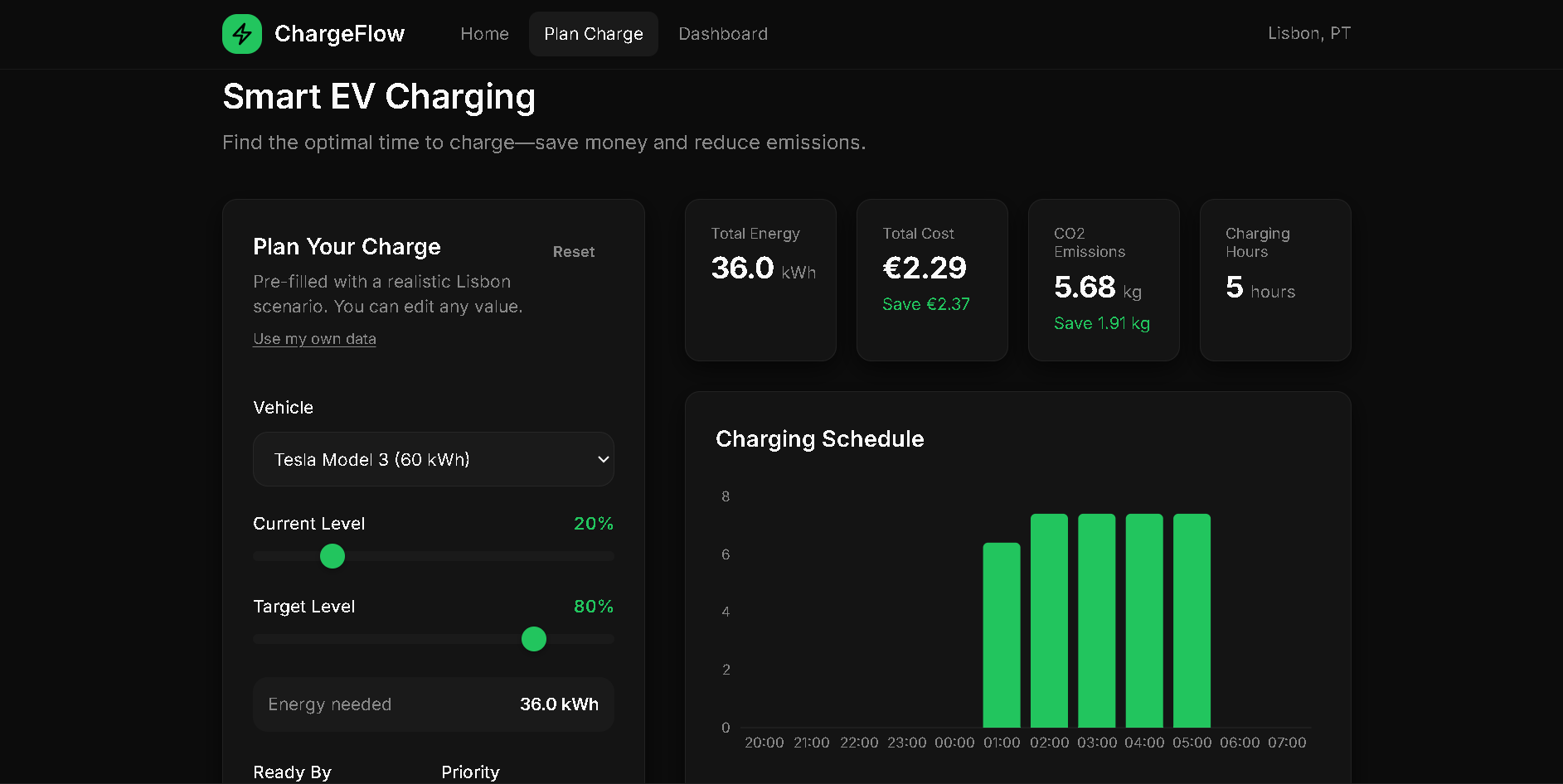
Users simply enter their:
- Vehicle model
- Current charge level
- Desired charge level
- Charging deadline
ChargeFlow then generates an optimized charging schedule that balances three key objectives:
- 💰 Cost Savings - Charge when prices are lowest
- 🌱 CO₂ Reduction - Charge when renewable energy is abundant
- ⚡ Grid Load Smoothing - Reduce strain during peak demand
Each possible charging window is scored using a weighted multi-objective model:
Score = wc · Cost + we · CO₂ + wg · Grid Load
Lower score is better, and all terms are normalized so no single metric dominates unfairly. Users can choose priorities (cheapest, cleanest, or balanced) to transparently explore tradeoffs.
City-Scale Impact
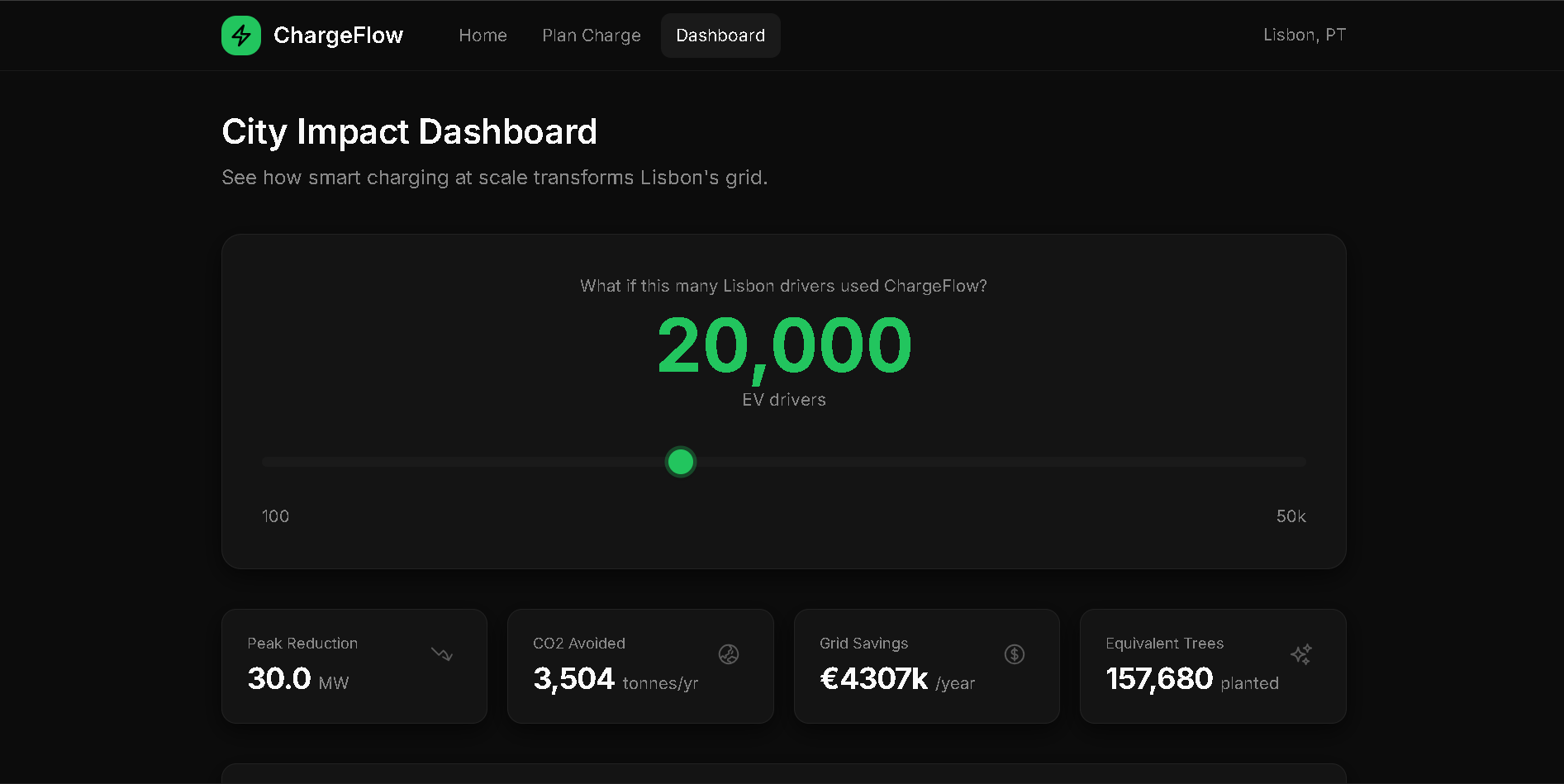
At the city level, ChargeFlow simulates how thousands of drivers using smart scheduling could dramatically reduce peak demand and emissions across Lisbon—turning individual chargers into a coordinated virtual power plant.
This demonstrates how small individual behavior shifts can scale into meaningful city-wide benefits without requiring new infrastructure.
How We Built It
Frontend & UI
- Next.js + TypeScript for a responsive, type-safe interface
- Tailwind CSS for a sleek, dark-mode design
- Recharts for interactive data visualizations
Core Engine
- Custom multi-objective scheduling algorithm
- City-scale simulator to model grid impact
- Scenario modeling (weekday peak, sunny weekend, winter evening)
Challenges We Faced
Data & Realism
One of the biggest challenges was modeling realistic grid behavior without access to live utility APIs. We had to:
- Design believable demand curves that mirror actual grid patterns
- Simulate realistic price fluctuations throughout the day
- Approximate carbon intensity variations based on renewable availability
- Ensure results felt authentic and not artificially optimized
Solo Development
Another significant challenge was building a polished user experience as a solo developer while simultaneously implementing:
- Complex scheduling algorithms
- Multi-scenario simulations
- Performance optimizations
- Responsive design across devices
Balancing technical depth with UX clarity required careful prioritization and iteration.
What We Learned
This project reinforced several key insights:
- Small changes, massive impact - Individual scheduling decisions compound into significant grid-scale benefits
- UX is as critical as algorithms - The best optimization means nothing if users can't understand or trust it
- Multi-objective > single-metric - Balancing cost, emissions, and grid health produces better real-world outcomes
- Software-first sustainability - Meaningful environmental gains are possible without expensive hardware upgrades
What's Next for ChargeFlow
Near-Term
- Consumer-facing charging assistant (mobile app + notifications)
- Live grid integration (real-time pricing and carbon intensity)
- AI-based demand forecasting (predictive scheduling)
Long-Term
- Utility demand-response platform
- Vehicle-to-grid (V2G) support
- Multi-city expansion beyond Lisbon
The Vision
ChargeFlow transforms millions of uncoordinated chargers into a virtual power plant—starting with Lisbon and scaling to cities worldwide.
By making smart charging effortless, we can accelerate the clean energy transition while saving drivers money and reducing grid stress.
Built for a smarter, cleaner urban energy future.
Built With
- city-simulation-engine
- custom-scheduling-algorithm
- next.js
- node.js
- recharts
- tailwind-css
- typescript

Log in or sign up for Devpost to join the conversation.