Inspiration
With the newfound prevalence of electric vehicles and the urgency of the earth's climate state, it has become more important to increase the accessibility and ease of adoption of environmentally friendly alternatives.
What it does
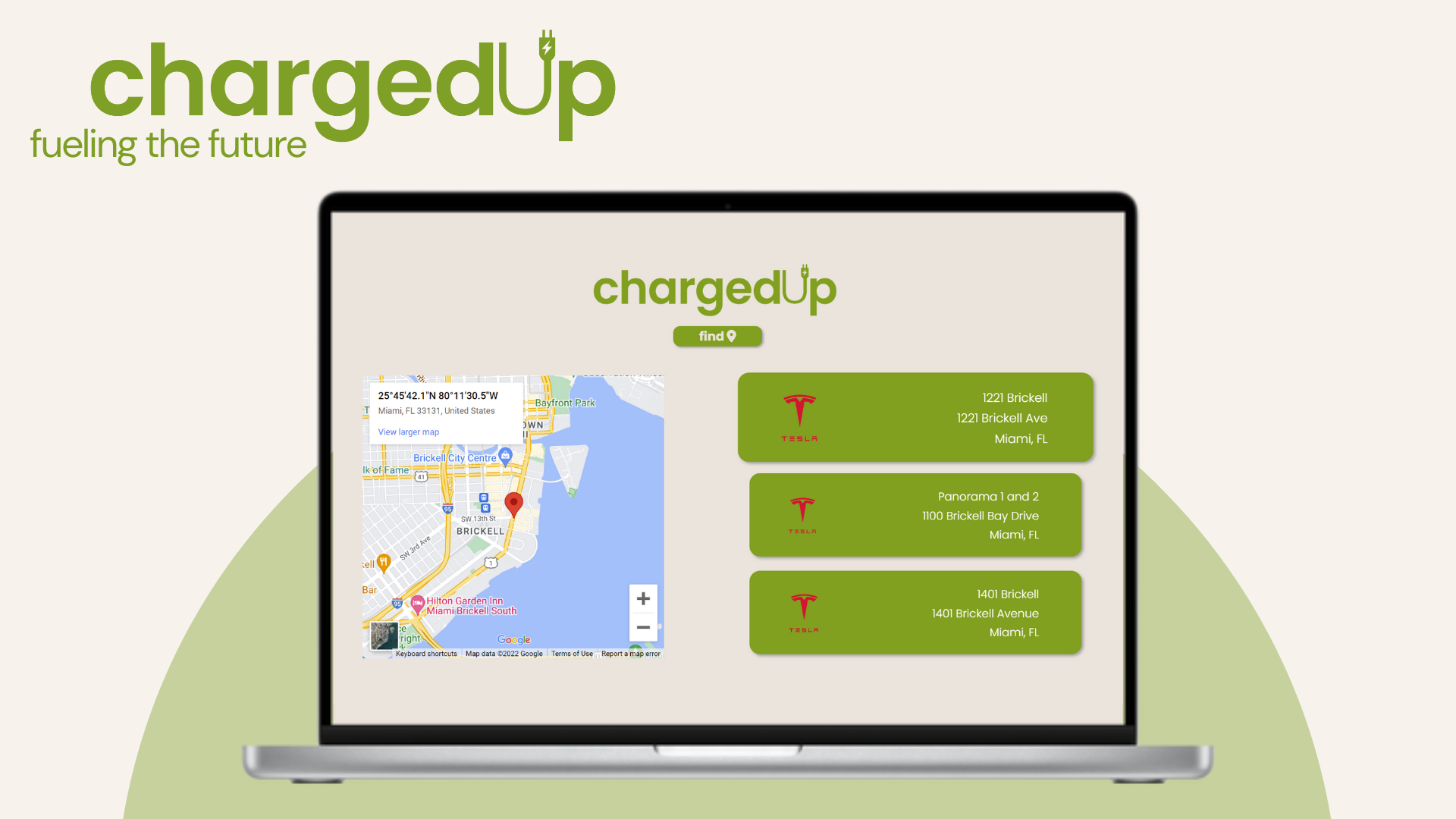
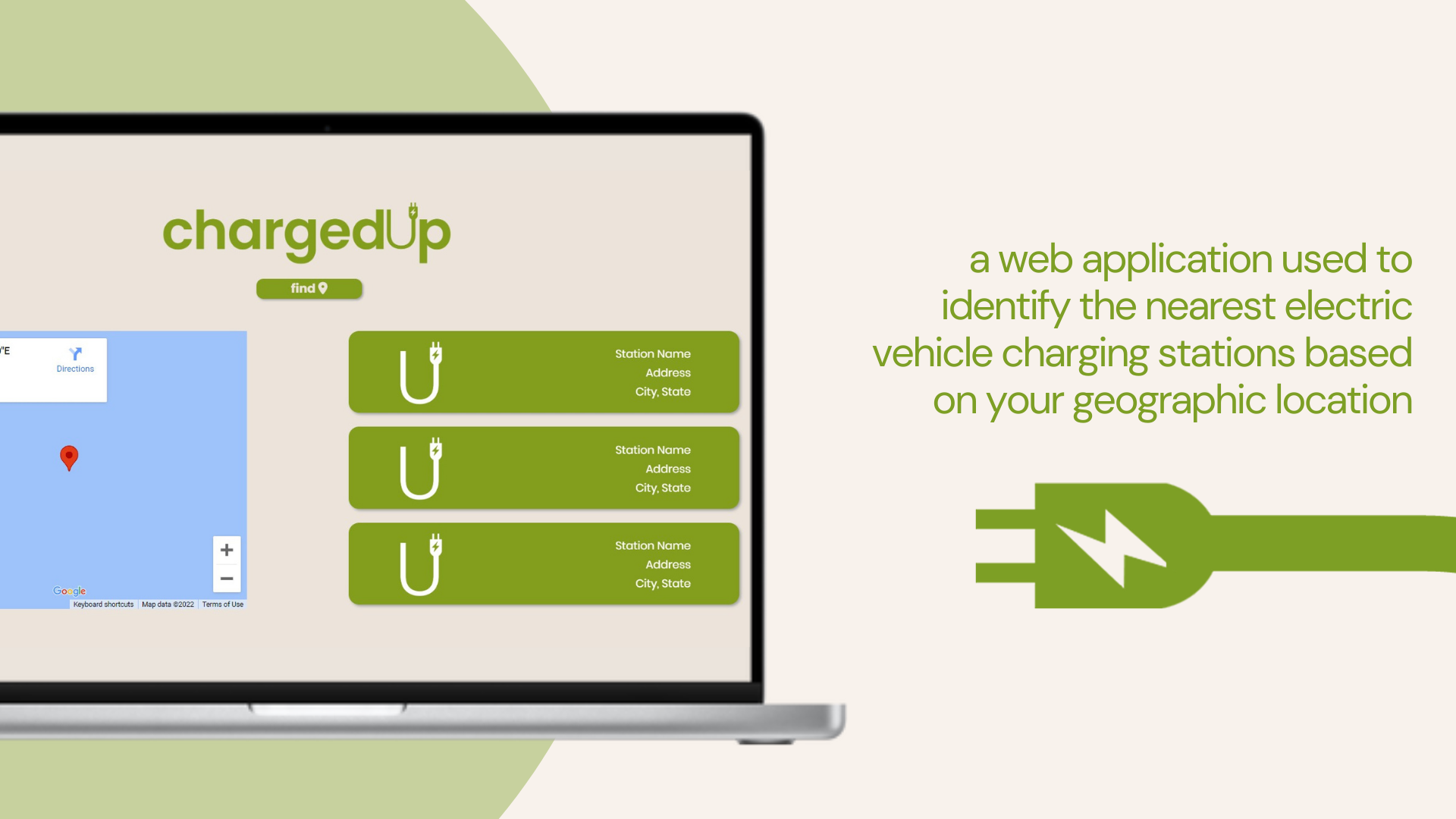
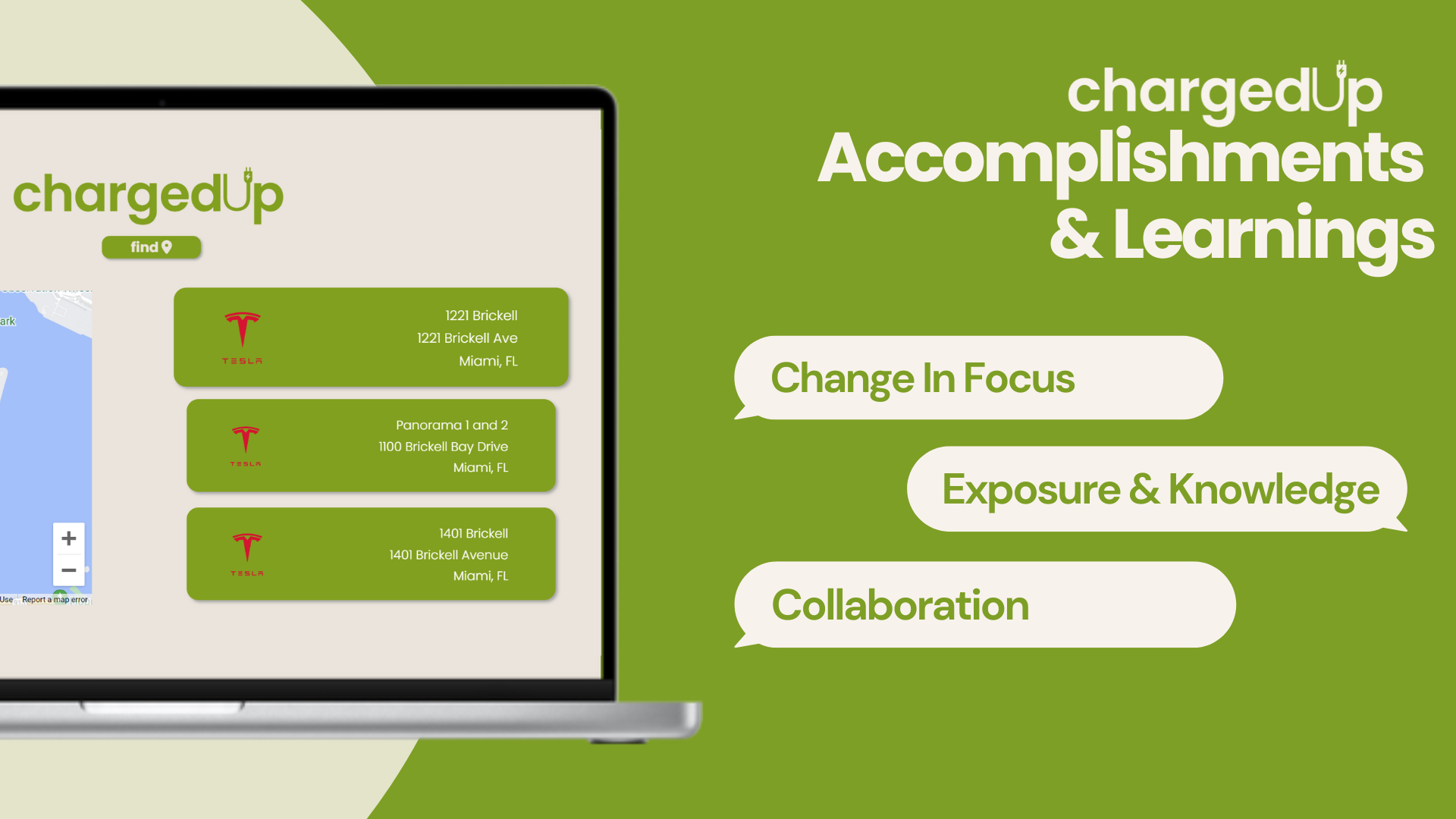
This web application finds the user's current location and pinpoints it on an embedded Google Map. Then, using the user's location, the three closest electric vehicle charging locations are displayed.
How we built it
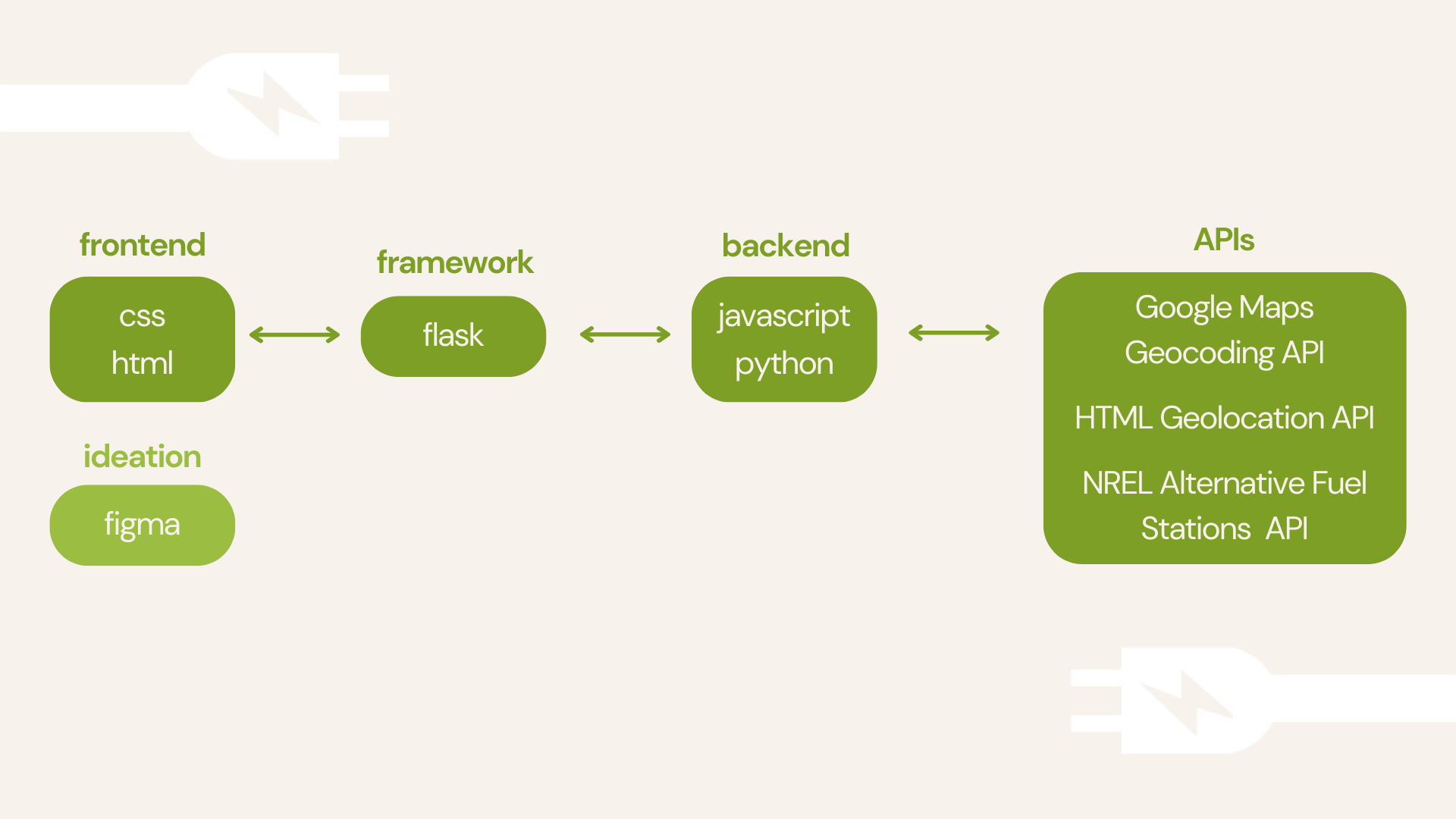
Our front-end was created with HTML/CSS and Javascript. This was connected with a Python Flask backend. We also integrated the HTML Geolocation API, the NREL (National Renewable Energy Laboratory) developer network API, and the Google Maps Geocoding API.
Challenges we ran into
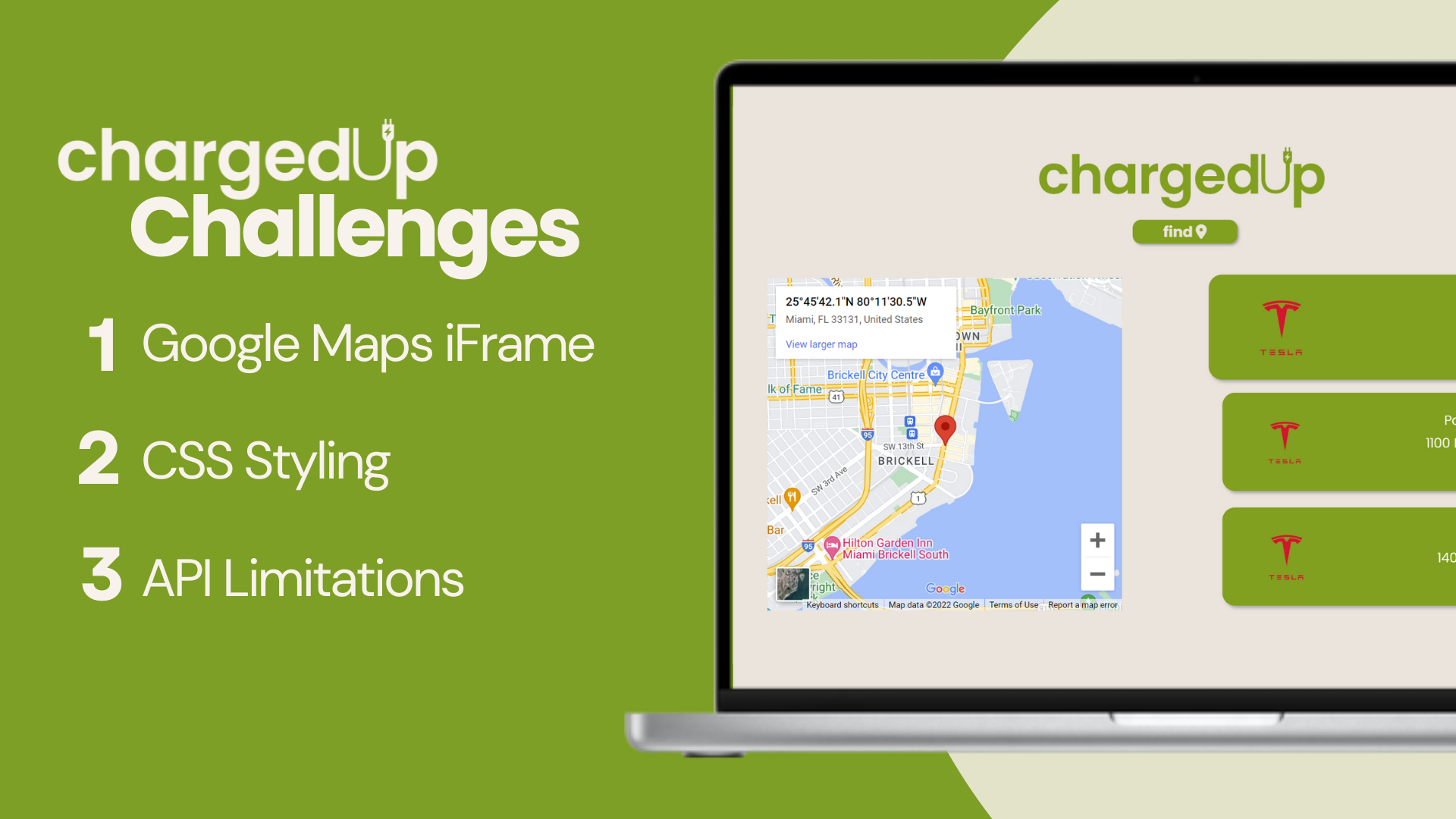
Initially, we encountered the issue of being able to dynamically change the marker on the embedded Google Maps iFrame - we ran into a CORS error when trying to reload the map. We realized that we had to use .replaceChild instead. Next, we had some challenges with CSS styling, specifically using flexbox and being able to actualize the ideas and formatting that we had. Next, we had some limitations with the APIs that were accessible to us - hence, the data we could use in our calculations and product offerings were limited.
Accomplishments that we're proud of
We're very proud of how we constantly adapted despite the challenges we encountered and the limitations in store for us. We initially intended on developing an application to find the nearest gas station and the prices of the fuel. However, the price information was unavailable on any API due to the constantly changing nature, and we had further API limitations with non-electric vehicle charging stations. So, we adapted and took this as an opportunity for innovation - we discovered a more valuable problem space. We're also proud of fully completing our project and accomplishing what we set off to complete.
What we learned
We gained exposure and knowledge in the Python Flask web framework, creating a full-stack application, effectively styling using CSS, collaborating and building strong work relationships with new teammates, HTTP requests, and integrating APIs.
What's next for chargedUp
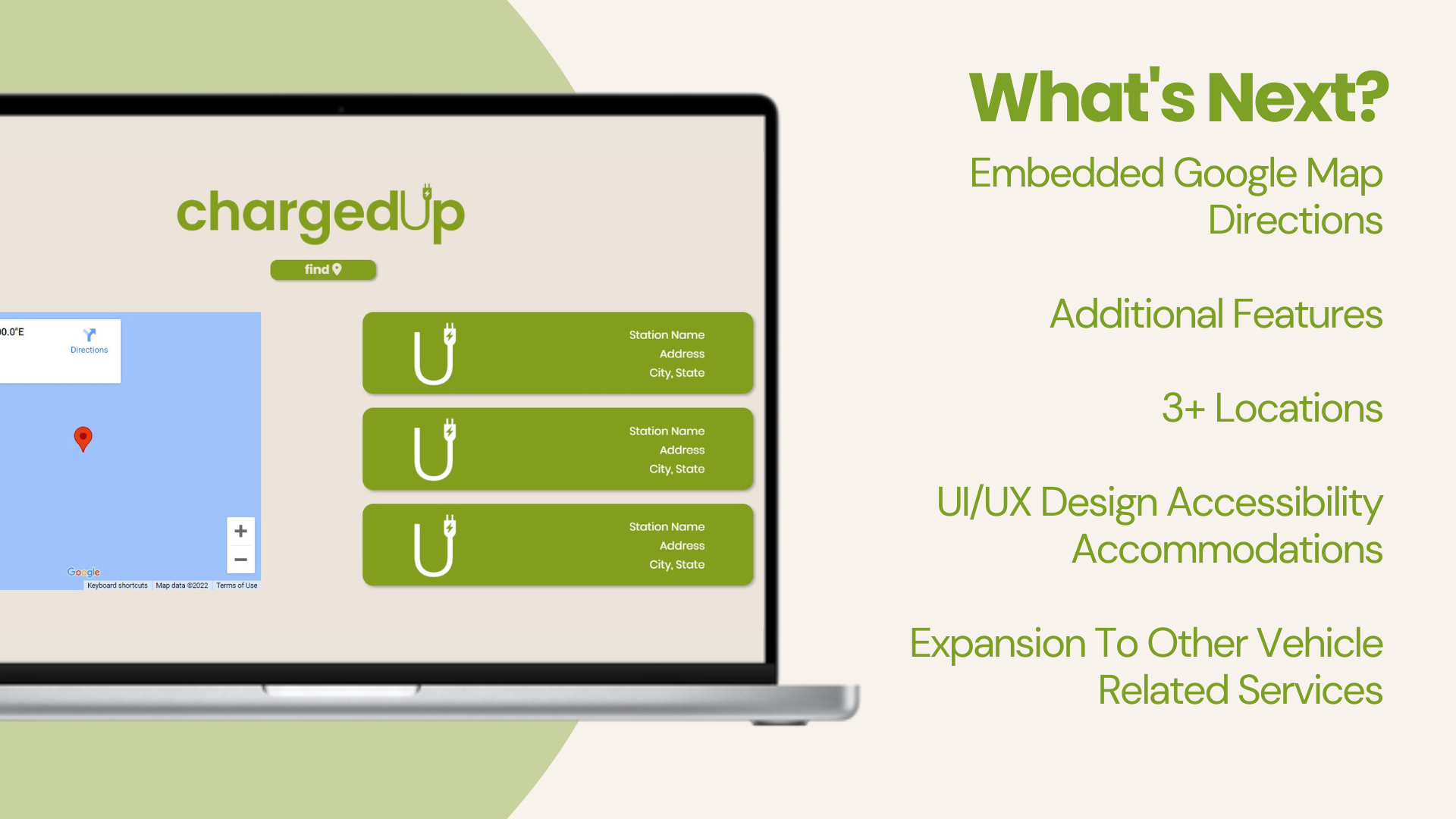
- [ ] Plotting the three closest electric vehicle charging locations on the embedded Google Map, allowing users to get directions straight to the location
- [ ] Including the prices of charging, and other further information in the three boxes
- [ ] Including more than three locations on the list, and allowing for sorting based on the user's preferred information
- [ ] Further accessibility considerations in terms of UI/UX design, including tooltips, instructions, and other improvements
- [ ] Expanding to offer the same service for gas stations, or other vehicle-related services
Built With
- css
- figma
- flask
- google-maps-geocoding-api
- html
- html-geolocation-api
- javascript
- nrel-alternative-fuel-stations
- python
- the-nrel-(national-renewable-energy-laboratory)-developer-network-api

Log in or sign up for Devpost to join the conversation.