-
-
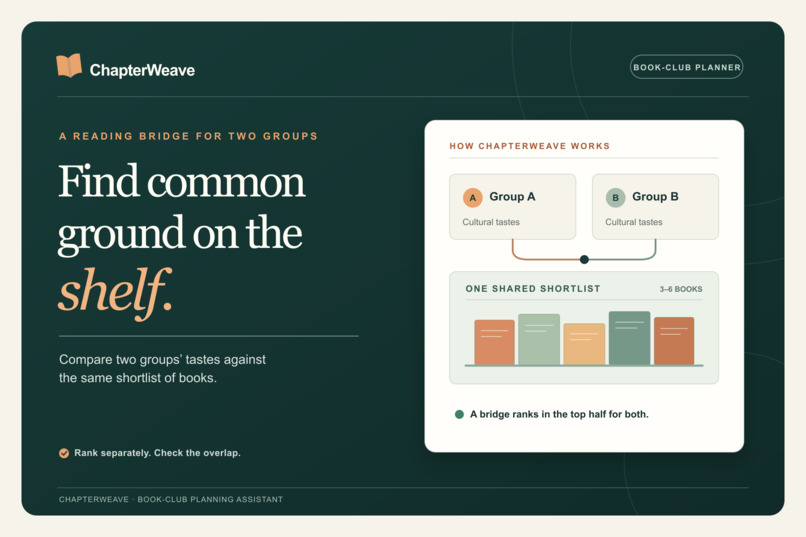
Two groups, one shortlist: ChapterWeave finds a shared top-half book or abstains.
-
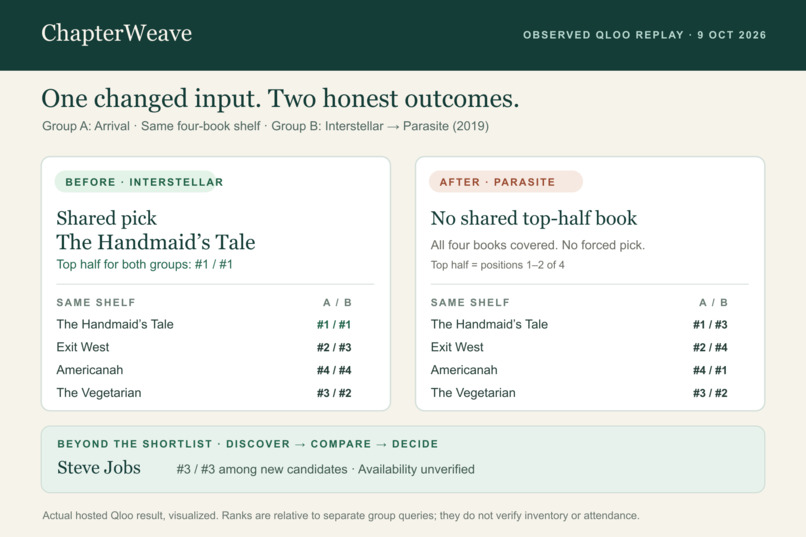
Observed Qloo replay: one group change turns a shared pick into abstention; the outside-shelf lead is unverified.
Why we built it
Book-club facilitators can bring together two groups with different tastes, but they still need to choose from books they can actually obtain. A generic list ignores both constraints. ChapterWeave helps a facilitator make an explainable choice—or say honestly that the current shelf has no shared fit.
What it does
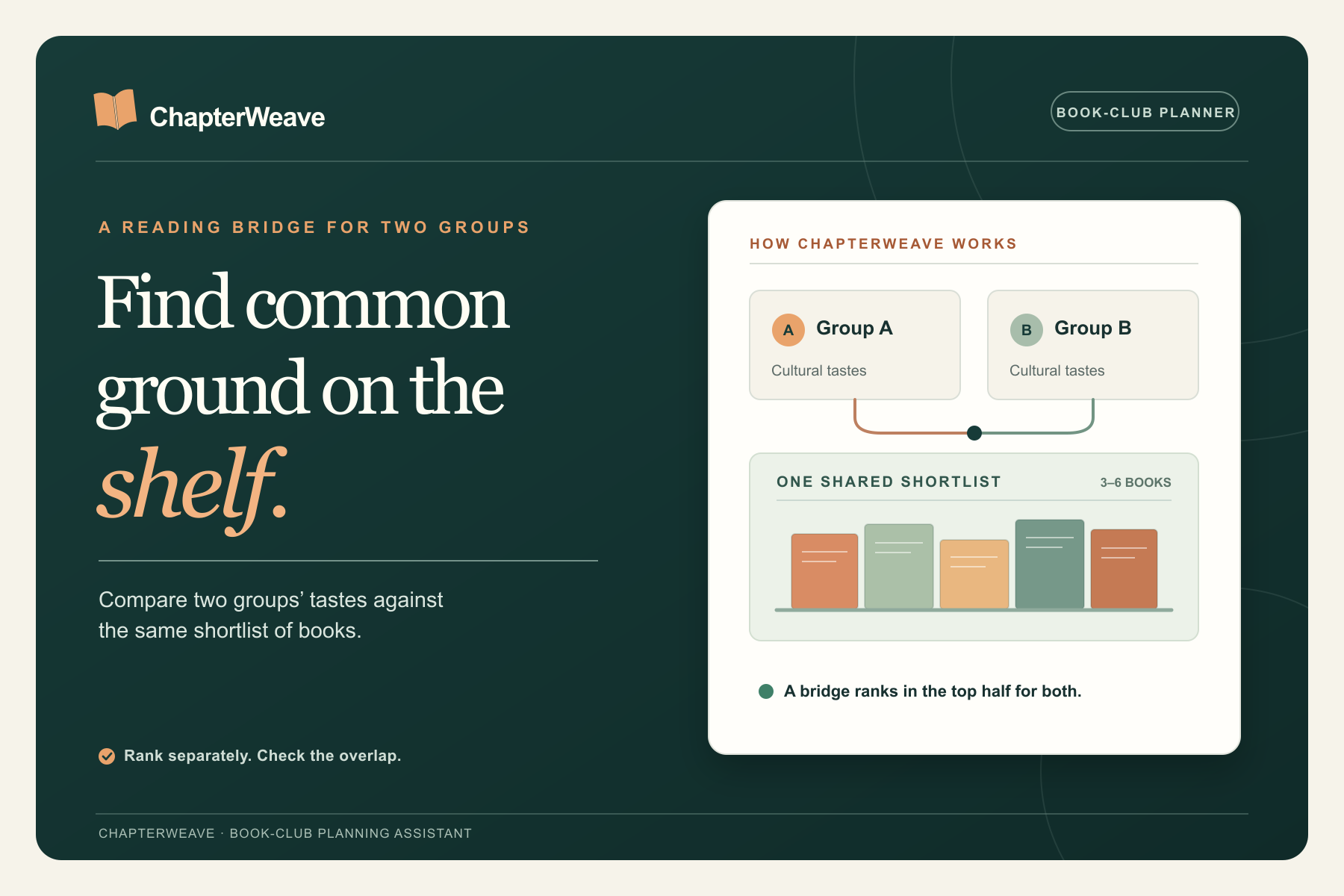
The facilitator chooses one or two Qloo catalog matches for each group and a common shortlist of three to six books. ChapterWeave asks Qloo to rank that same shelf separately for each group. It recommends a book only if it reaches the top half of both lists. The rule compares rank positions within each list, never raw affinity scores across separate Qloo queries. Missing coverage or no shared top-half book makes it abstain.
After abstaining, a bounded search can find books beyond the shelf. These are clearly marked as unverified leads. The facilitator can reject a book they cannot obtain or confirm one they can, replace a shortlisted book, and compare again. The displayed trace shows the discovery, comparison, and decision steps that actually ran. Human confirmation remains part of the workflow. A facilitator can copy a decision brief with both groups’ ranks and the availability caveat.
Try the live example
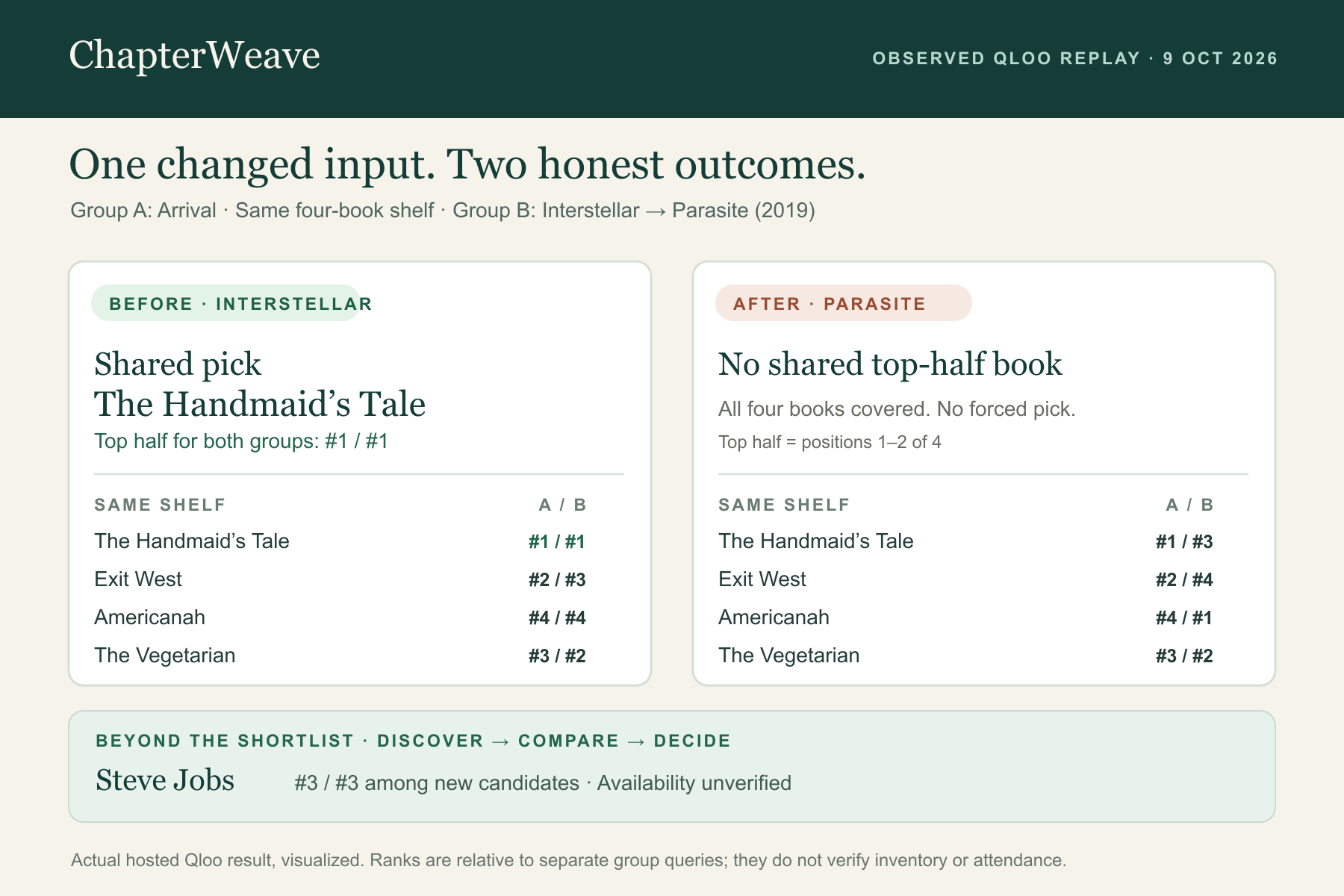
At https://chapterweave.bmgg.eu/ choose “Load illustrative live example,” then “Find a reading bridge.” The first plan compares Arrival and Interstellar against the same four-book shelf and, in our October 9 replay, placed The Handmaid's Tale at #1 for both groups. Then change only Group B to Parasite (2019) and compare again. The two plans appear side by side. In our replay, no shortlisted book reached both top-two lists, so ChapterWeave abstained and surfaced Steve Jobs at #3/#3 among newly discovered books. That book is an unverified lead; we did not check its availability or run a replacement plan. Qloo ranks may change.
How we built it
JavaScript implements the planner and browser flow. A private Cloudflare Worker mediates Qloo Search and Insights requests, validates inputs, limits calls, and keeps the event key out of the browser. Cloudflare Pages serves the working interface and same-origin API at chapterweave.bmgg.eu. Offline tests cover ranking, abstention, recovery, key handling, limits, and the example. We also replayed the two-plan example against Qloo's event API. The public MIT-licensed source and setup instructions are at https://github.com/Furan666/chapterweave.
What we learned
The useful Qloo signal is each group's position over the same shortlist, not a comparison of raw scores across separate API queries. ChapterWeave does not know local inventory, individual preferences, or attendance. Its result is a transparent planning aid, not an automatic purchase decision.
Built With
- cloudflare
- javascript
- pages
- qloo
- workers

Log in or sign up for Devpost to join the conversation.