
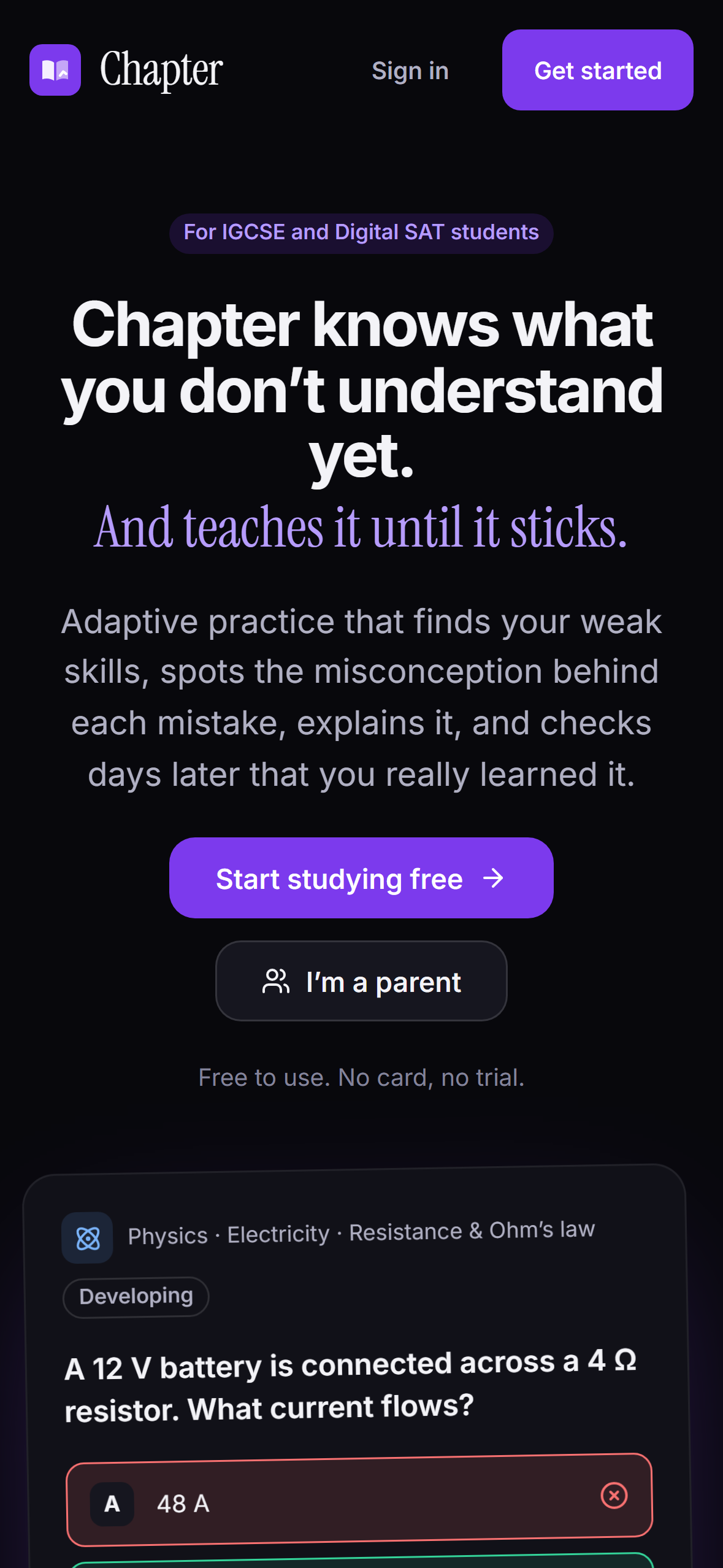
Studying has become incredibly fragmented.
Students jump between textbooks, past papers, YouTube videos, notes, AI chatbots, and revision websites, but most of these tools only solve one part of the learning process. They can give you an answer, but they don't necessarily understand why you got it wrong, remember your weaknesses, or adapt the next lesson to you.
That is where Chapter started.
What Inspired Chapter
The idea came from a simple question:
What if an AI tutor didn't just answer your questions, but actually understood how you learn?
Instead of treating every student like a blank slate, Chapter is designed around the idea of building a persistent learning profile.
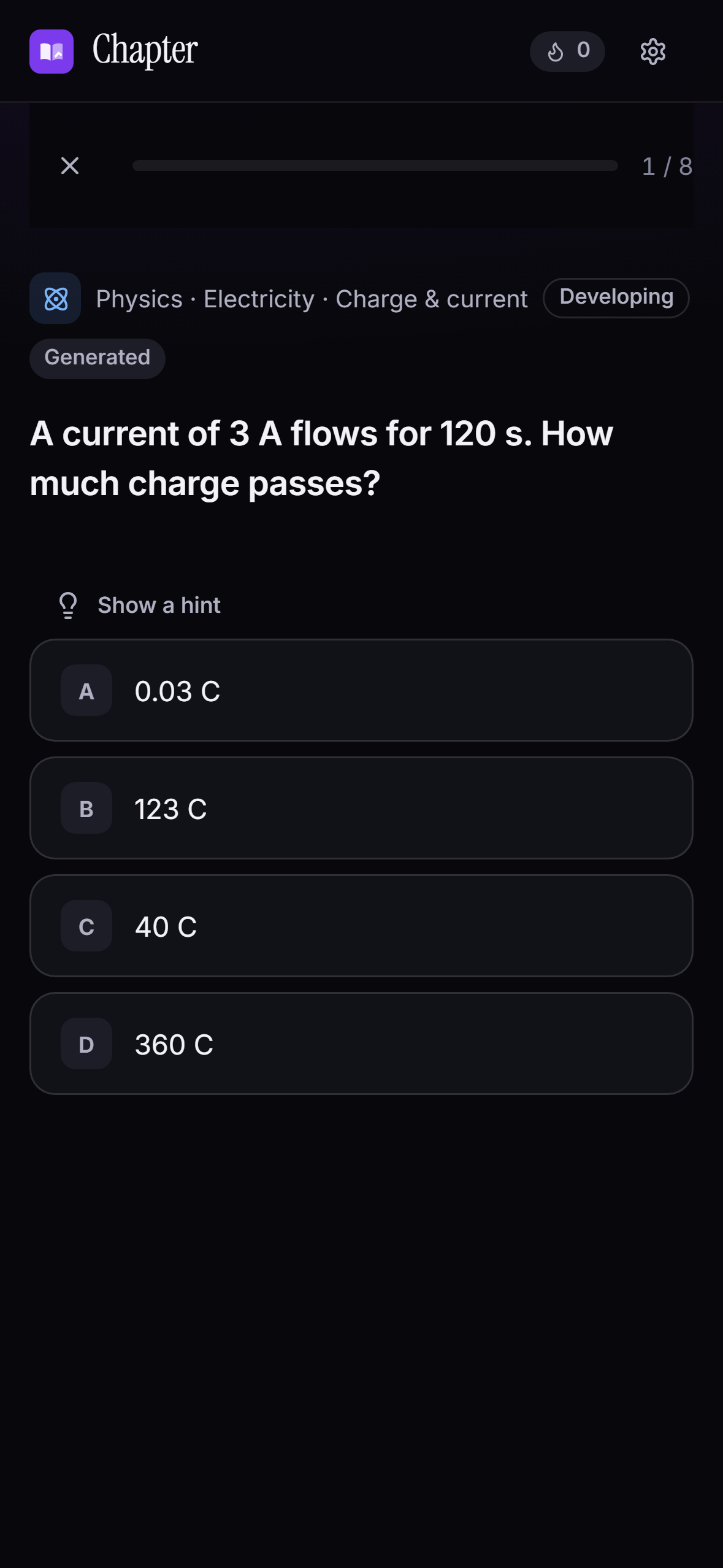
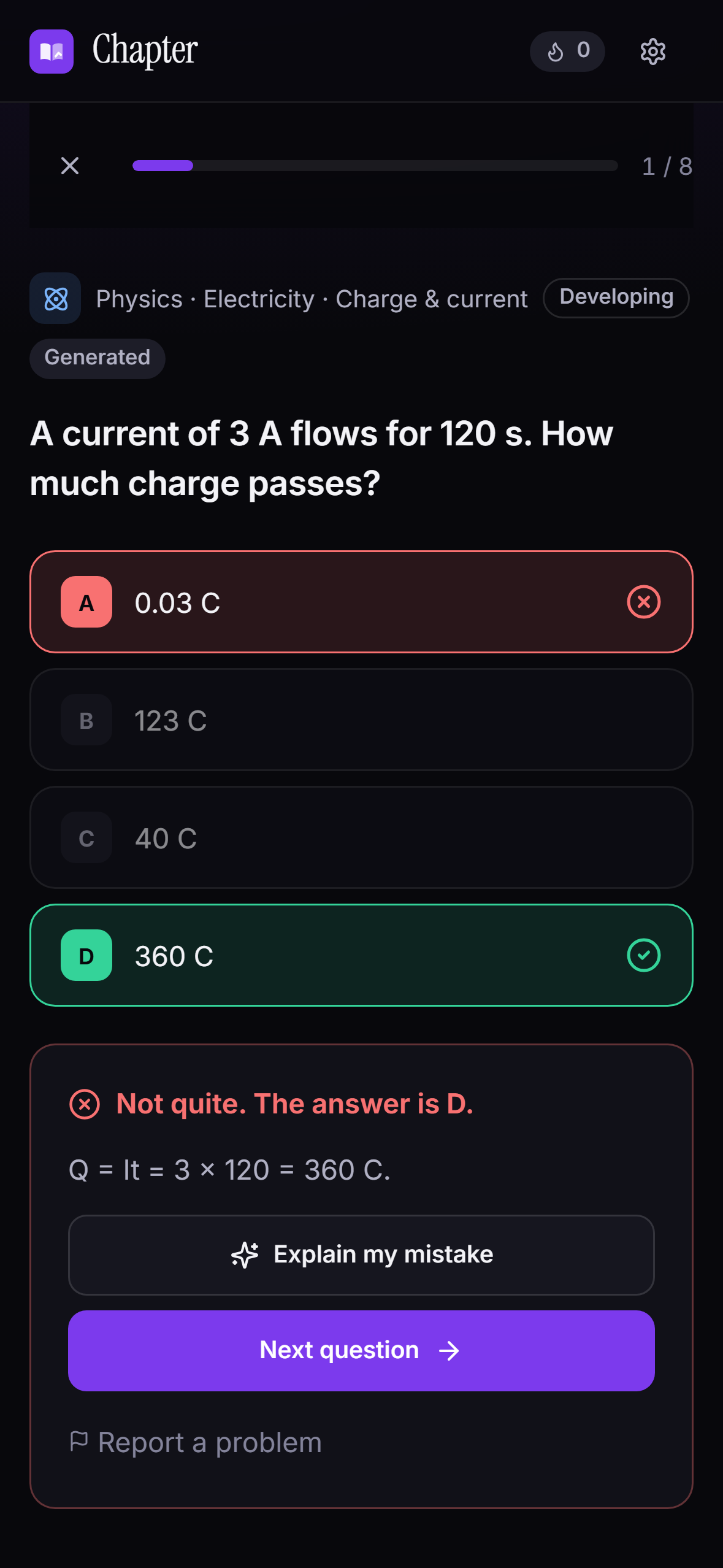
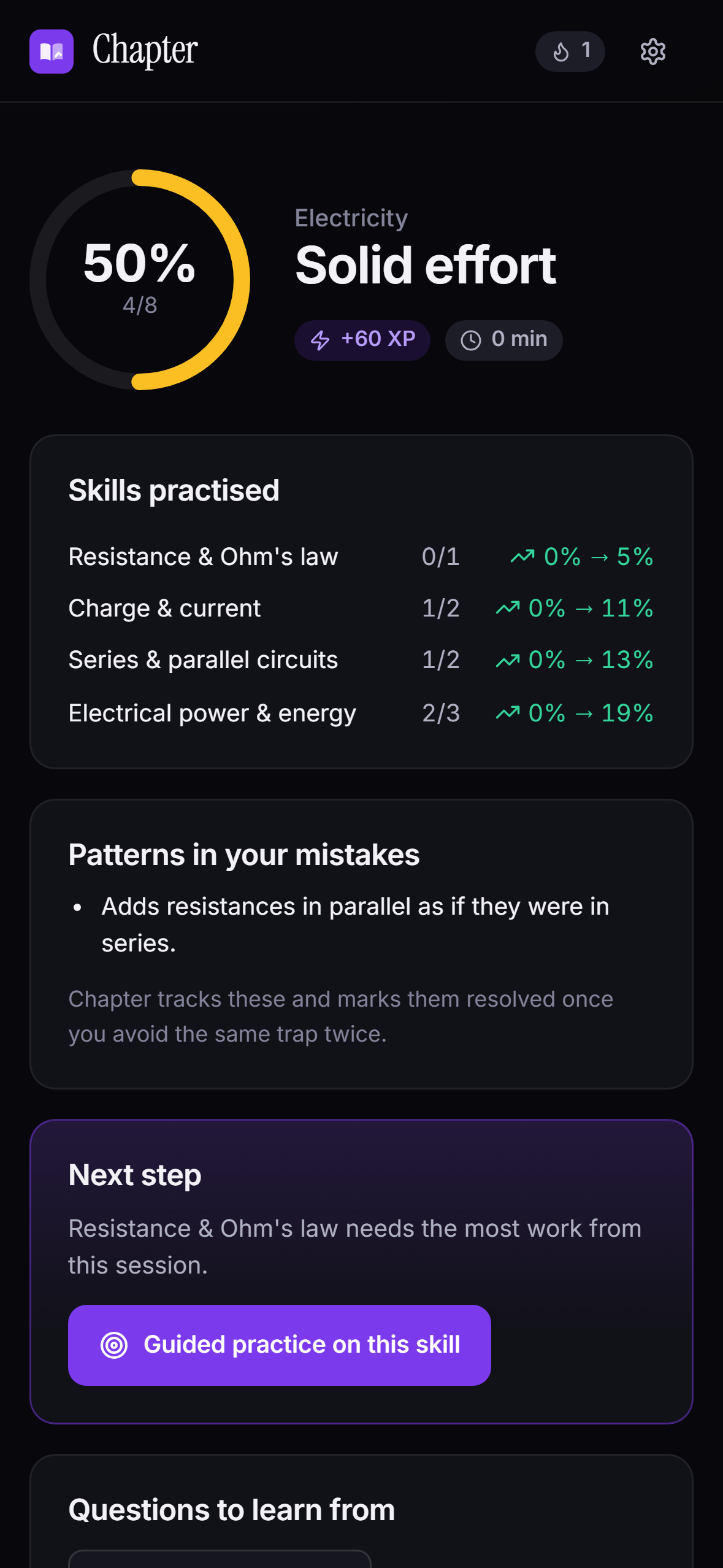
A student can bring in a past-paper question, ask for an explanation, get a hint instead of the answer, translate difficult material, and receive targeted help. Over time, Chapter tracks patterns in the student's learning and uses them to make future studying more useful.
The goal isn't to replace teachers or textbooks. It's to make the gap between I don't understand this and I can solve this myself much smaller.
What We Buil
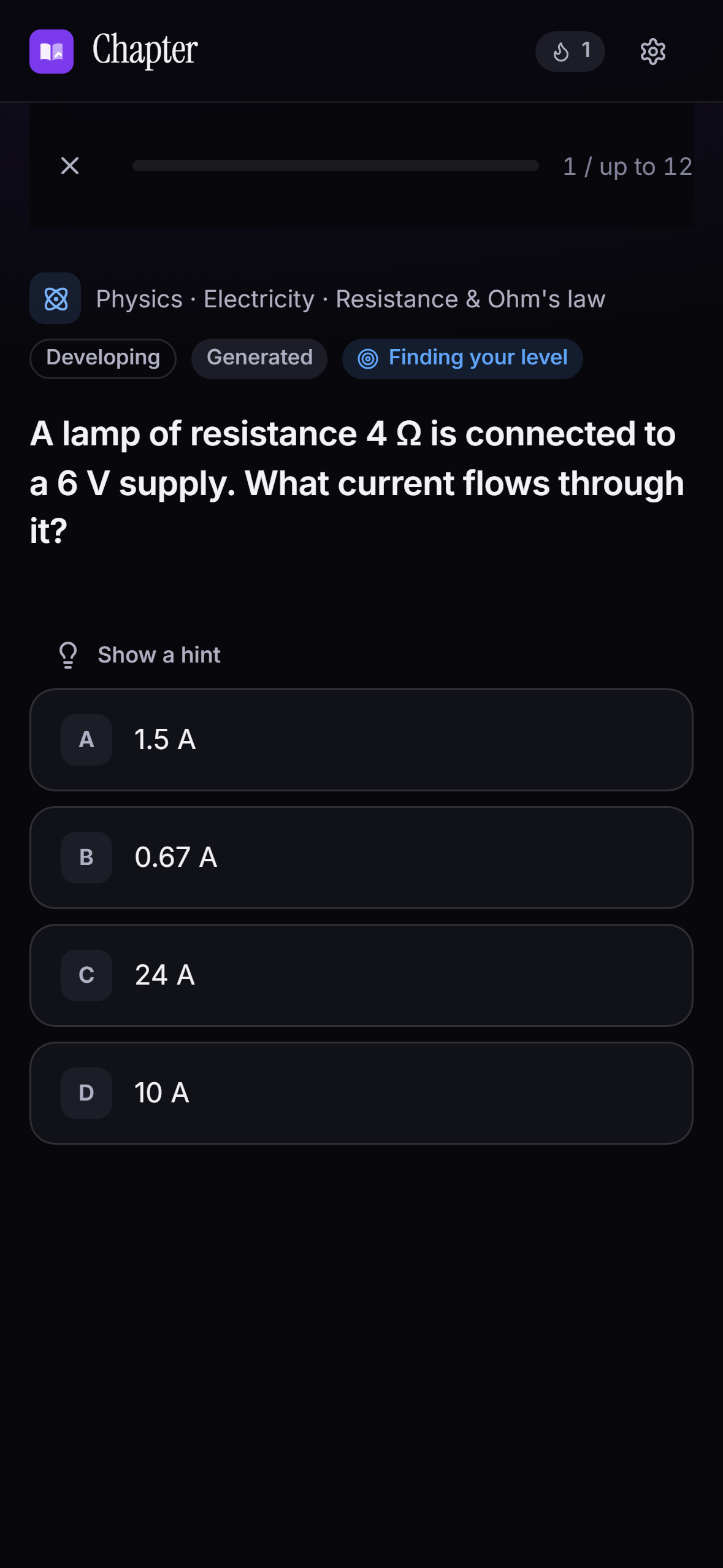
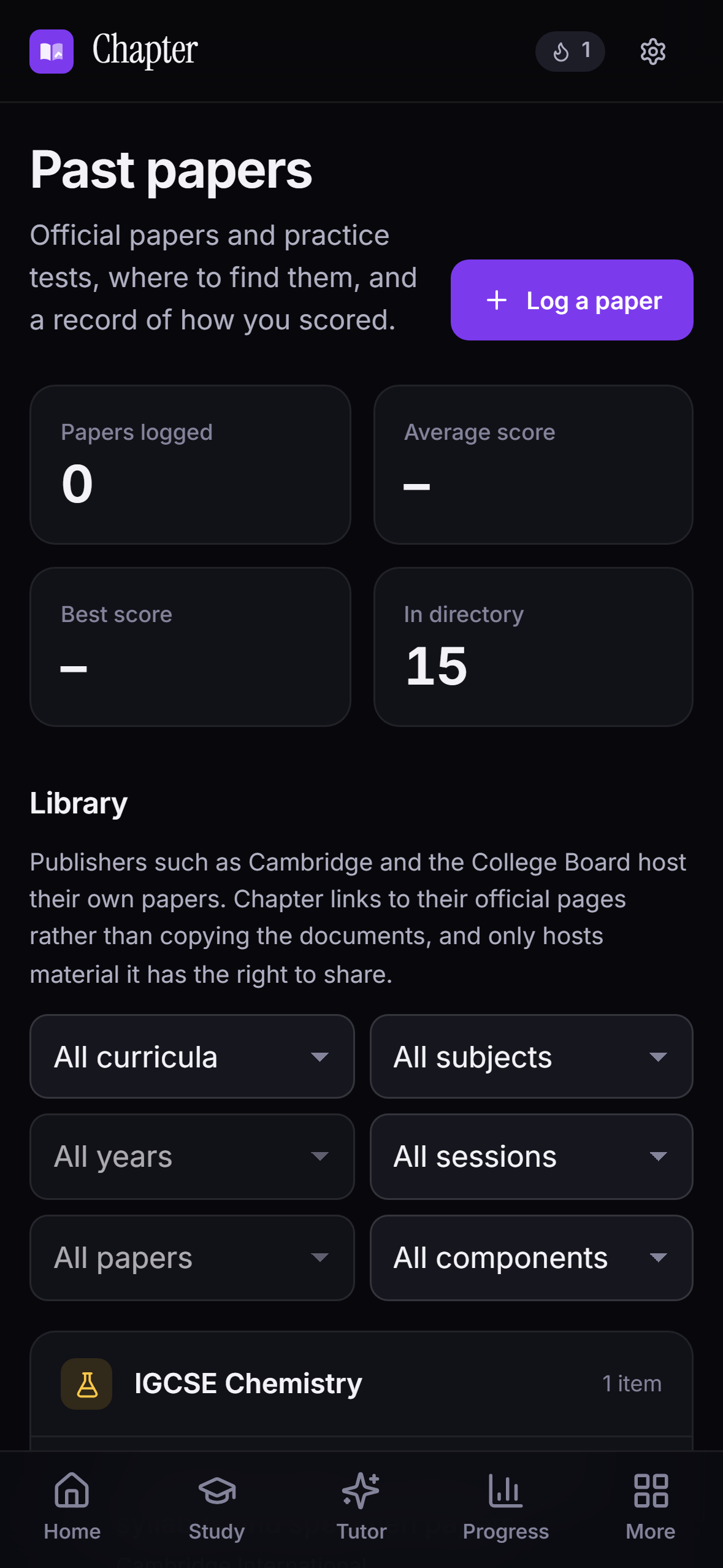
Chapter is an AI-powered study platform covering subjects such as Biology, Chemistry, Physics, Mathematics, Computer Science, Economics, English, and Business, alongside SAT preparation.
Students can:
- 📸 Scan questions from past papers and study material
- 🧠 Ask AI to explain concepts step-by-step
- 💡 Request hints instead of complete answers
- 🌍 Translate difficult questions and explanations
- 📚 Study across multiple subjects and exam formats
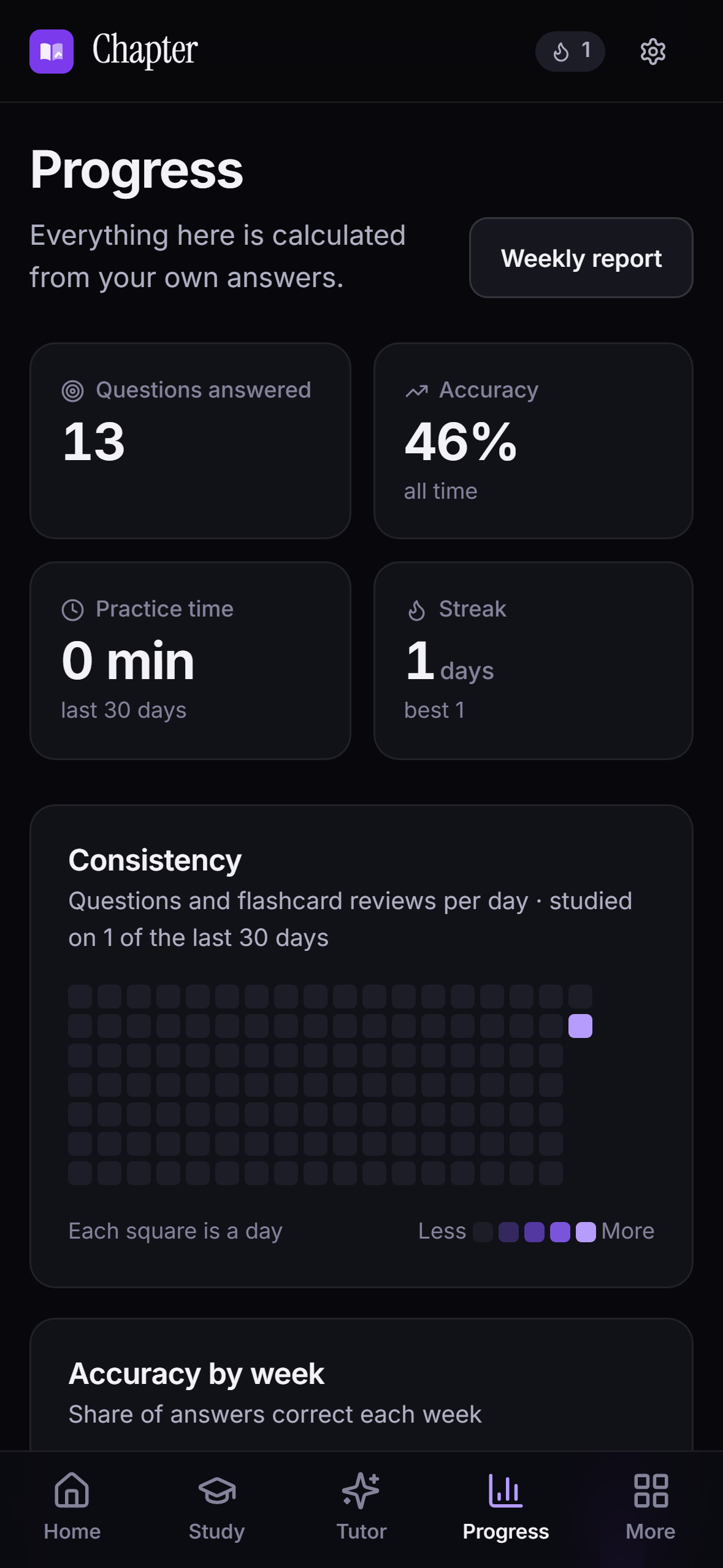
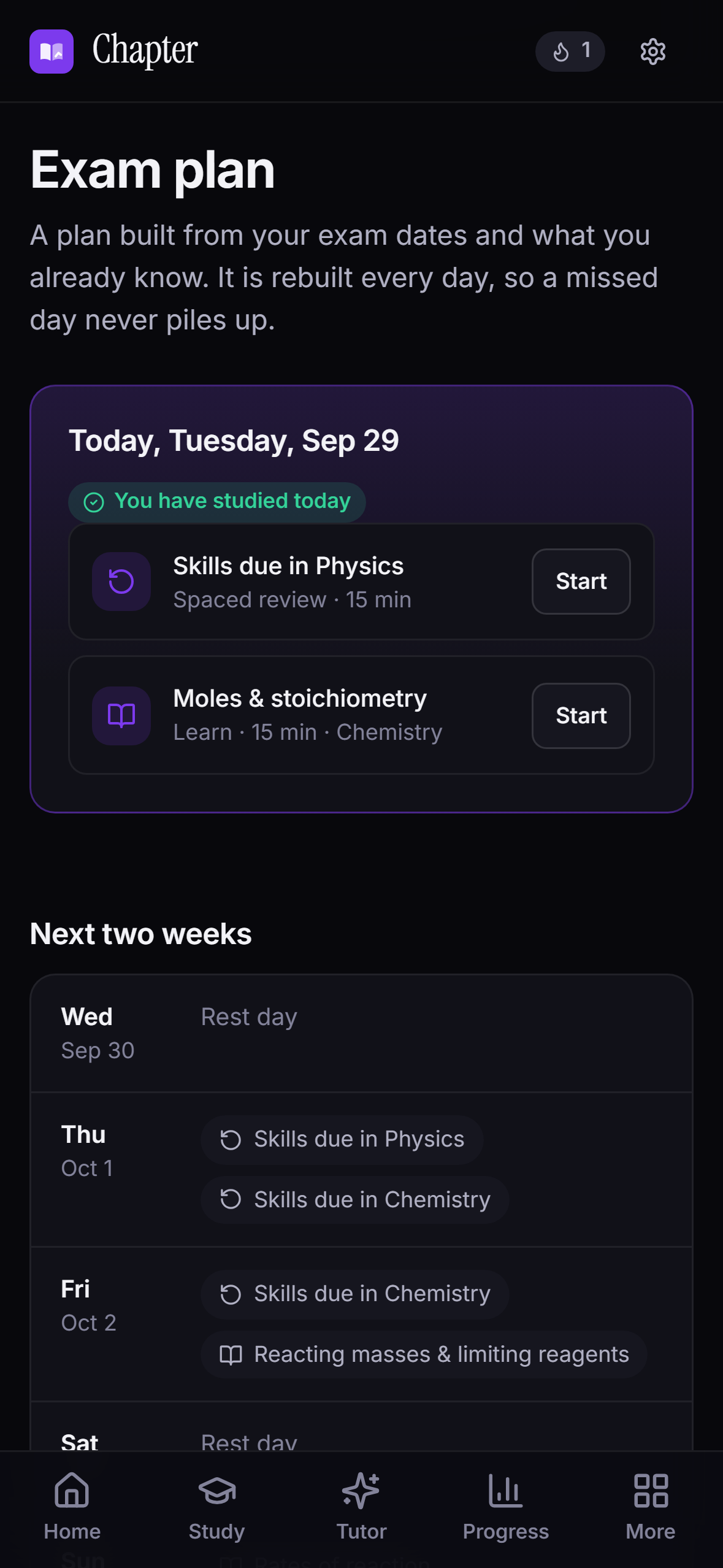
- 📈 Track progress and identify areas that need more work
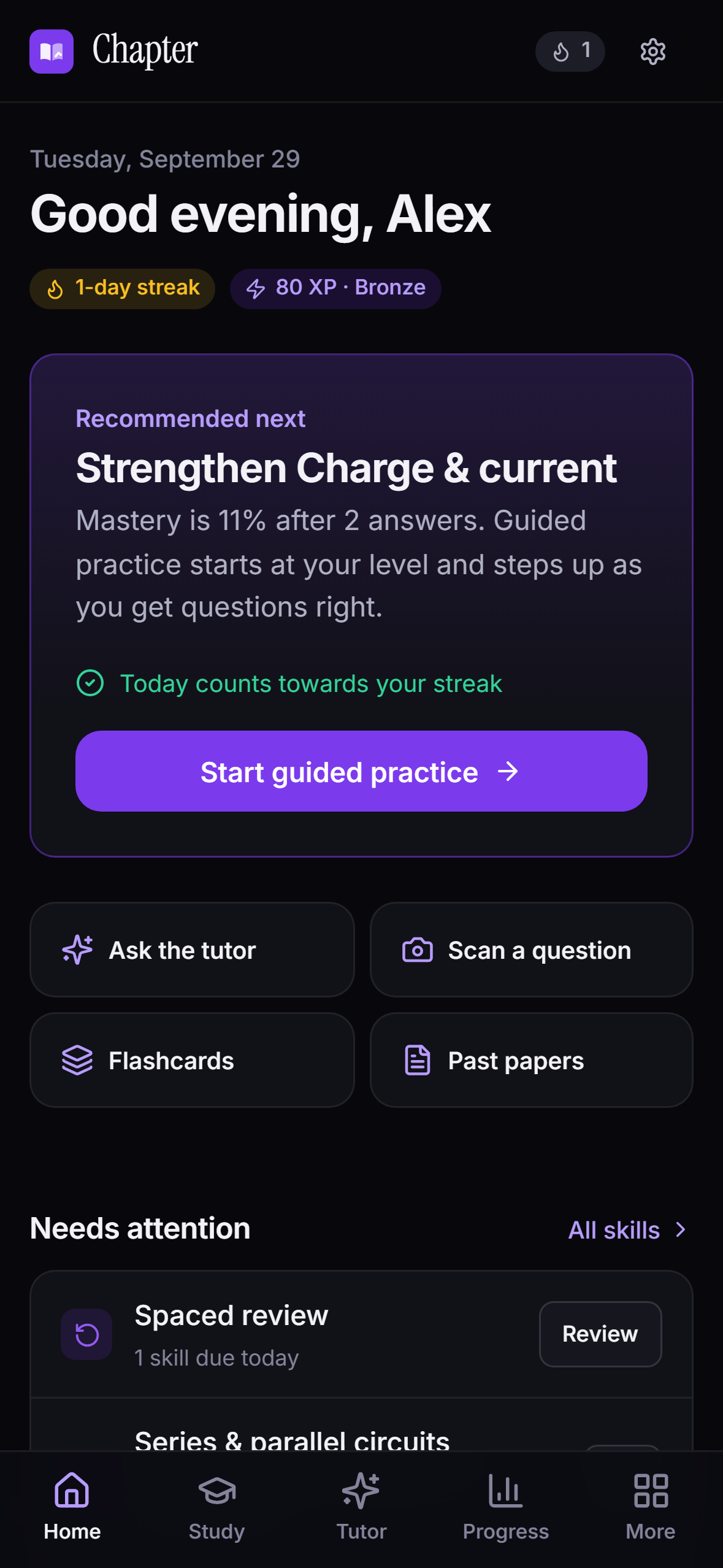
- 🔥 Build streaks, goals, and study habits
- 🏆 Participate in leagues and XP-based progression
- 🤖 Get personalized help based on their previous learning
We also designed Chapter with a parent side in mind, allowing parents to understand progress without turning the product into a surveillance dashboard.
How We Built It
Chapter was built as a full-stack application rather than a simple AI chat interface.
The frontend was designed around a dark, glass-style interface with a focus on making the product feel like a polished study platform rather than an AI wrapper.
Behind the interface, we built systems for:
- Authentication and user accounts
- Persistent student progress
- AI-powered tutoring
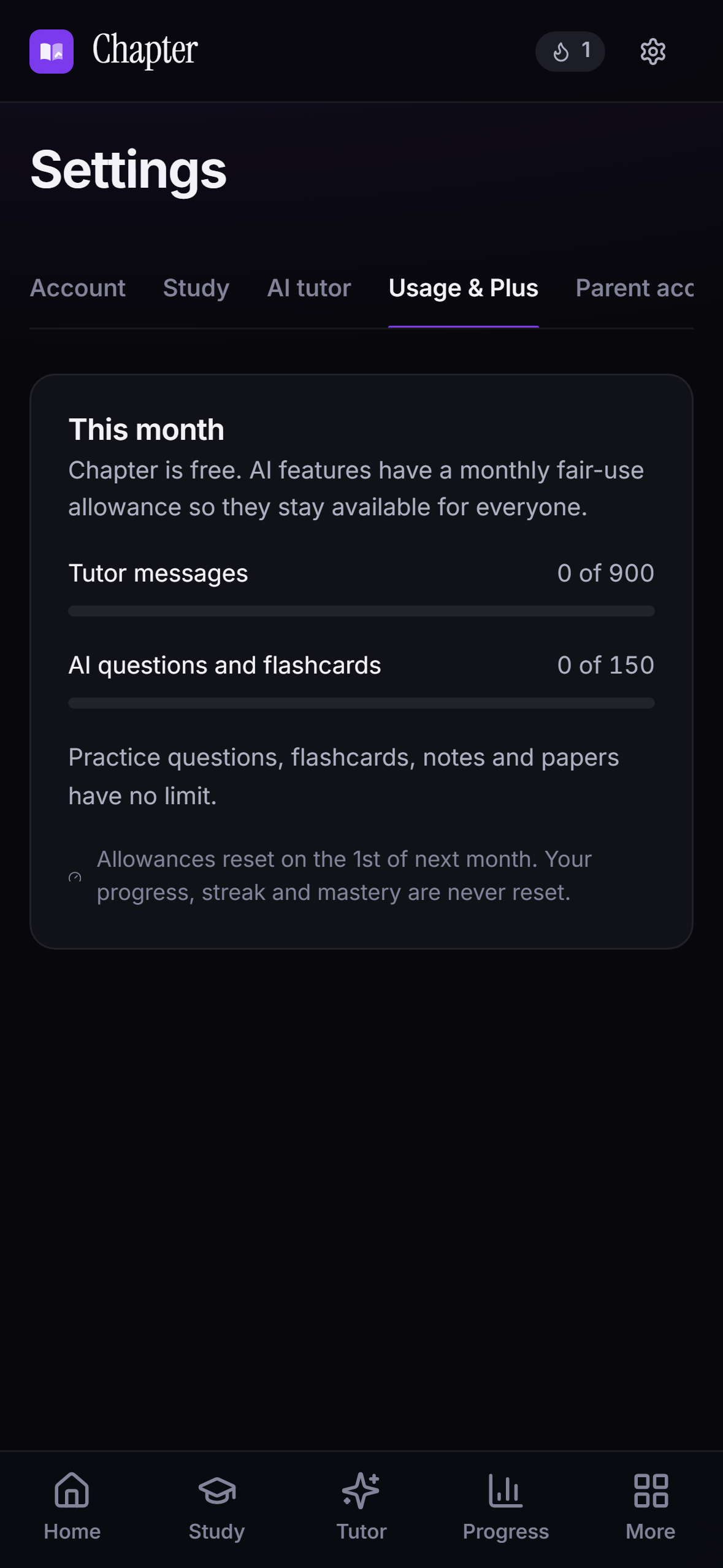
- Usage limits and quotas
- XP, streaks, goals, and progression
- Leaderboards
- Subject and question tracking
- Role-based access
- Database security policies
- Subscription and payment infrastructure
A major part of the engineering process was making sure that important logic could not simply be trusted to the client.
For example, things such as XP, quotas, progress, and access permissions need to be validated server-side. Otherwise, a student could theoretically modify a request and give themselves unlimited XP or bypass usage restrictions.
That meant Chapter had to be treated as a real production application, not just a prototype that looks good in a demo.
The Hard Parts
The hardest part wasn't getting an AI model to answer a question.
That part is relatively easy.
The difficult part was building everything around the AI.
We had to think about questions like:
- How do we prevent students from abusing AI usage limits?
- How do we securely store and retrieve learning progress?
- How should the system distinguish between a student asking for a hint and asking for the answer?
- How do we prevent users from modifying their own XP or progress?
- How should parents see useful information without exposing unnecessary student data?
- How do we make AI responses educational rather than simply giving away answers?
- How do we make the entire experience fast enough that students actually want to use it?
Security became especially important as the project grew. During testing, we discovered several places where server-side authorization needed to be strengthened, including functions that could accept arbitrary user IDs and data that could potentially be exposed to unauthenticated users.
Those issues became part of the development process rather than something we ignored for the sake of a demo.
What We Learned
Building Chapter taught us that an AI product is much more than the AI model.
The model might be the most visible part, but the quality of the actual product depends on everything surrounding it: authentication, databases, security, UX, state management, usage limits, personalization, and reliability.
We also learned that automated tests are not enough by themselves.
Chapter ended up with tests covering application logic, database security, and browser behavior across desktop and mobile layouts. We used those tests to catch problems that would have been easy to miss by simply clicking around the application.
Most importantly, we learned to think about AI as a system, rather than a feature.
What's Next
Chapter is still evolving.
The long-term vision is to make it feel less like a collection of study tools and more like a personal learning system that continuously understands what a student knows, what they struggle with, and what they should work on next.
The ultimate goal is simple:
Don't just help students get the answer. Help them become the kind of student who can get it themselves.
Built With
- postgresql
- pwa
- react
- supabase
- typescript
- vite


Log in or sign up for Devpost to join the conversation.