Inspiration
Twitch is more than a streaming platform — it's a community where viewers come together to share experiences. However, audience participation is often limited to chat messages, basic polls, and predefined commands.
I wanted to change that.
I envisioned a platform where viewers could influence the stream through their imagination, not just predefined commands. This inspired me to build ChaosForge AI, an AI-powered experience that transforms Twitch chat interactions into dynamic and engaging stream events.
What it does
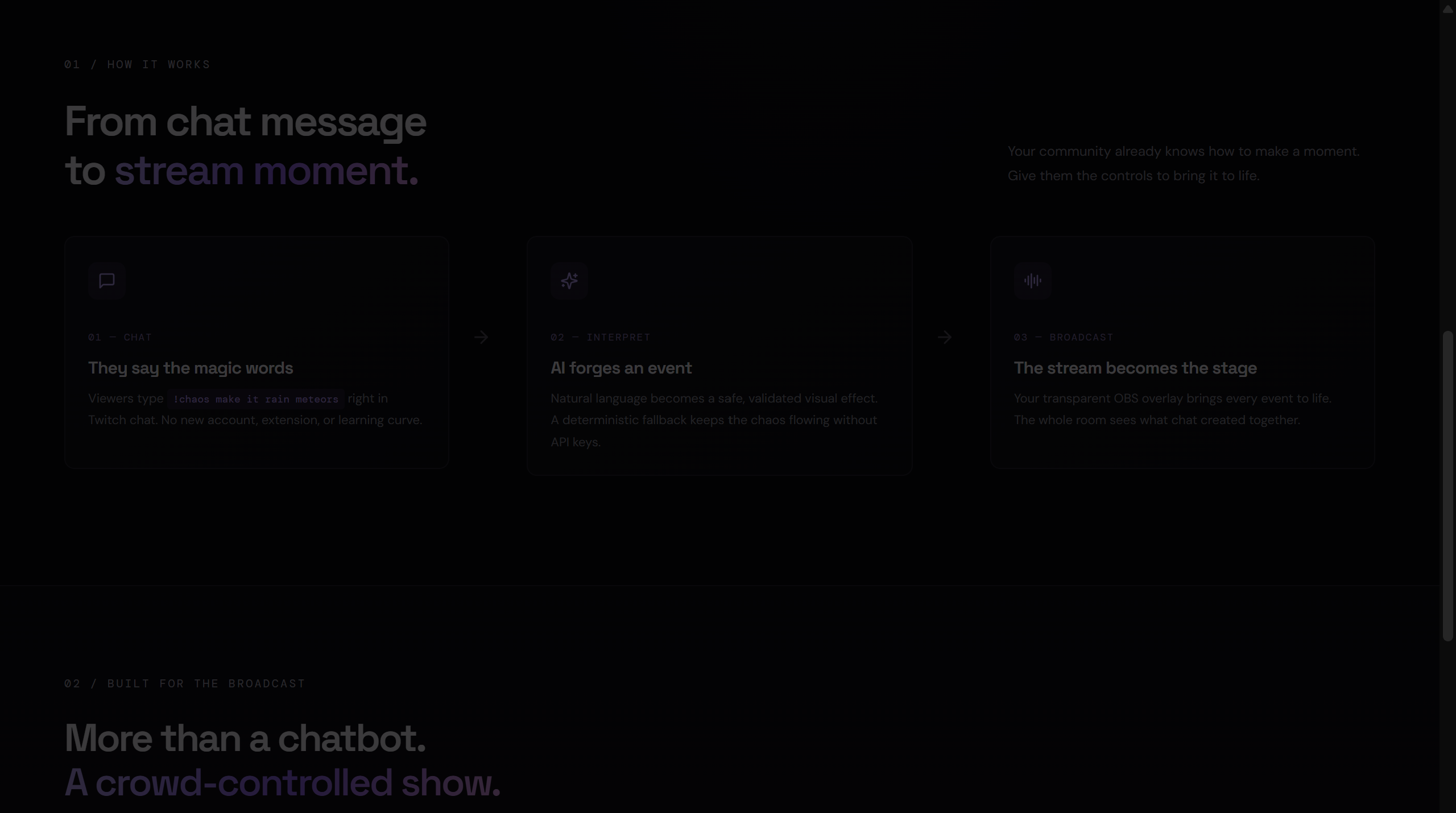
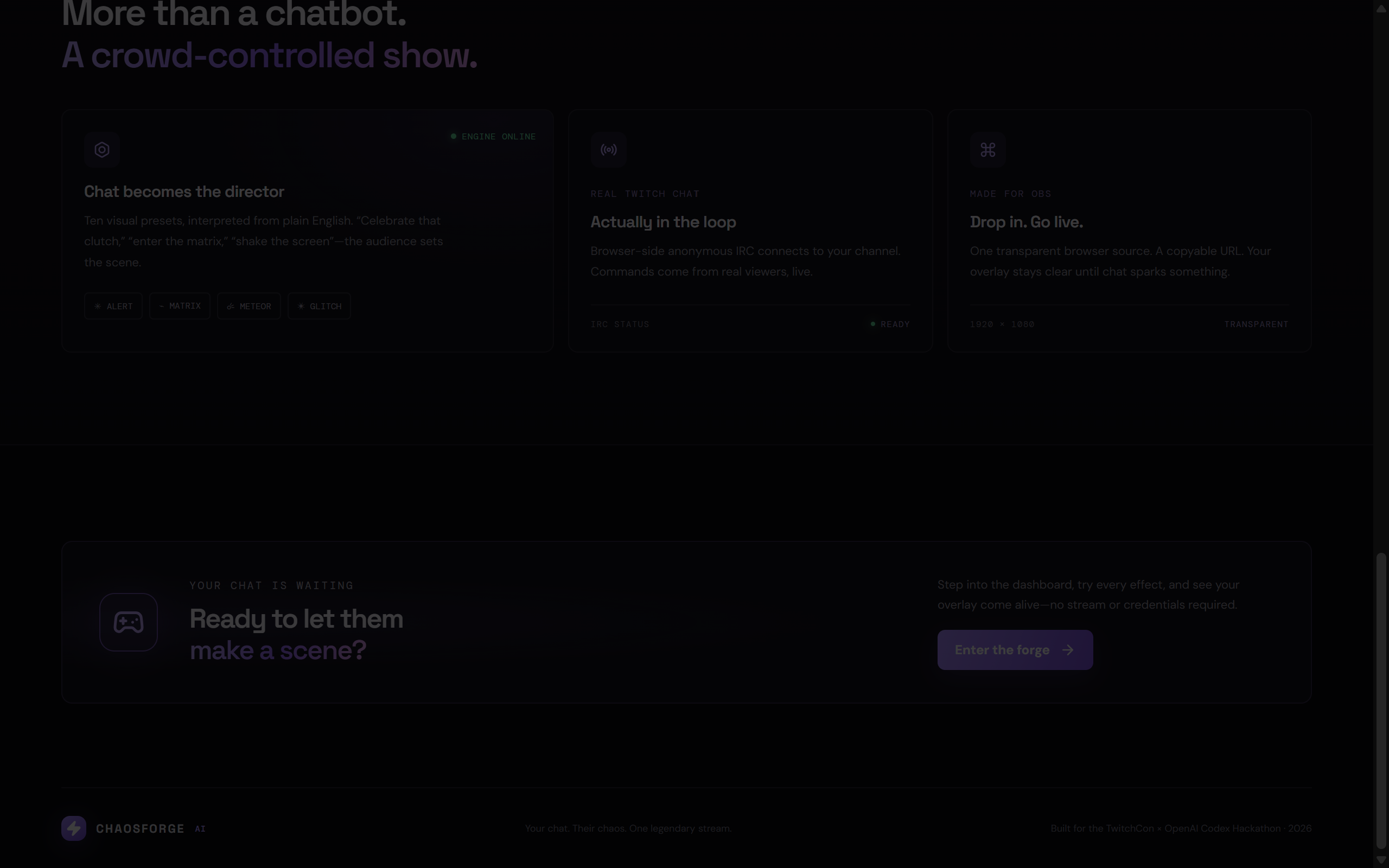
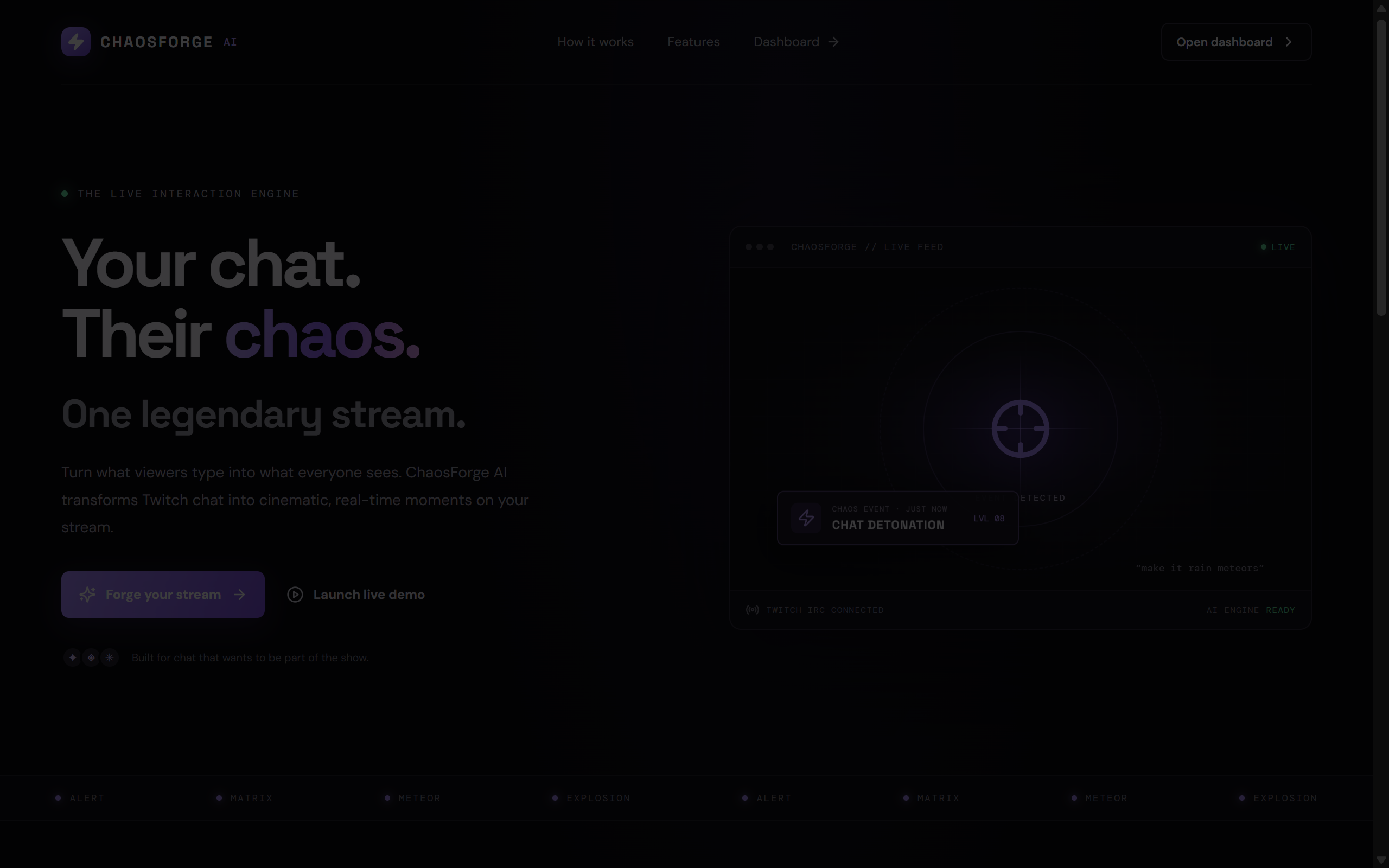
ChaosForge AI brings a new dimension to Twitch audience engagement by turning natural-language viewer interactions into interactive streaming experiences.
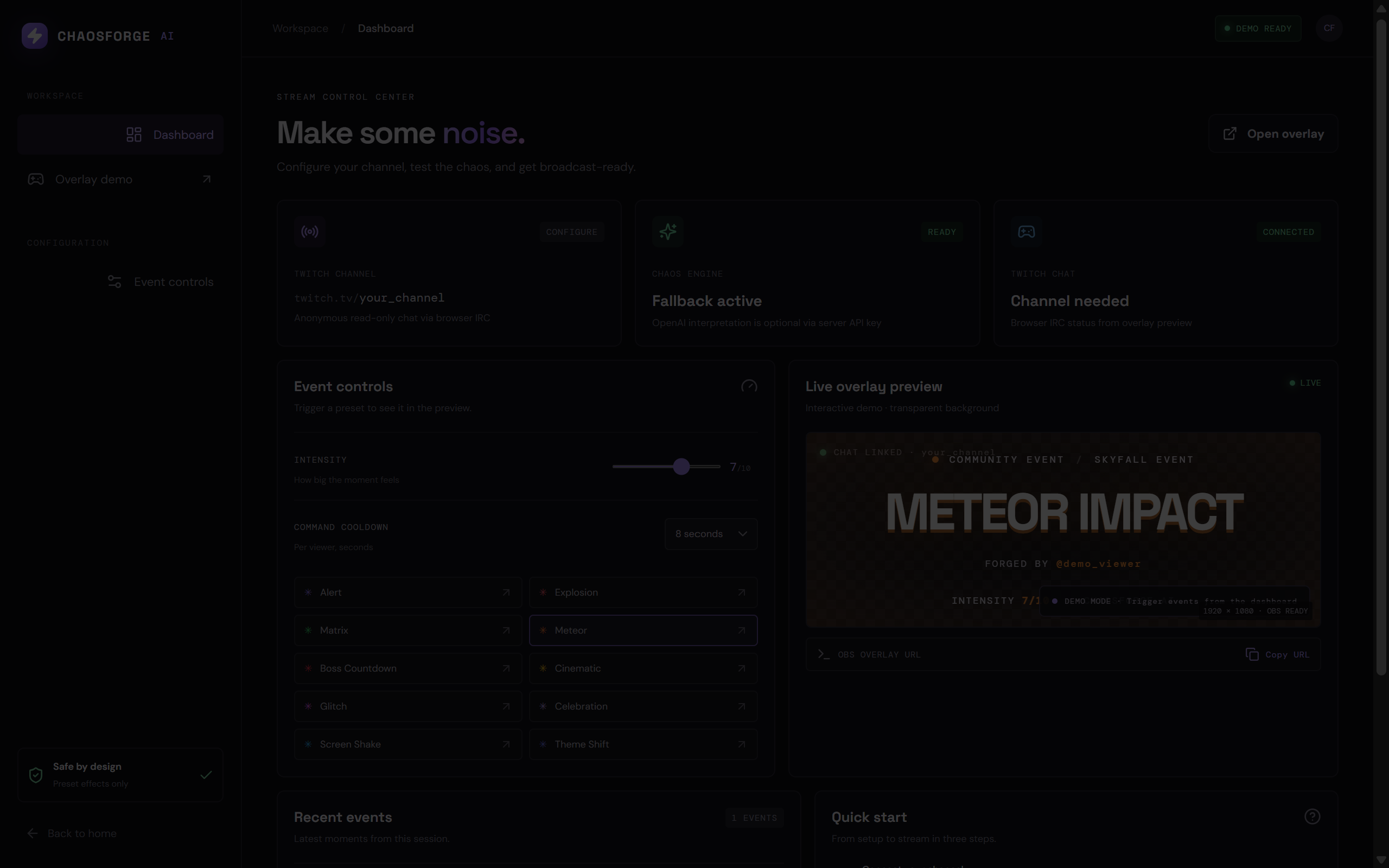
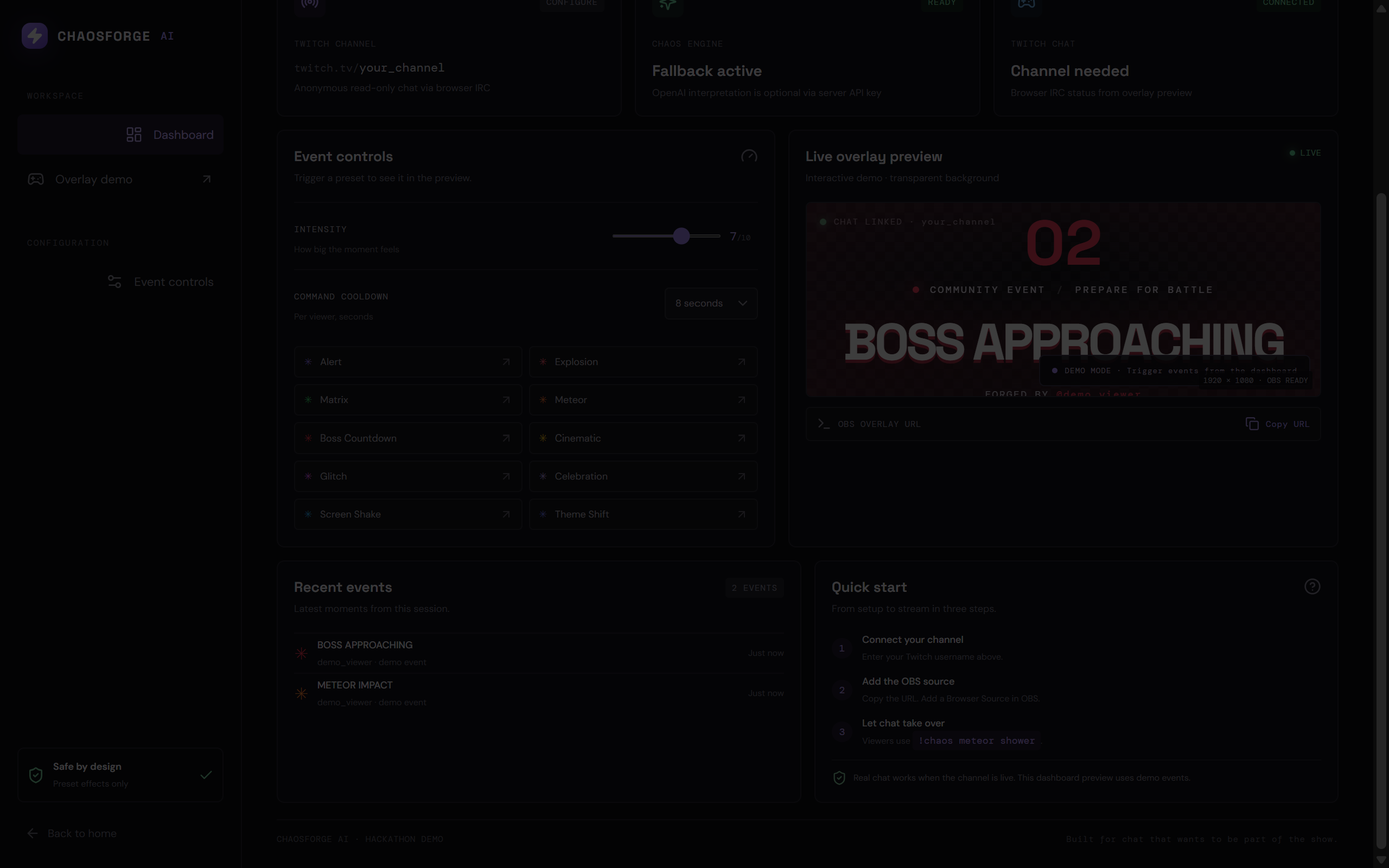
The platform aims to: 1) Interpret viewer messages using AI. 2) Transform natural-language requests into structured stream events. 3) Create dynamic visual effects and animations. 4) Enable community-driven interactions. 5) Provide streamers with an intuitive control experience. 6) Bring interactive experiences directly into OBS through a browser-source overlay.
The goal is simple: make viewers active participants in the stream rather than passive spectators.
How I built it
I developed ChaosForge AI as a solo developer using OpenAI Codex as my primary AI-powered development assistant.
I focused on building a streamlined architecture connecting Twitch interactions, AI-powered intent processing, and a dynamic visual interface.
The development involved: 1) Designing the application architecture and user experience. 2) Building the frontend and interactive dashboard. 3) Integrating AI-powered natural-language processing. 4) Developing the event-generation logic. 5) Connecting Twitch chat interactions. 6) Creating a dynamic overlay experience for streaming. 7) Testing the application and deploying it using Vercel.
I used Codex throughout the development process to accelerate implementation, debug issues, refine the architecture, and improve the overall product experience.
Challenges I ran into
Building an interactive AI-powered Twitch experience within a limited hackathon timeframe presented several challenges.
Some of the biggest challenges included:
- Real-time interaction: Ensuring that incoming chat messages could be processed and translated into responsive visual experiences.
- AI reliability: Making AI-generated event configurations predictable, structured, and safe to execute.
- Twitch integration: Working with Twitch chat connectivity and designing an interaction flow suitable for streaming environments.
- Overlay performance: Creating an engaging visual experience without compromising responsiveness or stream performance.
- Time constraints: Balancing functionality, design, testing, and deployment as a solo developer.
I addressed these challenges by prioritizing the core experience and keeping the architecture lightweight.
Accomplishments that I'm proud of
I'm particularly proud of turning an ambitious idea into a deployed product within a highly constrained development window.
My biggest accomplishments include:
1) Creating ChaosForge AI as a complete product concept and working application. 2) Exploring natural-language-driven audience interaction rather than relying exclusively on traditional chatbot commands. 3) Bringing AI intelligence and Twitch streaming experiences together. 4) Developing an interface focused on streamers and their communities. 5) Building and deploying the project independently using OpenAI Codex.
Most importantly, I transformed the idea of passive Twitch chat into a vision of community-driven entertainment.
What I learned
This project helped me understand how AI can move beyond conventional conversational interfaces and become part of real-time interactive experiences.
I gained practical experience in: 1) Using OpenAI Codex for accelerated software development. 2) Designing AI-powered application workflows. 3) Structuring natural-language inputs into predictable outputs. 4) Working with Twitch developer technologies. 5) Building interfaces for real-time interactions. 6) Debugging, testing, and deploying under strict deadlines.
I also learned that building a compelling hackathon product is not just about adding AI — it's about using AI to solve a meaningful problem.
What's next for ChaosForge AI
I see significant potential for ChaosForge AI beyond this initial version.
My future plans include:
1) Expanding Twitch API and EventSub integrations. 2) Introducing more customizable AI-generated stream events. 3) Developing advanced community voting and multiplayer interactions. 4) Adding streamer-specific themes and personalization. 5) Improving moderation, rate limiting, and event safety. 6) Exploring Twitch Extensions for deeper platform integration. 7) Introducing analytics to help streamers understand audience engagement.
My long-term vision is to make ChaosForge AI a creative interaction layer for live streaming, where every community can shape the experience in its own unique way.
With ChaosForge AI, viewers don't just watch the stream. They help create it.
Built With
- codex
- css
- html
- irc
- javascript
- next.js
- node.js
- react
- tailwind
- tmi.js
- typescript
- zod
