-
-
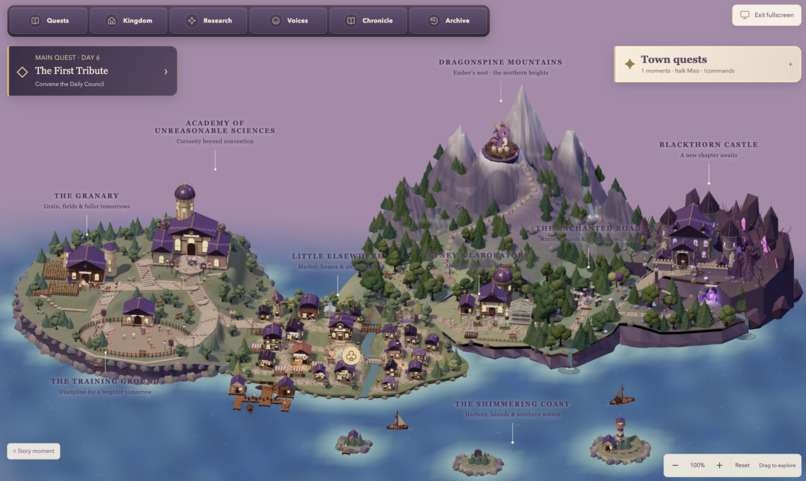
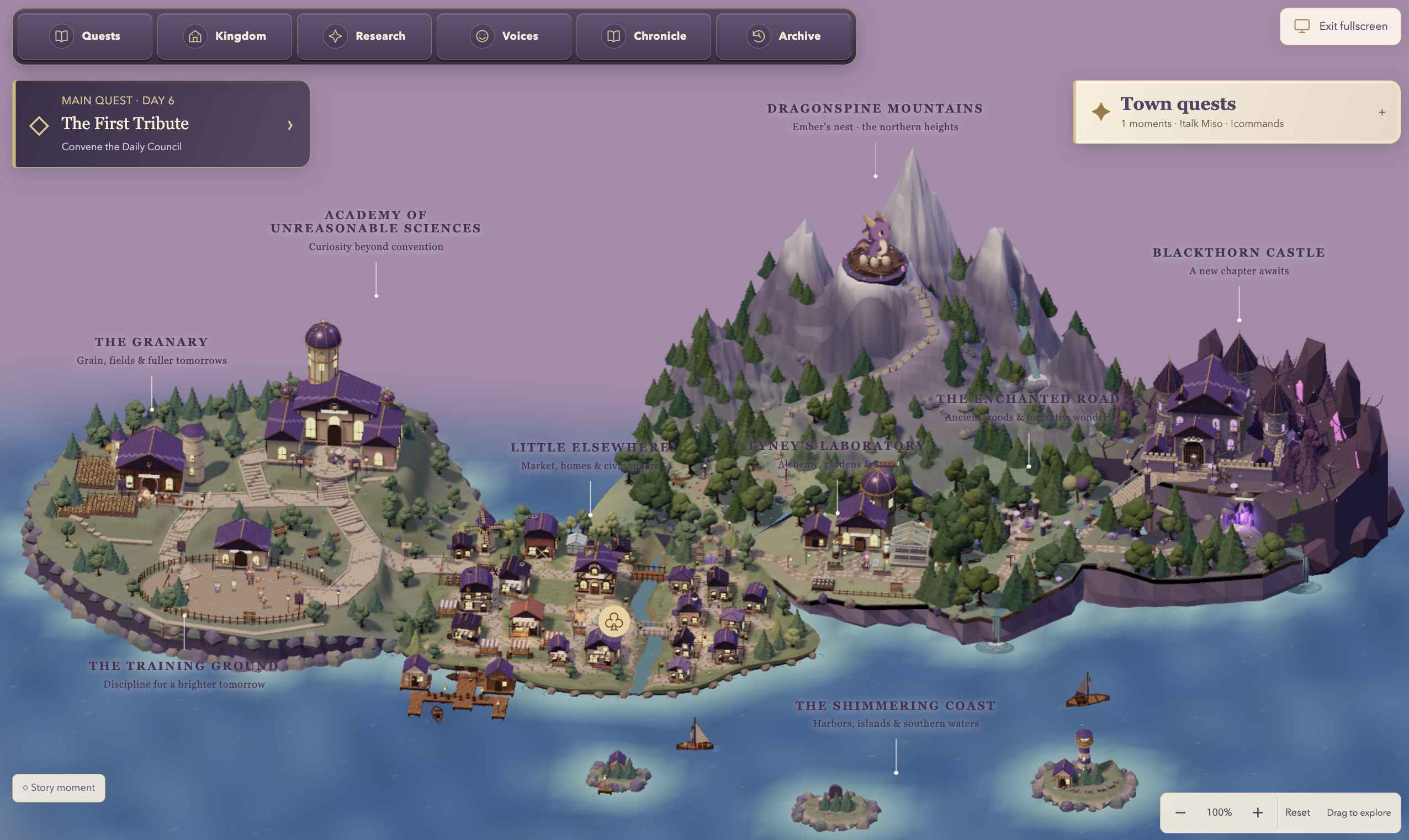
The Living Kingdom: Explore a sprawling world featuring Dragonspine, Blackthorn Castle, Little Elsewhere, and the Shimmering Coast.
-
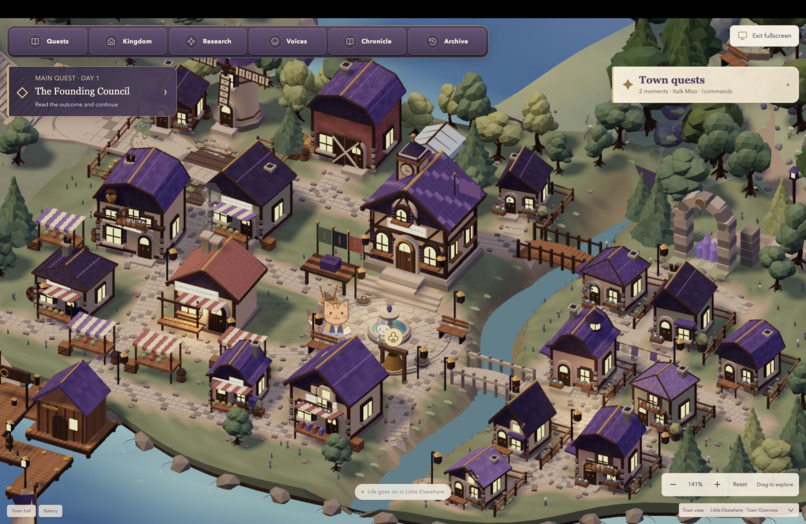
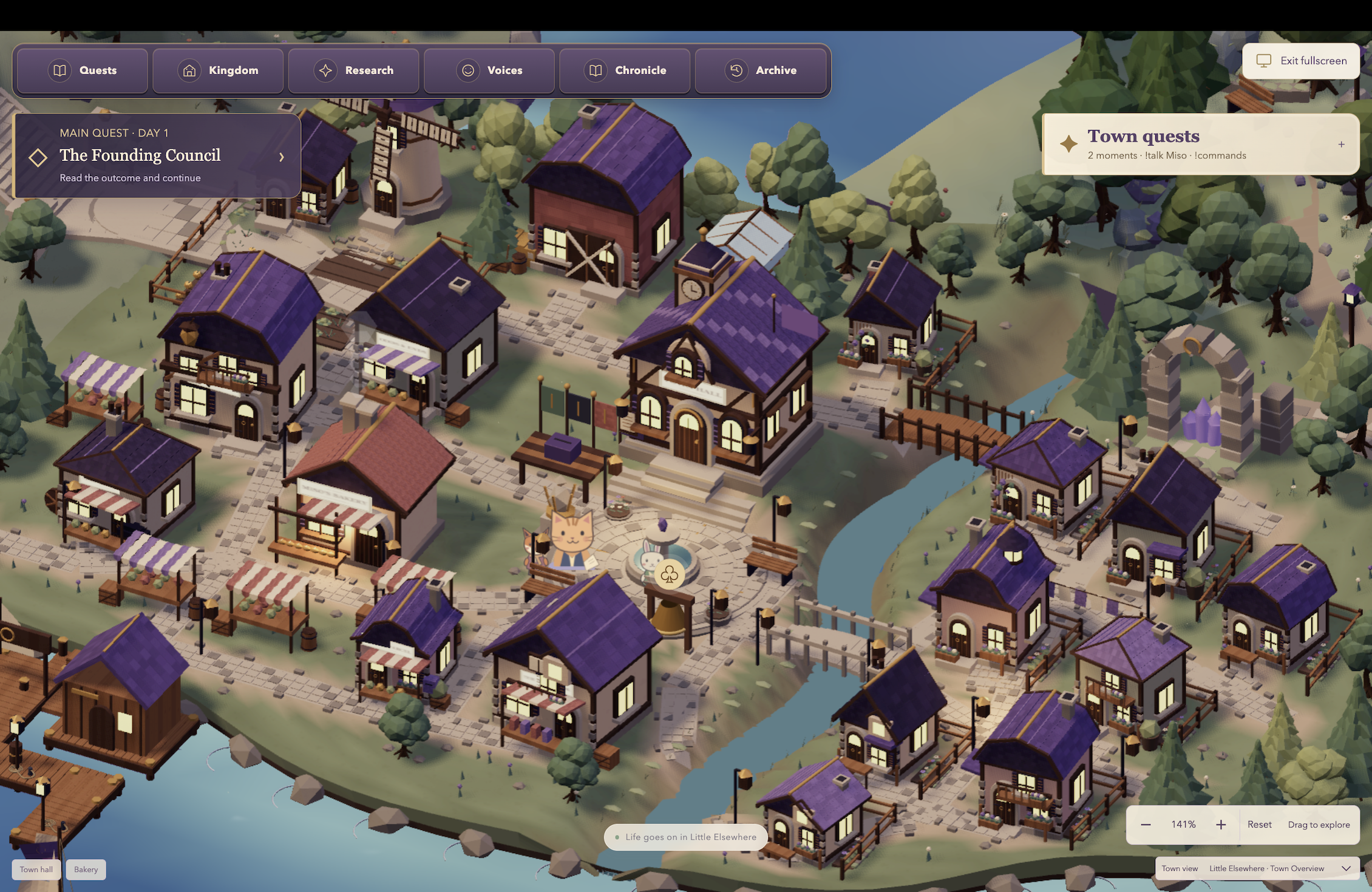
Little Elsewhere: A cozy, living fantasy town where citizens, quests, and community decisions shape every day.
-
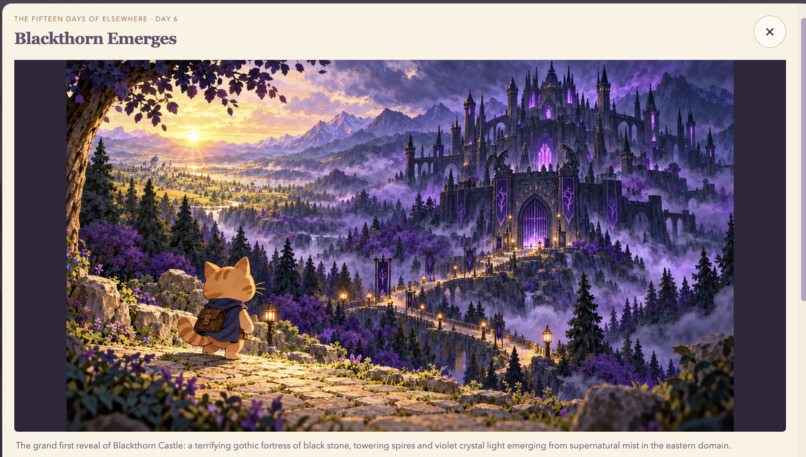
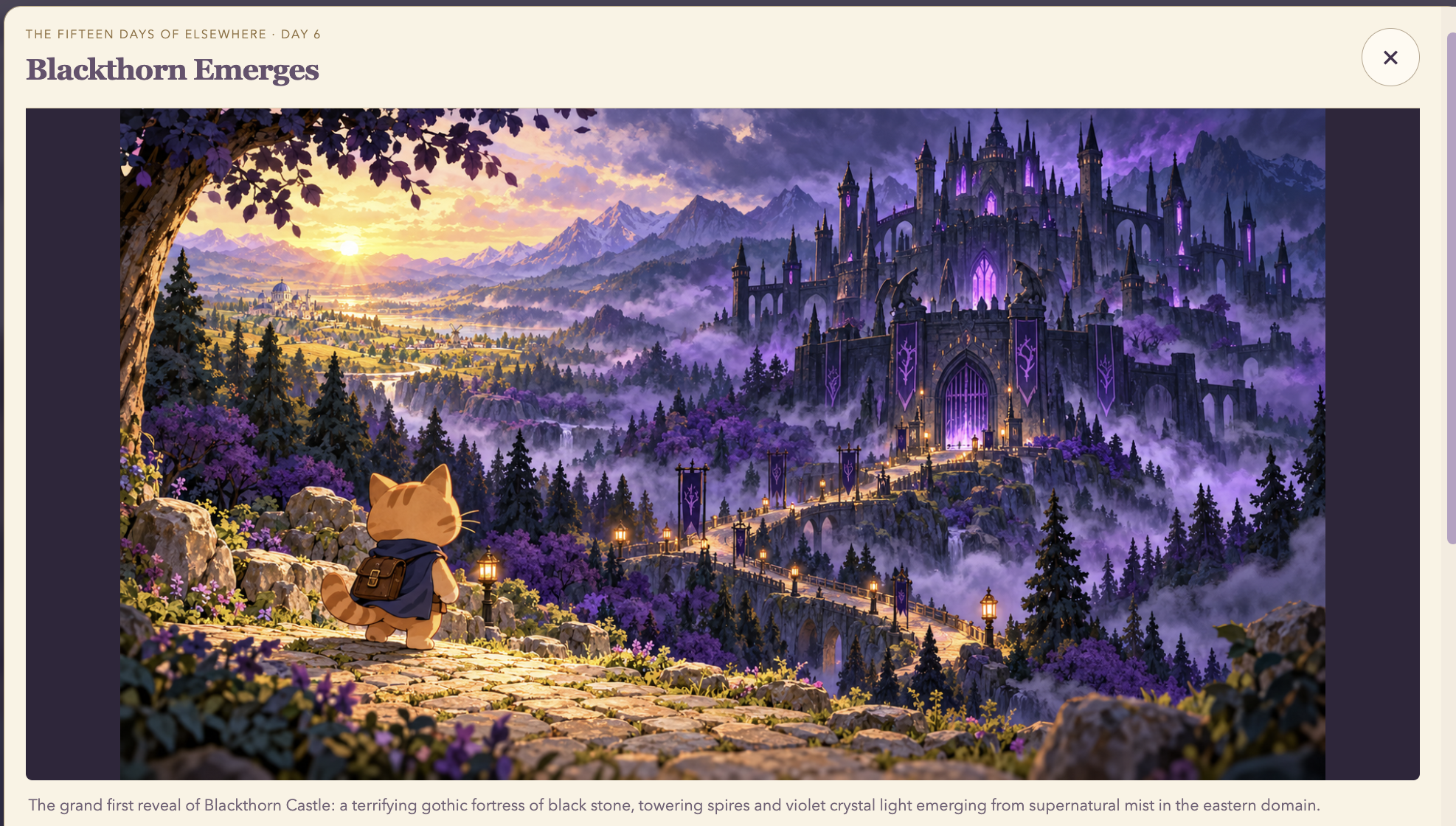
Blackthorn Emerges: On Day 6, Blackthorn Castle rises from the mist, beginning the Demon Lord's escalating demands.
-
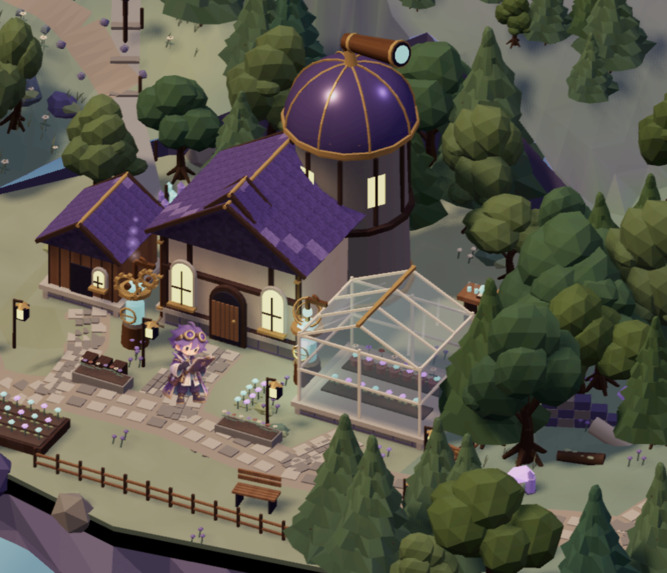
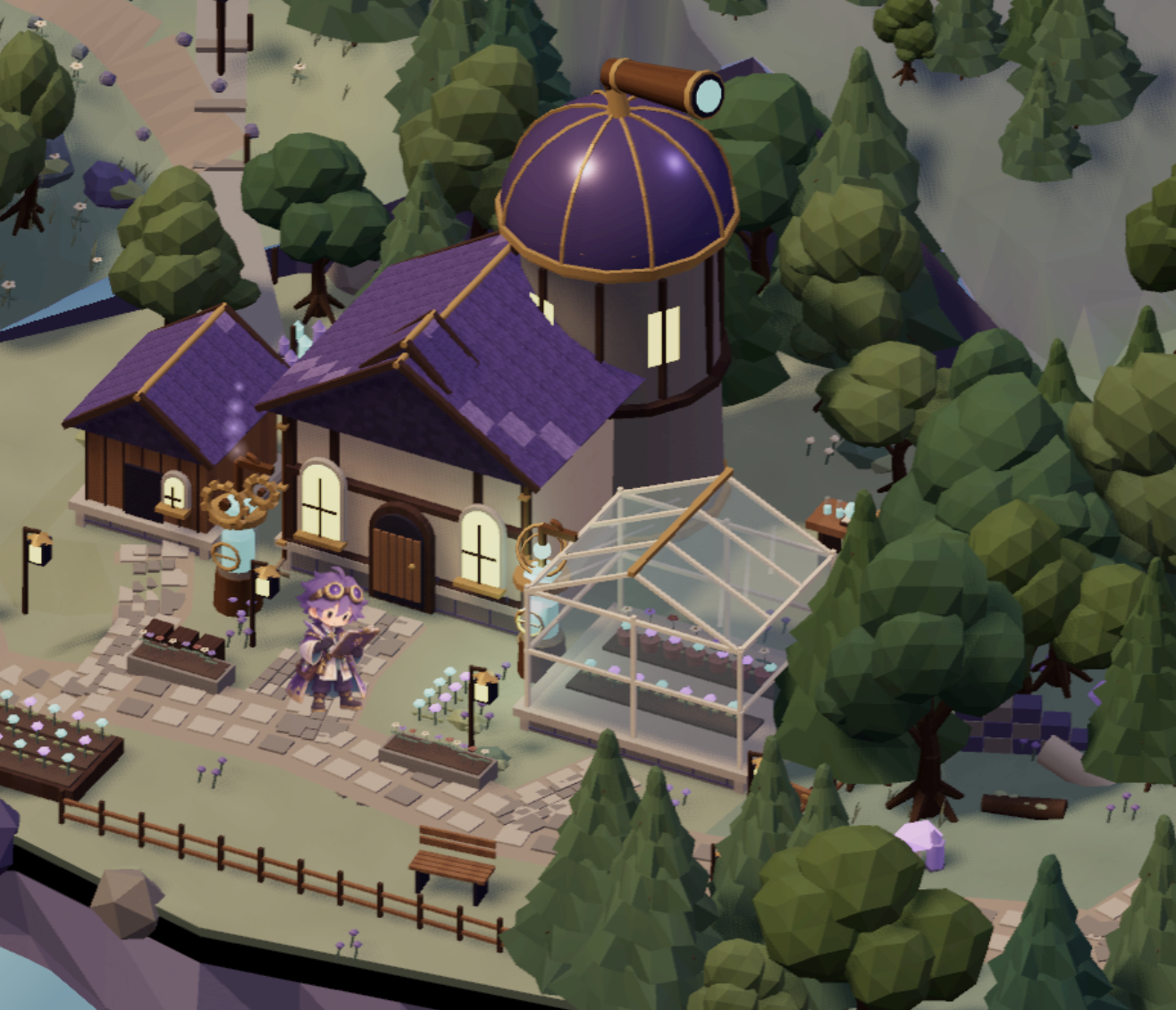
Lyney's Laboratory: Explore Lyney's magical laboratory, where curious experiments uncover mysteries beyond the kingdom.
-
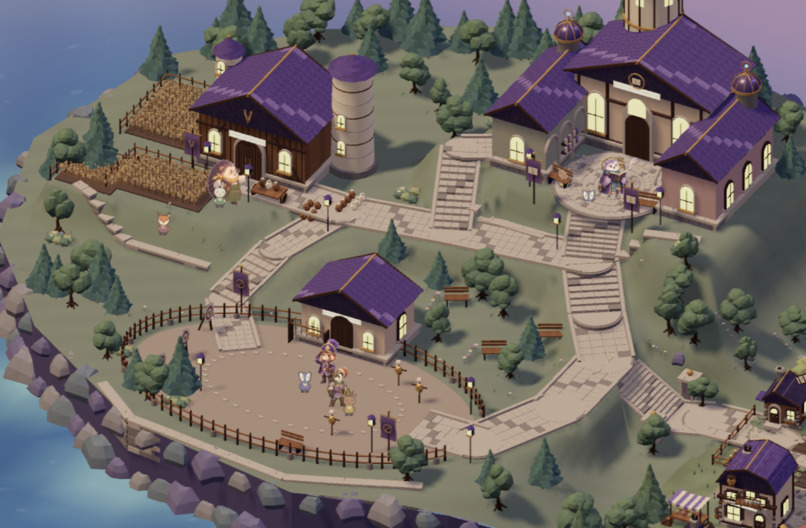
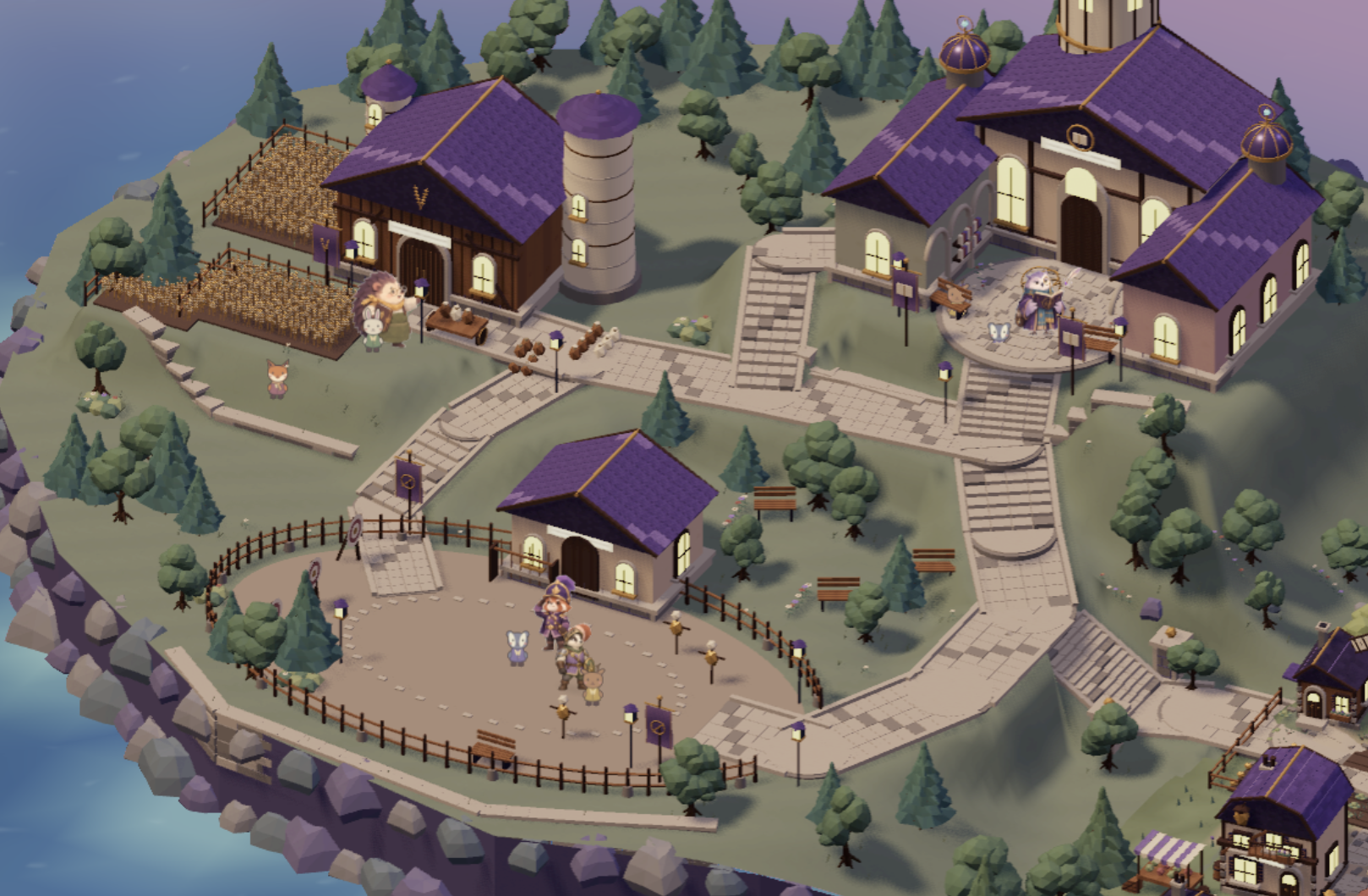
The Western District: The Granary, Training Ground, and Academy bring survival, defense, and research to life.
CHAOS TOWN — The Foreign Gods Made the Laws. The Town Remembers.
Inspiration
What if Twitch chat could control an entire fantasy kingdom?
Not just vote on what happens next, but actually govern a living civilization—deciding who farms, who fights, who researches, and how the town survives.
That was the original idea behind CHAOS TOWN.
I wanted to create something that felt like a cozy fantasy game, a chaotic community experiment, and an interactive story all at once.
But as the project grew, a much more interesting question emerged:
What if the people living inside that kingdom eventually questioned why strangers had the power to control their lives?
That question became the heart of CHAOS TOWN.
What It Does
CHAOS TOWN is a Twitch-controlled 2.5D fantasy civilization where the community becomes a mysterious group of beings known as the Foreign Gods.
Streamers host the kingdom, while viewers participate through Twitch chat commands to influence its development.
The community can allocate workers between agriculture, military training, leisure, and research; manage limited resources; help citizens with everyday problems; investigate strange mysteries; and make decisions that shape the kingdom's future.
The world is populated by memorable characters, including Bramble, a hedgehog determined to keep everyone fed; Thistle, an enthusiastic red panda guard captain; Vesper, a mysterious owl professor; and Lyney, a scientist whose experiments are only occasionally safe.
And then there's Lord Umbra, the terrifying Demon Lord watching from Blackthorn Castle.
The main campaign unfolds over 15 days and three chapters.
It begins with peaceful village life, gradually introduces mysterious magical phenomena, and escalates into a conflict involving tribute demands, difficult sacrifices, invasion, and betrayal.
Every major decision is recorded in the Chaos Chronicle, allowing the kingdom to remember its history.
And by the finale, the community must confront a rather uncomfortable possibility:
What if the Demon Lord isn't the only villain in this story?
How We Built It
I used OpenAI Codex throughout development to help turn the initial concept into a complete interactive game.
Codex assisted with designing the gameplay architecture, implementing features, debugging issues, refining the 2.5D environment, and building automated verification workflows.
The frontend uses React and TypeScript, with Three.js and React Three Fiber powering the fantasy world.
The backend uses Node.js and Express, with an authoritative deterministic game engine responsible for votes, resources, narrative progression, battles, and consequences.
Twitch OAuth and EventSub provide the connection between Twitch participation and the game's interactive systems.
The project also supports local gameplay controls, persistent campaign saves, replay functionality, contextual character dialogue, and broadcast-friendly layouts.
Rather than relying on AI to generate the story during gameplay, the campaign uses authored dialogue and deterministic branching systems. This keeps decisions consistent, explainable, and replayable.
Challenges We Faced
One of the biggest challenges was making Twitch participation feel meaningful.
A simple voting game would have been easy to understand, but I wanted the community to feel involved in the kingdom's everyday life.
That meant designing systems where viewers could help characters, investigate mysteries, participate in community activities, and influence consequences without disrupting the main story.
Another major challenge was connecting 15 days of branching narrative with a consistent simulation.
Food shortages, research investments, military preparedness, diplomatic decisions, and battle outcomes all needed to matter.
The game also had to remember what actually happened, rather than inventing consequences to fit a predetermined storyline.
Building the expanding 2.5D world presented its own challenges, particularly integrating character sprites, environmental details, dialogue bubbles, and story moments while preserving the game's visual identity.
Accomplishments We're Proud Of
CHAOS TOWN grew from a small fantasy-town experiment into a complete interactive civilization adventure.
Some of my favorite accomplishments include:
- Building a detailed 2.5D kingdom with distinct districts, a coastline, mountains, laboratories, and a mysterious castle.
- Creating a 15-day campaign with three chapters and multiple endings.
- Developing a deterministic Council system where community votes determine workforce allocation.
- Introducing memorable characters with personalities, contextual dialogue, and evolving relationships.
- Implementing tribute negotiations, military conflict, research upgrades, and meaningful resource management.
- Building the Chaos Chronicle to preserve the consequences of the community's decisions.
- Creating a finale that reflects the kingdom's actual history and asks players to reconsider their own authority.
Perhaps my favorite achievement is how the gameplay and story reinforce one another.
The community doesn't simply watch the kingdom change.
Its decisions are the reason the kingdom changes.
What We Learned
Building CHAOS TOWN taught me a lot about designing interactive systems where many people can influence a shared experience.
I learned how important deterministic gameplay, persistent state, event-driven architecture, and clear feedback are when turning audience participation into actual game mechanics.
I also learned that an interesting interactive story doesn't need unlimited possibilities.
Sometimes, a carefully structured narrative becomes more powerful when the game remembers the choices players made along the way.
Working with Codex helped me iterate rapidly across gameplay, world design, UI, and narrative systems while continuously improving the project.
Most importantly, I learned that the best community experiences aren't just about giving people more buttons to press.
They're about making those actions feel meaningful.
What's Next
There's still plenty more I'd love to build.
Next steps include validating the complete experience in a real Twitch broadcast with OBS, expanding cooperative town activities, refining character animations, adding more interactive narrative moments, and exploring new campaigns beyond the original fifteen days.
I'd also love to expand the kingdom's post-campaign life so that different endings lead to genuinely different ways of governing Little Elsewhere.
Because even after the final battle, the town's story doesn't have to end.
The Foreign Gods made the laws.
The town remembers.
Built With
- css3
- express.js
- git
- html5
- node.js
- obs-studio
- openai-codex
- playwright
- react
- react-three-fiber
- server-sent-events-(sse)
- svg
- three.js
- twitch
- twitch-eventsub
- twitch-oauth
- typescript
- vite
- vitest

