-
-
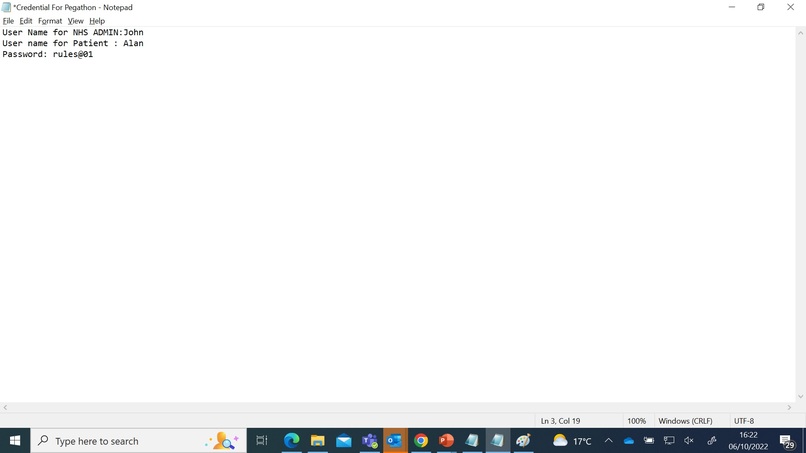
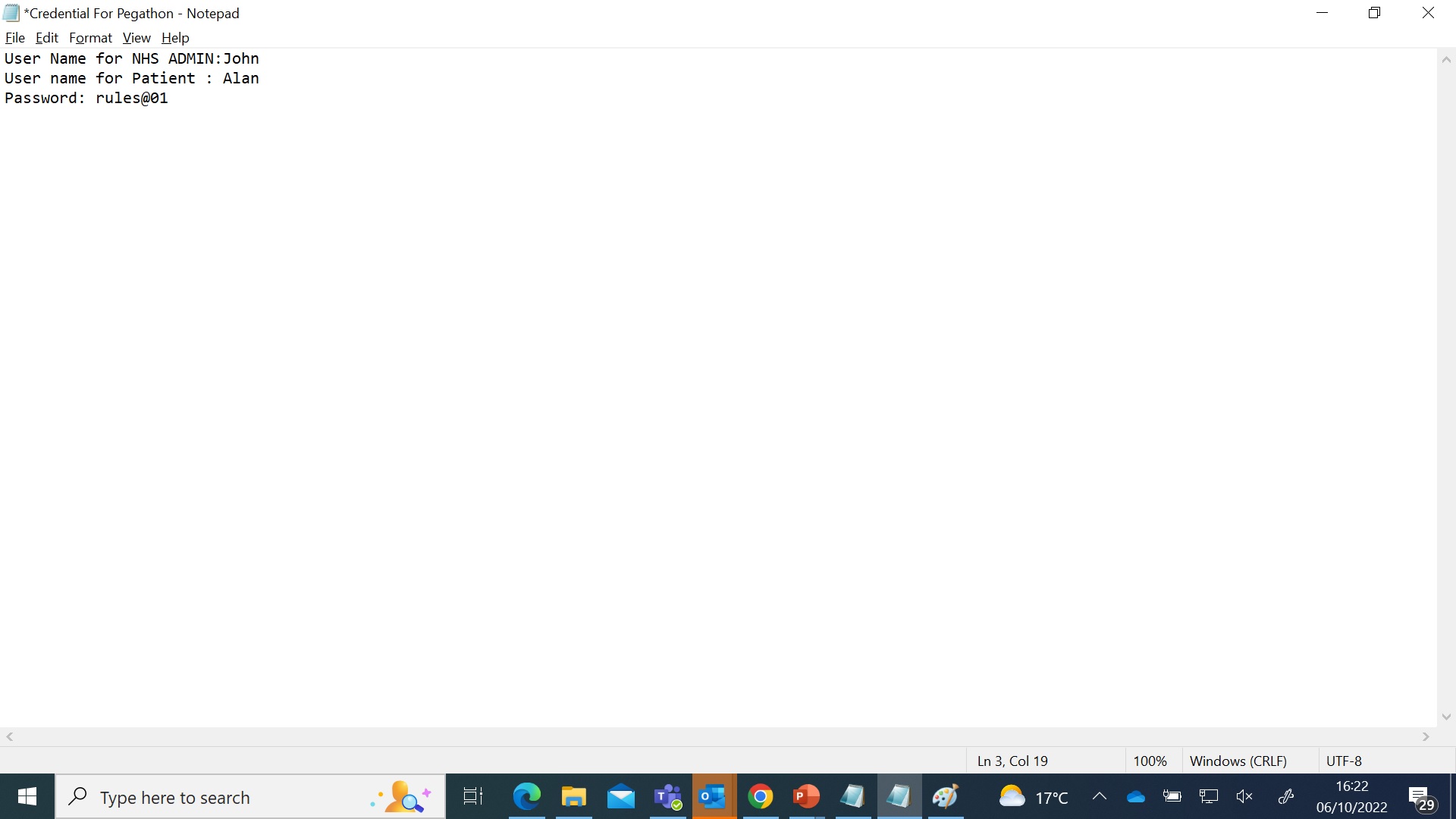
Credentials for CHAOS
Inspiration
Digital technology has the potential to transform the way patients engage with services, improve the efficiency and co-ordination of care, and support people to manage their health and wellbeing. Centralized Hospital Appointment Optimizer System has been conceived as a solution to the current problems of overwhelming and ever- increasing Patient Demand and Financial constraints faced by the GP and further intensified by the wasted workload on Did-Not-Attend (DNA) appointments. The high volumes of DNA appointments also exacerbate the strain on care delivery for the patients in need of immediate attention and substantially increase the waiting times. These patients might be compelled to self-medicate in this time to alleviate their symptoms and are at the risk of having adverse effects on their health instead, causing long term damage. This holistic damage caused may further result in requirement of increased medical attention for the patient and reduced quality of life. There has been a considerable strain on the care delivery to patient needing immediate care with longer appointment waiting time. As a repercussion an existing condition might worsens leading to complicated surgeries or increased use of medications are required, and slow recovery is slower ,worse outcomes and reduced quality of life. According to the extensive data curated from almost 307 million total number of sessions scheduled with GPs, nurses, therapists and other practice staff every year, 15+ million general practice appointments are being wasted each year because patients did not turn up and failed to notify surgeries. Considering an average cost of £30 for each appointment, the total monetary cost to the NHS is well beyond £216 million. With such daunting monetary losses coupled with a pressure of providing excellent service to every patient, we aim to build a solution to create an improved and streamlined GP centric digital solution for effective forecasting of missed appointments along with history and triaging, better distinguish between patients who might occasionally miss appointments or have a valid reason for DNA and those who regularly fail to comply with their obligations or repeat offenders. In addition to this, the solution intends to redefine the point of correspondence for the patients in terms of omni-channel notifications for appointments, digitisation of the Patient Pathway ( Video consultation /Self Care advice) for noncritical medical problems and thus support triaging and provide a focused disease-oriented consultation with accurate routing of the Patient Cases.
What it does
A streamlined and intelligent GP solution which has been designed to forecast missed appointments for NHS with the help of historical data and triaging. Based on the patients who occasionally miss appointments and those who regularly fail to comply with their obligations or are repeat offenders, we will be able to prioritize and route the appointments accurately. When a patient initiates the request for an appointment, the solution will check for the most optimal appointment for the patients depending on factors like the slot availability, doctor’s availability, criticality of the appointment, scope of virtual screening, and so on. After the optimal appointment is devised, Pega decisioning can determine the probability of a person not turning up based on several factors like historical data, weather, previous mobility issues. The system will follow a standard flow for the follow up and reminders when the probability of missing the appointment is low for a patient. The system will send communications to the patients prior to 6 weeks of appointment when this probability is high. The probability score will drive the automated follow-up process through omni channel communications. As a potential future scope Patient’s response to the follow-up communications decides if the appointment is to be confirmed or cancelled. In case of appointment cancelation, the next available, higher priority patient will get consideration for that date. This solution brings in all the capabilities that the Pega Framework provides along with the Pega decisioning and AI capabilities to charge penalty to repeated defaulters.
How we built it
The solution leverages Pega Case Management with CDH capabilities. There two case type Slot (Parent) and Book Appointment(Child). The Slot case will be auto created based on the records entered by the hospital admin in the delegated table. Both hospital admin and Patient will be able to launch the Book appointment Case where based on the speciality chosen it will suggest slots sorted in ascending order of Distance from hospital (Using Google Distance API ). The solution will use strategy where patient attributes with appointments details and their past interaction will be the input to find out the score of attending the appointment case and in turn it will also calculate the probability of the parent case i.e Slot. If the derived probability is less than the defined KPI value then the same slot will be open for secondary applicants. Therefore each slot can have more than one appointment child case. This is to ensure that each slot will have the highest possible probability of getting attended by either primary or secondary patient.
Challenges we ran into
- The probability of attending an appointment depends on numerous distributed factors. The predictive model to work accurately needs the access to patient historical records, demographics, geological inputs and even disruptive events ( like strikes, weather disruption). Collecting the data sets and integrate with real time events together only can predict the probability correctly. The major challenge to have reliable dataset for each predictor. We assumed simpler factors for demo like appointment history and distance , but in actual this needs a lot of investigation to obtain the actual dataset to train this models.
- Customer Data set with Historical Interaction for the Predictive Model to find out propensity of the Appointment case.
- Using the Google Distance API to find out the distance between the hospital and customer address need subscription. We used simulations for the same .
Accomplishments that we're proud of
- Foresee and Ability to significantly decrease the chances of the missed appointments by 1/3.
- Prediction of probability of missed appointments.
- Optimize the online appointment system to reduce the missed appointments.
- Optimize the online appointment system to effectively use the bandwidth of the doctors and nurses or the medical staff.
What we learned
- Cancelling the primary slot of a patient has a repulsive effect on the appointment availability, in ideal world the appointments made next day should take preference to move up in the queue, but this need confirmation from each patient in the queue to move their appointments. To simplify the same we kept the slots vacant, hoping a future caller will get a early slot . However, this might not look fair for all, however it solves the purpose of having maximum patients addressed within specified time.
- We investigated the current NHS appointment booking process and waiting time for Patient and figured out the potential use cases which will solve and reduce the waiting time for seeing a GP.
What's next for CHAOS
- Building correspondence template to contact patients for appointment changes and multiple follow up and reminders across available channels.
- Identify list of Patient who did not turn for appointments with feedback reason for tracking.
- Penalise repeated defaulters for not turning for appointment based on collections strategy. 4 .Contextual dashboards and reporting of Case Data.


Log in or sign up for Devpost to join the conversation.