-
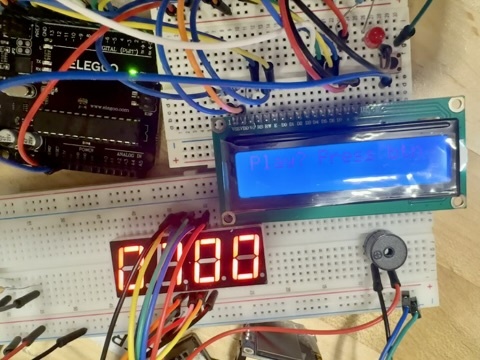
Breadboard and components
-
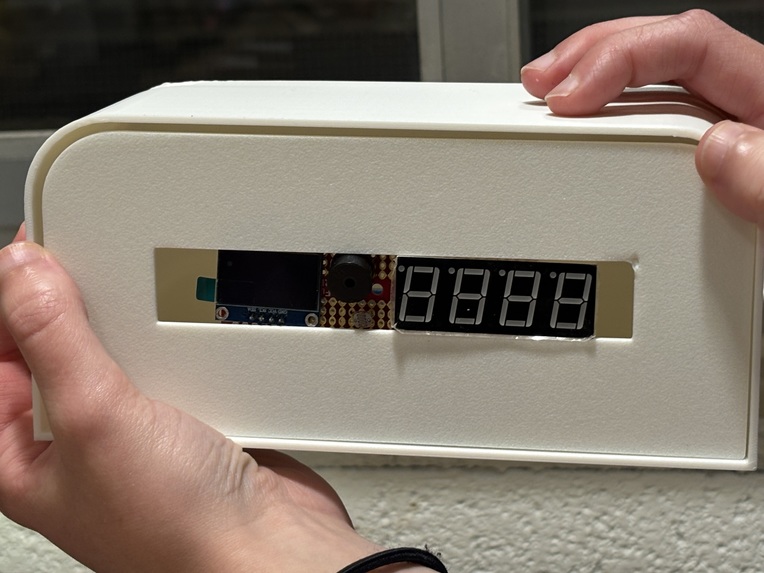
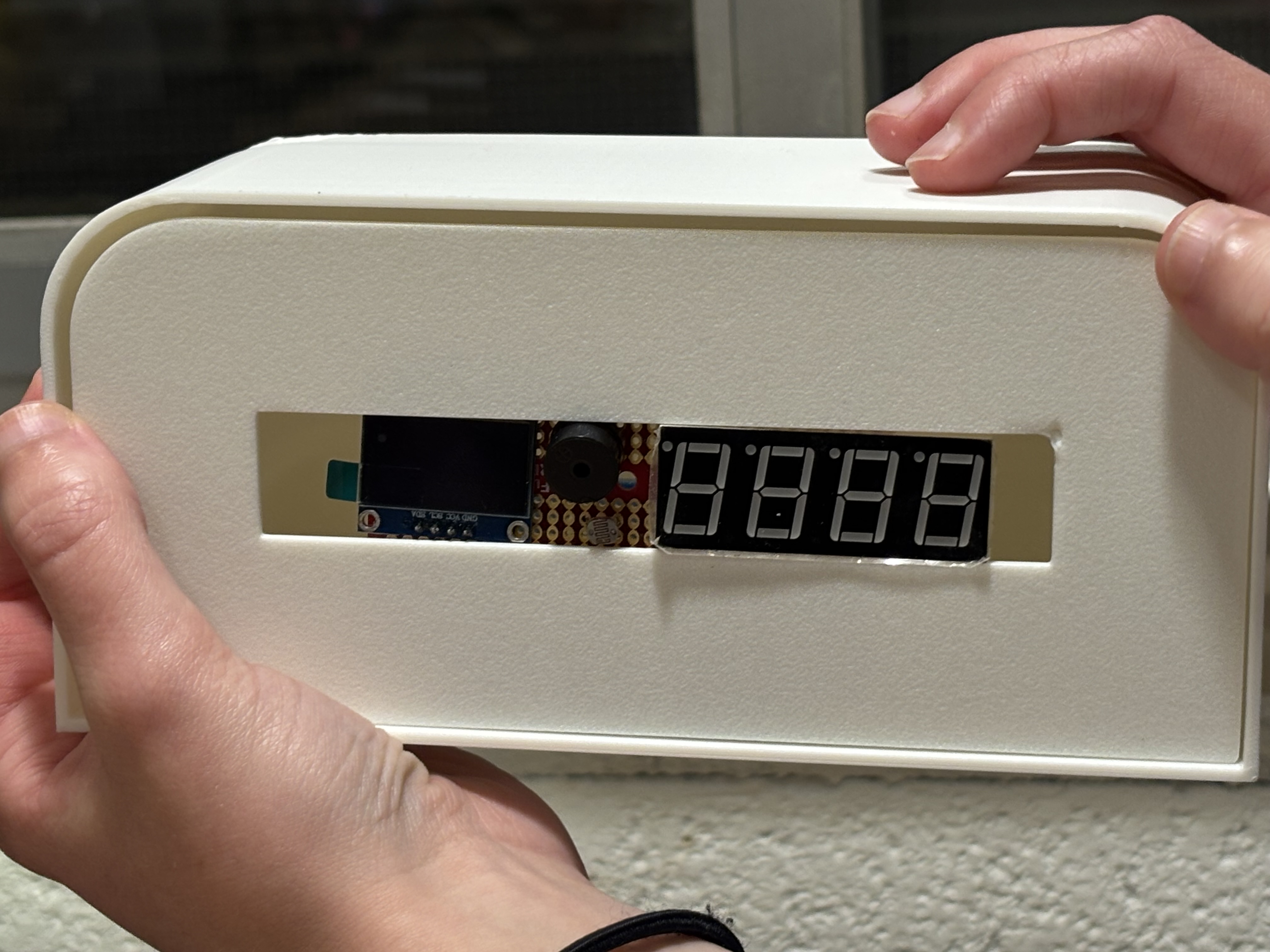
3D-printed shell
-
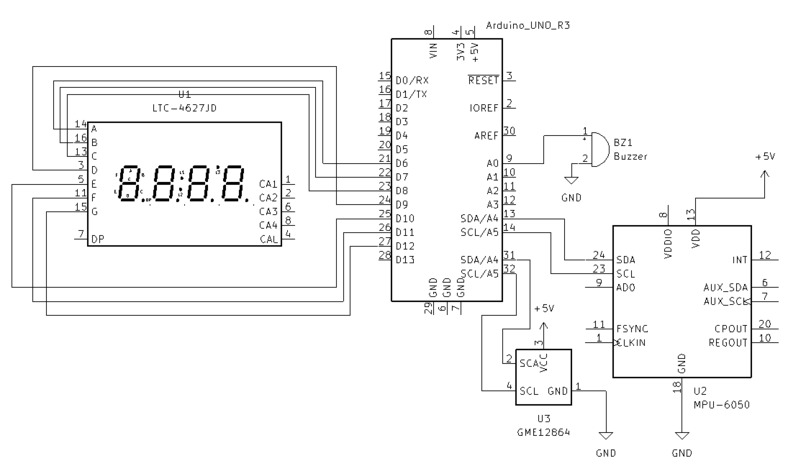
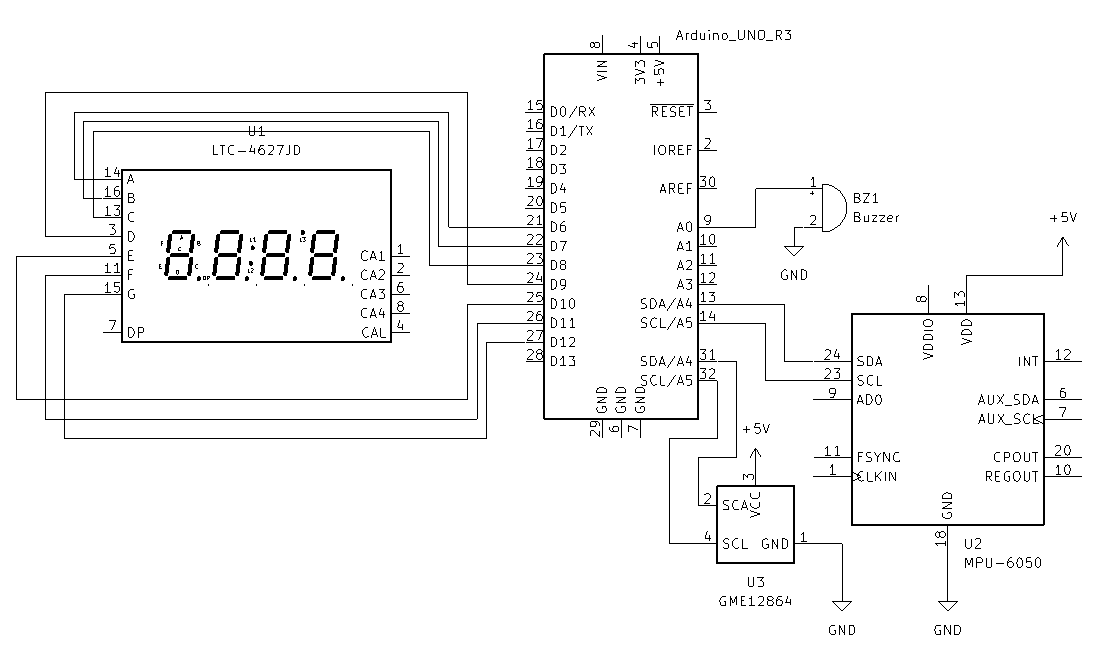
Schematic
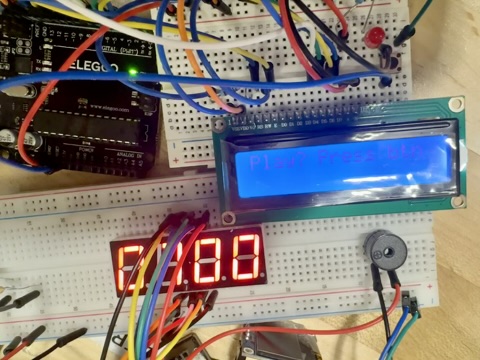
Inspiration
As college students, we find it particularly difficult to wake up for our 8 am classes. We thought an alarm clock that uses human-centered ways to get your body and brain active would be perfect to help get students physically and mentally prepared to take on their day.
What it does
This clock provides its user with different phases to turn off the alarm, ensuring that they wake up: shaking motion detection, light detection, cough detection, and a mini-game.
How we built it
We built this alarm clock with an LCD display, OLED display, 7 segment display, buzzers, and an Infineon PSoC6 AI chip for the hardware and Arduino code for the software.
Challenges we ran into
Soldering, time, and communication of main and sub between our 2 MCUs was difficult to ensure correct behavior.
Accomplishments that we're proud of
Modular development, 3D printed shell, and figuring out a lightweight pre-trained model that would enable us to use the Infineon chip.
What we learned
Knowing what specific components you will need in advance is critical to getting a good start on the project. Furthermore, we should only take on work that we can aim to finish the afternoon before the project is due because debugging and fine-tuning are time-consuming but critical steps.
What's next for Chaos Clock
We would hope to implement more specific noise detection along the lines of the cough detector to give the user a health summary of their sleep (much like certain mattress or wearable tech brands do but without the expensive price tag). We would also like to further this concept with mobile integration for alarm setting.

Log in or sign up for Devpost to join the conversation.