-
-
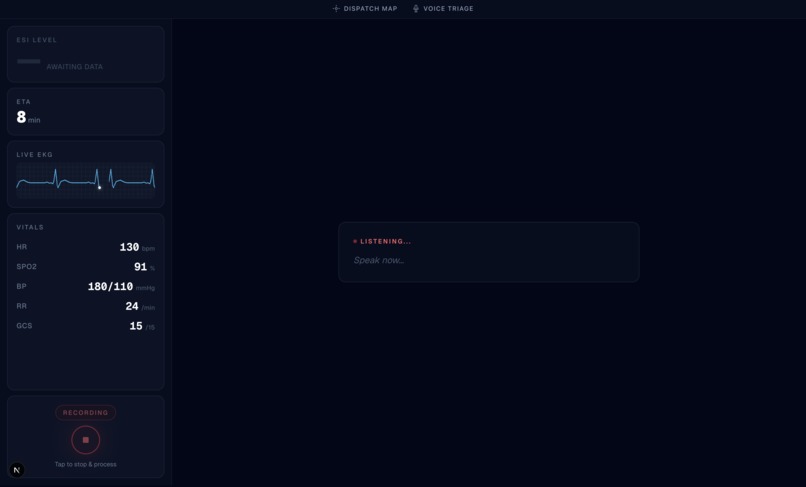
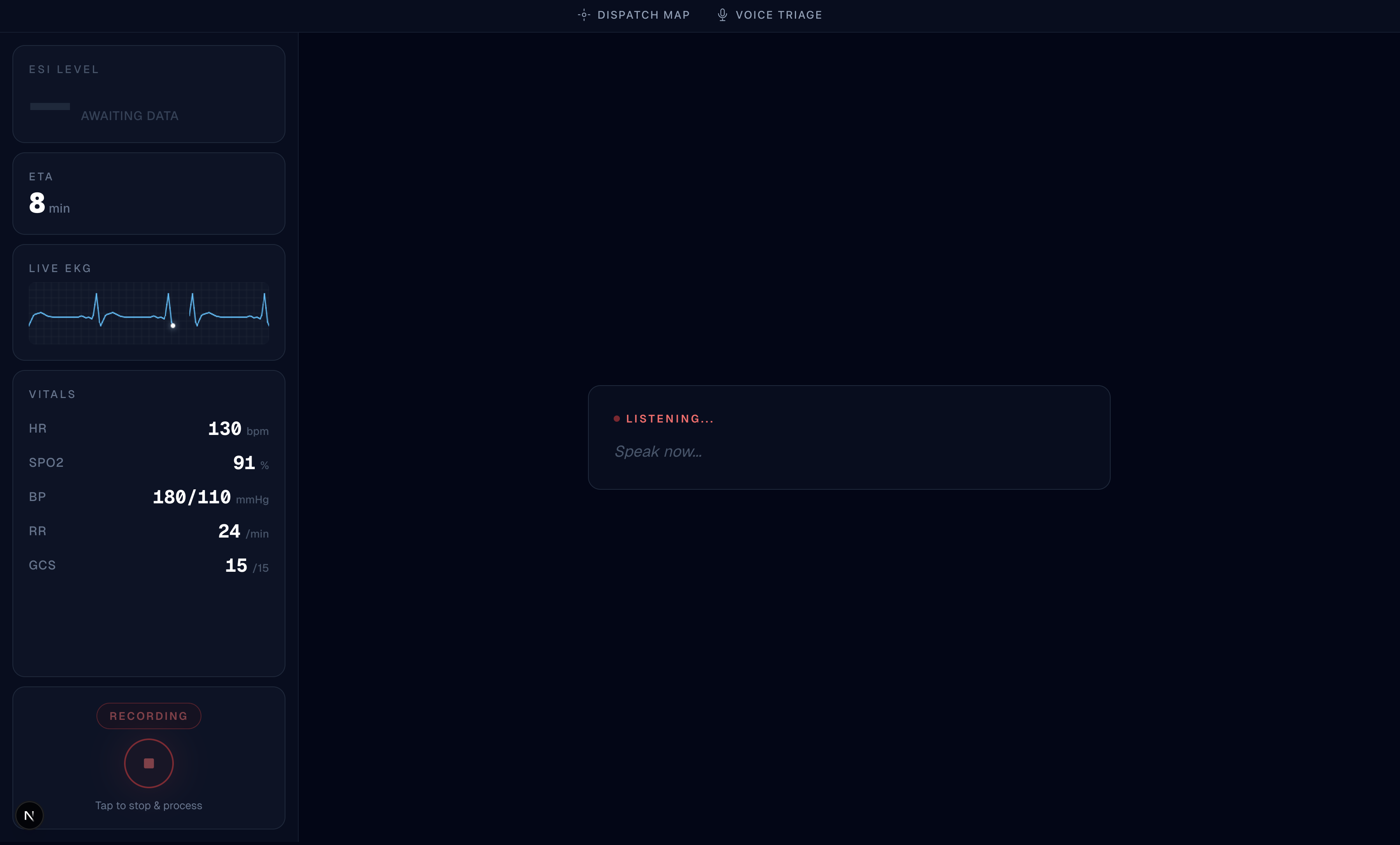
Listens to the Report
-
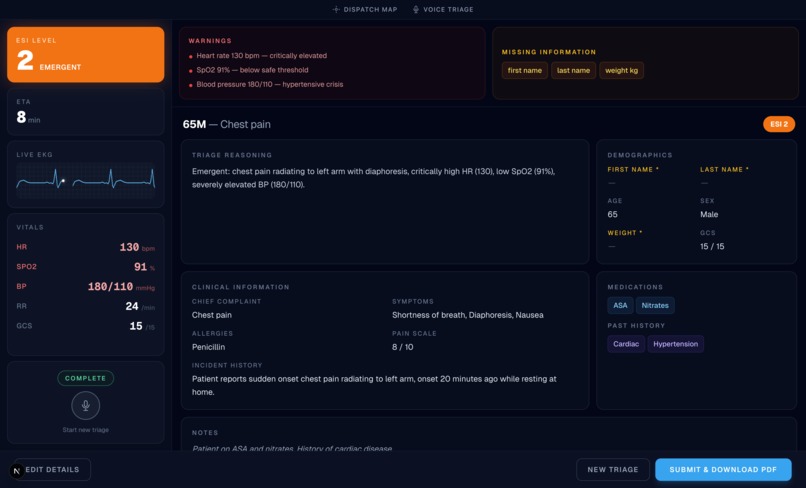
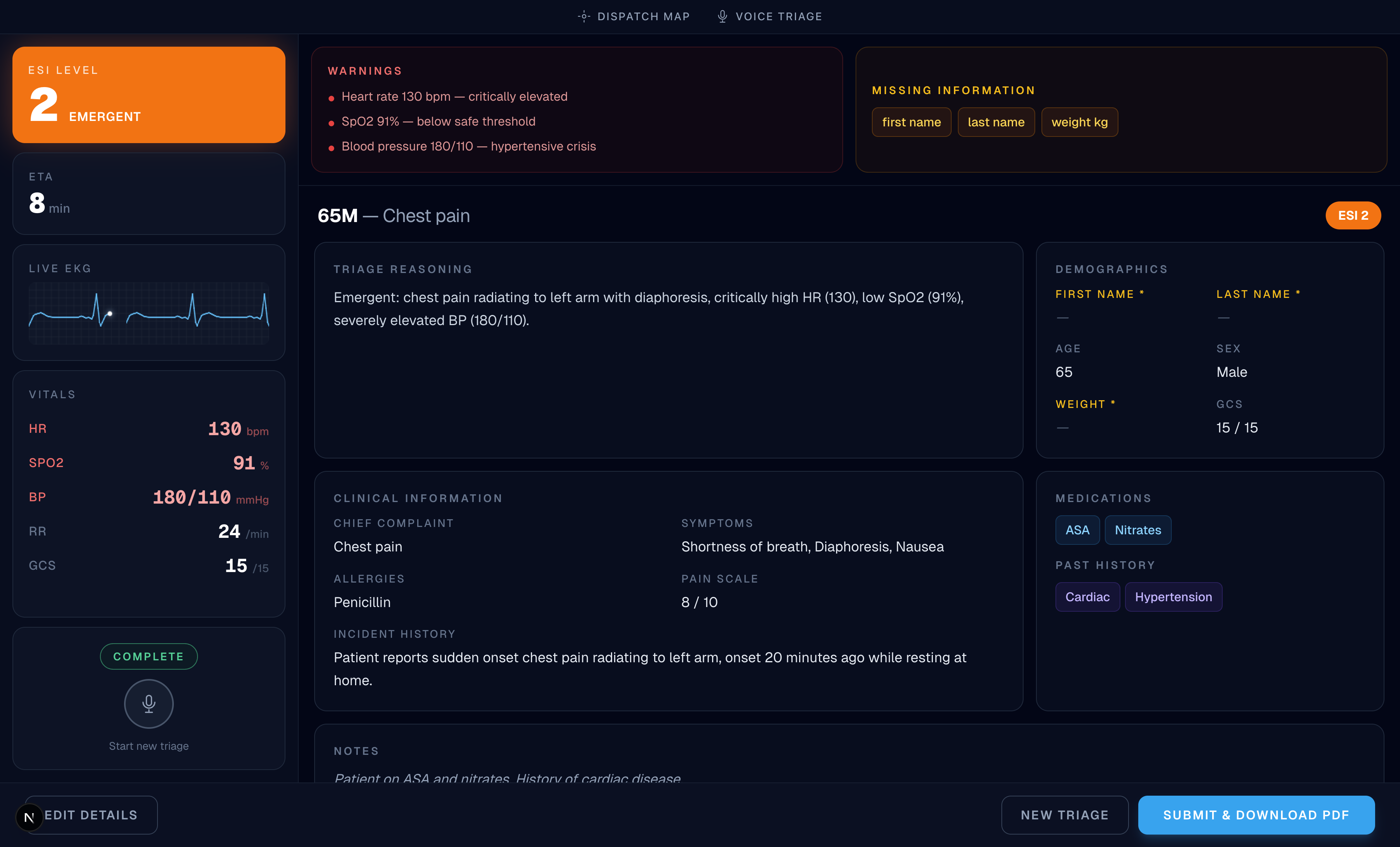
Gets Transcribed
-
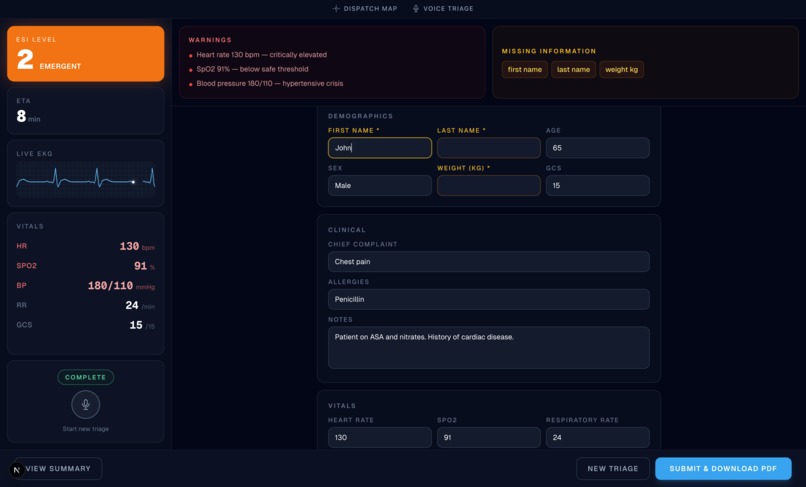
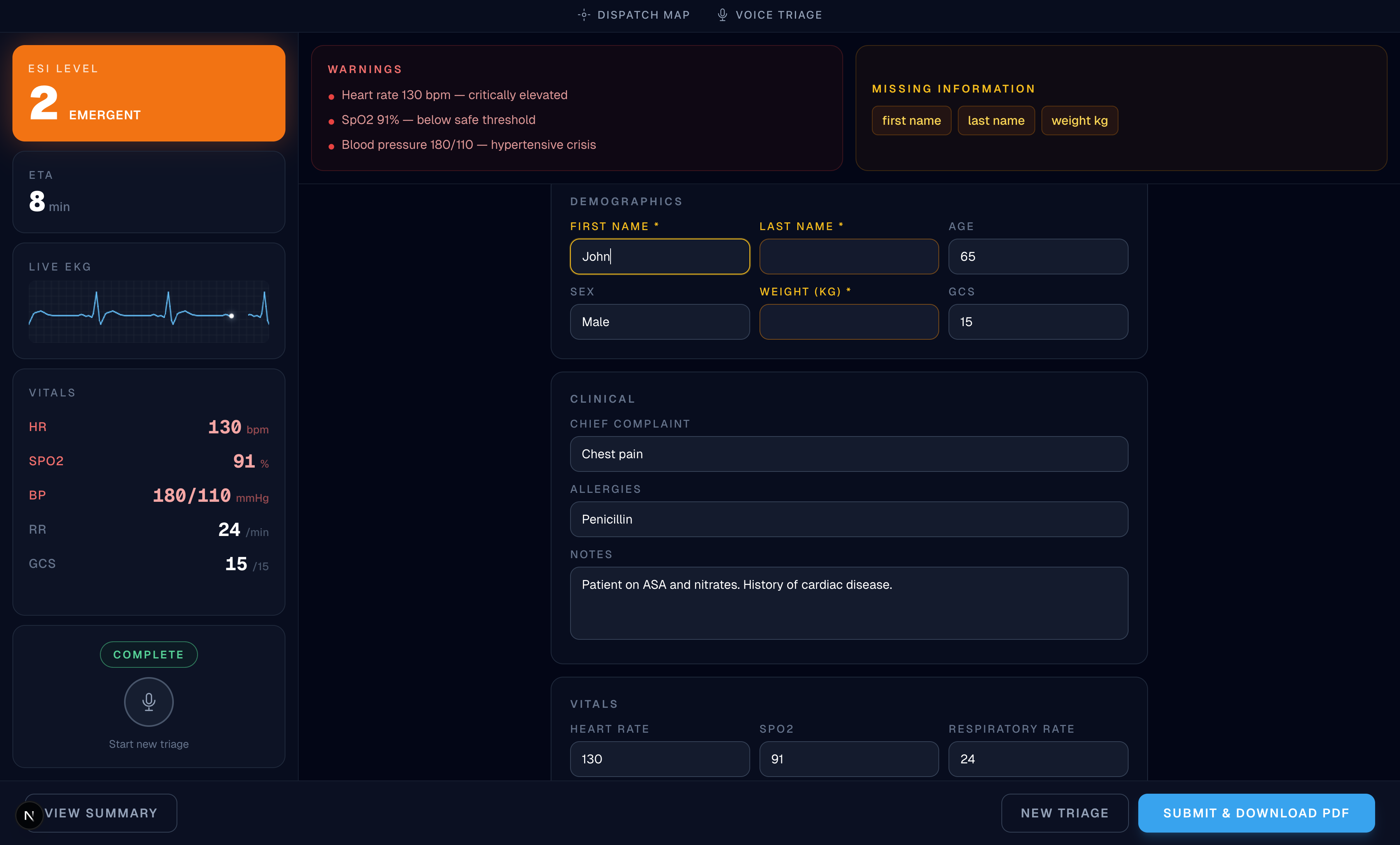
Fill Out Missing Info
-
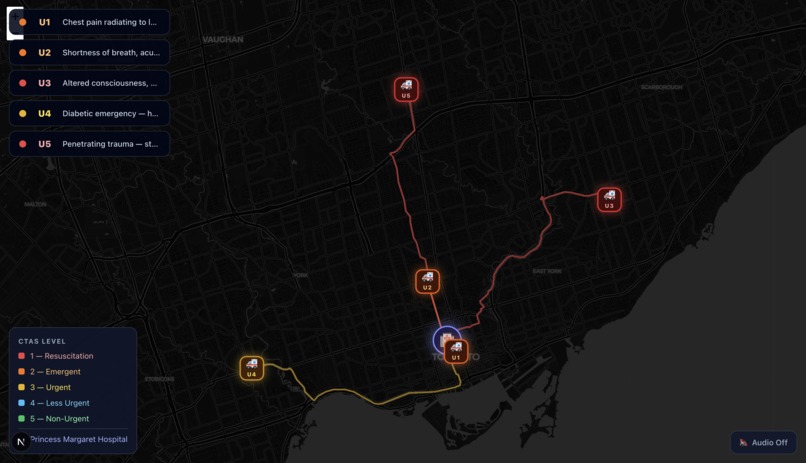
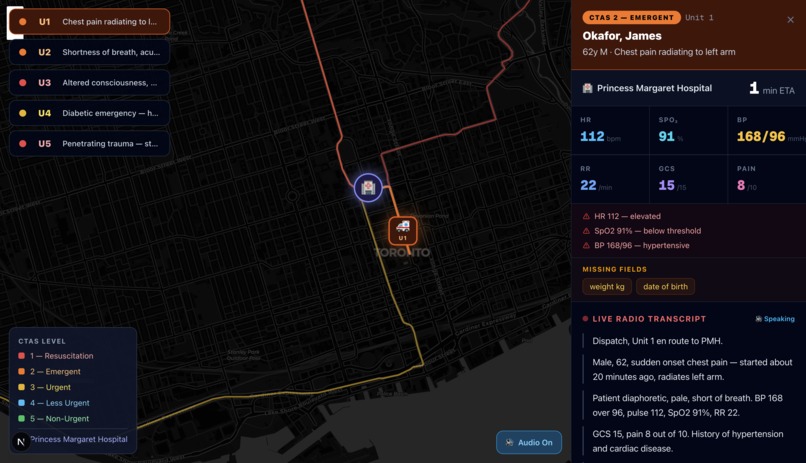
Dispatch Map
-
Shows Info Across Devices
What it does
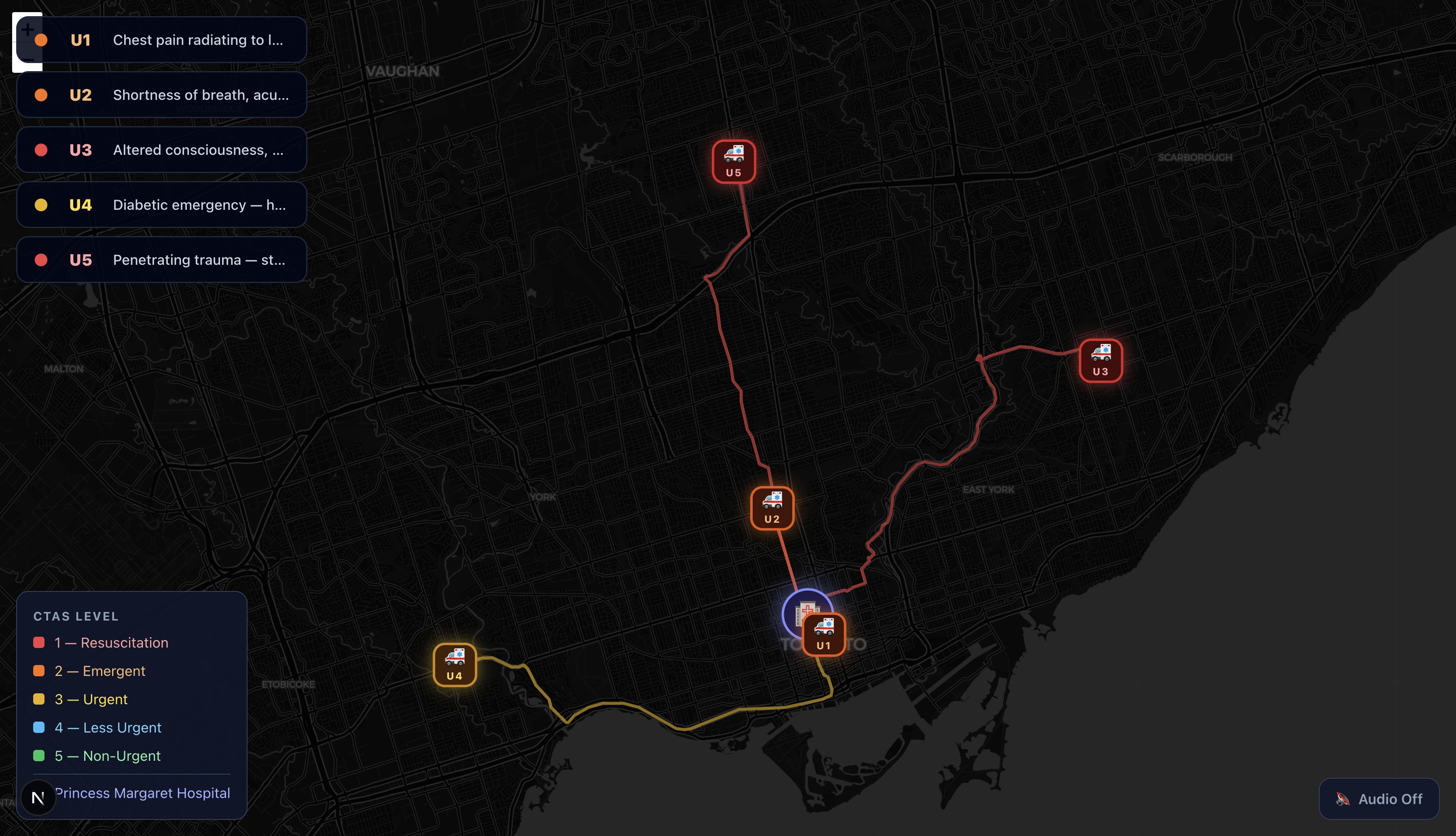
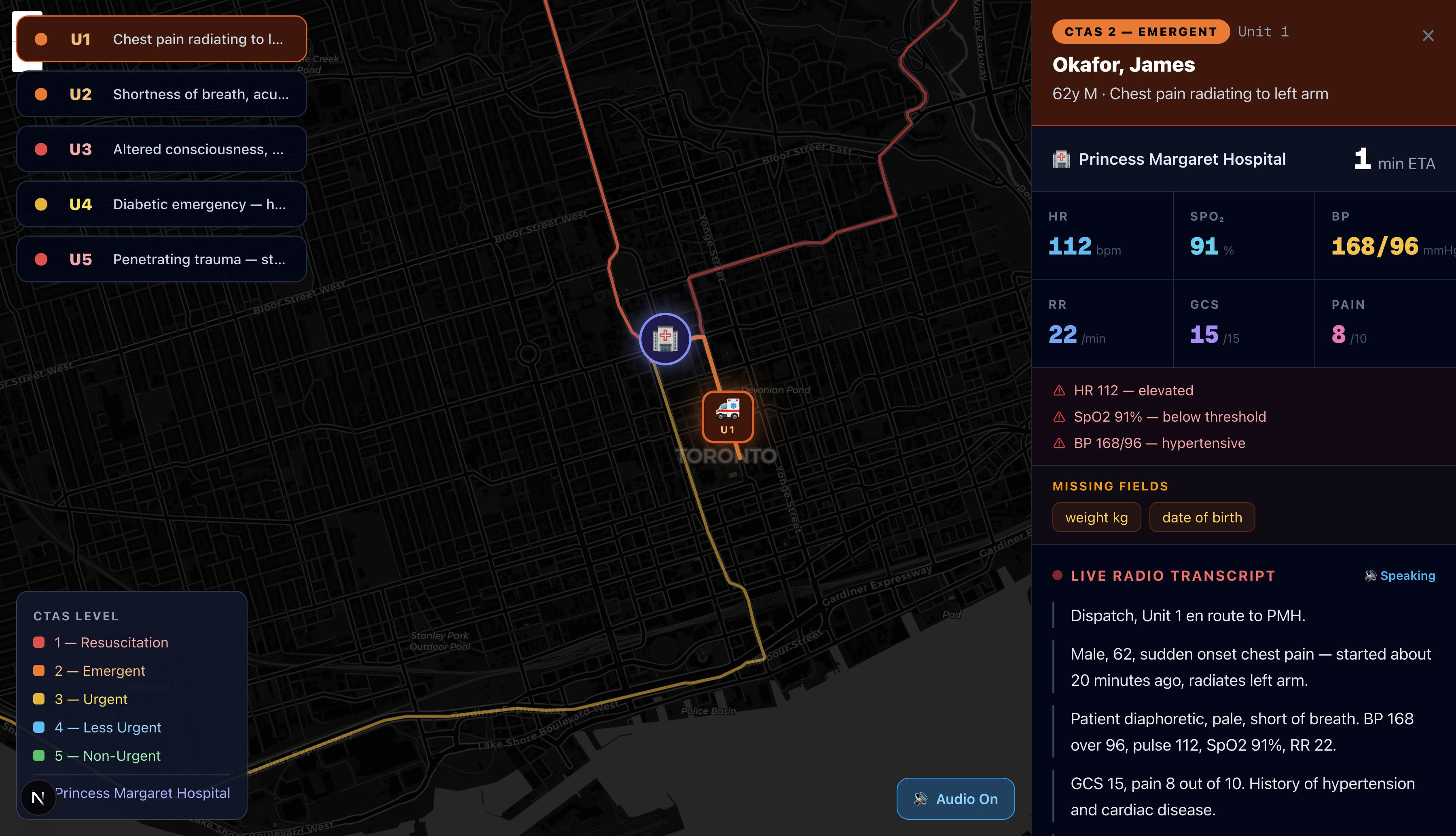
Every second counts in an emergency. Right now, paramedics are managing a critical patient in the back of an ambulance while trying to relay information over a radio — and hospitals are preparing blindly. We built Relay. A paramedic speaks naturally — 'male patient, 60 years old, chest pain, shortness of breath' — and Relay automatically parses that into a structured patient record using an LLM, streaming it live to the hospital dashboard before the ambulance even arrives. On top of that, Relay streams real-time vitals — heart rate, blood oxygen, blood pressure — over WebSockets, so the ED can monitor the patient the entire way there. And with our live Toronto map, hospital staff can see exactly where every unit is and who's incoming. We're not replacing paramedics — we're giving them a superpower. Hands-free, real-time, structured data from ambulance to emergency department. That's Relay
How we built it
Voice Input & NLP Pipeline:
- Browser-based Web Speech API for hands-free voice capture
- OpenAI GPT-4o for natural language parsing into structured Ontario Ambulance Call Report (ACR) fields
- Intelligent follow-up prompting to capture missing critical information based on chief complaint
Backend:
- FastAPI (Python) for high-performance async API endpoints
- WebSocket connections for real-time bidirectional data streaming
- In-memory state management for rapid prototyping (with PostgreSQL-ready architecture)
Frontend:
- Next.js 14 with React for the hospital dashboard
- Real-time form updates with optimistic UI rendering
- Interactive Toronto map showing live ambulance positions using Leaflet/Mapbox
- Live vitals monitoring charts with streaming data visualization
Data Model:
- Aligned with Ontario Ministry of Health ACR standards (Form 7530-4714)
- CTAS triage scoring, OPQRST pain assessment, SAMPLE history
- Structured procedure codes, medication tracking, and timestamps
Accomplishments that we're proud of
- Sub-3-second voice-to-form latency: A paramedic speaks, and the hospital sees structured data almost instantly
- Ontario ACR compliance: Our data model maps directly to the official provincial Ambulance Call Report, making it production-realistic
- Live vitals streaming: Real WebSocket-powered vital sign monitoring that updates in real-time on the hospital dashboard
- Smart follow-ups: The AI asks contextually relevant questions — chest pain patients get asked about radiation and nitro response; trauma patients get asked about mechanism of injury
- Auto-generated narrative: Relay produces a professional medical narrative from the structured data, saving even more documentation time
- Actually usable UX: Clean, dark-mode medical interface that doesn't overwhelm — designed for high-stress ED environments
Built With
- fastapi
- langgraph
- moorcheh
- next.js
- openai
- pydantic
- python
- railtracks
- tailwind
- typescript


Log in or sign up for Devpost to join the conversation.