-
-
-
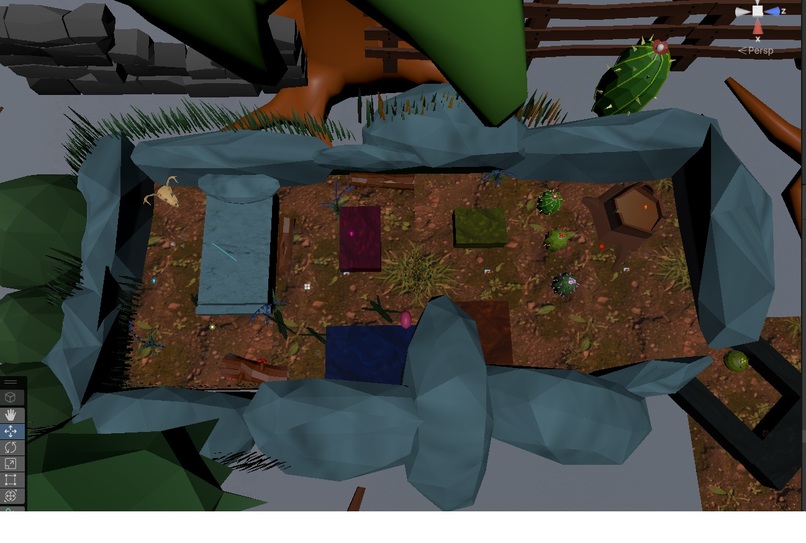
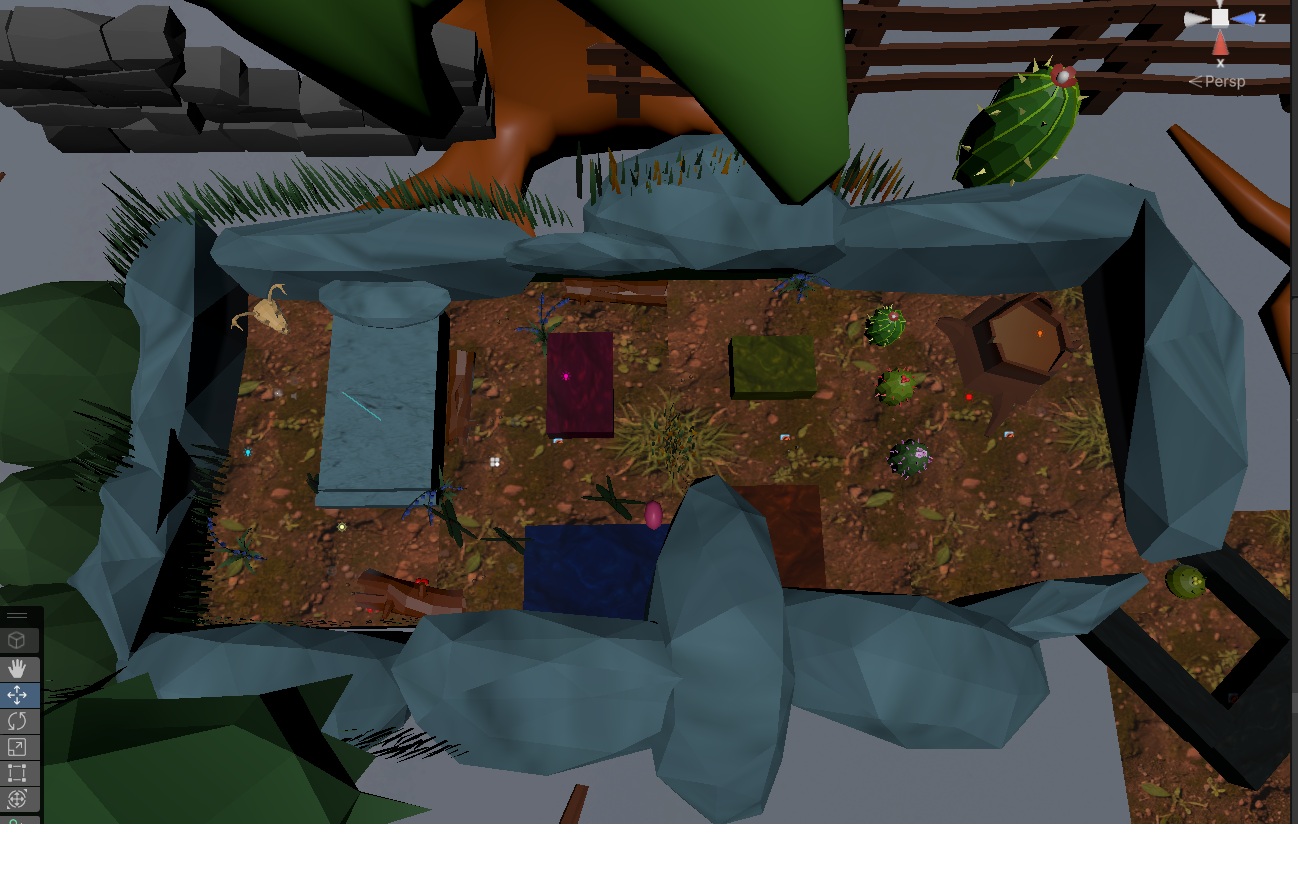
Aerial View of Map (Documentation)
-
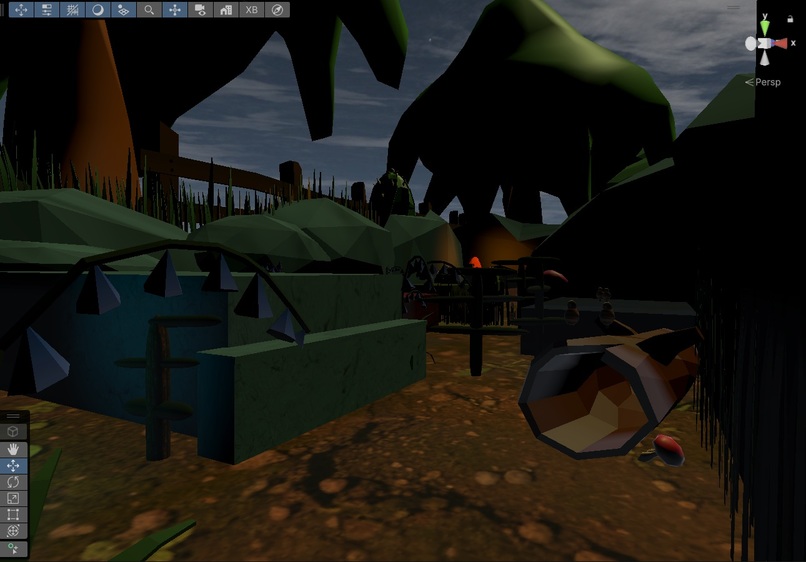
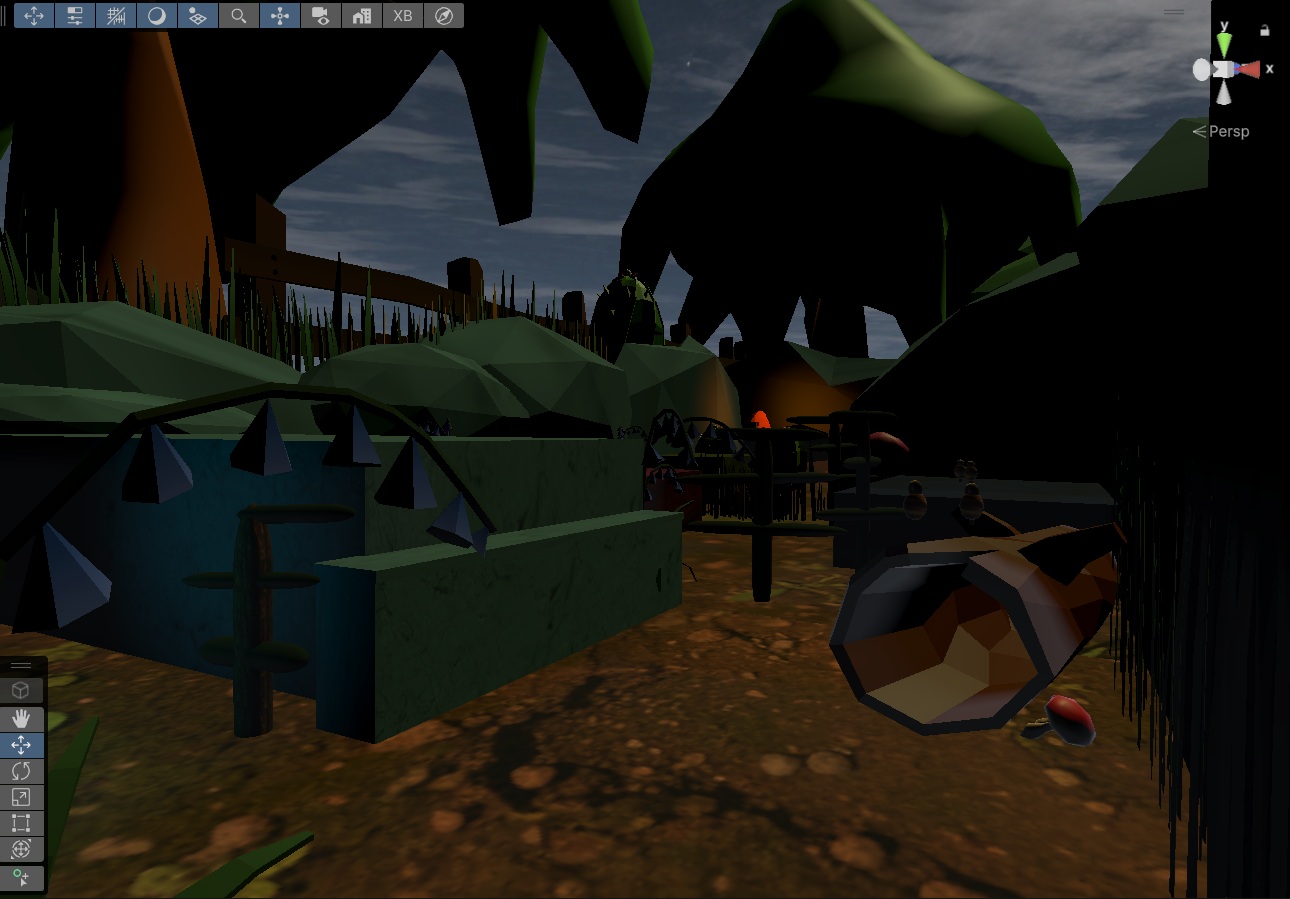
Initial testing lightning
-
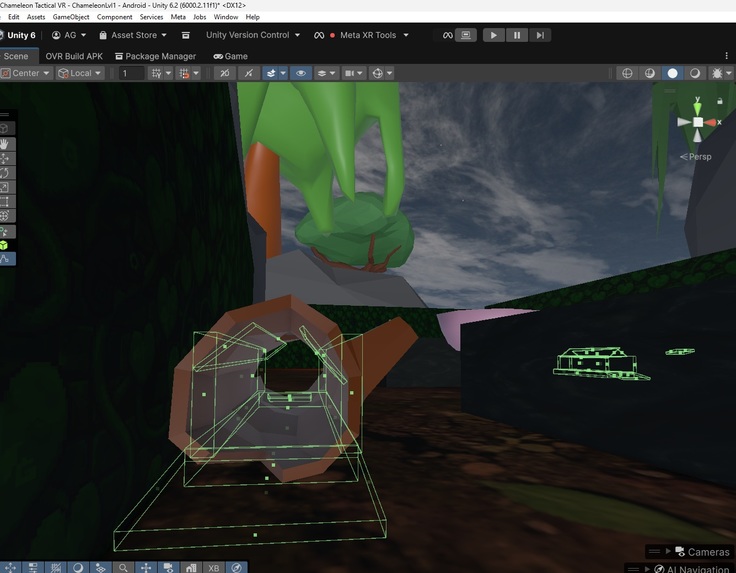
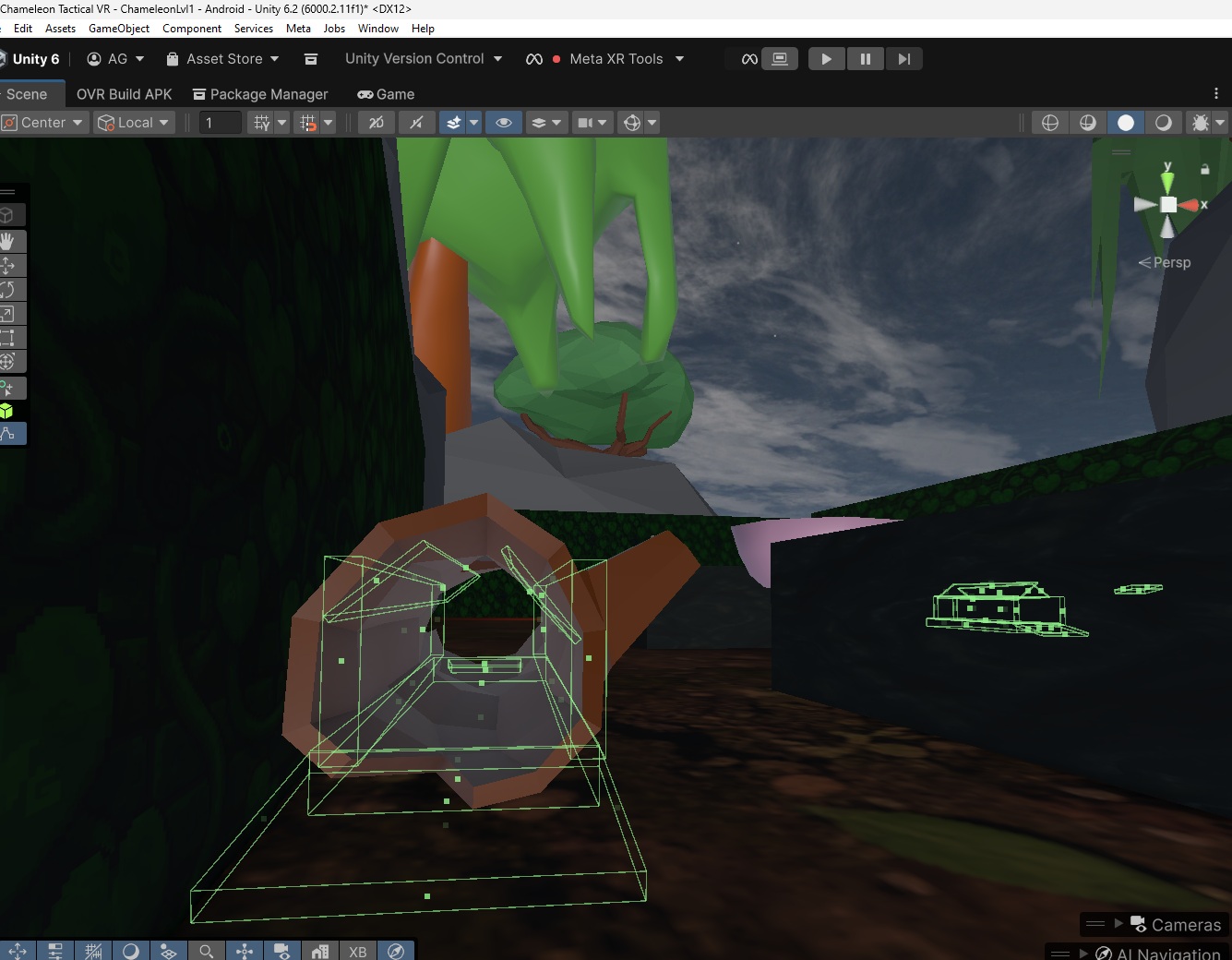
Working with different types of surface navigation
Inspiration
Splinter Cell: Pandora Tomorrow and Metal Gear Solid 3: Snake Eater were two of the games that shaped my love for stealth and tactical movement. Their systems—dynamic lighting, camouflage percentages, environmental awareness—always felt ahead of their time. When I started prototyping in VR, I realized locomotion was still one of the medium’s biggest limitations. Movement rarely feels physical or fun; it usually feels like an abstraction. That inspired me to explore a game where stealth and movement were fully embodied.
The idea became: What if you could physically blend into your environment like a chameleon and move through a 3D world using your own hands? The concept grew from experiments mixing MGS3’s camouflage, Splinter Cell’s shadow detection, and a playful “Twister in VR” idea where players match colors, surfaces, and poses to stay hidden.
What it does
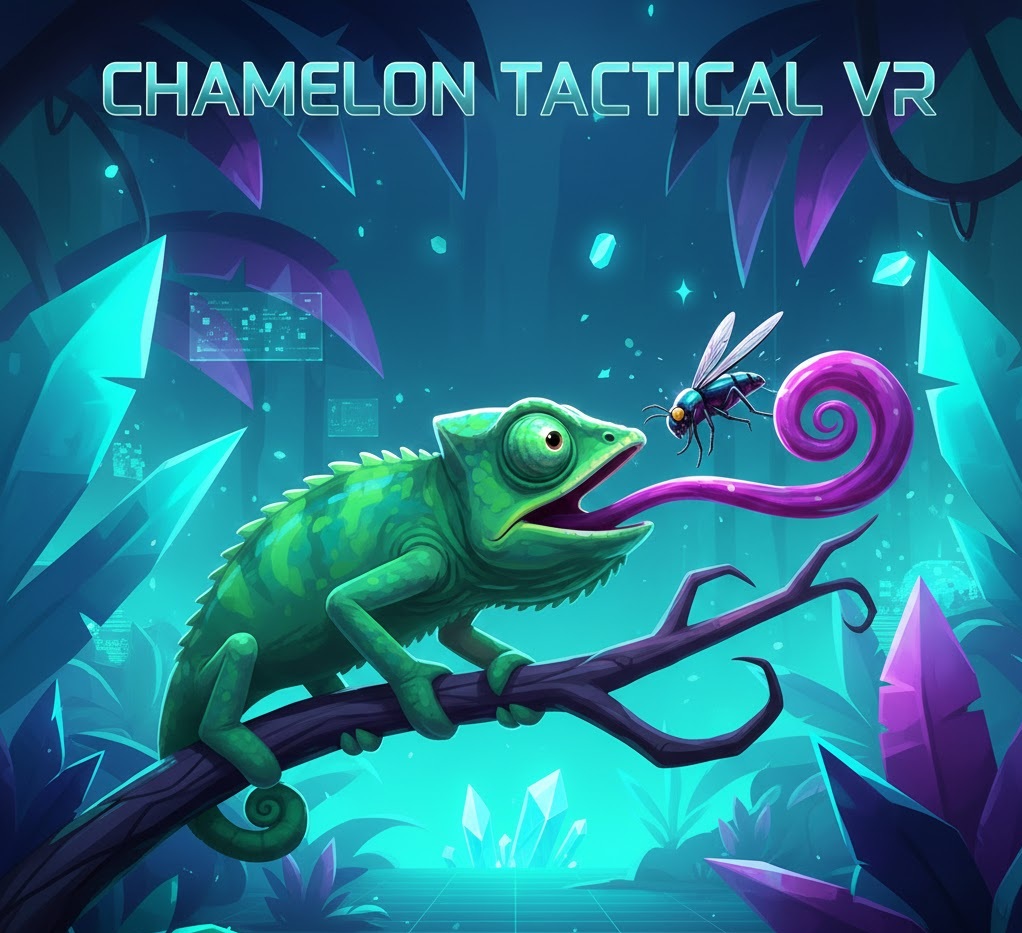
Chameleon Tactical VR: Bug Eater is a first-person stealth and traversal game where players embody a chameleon. (A Button + 2.5 sec tracking enemy, shoot tongue; B/Y To Camouflage arms; Grip button to climb) You hide by physically matching colors and surfaces, crawl and climb using hand-driven locomotion, and use a reactive tongue to capture insect enemies. A dynamic stealth meter tracks camouflage, motion, and environmental blending. Enemies—including the prototype wasp—use sight, motion detection, and color contrast to hunt the player. Music and audio cues inspired by Pink Panther, 007, and classic stealth soundtracks build tension and guide player behavior.
How we built it
The core was built in Unity with hand-based locomotion, custom physics for surface blending, and AI behaviors inspired by stealth classics. I created a color-detection system that compares player camouflage to nearby surfaces and feeds that into enemy AI. The wasp enemy uses a perception cone, color contrast scanning, and NavMesh chase logic. I focused heavily on sound design, including stealth-state stingers and dynamic tension layers. Iteration involved continuous testing on Quest hardware to ensure motion comfort and responsiveness.
Challenges we ran into
The biggest technical challenge was designing locomotion that felt physical but not exhausting or disorienting. Balancing stealth detection—color, light, distance, and movement—was also complex, especially in a VR space where players can pose unpredictably. My Laptop's GTX 1650 does not handle Meta Link, so I constantly had to use OVRBuilder to test APK files on device. IDEs would crash when compiling and that increased iteration time greatly and frustrating. At the end, trying to fix one thing broke others, but the version of the video is the closest I was to my goal for this competition.
Accomplishments that we're proud of
I’m proud that the game already delivers a unique form of physical stealth that feels different from typical VR locomotion. Despite Stealth and locomotion not being perfect yet, I really love how the tongue mechanic came out and hope to expand further on it. At first, I thought of twister-like tiles that required specific color matching, then Sydney, my mentor, taught me to think of camouflage in any place of the map, not just tiles. Creating that color picker + stealth sensor felt great and will become even better.
What we learned
I learned how crucial physical feedback is in VR and how much stealth changes when a player’s body becomes part of the puzzle. I also gained experience building AI for mobile VR, optimizing color and visibility systems, and crafting spatial audio that supports gameplay. Working alone is hard, too.
What's next for Chameleon Tactical VR: Bug Eater
Next steps include polishing movement, refining stealth mechanics, improving wasp behavior, SpeechRecognizer to shoot tongue, and expanding the enemy roster with insects and three main bosses: a Hawk, a Snake, and a Monkey. I plan to add more power-ups, a longer tongue with grapple-like traversal, platforming sections, and environmental puzzles. Long term, the goal is a stealth-focused, tactile, and cinematic VR experience that blends action, strategy, and physical play.


Log in or sign up for Devpost to join the conversation.