-
-
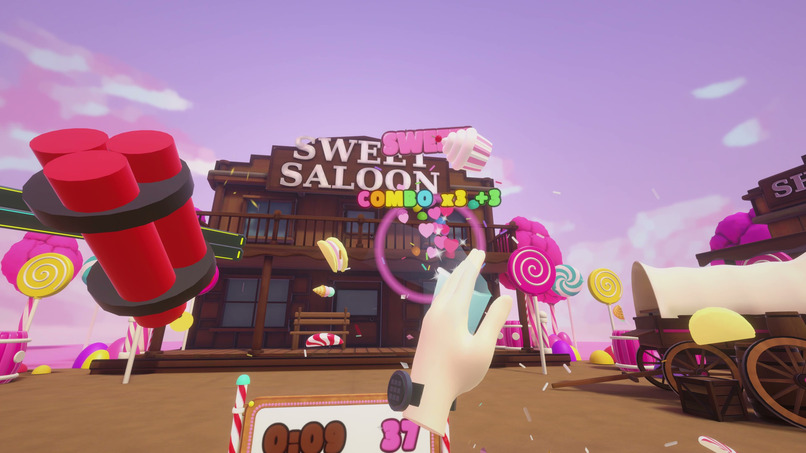
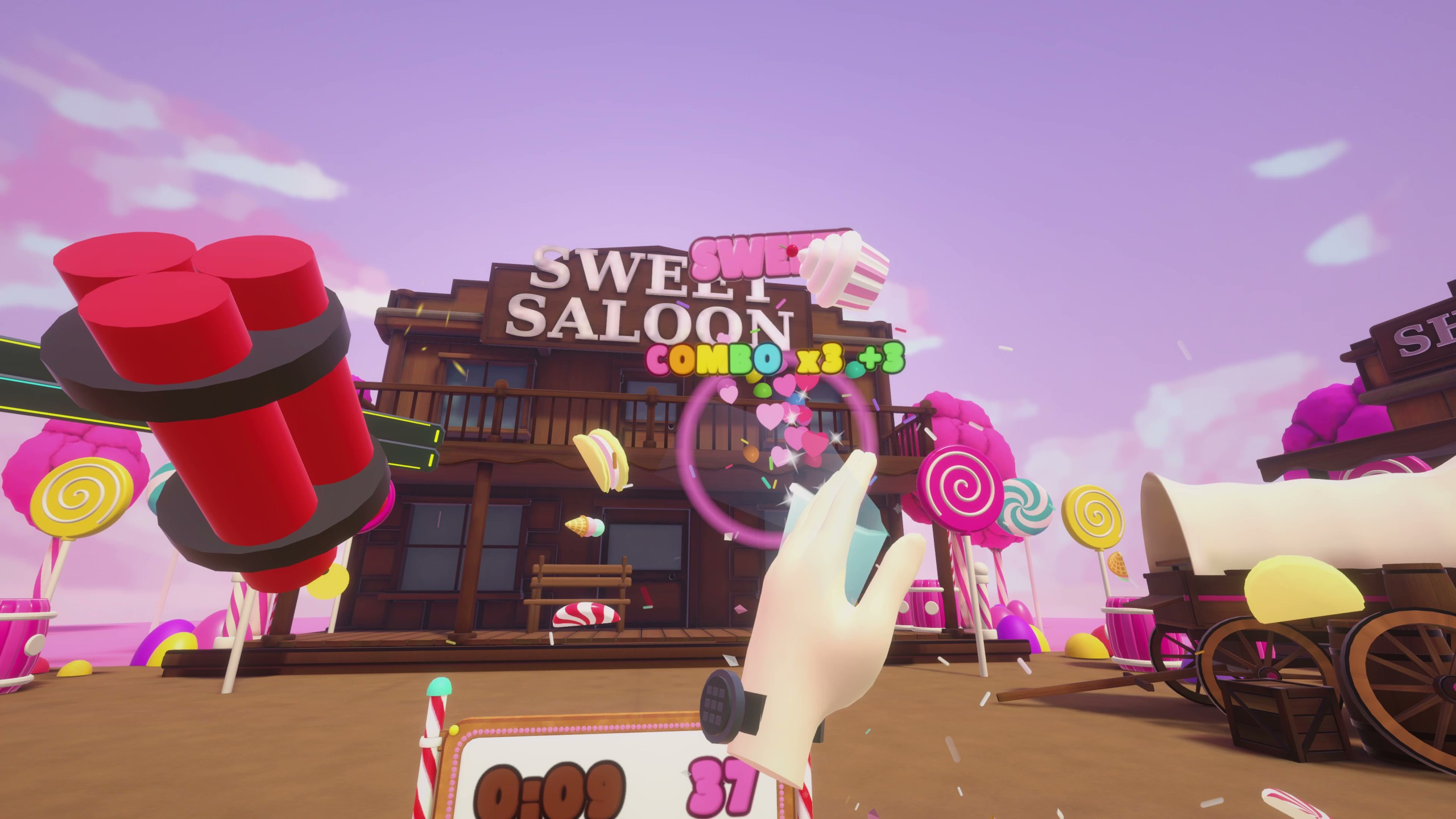
Sugar Slash, in Candy Land: chop flying sweets with the edge of your hand. Cut three in one swipe for a combo, and leave the TNT alone.
-
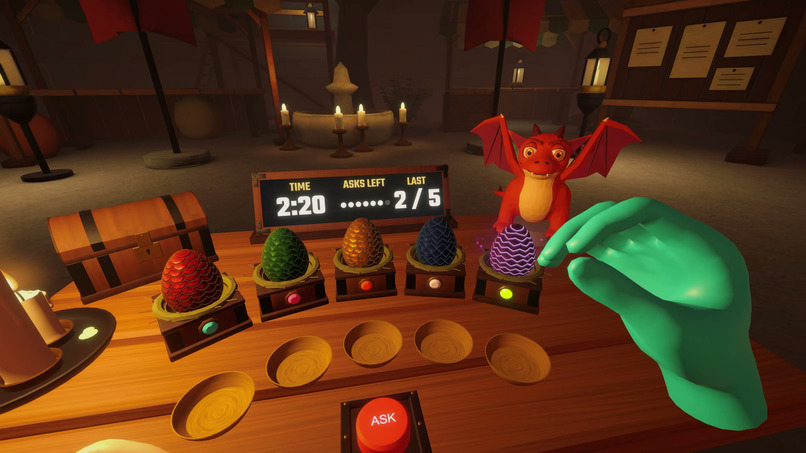
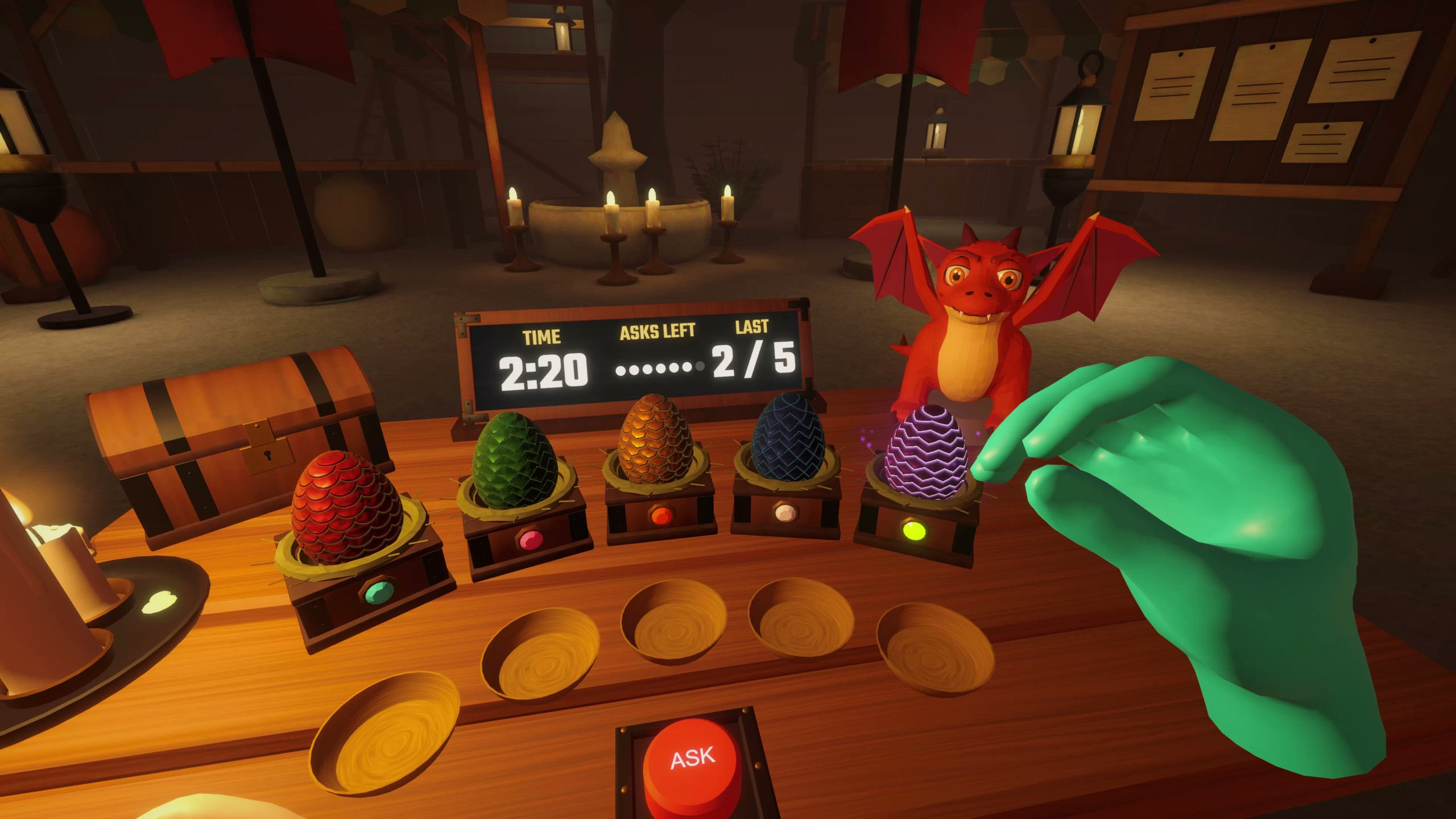
Ember's Eggs, in the Medieval world: put the dragon's eggs in order, then press ASK to see how many are right.
-
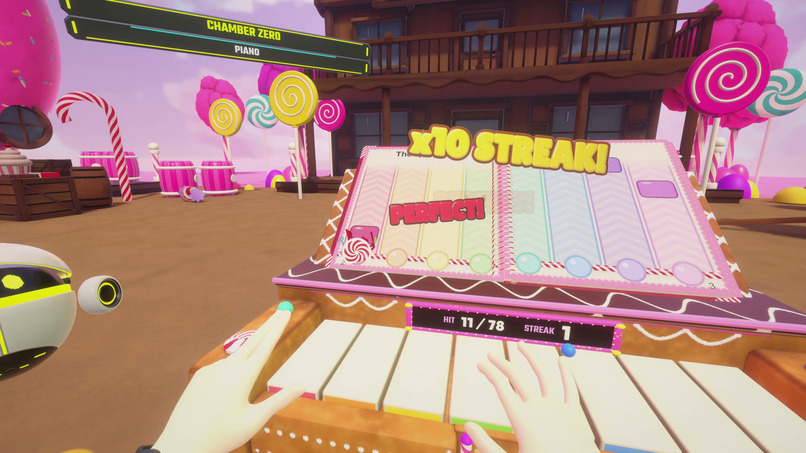
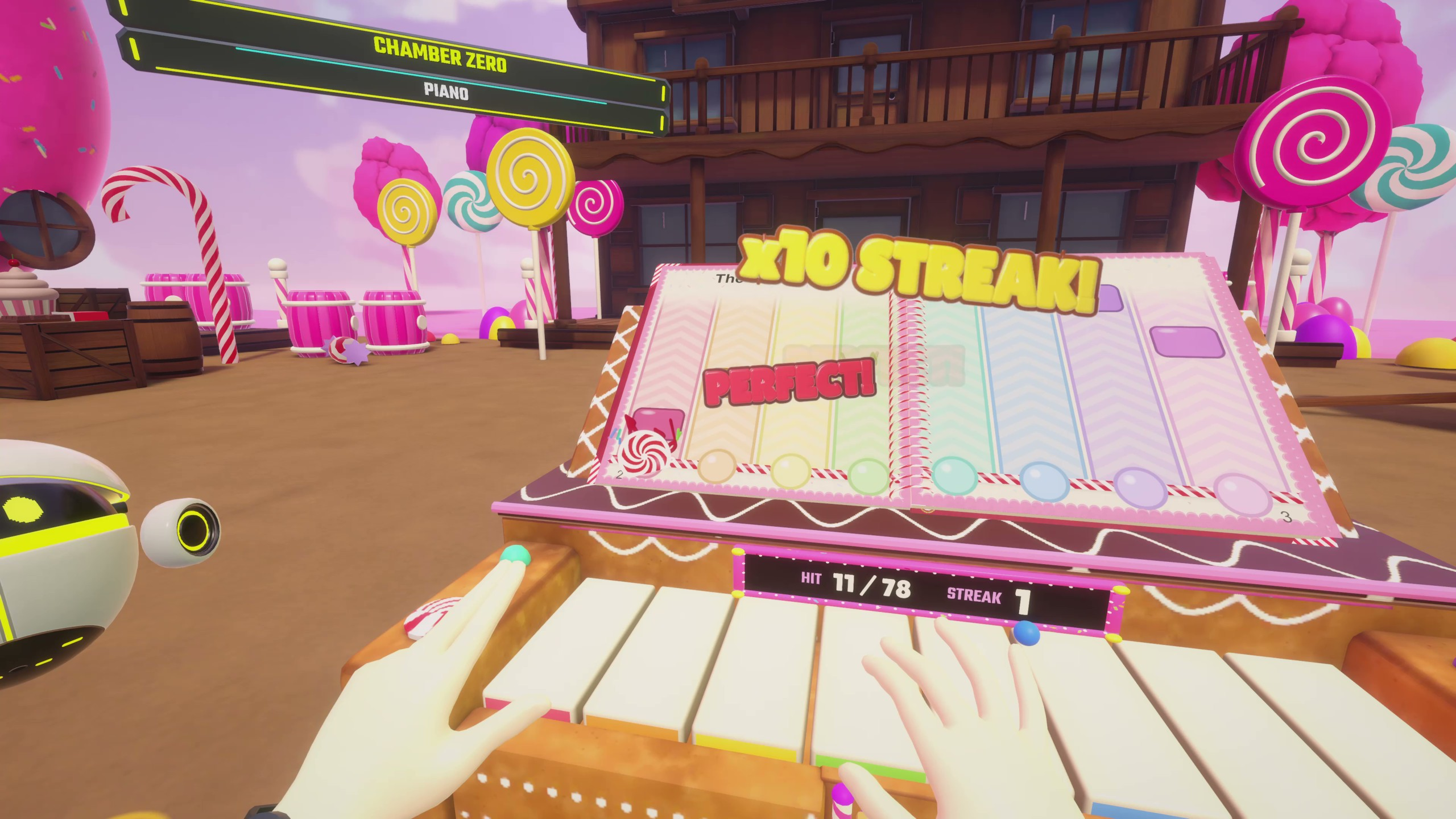
Ragtime Rush, in Candy Land: play The Entertainer on a candy grand piano as the notes fall down the song book, and keep your streak going.
-
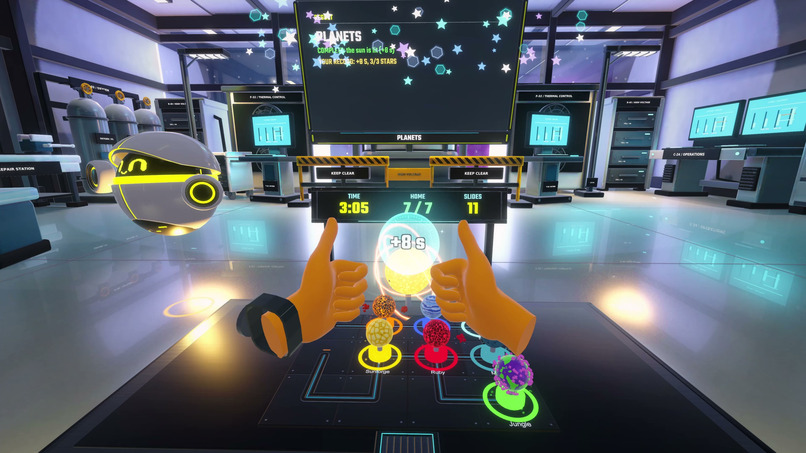
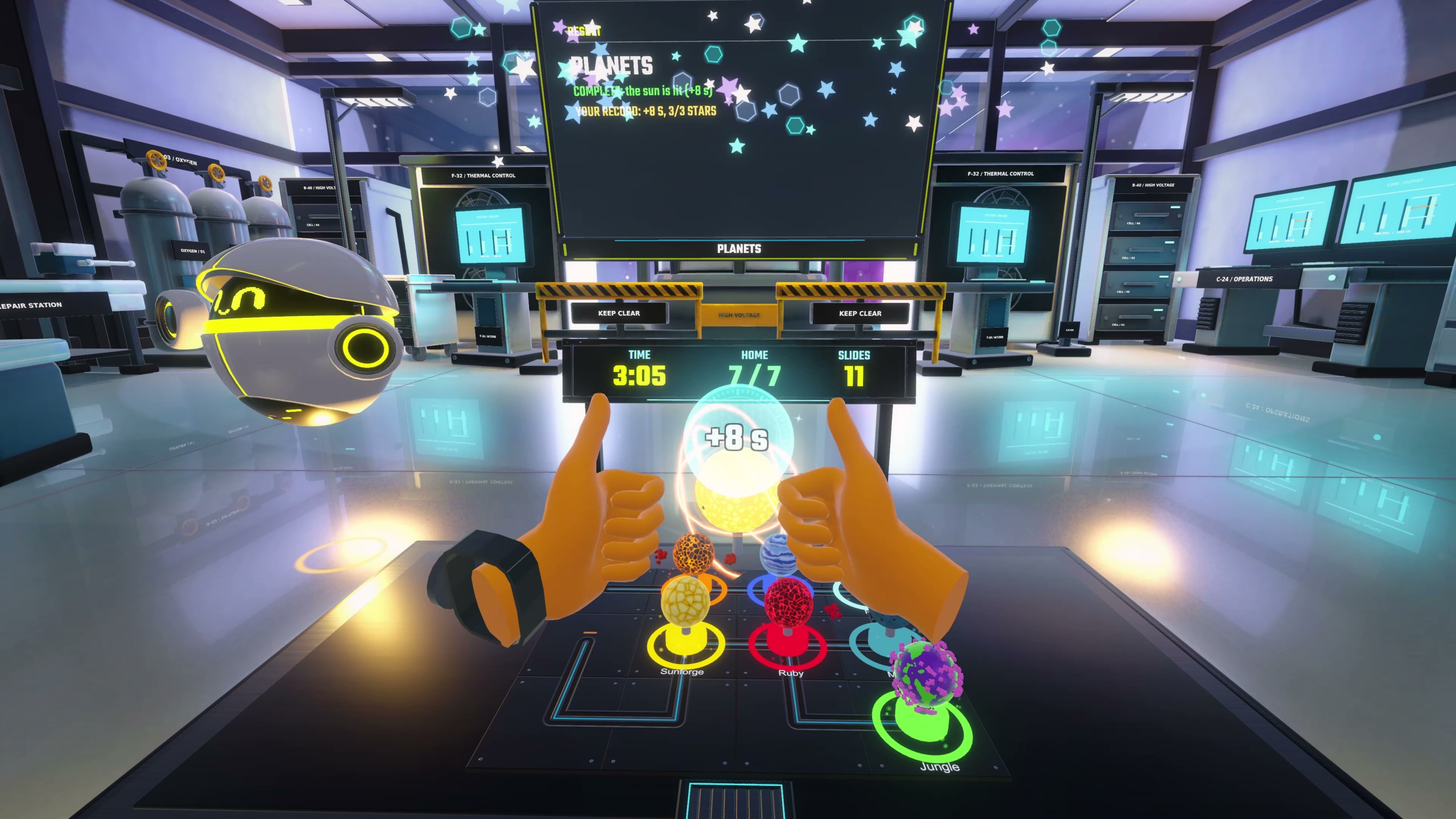
Puzzle Planets, in Space: slide the planets along the rails to their docks. Get all seven home to light the sun.
-
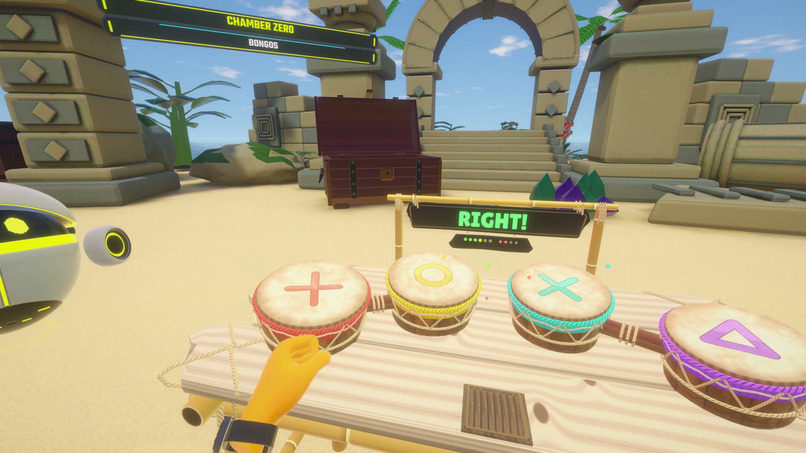
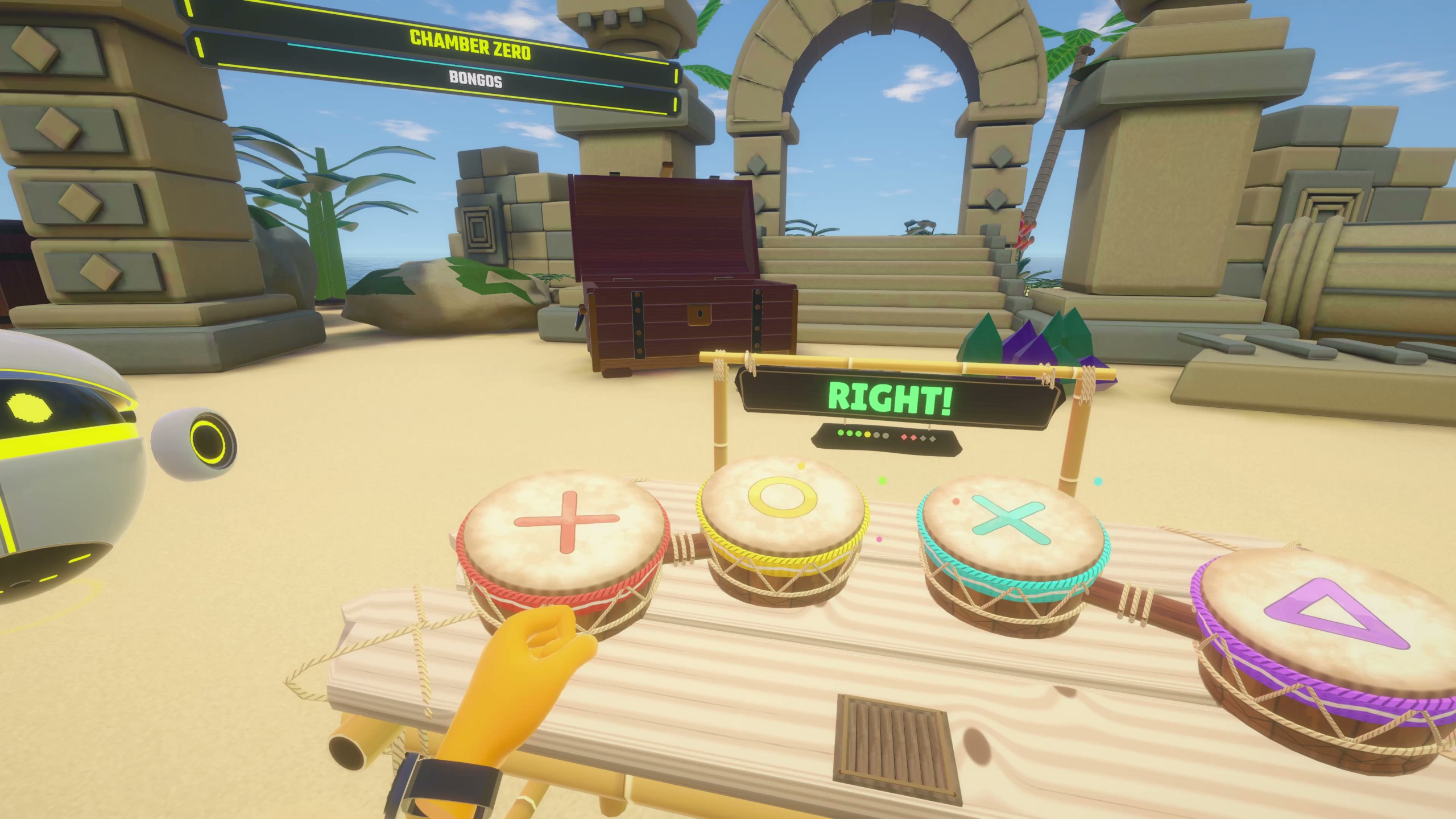
Bongo Beach, on Treasure Island: listen to the rhythm, then play it back on four drums. Each drum has its own symbol as well as its colour.
Inspiration
We're a small indie studio, and Chamber Zero is our way into Meta Quest. We wanted our first game there to be built around the thing that makes Quest special: your own hands, tracked, with nothing to hold and nothing to learn.
Too often hand tracking is used just to point at menus. We wanted the opposite: a game where you reach out and do things. Turn a steering wheel, throw a dart, play a piano, beat a drum, chop flying sweets out of the air.
We also wanted something you can play sitting down, on a sofa or at a desk, and hand to someone who has never been in VR. A game show was the perfect fit. Contestants stay in one spot, every game is explained in a few seconds, and a host, a clock and a final room you earn your way into give a short session a beginning, a middle and a big finish. So you take the contestant's chair, Zero the robot host shows you round, and every second you win buys you time in the chamber at the end.
What it does
You sit on a contestant's platform in a glass-domed hall. Zero, a small robot host, flies in and points you at four portals: Space, Medieval, Candy Land and Treasure Island. Each world holds two games you play with your bare hands, and each game grades you from 0 to 8 seconds. Play all eight and the lights cut out, the platform turns you round in the dark, and the doors of Chamber Zero open. Inside is the finale: you get only the time you banked, up to 64 seconds, to grab flying coins and drop them in a glass box.
- Puzzle Planets: slide planets along a rail network to their docks without passing each other.
- Moon Maze: drive a moon rover through a maze, one hand on the wheel, one on the throttle.
- Ember's Eggs: put the dragon's eggs in order, then ask Ember how many are right. He answers with fire.
- Dungeon Darts: five darts, one oak-log board, highest score wins.
- Ragtime Rush: play The Entertainer on a candy grand piano as the notes fall down the song book.
- Sugar Slash: chop tossed sweets with the edge of your hand, and leave the TNT alone.
- Bongo Beach: listen, then play the rhythm back on four drums.
- Tricky Tubes: sort balls by the colour of a word's ink, not the word it spells.
Every game lets you try it before you press START: the apparatus works and nothing counts. Layouts change from play to play, and your best scores are kept.
How we built it
- Engine: Unity 6, URP and OpenXR on Meta Quest, with Unity's XR Hands. No controller anywhere, menus included: the menu is a watch on your wrist that you tap.
- Our own hand-interaction layer: two kinds of interactable only, free objects you grab and throw, and mechanisms on rails (wheels, levers, sliders, cranks) that can never leave their rails. Drawn fingers stop on surfaces and bend until they touch, so your hand wraps what it holds. Darts, drums, piano keys, slicing and buttons each read the tracked hand in their own way, tuned from logs of real play on the headset.
- Playing fair with tracking: if tracking drops while you hold something, the clock and physics freeze together and nothing is dropped or lost. Play resumes when you say so. Meta's system gesture never presses a button or starts a grab.
- Comfort: the camera is always your head, and the game never moves or shakes it. The one big turn, into the chamber, happens in the dark. Effects keep half a metre clear of your eyes.
- A different run each time: rooms are built from a seed, so the mazes, the dragon's secret egg order and the waves of sweets change between plays, and every layout is solvable by construction.
- Art and sound: models are written as Blender scripts and baked to Quest budgets, and every environment was laid out and lit for the seat.
- Instruments: the piano is the University of Iowa Electronic Music Studios' Steinway recordings (free to use without restriction), the orchestra is Versilian Studios' VSCO 2 Community Edition (CC0), and the song is Scott Joplin's The Entertainer (1902), in the public domain.
- AI assisted, team made: AI tools sped up parts of the work: code, early environment drafts, Zero's voice, sound effects and music. Everything else is six weeks of our own work. We designed every game, built close to twenty and kept the eight that played best, and tuned every hand interaction by playing it in the headset, reading the logs and changing it until it felt right. The direction, the design and every decision in the game are ours.
Challenges we ran into
- Letting go: objects stuck to an open hand on release, so grabbing and releasing were retuned from logs of real play.
- Fast fingers: darts fell out of a loose pinch, and tracking blurs fingers in a fast throw, so a throw now also reads the arm's swing to know when you let go.
- Loading: the loading screen froze hard in the headset until we moved it onto its own compositor layer.
- Sitting down: we reworked the layout until the desk, START and the apparatus sat in the same place in every game, all within arm's reach.
Accomplishments that we're proud of
- Eight different hands-only games and a finale, each with its own way of using your hands.
- It holds 72 fps on Quest 3 at its default graphics setting, measured in our heaviest world.
- A full run from first portal to final coin, built from scratch within the competition window.
What we learned
- Hand interactions have to be tuned from real play, not guesses: the logs showed exactly where grabs, throws and presses went wrong.
- Comfort comes first: turning the player in full view felt jarring, and doing it in the dark fixed it.
- Buttons need intent: START is push and hold, and only counts while you're looking at it, after accidental presses in testing.
- On Quest 3 our game is GPU-bound, and one depth texture cost more than resolution did.
What's next for Chamber Zero
- Timed playtests to tune each game's grading and the final ranks.
- We have lots of ideas for Chamber Zero, and if players enjoy it we'd love to add more minigames, more puzzles and new game modes.
Target launch date: November 2026, on the Meta Quest store alongside our competition entry.
