-
-
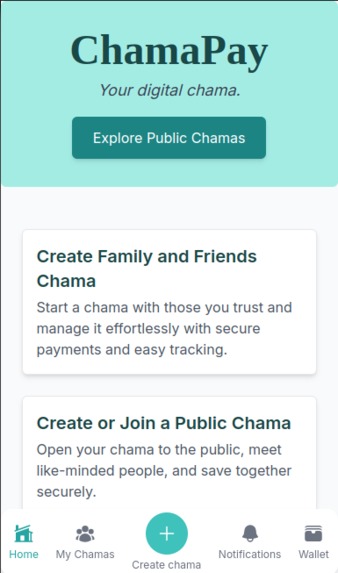
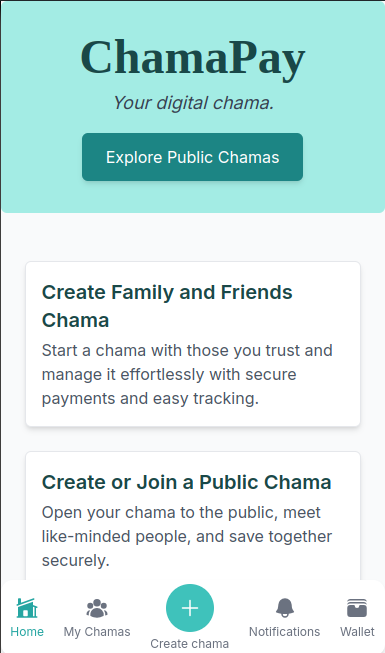
Homepage
-
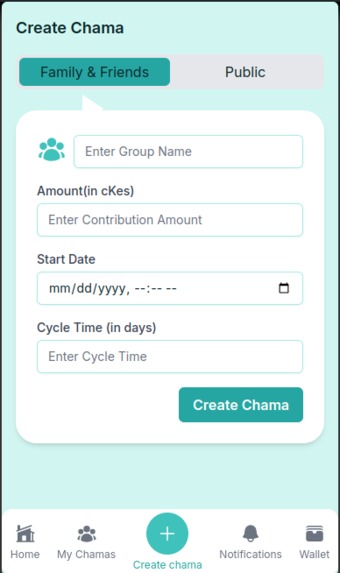
registration page
-
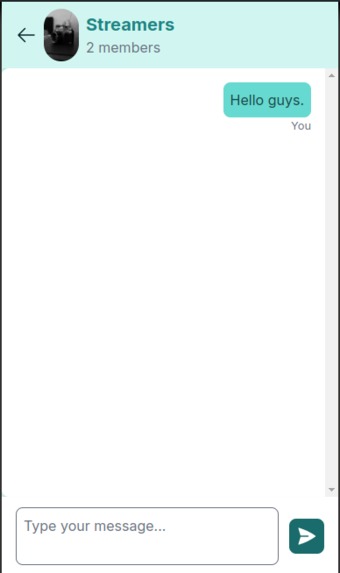
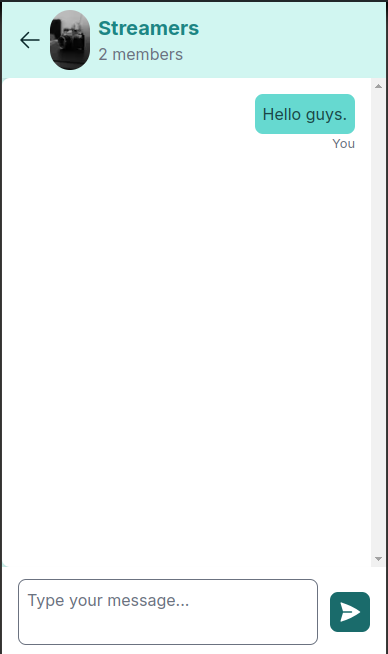
chats
-
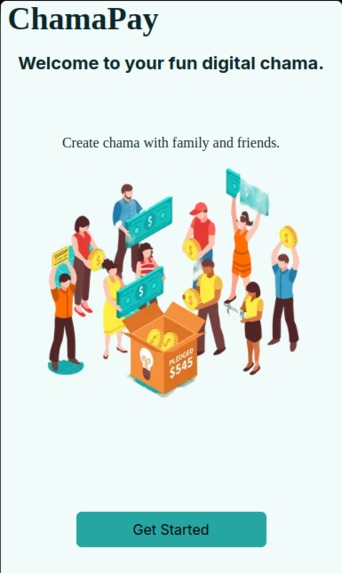
start page
-
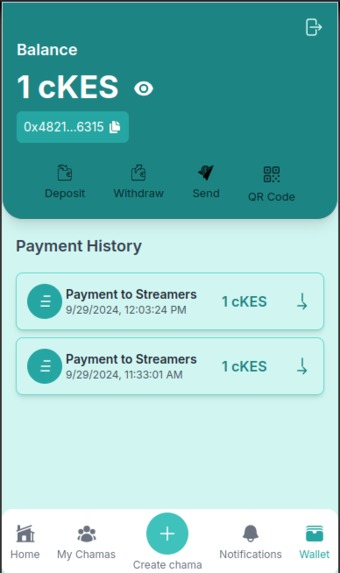
my wallet
-
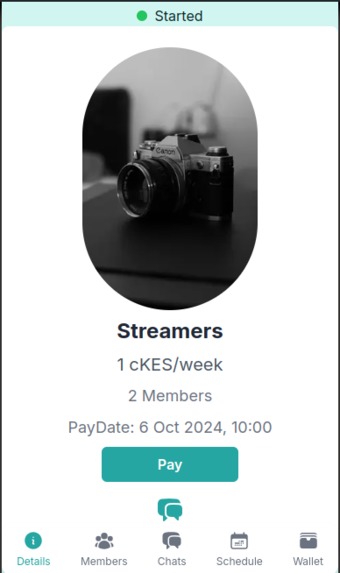
details
-
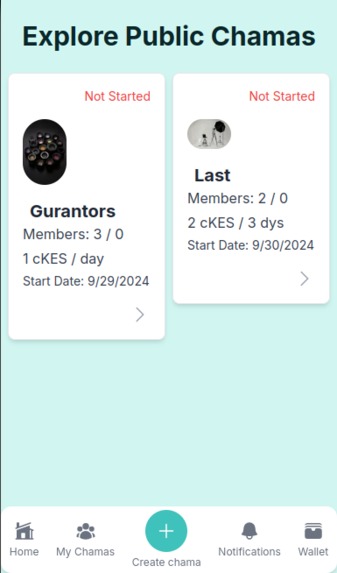
explore
-
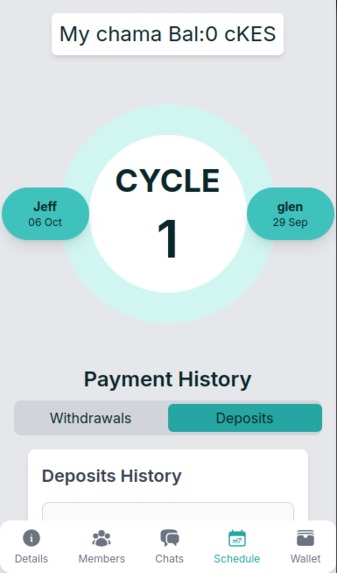
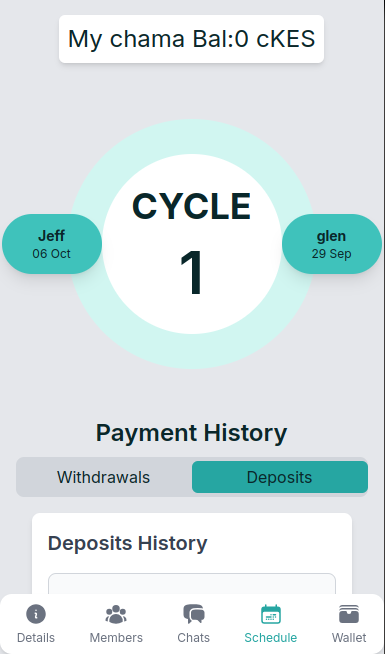
schedule
-
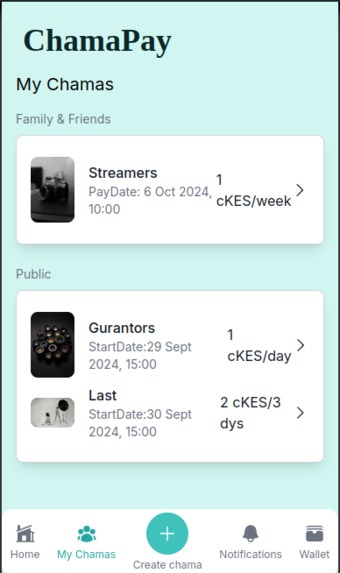
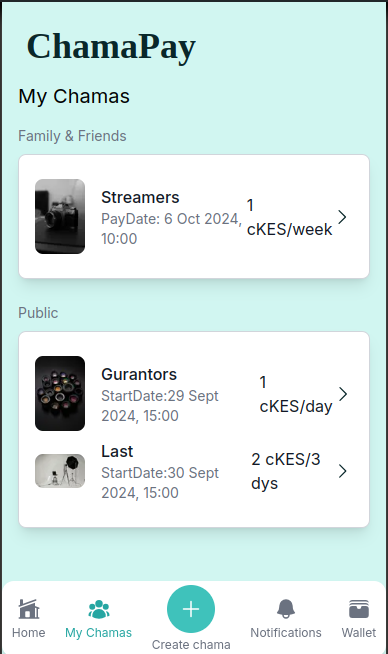
My chamas page
Inspiration
The inspiration for ChamaPay came from the traditional chama model in many communities, where people come together to support each other financially. These groups offer a rotating fund to members, allowing each one to receive a lump sum at a given time. I wanted to bring this concept into the digital age, using blockchain technology to make it more transparent, efficient, and accessible to a broader audience. The use of the cKES stablecoin adds a layer of security and trust, making the financial transactions stable and reliable for all participants.
What it does
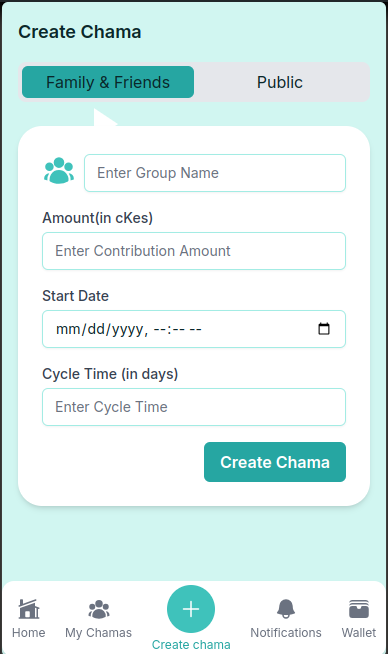
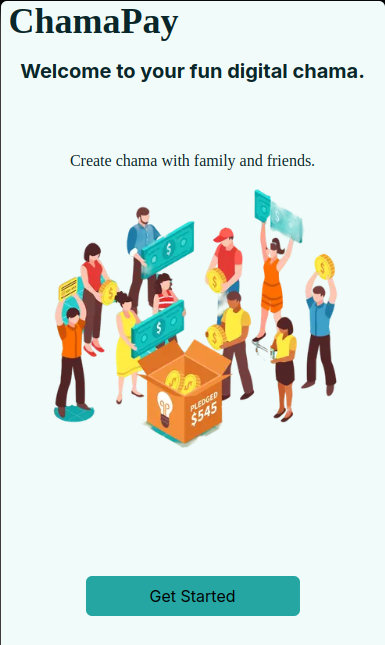
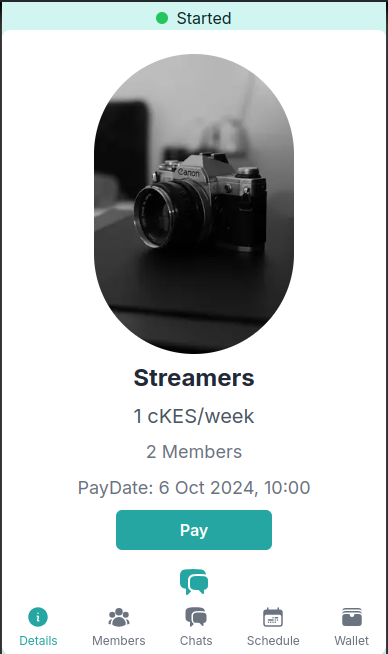
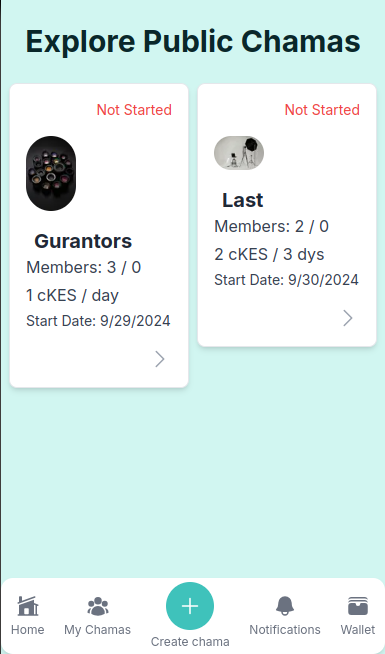
ChamaPay allows users to create public and private chamas (rotary savings groups) and save using cKES stablecoin. Members contribute a fixed amount after a fixed period of time, and funds are distributed to participants on a rotating basis. Public chamas are open to anyone, while private chamas are limited to friends and family. The platform manages the entire process, from member approval to fund disbursement, using smart contracts to ensure transparency and fairness.
How we built it
Smart Contracts:
We wrote smart contracts in Solidity and deployed them on the Celo mainnet. These contracts manage all the critical features, such as creating a chama, adding members, and disbursing funds.
Frontend Development: We used Next.js for the frontend and styled the UI with Tailwind CSS. This helped us build a responsive, mobile-friendly design, as accessibility is key for our target users. The user interface includes pages for exploring public chamas, managing private chamas, and making payments using cKES or M-Pesa.
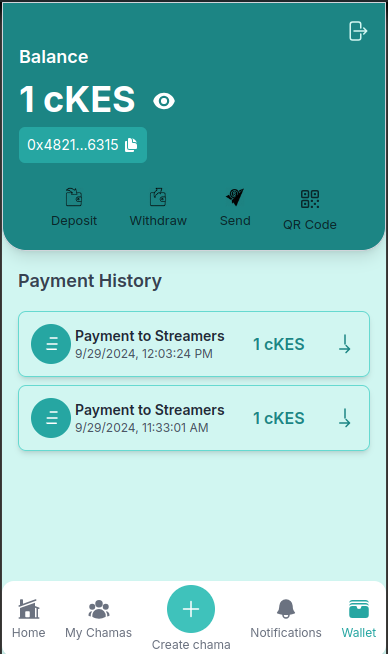
Blockchain and Wallet Integration. We integrated wagmi for wallet connectivity, allowing users to interact with the blockchain through decentralized authentication. This handles the creation of chamas, as well as deposits and withdrawals.
Notifications and Data Storage: Notifications are stored in a backend database, and users receive updates when important events happen in their chama. This ensures they stay informed about key moments, such as when it’s their turn to receive funds.
Challenges we ran into
Implementing Fund Rotation: Designing the smart contract logic to handle rotating fund disbursement fairly was challenging. The rotation had to account for all disbursing of funds and also cater for those who decide to deposit more money.
Ensuring Security: Security is critical for handling user funds and personal data. We faced challenges in ensuring the platform was both decentralized and secure and that all the payments were safe.
Accomplishments that we're proud of
Smart Contract Deployment Deploying and managing smart contracts on the Celo mainnet with cKES integration was a significant achievement. The system functions smoothly, handling fund distribution transparently and reliably.
Responsive and Accessible UI: We built an intuitive, mobile-first interface that allows users to interact with blockchain technology . Using backend (Postgress) and ORM(prisma) made it easy for notifications.
What we learned
*Blockchain & Smart Contracts * Gained a deeper understanding of Solidity and contract logic, especially in creating fair and transparent financial systems on the blockchain.
User-centric Design: Learned the importance of simplifying the UX for non-technical users, especially when dealing with decentralized systems.
What's next for ChamaPay
Cater M-Pesa payment We plan to enable users to pay through MPesa.
Advanced Features: We're exploring additional features such as lending pools and savings programs within chamas, offering more financial empowerment tools to users.
Cross-border Chamas In the future, we aim to support cross-border chamas, allowing people from different countries to form groups and contribute funds using blockchain technology.
Built With
- nextjs
- postgresql
- prisma
- solidity


Log in or sign up for Devpost to join the conversation.