-
-
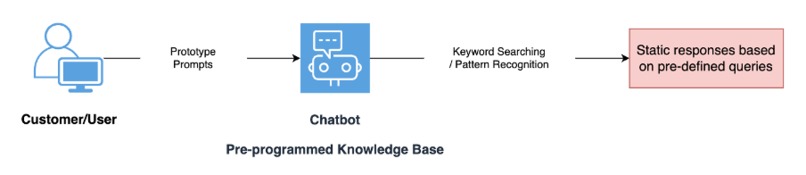
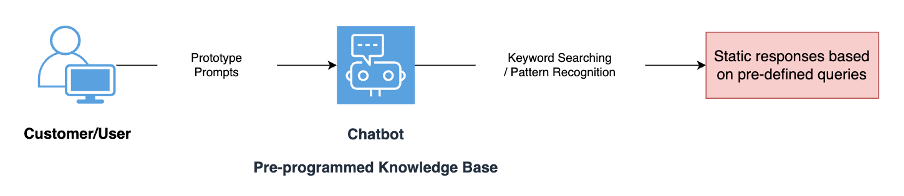
Rule-based Chatbot
-
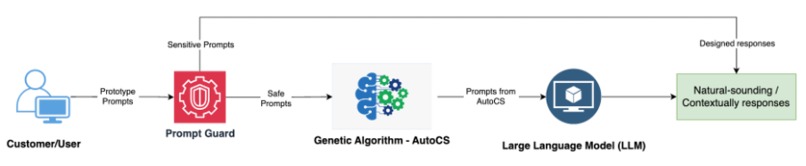
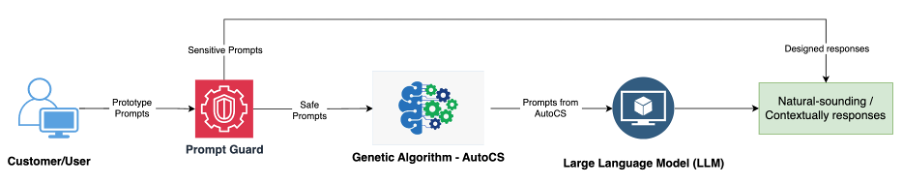
Proposed Solution
-
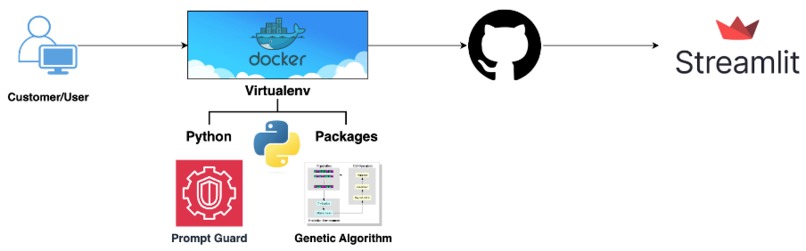
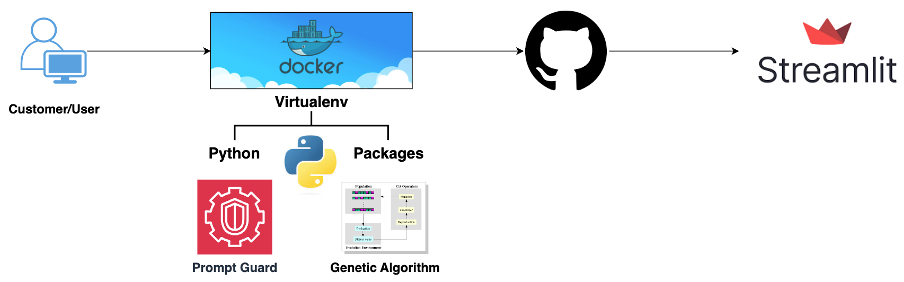
Deployment Diagram
-
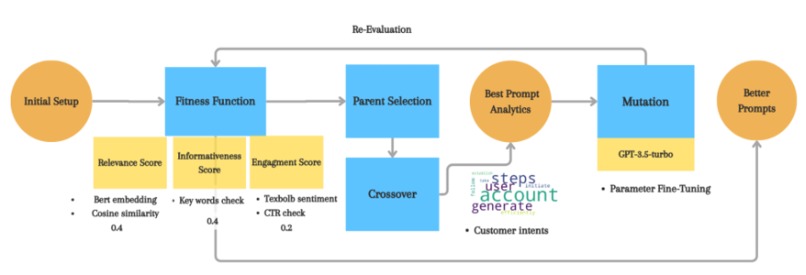
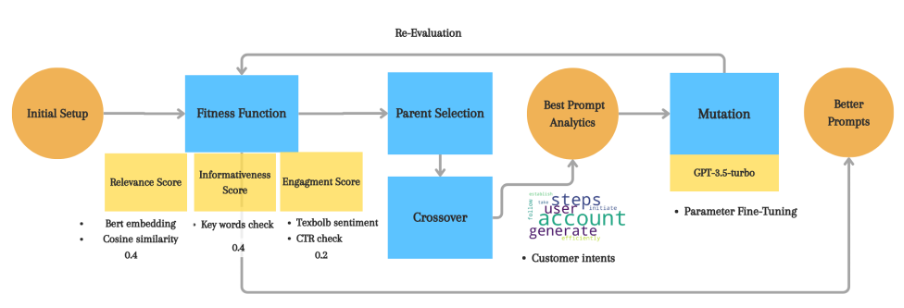
Genetic Algorithm
Inspiration
Traditional rule-based chatbots rely on predefined rules and patterns to generate responses. These bots follow a set of programmed instructions and keyword-based algorithms to interpret and respond to user inputs. The traditional chatbot has the following limitations:
- Lack of context understanding
- Limited problem-solving abilities
- Lack of personalization
- Incapacity to learn
What it does
Our proposed chatbot solution utilizes a genetic algorithm to generate optimized prompts based on user input and feed the best prompt into our large language model. The main highlights of this solution are:
- Genetic Algorithm is used to generate the best prompt which makes the client’s questions easier for LLM to understand.
- The LLM-powered chatbot will respond to clients’ inquiries in a human-like manner and generate contextual responses.
How we built it
We have developed a GA-based system for our prompt optimization to pass a filtered and optimized prompt to the LLM.
Challenges we ran into
Designing an appropriate Genetic Algorithm based on an E-commerce customer service user case.
Accomplishments that we're proud of
- The genetic algorithm can generate better prompts given user input.
- We built a customer service chatbot to implement our solution.
- We built a function called "prompt guard" to filter sensitive prompts to give users a better experience.
What we learned
We learned everything from understanding the problem, designing a hypothetical solution, then implementing the solution, and pruning until the final version we are presenting.
Future work
- Build diverse prompt datasets and introduce online learning which can help continuously update the dataset.
- Improve fallback mechanisms and continuous monitoring.
- Finetune the Large Language Model (LLM) according to specific user cases.
- Enhance the chatbot interface by incorporating user-friendly functions.
- Enhance the prompt guard's filtering capabilities using GA capabilities.

Log in or sign up for Devpost to join the conversation.